a&e features
Aretha’s triple whammy
Queen of Soul’s on a roll with great local concert, her best new album in years (and a book she wishes had never seen the light of day)
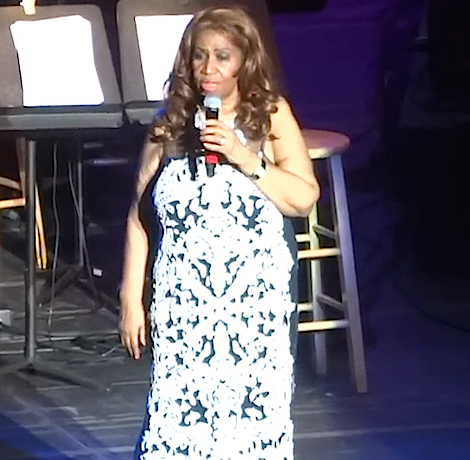
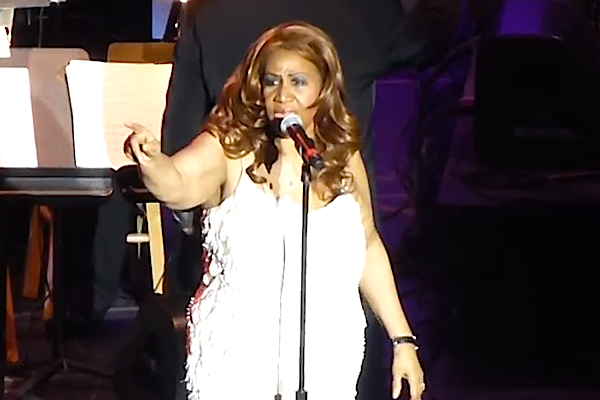
Aretha on stage in Baltimore on Nov. 13. (Screen capture from a YouTube video by Jim Brunzell)
It wouldn’t be an Aretha Franklin concert without at least one head-scratching oddity. For the legendary diva’s latest concert in our region — last Thursday’s show at the Lyric in Baltimore — she came up (sure ’nuff!) with a real winner: for no apparent reason, she sang the encore “The Way We Were” off stage.
For the first minute or so, I suspected it might be a recording and that she was simply too lazy to sing her encore live. If you’ve followed the Queen for any length of time, this notion is hardly outside the realm of possibility. Many others suspected the same as the approximately 98 percent-capacity crowd started pouring out of the theater in droves. But just as many were calling it a night, Franklin — still off stage — inserted a few geographically specific ad libs to the song. It was just another “WTF” moment in a legendary six-decade career (seven if you count her teenage gospel debut) that has been, especially in the last 15-odd years, as noted for its eccentricities and oddities as its music.
These quirks are not as random as they may seem at first glance. With Franklin, who’s actually a lot more predictable than is widely acknowledged, her musical genius — and it truly is genius — is pretty much proportionate inversely with her indulgences, eccentricities and career- and relationship-sabotaging whims. A lifetime in show business has her well informed on just how much she can get away with and how much she has to deliver to keep the world eating out of her hand.
She did return, for a few fleeting moments, to wave good night while her orchestra — in another baffling choice — closed the show with a rousing instrumental rendition of the old warhorse “There’s No Business Like Show Business.”
It’s actually a great time to be an Aretha fan. Late last month she released her best album since 1998 (there’ve only been a few) with the all-covers set “Aretha Franklin Sings the Great Diva Classics.” Galaxies better than the interminably delayed 2011 train wreck known as “Aretha: A Woman Falling Out of Love,” Franklin — a singer known for her way with covers throughout her career — tackles stalwarts like “I Will Survive,” “I’m Every Woman,” “Midnight Train to Georgia” and, most notably, Adele’s “Rolling in the Deep,” which she tore up in a live performance on “Late Show with David Letterman,” a performance that went viral in September.
But if last week’s Baltimore concert — more on that in a bit — and the new album are the first two pieces of a modern Aretha trifecta, the third is a controversial pork chop for the ages that will be discussed and debated for decades — no exaggeration — to come: David Ritz’s towering biography “Respect: the Life of Aretha Franklin,” which dropped just days after her album in October.
At first glance, it’s easy to prematurely dismiss the book as a character assassination of almost “Mommie Dearest” proportions (not quite, but almost). The backstory is delicious: Ritz, having co-written Franklin’s 1999 memoir “Aretha: From These Roots,” laments in the “Respect” intro that he wasn’t able to crack the famously private Franklin facade. The ’99 book, although still a priceless piece of Franklin history in many ways, is about as honest and forthright as its heavily airbrushed cover photo (Franklin’s wildly fluctuating weight has dogged her for years, yet the cover makes her look more like Iman than herself at the time).
“In my view,” Ritz writes in the new book, “my two years of working on ‘From These Roots’ resulted in my failure to actualize the great potential in Aretha’s narration. I didn’t do what I set out to do. Since the publication of the book some 15 years ago, I have not rested easy. It took me a decade to recommit myself to the Aretha story, knowing that this time around, I would have to fly solo.”
What results is a no-holds-barred dishfest that has had media outlets as far ranging as the Daily Mail and Gawker regurgitating its bitchiest passages (which are legion). From family fights with her sisters Carolyn and Erma (also both singers) to passive-aggressive intransigence and egotism gone mad working with collaborators such as Luther Vandross and producer Oliver Leibert, to endless canceling of engagements at the 11th hour, a habit that cost her dearly in the courtroom and drove former booking agent Ruth Bowen (a priceless source of Aretha legend, quoted here at length) nearly mad, “Respect” drips with unflattering tale after tale, the cumulative effect of which is damning, yes, but also rather sad. If even a tenth of its stories are true, Franklin is still an egomaniacal control freak who’s impossible to deal with.
Modern-day Franklin would seem, at first glance, to be quite a different story. Having quit drinking and smoking many years ago and now having her weight under control after a mystery illness in the fall of 2010 — an episode she masterfully spun into an extended testimony/gospel vamp improvisation complete with de rigueur miraculous recovery that found her trotting Holy Ghost-style (the crowd ate it up) at last week’s show — one would like to think Franklin is at peace. Sadly, Ritz says that’s hardly the case. Although long banished from her inner circle, he makes a strong case now that she’s an imperious monster surrounded by yes people who don’t dare cross her. Beset by irrational fears — from her refusal to fly to her her habit of paying her band members cash which she carries around in a purse that’s never out of her site (an assistant both brought it out before Thursday’s show and retrieved it just as she left the stage so it was never out of her sight) — Ritz paints a portrait of a controlling and impulsive woman incapable of self scrutiny or critique.
Franklin, of course, begs to differ. She told the Wall Street Journal last week the book was “a book of trash” and nothing but “lies, lies and more lies.” News broke this week that she’s considering legal action.
It’s an interesting conundrum because the book is not the crucifixion either Franklin or the more salacious outlets would have you believe. What’s been totally lost in the discussion — hardly a surprise — is the book’s many passages of balancing anecdotes. Even those who share the book’s most unflattering tales — Carolyn, Erma and Bowen chief among them — are also some of Franklin’s most loyal compatriots.
“My sister was always engaged in acts of kindness and charity that went unreported,” Ritz quotes Erma as having said. “She and I would be watching the late news. There’d be a story about a woman who lost her home in a fire and the next thing you knew, Aretha was on the phone to the news station getting the woman’s number. The next day she’d send her a check for thirty thousand dollars.”
Brother and former manager Cecil is quoted as calling Aretha “an open-hearted person” and one who “always wanted to help her family.” One gradually senses that Aretha is, at heart, a good person and altruistic when push comes to shove.
Many moments of sheer and utter joy are recalled such as one where Erma, singing backup for Aretha in the studio, remembers her sister cutting — in a mind-boggling display of brilliance — the hits “Day Dreaming” and “Rock Steady” on the same day.
“That was a marvelous day,” she says. “Aretha absolutely tore up the vocal. We knew it was an instant classic.”
Anytime a highly unflattering celebrity biography comes out — one thinks of everything from J. Randy Taraborrelli’s “Call Her Miss Ross,” Christopher Ciccone’s “Life With My Sister Madonna,” Carol Ann Harris’s “Storms: My Life With Lindsey Buckingham and Fleetwood Mac” and many others — everyone debates the perceived verisimilitude of the books. Although opinions vary wildly — Taraborrelli even amended in a way, his Diana Ross books with a later, more balanced effort (2007’s “Diana Ross: a Biography”) — most would concur where there’s smoke, there’s at least some fire.
Groomed and mollycoddled by a doting father (the legendary Rev. C.L. Franklin) and armed with enough Grammys, RIAA certifications and life achievement awards (Rolling Stone even voted her the best singer of all time — an accolade she’s sure to have pointed out every time she’s introduced), it’s easy to see how someone like Franklin could manage to live in her own little world, largely immune to anything she wishes to ignore. (A curious side note: Ritz quotes Carolyn as saying how happy she was to hear of the Stonewall riots in 1969; Aretha, who has supported gay causes in more recent years, initially “found the topic distasteful,” Ritz says.)
The best argument against Ritz’s book, which has gotten strong reviews in USA Today and the New York Times, is that the vast majority of the people he quotes, such as Aretha’s siblings and the voluminously quoted Bowen, are dead.
“He offers no proof that he interviewed them,” says Roger Friedman, writing for showbiz411.com. “Ritz wrote a whole book about Ray Charles. But none of the Ray Charles info in ‘Respect’ was in the Ray book. Suddenly a dead Ray Charles has a whole lot of new quotes about Aretha Franklin.”
It’s a good point, but hardly a damning one. Having co-written a whole book with Charles, (1978’s “Brother Ray”), it’s wholly conceivable that the two spent many hours together and that Ritz could have substantial outtakes Charles either didn’t want in his own book or one party or the other didn’t think were pertinent.
Also curiously absent are the slightest comments or input from any of Franklin’s four sons, two of whom (again, oddly) are pictured with her in the booklet for her new album. It’s debatable the degree to which Franklin herself actually raised these boys, two of whom were born when she was a teen. A passing reference from sister-in-law Earline notes that at one point in the early ‘70s, “Clarence and Eddie were back in Detroit being cared for by Big Mama (Franklin’s grandmother),” and “Teddy was being raised by his father’s folks.” While Teddy played guitar for his mom for years, at times hawking his own recordings outside her shows, the Franklin children are largely a mystery. While Diana Ross counters much of her negative press with united-front photos of her with all five smiling grown children in tow every time she gets an award, I don’t know that a single photo of Franklin with all four of her boys has ever surfaced publicly (Tina Turner’s grown sons are equally as low-key and almost never seen).
This absence of comment is telling. A historian as thorough as Ritz surely tried to get their input. There are a few other flaws with “Respect.” Although perhaps unavoidable considering Ritz knows Franklin personally and witnessed some of the incidents first hand, the shifts into first person are jarring. And there are curious omissions. For all the talk of Aretha’s heavily religious (albeit liberal) formative years, we leave without the slightest sense of whether she has been much of a church goer in her adult years or, if celebrity and travel prevent it, where she gets her spiritual needs met now. Bishop Carlton Pearson was her guest at her 2012 Washington concert at DAR Constitution Hall and her faith background is essential to her persona. And although her appearance on a 1994 episode of “Saturday Night Live” might be seen as a minor matter overall, it gives an interesting insight into the legend. Perhaps compensating for a not-quite-ready-for-prime-time guest host Nancy Kerrigan (fresh off the ’94 Olympics) Franklin, in addition to being that week’s musical guest, also hilariously spoofs her persona in a mock BET interview sketch. If nothing else, it shows Franklin does not always take herself as seriously as Ritz and his flock of mostly dead mudslingers would have you believe. And she hardly sings her hit “Angel” at every concert as Ritz posits: in fact the only time she’s sung it at any of her D.C. concerts in the last decade was at her summer 2011 show at Wolf Trap.
Aretha’s cousin and long-time back-up singer Brenda Corbett, very much alive yet not in her usual spot at last week’s concert, is, however, quoted and is as forthcoming and candid as Carolyn and Erma (both, along with brother Cecil, sadly gone) were.
“I’ve been singing background with my cousin for some 42 years,” Ritz quotes her as saying. “And I still don’t know — record from record or concert from concert — where she’s going to hire me or fire me. Months will go by when she cuts off all communication with me. She’s furious with me and I never know why. Then she’ll call and we’re back together like nothing ever happened.”
It’s a pattern Ritz says happens over and over with family and longtime associates. And like abuse patterns — when many people over decades have eerily similar stories — the tales gain traction.
Ritz’s book ultimately succeeds because it holistically presents a balanced psychological portrait of the great legend. It’s an unexpectedly satisfying unofficial companion to Anthony Heilbut’s brilliant 2012 book “The Fan Who Knew Too Much: Aretha Franklin, the Rise of the Soap Opera, Children of the Gospel Church and Other Meditations.” Though only part of it focuses on Franklin, it’s the most contextualizing thing about her that’s ever been written. Ritz also deserves credit for having the balls to publish this while Franklin (72) is still alive. He could easily have taken the Darwin Porter (known for his trashy celeb bios always published within a year of the subject’s passing) approach, but he opted to forge ahead.
So what’s the deal with Aretha? Is it just Norma Desmond-ism — talent-plus-ego run amok?
Perhaps a quote from Carolyn sums it up best: “I think she was basically afraid that she wasn’t enough,” Ritz quotes her as saying. “Crazy as it sounds, she was afraid that she wasn’t good enough as a singer, pretty enough as a woman or devoted enough as a mother. I don’t know what to call it except deep, deep insecurity.
Ritz offers his own summation in the book’s coda. “In her troubled mind,” he writes, “control is the antidote to fear. She hires, fires and rehires a battery of publicists, booking agents and managers because, when all is said and done, she cannot relinquish control. … When these efforts fail, she deflects the blame. Self-scrutiny is not her way. Her methods of denial have been perfected over a lifetime.” He also writes, though, that she’s the “ultimate survivor, a symbol of strength” who “keeps moving forward, no matter what.”
Ritz also gains credibility to an extent because his love and admiration for the woman — of which he’s unabashed — comes shining through. His laments about the things he wishes Aretha would do, the career twists and turns he longs for her to have made, echo those expressed by many a gay man for the divas they love. With Franklin, it’s especially sad because the sheer magnitude of her greatest great moments indicate how much more she could have accomplished if she had personal discipline, the ability for introspection, a management team whose advice she heeded and better artistic instincts. Hers, unfortunately, have just as often let her down (like attempting a ballet routine at a Clive Davis tribute with a straight face) as reinforced or at times even expanded her legend (subbing memorably for an ailing Pavarotti at the ’98 Grammys).
His description of his ultimate dream for her furnishes a lovely, though bittersweet, moment: “I wanted her to realize a concert with only a superb jazz trio behind her as she sings George Gershwin and Cole Porter and the blues ballads of Percy Mayfield,” he writes. “I wanted her to sit at the piano and accompany herself as she revisits her best songs and the songs of Thomas A. Dorsey and James Cleveland and Curtis Mayfield” and to “put her performing and recording career in the hands of producers noted for impeccable taste, musical restraint and unfettered imagination.” They’re all things, sadly, that will likely never happen.
Leaving an Aretha concert, one has many similar thoughts. Her shows vary in quality — like Ritz, I’ve seen her on several occasions, merely going through the motions and serving up adequate, but hardly inspiring, renditions of her classic hits.
But catch her on a good night — and last Thursday was one — and there are magical moments to be had amidst the clutter (did we really need an on-stage presentation from the local Delta Sigma Theta chapter?) and repetition (she’s used Jackie Wilson’s “Your Love Keeps Lifting Me,” a song she’s never recorded, as her opening number for several years now; it’s a fine song she delivers solidly, but the lack of imagination considering her vast catalogue is inane).
Her cut from “Waiting to Exhale,” “Hurts Like Hell,” was a delicious surprise, that gave her a great little musical cushion upon which to unfurl her trademark melismas, “It’s Just Your Love” was a wildly unexpected deep album cut from the “Jump To It” album and the aforementioned testimony vamp had all the energy and passion one would expect from a soul legend and product of the church whose authenticity of faith has never been questioned.
Probably a little shy in terms of overall quality compared to her Nov. 2012 show at DAR (her last in the region), which included scintillating renditions of “Day Dreaming,” “Think” and “Something He Can Feel,” the Baltimore concert was still highly enjoyable. She looked resplendent in two different gowns and was far more spry and mobile than she was at her heaviest about five years ago. Even with the repetition, the woman truly never gives the same show twice. She mixes up her set list oceans more than her contemporaries like Dionne Warwick, Gladys Knight or Diana Ross, whose set list is essentially the same one she’s been using the last five years.
It’s all part of the joy and frustration of being an Aretha Franklin fan. As Ritz has learned the hard way, you either take the Queen on her terms or you don’t take her at all. Each person, fan and minion alike, has to decide for him- or herself if the sweet outweighs the bitter. Last Thursday night, it did.
- Overture (orchestra)
• Introduction of Aretha (8:52 p.m.) - Your Love Keeps Lifting Me Higher and Higher
- It’s Just Your Love
- Don’t Play That Song
- Hurts Like Hell
- Sweet 16
- gospel vamp/testimony
- Chain of Fools (w/ dancers)
- band jam — Another Star/band solos
• recorded track — Aretha returns dancing with Willie Wilkerson
• presentation from Delta Sigma Theta
• recognition of honored guests - Old Landmark
- I Remember (Keyshia Cole)
- Rolling in the Deep
- You Send Me (Aretha at the piano)
- Freeway of Love (with dancers)
- Respect (with dancers)
ENCORE - The Way We Were
- No Business Like Show Business (orchestra)
(show ends at 10:30 p.m.)







Some gifts scream practical, others whisper luxury, and a few flat-out blur the lines. From cocoa that feels ceremonial to a cologne that linger like a suggestive smirk, this year’s ultimate gift picks prove that thoughtful (and occasionally naughty) presents don’t have to be prosaic. Welcome to your holiday cheat sheet for festive tangibles that get noticed, remembered, and maybe even result in a peck of gratitude planted under the mistletoe. Consensually, of course.
Amber Glass Champagne Flutes
Pop the champs – but make it vintage. These tulip-shaped stunners in amber-tinted glass bring all the Gatsby vibes without the Jazz-age drama. Whether you’re toasting a milestone or celebrating a Tuesday, their seven-ounce capacities and hand-wash-only care make ‘em as practical as they are pretty. Pair with a thoughtful bottle of bubs and gift with a glittering wink. $18, NantucketLooms.com
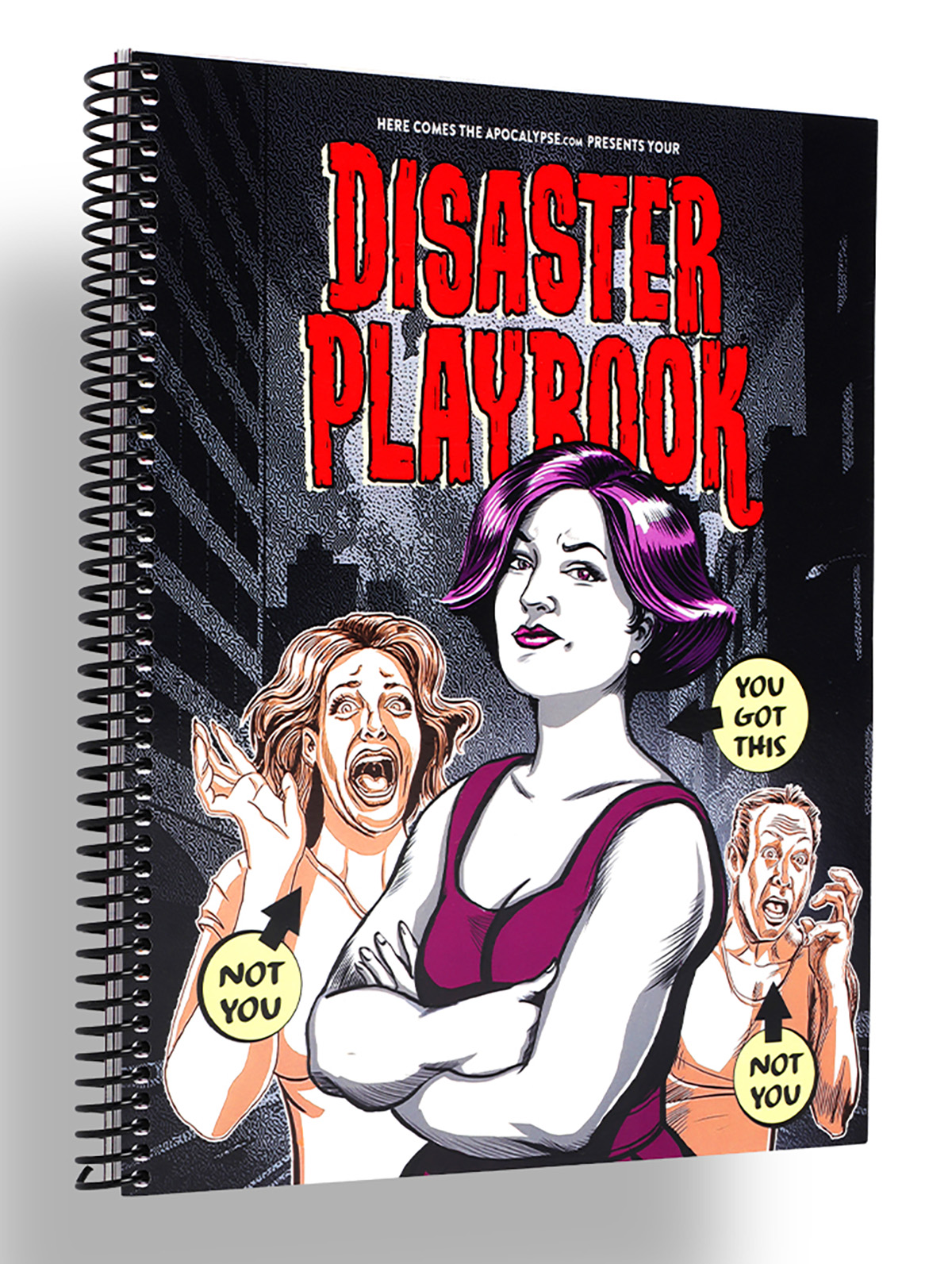
Disaster Playbook by Here Comes the Apocalypse
Because the end of the world shouldn’t be a solo act, this spiral-bound guide is your step-by-step roadmap to surviving and thriving when everything else goes sideways, which might be sooner than you think. Packed with checklists, drills, and a healthy dose of humor, it’s like a survival manual written by your most prepared (and slightly snarky) friend. Whether you’re prepping for a zombie apocalypse or, more realistically, REVOLUTION!, this playbook’s got your back. $40, HereComesTheApocalypse.com
Wickless Vulva Candles
Bold, luxurious, and completely flame-free, CTOAN’s wickless candles melt from beneath on a warmer, releasing subtle, sophisticated fragrances, like sandalwood or lavender. The vulva-shaped wax adds a playful, provocative element to any space –perfect for a bedroom, living room, or anywhere you want elegance with an edge. A gift that celebrates form, intimacy and self-expression, no fire required. $39, CTOANCO.com
Villeroy & Boch Royal Classic Christmas Collection
Every meal is a mini celebration – with whimsy at every place setting – in Villeroy & Boch’s Royal Classic festive dinnerware collection that hits all the right notes. Made from premium German porcelain, it features nostalgic little toys, nutcrackers, and rocking horses in delicate relief, giving your holiday spread a playful but refined twist. Dishwasher- and microwave-safe, it’s luxe without the fuss. Gift a piece to a special someone, or start a collection they’ll use (and show off) for years to come. $22-$363, Villeroy-Boch.com
Greenworks Electric Lawnmower
You a ’hood queen who considers lawn care performance art – or just wants to rule the cul-de-sac in quiet, emission-free glory? Greenworks’ zero-turn electric mower has the muscle of a 24-horsepower gas engine but none of the fumes, drama or maintenance. Six 60V batteries and a 42-inch deck mean you can mow up to two-and-a-half acres on a single charge – then plug in, recharge, and ride again. It’s whisper-quiet, slope-ready, and smooth enough to make you wonder why you ever pushed anything besides your queer agenda. The perfect gift for the homeowner who loves sustainability, symmetry, and showing off their freshly striped yard like that fresh fade you get on Fridays. $5,000, GreenworksTools.com
Molekule Air Purifier
For the friend who treats their space like a sanctuary (or just can’t stand sneezes), the Molekule Air Pro is magic in motion. Covering up to 1,000 square feet, it doesn’t just capture allergens, VOCs, and smoke – it destroys them, leaving your air feeling luxury-clean. FDA-cleared as a Class II medical device, it’s serious science disguised as modern design. Gift it to your city-dwelling, pet-loving, candle-burning friend who likes their living room as pristine as their Instagram feed. $1,015, Molekule.com

Cipriani Prosecco Gift Set
Effervescent with stone-fruit sweetness and a touch of Italian flair, the Cipriani Bellini & Prosecco gift set brings brunch-level glamour to any day of the week. The Bellini blends rich white-peach purée with sparkling wine, while the dry ’secco keeps things crisp and celebratory. Pop a bottle, pour a flute, and suddenly winter weeknights feel like a party – even with your pants off. $36, TotalWine.com
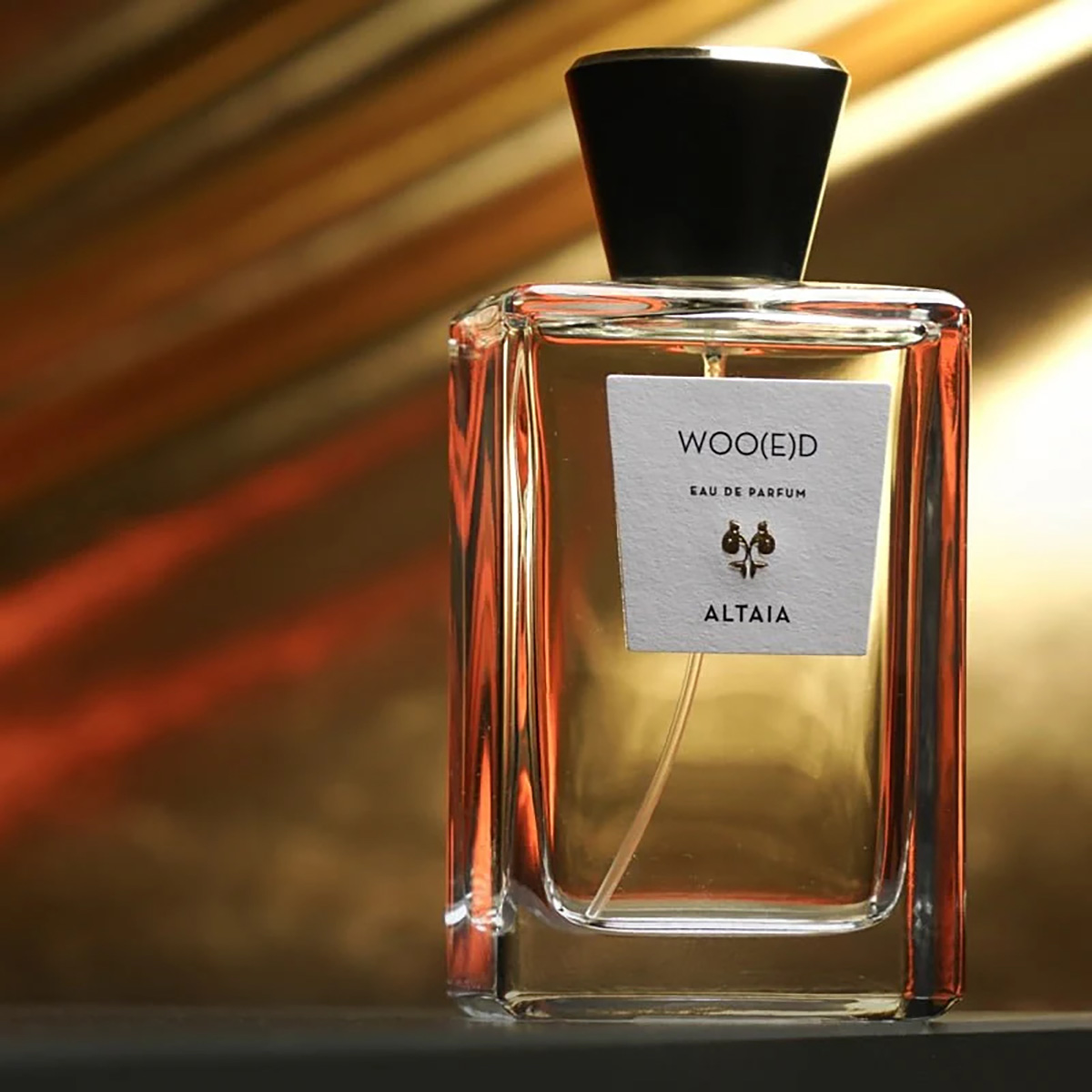
Woo(e)d Cologne
British GQ recently crowned Woo(e)d by ALTAIA the “Best Date Night Fragrance,” and honestly, they nailed it. Confident without being cocky – smoky gaïac and Atlas cedarwood grounds the room while supple leather and spicy cardamom do all the flirting – it’s a scent that lingers like good conversation and soft candlelight. Gift it to the one who always turns heads – or keep it for yourself and let them come to (and then on) you. $255, BeautyHabit.com
Lococo Cocoa Kit
Keep the run-of-the-mill mugs in the cabinet this Christmas and pull out Lococo’s handcrafted Oaxacan versions that demand you slow down and sip like it matters. Paired with a wooden scoop, rechargeable frother, and Lococo’s signature spice hot-chocolate blend (vegan, gluten-free, with adaptogenic mushrooms), this holiday kit turns Mexi-cocoa into a mini ritual you’ll look forward to. Perfect for anyone who loves a little indulgence with a side of ¡A huevo! energy.
Manta Sleep Mask
Total blackout, zero pressure on the eyes, and Bluetooth speakers built right into the straps, this ain’t your mama’s sleep mask — but it could be. The Manta SOUND sleep mask features C-shaped eye cups that block every hint of light while ultra-thin speakers deliver your favorite white noise, meditation, or late-night playlist straight to your ears. With 24-hour battery life, breathable fabric, and easy-to-adjust sound, it turns any bed (or airplane seat) into a five-star sleep suite. Perfect for anyone who treats shut-eye like an art form (or just wants to escape their roommate’s late-night bingin’ and/or bangin’). $159, MantaSleep.com

Shacklelock Necklace
Turn the industrial-chic vibe of a shackle into a sleek statement. Mi Tesoro’s platinum-plated stainless-steel necklace sits on an 18-inch wheat chain, featuring a shackle-style latch pendant that’s waterproof, tarnish-free, and totally fuss-les. Beyond style, it nods to a classic gesture in the queer leather community: replacing a traditional Master lock with something elegant to quietly signal belonging to someone special. Wear it solo for a minimalist edge or layer it like you mean it; either way this piece locks in both your look and your intentions. $90, MiTesoroJewelry.com
Parkside Flask Mojave Edition
Wine nights get a desert glow-up with Parkside’s limited-edition 750-milliliter all-in-one flask draped in sun-washed bronze and badland hues like sage, sand, and terracotta – with magnetic stemless tumblers that snap on for effortless shareability. It keeps your vino chilled for 24 hours, pours without drips (no tears for spilled rosé, please), and even lets you laser-engrave your own mantra or inside joke. Perfect for picnics, surprise rooftop clinks, or gifting to your favorite wine (or desert) rat. $149, HighCampFlasks.com

Mikey Rox is an award-winning journalist and LGBT lifestyle expert whose work has published in more than 100 outlets across the world. Connect with him on Instagram @mikeyroxtravels.
a&e features
Meet Mr. Christmas
Hallmark’s Jonathan Bennett on telling gay love stories for mainstream audiences
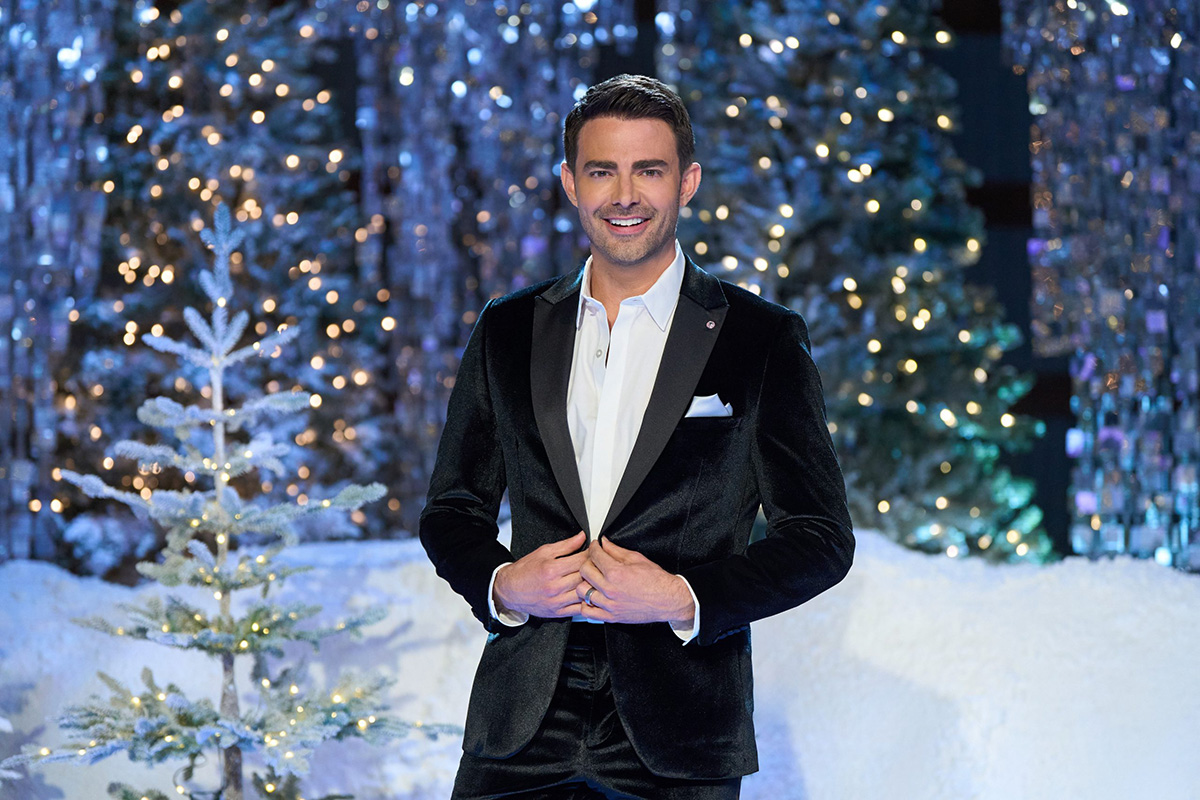
Jonathan Bennett believes there are two kinds of people in the world — those who love Hallmark movies and liars. And in Season 2 of Finding Mr. Christmas, which the Mean Girls star co-created with Ben Roy, Bennett is searching for Hallmark’s next leading man.
“It’s so fun for people because everyone in their life has someone they know that they think should be in Hallmark movies, right? The UPS driver, the barista at the coffee shop, the dentist,” Bennett says. “So we’re testing their acting abilities, we’re testing who they are, but we’re also looking for that star quality — the thing that makes them shine above everyone else. It’s almost something you can’t explain, but we know it when we see it.”
Season 2’s cast includes a former NFL player for the Green Bay Packers, a few actors, and a realtor. The 10 men compete in weekly festive-themed acting challenges, one of which included having to ride a horse and act out a scene with Alison Sweeney. The contestants were chosen from a crop of 360 potential men, and Bennett gives kudos to the show’s Emmy-nominated casting director, Lindsay Liles (The Bachelor, Bachelor in Paradise).
“She has a tough job because she has to find 10 guys that are going to be good reality television, but also have the talent to act, carry a scene, and lead a Hallmark movie eventually,” he says. To be the right fit for a Hallmark leading man, Bennett singles out five key characteristics: you have to be funny, charming, kind, have a sense of humor, and you have to do it all with a big heart.
Of course, Finding Mr. Christmas wouldn’t be Finding Mr. Christmas without its signature eye candy — something Bennett describes as “part of the job” for the contestants. “I can’t believe Hallmark let me get away with this. I dressed them as sexy reindeer and put them in harnesses attached to a cable 30 feet in the air, and they had to do a sexy reindeer photo shoot challenge,” he says with a laugh. “This season is just bigger and bolder than last. People are responding to not only all the craziness that we put them through, but also comparing and contrasting the guys in their acting scenes when we do them back-to-back.”
Season 1 winner Ezra Moreland’s career has been an early testament to the show’s success at finding rising talent. On seeing the show’s first winner flourish, Bennett says, “Now to watch him out in the world, just booking commercial after commercial and shining as an actor and a model, I think the show gave him the wings to do that. He learned so much about himself, and he took all that into his future auditions and casting. He just works nonstop. I’ve never seen an actor book more commercials and modeling gigs in my life.”
Bennett has been a star of plenty of Hallmark movies himself, including the GLAAD-award-winning The Groomsmen: Second Chances, which makes him a fitting host. Among those movies are 2020’s Christmas House, which featured the first same-sex kiss on the network and had a major impact on Bennett’s career as an openly gay man. “Hallmark’s been so great about supporting me in queer storytelling. But again, I don’t make gay movies for gay audiences. I make gay love stories for a broad audience, and that’s a huge difference, right? We’re not telling stories inside baseball that only the gay community will understand.”
He continues, “The backdrop of a Hallmark Christmas movie is very familiar to these people who watch. And so when you tell a gay love story, and you tell it no differently than a straight love story in that space, they’re able to understand. It’s able to change hearts and minds for people who might not have it in their lives.”
While Hallmark has become a major staple of Bennett’s career, he started off wanting to be a Broadway actor. And before the first season of Finding Mr. Christmas aired, Bennett took a break from TV to make his Broadway debut in Spamalot, replacing Michael Urie as Sir Robin and starring alongside Ethan Slater and Alex Brightman.
“That was my dream since I was five years old – then I booked a movie called Mean Girls, and everything kind of changes in your life. You no longer become a person pursuing Broadway, you become a part of pop culture,” Bennett recalls. “And to be honest, when I hit 40, I was like, ‘I’m probably never going to get to live that dream.’ And that’s okay, because I got to do other dreams and other things that were just as cool but different. So I honestly never thought it would happen.”
Bennett is still determined to make his way back on Broadway with the right role — he calls Spamalot the “best experience” of his life, after all — but he’s got another Hallmark show lined up with Murder Mystery House, which he co-created. The show was recently greenlit for development and intends to bring the Hallmark mystery movie to life. “It’s kind of like our version of The Traitors,” Bennett admits.
Looking back on both seasons, Bennett says that what makes Finding Mr. Christmas stand out in the overcrowded reality TV landscape is that everyone involved makes it with heart: “This isn’t a show where you’re going to watch people throw drinks in each other’s faces and get into big fights. The thing that has amazed me so much about this show, the more we’ve done it, is that every season, 10 guys come in as competitors, but they leave as a family and as brothers. That’s something you don’t get on any other network.”
Finding Mr. Christmas airs every Monday on Hallmark through December 20, with episodes available to stream on Hallmark+.
a&e features
Guillermo Diaz on his role as a queer, Latino actor in Hollywood
Shattering stereotypes and norms with long resume of roles
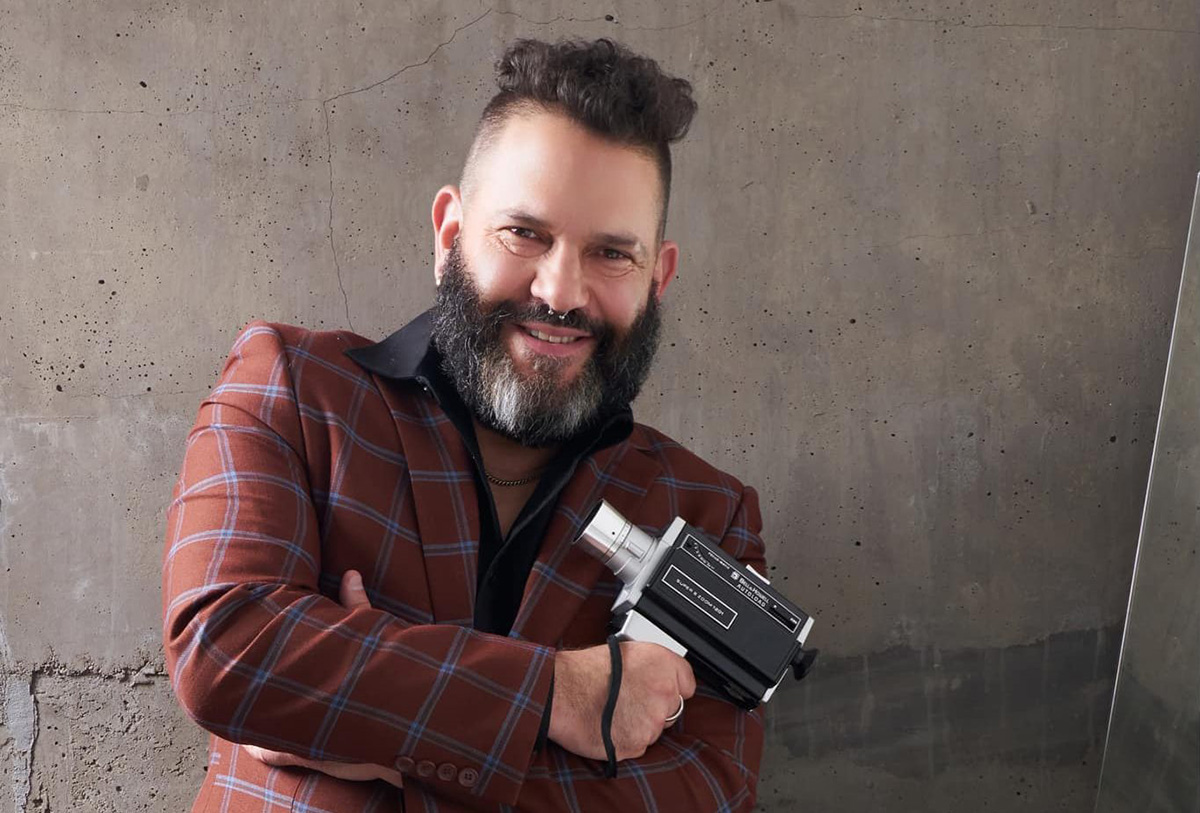
Actor Guillermo Diaz has been working hard in the entertainment industry for more than three decades. Proud of his heritage and queer identity, he has broken through many glass ceilings to have a prolific career that includes tentpole moments such as roles in the films Party Girl, Half Baked, and Bros, and in major TV shows like Weeds and Scandal, and even in a Britney Spears music video. This season, he made his feature-length directorial debut with the film Dear Luke, Love Me.
In an intimate sit-down with the Blade, Diaz shares that he attributes a lot of his success to his Cuban upbringing.
“Well, it prepared me to learn how to lie really well and be a good actor because it was a lot of acting like you were straight, back in the eighties and nineties (laugh). Another thing I learned from my Cuban immigrant parents is that they work super hard. They both had two jobs; we were latchkey kids, and I just saw them constantly working and wanting to provide for us by any means. So that was super instilled in me. That was the one thing that really stuck out that I admire and respect.”
Besides Diaz’s recurring roles on TV, his resume includes appearances in just about every genre of programming out there. If there is a major show out there, he was probably on it. Law and Order, Girls, The Closer, Chappelle’s Show, ER, Party of Five, and the list goes on. He’s accomplished more in his career thus far than most actors do in a lifetime. There is no doubt he is a hard worker.
“It’s a sign that I just loved to work, and it’s funny looking back at it now because you see all those things, but at the time it was just the next gig, the next job. I was just wanting to keep working and acting and learning and doing all that stuff. Then it sort of accumulates, and you look back and you’re like, damn! That’s a lot of stuff!”
Acting was never on Diaz’s radar until he was asked to fill in for a friend in a Beastie Boys medley for a talent show when he was a sophomore in high school.
“I did it and fell in love with it. I was teased a lot in high school. Then, when I did that performance, all those people who teased me were like, you were so great! So I looked at it initially as a thing of like, oh, this is where I’m accepted and people like me when I’m on stage. It’s kind of sad, too, because that’s what I latched onto. And then of course, I fell in love with the craft and performing and acting, but that initial rush was because all these people who were messing with me and teasing me all of a sudden liked me. And I was like, this is what I have to do.”
Little did Diaz know that he would break the mold when it came to stereotypical casting. When he first hit the industry, diversity and positive representation were not a thing in Hollywood.
“You just kind of accepted at the time. It was the early nineties. 90% of the time, it was playing a thug or a gun dealer, or a crack head – it was all bad guys, negative characters. But it was either that or not act and not be in anything. So you just kind of accept it, and then you have this sort of vision or hope that in the future it’s going to get better.
Diaz’s management was trepidatious about him playing gay roles for fear of being typecast. But Diaz did play a handful of gay roles early on, although he passed on But I’m A Cheerleader, which went on to become a gay cult classic. Diaz decided early on that he was not going to hide his sexuality. Diaz appeared in the film Stonewall. That was the defining point for him in sharing his identity.
“Being cast in that historical sort of dramatization of the 1969 Stonewall riots – I couldn’t believe I was in the midst that I was in the middle of doing this and playing the lead drag queen on the film. I just felt so honored, and I knew it was important, and I knew I needed to do a really good job. I thought, what a special moment this is. And it kicked my ass shooting that movie.
I remember after doing Stonewall, people saying, well, now you’re either going to have to make a choice if you’re going to lie, or if you’re going to just be honest, and you’re going to have to be out from now on if you’re going to be honest. And I was like, I’m not going to freaking lie. When they’d asked me, I would say I was gay. I think because I never tried to hide it, it didn’t become a thing. So people just kind of ignored it. It didn’t mess with me or my career. I don’t know. Or I just got lucky. I don’t freaking know.”
As a queer, Latin actor, Diaz is all too aware of what is happening politically and socially in the world towards minority communities. Does he think actors have a place in politics?
“For sure. I mean, we’re people first, right? Like, I hate when people sort of are like, oh, you’re an actor, shut up. I’m super political and outspoken, and I’m that guy who will say shit. I’m on the right side of history, at least. I’m not being complicit and silent. So, yeah, I think actors for sure have a place in politics. Absolutely.”
While directing was on Diaz’s radar, it wasn’t something that he was actively searching out. But as life would have it, his friend Mallie McCown sent him her script for Dear Luke, Love Me, a film she would play the lead in. Diaz was hooked.
“It was one of those scripts that I had to keep putting down every like 20 pages. I would put it down because I didn’t want it to end. It was so good. Originally, I was just going to come on as a producer of the film, and then the director dropped out, and then Mallie asked me if I was interested in directing. I was scared as shit. I had never directed a feature film. But I was like, it’s now or never.”
The film covers a decade of the friendship between Penny and Luke, covering themes of platonic love, asexuality, co-dependence, and self-identity. With most of the film focusing on just the two leads, Diaz has crafted an intimate and raw film. What is his message with the film?
“That love is complicated, but it’s beautiful and rewarding and worth all the heartache. I believe that. I don’t want to give away too much in the film either, but I think everyone can relate to it because there’s heartache and there’s pain, and there’s beauty and there’s love.”
And in looking at his past work and in looking toward his future career, what kind of legacy does Diaz want to build?
“That I broke some ground, that I knocked down some walls as an artist; I’m hoping that made a difference. It’s funny because when you’re in it, you’re not thinking about all this stuff that could possibly pave the way for other people. You’re just kind of moving along and living your life. But yeah, I would hope that I broke down some walls as a queer Latino.
I hope that people can sort of get something out of me trying to live as authentically as I can, just being my queer self. Hopefully, that helps someone along who is having some troubles being accepted or being comfortable with who they are.”

A queer Korean adoptee finds healing with original family members

Kazakh Senate tables anti-LGBTQ propaganda bill

Three women elected leaders of Capital Pride Alliance board

The harsh truth about HIV phobia in gay dating

D.C. Police Chief Pamela Smith to step down Dec. 31

Victory Fund continues to shun me and my place in LGBTQ history

Victory Institute honors President Biden

Tammy Bruce, Trump’s lesbian nominee for deputy UN ambassador. Just say no!

FreeState Justice launches 501(c)(4) group

Team DC’s holiday party set for Dec. 8
-

 Opinions5 days ago
Victory Fund continues to shun me and my place in LGBTQ history
-
LGBTQ Non-Profit Organizations4 days ago
Victory Institute honors President Biden
-
Opinions4 days ago
Tammy Bruce, Trump’s lesbian nominee for deputy UN ambassador. Just say no!
-
Maryland5 days ago
FreeState Justice launches 501(c)(4) group