Local
New web site targets closeted Catholic priests
A gay activist has launched a web site to collect information about closeted gay Catholic priests assigned to the Archdiocese of Washington, D.C., with the aim of “persuading” them to disclose their sexual orientation and speak out against the church’s opposition to same-sex marriage.
Phil Attey, an Internet consultant who coordinated local gay volunteers for the 2008 Obama campaign, said he hopes to identify such a large number of gay priests that a “critical mass” will be reached and church leaders won’t be able to oust them.
“The goal of this campaign is not to hurt any of these Catholic priests,” Attey said. “The goal of this campaign is to create an environment where priests will be able to come out safely to their parishes.”
Attey told D.C. Agenda that his web site could disclose the identity of priests he confirms are gay if they decline to identify themselves.
“We’re hoping it doesn’t come to that,” he said.
“One of the reasons we’re asking for such detailed information is that the more details we have, the more appealing it is for the priest to come out on his own so that all he has to say is that he’s gay rather than have all of the lurid details we may have on them or not have on them come out.”
According to Attey, the response to the web site, www.churchouting.org, has been “overwhelming,” with D.C.-area gay Catholics submitting information about closeted priests about whom they have first-hand information.
He said the information received would be carefully vetted and a priest’s sexual orientation would not be disclosed unless it is verified by two or more people with reliable information.
“Once a story is verified, we will be contacting the priests involved to help them make the right choices,” a message on the web site says.
A spokesperson for the Archdiocese of Washington could not be immediately reached for comment.
Bill Donahue, president of the conservative Catholic League for Religious and Civil Rights, called Attey’s web site a form of “religious cleansing” and a “witch hunt,” according to Christian News Service.
“Are they going to start harassing, intimidating, stalking priests?” CNS quoted Donahue as saying. “This is simply beyond the pale.”
Attey said he expects conservative, anti-gay groups such as Donahue’s organization to level that type of accusation against churchouting.org.
“None of that is true, and people will come to see that as we move forward,” he said.
The site includes a drop-down menu showing the entire roster of 314 priests assigned to parishes throughout the D.C. metropolitan area under the auspices of the Archdiocese of Washington. It also includes directions prompting readers to submit their name and e-mail address along with a narrative identifying a closeted gay priest and a description of how they know the priest is gay.
Attey said recent statements by Archbishop Donald Wuerl, who heads the Archdiocese of Washington, opposing the same-sex marriage bill pending before the D.C. City Council played a role in his decision to launch the web site late last month. He said Wuerl’s decision to sign a document prepared jointly with fundamentalist Christian groups known as the Manhattan Declaration, which calls for using civil disobedience to oppose certain laws that conflict with religious beliefs, including same-sex marriage laws, also prompted him to act at this time.
However, Attey said he had been planning the site for several years, largely as a concerned gay Catholic interested in challenging the church hierarchy’s anti-gay positions and the large number of closeted gay priests who, according to Attey, lend their support to the anti-gay policies by remaining silent.
“This is a site dedicated to every Catholic family who has lost a loved one to suicide or disassociation, needlessly caused by the spiritual pain inflicted by the church hierarchy’s relentless attacks on LGBT people,” Attey wrote on the site.
Gay activists have had mixed views on the use of outing as a means of advancing LGBT rights. D.C. gay activist Michael Rogers, editor of the gay blogs PageOneQ and BlogActive, has received national attention for his stories outing closeted anti-gay politicians. Rogers said he would have no objections to Attey’s outing of priests who actively campaign against gay rights. But he said he was less certain about outing priests who remain silent or who quietly support the LGBT community but don’t take a public stand.
“I don’t know where to draw the line on religious outing,” he said.
Mitch Wood, president of the Gay & Lesbian Activists Alliance, said an outing campaign against the Catholic Church should be directed at “higher up decision-makers, not rank-and-file clergy.”
GLAA Vice President Rick Rosendall cautioned that indiscriminate outings of priests could backfire and hurt the LGBT rights movement.
“If you had an ordinary priest who was not brave or bold enough to throw his pastoral career into a tailspin by confronting the hierarchy publicly, targeting him would likely turn the main focus back on those doing the outing, and show them to be cruel and fanatical,” Rosendall said.
“Our opponents on the radical religious right already portray themselves as victims,” he said. “We should take care to avoid playing into their hands.”
Father Joseph Palacios, an openly gay Catholic priest who teaches at Georgetown University, said he was ambivalent about the outing web site.
“A gay priest leading a double life and working overtly or covertly against gay rights is working against his own self interests and that of the gay community that he participates in,” Palacios said. “This kind of hypocrisy should be brought to light – just as should be done to straight priests living double lives.”
He said a gay priest generally should be “personally encouraged to look at himself and make the decision to live the truth of his sexuality.”
Attey said he doesn’t expect his web site to disclose the names of gay priests in the immediate future.
“I’m not looking at this as a short-term project,” he said.
Virginia
Winsome Earle-Sears launches campaign against Va. marriage equality amendment
Former LG lost to Abigail Spanberger in 2025 gubernatorial race
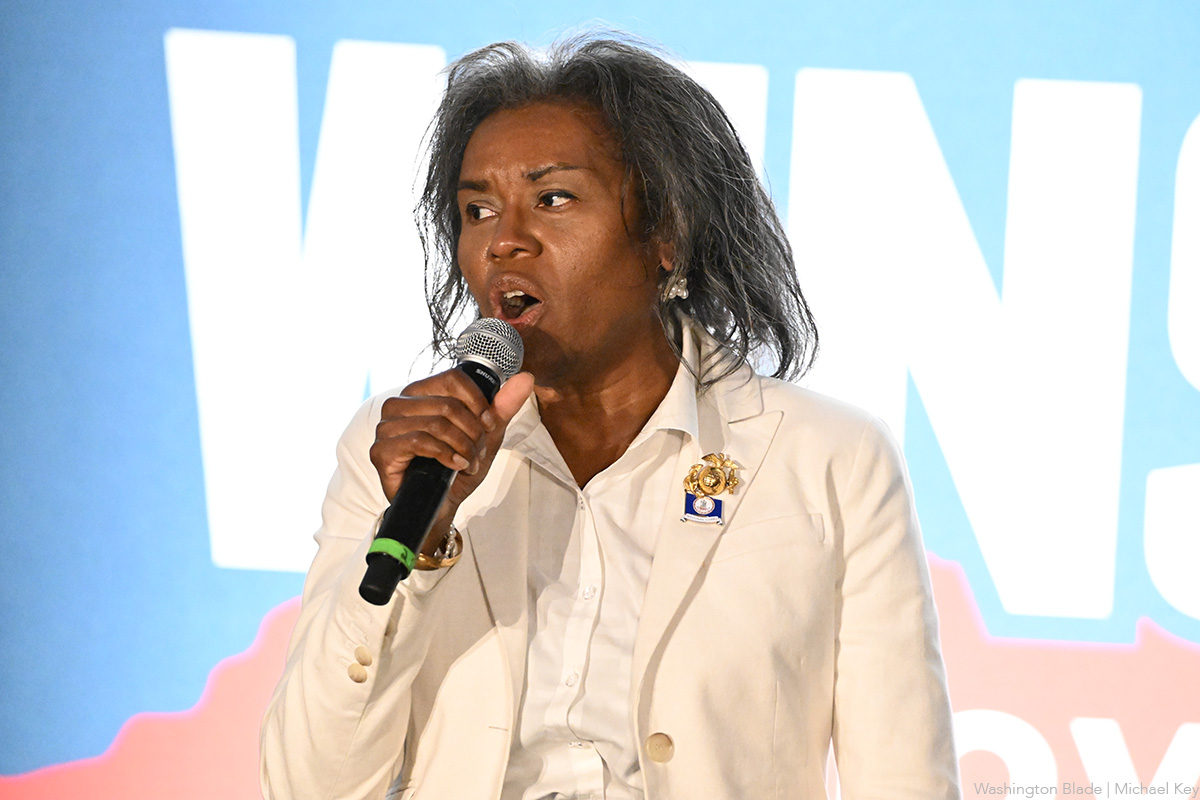
Less than a year after losing Virginia’s gubernatorial race, former Lt. Gov. Winsome Earle-Sears is campaigning across the state against constitutional amendments that would protect marriage equality and reproductive freedom.
She is launching a statewide “Life and Marriage Tour” ahead of November’s election.
Although same-sex couples can legally marry under the U.S. Supreme Court’s 2015 Obergefell v. Hodges decision, Virginia’s constitution still contains language that defines marriage as between one man and one woman. Supporters say removing the language would protect marriage equality should federal precedent change.
The original ban was written into the state constitution in 2006.
It has been hinted at in the past by Supreme Court Judge Clarence Thomas that he would consider revisiting Obergefell v. Hodges regarding contraception and marriage rights for same-sex couples. He stated this in his concurring opinion regarding the Dobbs v. Jackson ruling, which allows for state-level abortion bans.
Equality Virginia Executive Director Narissa Rahaman said removing the ban would bring the state’s constitution in line with existing law.
“20 years after banning marriage equality, it’s time for our commonwealth to fully complete our evolution — and finish the job on protecting marriage equality for all,” Rahaman said.
In an email to supporters, Earle-Sears said these amendments “raise serious concerns” and could alter principles about which Virginians care.
“That is why our efforts are focused not only on informing voters, but also encouraging them to carefully consider these proposals and vote NO on both amendments,” Earle-Sears said.
Virginia voters will consider three constitutional amendments this November.
Earle-Sears is campaigning for voters to reject two of them: the Virginia Remove Constitutional Same-Sex Marriage Ban Amendment and the Right to Reproductive Freedom Amendment.
A “Yes” vote on the Same-Sex Marriage Ban Amendment would include removing a provision that states marriage is between one man and one woman and prohibitng the state from denying a marriage license to two adults based on their sex, gender, or race, according to the Virginia Department of Elections.
In 2025, during debates against now Gov. Abigail Spanberger, Earle-Sears argued it is not discrimination to think that gay people should not be allowed to marry. She claims it conflicts with her faith.
According to ABC 8, in 2024 she wrote that she had a “moral opposition” to marriage equality, after former Gov. Glenn Youngkin, a Republican, signed a marriage equality bill that barred denying marriage licenses based on sex, gender, or race.
According to the Virginia Department of Elections, a “Yes” vote on the Reproductive Freedom amendment supports adding a section to the state constitution that would give Virginians the right to make and carry out decisions regarding reproductive healthcare, except in specific exemptions.
The Virginia Department of Elections wrote that if accepted, the amendment would allow the state government to pass laws to regulate abortion care in the third trimester of pregnancy, but require abortion care when it is medically needed to protect the life and health of the pregnant person or because the fetus is not viable.
During the 2025 election cycle, Earle-Sears was clear on her anti-abortion stance.
According to the Virginia Independent, she utilized campaign funds to donate to the Family Foundation of Virginia. The group is a faith-based, anti-abortion, and anti-in vitro fertilization non-profit.
The “Life and Marriage Tour” will include traveling throughout Virginia to speak with citizens, churches, community organizations, and local leaders. The exact locations have yet to be announced.
District of Columbia
D.C. Council approves increased funding for Mayor’s Office of LGBTQ Affairs
Increase attached to 2027 budget bill

The D.C. Council on July 14 gave final approval for the city’s fiscal year 2027 budget that includes an amendment calling for increasing the number and size of funding grants that the Mayor’s Office of LGBTQ Affairs provides for local organizations providing services for the LGBTQ community.
The amendment, called the “LGBTQ Community Grant Amendment Act of 2026,” was introduced earlier this year by D.C. Council member Zachary Parker (D-Ward 5), the Council’s only gay member.
The D.C. LGBTQ Budget Coalition called the Parker amendment “a historic measure that establishes the District’s most sustainable model for a vehicle for investing in LGBTQ communities.”
The Council approved the version of the FY 2027 budget bill with the attached Parker amendment in its first of two required votes on June 9. Shortly after voting unanimously to give final approval of an earlier version of the two-part budget measure on July 7 that includes the Parker amendment, the Council sent the bill to Mayor Muriel Bowser for her signature.
Bowser has expressed strong opposition to several provisions in the $22 billion budget measure passed by the Council that are unrelated to the Parker amendment regarding the Office of LGBTQ Affairs. The mayor has yet to say whether she will sign, veto, or choose not to sign the bill.
The latter option would allow the bill to become law if Congress does not choose to overturn it during its required 30-day legislative review period for all D.C. bills. Political observers believe the Council will vote to override a veto if Bowser chooses to veto the bill.
When contacted by the Washington Blade on July 22 to determine where the mayor stands on the budget bill, mayoral spokesperson Daniel Gleick said only, there was “no update on the budget just yet.”
Among other things, the Parker amendment calls for the Mayor’s Office of LGBTQ Affairs to issue a $980,000 grant in FY 2027 to a private, nonprofit organization in partnership with the office “for the purpose of supporting programs that promote the welfare of the lesbian, gay, bisexual, transgender, and questioning community.”
It would allocate $680,000 of that funding total from existing funds from the city’s community affairs grants program and calls for $200,000 in newly appropriated funds.
It says the organization selected would also initiate its own fundraising effort to expand the amount of funds beyond the amount the office would provide, enabling it to provide larger grants to a greater number of local LGBTQ organizations.
“The legislation arrives at a critical moment, as LGBTQ-serving organizations face unprecedented uncertainty,” the D.C. Budget Coalition said in its comment on the Parker amendment. “Growing demand for services is colliding with shrinking resources, federal attacks on LGBTQ programs, and ongoing threats to local funding streams,” the coalition’s statement says.
In what some observers have called a highly controversial action; the budget bill approved by the Council reverses and restores millions of dollars in budget cuts proposed by Bowser in the budget she submitted to the Council earlier this year.
Among other things, the Council’s budget preserves the current level of funding for housing vouchers, childcare, paid family leave, and other programs slated to be cut in the mayor’s proposed budget, according to a report by the Washington Post.
Bowser points out that the Council approved budget bill calls for using $150 million from the city’s reserve fund, which she and others have said could put the city in jeopardy in future years. The mayor has said the cuts were needed to prevent a major funding shortfall brought about by the action by Republicans in Congress to cut the city’s budget by over a billion dollars.
Rehoboth Beach
Craig Thier says experience, civility are key to Rehoboth’s future
Mayoral candidate cites finance background as key strength
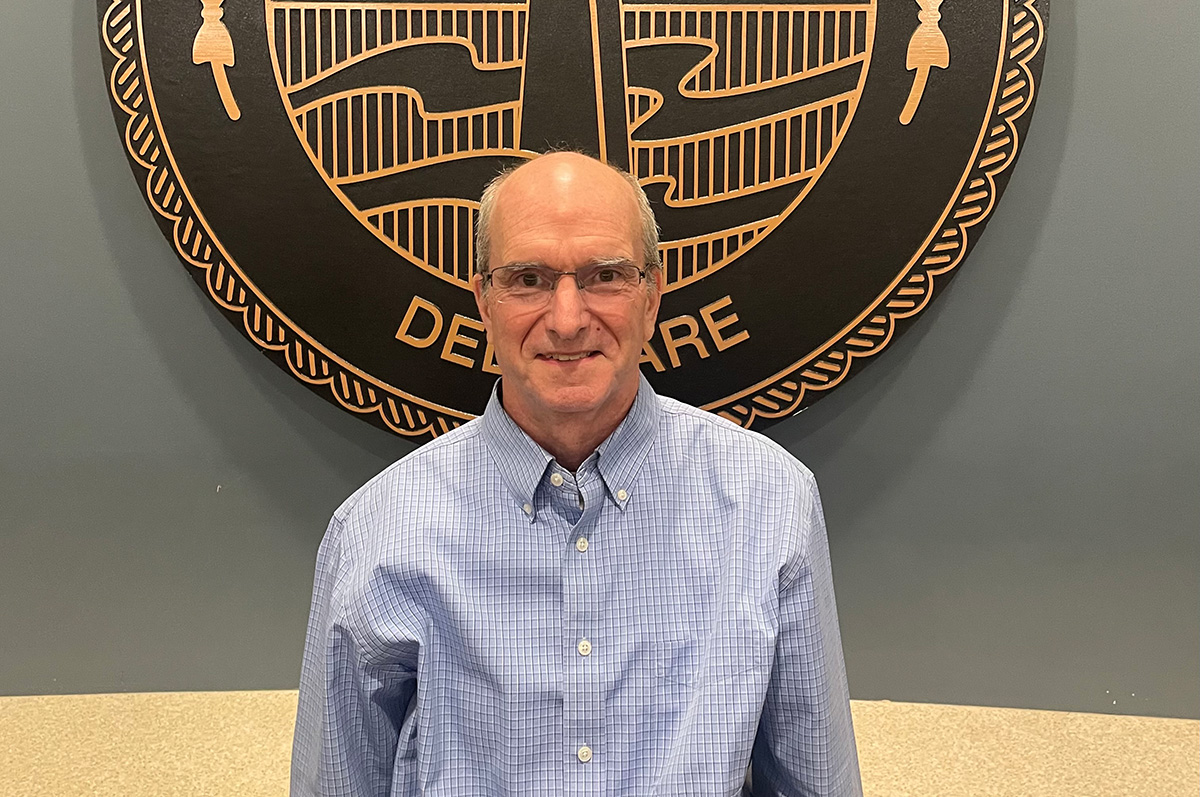
(Editor’s note: This is the third installment in a three-part series profiling the candidates for mayor of Rehoboth Beach, Del.: Commissioners Suzanne Goode, Susan Stewart, and Craig Thier; a fourth candidate, William Raak, filed to join the race but has not responded to multiple Blade inquiries. Visit washingtonblade.com for previous installments.)
Rehoboth Beach City Commissioner Craig Thier says his experience in public service and finance has prepared him to lead the city as residents elect a new mayor on Aug. 8.
Thier, who has owned property in Rehoboth Beach since 2002 and has lived there full time for a little more than five years, said he first sought public office after becoming concerned about the city’s financial planning.
“A couple of years ago, when I decided to run, the city raised taxes and fees across the board unnecessarily. They had a broken budgeting process,” said Thier.
Elected as a city commissioner in August 2024, Thier draws on a background in corporate finance and consulting, He said he could improve the city’s budgeting practices.
“I felt that I could bring that experience in and help the city improve that broken budgeting process,” he said.
Thier said one of his accomplishments as commissioner has been helping transition the city from annual budgeting to long-term financial planning.
“Within the first year, I worked with the city administration to transition us from an annual budgeting process that was really broken to a multi-year planning process,” he said.
If elected mayor, Thier said his first priority would be improving relationships among members of the Board of Commissioners.
“First would be just civility. There is a lot of infighting among some of the commissioners,” said Thier.
He says that he wants to focus on “getting people to work together so that we can get back to the business of the city.”
Thier said disagreements are inevitable but believes they should be handled more respectfully.
“We have to return to civility. People need to respect each other, people need to respect the right of other individuals to express their thoughts and opinions,” he said.
“That lack of civility absolutely has impacted our ability to get the business of the city done.”
He also said meetings should remain focused on the agenda even when commissioners disagree.
“Everyone’s got to tone things down a little bit,” Thier said. “Just because we may not agree with someone’s position doesn’t mean that that position isn’t valid.”
He added that after discussions conclude, commissioners should be willing to accept the outcome.
“People need to be prepared to move on if they don’t have the support,” he said.
Thier pointed to his previous elected experience as another qualification for the mayor’s office.
“I spent 12 years on a school board, five years as president, and I’m finishing up my second year here [as commissioner]. I believe that I have far more experience than anyone else.”
“I’ve been able to accomplish things because of my experience, and I’ve been doing this a long time,” he added.
Thier also said maintaining Rehoboth Beach’s perfect score on the Human Rights Campaign’s Municipal Equality Index would remain a priority if he is elected.
“It is absolutely a priority for the city,” he said.
“I think it’s one of the great things about the city of Rehoboth Beach is the diversity that’s there, and that we’ve been a very welcoming community.”
Thier credited city staff for helping achieve the city’s perfect score and said he would continue working with LGBTQ+ organizations, including CAMP Rehoboth.
“I have relationships with these organizations. I would continue to foster these relationships,” he said. “It’s critical that we’re doing the things to maintain this perfect score.”
Thier also expressed support for the city’s partnership with Clear Space Theatre Company as it works toward constructing a permanent performing arts venue downtown.
“Clear Space has been part of the community for more than 20 years. I think they’re an important part of the community.”
He said the theater contributes to Rehoboth’s identity as a tourist destination.
“The tourists come to Rehoboth for the whole package: the beach, the boardwalk, our restaurants, our retailers, Clear Space. They’re an important part of that whole package.”
The election will take place on Aug. 8 from 10 a.m.-6 p.m. at the Rehoboth Beach Convention Center.

Winsome Earle-Sears launches campaign against Va. marriage equality amendment

Calendar: July 24-30

Pentagon says hormones make trans troops unfit but gives them to men

At Alliance Defending Freedom’s summit, church and state are one

2026 International AIDS Conference to take place in Rio

DOJ seeks to dismiss some claims in gay FBI employee’s bias lawsuit

LGBTQ community center opens in Leesburg, Va.

Sci-fi has long been at vanguard of LGBTQ representation

Beloved local master gardener Frank Asher dies at 69

The government pressured USA Rugby to ban transgender women. A Baltimore team refused to comply.
-

 National5 days ago
DOJ seeks to dismiss some claims in gay FBI employee’s bias lawsuit
-
Virginia5 days ago
LGBTQ community center opens in Leesburg, Va.
-
Arts & Entertainment5 days ago
Sci-fi has long been at vanguard of LGBTQ representation
-
Obituary4 days ago
Beloved local master gardener Frank Asher dies at 69