National
Anti-gay violence, domestic abuse on the rise: report
New study, presented to White House, outlines challenges for LGBT victims
Anti-gay violence is increasing by staggering percentages each year, domestic violence among same-sex couples is as pervasive as it is among opposite-sex couples and mainstream service providers for victims of violence are woefully undertrained in how to effectively treat LGBT victims who turn to them for help, according to a new study conducted last year and released in late March.
“Why it Matters: Rethinking Victim Assistance for Lesbian, Gay, Bisexual, Transgender and Queer Victims of Hate Violence & Intimate Partner Violence” is a joint policy report by the National Center for Victims of Crime and the National Coalition of Anti-Violence Programs. The Coalition focuses on LGBT and HIV-affected communities. The Center isn’t LGBT specific but bills itself as the country’s leading resource and advocacy organization dedicated to helping victims of crime rebuild their lives. The groups collaborated to identify and raise awareness about the gaps in LGBT victims’ rights (find the report online at ncvc.org or avp.org).
“The collaboration was very deliberate,” says Sharon Stapel, a lesbian and executive director of the New York City Anti-Violence Project, the group that coordinates the Coalition. “The NCVC membership had access to our LGBT expertise and the Coalition membership had access to the Center’s resources. It really began because we knew a lot of this information anecdotally but we didn’t have numbers or know why.”
The study, in which 648 responders from across the country in a variety of victim assistance programs participated voluntarily, found that their agencies lacked outreach to LGBT victims, lacked staff LGBT-specific cultural competency training, did not implement LGBT-specific victim services policies and practices and did not collaborate with those who had, and were under-resourced to correct the barriers to LGBT-specific services.
But how pressing is the need? According to Coalition numbers for 2008, the most recent year for which numbers are available, hate violence against LGBT people is continually on the rise having increased 26 percent from 2006 to 2008 with a 36 percent climb in crimes committed by strangers, a 48 percent increase in bias-related sexual assault and an all-time high rate of hate violence resulting in murder. Anti-LGBT bias-related physical abuse at the hands of law enforcement personnel increased a whopping 150 percent from 2007 to 2008, the Coalition reports.
It also cites several studies from the ’00s that show intimate partner violence affects LGBT couples at the same rate it occurs in straight relationships — between 25 and 33 percent of all relationships. About 11 percent of women reported being raped by their lesbian partners while another study found 39 percent of gay men reported some form of battery from their same-sex partners over a five-year period.
So even though the rates are about the same gay and straight, heterosexual victims tend to have many more resources at their disposal. Gay men who flee abusive partners often find shelters only admit women. Lesbians who turn to shelters are sometimes harassed by the straight women there or worse, discover there’s no barrier in place to prevent their abusive female partners from joining them at the shelter.
Kelcie Cooke is bi and provides trauma counseling at Boston’s Fenway Community Health Center, one of only 36 LGBT-specific victim assistance providers in the U.S. She says fundamental shifts need to happen before mainstream providers are equipped to help LGBT victims.
“The definition of domestic violence is really rooted in the feminist movement,” Cooke says, “which understood it to be about men’s oppression over women. That doesn’t make sense for an LGBT program and under that paradigm, we don’t even see LGBT examples when it’s all about men and women.”
Many other factors often prevent LGBT domestic violence victims from finding help or even reporting their crimes, the report says. Some fear being outed and perhaps losing their jobs if they’re in the military for instance. Others fear being excluded from their circle of friends if a restraining order is granted. Transgender victims face even further obstacles.
Jeff Dion, executive director for the National Center for Victims of Crime, remembers one case he worked on in Miami that illustrated the problem.
“Sometimes law enforcement and the courts don’t take these issues seriously,” Dion, who’s gay, says. “Miami even has its own special domestic violence court but I remember one lawyer advocate who said, ‘You’re going to have a hard time getting justice if a man goes to court dressed as a woman.’ So there are still major barriers to overcome just to treat people like people.”
Morgan Lynn, a local lesbian attorney who founded an LGBT-specific program at Women Empowered Against Violence, says there are further complications she sees daily in her work.
“The people I see are just going to have different issues,” she says. “We have custody issues that affect us differently, marriage and divorce, outing is a whole issue that’s unique to our community. These are just the kinds of questions that straight folks, straight women, just don’t have to be aware of. Like with divorce. There’s no residency requirement to get married in Massachusetts but there is for divorce. So what are you going to do? Move there with an abusive partner just so you can get divorced?”
Homophobia and heterosexism are also challenges, the study says.
“There’s a lot of heterosexism in domestic violence work in general,” Lynn says. “You think about the images you see. A straight woman, she’s probably white, cowering in the corner. Advocates like us try to work through those cultural stereotypes because we know not all abusers are men, or not all abusers are the more masculine person. People think the butch in a lesbian relationship is the abuser but that’s not always the case. I’ve even had some women leave abusive heterosexual relationships thinking there was no domestic violence among lesbians only to find their girlfriend is abusive.”
But there is good news. Many of the mainstream providers who responded said they’d welcome LGBT-specific training.
“We weren’t surprised to hear that but it was gratifying to see the numbers of mainstream service providers who were so vocal about really wanting to do this work but really needing the technical assistance to do it properly,” Stapel says.
Cooke, though, says it requires more than an afternoon training session.
“We’ve done a lot of training here in the Boston area with many front-line workers,” she says. “They’re very well intentioned, but they often don’t have the institutional buy in to really make the changes necessary to do the work correctly. There’s a lot to it. Forms need to be changed for gender variance, they don’t screen at shelters to keep same-sex perpetrators from finding their victims there … there really has to be structural change. It’s not just about sensitivity training.”
So what’s the answer? The study’s authors included several recommendations based on their findings. They advocate collaborations between LGBT-specific and mainstream victim assistance providers, advocacy for state and federal protections to ensure LGBT victims have equal access to protections, an increase of public awareness of the extent and impact of victimization in the LGBT community and increases of funding to see these objectives through.
The two organizations that performed the study are off to a good start — just last week they presented the report at the White House to several of President Obama’s advisers.
“It might take a year or so for this to get into the next round of grant solicitations and to develop grant programs but there’s an awful lot of buzz about this and people are interested and excited to see the report, particularly in this administration,” Dion says. “It’s really helped us quantify the anecdotal evidence. We can now offer the report to validate that and give us a platform to move forward.”




National
Man charged in Mall of America shooting plot inspired by Pulse massacre: report
Suspect exchanged hundreds of messages, pledged loyalty to ISIS
The U.S. Department of Justice charged Sheikhdoon Abdullahi Mohamud, 18, of Richfield, Minn., on Oct. 7 with one count of knowingly receiving a firearm and ammunition in order to commit a federal crime of terrorism. Mohamud allegedly planned to carry out a mass-casualty attack in support of ISIS, inspired in part by the Pulse nightclub massacre that took place on June 12, 2016 when then-29-year-old Omar Mateen murdered 49 people and wounded 58 – one of the deadliest mass shootings in U.S. history, and the deadliest targeting the LGBTQ+ community.
According to a DOJ statement release, Mohamud was arrested on Oct. 6 by the FBI, which had arranged to sell him an AK-47 assault rifle, magazines, and ammunition through an undercover FBI employee. Mohamud was arrested shortly after paying $600 in cash and taking possession of those items; he reaffirmed his intention to shoot people at the Mall of America during the transaction.
“Mohamud allegedly sought to carry out a mass-casualty shooting at the Mall of America, expressing a desire to emulate some of the most horrific ISIS-inspired attacks in the United States, including the atrocities at Pulse Nightclub and 2025 New Year’s Day attack in New Orleans,” said Assistant Attorney General for National Security John A. Eisenberg in the statement by the DOJ. “The National Security Division will continue to work closely with the FBI and Joint Terrorism Task Force to track down and prosecute ISIS-inspired terrorists in the United States.”
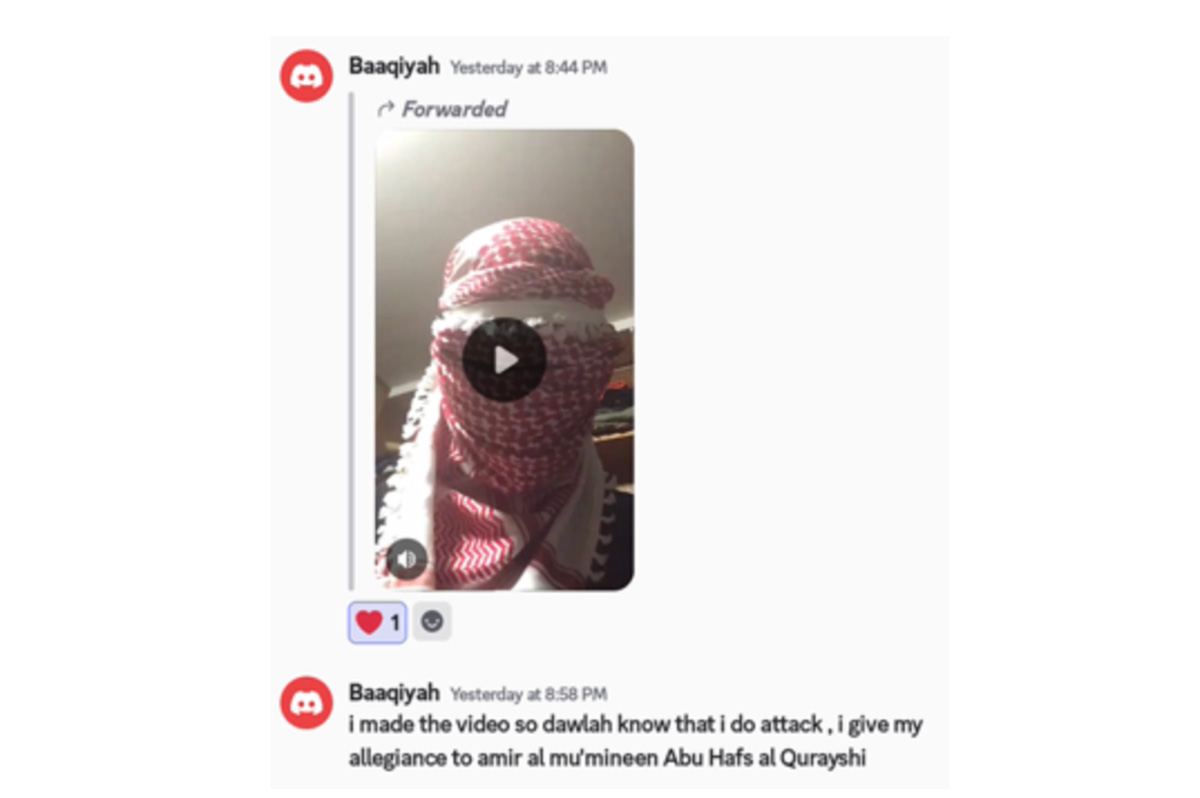
According to the complaint, beginning on or about December 2024, Mohamud had exchanged hundreds of messages through multiple social media and messaging apps with a confidential source, and expressed a desire to travel to Somalia to join a designated foreign terrorist organization to fight on their behalf.
The defendant stated many times that if he was unable to travel overseas because of a lack of funds, he planned to carry out a mass-casualty event in Minnesota in support of ISIS.
According to the DOJ, “In July 2026, Mohamud sent messages discussing his intent to carry out a mass-casualty shooting attack at the Mall of America because he claimed it was owned by Jews. He wrote that [he] wanted to kill 30 to 60 people so no one would go there.”
“During the course of his communications, Mohamud stated that he wanted to commit an attack similar to those of the Pulse Nightclub mass-shooting in Orlando, the Bondi Beach mass-shooting in Australia, and the New Year’s Day vehicle-ramming attack in New Orleans.”
This case is being prosecuted by Trial Attorney Ryan White of the National Security Division’s Counterterrorism Section and Assistant U.S. Attorney Benjamin Bejar for the District of Minnesota.
California
Calif. GOP gubernatorial candidate ad ‘disgusting attempt to exploit lesbian intimacy’
Activists, anti-LGBTQ religious leaders criticized Steve Hilton spot

Two women sit on a bed, a Pride flag hanging behind them. One is nervous; the other tells her to be calm and that she’ll do “all the work.” The music swells. The two hold hands and — fill out a ballot voting for Steve Hilton?
This is the new advertisement from the Hilton gubernatorial campaign that is drawing rebuke from both sides of the aisle, but for very different reasons.
Jorge Reyes Salinas, the communications director at Equality California, said the ad was an insult to the queer community.
“This ad is a disgusting attempt to exploit lesbian intimacy for political attention,” he said. The advertisement plays on media tropes that Salinas says “reduce lesbian and bisexual women … to sexual entertainment,” rather than showing them as well-rounded characters. “Any group of the LGBTQ+ community deserves the same dignity and respect as everyone else,” he said.
The ad is truly hyper-sexualized. It ends with one woman telling the other, “Now lick it.” The two pause and stare before she reveals an envelope to send the ballot, and large text pops up saying, “Just try it!”
Salinas characterized the ad as a desperate attempt to get attention from a candidate who is trailing far behind in the polls in heavily Democratic California. The Democratic candidate Xavier Becerra, who is endorsed by Equality California, holds a 25-point lead over Hilton according to recent polling by the UC Berkeley Institute of Governmental Studies.
Conservatives have also criticized the ad.
Influential evangelical Pastor Jack Hibbs thought the ad was distasteful and said, “lesbianism among college girls and some high school girls that right now is an actual pandemic of social ill.” Republican attorney general candidate Michael Gates said it undermines “the sanctity of the relationship between parents and their children.” This criticism is rather confusing because although the ad features two relatively young women, they both appear to be adults, not minors.
“The comments from Pastor Jack Hibbs should be criticized because there is nothing wrong with two women being attracted to each other,” Salinas said. “We’re calling out the ad’s stereotypes, while also rejecting the homophobia in the response to it … by other Republicans.”
The backlash from Hilton’s own party and supporters shows that an advertisement full of queer innuendo was ill-considered, considering the national GOP’s attacks on LGBTQ people in recent years. Hilton himself has been campaigning against transgender girls and women competing in school sports and using locker rooms that correspond with their gender identity. This context might be why Hilton’s political base responded to the ad just as poorly as the liberal voters he was attempting to court.
Hilton says the ad is part of a new series rolling out before Election Day, showing stereotypical California liberal archetypes voting for Hilton. He claims these ads are authentically filmed with real actors, as opposed to being A.I. generated, like many of his previous ads. One other advertisement has been released so far by the campaign showing a man at a spiritual retreat also being swayed to vote for Hilton, although it is notably absent of sexual innuendo.
Caleb Kaufman is a California Local News Fellow placed with the Los Angeles Blade. The California Local News Fellowship is a state-funded initiative to support and strengthen local news reporting. Learn more about it at fellowships.journalism.berkeley.edu/cafellows.
2026 Midterm Elections
Trump uses anti-trans slur against Democratic Senate candidate
President mocked Annie Andrews

President Donald Trump used an anti-trans slur against Democratic South Carolina Senate candidate Annie Andrews on Monday as he sought to rally support for Republicans in the state’s Senate race.
In a post on Truth Social, Trump attacked Andrews three times, referring to her as “trannie” while promoting U.S. Sen. Darline Graham (R-S.C.)’s campaign.
Andrews is running against Graham for a Senate seat in the solidly Republican state.
Earlier this year, Graham was specially appointed to the seat following the death of her brother, Lindsey Graham, who represented South Carolina in the Senate from 2003 to 2026.
Andrews, the Democratic nominee from the state, is a pediatrician that lives in Charleston with her three children. She told NBC News that she will “work with anyone to put South Carolina first.”
“As a mom and a pediatrician, I’m in this race to fight for my patients, my three kids, and South Carolina,” Andrews said, adding that “lowering costs and making life better for families across our state is going to take all of us working together.”
Andrews used the attention from the president’s attack to emphasize what she described as a focus on policy issues rather than the culture wars that have dominated much of the political debate.
“If you care more about your bills than the politics in Washington, this campaign is for you,” she added.
Trump’s remarks have drawn criticism from leaders on both sides of the aisle.
Senate Minority Leader Chuck Schumer (D-N.Y.) condemned Trump’s words Monday night on social media, calling his attacks on Andrews “despicable.”
“Annie Andrews is a mom and pediatrician who’s always put her community first — and she’s exactly who South Carolina needs representing them in the Senate,” Schumer said on X.
Former South Carolina Gov. David Beasley, a Republican, also criticized the president’s attack on Andrews, urging voters to “reject politics based on division and hate.”
“This is abhorrent. Elections don’t have to be about cruelty and lies. South Carolina deserves better,” Beasley wrote Monday night on X.
South Carolina has not elected a Democratic senator in nearly three decades.
Andrews’s campaign website does not mention her positions on LGBTQ issues.
The Washington Blade reached out to Andrews’s campaign for comment on Trump’s attack and her positions on transgender rights but did not hear back by time of publication.

Comings & Goings

‘Hidden in Plain Sight:’ The story of Odessa Madre

‘Governments that attack LGBTQ+ rights learn from each other’

Horror genre has evolved into space to explore queer identity

Annie Andrews denounces trans athletes after Trump targets her

Bet Mishpachah participates in D.C. Oct. 7 commemoration ceremony

ICC unseals arrest warrants for Taliban officials accused of persecuting LGBTQ people, women

Physician: addiction doesn’t always look the way you think it does

Calendar: October 9-15

Solidarity beyond the parade: the actual cost of Pride
-

 District of Columbia5 days ago
Bet Mishpachah participates in D.C. Oct. 7 commemoration ceremony
-
Afghanistan4 days ago
ICC unseals arrest warrants for Taliban officials accused of persecuting LGBTQ people, women
-
District of Columbia4 days ago
Physician: addiction doesn’t always look the way you think it does
-
Calendar4 days ago
Calendar: October 9-15