National
EXCLUSIVE: Outed sheriff ‘110 percent in the race for Congress’
Babeu pledges to change ‘beliefs, perceptions’ about gays
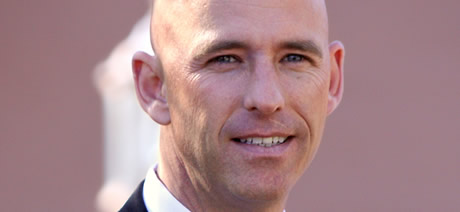
The recently outed gay sheriff of Pinal County, Ariz., says if he’s elected to Congress he’ll support pro-LGBT initiatives and help change perceptions lawmakers have about gay people.
In an exclusive interview with the Washington Blade, Paul Babeu, who’s running to represent Arizona’s 4th congressional district in Congress, said his election would be “very impactful and helpful” in changing “the views, perceptions, beliefs about who we are.”
“If they know me first as a sheriff, as a police officer who has responded to, literally, thousands and thousands of emergencies, has fought criminals, has actually saved lives and served our country in the military for 20-plus years … and when regular people see those accomplishments and those results first, then understand at a later point that I am gay, it changes people’s beliefs and perceptions and understanding,” Babeu said.
The Blade interview marks the first time Babeu has spoken to the LGBT media since he came out during a news conference earlier this month.
Babeu, elected as sheriff in 2008 and considered a rising star in the Republican Party, gained national attention after the Phoenix New Times on Feb. 17 published allegations that he threatened to deport his ex-boyfriend, Jose Orozco, a Mexican national and campaign volunteer, after their relationship soured. The article included semi-nude photos he reportedly sent to Orozco and a picture from what appears to be his adam4adam profile.
In a news conference following the article’s publication, Babeu denied the allegations against him save for one: he publicly acknowledged that he’s gay. Babeu has since accused Orozco of identity theft, which Orozco’s attorney has denied.
Asked to comment on Babeu’s assertions about the situation, A.D. Horan, Orozco’s lawyer, told the Blade, “Jose denies the allegations and intends to cooperate fully with the state’s investigation.” Horan declined to comment further.
Although his race to win the Republican nomination will likely be more difficult while facing these allegations, Babeu told the Blade he’s “110 percent in the race for Congress.”
“It will be a harder fight, and I never turn from a fight,” Babeu said. “I shall stand and work harder than I ever have in my life on my accomplishments, on my service.”
Babeu said he believes voters in his district will accept him because “we’re different as Americans” and “we’re exceptional people.”
“When though we’ve overcome many hurdles and obstacles, and none of us are perfect, in America, we define ourselves by the value we add in our communities,” Babeu said. “We see our differences as a strength, whether it’s our religion, our ethnicity, our gender, our [sexual] orientation. Those are the same liberties and freedoms I personally defend and fought for, and that’s why I continue to stand up and fight now.”
Babeu said he’s “not ashamed” of his sexual orientation, but added, “I’m just not going to define myself solely on the fact that I am gay.”
If elected to Congress, Babeu said he’ll be “a strong fiscal conservative” and advocate for “spending within our means,” but also will support pro-LGBT legislative measures.
Among the initiatives Babeu said he supports is the Employment Non-Discrimination Act, noting he’s “in favor of eliminating any discrimination” and adding that workers should be evaluated solely on their performance and merit.
Asked whether he supports the idea of President Obama issuing an executive order requiring federal contractors to have LGBT-inclusive non-discrimination policies, Babeu said he’d have to “look into it” but would support such a directive “on the surface.”
Additionally, Babeu said he would “certainly vote to repeal” the Defense of Marriage Act and said he thinks the anti-gay law exceeds the authority of the government under the U.S. Constitution.
“I’m a strict constitutionalist as well,” Babeu said. “As a strict constitutionalist, this has no business at the federal level. This should go to the states.”
The sheriff said his opposition to DOMA is in line with his belief that the government shouldn’t tell religions which individuals they can or can’t marry.
“The issue of marriage is a deeply religious ceremony, and this is where the government shouldn’t tell certain faiths, say like Catholics, that they have to marry two men or two women, in the same way that they shouldn’t tell other faiths or religions that they can’t,” Babeu said. “This isn’t a role for the government to enter into. This is an issue of religious freedom.”
Babeu also said “Don’t Ask, Don’t Tell” should remain off the books, drawing on his service as an Army veteran of the Iraq war in opposing the now-ended policy. The sheriff, who retired with the rank of major, said he had gay soldiers under his command who were “exemplary in their service.”
“I had to live under that,” Babeu said. “Anyone who wants to wear the uniform of our country and put their own personal safety and life on the line to protect Americans, they should be allowed to and they should be honored for that service.”
But Babeu said he couldn’t yet declare support for another piece of legislation, the Uniting American Families Act, because he wasn’t familiar with it. The immigration-related bill would enable gay Americans to sponsor their foreign born same-sex partners for residency in the United States.
“To be honest with you, I haven’t read the legislation,” Babeu said. “I’d be happy to read it and give you an answer after that. You know where I stand on all these other issues, which are consistent with being an advocate for equality.”
Known for taking a hard line on immigration, Babeu is a proponent of Arizona’s controversial immigration law, which requires immigrants to have registration documents in their possession at all times. The law has come under fire from immigration rights advocates and the U.S. Justice Department has filed suit against the statute.
Babeu said he doesn’t see any connection between the immigration advocacy community and the LGBT community in their struggle for equal rights.
“It’s a difference between civil rights for citizens versus legal status,” Babeu said. “Though these may be good and decent people in terms of illegal immigrants, the fact is that they’re illegal. In our community, we’re talking citizens. … It’s a very different issue; it’s not like an oppressed people or disenfranchised or people who’ve had their rights taken away. They’re here illegally, so it’s about the rule of law.”
Asked whether he supports the passage of comprehensive immigration reform legislation, Babeu said Congress should approve the 10-point border security plan introduced in the Senate last year by Sens. John McCain (R-Ariz.) and Jon Kyl (R-Ariz.). Among the 10 points are deploying 3,000 National Guard troops to the Arizona border, providing additional funds to border security personnel as well as completing 700 miles of fencing along the border with Mexico and constructing double- and triple- layer fencing at certain locations.
Despite his pledge to work as an LGBT advocate, as a Republican candidate, Babeu noted he would vote for Republican leadership if elected to the House. Under the leadership of House Speaker John Boehner (R-Ohio), pro-LGBT initiatives have seen no progress.
Still, Babeu said he thinks pro-LGBT initiatives will be able to see movement in the 113th Congress even with Republicans in the majority if he’s elected because he’ll work to influence lawmakers.
“This is where I can be an influence, the voice of reason,” Babeu said. “And I can tell you that I have far more credibility with a record of accomplishment and a record of service. I can say and can stand as a recent veteran, as somebody who has actually commanded soldiers from every nationality, every ethnic group, every faith and gender and sexual orientation.”
Until the allegations against him made headlines, Babeu was also affiliated with Mitt Romney’s presidential bid and served as co-chair of his Arizona campaign. Babeu resigned that position after the New Times story was published.
Although he’s no longer with the campaign, Babeu said he believes “in the end” Romney would be a friend to LGBT Americans if elected to the White House.
“Even though [Mitt Romney] has his deep religious views, I can tell you that a lot of Mormons support me and still do, and this changes nothing for a lot of these individuals,” Babeu said.
Babeu said he’s already voted for Romney via early voting in the Arizona primary, which takes place on Tuesday, and intends to continue supporting the former Massachusetts governor’s campaign. When the New Times story broke, Babeu said the Romney campaign told him he didn’t need to resign his post, but he wanted to leave to address the allegations against him.
Asked whether he’s bothered that Romney opposes same-sex marriage and backs a U.S. constitutional amendment banning marriage rights for gay couples, Babeu said he doesn’t agree with the candidate on every issue, but noted President Obama isn’t perfect on LGBT issues because of his position on marriage.
Babeu referenced a 1996 questionnaire with the Windy City Times in which Obama, then a candidate for Illinois state Senate, said he supported legalizing same-sex marriage. Since running for national office, Obama hasn’t supported marriage rights for gay couples.
“He said that in local office, and then he had a different position when he ran for president,” Babeu said. “For all these leaders, we literally have to demand and advocate for issues, and I believe that effort is growing, and it’s becoming a groundswell nationally. We have to create an environment in which either President Obama or Mitt Romney makes a decision that is right and consistent with the Constitution.”
Since coming out, Babeu said he’s been in contact with numerous national LGBT leaders. Among them are heads of conservative groups: R. Clarke Cooper, executive director of Log Cabin Republicans, and Jimmy LaSalvia, executive director of GOProud.
Babeu said he’s reached out to the Gay & Lesbian Victory Fund and has friends at the organization. On Saturday evening, Babeu said he was set to talk via phone with Chuck Wolfe, the Victory Fund’s CEO.
Babeu said he hasn’t spoken to the Human Rights Campaign, but said he’s a member of the organization and is on its mailing list. The sheriff said he’s made contributions to the Gay & Lesbian Alliance Against Defamation and has been a member “in the past.”
Babeu could face a rocky road to elected office, even though polls had him ahead of his opponents prior to the publication of the Phoenix New Times piece.
The sheriff is facing two investigations: one that he requested with Arizona Attorney General Tom Hume and another that was initiated by Pinal County’s top prosecutor, James Walsh.
Babeu said he called for the investigation with the attorney general because he wants to “clear [his] name because there was never any threat” of him retaliating against Orozco. Babeu said Orozco is in the United States legally.
Additionally, Babeu said Orozco tried to shop his story around “to every media outlet in metro Phoenix, and even in Tucson,” but no other media outlet besides the Phoenix New Times would touch it because “it’s not against the law being gay.”
Babeu maintained that the only correspondence that he or his lawyer, Chris DeRose, had with Orozco was sending him a cease-and-desist letter to stop him from accessing online media for the campaign. Babeu categorically denied that he ever asked Orozco to sign an agreement that he wouldn’t tell anyone about Babeu’s sexual orientation.
“I’ve never asked him to do anything of the sort,” Babeu said. “I’ve never asked anybody.”
Babeu emphasized the distinction between how he and his ex-boyfriend are acting in the aftermath of the publication of the New Times piece.
“I’m the one who’s standing and defending myself,” Babeu said. “I’m the one who’s talking and he’s got his got his face blocked out, his voice altered and is nowhere to be found. He won’t talk to anybody. That seems highly suspicious to me. I’m the one asking for the investigation. It is very easy to attack and to malign. But the business that I’m in is that you’re innocent until proven guilty.”
Babeu said he believes Orozco went public with the story because he was hurt after their relationship ended and because his political opponents helped facilitate the effort. The sheriff said he’ll do whatever he can to help prosecute Orozco.
The New Times piece also insinuates a relationship between Babeu and Matt Heinz, a Democratic state lawmaker who’s also pursuing a congressional bid.
The piece states that Heinz broke with Democratic ranks to vote to approve $5 million in funds for Babeu for border security work. The article includes a text message allegedly from Babeu saying that he was planning to spend the night at the home of Heinz and his boyfriend, suggesting some kind of sexual payoff.
But Babeu denied that the relationship with Heinz was anything other than friendship.
“It’s simply outrageous that they would write such a thing,” Babeu said. “Matt Heinz is a good and decent man. He’s a physician who is well respected and we have a purely platonic friendship.”
Despite the allegations and the investigations he faces, Babeu said the reaction from Arizona Republicans to his coming out has been positive and “pretty overwhelming.”
Babeu said he was greeted with applause during an appearance last week in Yuma, Ariz., a conservative, rural city in his district, where he talked about how he wants to continue pressing economic issues and government spending while asking people to judge him on his commitment to his country.
“How I should be judged is the value I bring to my community and to my country, my service, in the same way that you would want to be judged is how I want to be judged by that service and by the value that I add,” Babeu said. “And nearly everyone in that room came up and signed my papers, which you can only sign for one candidate. And these are the most active Republicans. They are the ones that go out and do all the campaign work and so forth.”
Babeu said military veterans shook his hand and looked him in the eye, saying “Paul, I’m with you. Sheriff Paul, you’ve got my support. This changes nothing.” Additionally, he said at least 15 women hugged and kissed him, saying, “I think you’re great, I support you and we’re going to win.” Babeu said one of the precinct committee members told him, “My only sister is gay. I think it’s great that you’re gay.”
“There will be some people who react coldly, that shall not deter me,” Babeu said. “I’m the same sheriff today that I was 10 days ago. And who I was then is who I am today. So, I’m confident not just in terms of who I am, but what I believe and why I ran in the first place.”
UPDATE: Following the Blade’s interview with Babeu, an ABC News affiliate in Arizona published a report containing new allegations against the sheriff.
According to ABC15, while Babeu was headmaster and executive director of DeSisto Private Boarding School, complaints were filed that officials administered harsh punishments for students. Additionally, the report quotes Babeu’s sister, Lucy Babeu, who claims he was involved in a relationship with a 17-year-old male student at the school.
Lucy Babeu said she found a student from DeSisto living with the now-sheriff. According to Lucy, her brother told her the student was his boyfriend. ABC15 didn’t identify the former student. At the time, the student was reportedly 17, which is the legal age of consent in Massachusetts.
The Massachusetts Office of Child Care Services launched an investigation into repeated allegations of abuse, according to the report; during Babeu’s tenure the school wasn’t licensed. Babeu left the school in 2001; the state investigation forced DeSisto to shut down in 2004.
Among the alleged punishments at the school was being “sheeted,” or being forced to strip down to nothing but a sheet and stand before peers. Another alleged punishment was being “cornered,” which required sitting and facing a wall for hours, days and sometimes weeks.
“In one case, records show a student with bi-polar disorder, ADHD and impulse control disorder was ‘cornered’ for ‘weeks on end,'” the report states. “The student’s medication was not monitored properly. He began to “urinate and defecate” on himself. He was also taken to the hospital for pneumonia.
Days later, that same student was returned to DeSisto and sent back to the corner.”
Holli Nielsen, a student at DeSisto while Babeu was headmaster, was quoted in the report as saying Babeu was “certainly aware” of the kind of punishments happening at the school under his watch.
Chris DeRose, a Babeu campaign adviser, told the Blade that the allegations in the report “are false.” According to DeRose, Lucy Babeu has a history of mental illness, and the news station “knowingly exploited a mentally ill woman for the sake of airing a sensational story.”
DeRose said Lucy Babeu has been declared insane and was involuntarily committed to a psychiatric ward on multiple occasions and stripped of custody of her children for severe mental illness. Additionally, DeRose contends Lucy’s children have obtained multiple orders of protection against her for threatening to kill them, and that a court order was issued based on the threat of immediate harm.
According to DeRose, Lucy has a history of threatening or filing frivolous lawsuits against previous employers and has called law enforcement officials to “report imaginary conspiracy theories.” DeRose said Lucy has a history of illegal drug abuse.
DeRose said ABC 15 was offered the opportunity to review this information, but didn’t accept and aired the story anyway. According to DeRose, at least five Arizona media outlets declined to use Lucy as a source.



National
Man charged in Mall of America shooting plot inspired by Pulse massacre: report
Suspect exchanged hundreds of messages, pledged loyalty to ISIS
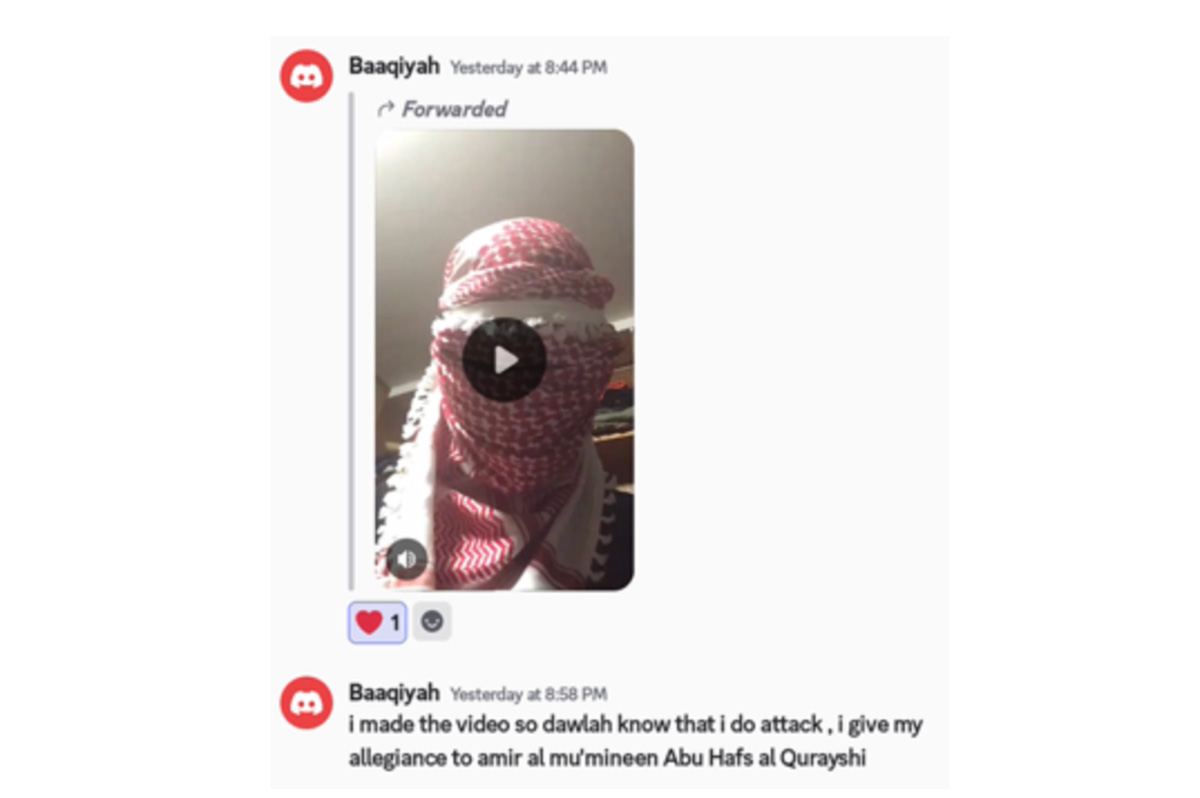
The U.S. Department of Justice charged Sheikhdoon Abdullahi Mohamud, 18, of Richfield, Minn., on Oct. 7 with one count of knowingly receiving a firearm and ammunition in order to commit a federal crime of terrorism. Mohamud allegedly planned to carry out a mass-casualty attack in support of ISIS, inspired in part by the Pulse nightclub massacre that took place on June 12, 2016 when then-29-year-old Omar Mateen murdered 49 people and wounded 58 – one of the deadliest mass shootings in U.S. history, and the deadliest targeting the LGBTQ+ community.
According to a DOJ statement release, Mohamud was arrested on Oct. 6 by the FBI, which had arranged to sell him an AK-47 assault rifle, magazines, and ammunition through an undercover FBI employee. Mohamud was arrested shortly after paying $600 in cash and taking possession of those items; he reaffirmed his intention to shoot people at the Mall of America during the transaction.
“Mohamud allegedly sought to carry out a mass-casualty shooting at the Mall of America, expressing a desire to emulate some of the most horrific ISIS-inspired attacks in the United States, including the atrocities at Pulse Nightclub and 2025 New Year’s Day attack in New Orleans,” said Assistant Attorney General for National Security John A. Eisenberg in the statement by the DOJ. “The National Security Division will continue to work closely with the FBI and Joint Terrorism Task Force to track down and prosecute ISIS-inspired terrorists in the United States.”
According to the complaint, beginning on or about December 2024, Mohamud had exchanged hundreds of messages through multiple social media and messaging apps with a confidential source, and expressed a desire to travel to Somalia to join a designated foreign terrorist organization to fight on their behalf.
The defendant stated many times that if he was unable to travel overseas because of a lack of funds, he planned to carry out a mass-casualty event in Minnesota in support of ISIS.
According to the DOJ, “In July 2026, Mohamud sent messages discussing his intent to carry out a mass-casualty shooting attack at the Mall of America because he claimed it was owned by Jews. He wrote that [he] wanted to kill 30 to 60 people so no one would go there.”
“During the course of his communications, Mohamud stated that he wanted to commit an attack similar to those of the Pulse Nightclub mass-shooting in Orlando, the Bondi Beach mass-shooting in Australia, and the New Year’s Day vehicle-ramming attack in New Orleans.”
This case is being prosecuted by Trial Attorney Ryan White of the National Security Division’s Counterterrorism Section and Assistant U.S. Attorney Benjamin Bejar for the District of Minnesota.
California
Calif. GOP gubernatorial candidate ad ‘disgusting attempt to exploit lesbian intimacy’
Activists, anti-LGBTQ religious leaders criticized Steve Hilton spot

Two women sit on a bed, a Pride flag hanging behind them. One is nervous; the other tells her to be calm and that she’ll do “all the work.” The music swells. The two hold hands and — fill out a ballot voting for Steve Hilton?
This is the new advertisement from the Hilton gubernatorial campaign that is drawing rebuke from both sides of the aisle, but for very different reasons.
Jorge Reyes Salinas, the communications director at Equality California, said the ad was an insult to the queer community.
“This ad is a disgusting attempt to exploit lesbian intimacy for political attention,” he said. The advertisement plays on media tropes that Salinas says “reduce lesbian and bisexual women … to sexual entertainment,” rather than showing them as well-rounded characters. “Any group of the LGBTQ+ community deserves the same dignity and respect as everyone else,” he said.
The ad is truly hyper-sexualized. It ends with one woman telling the other, “Now lick it.” The two pause and stare before she reveals an envelope to send the ballot, and large text pops up saying, “Just try it!”
Salinas characterized the ad as a desperate attempt to get attention from a candidate who is trailing far behind in the polls in heavily Democratic California. The Democratic candidate Xavier Becerra, who is endorsed by Equality California, holds a 25-point lead over Hilton according to recent polling by the UC Berkeley Institute of Governmental Studies.
Conservatives have also criticized the ad.
Influential evangelical Pastor Jack Hibbs thought the ad was distasteful and said, “lesbianism among college girls and some high school girls that right now is an actual pandemic of social ill.” Republican attorney general candidate Michael Gates said it undermines “the sanctity of the relationship between parents and their children.” This criticism is rather confusing because although the ad features two relatively young women, they both appear to be adults, not minors.
“The comments from Pastor Jack Hibbs should be criticized because there is nothing wrong with two women being attracted to each other,” Salinas said. “We’re calling out the ad’s stereotypes, while also rejecting the homophobia in the response to it … by other Republicans.”
The backlash from Hilton’s own party and supporters shows that an advertisement full of queer innuendo was ill-considered, considering the national GOP’s attacks on LGBTQ people in recent years. Hilton himself has been campaigning against transgender girls and women competing in school sports and using locker rooms that correspond with their gender identity. This context might be why Hilton’s political base responded to the ad just as poorly as the liberal voters he was attempting to court.
Hilton says the ad is part of a new series rolling out before Election Day, showing stereotypical California liberal archetypes voting for Hilton. He claims these ads are authentically filmed with real actors, as opposed to being A.I. generated, like many of his previous ads. One other advertisement has been released so far by the campaign showing a man at a spiritual retreat also being swayed to vote for Hilton, although it is notably absent of sexual innuendo.
Caleb Kaufman is a California Local News Fellow placed with the Los Angeles Blade. The California Local News Fellowship is a state-funded initiative to support and strengthen local news reporting. Learn more about it at fellowships.journalism.berkeley.edu/cafellows.
2026 Midterm Elections
Trump uses anti-trans slur against Democratic Senate candidate
President mocked Annie Andrews

President Donald Trump used an anti-trans slur against Democratic South Carolina Senate candidate Annie Andrews on Monday as he sought to rally support for Republicans in the state’s Senate race.
In a post on Truth Social, Trump attacked Andrews three times, referring to her as “trannie” while promoting U.S. Sen. Darline Graham (R-S.C.)’s campaign.
Andrews is running against Graham for a Senate seat in the solidly Republican state.
Earlier this year, Graham was specially appointed to the seat following the death of her brother, Lindsey Graham, who represented South Carolina in the Senate from 2003 to 2026.
Andrews, the Democratic nominee from the state, is a pediatrician that lives in Charleston with her three children. She told NBC News that she will “work with anyone to put South Carolina first.”
“As a mom and a pediatrician, I’m in this race to fight for my patients, my three kids, and South Carolina,” Andrews said, adding that “lowering costs and making life better for families across our state is going to take all of us working together.”
Andrews used the attention from the president’s attack to emphasize what she described as a focus on policy issues rather than the culture wars that have dominated much of the political debate.
“If you care more about your bills than the politics in Washington, this campaign is for you,” she added.
Trump’s remarks have drawn criticism from leaders on both sides of the aisle.
Senate Minority Leader Chuck Schumer (D-N.Y.) condemned Trump’s words Monday night on social media, calling his attacks on Andrews “despicable.”
“Annie Andrews is a mom and pediatrician who’s always put her community first — and she’s exactly who South Carolina needs representing them in the Senate,” Schumer said on X.
Former South Carolina Gov. David Beasley, a Republican, also criticized the president’s attack on Andrews, urging voters to “reject politics based on division and hate.”
“This is abhorrent. Elections don’t have to be about cruelty and lies. South Carolina deserves better,” Beasley wrote Monday night on X.
South Carolina has not elected a Democratic senator in nearly three decades.
Andrews’s campaign website does not mention her positions on LGBTQ issues.
The Washington Blade reached out to Andrews’s campaign for comment on Trump’s attack and her positions on transgender rights but did not hear back by time of publication.

Annie Andrews denounces trans athletes after Trump targets her

On Republican Long Island, gay Democrat Chris Gallant bets on public service over politics

Report: LGBTQ exclusion costs Japanese economy billions a year

Center for Black Equity honors leaders, activists at BE. Gala

In ‘The Lost Brontë,’ a complicated lie can lead to danger

U.S. int’l trade negotiator, consultant James Bedore dies at 82

Campaign urges Virginia High School League to reverse stance on trans athletes

Trump, Netanyahu, and Putin are all war criminals

Calif. GOP gubernatorial candidate ad ‘disgusting attempt to exploit lesbian intimacy’

Center Arts Gallery celebrates 10 years with reception, auction
-

 Obituary5 days ago
U.S. int’l trade negotiator, consultant James Bedore dies at 82
-
Virginia5 days ago
Campaign urges Virginia High School League to reverse stance on trans athletes
-
Opinions5 days ago
Trump, Netanyahu, and Putin are all war criminals
-
California5 days ago
Calif. GOP gubernatorial candidate ad ‘disgusting attempt to exploit lesbian intimacy’