Opinions
Liquor license follies follow D.C. development
Foolish fight over a new neighborhood business in Shaw

It’s often a simple choice for D.C. residents in neighborhoods with growing populations — street corner drug dealing or local development, abandoned storefronts or new amenities, livable avenues offering community interaction or desolate strips without eyes on the street.
Or so you would think.
That’s the battle currently being waged near 8th Street and Florida Avenue in the rapidly developing Shaw/LeDroit Park neighborhood of northwest Washington — a couple of blocks from Nellie’s Sports Bar, a block south of Town Danceboutique, down the street from the newly refurbished historic Howard Theatre and near the Shaw-Howard University Metro station and the adjacent Progression Place mixed-use 205-unit apartment and 20,000-square-foot ground level retail property with an adjoining 50,000-square-foot office building undergoing construction.
The planned All Souls Bar — to fill a modest empty space at the street corner end of a small retail strip of quaint older commercial storefronts adjacent to a CVS pharmacy, home to both a tailor shop and pizza restaurant — has ignited a liquor licensing conflict fueled by a tiny cadre of neighborhood busybodies.
A small number are opposing the proposed establishment, to occupy less than 800 square feet with a maximum capacity of only 50 seats and serving a traditional American menu. The venture, planned for the deserted space at 725 T St., N.W., originally constructed as stables and featuring an interior tin ceiling, has unleashed an all-too-common overblown regulatory brouhaha.
The conflict was aired again last week at a public meeting conducted by Myla Moss, the Advisory Neighborhood Commission (ANC) member for the area. One of the most vocal objectors has been a Maryland resident whose connection is limited to his girlfriend living around the corner next to the abandoned retail space.
Most area residents, long frustrated by the neglected storefront — as well as the open-air drug dealing and evening clusters of disreputable characters ruling the corner — welcomed the news announced last October by the Prince of Petworth community blog that respected former Jaleo and Zaytinya restaurants manager David Batista hoped to open at the spot.
Fliers distributed in the area object to granting a liquor license for the restaurant bar due to its location within 400 feet of a school — the Cleveland Elementary School across the street. Normally such proximity would preclude an alcohol license for the business. However, the law allows an exception for licensing in areas where there is a prior license of the same type within the restricted zone. As a result of the property being midway between the bustling 9th Street and developing 7th Street commercial corridors and a variety of restaurants and bars, the location is fully eligible for an alcohol service permit.
In addition to legally required mantra-like objections to “peace, order and quiet,” licensing opponents claim that the business will cause harm to schoolchildren if they witness patrons seated outside sipping beer or wine with their meal, or even if they see alcohol products being delivered to the business.
Never mind that one long-time resident refers to the corner as akin to the HBO series “The Wire.” Protesting residents apparently consider visual exposure to alcohol more worrisome than the drug sales, troublesome loitering and public urination occurring on the street.
To facilitate progress and maneuver around the obstacles thrown up by neighborhood nannies intent on preventing the establishment from opening, entrepreneur Batista has agreed to revise the licensing application to initially restrict the business to a 5 p.m. opening on weekdays and defer a request for early evening outdoor patio service.
This outsized power wielded by chronic complainers confounds area residents desiring an enhanced streetscape and limits the potential success of the enterprise. Batista could also be forced to sign a notoriously inappropriately named “Voluntary Agreement” including further operating constraints.
It is long overdue for the District to reform its overly cumbersome and unnecessarily contentious liquor license labyrinth thwarting economic development and community amenities adding vibrancy and vitality to urban neighborhoods. Fairness and common sense require that the inordinate ability of so few to dictate regulatory policy and city landscapes should end.
I’m willing to bet a craft beer at All Souls Bar — if and when it finally opens — that elected city officials lack the courage to make that happen.
Mark Lee is a local small business manager and long-time community business advocate. Reach him at [email protected].




Opinions
Pentagon says hormones make trans troops unfit but gives them to men
A man who needs a screening program to feel like a warrior is telling on himself
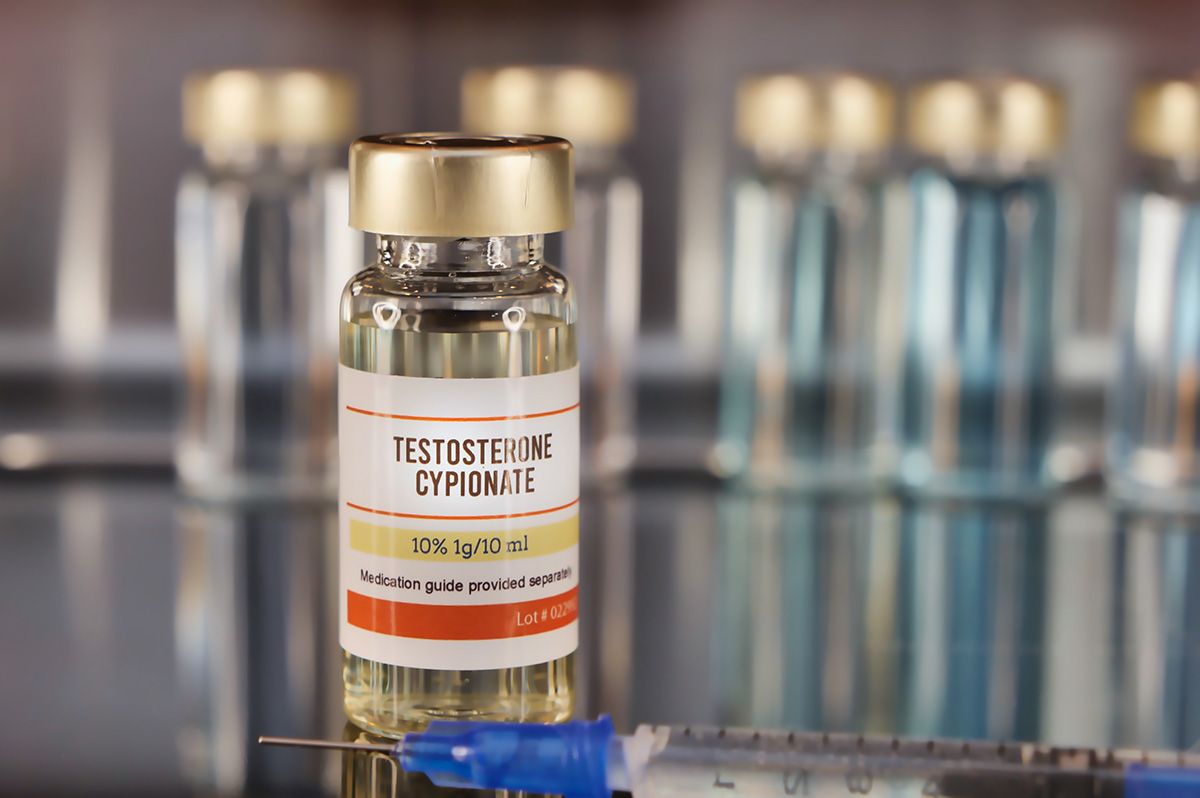
Last week, the Secretary of Defense posted a video to announce what he called the “High-T Department of War.” In it, Pete Hegseth ordered annual testosterone screening for every service member over 30 and offered testosterone therapy to those who want it, all in the name of keeping American warriors, in his words, on the “leading edge of lethality.” A hormone, he explained, is part of “the biological foundation required to sustain the fight.”
I have spent years writing about masculinity, so I know a performance when I see one. But this one is different, because at the exact moment Hegseth is prescribing testosterone to the men, his department is throwing other Americans out of uniform for taking it.
Here is the contradiction, and I promise I am not the one straining to find it. Since early 2025, the administration has worked to remove transgender troops from the military. One of its stated reasons, laid out in the executive order and in the government’s own court filings, is that these service members require ongoing medical treatment the military cannot easily sustain. Hormone therapy, the argument goes, means cost, monitoring, lab work, and stretches of non-deployability. A soldier who needs a standing prescription, the logic runs, is a burden the force cannot carry.
Then the same department launched a program to put a standing hormone prescription in the pocket of any man over 30 who wants one.
You do not have to take my word for the hypocrisy. A federal judge has already put it on the record. Last Wednesday, in the case challenging the transgender ban, Judge Ana Reyes took formal notice of the new testosterone program and ordered the government to explain how the very same class of treatment can be readiness-enhancing for one group of troops and disqualifying for another. It is the question at the center of the case now. Reyes has been skeptical of the medical argument from the start. Last year she pointed out that the military spent roughly $41 million on Viagra in a single year, and called transgender care, by comparison, “not even a rounding error.”
That is the tell. It was never really about the medicine. Testosterone is testosterone. The prescriptions, the monitoring, the lab work, the deployability questions are identical whether the person filling the vial is a trans man or a cisgender colonel chasing his youth. The only thing that changes is who is holding it. When the man taking the hormone fits the picture of a warrior, the treatment becomes “lethality.” When the man taking it is transgender, the identical treatment becomes a fatal risk to readiness. The medicine did not change. The identity did.
I want to be fair, because the argument only works if it is honest. The government has other claims in the case that a court has not yet resolved, about surgeries, about facilities, about unit cohesion, and it insists that cisgender men on testosterone and transgender men are simply “not similarly situated.” Those arguments can be debated on their merits. But the medical one, the claim that hormone therapy itself is too much for the military to manage, is the one Hegseth’s own policy just detonated. You cannot brand testosterone a warrior’s birthright on Monday and a disqualifying liability on Tuesday and expect a judge, or the rest of us, not to notice.
And notice what the whole spectacle is actually selling. A “Department of War” rebrand. A hormone reframed as a weapon. A Secretary who mocks “dudes in dresses” while rolling out mandatory bloodwork so the men can optimize their manhood by the milligram. This is not a medical policy. It is a theory of masculinity, the same tired one, that a man is a number on a lab report and a posture for the camera. It arrives, not coincidentally, as the administration moves to loosen testosterone prescribing across the country, turning manhood into a supplement you can top off.
I have known a lot of strong men. My father crossed an ocean as a laborer to build a life; the strongest men I was raised by never once measured themselves in a vial. Real strength was never a hormone level, and the men who most need to announce their lethality are, with remarkable consistency, the ones least sure of it.
The House declined last week to write the transgender ban into law, so it still rests on nothing sturdier than executive will and a medical excuse. That excuse just ran out of testosterone. A man who needs a screening program and a war-department rebrand to feel like a warrior is telling on himself. The rest of us should say so out loud.
Dimitrios Aletras is a queer, first-generation Greek-American writer and survivor-advocate, with work published in Salon, The Advocate, and the Reading Eagle.
Opinions
Trump tries to scare Americans into not voting
Will he deploy military to the polls in November?
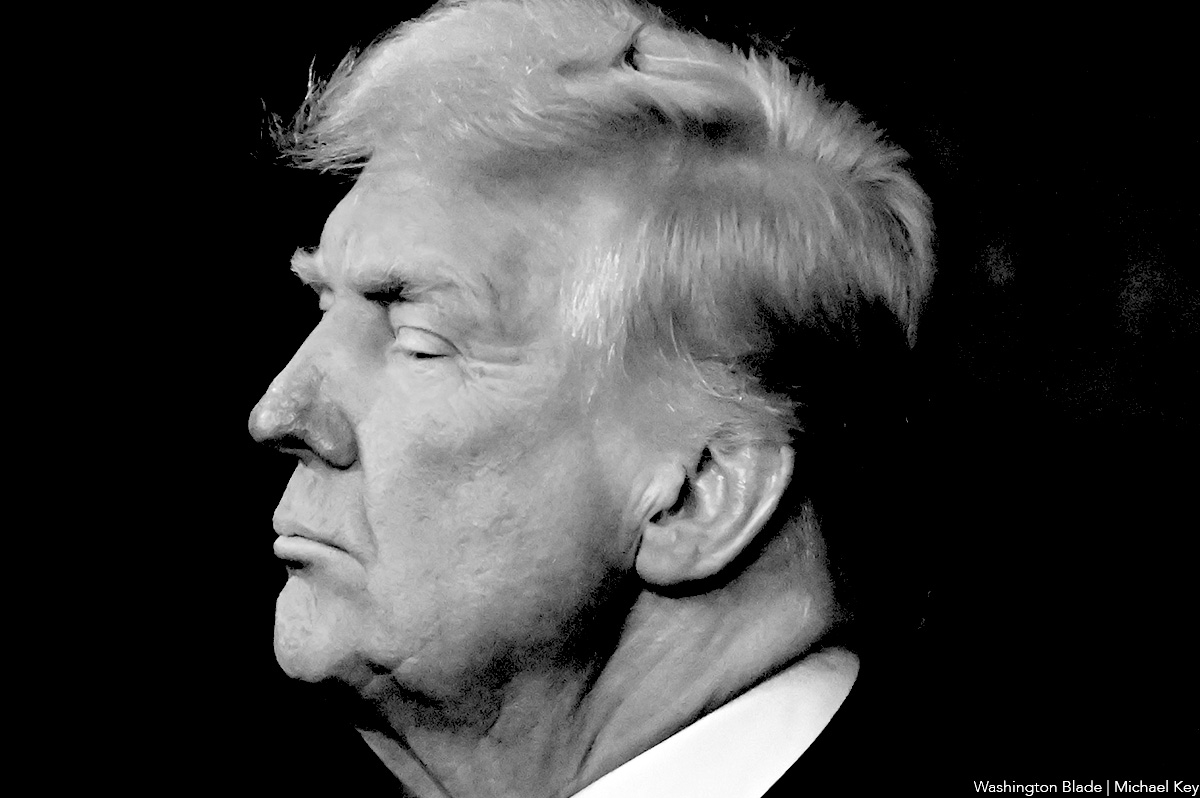
By saying we cannot trust our elections, the sick, old, demented, felon, in the White House is trying to scare Americans into not voting. He, and his faithful fascist appointees, dragged out old documents, already proven to be false, to scare people. He revisited claims that threats, and interference from China and Venezuela, impacted our elections in 2020, all of which have already been shown were not implemented effectively in any way.
Even a few Republicans are saying this is nonsense, reminding people the felon is making claims the only elections we can’t trust, are the ones that he lost. Those Republicans who dare to speak up, and are running for office, have said he is making it harder for them by focusing on this BS, and doing nothing about the future. We must remember the only election he lost, was when he was president during the election. He won when Democrats were in office in 2016 under Obama, and in 2024 when Biden was president.
We can only hope if he moves further with this, which some think he will, the courts will tell him no. There are some who believe he will try to call a ‘national emergency’ and deploy the military to the polls.
The only effective response to his lies is very clear. Democrats and independents must come out in huge numbers in November, and vote for Democrats, up and down the ballot. By doing this they say to the felon, we believe our elections are fair, we trust the process, and we will win big enough so there is no question about the results.
All anyone has to do to hear the felon lie, is to watch his mouth move. Every time he opens it, another lie comes out. He promised the nation, among other things, he would lower gas prices, lower grocery prices, lower rent prices, lower inflation, and even more important to the world, he promised the United States would not go to war. So, what we got instead, from him and his fascist cohorts, and sycophants in Congress, are higher gas prices, higher grocery prices, higher rents, higher inflation, and an expensive, in terms of both money, and human life and suffering, an illegal war with no end in sight. Even his own Secretary of State recently said, “the initial U.S. operation in Iran, Epic Fury, is over. The U.S. was now focused on Project Freedom. This is the name of the operation to get ships moving through the Strait of Hormuz again.” Something that was the case before Trump began this absurd and illegal war.
I applaud those media outlets that didn’t give Trump free air time to lie to the American people, despite the threats he made to have the FCC punish them for it. Kudos to those who had the guts to say we will not be a party to this, and went further, debunking the lies he told in the speech. The felon can continue to threaten those who call him out, but I believe they will win in the end, because the American people will not let him silence all the ‘free’ press. His fellow billionaires might take over some of it, like has been done with CBS, but the truth will come out.
In his continuing efforts to control elections, Trump has ousted members of a bipartisan federal election commission, the Election Assistance Commission, that resisted his efforts to require would-be voters to have extra documentation of their U.S. citizenship before registering. The commission distributes federal grants to states, oversees the testing of voting systems, and maintains the national voter registration form. He did this to get the Congress to pass his ‘Save Act’ which would make it harder for legal voters to vote. But congress once again voted against this after his speech, and there aren’t the votes to pass it. But the felon has shown fairness is not in his quiver when he plays any game. He cheats, and screws, as many people as possible in his business dealings, as long as he can make money. He is now doing the same to the American people.
Again, it is my belief in the end, the American people will win. Trump will be shown to be the loser he is, and our democracy will survive.
Peter Rosenstein is a longtime LGBTQ rights and Democratic Party activist.
Opinions
No Pride without Disability Pride
Anti-ableism must become part of the foundations of queer activism

On Saturday, June 20, Capital Pride hosted the Pride Parade through the heart of Washington, D.C. I broke my foot just a couple days before and couldn’t attend, but beyond my mobility, Pride celebrations have always been difficult as a multiply disabled, queer person. As someone who is autistic with heat and sensory sensitivities, and autoimmune conditions, I also want to be part of Pride celebrations, to feel part of and be in community with others, but it is rare that Pride celebrations — not just Pride marches — are accessible to me.
Back in 2022, I wrote a piece for The Unwritten issuing a call to action: “it’s time to make all queer spaces accessible” after a woman in a wheelchair was denied entry to my favorite — and one of the few remaining — lesbian bars A League Of Her Own. Back in 2022 when I had just moved to Washington, D.C. for graduate school, the bar became my queer safe space where I watched Willow Pill’s win on season 14 of “RuPaul’s Drag Race.” Pill, who openly discussed having cystinosis, a rare genetic disorder that causes the build-up of the amino acid cystine on the show, was the first person who openly discussed how being disabled affected the way she was able to share and experience her queerness. Because of her disability, she admitted that she would have to quit performing drag much sooner than her fellow queens.
Yet four years after I published the piece, little has changed. Many Pride celebrations remain inaccessible to people who use mobility aids, have sensory or heat sensitivities, or require ASL interpretation or audio description to participate. When queer, disabled people ask for these services, ask for events that include everyone, we are met with excuses about expense and convenience, about serving the majority of community members rather than all — and invitations to future events that never end up planned or taking place.
For many queer, disabled people like me, this sends a very clear message about whose presence is valued and prioritized at Pride celebrations and it is part of larger systems of racism, ableism, and transphobia that are solidified when people participating in Pride forget the event’s roots. While many people pointed out that corporations and cities cancelled their participation and events this year, it’s important to recognize that Pride was never about pinkwashing, was never about getting free rainbow fans in the street or catering events to a socio-political status quo. Pride began as a protest against police brutality.
When we remember that history, it becomes clearer than ever that events focused on our visibility must be accessible. In the United States today, Immigration and Customs Enforcement agents have hurt and even killed disabled people during the arrest and detention of immigrants and people of color. Autistic and individuals with cognitive disabilities, especially neurodivergent people of color, are at much higher risk of being hurt or even killed by the police, and disabled people are increasingly at risk for sexual violence in institutions and when living in their communities. Pride began as a fight against state-sanctioned violence.
If people want Pride to remain true to its roots and honor the people who paved the way like Marsha P. Johnson who herself was disabled, we need Pride to be accessible.
While I can recommend that people who are set to host Pride celebrations next year arrange shaded and cool space for people to sit, rest and recover, provide water and food for people to sip and snack on to keep their energy and blood sugar up, offer sensory support including earplugs and headphones, and access services like ASL interpretation, audio description, and captioning for events, this is not enough.
It can’t just be about tacking on accessible services to an already planned event, it has to involve electing disabled queer people to Pride leadership boards, thinking about accessibility from the very beginning when we envision events for the LGBTQ+ community, and incorporating anti-ableist action into queer protesting. Anti-ableism (and anti-racism and xenophobia) has to become part of the very foundations of our queer activism before we can make changes that push for our collective liberation. And queer people’s and disabled people’s liberations are inextricably linked—both are rooted in bodily autonomy, access to healthcare, and right to love and marry as we chose (today, many disabled people are denied access to marriage without losing lifesaving medical care).
And it’s not just disabled queer folxs who benefit from accessible events. Everyone can benefit from events that focus on preserving and protecting our bodies and energy.
How many people use captions when they watch a show, or could use a shaded, cool, sensory-friendly space at Pride amid all the sounds and smells of the parades and festivals? How many people could use access to food, water, and chairs to sit or mobility aids so that they are not hurting the following day? How many more people would show up, would lend their voices to the fight for gender-affirming care, for trans rights, if the protests we organized and participated in were accessible? And how would the visible inclusion of disabled queer and trans people change our collective perceptions and goals of intersectional activism–knowing that not everyone can access gender affirming care because of their disabilities?
Making events accessible isn’t just about including disabled folxs, it’s about crafting spaces that serve and uplift everybody and all bodies in our fight for liberation. For disabled people who have long been infantalized and desexualized (while at the same time being fetishized and facing increased sexual violence), making Pride accessible is about affirming that disabled people are whole people who also have rich, diverse sexualities and gender expressions.
And let’s be clear, it’s not up to disabled queer folx to do this work for the community. For too long, disabled people are asked to educate their peers and superiors on accommodations and accessibility services, on what anti-ableist action looks like. It’s the responsibility of a community that itself has long been marginalized to recognize the ways in which ableism is interwoven into the very power systems that disenfranchise and deny the rights of queer and trans people and educate themselves. Along with creating pathways to leadership uplifting queer disabled folxs and planning events that are accessible by design, this is about queer and trans people educating themselves in and committing to anti-abelist action.
If Pride is truly about protesting state-sanctioned violence against us, against all marginalized communities, it cannot involve events that are inaccessible, events that routinely exclude a part of the community. There’s a reason that Disability Pride Month is scheduled the month after Pride month in the U.S. — it should be a continuation of protests fighting for the liberation of all bodies, rather than some.
Emma Cieslik is a D.C.-based museum worker and public historian.

With gas prices soaring again, a staycation is a good plan

Summer in the City: Free exhibits, movies, more fill D.C.’s calendar

D.C. summer theater offers something for every taste

1 dead, 29 injured in Berlin Pride attack

‘Into the Grey’ unites Cavill, Gyllenhaal for thrills and gay love

Is the Metro safe for riders?

Craig Thier says experience, civility are key to Rehoboth’s future

House blocks effort to codify transgender servicemember ban into law

D.C. Council approves increased funding for Mayor’s Office of LGBTQ Affairs

Summer in D.C. brings sports, Restaurant Week, festivals, and more
-

 District of Columbia4 days ago
Is the Metro safe for riders?
-
Rehoboth Beach4 days ago
Craig Thier says experience, civility are key to Rehoboth’s future
-
Congress4 days ago
House blocks effort to codify transgender servicemember ban into law
-
District of Columbia4 days ago
D.C. Council approves increased funding for Mayor’s Office of LGBTQ Affairs