Arts & Entertainment
Queery: Sterling Washington
The Federation of Black Prides manager and singer answers 20 gay questions
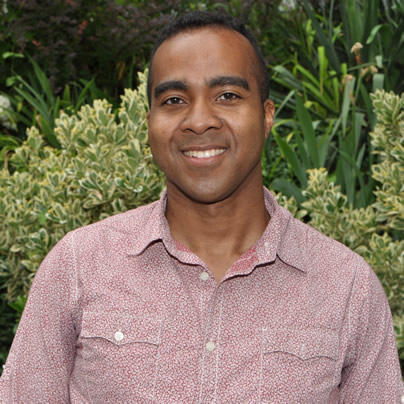
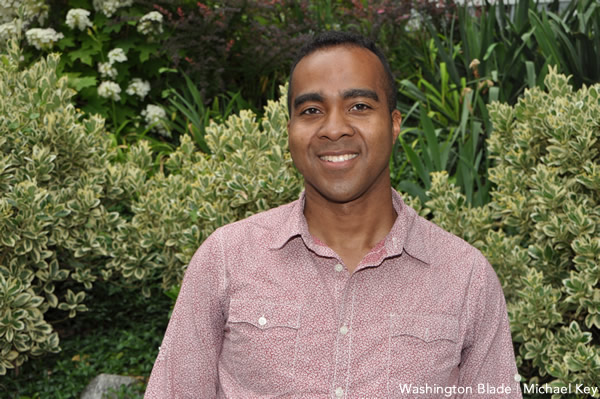
Sterling Washington (Blade photo by Michael Key)
Sterling Washington jokes about the time he became a “professional homosexual” when he went to work for Us Helping Us.
He’d previously been a presidential appointee (he was an assistant in the Office of Administration) in the Clinton White House, he then worked in IT work for several years, went back to school at Howard to get a second degree, then landed at Us Helping Us working in development. Since July 2008, he’s been resource and grant development manager at the International Federation of Black Prides. Previously he served on the board of D.C. Black Pride.
Washington, a native Washingtonian, says the Federation does important work.
“Each of the Black Prides have advocacy projects they execute in local communities that could be anything from HIV work to youth empowerment to pushing for pro-LGBT legislation,” he says. “I think that work is very important.”
Washington is also a singer and sings tenor in the choir at the National City Christian Church in Thomas Circle. He loves opera and jazz and dreams perhaps one day of living in Vienna.
Washington grew up in the District’s Shepherd Park area and enjoys watching TV, reading, dining out with friends, acupuncture, walks in the woods and playing the piano in his free time. He’s single, though he’s recently been dating someone more regularly. (Blade photo by Michael Key)
How long have you been out and who was the hardest person to tell?
I’ve been out since 1994, when I was in undergrad at GWU. The hardest person to tell was my mother, who took the news better than I expected. Since she insisted on telling my father herself, I was spared the stress associated with telling him. Although they were a little resistant at first, both of my parents grew to accept my sexual orientation over time.
Who’s your LGBT hero?
This is difficult to answer because there are so many. Dr. Zachary Gabriel Green, a clinical psychologist and an expert on group dynamics, is definitely one of my LGBT heroes. He has done amazing work around identity-based conflicts and leadership development, publishing numerous papers on those subjects. Dr. Green and his husband, Dr. Rene Molenkamp, really helped in my coming out process and they remain good friends of mine. There’s also the late Bayard Rustin, who was an extraordinary community organizer. Like Rustin, I am an activist and singer.
What’s Washington’s best nightspot, past or present?
It’s a tie between The Andalusian Dog and “The Deep End” at Club Andalu. The former was around in the late ’90s and was located near 14th and U streets, N.W. The latter had its heyday in 2002-2004 and featured the music of DJ Mandrill, who is fantastic.
Describe your dream wedding.
My husband and I would wed in a romantic outdoor setting, followed by a lavish reception and dancing under the stars.
What non-LGBT issue are you most passionate about?
Environmental issues. In fact, I Tweet a lot more about environmental issues than LGBT issues. Environmental degradation impacts every living thing on the planet.
What historical outcome would you change?
The 2000 presidential election, which remains the most disappointing election of my life.
What’s been the most memorable pop culture moment of your lifetime?
The release of the “Star Wars” prequels, although Episode III was the only one I really enjoyed.
On what do you insist?
Understanding and respect for other people’s culture and religious beliefs.
What was your last Facebook post or Tweet?
I Tweeted a petition in support of the Community Renewables Act of 2012, which is coming before D.C. City Council.
If your life were a book, what would the title be?
“On My Journey Now” would be the title. It is inspired by one of my favorite African-American spirituals.
If science discovered a way to change sexual orientation, what would you do?
Nothing. To quote the late Frank Kameny, “Gay is good.”
What do you believe in beyond the physical world?
A loving and inclusive God and an afterlife.
What’s your advice for LGBT movement leaders?
My advice is to attend a Tavistock group relations conference. These leadership conferences use experiential learning to uncover the unconscious processes that affect how organizations operate. I’ve been to at least five of these conferences, four as a member and once as an administrator. I have learned something new about myself every time and acquired knowledge and skills that improved the effectiveness of organizations in which I served.
What would you walk across hot coals for?
Since I’m a foodie, I’d walk across hot coals for a great meal.
What LGBT stereotype annoys you most?
The assumption that LGBT people are trying to convert all heterosexuals to our sexual orientation. Sure, we’re trying to convert some of them, but not all!
What’s your favorite LGBT movie?
“Latter Days” is my favorite, although this changes often.
What’s the most overrated social custom?
Answering one’s cell phone or texting back as soon as someone calls or text messages you. It is important to have personal time. Besides, it is not appropriate to answer the phone or text everywhere.
What trophy or prize do you most covet?
I would like to receive the designation of Kammersänger by the Austrian government. It is a title given to a distinguished singer and it is rare for an American to receive it.
What do you wish you’d known at 18?
That the popular images of LGBT people in the media are not reflective of the entire community.
Why Washington?
Well, I was born here and just never left. While I do not plan to stay here forever, Washington is a nice place to live, despite my occasional frustrations with the city.



Friday, March 27
Center Aging Monthly Luncheon With Yoga will be at 12 p.m. at the DC Center for the LGBT Community. Email Mac at [email protected] if you require ASL interpreter assistance, have any dietary restrictions, or questions about this event.
Go Gay DC will host “LGBTQ+ Happy Hour” at 7 p.m. at Dupont Italian Kitchen. This is a chance to relax, make new friends, and enjoy happy hour specials at this classic retro venue. Attendance is free and more details are available on Eventbrite.
Trans and Genderqueer Game Night will be at 7 p.m. at the DC Center for the LGBT Community. This is a relaxing, laid-back evening of games and fun. All are welcome and there’ll be card and board games on hand. Feel free to bring your own games to share. For more details, visit the DC Center’s website.
Trans Discussion Group will be at 7 p.m. on Zoom. This event is intended to provide an emotionally and physically safe space for trans people and those who may be questioning their gender identity/expression to join together in community and learn from one another. For more details, email [email protected].
Saturday, March 28
Go Gay DC will host “LGBTQ+ Community Brunch” at 11 a.m. at Freddie’s Beach Bar & Restaurant. This fun weekly event brings the DMV area LGBTQ+ community, including allies, together for delicious food and conversation. Attendance is free and more details are available on Eventbrite.
The DC Center for the LGBT Community will host “Sunday Supper on Saturday” at 2 p.m. It’s more than just an event; it’s an opportunity to step away from the busyness of life and invest in something meaningful, and enjoy delicious food, genuine laughter, and conversations that spark connection and inspiration. For more details, visit the Center’s website.
Black Lesbian Support Group will be at 1 p.m. on Zoom. This is a peer-led support group devoted to the joys and challenges of being a Black Lesbian. For more details, email [email protected].
Monday, March 30
“Center Aging: Monday Coffee Klatch” will be at 10 a.m. on Zoom. This is a social hour for older LGBTQ adults. Guests are encouraged to bring a beverage of choice. For more information, contact Adam ([email protected]).
“Tea Time! A Local DC Drag Comedy Show” will be at 3 p.m. at Spark Social. This is a live drag comedy show where drag legends TrevHER & Tiara Missou Sidora host spill all the tea in the DMV. This event is free and more details are available on Eventbrite.
Tuesday, March 31
Visibili-TEA Party will be at 6 p.m. at Restoration Station. Guests are encouraged to come sip, celebrate, and shine together. This event is a Trans Day of Visibility celebration and a special collaboration between Auntie’s Home and Damien Ministries. This is a boozy tea party with intention and the dress code reflects the vibe. More details are available on Eventbrite.
Wednesday, March 1
Job Club will be at 6 p.m. on Zoom upon request. This is a weekly job support program to help job entrants and seekers, including the long-term unemployed, improve self-confidence, motivation, resilience and productivity for effective job searches and networking — allowing participants to move away from being merely “applicants” toward being “candidates.” For more information, email [email protected] or visit thedccenter.org/careers.
Thursday, April 2
The DC Center’s Fresh Produce Program will be held all day at the DC Center for the LGBT Community. People will be informed on Wednesday at 5 p.m. if they are picked to receive a produce box. No proof of residency or income is required. For more information, email [email protected] or call 202-682-2245.
Virtual Yoga Class will be at 7 p.m. on Zoom. This free weekly class is a combination of yoga, breathwork and meditation that allows LGBTQ+ community members to continue their healing journey with somatic and mindfulness practices. For more details, visit the DC Center’s website.
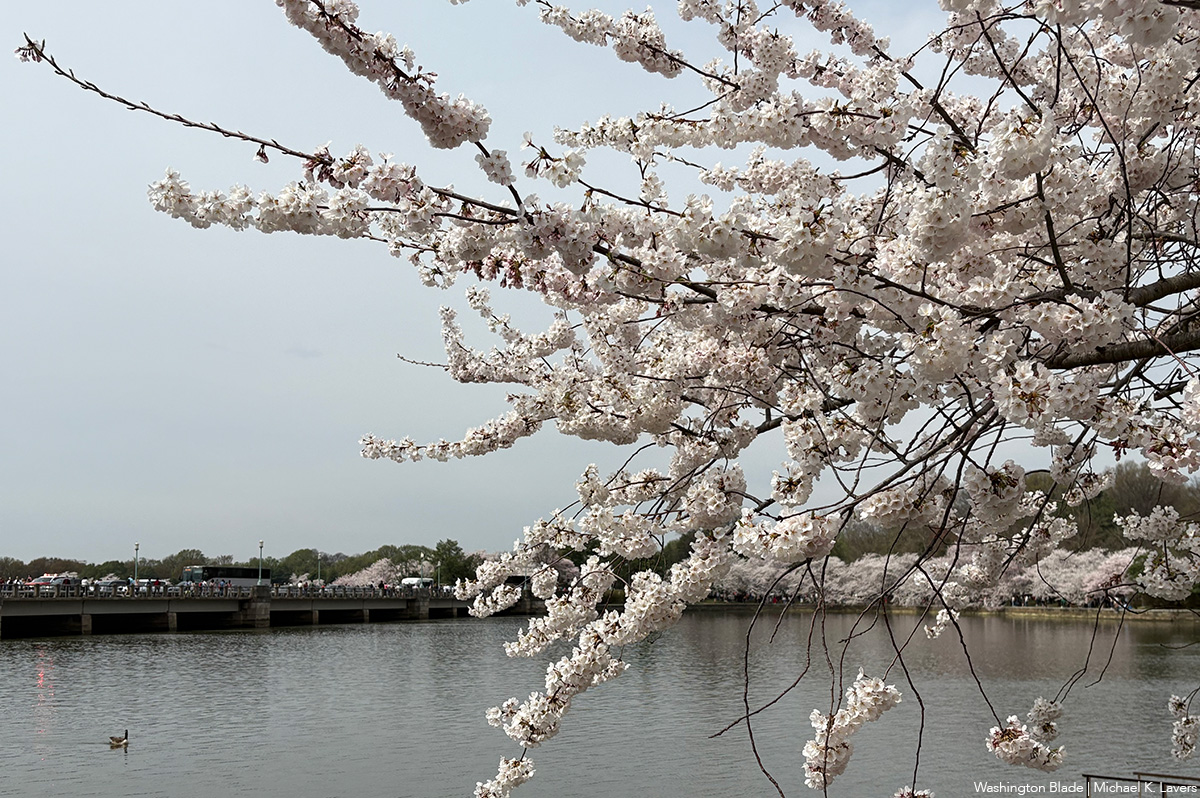
Unconventional Diner will host “Cherry Blossom Drag Bingo Party” on Friday, April 3, at 6:30 p.m.
Guests will be treated to an unforgettable night of drag performances, bingo, food and drink and prizes. Highlights of the evening include themed cocktails, drag performances and bingo prizes.
Tickets can be secured via Resy.
Sports
New IOC policy bans trans women from Olympics
New regulation to be in effect at 2028 summer games in Los Angeles
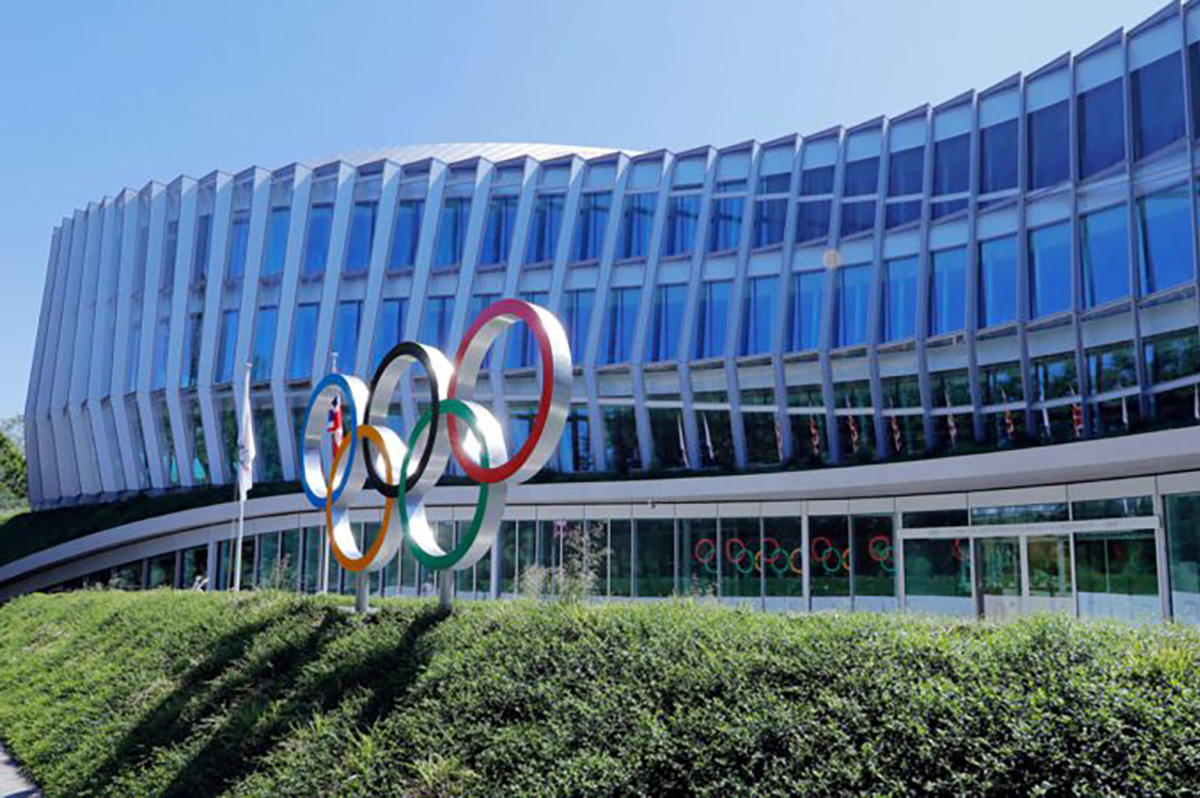
The International Olympic Committee on Thursday announced it will not allow transgender women from competing in female events at the Olympics.
“For all disciplines on the Sports Program of an IOC event, including individual and team sports, eligibility for any Female Category is limited to biological females,” reads the new policy.
The policy states “eligibility for the Female Category is to be determined in the first instance by SRY Gene screening to detect the absence or presence of the SRY Gene.”
“On the basis of the scientific evidence, the IOC considers that the SRY (sex-determining Region Y) Gene is fixed throughout life and represents highly accurate evidence that an athlete has experienced or will experience male sex development,” it reads. “Furthermore, the IOC considers that SRY Gene screening via saliva, cheek swab or blood sample is unintrusive compared to other possible methods. Athletes who screen negative for the SRY gene permanently satisfy this policy’s eligibility criteria for competition in the Female Category.”
The policy states the test “will be a once-in-a-lifetime test” unless “there is reason to believe a negative reading is in error.”
The new regulation will be in place for the 2028 Summer Olympics in Los Angeles.
“I understand that this a very sensitive topic,” said IOC President Kirsty Coventry on Thursday in a video. “As a former athlete, I passionately believe in the rights of all Olympians to take part in fair competition.”
“The policy that we have announced is based on science and it has been led by medical experts with the best interests of athletes at its heart. The scientific evidence is very clear: male chromosomes give performance advances in sport that rely on strength, power, or endurance,” she added. “At the Olympic Games, even the smallest margins can be the difference between victory and defeat. So, it is absolutely clear that it would not be fair for biological males to compete in the female category. In addition, in some sports it would simply not be safe.”
(Video courtesy of the IOC)
Laurel Hubbard, a weightlifter from New Zealand, in 2021 became the first trans woman to compete at the Olympics.
Imane Khelif, an Algerian boxer, won a gold medal at the 2024 Summer Olympics in Paris. Khelif later sued JK Rowling and Elon Musk for cyberstalking after they questioned her gender identity.
Ellis Lundholm, a mogul skier from Sweden, this year became the first openly trans athlete to compete in any Winter Olympics when he participated in Milan Cortina Winter Olympics in Italy.
President Donald Trump in February 2025 issued an executive order that bans trans women and girls from female sports teams in the U.S.
The U.S. Olympic and Paralympic Committee last July banned trans women from competing in female sporting events. Republican lawmakers have demanded the IOC ban trans athletes from women’s athletic competitions.
“I’m grateful the Olympics finally embraced the common sense policy that women’s sports are for women, not for men,” said U.S. Sen. Tom Cotton (R-Ark.) on X.
An IOC spokesperson on Thursday referred the Washington Blade to the press release that announced the new policy.

Trump tells Fox News he won the ‘gay vote’ — but polls tell a different story

Anti-trans visa ruling echoes Nazi regime destroying trans documents

Japanese Supreme Court to consider marriage equality

The outrage economy is not the LGBTQ community

Calendar: March 27-April 2

Trans Day of Visibility events planned

Virginia General Assembly’s 2026 legislative session ends

Gay man murdered in Va.

Markwayne Mullin confirmed as next DHS secretary