Local
Bill Clinton, Pelosi bring AIDS conference to a close
Former president seeks universal access to treatment for people with HIV


Former President Bill Clinton speaks at AIDS 2012 (Blade photo by Michael Key)
Former President Bill Clinton on Friday called for a more effective use of resources in the fight against HIV/AIDS.
“We need a new level of openness about how every last dollar is spent by countries, by governments, by NGOs,” he said during the International AIDS Conference’s closing session at the Walter E. Washington Convention Center.
The Clinton Health Access Initiative through the former president’s foundation in 2010 announced a partnership with the South African government to expand access to HIV testing and antiretroviral treatment. More than 400,000 additional South Africans with HIV had received these drugs within a year of the program’s inception. Clinton further pointed out that the initiative has saved the country roughly $700 million over the last two years.
A CHAI and Center for Global Development study of more than 100 health facilities in Ethiopia, Malawi, Rwanda and Zambia in 2011 found it cost an average of $200 — $682 annually in South Africa because of higher health and labor costs — a year to treat a person with HIV. A President’s Emergency Plan for AIDS Relief analysis that was released during the 2010 International AIDS Conference in Vienna placed this figure at $880 a year.
The World Health Organization estimated that 5.2 million of the 15 million people with HIV globally received treatment at the end of 2009. “There is no excuse for failing to provide treatment for the remaining 10 million people in need,” said Clinton, referring to the goal of universal access by 2015.
The international HIV/AIDS community also seeks to virtually eliminate mother-to-child transmissions — Secretary of State Hillary Clinton on Monday announced that the U.S. government would pledge an additional $80 million to achieve this benchmark as part of a broader $157 million pledge towards what she described as an AIDS-free generation. They have also pledged to reduce new HIV infection rates by 50 percent over the next three years.
The former president acknowledged that the global financial crisis has adversely affected the amount of money that donor countries can give — although he noted that the United Kingdom and Ireland are among those that continue to contribute inspire of austerity measures. He further pointed to the Bill and Melinda Gates Foundation and other private foundations and donors that have increased their support of global HIV/AIDS efforts in recent years.
“There’s an enormous amount of private money being raised and spent and there will be more,” said Clinton. “Governments, even in this difficult time, I believe will do more if we prove we’re maximizing the amount of money they have given.”
The former president noted only slightly more than a quarter of the 1.2 million Americans living with HIV “are getting optimum care.” He further cited statistics that new infection rates among young gay men — and particularly among black men under 30 who have sex with men continue to rise. Clinton also spoke about the epidemic’s continued impact on Latinos, Native Americans, Asians and Pacific Islanders.
“Many of them feel that because of the overall progress made in the fight against AIDS, they’re just going to be left out and left behind,” he said.
Clinton also applauded D.C. for efforts to fight HIV. These include the distribution of more than five million male and female condoms last year and a 72 percent decrease in HIV rates among intravenous drug users between 2007 and 2010. Mayor Vincent Gray reiterated at the AIDS Memorial Quilt on the National Mall on Sunday that no baby has been born with HIV in the city since 2009.
“In this city, government and community leadership has been reinvigorated,” said Clinton. “They are making a different.”
Pelosi: We have an obligation to continue HIV/AIDS fight
In a separate speech, House Minority Leader Nancy Pelosi (D-Calif.) recalled the epidemic’s early impact in San Francisco.
“It was 31 years ago when we first heard in our community that doctors at UCSF (University of California-San Francisco) were seeing unlike anything they’d seen before, symptoms that harkened back to the Middle Ages,” she said. “Many of you could tell this same story. Quickly, AIDS began to take a terrible toll. Soon, we were going to as many as two funerals a day. Quickly we know that this was an emergency and that we had to pull out all the stops.”
Pelosi’s first speech in Congress after she arrived on Capitol Hill in 1987 was about AIDS. She said that some of her fellow lawmakers questioned why she decided to speak about the issue.
“I said: ‘I said it because that’s what I came here to do,’” recalled Pelosi. “But recognize that was the sign of the times in Washington, D.C.”
She said she and other San Franciscans saw themselves at the center of the epidemic.
“We were ground zero, as we saw it, of the AIDS assault — on our health, on our economy and on our community; on the lives of our dear friends,” said Pelosi, who later sewed a patch on the AIDS Memorial Quilt in memory of the flower girl at her wedding who lost her battle to the disease. “With death, denial, and discrimination against those with the disease, AIDS was not only a challenge to our scientific and medical professionals; it was a challenge to the conscience of all of us and it remains so to this day. We knew we had to organize, not just agonize — and organize, not agonize, and organize not agonize we did.”
She specifically cited California Congressman Henry Waxman and the late-Massachusetts Sen. Ted Kennedy for their efforts to secure passage of the Ryan White Care Act in 1990. Pelosi praised Clinton and former President George W. Bush for their commitment to the fight against the global AIDS epidemic. And she applauded President Obama for both signing the health care reform bill and repealing the travel ban for people with the virus.
“On the brink of the AIDS-free generation, we must carry on with determination, hope, and courage,” said Pelosi. “Courage is one of the defining qualities that we always must bring to this. In doing so, we will succeed in turning the tide together. Thank all of you, to every one of you for your leadership, your activism, for your commitment to ending HIV/AIDS once and for all.”
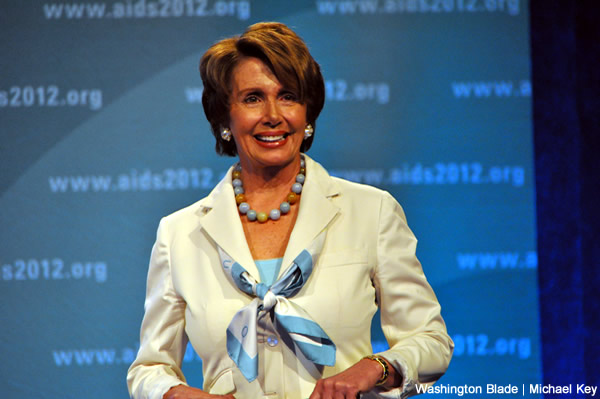
House Minority Leader Nancy Pelosi (D-Calif.) speaks at the International AIDS Conference (Blade photo by Michael Key)



Virginia
Gay Va. couple hopeful voters will enshrine marriage equality in state constitution
Early voting has already begun in the state

A referendum on whether to enshrine marriage equality in Virginia’s constitutional amendment is on the ballot this year.
If voters approve Question 2, it will codify the U.S. Supreme Court’s Obergefell ruling in 2015 that extended marriage rights to same-sex couples across the country — gays and lesbians have been able to legally marry in Virginia since Oct. 6, 2014.
Rob Bookbinder and James Fisher are a married couple who live in Arlington.
They have been together for 38 years — Bookbinder and Fisher married in 2014.
“We think this is a critical vote to remove this discriminatory language from the constitution and to ensure that going forward, no matter what happens, the state of Virginia will ensure marriage equality,” Fisher told the Washington Blade. “It is it is really difficult and upsetting to think that our current state constitution would prohibit same-sex marriage, even though the federal government overrides that now. There’s no saying what may happen in the future.”
Bookbinder said it was important for him and Fisher to get married “to gain social equality.”
“I was surprised how good it felt, how important it was to begin to say, ‘my husband rather than my partner,'” Bookbinder said.
Bookbinder then explained why it feels good to be married.
“Is it a legal partner, a business partner, a tennis partner, you know, or a romantic partner? But when you say my husband James, everyone knows exactly what you mean and confers an equal status with everyone else who’s married, and we were both surprised at how good it felt and how equal it felt to suddenly be married and be able to state that you were married and discuss your husband rather than your partner, and I would hate to lose that,” he said.
Bookbinder and Fisher said they are hopeful that voters will approve the amendment, noting Virginia has become more progressive over the years.
“I think people have, with the Supreme Court decision, people have seen that a same-sex marriage is just a marriage,” stated Fisher. “It’s just two people who love each other, and I think more and more people have attended a same-sex marriage, someone in their family or a friend, and the experience of what this is, firsthand experience, is so important in shaping people’s opinions, and I think the period of time that we’ve had since the Obergefell decision has given a lot of voters that experience, which I think is really important and powerful.”
The couple also said the push to enshrine marriage equality in Virginia’s constitution is in response to the Trump-Vance administration.
“And I think due to President Trump doing all the horrible things he’s done to so many groups, including LGBTQ, especially trans people, that Virginians are kind of pushed to be even more progressive to protect those who need protection, which would include the LGBTQ community in terms of marriage equality, so I’m confident it will pass,” said Fisher.
Narissa Rahaman, executive director of Equality Virginia, sent the Blade a statement about early voting on Question 2 that has already begun.
“With early voting now underway, our focus is making sure every Virginian knows Question 2 is on their ballot,” said Rahaman. “The outdated ban on same-sex marriage still in Virginia’s state constitution leaves a gap in protections for the thousands of same-sex couples that call this state home, but after 20 years we have the chance to fix it.”
Log onto www.mobilize.us/vaformarriage to find out more about the campaign in support of Question 2.

By JOHN-JOHN WILLIAMS IV | Those legendary heavy-handed pours, spirited karaoke and trivia nights, and groan-worthy wall-to-wall patrons on packed nights are back!
Leon’s will live to see another day.
Baltimore’s oldest gay bar, which opened in the 1950s, closed in July following the death of its owner, Ron Singer.
The rest of this article can be read on the Baltimore Banner’s website.
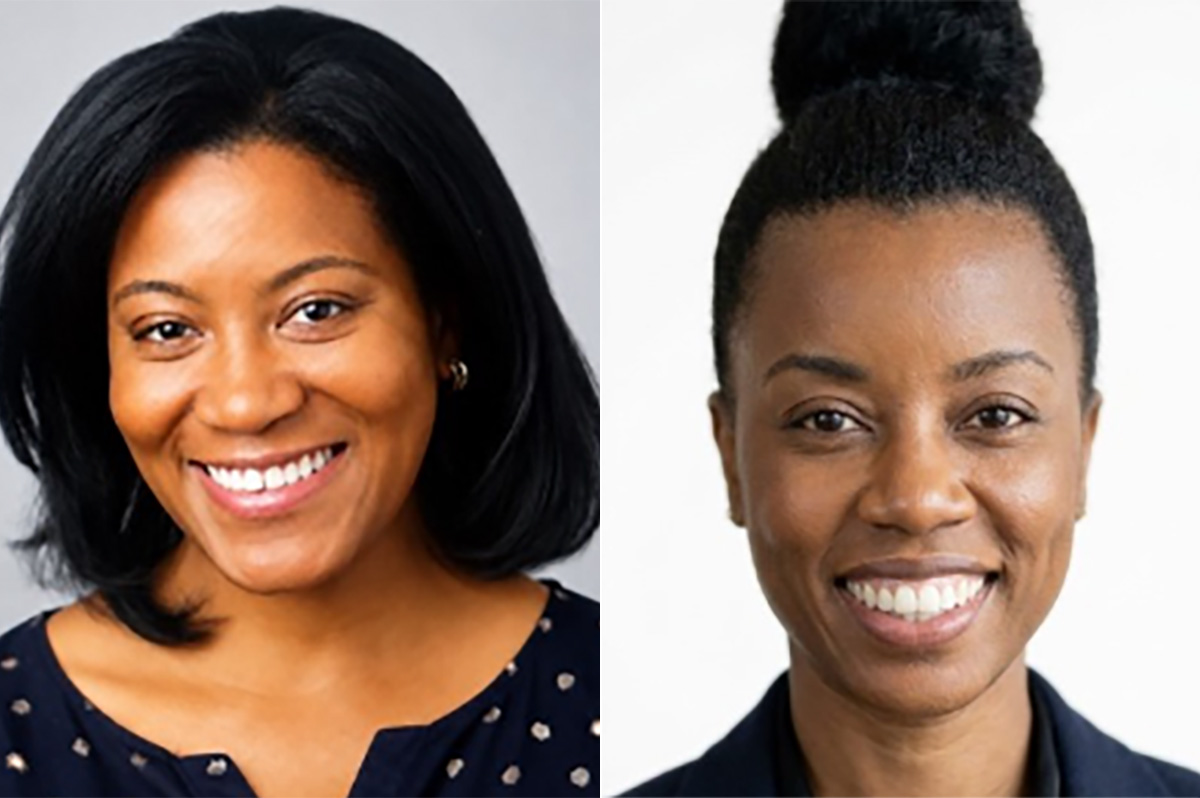
The Comings & Goings column is about sharing the professional successes of our community. We want to recognize those landing new jobs, new clients for their business, joining boards of organizations and other achievements. Please share your successes with us at [email protected].
Congratulations to Leigh Miles Jackson, Ph.D., named executive director of The Institute for Health Research & Policy at Whitman-Walker, and Angel Earle, Ph.D. named as chief operating officer, Whitman-Walker Health System.
Upon her appointment Dr. Jackson said, “Under my leadership, I would love for The Institute for Health Research & Policy at Whitman-Walker to be known as a trusted, forward-looking research organization that shapes policies, strengthens practices and creates measurable change for the community.” Dr. Jackson spent 12 years with the National Academies of Sciences, Engineering and Medicine, leading national initiatives on minority-serving institutions and economic evidence for investments in children, youth and families. Dr. Jackson holds an extensive educational background, including postdoctoral fellowships in developmental Psychology and Neurogenomics from Vanderbilt University, a Ph.D. in molecular and systems pharmacology from Emory University and a bachelor’s degree in chemistry from Wake Forest University.
Upon her appointment Dr. Earle said, “When we talk about parity and inequities and research, it’s never just about the dollars that are out there. It’s about making sure that we’re cultivating a change that embraces equity at the heart of everything that it does. As the COO for Whitman-Walker Health System I will be working closely to support The Institute for Health Research & Policy at Whitman-Walker and the Whitman-Walker Foundation to drive advancement in research and support the strategic goals of all of the Whitman-Walker Heath System entities.”
Dr. Earle is a genetic epidemiologist and senior executive. She brings a background from the London School of Economics and the University of South Carolina, with expertise in global health, corporate strategy and socioeconomic policy. She has co-authored peer-reviewed research on cancer genetics, nephrology biomarkers and reproductive genomes.
Dr. Heather Aaron, CEO of Whitman-Walker Health System said, “both leaders bring research-driven expertise and operational strength to the organization as it continues expanding research, health care access, and health outcomes for residents across the Washington, D.C., region, including the LGBTQ+ community, people living with and at risk for HIV, and communities experiencing persistent health disparities.”
The Institute for Health Research & Policy at Whitman-Walker is also expanding its research agenda beyond HIV to address the complex health conditions affecting people living with and at risk for HIV, as well as the broader communities The Institute for Health Research & Policy at Whitman-Walker serves.

Gay Va. couple hopeful voters will enshrine marriage equality in state constitution

Vote now! Best Of LGBTQ DC readers’ choice awards

Meet the LGBTQ candidates running for U.S. House, Senate

Ana Brnabić becomes world’s first openly lesbian head of state