National
House Dems intercede on behalf of N.Y. widow against DOMA
Record number of lawmakers sign brief against anti-gay law
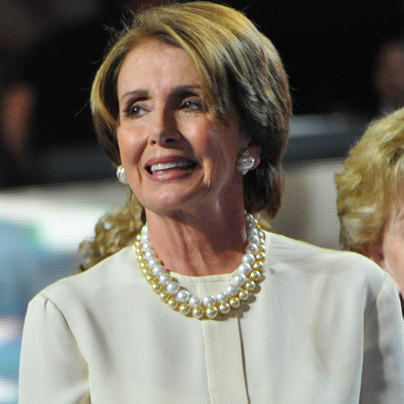

House Minority Leader Nancy Pelosi leads a group of 145 House Democrats expecting to file a friend of the court brief on behalf of the Edie Windsor case. (Washington Blade file photo by Michael Key)
House Democrats are yet again interceding on behalf of litigation challenging the Defense of Marriage Act — this time as one of 15 parties expected to file legal briefs before an appellate court in a case involving a lesbian New York widower.
A group of 145 House Democrats — led by House Minority Leader Nancy Pelosi (D-Calif.) and Rep. Jerrold Nadler (D-N.Y.) — were expected to file a friend-of-court brief on Friday in the case of Windsor V. United States, which is pending before the U.S. Second Circuit Court of Appeals.
The plaintiff in the lawsuit, filed by the American Civil Liberties Union and other legal groups, is 83-year-old Edie Windsor, who was forced to pay $363,000 in estate taxes upon the death in 2009 of her spouse Thea Spyer because of Section 3 of DOMA, which prohibits federal recognition of same-sex marriage. The couple first met in 1963, but married in 2007 in Canada after an engagement that lasted more than 40 years.
The 30-page brief lays out the case why DOMA should be stricken down as unconstitutional, arguing Congress passed DOMA in 1996 out of animus toward gay people.
Additionally, the brief says DOMA unfairly imposes estate taxes upon married same-sex couples, saying “it is impossible to believe that any legitimate federal interest is rationally served by depriving a widow like [Edie] Windsor of the marital deduction that allows married couples to pass property to the surviving spouse without penalty, thus maximizing the survivor’s financial well-being.”
It’s not the first time House Democrats filed a legal brief in favor of litigation challenging DOMA. Democrats also filed a legal brief before the U.S. First Circuit Court of Appeals in the consolidated case of Gill v. Office of Personnel Management and Commonwealth of Massachusetts v. Department of Health & Human Services as well as before the U.S. Ninth Circuit Court of Appeals in the case of Golinksi v. Office of Personnel Management.
However more have signed today’s brief than ever before. The new 13 signers who didn’t pen their name to the last brief are Reps. Ron Barber (D-Ariz.), Corrine Brown (D-Fla.), Russ Carnahan (D-Mo.), John Carney, Jr., (D-Del.), Kathy Castor (D-Fla.), Norman Dicks (D-Wash.), Al Green (D-Texas), Marcy Kaptur (D-Ohio), Bill Pascrell, Jr., (D-N.J.), Ed Perlmutter (D-Colo.), Silvesre Reyes (D-Texas), Allyson Schwartz (D-Pa.) and Albio Sires (D-N.J.).
Other signers are House Minority Whip Steny Hoyer (D-Md.), Assistant Minority Leader Jim Clyburn (D-S.C.), House Judiciary Committee Ranking Member John Conyers (D-Mich.), and the four openly gay members of Congress: Reps. Barney Frank (D-Mass.), Tammy Baldwin (D-Wis.), Jared Polis (D-Colo.) and David Cicilline (D-R.I.).
The House Republican-led Bipartisan Legal Advisory Group, under the direction of House Speaker John Boehner (R-Ohio), appealed the lawsuit to the Second Circuit after the U.S. District Court for the Southern District of New York ruled in favor of Windsor and against DOMA. Oral arguments are set for September 27. It’s unclear whether any friend-of-the-court briefs will be filed on their behalf.
Other groups that are expected to file friend-of-the-court briefs in favor of Windsor are local governments, including New York City and the States of New York, Connecticut and Vermont; the Partnership for New York City — a group of CEOs from New York City businesses — the NAACP Legal Defense and Educational Fund; Bar associations, labor unions and civil rights, religious, cultural and LGBT organizations; Social workers and national mental health and medical organizations; and professors of U.S. history, family law, and family and child welfare law.
Donna Lieberman, executive director of the New York Civil Liberties Union, had particular praise for the briefs that were filed by the State of New York and New York City — both of which are the jurisdictions in which Windsor resides.
“New York is home to more married same-sex couples than any other state,” Lieberman said. “It only makes sense that our state and local governments would join the dozens of other groups supporting this case. No committed family should be relegated to second-class status.”
The ACLU has asked the Supreme Court to take up the case before the Second Circuit makes its decision on the lawsuit, but the friend-of-the-court briefs that were expected on Friday were delivered to the lower court where the case currently stands. The Supreme Court may decide to take up the lawsuit after the justices return from summer recess.
James Esseks, director of the ACLU LGBT Project, said the number of parties who have filed briefs on behalf of Edie Windsor demonstrates the extent to which DOMA harms married same-sex couples.
“The number and scope of the parties supporting Edie’s case illustrate the breadth of the harms that DOMA inflicts on married same-sex couples,” Esseks said. “It is time for the courts to bring an end to this discriminatory law once and for all.”


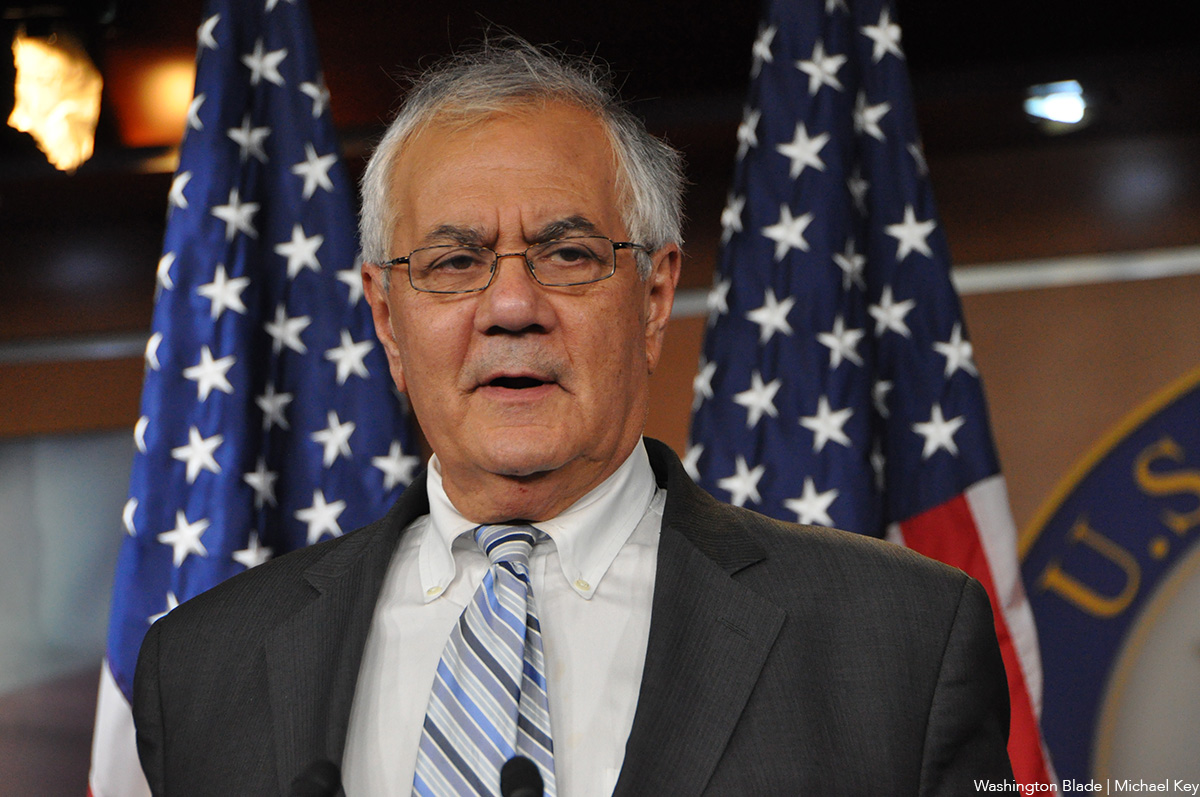
Former U.S. Rep. Barney Frank (D-Mass.) died on Tuesday. He was 86.
The Massachusetts Democrat served in the U.S. House of Representatives from 1981-2013. Frank in 1987 became the first member of Congress to voluntarily come out as gay.
The Washington Blade earlier this month interviewed Frank after he entered hospice care at his Ogunquit, Maine, home where he lived with his husband, Jim Ready, since 2013. The former congressman, among other things, talked about his new book, “The Hard Path to Unity: Why We Must Reform the Left to Rescue Democracy.”
The book is scheduled for release on Sept. 15.
NBC Boston reported Frank’s sister, Ann Lewis, and a close family friend confirmed his death.
The Blade will update this article.
Federal Government
Texas Children’s Hospital reaches $10 million settlement with DOJ over gender-affirming care
Clinic specializing in detransition care will be established

The Justice Department announced May 15 that it has reached a settlement with Texas Children’s Hospital, one of the nation’s top pediatric hospitals.
Under the agreement, the hospital will pay more than $10 million in damages and civil penalties related to its provision of gender-affirming care and will establish a clinic specializing in detransition care.
The DOJ partnered with Texas Attorney General Ken Paxton’s office to resolve allegations that the hospital submitted false billings to public and private insurers to secure coverage for pediatric gender-affirming procedures. The department alleges the conduct violated the Federal Food, Drug, and Cosmetic Act, the False Claims Act, and federal fraud and conspiracy laws.
The settlement was reached out of court, meaning neither party formally admitted wrongdoing. Both the DOJ and Texas Children’s Hospital denied liability.
“The Justice Department will use every weapon at its disposal to end the destructive and discredited practice of so-called ‘gender-affirming care’ for children,” Acting Attorney General Todd Blanche said in a DOJ press release. “Today’s resolution protects vulnerable children, holds providers accountable, and ensures those harmed receive the care they need.”
The DOJ’s hardline stance on gender-affirming care sharply contrasts with the positions of major medical organizations, transgender healthcare advocates, and human rights groups, which broadly support gender-affirming care as an evidence-based treatment for gender dysphoria.
Adrian Shanker, former Deputy Assistant Secretary for Health Policy and Senior Advisor on LGBTQI+ Health Equity at the U.S. Department of Health and Human Services under during the Biden-Harris administration, told the Washington Blade the settlement could have sweeping consequences for trans youth and healthcare providers nationwide.
“The Trump administration’s framing of gender-affirming care is wildly inaccurate, scientifically implausible, and frankly, just mean-spirited,” Shanker told the Blade. “What’s really clear is that the science hasn’t changed, the evidence hasn’t changed — it’s only the politics that have changed. Unfortunately, the people that lose out the most with a settlement like this one are the patients that are denied access to care where they live.”
According to Shanker, the agreement also requires Texas Children’s Hospital to revoke privileges for physicians involved in providing gender-affirming care, potentially limiting their ability to practice elsewhere.
“This is a weaponized Department of Justice doing absurd investigations against providers that are providing care within the established standard of care,” he said. “They’ve come up with an absurd remedy in their settlement to require a so-called ‘detransition clinic’ to open at Texas Children’s. It’s harmful to science, it’s harmful to trans people, and it’s harmful to the medical profession.”
Shanker argued the case reflects a broader politicization of trans healthcare.
“Every American should be concerned about the weaponized Department of Justice and their obsession with trans people and their access to care,” he said. “These hospitals that provide gender-affirming care, the providers of gender-affirming care, have done nothing wrong. They followed the standards of care that are well established and followed the mountain of evidence.”
Karen Loewy, senior counsel and director of constitutional law practice at Lambda Legal, echoed those concerns.
“For Texas Children’s to capitulate to this pressure campaign of both Paxton and the Trump administration and end this care, and go after physicians who had been lawfully and faithfully taking care of their patients, it’s hard to see that as anything other than bending the knee in the face of political pressure,” Loewy told the Blade. “That’s not putting your mission above politics. Your mission is to provide health care for kids that need it.”
Loewy said the settlement reflects years of efforts by Paxton and the Trump-Vance administration to target gender-affirming care providers. Paxton has pursued investigations into providers across Texas since 2022 and supported a 2023 law banning gender-transition-related medical care for minors. Meanwhile, the Trump-Vance administration moved quickly in its second term to restrict trans healthcare access, including through Executive Order 14187, titled “Protecting Children from Chemical and Surgical Mutilation.”
“This is a perfect storm of Ken Paxton’s own mission to stigmatize and target trans young people and their healthcare in Texas with the Trump administration’s targeting of trans people and gender-affirming medical care,” Loewy said. “It is the two of them together. Without that, you wouldn’t have had this settlement.”
Loewy also emphasized that the settlement is part of a broader legal strategy targeting providers nationwide.
“You can’t view this one in isolation from all of the other administrative subpoenas that have been sent to hospitals or other kinds of medical providers that have provided gender-affirming medical care to trans adolescents,” she said. “It is all part and parcel of the same direct line from the executive orders that were issued in the first days of this Trump administration.”
“Every court that has considered those subpoenas has found them illegitimate and issued for an improper purpose, or at least narrowed them really dramatically,” she added. “Courts agree these hospitals didn’t do anything wrong. It’s the DOJ that has the problem here.”
Shanker also criticized the settlement’s requirement that the hospital establish a detransition clinic, arguing the move contradicts existing medical evidence.
“The irony shouldn’t be lost on anyone that the Trump administration is claiming that gender-affirming care lacks a scientific basis, and then is requiring the opening of a so-called detransition clinic, which certainly lacks a scientific basis,” Shanker said. “There’s less than a 1% regret rate when it comes to gender-affirming care. That’s lower than knee surgery, lower than bariatric surgery, lower than childbirth, lower than breast reconstruction, and lower than tattoos.”
Loewy was similarly blunt in her criticism.
“This is the most craven, political, ridiculous elevation of ideology over evidence,” she said. “They are creating a program built on an outcome that almost never happens. It is unprecedented and politically mandated rather than healthcare mandated.”
She said the settlement’s broader effect will be to intimidate providers and further marginalize trans people.
“The real effect here is to further stigmatize trans people and intimidate healthcare providers,” she said. “This is about sending a message nationwide that the DOJ is coming after the doctors. These are committed, faithful, law-abiding physicians and healthcare providers who just want to provide the healthcare their patients actually need.”
Both Loewy and Shanker warned that restricting access to gender-affirming care could deepen health disparities for trans people.
“We know that when transgender Americans lack the care that they need, we end up with higher rates of depression, higher rates of anxiety, higher rates of self-harm and suicidal ideation,” Shanker said. “We know that gender-affirming care is a medically appropriate, scientifically grounded form of care that resolves these challenges and leads us toward health equity. It’s unfortunate that the Trump administration has politicized not only transgender medicine, but the very basis of public health.”
Shanker said the restrictions are already prompting some trans people to relocate in search of care.
“We’re already seeing medical refugees leave states that have restricted access to care to move to states where it’s still available,” he said. “Frankly, we’ve already seen some trans people go to other countries to receive care or maintain access to care.”
Loewy said the DOJ’s recent subpoenas targeting hospitals, including those issued to NYU Langone Health in New York, suggest the administration is escalating its legal strategy.
“We’ve seen the DOJ escalate this by convening a grand jury and issuing grand jury subpoenas to hospitals,” she said. “That is going to be the next front in this fight.”
In addition to , there has been as large increase in anti-trans legislation in the past few years — with 126 federal pieces of legislation introduced this year and 26 state level policies passed across the country.
Still, Loewy pointed to recent court victories as evidence that challenges to these policies can succeed.
“Just yesterday, a state court in Kansas struck down that state’s ban on gender-affirming medical care in one of the most meticulous recognitions of the medical consensus and the harm of denying care to trans young people,” she said. “When courts actually look at the science and the impacts on trans people, they still can rule the right way.”
Asked whether there is any optimism to be found amid the ongoing legal battles, Loewy said she continues to draw hope from advocates, families, and community organizers fighting back.
“The solidarity of the community is really what brings hope,” she said. “There are incredible lawyers, advocates, families, and organizations fighting every day to protect these kids and their privacy and safety. It is that community strength and collaborative effort that continues to give me hope.”
Commentary
‘Live Your Pride’ is much more than a slogan
Waves Ahead forced to cancel May 17 event in Puerto Rico

On May 5, I spoke by phone with Wilfred Labiosa, executive director of Waves Ahead, a Puerto Rico-based LGBTQ community organization that for years has provided mental health services, support programs, and safe spaces for vulnerable communities across the island. During our conversation, Labiosa confirmed every concern described in the organization’s public statement announcing the cancellation of “Live Your Pride,” an event scheduled for Sunday in the northwestern municipality of Isabela. But beyond the financial struggles and organizational challenges, what stayed with me most was the emotional weight behind his words. There was pain in his voice while describing what it means to watch spaces like these slowly disappear.
This was not simply the cancellation of a community event.
“Live Your Pride” had been envisioned as a celebration and affirming gathering for LGBTQ older adults and their allies in Puerto Rico. In a society where many LGBTQ elders spent decades hiding parts of themselves in order to survive, spaces like this carry enormous emotional and social significance. They become places where people can finally exist openly, without fear, apology, or shame.
That is why this cancellation matters far beyond Isabela.
What is happening in Puerto Rico cannot be separated from the broader political climate unfolding across the U.S. and its territories, where programs connected to diversity, inclusion, education, mental health, and LGBTQ visibility increasingly find themselves under political attack. These changes do not always arrive through dramatic announcements. More often, they happen quietly. Funding disappears. Community organizations weaken. Safe spaces become harder to sustain. Eventually, the absence itself begins to feel normal.
That normalization is dangerous.
For years, organizations like Waves Ahead have stepped into gaps left behind by institutions and governments, particularly in communities where LGBTQ people continue facing discrimination, social isolation, economic instability, and mental health struggles. Their work has never been limited to organizing events. It has involved accompanying people through loneliness, trauma, rejection, depression, aging, and survival itself.
“Live Your Pride” represented much more than entertainment. It represented visibility for LGBTQ older adults, many of whom survived decades of family rejection, religious exclusion, workplace discrimination, violence, and silence. These are individuals who came of age during years when living openly could cost someone employment, housing, relationships, or personal safety. Many learned to survive by making themselves invisible.
When spaces like this disappear, something deeply human is lost.
A gathering is canceled, yes, but so is an opportunity for healing, connection, recognition, and dignity. For many LGBTQ older adults, especially in smaller municipalities across Puerto Rico, these events are not secondary luxuries. They are reminders that their lives still matter in a society that too often treats aging and queer existence as disposable.
There are still political and religious sectors that portray the rainbow as some kind of ideological threat. But the rainbow does not erase anyone. It illuminates people and stories that society has often tried to ignore. It reflects the lives of young people forced out of their homes, transgender individuals targeted by violence, older adults aging in silence, and families that spent years defending their right to exist openly.
Perhaps that is precisely why the rainbow unsettles some people so deeply.
Its colors expose abandonment, hypocrisy, inequality, and fear. They force societies to confront realities that are easier to ignore than to address honestly. They reveal how fragile human dignity becomes when political agendas decide that certain communities are no longer worthy of protection, funding, or visibility.
The greatest concern here is not solely the cancellation of one event in one Puerto Rican town. The deeper concern is the message quietly taking shape behind decisions like these — the idea that some communities can wait, that some lives deserve fewer resources, and that safe spaces for vulnerable people are expendable during moments of political tension.
History has shown repeatedly how social regression begins. Rarely with one dramatic act. More often through exhaustion, silence, budget cuts, and the slow dismantling of organizations doing essential community work.
Even so, Waves Ahead made one thing clear in its statement. Although “Live Your Pride” has been canceled, the organization will continue providing mental health and community support services through its centers across Puerto Rico. That commitment matters because people do not survive on slogans alone. They survive because somewhere there are still open doors, trained professionals, supportive communities, and people willing to remain present when the world becomes colder and more hostile.
Puerto Rico should pay close attention to what this moment represents. No healthy society is built by weakening the organizations that care for vulnerable people. No government should feel comfortable watching community groups struggle to survive while attempting to provide services and compassion that public institutions themselves often fail to offer.
The rainbow has never been the problem.
The real problem is the discomfort created when its colors force society to confront the wounds, inequalities, and human realities that too many people would rather keep hidden.

BREAKING NEWS: Barney Frank dies at 86

Intersex lives, constitutional freedom, and the dangerous future of Ghana’s Human Sexual Rights and Family Values Bill

Doc on Blade reporter Chibbaro scores Emmy nomination

Don’t let Rehoboth rain deter you, there’s lots to do for Memorial Day

A case of retaliation, not stalking

HIV Vaccine Awareness Day set for May 18

‘The Inheritance’ is most-nominated at this year’s Helen Hayes Awards

Calendar: May 15-21

United Night Out set for Saturday