News
Polis, Miller seek House hearing on ENDA
Lawmakers say chamber should act “in meaningful way” against LGBT workplace discrimination
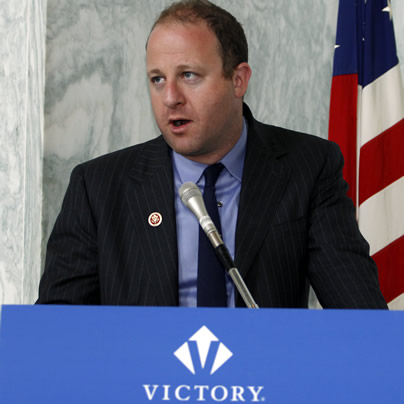
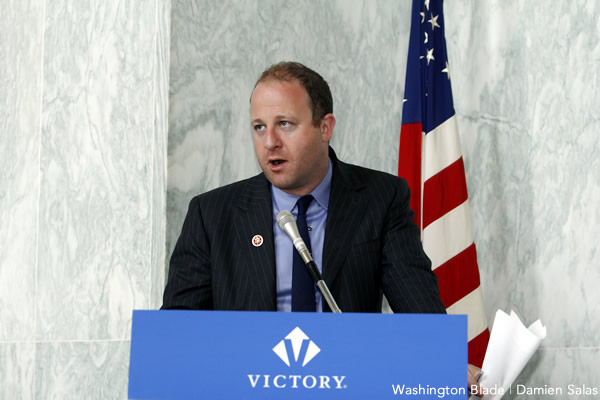
Rep. Jared Polis (D-Colo.) seeks a House hearing on ENDA (Washington Blade photo by Damien Salas)
In an attempt to build off the momentum of a successful Senate committee vote, Rep. Jared Polis (D-Colo.) and the lead House Democrat on workplace issues are calling for a House hearing on the Employment Non-Discrimination Act.
In an open letter dated July 11, Polis, who’s gay and lead sponsor of ENDA in the U.S. House, and Rep. George Miller (D-Calif.), the top Democrat on the House Education & the Workforce Committee, seek a hearing in the Republican-controlled House on ENDA. The letter is addressed to Chairman John Kline (R-Minn.).
“It is time for this committee and this Congress to act in a meaningful way and ensure that LGBT individuals are not denied the right to work and earn a living because of their sexual orientation or gender identity,” Polis and Miller write.
The letter comes on the heels of a successful vote on ENDA in the Senate Health, Education, Labor & Pensions Committee in which 12 Democrats were joined by Sens. Mark Kirk (R-Ill.,) Orrin Hatch (R-Utah) and Lisa Murkowski (R-Alaska) in voting in favor of the bill.
Polis and Miller emphasize that a House hearing on ENDA would capitalize on the momentum that the measure enjoys after the committee vote in the Senate.
“The vote sends a strong message that employment decisions should be based on merit and not prejudice,” Polis and Miller write. “The House must seize the moment and stand on the side of fairness and equality by holding a hearing that will kick start the process of moving this important legislation through this body.”
The last time the House held a hearing on ENDA was in 2009. Democrats at the time were in control of the chamber and Miller was chair of the committee, which was then known as the House Education & Labor Committee.
Kline’s office didn’t immediately respond to a request to comment. The Minnesota lawmaker voted against a version of the legislation in 2007 and he spoke out against ENDA during the hearing in 2009.
“H.R. 3017 represents a significant departure from longstanding civil rights law,” Kline said at the time. “It creates an entirely new protected class that is vaguely defined and often subjective.”
Tico Almeida, president of Freedom to Work, said Polis and Miller “should be commended” for acting quickly in the aftermath of the Senate committee vote on ENDA.
But in the event that Kline is unresponsive, Almeida invited Polis and Miller to ask Rep. Rob Andrews (D-N.J.,) a committee member with experience on ENDA, to hold a hearing on the legislation in the House Democratic Steering & Policy Committee, which Andrews co-chairs.
“The Democrats could set that hearing without Republican approval for September or October, and they could call two or three LGBT victims of workplace discrimination and some pro-LGBT business leaders to testify about how ENDA is good for business,” Almeida said. “I’d love to see the Democrats invite Exxon’s CEO to testify and explain why they refuse to adopt the same LGBT fairness policies that competitors like Chevron have adopted.”
Such a hearing, Almeida said, would lay the foundation for a successful discharge petition on ENDA in the House and a successful Senate floor vote between 60 and 70 votes.
The complete letter from Polis and Miller follows:
July 11, 2013
The Honorable John Kline
Chairman
Committee on Education and the Workforce
2181 Rayburn House Office Building
Washington, D.C. 20515Dear Chairman Kline:
We write to respectfully request that you hold a committee hearing as soon as possible on H.R. 1755, the Employment Non-Discrimination Act (ENDA), legislation that would end employment discrimination on the basis of sexual orientation and gender identity and make clear that Americans in the workplace should be judged on whether they can do the job.
We believe that the strong bipartisan vote by the Senate Health, Education, Labor and Pensions (HELP) on June 10in favor of ENDA reflects the overwhelming consensus that LGBT Americans should have the freedom to work and be full participants in our economy. The vote sends a strong message that employment decisions should be based on merit and not prejudice. The House must seize the moment and stand on the side of fairness and equality by holding a hearing that will kick start the process of moving this important legislation through this body.
As you may know, H.R. 1755 enjoys bipartisan support in the House and currently has 177 cosponsors. The legislation would prohibit employers from firing, refusing to hire, or discriminating against those employed or seeking employment, on the basis of their perceived or actual sexual orientation or gender identity. Such protections are already in place prohibiting discrimination based on race, religion, gender, national origin, age, and disability. More than 85 percent of Fortune 500 companies already extend workplace protections based on sexual orientation and more than one-third on the basis of gender identity.
Chairman Kline, business leaders, advocates, and an overwhelming supermajority of Americans – nearly 75 percent – support prohibiting employment discrimination on the basis of sexual orientation and gender identity. It is time for this Committee and this Congress to act in a meaningful way and ensure that LGBT individuals are not denied the right to work and earn a living because of their sexual orientation or gender identity.
We look forward to working with you on this and many other issues important to our nation.
Sincerely,
GEORGE MILLER
Senior Democratic Member
JARED POLIS
Member of Congress



District of Columbia
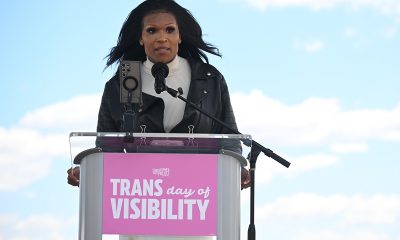
Trans activists gather on National Mall for Transgender Day of Visibility
Around 200 members, supporters of the trans community, gathered on the Mall amid the increasingly hostile political environment.
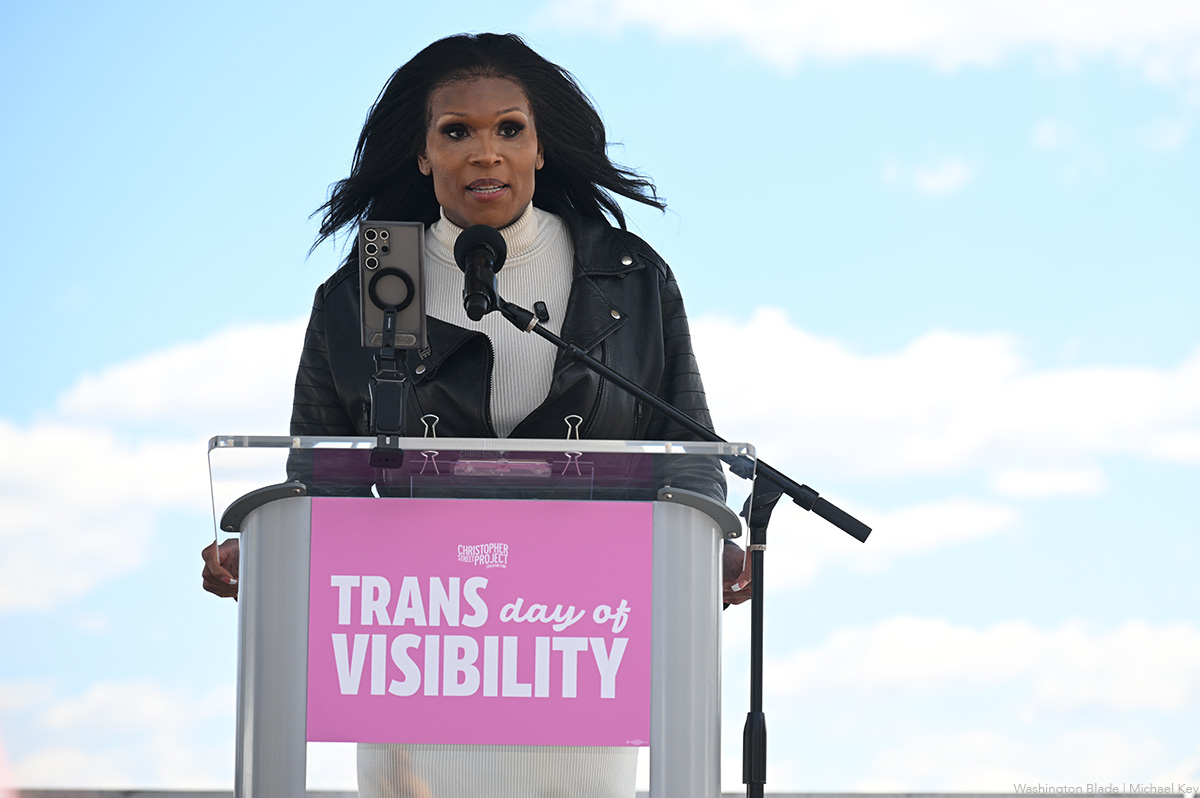
The National Mall was covered in kites on Saturday as transgender activists from around the country gathered to support the second annual Transgender Day of Visibility. The event, put on by the Christopher Street Project — whose mission to protect and support trans Americans on the ballot and in streets — brought together around 200 supporters and organizations to honor trans homicide victims and rally for the future of human rights.
Created 17 years ago by psychotherapist and trans activist Rachel Crandall-Crocker, the day was born out of a need to celebrate one of the most marginalized groups in American politics, she told The 19th in 2021.
Since then, the nation has slowly caught up. This year marked the second time the observance has expanded into a multi-day movement, with events ranging from panels and congressional lobbying to organizing efforts, culminating in a rally on the “nation’s front door” — the National Mall.
A recent survey conducted by SRSS, a national research and marketing firm, and commissioned by the Human Rights Campaign Foundation, found that 41 percent of American adults say they personally know someone who is trans. That figure is up from previous estimates of around 30 percent. The study also shows that 27 percent say they have had a regular conversation with a transgender person in the last year. For HRC, this data is confirmation that visibility efforts are working.
“Transgender people are not strangers. They are our neighbors, coworkers, family members, and friends. And this new data shows that as people get to know them, they are more likely to stand by them as allies,” said Kelley Robinson, president of HRC said in a statement. “Defending trans rights is part of defending democracy itself. The more we show up for each other, the stronger our communities and our democracy become.”
Despite this progress and growing positive sentiment, more than 80 anti-trans bills are currently pending in state legislatures across the country, according to HRC, while similar issues are being debated at the national level. Many of the bills seek to restrict trans youth from participating in sports aligned with their gender identity and limit access to gender-affirming medical care.
Tyler Hack, founder and executive director of the Christopher Street Project, who is trans and nonbinary, spoke with the Washington Blade on March 28 about the growing importance of the day.
“We saw that there was a lack of political power for the trans community. We saw that there was a lack of political power for the trans community,” Hack said. “We decided to step up and implement the demand leadership and have galvanized people all across this country for Trans Day of Visibility and our gatherings these last few days we’ve had people come from as far as Hawaii to come celebrate with us, advocate for our rights on the hill, and learn about what it means to fight for all of us.”
Fighting for “all of us,” Hack noted, means showing up where political power is concentrated — in the nation’s capital. The National Mall, a hub for both protest and tourism, draws a wide range of visitors, from political activists brandishing MAGA hats or “You did it, Joe” t-shirts to everyday sightseers.
“I literally just saw a guy in a Trump shirt [at the rally], but we’re not going anywhere,” they said. “Visablity is really important, alongside needing to be an active parts of society, being having public life, and we need to demonstrate that we’re not going anywhere. I mean, we had people from the hill, Congress members come who weren’t even planning to come and did … We are now learning about what it means to fight for and stand up for our rights.”
Hack then looked toward the Capitol after being asked why they believe there are so many negative — and false — statements coming from congressional legislators about trans people. After a pause, they emphasized that the fight for trans rights is often deliberately mischaracterized by Republican opponents try to turn Americans against the community. That, they pointed out, is not what is happening outside the halls of the Hill.
“We are fighting for an America that works for all of us, and we know that,” Hack said. “We know that fighting for all of us is not unpopular. What’s unpopular is genital inspections in schools for girls as young as four years old — who some of our leaders want to transvestigate for not looking feminine enough. What’s unpopular are subpoenas of hospitals so the government can go through your records and decide what they like and don’t like. It is about power.”
That framing — that trans people simply want to live freely and equally under the law — has become central to the movement’s messaging, even as conservative media organizations and political leaders continue to shape public perception in opposing ways.
“We can’t cede any ground because we don’t need to. We are not fighting for a cause that’s inherently unpopular. People know that we shouldn’t throw anyone under the bus, and that’s what we’re here to say to our leaders: we’re paying attention.”
This year’s TDoV was noticeably larger in production than last year’s event, with a bigger stage, more high-profile speakers, increased security, and expanded programming across multiple days.
“We also planned three days of programming. We had dozen panels and workshops on Thursday, and we had over 75 Hill meetings on Friday,” they said. “Now we have this rally, and our capacity hasn’t grown that much — a lot of this was done by two people, but I think it just has come to fruition in a way. I’m happy with it, but I would love to see people with crazy budgets and includes expanded capacity, also we can continue to step out and do the work.”
One moment that stood out to Hack was seeing a parent advocate for her trans child — highlighting what they described as the deeply human nature of these stories.
“The first person to come up to me today was a mom of a trans kid and a nonbinary kid who said she came to our whole convening, going to the Hill to advocate yesterday — for the first time, because we inspired her to act, and that she was too scared to be a part of something,” they said. “She knew that her kids’ lives had been criminalized and that she needed to act and –that really hit me. I also know most of the people who educated our lawmakers, were people who have never been to the Hill before. These people who were also telling their stories, were also fighting for reproductive freedom for all. I mean, we had people from Hawaii, Washington State, California, people who some of them hadn’t been to D.C. Those are the people that we are here to mobilize because they haven’t been galvanized by any project before. I’m just grateful we gave them something that they’re willing to get behind.”
Speakers throughout the rally echoed similar themes of urgency, visibility, and collective action.
Rayceen Pendarvis, a local D.C. trans activist, spoke at the event, emphasizing the history behind the current fight — especially the exclusion of trans people from broader LGBTQ movements — and the need to push back against current political attacks on the most marginalized.
“Trans people in D.C. had to fight for their seat at the table. Trans people were either an afterthought — or left out completely. Now, trans people have become the scapegoat. Ignorance about trans people has been weaponized.”
The lifelong Washingtonian, who had a popular show that ran for 10 seasons with a range of programming covering local and national LGBTQ topics from 2012–2021, continued on the need to stay aware and vocal during the increasingly difficult Trump-Vance administration.
“We have to push back — be as relentless as they are. If your vote was not important, they wouldn’t spend so much time trying to stop you from using it. Voting is not enough — we all must get involved. Let us make our ancestors proud by unifying, organizing, and fighting back.”
She ended her speech with advice to not only strategically spend time advocating, but also build relationships within and around the transgender community.
“Support each other, encourage each other, and help each other. Spend time with your trans elders while you can and learn from them. Give them their flowers, but also give the old dolls some money to pay their bills,” she said to cheers from the crowd. “Allies need to put their money where their mouth is!”
“RuPaul’s Drag Race” contestant, singer-songwriter, and trans activist Peppermint spoke about the mixed feelings the day brings, allowing her to recognize both pride and frustration with the slow-moving progress for the transgender community.
“I love being trans, and it’s inspiring to see more people feel comfortable expressing who they are,” Peppermint said to the crowd. “But I’m disappointed that we have to march for our rights. I’m disappointed that we have to convince people who we are, while we’ve been here supporting them all along. I’m disappointed that not enough people show up when the trans community is under attack.”
Last year, a record number of anti-trans policies passed through state and federal legislatures — many originating from Republican lawmakers who argue such measures are necessary for safety. Idaho voted to make it a criminal offense to use the bathroom aligned with one’s gender identity if it does not match sex assigned at birth, setting up a bounty-style enforcement system. Twenty-seven states have banned sports participation for transgender children, primarily targeting transgender girls, citing fairness and safety — claims that research has shown are not supported by evidence. Last month, Kansas’s state Senate voted to invalidate driver’s licenses and birth certificates of trans residents who had updated their gender markers, while also defining sex strictly as assigned at birth.
Peppermint highlighted the specific cruelty of these policies and echoed the rally’s broader message.
“People are being asked to make an agreement to throw us under the bus. You’re watching our civil rights be stripped away like it’s entertainment. When you empower a government to take rights from some, you empower it to take rights from everyone,” the Broadway performer added. “That’s the reality we’re facing.”
She finished by affirming those present and pointing toward the future of the fight for equal treatment under the law.
“Trans people are women, men, nonbinary, immigrants, disabled — every kind of person. We are here, and we are inevitable. I’m disappointed — but I’m hopeful. I’m grateful — and you should be too,” Peppermint said. “I love you, I’m in awe of you, and I am grateful for you. I’m proud to stand with this diverse trans community. We have always shown up for others, year after year. And we’re still here.”
Rabbi Abby Stein framed the moment through a spiritual and historical lens, offering an alternative to narratives often pushed by conservative lawmakers and commentators.
“They’ve moved past trying to erase us — they’re using us. We have become the rock they’re using to hit the people they want to oppress,” Stein said. “We are visible, but we’ve been forced into a narrow place. That’s the reality of this moment.”
She continued, explaining that, despite what some have said, her trans identity reaffirms her religion and strengthens her Jewish faith.
“For generations, we’ve told stories about leaving narrow places. Those narrow places exist today — in closets, in systems, in the ways people try to restrict us. But we have always found a way out. That is our history and our power.”
“Coming out and being who you are isn’t just okay — it’s a spiritual obligation. It is powerful, and it is necessary. If you try to take away our visibility, our rights, and our joy, you will fail. We are going to win because we will keep fighting together.”
Other activists that spoke included military members who had been forced out of their jobs and benefits following the Trump-Vance administration’s return to banning transgender military members, including SPARTA Pride Executive Director and US Army Major Kara Corcoran and Air Force Master Sgt. Logan Ireland, both focusing their time on stage on sharing how they gave their country their lives, yet the president couldn’t accept their gender identity.
Others who spoke/performed included the queer cheerleading group Cheer DC, local trans DJ and organizer Samson, and Chastity Bowick, Executive Director of Marsha P. Johnson Institute also spoke.
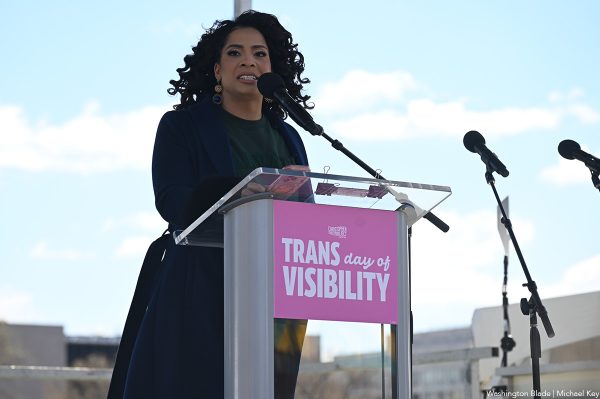
Hack closed with a message centered on their belief in collective action to create a better world for everyone and the resilience of the community.
“We’ve been fighting in the halls of power, and I’m proud of how far we’ve come. This week is about educating, advocating, and rallying. There isn’t one strategy to take back our country. It takes all of us … This is not just about trans people — this is about whether the government gets to decide who is acceptable. When one group is targeted, it never stops there. That’s what history shows us. That’s why this moment matters.”
“We’re being scapegoated and forced out of public life. There are efforts to legislate us out of existence. Our freedoms are intertwined — we can’t leave anyone out. They think we’re small, but they’re wrong.”
“The days of respectability politics are over,” Hack said, with rainbow kites lying overhead, signaling a welcome and powerful reflection of the day’s movement — one that echoed the sentiments of those gathered. “Our movement has never needed permission to exist — and we’re not asking for it now. There is something inevitable about a people who refuse to disappear. It is inevitable that we win.”
Senegal
Senegalese president signs bill that further criminalizes homosexuality
Measure passed in National Assembly with near unanimous support
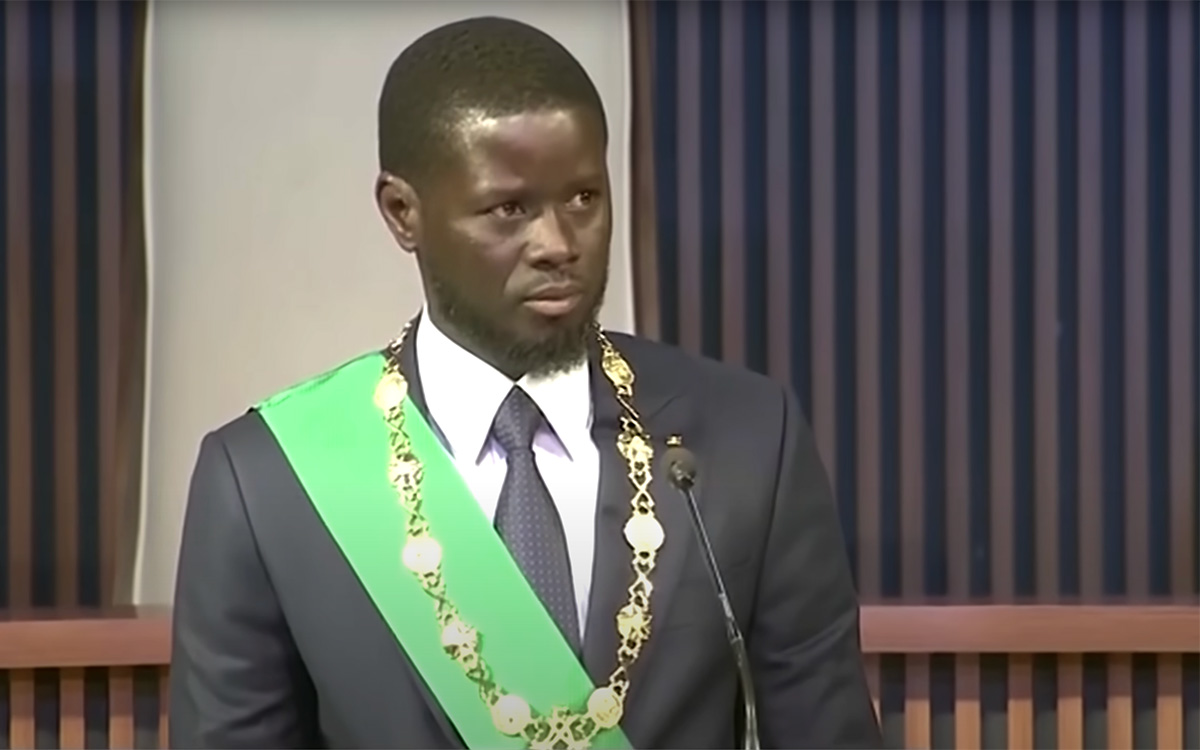
Senegalese President Bassirou Diomaye Faye on Tuesday signed into law a bill that further criminalizes consensual same-sex sexual relations in the country.
Lawmakers in the African country on March 11 nearly unanimously passed the measure that increases the penalty for anyone convicted of engaging in consensual same-sex sexual relations from one to five years in prison to five to 10 years. The bill that Prime Minister Ousmane Sonko introduced also prohibits the “promotion” or “financing” of homosexuality in Senegal.
Reuters on March 16 reported MassResistance, an anti-LGBTQ group based in the U.S., worked with Senegalese groups that support the bill. Volker Türk, the U.N. high commissioner for human rights, is among those who urged Faye not to sign it.
The Senegalese National Assembly in 2021 rejected a bill that would have further criminalized homosexuality in the country.
Police in February arrested a dozen men and charged them with committing “unnatural acts.”
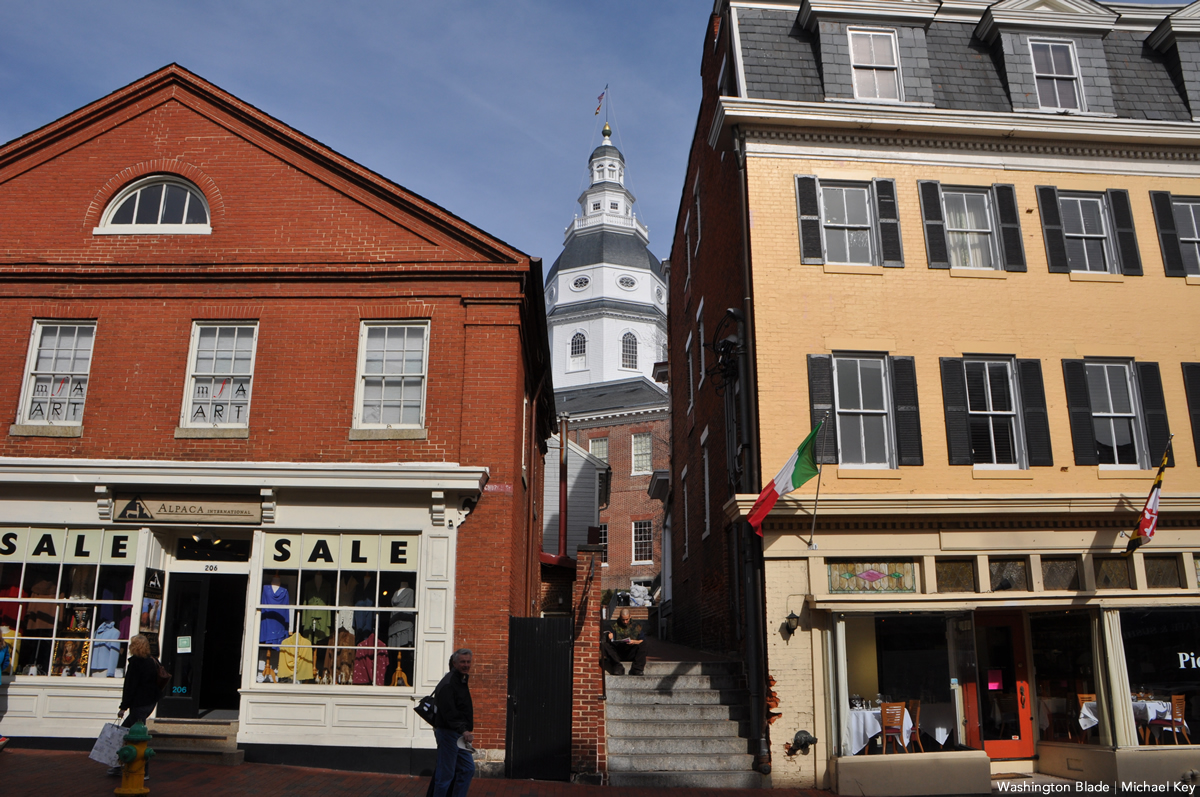
Maryland’s legislative caucuses outlined their legislative priorities heading into the final weeks of the 2026 General Assembly during a joint press conference on March 24.
The press conference was titled “We are Maryland,” where a representative for each of the legislative caucuses outlined priorities.
State Del. Kris Fair (D-Frederick County) of the LGBTQ+ Caucus opened the press conference with a statement on the unity of Maryland’s caucus.
“Together we can show our state and our community a different world, one where we mutually support one another and through that support uplift every Marylander,” he said.
In a press conference on March 5, the LGBTQ+ Caucus outlined its top legislative priorities. Fair highlighted two of those bills again during the “We are Maryland” press conference.
The first of the two highlighted pieces of legislation was Senate Bill 626 and House Bill 1589.
The bills would simplify the process of updating an individual’s birth certificate and align the Department of Health and DMV systems to reflect those changes. The bill is being led by state Sen. Clarence Lam (D-Anne Arundel and Howard Counties) and state Del. Ashanti Martinez (D-Prince George’s County).
The second piece of legislation is Senate Bill 950 and House Bill 1209, which would update and modernize laws and regulations around so-called conversion therapy. The bills have failed to pass either chamber thus far. They are being led by state Sen. Cheryl Kagan (D-Montgomery County) and state Del. Bonnie Cullison (D-Montgomery County).
(The U.S. Supreme Court on Tuesday ruled against a Colorado law that bans so-called conversion therapy for minors. Maryland is among the U.S. jurisdictions that prohibit the widely discredited practice for anyone under 18.)
Martinez and Lam have introduced bills in their respective chambers that would expand PrEP access in Maryland. Martinez did not attend the press conference, and Fair did not mention it when he spoke.
State Del. N. Scott Phillips (D-Baltimore County) represented the Black Caucus during the press conference. State Del. Dana Jones (D-Anne Arundel County) spoke on behalf of the Women’s Caucus, State Del. Teresa Woorman (D-Montgomery County) represented the Latino Caucus, and State Del. Lily Qi (D-Montgomery County) represented the Asian-American and Pacific Islander Caucus. State Del. Jared Solomon (D-Montgomery County) represented the Jewish Caucus, and state Del. Sean Stinnett (D-Baltimore County) represented the Muslim Caucus during the press conference.
Solomon ended the press conference by explaining the importance of all the caucuses coming out together.
“We are stronger when we’re together, and many of these issues that we have talked about, again, impact all of us,” said Solomon.

Trans activists gather on National Mall for Transgender Day of Visibility

The cost of speaking one’s mind

Senegalese president signs bill that further criminalizes homosexuality

Md. lawmakers reaffirm legislative priorities

Supreme Court rules against Colo. law banning conversion therapy for minors

Lorato ke Lorato: marriage equality, democracy, and the unfinished work of justice in Botswana

Celebrate cherry blossoms the drag way

Japanese Supreme Court to consider marriage equality

The outrage economy is not the LGBTQ community

Anti-trans visa ruling echoes Nazi regime destroying trans documents
-

 Botswana5 days ago
Lorato ke Lorato: marriage equality, democracy, and the unfinished work of justice in Botswana
-
Out & About4 days ago
Celebrate cherry blossoms the drag way
-
Japan4 days ago
Japanese Supreme Court to consider marriage equality
-
Opinions4 days ago
The outrage economy is not the LGBTQ community