Local
D.C. activists seek to ‘build on victories’ in 2014
Mayoral contest could pit Gray against Catania
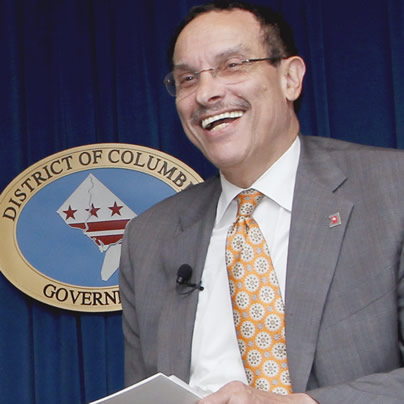
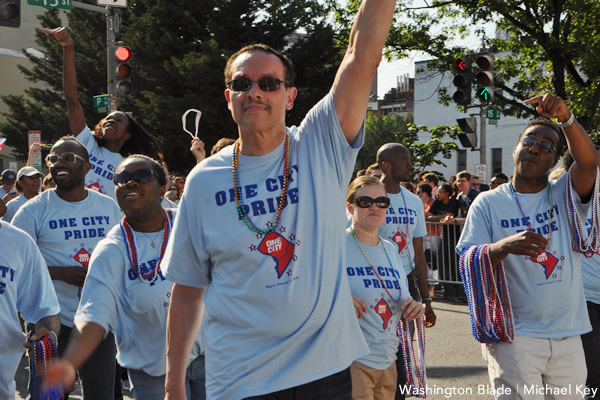
Mayor Vincent Gray announced late last year that he would seek re-election. The primary is slated for April 1. (Washington Blade photo by Michael Key)
LGBT activists in D.C. acknowledge that they live in a city that has had one of the nation’s strongest anti-discrimination laws protecting their community for more than 20 years, the city passed a same-sex marriage law in 2009, and virtually all elected officials strongly support LGBT equality.
With that as a backdrop, the Gay and Lesbian Activists Alliance last week released its 2014 Election Year Agenda for LGBT Equality in Washington, D.C., which, among other things, calls for more than a dozen policy initiatives and for the approval of five LGBT-related bills currently pending before the City Council.
In an announcement last week, GLAA said the 16-page policy document was used to formulate a questionnaire on LGBT issues that the group has sent to all candidates running in the April 1 D.C. primary for mayor and seats on the City Council, just as it has done in every city election since the early 1970s.
“We have won most of the policy reforms for LGBT equality, which is reflected in the title of this year’s policy brief, ‘Building on Victory,’” said GLAA President Rick Rosendall.
“What remains mostly falls into two broad categories – translating our model policies and laws into reality, especially for at-risk populations including LGBT youth and transgender persons, and remaining vigilant,” Rosendall said.
The issues covered in the five pending bills include:
• The Surrogacy Parenting Agreement Act, which calls for updating the city’s surrogate parenting law that gay rights attorneys have called archaic to add provisions to better enable same-sex couples to enter into surrogacy agreements.
• The Domestic Partnership Termination Recognition Amendment Act, which calls for changing D.C.’s existing domestic partnership law to enable couples that don’t live in D.C. to terminate their partnerships in a way that is recognized by courts in other states.
• The LGBTQ Homeless Youth Reform Amendment Act calls for, among other things, city funds to pay for beds reserved for LGBT youth in homeless shelters and other homeless facilities that activists say traditionally have not met the needs of LGBT or “questioning” youth.
• The Conversion Therapy for Minors Prohibition Act calls for prohibiting licensed therapists in the city from seeking to change the sexual orientation or gender identity of people under the age of 18 through so-called “conversion” therapy. Advocates for the legislation point out that virtually all professional mental health organizations have said the therapy is harmful to the mental health of those participating in such therapy, especially young people.
• The Marriage License Issuance Act calls for amending the city’s marriage law to eliminate the current mandatory, three-day waiting period for obtaining a marriage license. Marriage reform activists, both gay and straight, have called the waiting period requirement an unnecessary relic of the past.
The GLAA policy brief also calls for a requirement by city regulators and the mayor’s office that health insurance plans offered to D.C. government employees and the city’s Health Link insurance exchange program under the Obama administration’s Affordable Care Act include full coverage for sex reassignment surgery and hormone treatment for transgender people.
GLAA’s candidate questionnaires ask all candidates running for mayor and for the City Council to state whether they would support such a proposal.
“This is a huge priority in our community,” said Nico Quintana, senior organizer for the D.C. Trans Coalition.
Voters to choose among friends in election
Many LGBT activists have said that since nearly all of the candidates running this year for mayor and seats on the City Council have strong records of support on LGBT issues, LGBT voters will likely choose among them based on non-LGBT issues.
Mayor Vincent Gray, who some activists say has the strongest record on LGBT issues of any mayor in D.C. history, is being challenged by four members of the City Council, all of whom have expressed strong support for the LGBT community.
Council members Jack Evans (D-Ward 2), Muriel Bowser (D-Ward 4), and Tommy Wells (D-Ward 6) each have longtime records as strong supporters of LGBT equality. Council member Vincent Orange (D-At-Large), who opposed same-sex marriage when he ran for mayor in 2006, has said he changed his mind and has become a committed supporter of the city’s same-sex marriage law while continuing his support on all other LGBT-related issues.
Former State Department official Reta Jo Lewis and, Busboys and Poets Restaurant owner and businessman Andy Shallal have also expressed strong support for LGBT rights. The positions of lesser-known mayoral candidates Carlos Allen, a music promoter, Christian Carter, a businessman and civic activist, couldn’t immediately be determined.
Political observers say the LGBT vote, which surveys show will likely comprise at least 10 percent of the vote in the April 1 Democratic primary, could be a key factor in the outcome of the election.
But based on interviews with LGBT activists following the campaigns of the mayoral candidates, the LGBT vote will likely be divided among Gray and his City Council rivals, although many activists believe Gray remains highly popular in the LGBT community.
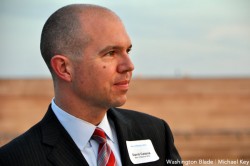
Council member David Catania (I-At-Large) has said he will enter the mayor’s race as an independent if Vincent Gray wins the primary and becomes the Democratic Party nominee. (Washington Blade file photo by Michael Key)
In looking beyond the primary to the November general election, gay D.C. Council member David Catania (I-At-Large) is being viewed as the wildcard of the 2014 mayoral race. Catania last fall formed an exploratory committee to consider whether to enter the mayoral race, knowing that as an independent he doesn’t have to file papers as a candidate until June, long after the winner of the Democratic primary is known.
In a development that startled some political observers, Catania told the Washington Post that he has already decided he will enter the race if Gray wins the primary and becomes the Democratic Party nominee.
In every mayoral election since the city obtained its home rule government in 1974, the Democratic Party nominee has won his or her race as mayor in the November general election. Catania, however, is telling potential supporters that this year is different and that the electorate is “tired” of politics of the past.
LGBT voters, who have long supported Catania in large numbers, could be faced with a dilemma if forced to choose between Gray and Catania, according to some LGBT advocates.
Next week: A preview of City Council races and the prospects for gay longtime Council member Jim Graham (D-Ward 1).


Cameroon
Gay Cameroonian immigrant will be freed from ICE detention — for now
Ludovic Mbock’s homeland criminalizes homosexuality
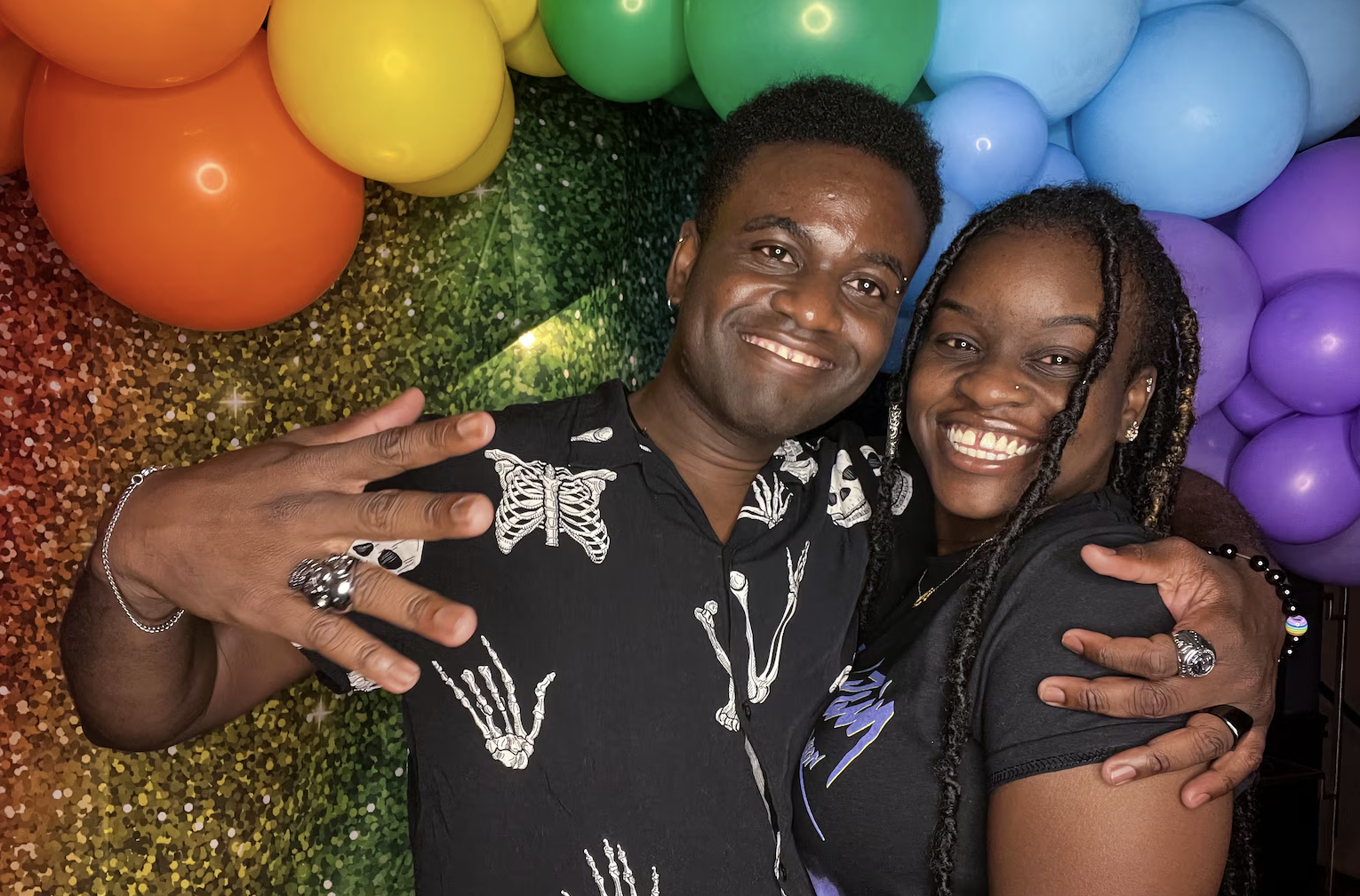
By ANTONIO PLANAS | An immigration judge on Friday issued a $4,000 bond for a Cameroonian immigrant and regional gaming champion held in federal immigration detention for the past three weeks.
The ruling will allow Ludovic Mbock, of Oxon Hill, to return to Maryland from a Georgia facility this weekend, his family and attorney said.
“Realistically, by tomorrow. Hopefully, by today,” said Mbock’s attorney, Edward Neufville. “We are one step closer to getting Ludovic justice.”
The rest of this article can be found on the Baltimore Banner’s website.
District of Columbia
Bowser appoints first nonbinary person to Cabinet-level position
Peter Stephan named Office of Disability Rights interim director
D.C. Mayor Muriel Bower has named longtime disability rights advocate Peter L. Stephan, who identifies as nonbinary, as interim director of the D.C. Office of Disability Rights.
The local transgender and nonbinary advocacy group Our Trans Capital and the LGBTQ group Capital Stonewall Democrats issued a joint statement calling Stephan’s appointment an historic development as the first-ever appointment of a nonbinary person to a Cabinet-level D.C. government position.
“This milestone appointment recognizes Stephan’s extensive expertise in disability rights advocacy and marks a historic advancement for transgender and nonbinary representation in District government leadership,” the statement says.
The statement notes that Stephan, an attorney, held the position of general counsel at the Office of Disability Rights immediately prior to the mayor’s decision to name him interim director.
The mayor’s office didn’t immediately respond to a question from the Washington Blade asking if Bowser plans to name Stephan as the permanent director of the Office of Disability Rights. John Fanning, a spokesperson for D.C. Council member Anita Bonds (D-At-Large), said the office’s director position requires confirmation by the Council.
Stephan couldn’t immediately be reached for comment.
“At a time when trans and nonbinary people ae under attack across the country, D.C. continues to lead by example,” said Stevie McCarty, president of Capital Stonewall Democrats. “This appointment reflects what we have always believed that our community is always strongest when every voice is represented in government,” he said.
“This is a historic step forward,” said Vida Rengel, founder of Our Trans Capital. “Interim Director Stephan’s career and accomplishments are a shining example of the positive impact that trans and nonbinary public servants can have on our communities,” according to Rangel.
District of Columbia
Capital Stonewall Democrats set to celebrate 50th anniversary
Mayor Bowser expected to attend March 20 event

D.C. Mayor Muriel Bowser, members of the D.C. Council, and local and national Democratic Party officials are expected to join more than 150 LGBTQ advocates and supporters on March 20 for the 50th anniversary celebration of the city’s Capital Stonewall Democrats.
A statement released by the organization says the event is scheduled to be held at the Pepco Edison Place Gallery building at 702 8th St., N.W. in D.C.
“The evening will honor the people who built Capital Stonewall Democrats across five decades – activists who fought for rights when the odds were against them, public servants who opened doors and refused to let them close, and a new generation of leaders ready to carry the work forward,” the statement says.
Founded in 1976 as the Gertrude Stein Democratic Club, the organization’s members voted in 2021 to change its name to the Capital Stonewall Democrats.
Among those planning to attend the anniversary event is longtime D.C. gay Democratic activist Paul Kuntzler, 84, who is one of the two co-founders of the then-Gertrude Stein Democratic Club. Kuntzler told the Washington Blade that he and co-founder Richard Maulsby were joined by about a dozen others in the living room of his Southwest D.C. home at the group’s founding meeting in January 1976.
He said that among the reasons for forming a local LGBTQ Democratic group at the time was to arrange for a then “gay” presence at the 1976 Democratic National Convention, at which Jimmy Carter won the Democratic nomination for U.S. president and later won election as president.
Maulsby, who served as the Stein Club president for its first three years and who now lives in Sarasota, Fla., said he would not be attending the March 20 anniversary event, but he fully supports the organization’s continuing work as an LGBTQ organization associated with the Democratic Party.
Steven McCarty, Capital Stonewall Democrats’ current president, said in the statement that the anniversary celebration will highlight the organization’s work since the time of its founding.
“Capital Stonewall Democrats has been fighting for LGBTQ+ political power in this city for 50 years, electing people, training organizers, holding this community together through some really hard moments,” he said. “And right now, with everything going on, that work has never mattered more. This gala is the first moment of our next chapter, and I want the community to be a part of it.”
The statement says among the special guests attending the event will be Democratic National Committee Vice Chair Malcolm Kenyatta, who became the first openly gay LGBTQ person of color to win election to the Pennsylvania General Assembly in 2018.
Other guests of honor, according to the statement, include Mayor Bowser; D.C. Council member Zachary Parker (D-Ward 5, the Council’s only gay member; D.C. Council member Anita Bonds (D-At-Large); Earl Fowlkes, founder of the International Federation of Black Prides; Vita Rangel, a transgender woman who serves as Deputy Director of the D.C. Mayor’s Office of Talent and Appointments; Heidi Ellis, director of the D.C. LGBTQ Budget Coalition; Rayceen Pendarvis, longtime D.C. LGBTQ civic activist; and Phillip Pannell, longtime D.C. LGBTQ Democratic activist and Ward 8 civic activist.
Information about ticket availability for the Capital Stonewall Democrats anniversary gala can be accessed here: capitalstonewalldemocrats.com/50th

BMA celebrates enduring influence of Henri Matisse

Gay Venezuelan man ‘forcibly disappeared’ to El Salvador files claim against White House

Trump proclamation targets trans rights as State Dept. shifts visa policy

Adolescentes trans en Ecuador podrán cambiar datos en su cédula, pero con condicionamientos

Gay Cameroonian immigrant will be freed from ICE detention — for now

Trump will refuse to sign voting bill without anti-trans provisions

Owner of D.C. gay bar Green Lantern John Colameco dies at 79

PHOTOS: ‘Defrosted’

Ukrainian Supreme Court recognizes same-sex couple as a family

Md. Legislative LGBTQ+ Caucus outlines 2026 priorities
-

 The White House4 days ago
Trump will refuse to sign voting bill without anti-trans provisions
-
District of Columbia5 days ago
Owner of D.C. gay bar Green Lantern John Colameco dies at 79
-
Photos4 days ago
PHOTOS: ‘Defrosted’
-
Ukraine4 days ago
Ukrainian Supreme Court recognizes same-sex couple as a family