Books
Politics, sex, activism highlight memoir on AIDS survival
POZ magazine founder Strub recounts journey from Capitol Hill to HIV fight
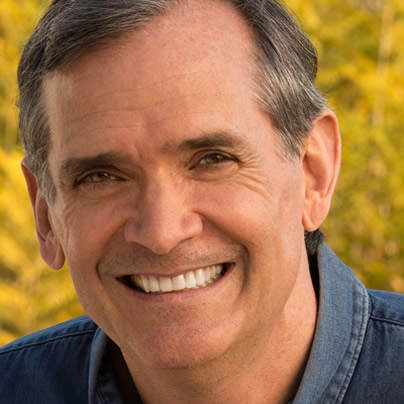
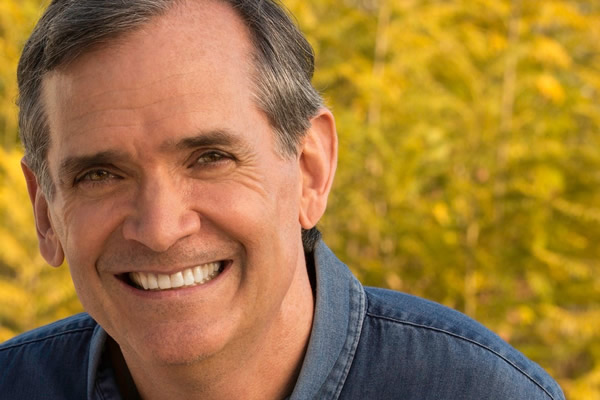
Sean Strub’s new memoir revisits closeted Washington in the ‘70s and the AIDS fight in New York. (Photo courtesy Public Impact Media Consultants)
Sean Strub’s newly published book Body Counts: A Memoir of Politics, Sex, AIDS, and Survival provides a vivid, first-hand account of how his own struggle with AIDS intersected with his role as an AIDS activist during the tumultuous early years of the epidemic in New York City.
But Strub, 55, also reveals a part of his life that those who know him as founder of the influential AIDS publication POZ magazine may not have known – his political and personal coming out following his move to Washington, D.C., from his home state of Iowa in 1976 at the age of 17.
After delaying his start at Georgetown University for a year to work on political campaigns in Iowa and through help from then-Sen. Dick Clark (D-Iowa), Strub landed a patronage job as an elevator operator at the U.S. Capitol in March of 1976.
“I couldn’t imagine anything more exciting for an ambitious political junkie than employment literally a few steps away from the Senate chamber,” he writes in his book.
Strub is scheduled to read from his book and take questions from listeners Tuesday night, Jan. 28, at D.C.’s Politics and Prose bookstore at 5015 Connecticut Ave., N.W., from 7-9 p.m.
As Strub tells it, over the next three years (from 1976-1979) he cautiously came to terms with his status as a gay man after having struggled with self-denial in his younger years. His gradual evolution toward self-acceptance, he writes, came in part through the help of closeted gay men in influential political positions in Washington and later in New York who became his mentors.
Like them, Strub writes, he became comfortable with his own sexual orientation but remained deep in the closet, fearing that public disclosure of his “hidden” life would destroy his long-held aspirations to become involved in politics and public policy making. His earlier dream of one day getting elected to public office would no longer be possible due to his sexual orientation, he concluded during the years from the late 1970s to early 1980s.
Before going on to chronicle his early career operating a direct mail fundraising business while helping to raise money for AIDS-related causes, Strub provides a behind-the-scenes glimpse into the closeted gay scene in the nation’s capital in the late 1970s.
Gay men of the Baby Boom generation who lived in D.C. at that time will likely relate to Strub’s stories about meeting and befriending Capitol Hill staffers and others involved in politics at the Lost and Found, the then highly popular gay disco located in a hidden warehouse district in Southeast D.C. less than a mile from the Capitol.
“Going to the Lost and Found marked my first appearance in a public gay venue, and that felt irreversible, crossing a threshold from which I could not return,” he writes.
“I learned that meeting gay men in a gay context – whether at a bar, private party or other circumstance – invoked an unspoken omerta-like agreement not to share the secret life with others, even if it meant pretending we didn’t know each other,” he says in the book.
Among those who became his mentor was Washington political operative turned journalist Alan Baron, publisher of the widely read Baron Report on Washington politics. Others – both gay and straight – gave him what he called the equivalent of a Harvard MBA in the field of fundraising through direct mail and telemarketing techniques.
Still others introduced him to the world of gay sex and gay male cruising spots both in D.C. and during his first few years in New York. It was at a time just before AIDS burst on the scene that epidemiologists later described as a “perfect storm” for the sexual transmission of HIV between men who have sex with men.
Through a friend he met at the D.C. gay bar Rascals, Strub says he was invited to a dinner party in 1978 at the home of D.C. gay businessman Bob Alfondre and his partner Carroll Sledz. Strub says it was there that he met and became friends with famed playwright Tennessee Williams, a guest of honor at the dinner party, who later invited Strub to visit him at his home in Key West, Fla.
Other VIPs with whom Strub met and befriended in subsequent years included Andy Warhol, Keith Haring, Gore Vidal and Larry Kramer.
In what his activist friends considered a major coup, Strub tells of how he mustered all of his courage and salesmanship in 1982 to persuade Tennessee Williams to sign his name to a fundraising letter for the Human Rights Campaign Fund, an arm of the then Gay Rights National Lobby that became the forerunner to today’s Human Rights Campaign.
The letter was written by Baron at the request of Steve Endean, the executive director of GRNL and whose idea it was to create the HRCF. Among other things, the letter urged potential donors to give money to HRCF, a political action committee or PAC, to help prevent anti-gay candidates backed by the Rev. Jerry Falwell from getting elected to Congress.
“I emphasized how influential the new PAC would be and how critical his signature on the letter would be to its success,” Strub wrote in describing his pitch to Williams at a hotel room in New York City where Williams was staying at the time. When Strub entered the hotel room Williams was dressed in pajamas and a bathrobe and had a glass of wine in his hand.
“I said he could set a powerful example to others,” Strub wrote. “Getting him to sign the letter, I declared, would be the most important thing I had ever done in my life.”
Over the next 90 minutes or more Williams talked about his plans for a new play and all kinds of things unrelated to the letter. At one point the then 24-year-old Strub nearly froze when Williams asked him what he would do to persuade him to sign the letter, thinking Williams might be making a pass at him, Strub writes.
“Almost anything, but I hope I don’t have to,” Strub says he replied.
Finally, thinking Williams was politely indicating he wouldn’t sign the letter, Strub got up from where he was sitting and put on his coat and walked toward the door. “Wait a minute, baby, what about your letter?” Strub quotes Williams as shouting.
The famous playwright signed the letter, which, according to Strub, became the most successful gay rights fundraising appeal to date, generating over 10,000 new donors to the gay rights cause and paving the way for the future HRC to become the nation’s leading LGBT rights organization.
Strub’s success in getting Tennessee Williams to sign the fundraising letter came after he moved to New York in 1979 to continue his studies at Columbia University. A short time later Strub and various partners established a direct mail fundraising businesses that did work for gay rights and other progressive causes as well as for Democratic Party candidates running for public office.
By the mid-1980s, around the time he discovered he was HIV positive, he helped raise money for AIDS advocacy groups, including New York’s pioneering Gay Men’s Health Crisis, the American Foundation for AIDS Research (AmfAR), and ACT UP.
NIH official Fauci disputes claim he was ‘uncooperative’
By 1987, Strub says he became further disillusioned over the federal government’s response to AIDS when fellow activist Michael Callen told him about a tense meeting in May of that year between Callen and several other AIDS activists and Dr. Anthony Fauci, who headed AIDS research programs at the National Institutes of Health.
Callen and the other activists urged Fauci to arrange for the NIH to issue guidelines recommending that doctors treating AIDS patients prescribe the drug Bactrim as a prophylaxis to prevent the onset of pneumocystis carinii pneumonia, the opportunistic infection that killed most people with AIDS at the time. Strub notes that Callen cited promising results in New York and other places where AIDS doctors, especially New York physician and researcher Joseph Sonnabend, reported Bactrim was succeeding in preventing patients from contracting the deadly pneumonia.
“Fauci was uncooperative,” Strub reports in his book. “He dismissed previous research, saying he wanted data proving that prophylaxis [Bactrim] helped prevent PCP specifically in patients with HIV.”
Strub noted that NIH ultimately issued the guidelines two years later after confirming through a drug trial that Bactrim did, indeed, effectively prevent PCP. But during the two years prior to the release of the guidelines, Callen estimated that nearly 17,000 people with AIDS died of PCP, Strub says in his book. He says Callen expressed outrage that many of them might have survived if their doctors were informed of the effectiveness of Bactrim as a preventive measure.
When contacted by the Blade last week, Fauci disputed Callen’s account of what happened, saying he made it clear to Callen during their 1987 meeting that he did not have the authority to issue guidelines on prescription drugs.
“So what actually happened is that Michael came to me and said you know there is this preliminary activity and some small trials that Bactrim works,” Fauci said. “Would you come out and make a guideline to say it should be used by everybody. And I said ‘Michael I can’t do that but what I can do is help design and make sure that the grantees that we fund do a clinical trial in Bactrim to prove or not that it was safe and effective,’” he said.
“So I did exactly what I promised Michael,” Fauci said. “It took obviously longer than he would have wished. But I didn’t blow him off and say I don’t want to issue guidelines. The fact is that’s neither within my purview nor within the responsibility or authority I have to issue guidelines.”
In 1990, Strub ran for Congress in a district just north of New York City where he had been living while operating a fundraising business. Although he lost in the Democratic primary, many familiar with his race said he broke new ground by becoming the first openly HIV-positive candidate to run for a federal office.
Four years later, in 1994, he founded POZ magazine, a first-of-its-kind upscale publication reporting on the experiences of people with HIV and the trials and tribulations they faced – including Strub himself – in struggling to stay alive.
By that time Strub was out publicly, was a veteran of AIDS protests, and had experienced several years earlier the death of his first partner from AIDS.
In keeping with the belief at the time that nearly everyone with AIDS would die, Strub raised the bulk of the capital needed to launch POZ by selling two life insurance policies he had to a “viatical” investment company for $345,000.
The company expected to yield $75,000 in profit by cashing in the $450,000 combined value of the two policies when Strub died.
Although Strub survived, he tells in great detail how during the years immediately following the launching of POZ, he struggled with Kaposi’s sarcoma and pneumocystis pneumonia. His says his decision to discontinue treatment with the harsh drug AZT, which had side effects that caused fellow patients to become sick and weak, most likely kept him alive long enough to be saved by the new generation of protease inhibitor drugs.
In 2004 Strub sold POZ and began spending more time at his home in the small town of Milford, Penn., while retaining his home in Manhattan.
Following are excerpts of the Blade’s interview with Strub.
Washington Blade: What prompted you to write the book at this time?
Sean Strub: I had thought about it over the years and I kind of resisted it in the years after I left POZ. Then about five years ago enough time had passed from the very worst days that I thought I was getting more perspective on it. I felt more of a sense of wanting to remember people and I think most importantly to document a history that had not been well documented.
And there are fewer and fewer people who are around to tell the story firsthand who were really on the front lines over such a long period of time.
Blade: You describe in a moving way in your book how sick you were in the middle 1990s. You wrote that you expected to die. Why do you feel you survived long enough to benefit from the new generation of effective drugs such as protease inhibitors when others did not?
Strub: I think that is the question thousands of people who survived that time ask themselves often. I thought of it once as a sort of survivor’s guilt. But today it just seems like an existential question. It’s a question I don’t think I will ever answer but also one I don’t think I should ever stop asking.
The quality of care a person received is probably the most important factor, but there are others. When [the late New York AIDS activist] Michael Callen wrote “Surviving AIDS” in 1990 he recognized three shared traits amongst people with HIV at that time that were surviving. This was before combination treatment, of course. The three were, one, a belief that some people would survive; two, they could identify a reason to survive — raising a child, loving a partner, running a business, completing school, etc.; and, three, when asked how they treated their illness, they could list many different strategies. It wasn’t so much which strategy they pursued, but it was the length of the list that mattered because that indicated they were people who were seeking to survive. I think that is apt for me. I sought to survive…
Survival for me was a path, not a place. The bullet I narrowly missed was AZT mono-therapy. My doctor recommended it to me. Michael Callen constantly harangued me against it. I took it for a few weeks then stopped it. I believe if I had continued on AZT mono-therapy, I wouldn’t have survived to benefit from protease therapy.
Blade: To jump ahead a bit, what are you doing these days?
Strub: I’m the executive director of the Sero Project, which is a network of people and their allies fighting for freedom from stigma and injustice. And that’s our tagline. And we are particularly focused on HIV criminalization. So we have been engaged with a lot of the decriminalization advocates across the country.
Blade: You go into that in the last chapter of your book, saying in no uncertain terms that laws making it a crime for someone who is HIV positive to have sex with another person without telling them they are positive should be repealed.
Strub: You can see SeroProject.com. If you go to that website there is a little short film. It’s the trailer to a documentary I’ve been working on called HIV is Not a Crime. It really explains our work.
Blade: Wasn’t there a bill introduced in Maryland to increase the penalties for so-called intentional HIV transmission?
Strub: A couple of years ago – I think it was State Sen. [Norman R.] Stone [D-Baltimore County] who wanted to increase the maximum penalty from three years to 35 years. And that was beaten back. And then last year Del. Shirley Nathan Pulliam [D-Baltimore County] introduced a bill to get rid of the statute entirely.
In Maryland like every other state they have assault statutes and someone who maliciously intends to harm someone else they can prosecute, whether they use a gun or a baseball bat…And the HIV specific statute doesn’t contribute anything to public safety or public health. It hurts public health and it’s profoundly stigmatizing. So she introduced that bill last year. It’s been withdrawn.
Blade: Is it mostly states that have these statutes? Is there a federal statute?
Strub: There is not a federal statute. So it’s state by state. About two thirds of the states have these HIV specific statutes; although in every state they can use someone’s HIV-positive status inappropriately in some criminal prosecutions in heightened charges. In Texas and New York, for example, they don’t have HIV-specific statutes.
But there is a guy in Texas spending 35 years for spitting at a cop and a guy in New York who just got out of jail after serving six and a half years for spitting when a New York appeals court ruled that in New York State saliva cannot be considered a deadly weapon. So the specific statutes are in about two thirds of the states.
At the federal level we did just get through Congress recently an amendment to the Armed Services Appropriations bill to have the Secretary of Defense have a review of the Uniform Code of Military Justice and how it relates to HIV to make sure that their policies and procedures are consistent with contemporary science and not inappropriately stigmatizing people. So that’s our only legislative victory so far on this. There will be more to come. We’re organizing in individual states and I hope there will be some pretty good action in a couple of them this year.
Blade: So is this your main activity at this point?
Strub: That’s correct – that and here in Milford [Pa.] I also co-own a historic hotel-restaurant called the Hotel Fauchere. So that’s my sort of business here. But I spend most of my time on the advocacy work.
Blade: Are you in Milford, Pennsylvania right now?
Strub: I’m in Milford at the moment. I live in Milford and also in Manhattan. But lately, for a year or so, I’ve been much more in Milford than in New York.
Blade: That seems to be the type of thing you have done throughout your professional career – a combination of activism and as you called it entrepreneurial activity. Would that be correct?
Strub: That’s correct.
Blade: Do you have any interest in going back into the direct mail and fundraising field?
Strub: Not really – I’m always, I’m frequently giving pro-bono counsel to the efforts I support around fundraising. But I’ve really been much more focused on the advocacy work, particularly recreating a grass roots network of people with HIV engaged in advocacy on the state and local level, which we had in the ‘80s and even in the early ‘90s and then it kind of dissipated through the ‘90s. And now it’s enjoying a bit of a revival. We are recreating these networks of people with HIV.
Blade: What is your assessment of the status of the national AIDS advocacy organizations right now? Some people have referred to them as AIDS incorporated. Some people say they have overlapping functions and maybe there is duplication of efforts and there should be more consolidation.
Strub: Well, this AIDS, Inc. phrase is often used in a pejorative way. But it’s also just descriptive. It’s a big industry now. Careers are made – institutions – it isn’t the epidemic of 30 years ago by any means – and thank goodness. But in terms of the advocacy organizations, I don’t really see the advocacy organizations at the federal level…
HRC was pretty consistent in terms of advocating for the Ryan White program in some of the big funding streams. But the other issues outside of funding for service providers, for example, the issues involving privacy, confidentiality, stigma, patient autonomy, criminalization and the whole range of human rights approaches to the epidemic became an orphan in Washington and no one was really working on those.
Now what has happened in the last several years…there is sort of a growing pressure on the national LGBT groups to re-engage in the epidemic. After combination therapy came out – first of all, a lot of advocates left AIDS work because a lot of them were personally concerned about – their engagement and advocacy was due to their own fear, right? And their AIDS activism was a singular effort. It wasn’t connected to any broader social justice movement. And so a lot of those people kind of left after combination therapy came out.
And a lot of the LGBT groups turned to other opportunities and exciting things – ‘Don’t ask, Don’t Tell’ repeal and marriage equality and so on. And all of these human rights-related issues kind of got neglected. And so then we end up with things like criminalization.
Now, that is a growing and scary phenomenon that leaves every person with HIV in the country just one disgruntled, ex-partner away from being in a courtroom.
And yet the survey work has shown that gay men overwhelmingly support having it be a criminal act for someone with HIV not to disclose that fact prior to being intimate, independent of whether there is any risk involved and independent of whether there is any HIV transmission involved.
So we’re kind of playing catch up in the gay community on these issues. There are good things happening. I think HRC is certain to focus on this. They’ve been quite receptive toward us and some other groups. So I think we’re going to see more advocacy from gay groups.
Blade: What about the issue of prevention and what is possible? The issue of sex is always with us. Frank Kameny, the veteran gay rights pioneer, said back when the epidemic began and we learned the virus was sexually transmitted that you can never change the sex urge.
Strub: Well, even in the worst years when people were presumably the most frightened we never got much more than half of gay men to consistently use condoms. So there definitely is a limit on how far that will go. But I’m also not a fan of just relying on the biomedical approaches.
I think in terms of prevention the things we need to do – first we need to target prevention funding. Two-thirds of the new cases are among gay men. Only a small percentage of federal prevention funds are targeted to men who have sex with men…
That’s one thing. Second, there still is a reluctance to talk honestly about how gay men have sex. And this goes back to the first days of the epidemic. I write about that in New York – the conflict between the AIDS establishment and [AIDS activists] Michael Callen, Richard Berkowitz and [AIDS doctor and researcher] Joe Sonnabend. Too much of the prevention messaging is either fear based, which is sort of relying on what might have been effective in the epidemic 25 years ago. But the truth is the consequences of HIV infection today are very different than they were 25 years ago. And you can’t use tactics and strategies that worked for that epidemic and expect them to work for this epidemic. You need to deal with the epidemic we have today and the realities of that today…
The New York City Health Department has this one ad that centers on HIV and the next minute you’ve got a brain fog and anal cancer and your bones are snapping. And all of those things can be side effects of the treatments. And I’m not saying they don’t happen. They do happen. I’ve said a lot about the side effects. But they aren’t happening to everybody. And to gay men they know this is a wild exaggeration. I compare it to the anti-drug campaign that sort of implies that if you smoke a joint and two weeks later you’re going to be starting heroin. People know better than that.
And we’re not focusing on getting people real practical information for them to integrate into their own risk reduction analysis, which is what I think most gay men and most people do before they have sex with someone they don’t know a lot about.
We need to give people the information so that they are doing that risk analysis. We need prevention campaigns that are fact based, that are non-judgmental, and that are supportive of gay male sexuality.
You know, Joe Sonnabend said early in the epidemic and I quoted him in the book, he said we’ll never defeat AIDS until we treat the anus as a sex organ with the same respect given to the vagina or the penis. And that remains true today.
Blade: You mentioned that Dr. Anthony Fauci appeared to be an impediment to the use of the drug Bactrim back in 1987 as a prophylaxis to prevent pneumocystis pneumonia for people with AIDS.
Strub: Absolutely.
Blade: Did he have what he might consider legitimate reasons for needing more time to promote this drug?
Strub: Well I don’t know what he would say. It was written about at the time. Michael Callen referred to it as one of the most egregious examples of federal indifference to the lives of gay men. At the time Michael met with him in 1987 and begged him to support publicizing and making this a recommendation because Bactrim… was around a long time and was very effective. It has been used in immune compromised patients before. There were even clinical trials done in transplant patients. So there was a fair amount of literature on its use by immune compromised patients to prevent PCP [pneumocystis carinii pneumonia].
So Callen went and met with Fauci and Fauci was doubtful. He wanted clinical trials done to prove it…So when the trial results were in that’s when the feds came out with the recommendation around Bactrim. And in that intervening period – I have the number in there — something like 12 or 14 or 16,000 people with AIDS died of pneumocystis, which is a horrible death. You probably know people who died of it. They suffocate to death.
And if they had been on this treatment the majority of them would not have died of pneumocystis. They may or may not have lived until combination therapy came up. Who knows? Some of them surely would have. You know I don’t get into personally bashing Fauci. But this is kind of an example indicative of the federal response then and to a certain extent today and how all sorts of bureaucracy and funding get in the way of what is effective and needed.
Blade: Going back to your years in Washington you name certain members of Congress as being gay. Do you ‘out’ some of these people or were they known publicly to be gay?
Strub: The people I talk about I knew before they were outed. I talked about [former Rep.] Gerry Studds [D-Mass.]. I talked about [former Rep.] Barney [Frank (D-Mass)]. I think I referenced [former Rep.] Peter Kostmayer [D-Penn.]. I talked about the Bob Bauman scandal [former Rep. Robert Bauman (R-Md.)]. I referenced [former Rep.] Stuart McKinney [(R-Conn.)]. I don’t think I’m outing any current or former member of Congress that isn’t already known to be gay.
Blade: You appear to be more than a little critical of the Clinton administration on the AIDS front.
Strub: I thought I went easy on him.
Blade: Richard Socarides, Clinton’s White House liaison to the LGBT community, may disagree with some of the things you say in the book about Clinton.
Strub: Well, Richard Socarides – there are a lot of people who will disagree with Richard Socarides’ version of that history. I tried not to take things personally because there is always another side. But the indifference and the opportunism and the manipulation of the issue for political purposes are something I and a lot of other people saw really clearly – really visibly. And there is no question about it. The needle exchange stuff. You know, that’s a sin right up there with Fauci on the Bactrim. That is something that was so immediate, so clear.
One of the biggest reasons that the heterosexual transmission in New York has declined so precipitously is because of needle exchange.
Blade: Would the Clinton people argue that they didn’t have the political support in Congress and elsewhere to fund and promote needle exchange?
Strub: That’s always the argument – that’s always the argument. But you know that’s also a decision. The other way of saying it is they weren’t willing to expend the political capital to do that. And that becomes a little chicken and egg-ish, right? They could have done it. They could have gotten it done. There would have been some price they would have had to pay. Maybe it would have screwed up the rest of their legislative agenda. I don’t know. And I suppose they could have tried and ended up failing. But I think if the president had shown the leadership on it I think it would have happened because the science was so clear.
Blade: Didn’t at some point Congress enact into law a funding ban on needle exchange programs?
Strub: Sure. But that isn’t a reason for the Clinton administration not to have sought to change it. There are many different strategies. The problem was they decided to roll over on it. They were not going to go out on a limb on this issue and to bring about a change was not that important to them. You can say they had other priorities. Everyone in office only has so much political capital and they have to use it on what’s important to them. And we learned that this was not something that was important to them.
Blade: What can you say about the status of your marriage to a woman friend Doris O’Donnell that you tell about in the book? You said the marriage, among other things, would have allowed her to obtain your disability benefits and pass them on to your life partner Xavier Morales in the event of your death. Are you still married to her?
Strub: No. We got married. And then when my health came back and she had qualified for Medicare and Social Security we then got divorced because for tax reasons it made sense. She subsequently has died.
Blade: I’m sorry to hear that.
Strub: She was quite elderly. She used to joke that when we got married the only good reason to get married was for money. Her parents were both journalists. Her father was the Washington bureau chief for the Daily News for decades – John O’Donnell. And her mother was Doris Fleeson, who was the first female political columnist who was syndicated and was very close friends with Eleanor Roosevelt. I think her columns started in the 1940s and went right up into the 1960s. She was in a hundred and some papers. Mary McGrory was her protégé. So that’s just an aside but she grew up in that Washington media political world.
Blade: You mention in the book that your partner Xavier was not all that pleased about your decision to get married to a woman. Is he still part of your life now?
Strub: He’s roasting a chicken in the other room. After my health came back – there was a real stress on my relationship as this is for a lot of people. For most of the time we were together – it was usually unspoken – but the assumption was I was going to die and he would go on with his life. And he had moved in with me and then I got sick. And after my health got better there were stresses on the relationship and we broke up for a while and a number of years ago we got back together. We’re now [together] 22 years believe it or not.




Books
New book examines Trump cuts to LGBTQ healthcare
‘Aftershocks’ details impact of policy shifts on HIV response, broader public health

As LGBTQ and HIV advocates continue to grapple with the Trump administration’s attacks on healthcare, a new book offers a timely look at what happens when public health systems — and the democratic institutions that sustain them — are pushed to their limits.
The book, “Aftershocks: Trump 2.0, Public Health, and Our Better Angels,” was written by Dr. José M. Zuniga, president/CEO of Fast-Track Health. Zuniga is a globally recognized public health leader with more than three decades of experience advancing responses to HIV, communicable and non-communicable diseases, and the health impacts of climate change. He is also editor-in-chief of the Journal of Fast-Track Health.

The book covers the first year of the second Trump administration. It chronicles the impact of federal policy shifts and budget cuts on the HIV response and public health more broadly, including for LGBTQ communities. Drawing from policy analysis, frontline insight, and lived experience, the author reveal how decades of hard-won progress became vulnerable through Project 2025 and DOGE, but also a paralysis in the HIV and public health communities following the outcome of the 2024 elections.
“In other words, we were caught flat-footed when our opposition had a detailed plan to create chaos and disruption,” Zuniga says. “Thus, the book also offers Horizons 2028 as an antidote to Project 2025 as a starting point for a wide-ranging conversation about how we will build back better given the baseline pre-Trump 2.0 was already imperfect.”
Below is an excerpt from the book.
What Could Not Be Left Unsaid
Let me begin with a simple truth: I did not set out to write this book. Like many in the public health community, I set out daily to do the work of scaling prevention, expanding access to care, strengthening health systems, and ensuring that dignity, equity, and justice are operational realities. Writing, for me, has always been in service of action: policy briefs to shape decisions, editorials to provoke accountability, reports to document progress or failure, and books to synthesize experience into insight that can guide public health action. But Aftershocks is something different; it is not merely an analysis. Instead, it is a record of rupture, of response, and of what it means to continue when the ground beneath your work begins to shift.
This book was written because something changed, and that change came into sharp relief during the beginning days of the second Trump administration, including the erosion of norms, the weaponization of rhetoric, and the recalibration of governance itself. The change was not limited to policy reversals or budget cuts, though there were many. Moreover, it was not confined to rhetoric, though language played a central role. The change was structural and moral: a redefinition of how power understood its obligations to people, to evidence, and to truth itself. And for those of us working in public health, the effects were immediate and personal. We experienced a purposeful disruption of the public health ecosystem and a direct repudiation of the “health for all” principle that guides our work….
Writing this book was, unexpectedly, an act of catharsis. Not because it resolved anything, but because it created space to process what would otherwise have been overwhelming… Amid what many in the public health community experienced as both individual and collective trauma, documenting itself was stabilizing, allowing reflection without detachment and critique without disengagement. But catharsis alone is insufficient. This book is not an exercise in lament; it is also a response. If the period it chronicles is defined by disruption, then its purpose is to offer direction. Where Project 2025 represented a blueprint for ideological capture of institutions, language, and governance, this book offers a counterpoint: Horizons 2028…
Horizons 2028 is grounded in a simple premise: that the future of public health – and of democratic governance more broadly – depends on rebuilding systems that are resilient to political volatility. That means strengthening not only federal capacity, but subnational leadership. It means embedding community-led accountability into data systems. It means aligning health outcomes with social determinants and recognizing that equity is not an endpoint but a continuous process of adjustment and correction. It means treating global engagement not as optional, but as essential to national well-being. In other words, it is a roadmap not for returning to what was, but for building what is required…
I write as an Independent. Not in the sense of detachment, but in the sense of accountability to evidence, to outcomes, and to the people whose lives depend on both… Independence does not mean neutrality in the face of harm; it means refusing to filter reality through partisan allegiance. Importantly, it also means being guided by a consistent commitment to equity, dignity, and justice. These are not abstract values… They are tested in moments of crisis, when the gap between principle and practice becomes most apparent. They demand accountability not only for what is said, but for what is done – and for what is allowed to persist unchallenged. And they require the courage to name harm clearly, even when doing so is inconvenient or politically unwelcome.
That commitment shapes the analysis that follows, but it is also what makes the writing difficult. Because to document harm is to confront it. To trace its origins is to name decisions and their consequences. And to do so honestly is to risk being read as partisan in a landscape where truth itself has become politicized. But the alternative – silence, or false equivalence – is not acceptable. Not when the stakes are as high as they are. There is, however, a thread that runs through this book that resists cynicism, is not optimism, at least not in the conventional sense, but is something quieter and more durable: a belief that even in moments of rupture, there remains a capacity – within institutions, within communities, within individuals – to reorient toward something better.
The Blade may receive commissions from qualifying purchases made via this post.
Books
Exploring Renée Richards’s life through lens of a trans author
Surprises await in new book about pioneering tennis star
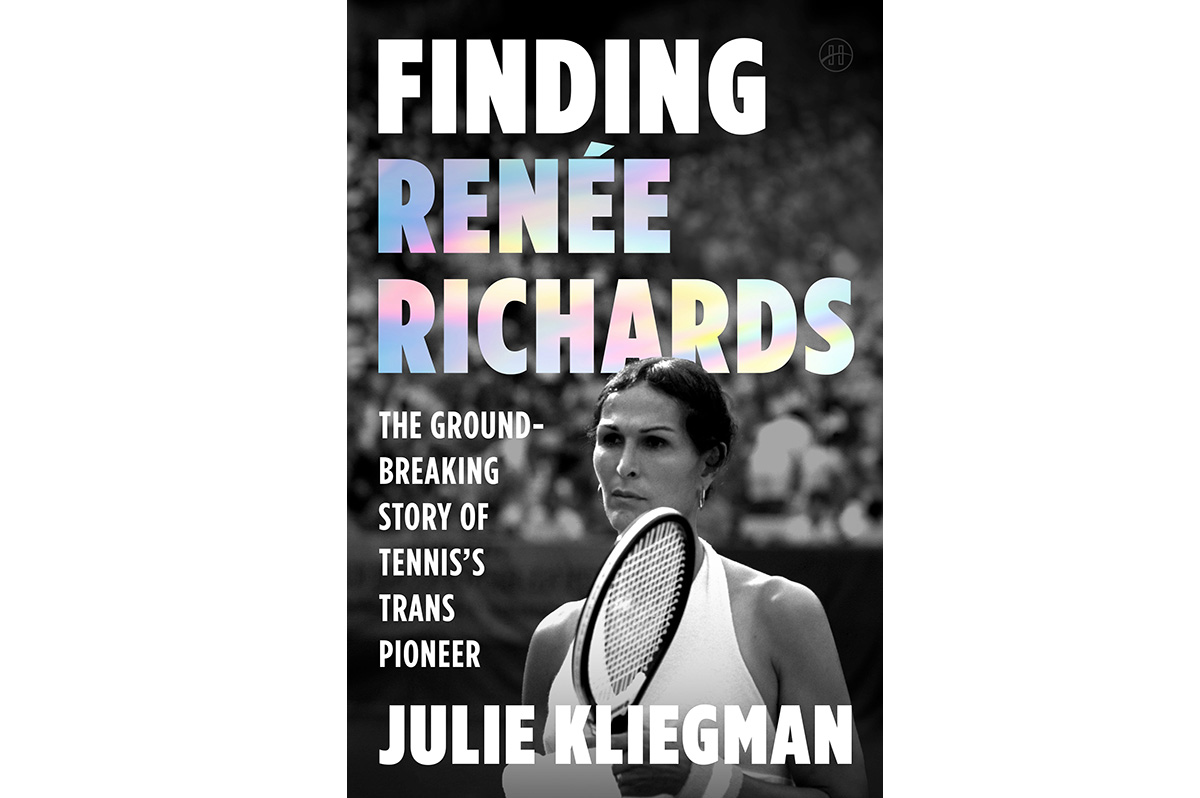
‘Finding Renée Richards’
By Julie Kliegman
c.2026, HarperOne
$28.99/272 pages
Come on in, the water’s fine.
Wade into it up to your ankles, your calves, your waist, you’ll be OK. You’ll adjust to the waves that swirl around you so come on, dive in, it’s all good. As in the new book “Finding Renée Richards” by Julie Kliegman, that goes for swimming, and for controversy.
Assigned to do a story on books written by trans tennis great Renée Richards, Julie Kleigman read the books and became “transfixed by a woman who had fought so hard to simply live as who she had long known she was….”. Their editor had figured that, as a nonbinary and trans individual, Kleigman would have “something incisive to say…” in an article. Instead, once they met and began interviewing Richards, Kliegman was left frustrated.
Born in the late summer of 1934, Richard Henry Raskind seemed to have arrived with a tennis racket in his hand. His mother was a psychiatrist; his father was an orthopedic surgeon who hoped “Dick” would follow his footsteps but Raskind was drawn instead to ophthalmology and tennis. He was also irresistibly drawn to wearing women’s clothing.
His sister knew of this pull and Raskind eventually came out to both parents, but few others on the tennis circuit were aware. When Raskind visited his hometown of New York City, however, he enjoyed furtively going out in women’s clothing but he also tried to squash the desire; in the meantime, he fell in love, married, fathered a son, and eventually learned that it was possible to become the woman he knew he really was.
To continue playing tennis professionally was a bonus.
And right there were the disagreements Kleigman had with Richards.
Richards, “To this day… [makes] a point of describing herself as a woman, period,” says Kleigman, but she firmly acknowledged Richard, almost as a separate individual, insisting that Kleigman use “him/his” pronouns when describing her earlier life.
And as for tennis and trans women’s participation in the sport, Richards had something even more frustrating to say.
Take that as a fair warning: you might be equally surprised at what author Julie Kliegman uncovered in “Finding Renée Richards,” and you may be truly gobsmacked by reading opinions from other women about the topic of trans women in sports.
That’s the main, huge point of interest in this fascinating book; the other is Richards’s life as seen through the lens of a trans individual. Kleigman’s wrestling with the 90-year-old Richards’ firmly dug-in heels is, in itself, worth your time as a study of highly varying viewpoints. That Kleigman and Richards have both lived at least a part of trans history is somewhat of a key to understanding how this book unfolds, as Kleigman offers up Richards’s tale. Readers who are able to read between the lines will be riveted.
If you’re a sports fan and you have opinions, you must read this book – and that goes double if it’s tennis you love. Also check out “Finding Renée Richards” if you just want a raucously good and very fine read.
The Blade may receive commissions from qualifying purchases made via this post.
Books
Bros + romance + fantasy = ‘Bromantasy.’
New book a romp full of humor, dragons, kings, and adventure
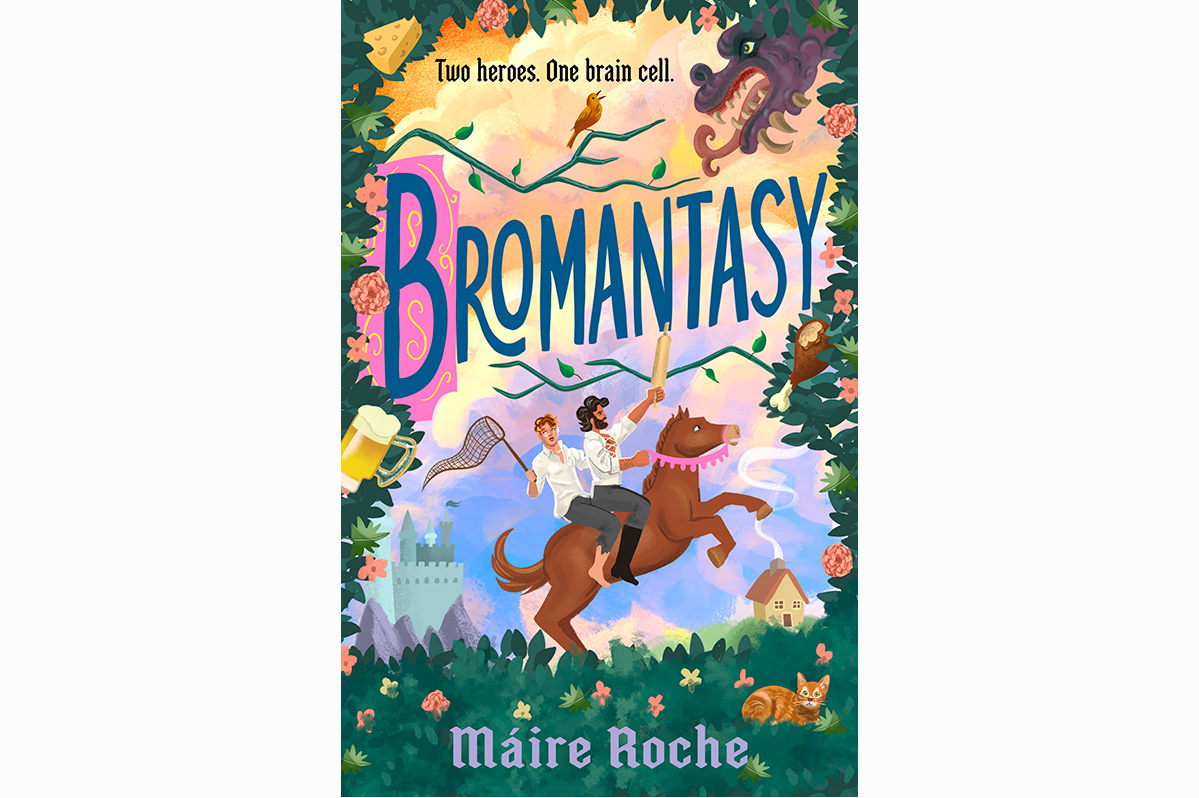
‘Bromantasy’
By Maire Roche
c.2026, G.P. Putnam’s Sons
$20/339 pages
“Danger” just happens to be your middle name.
Any fray, any tussle, anytime anybody needs help, they count on you to step in and save the day. You’re brave, smart and strategic, kind to old people, children, and small animals and, as in the new book “Bromantasy” by Maire Roche, dragons.
Of all the things there were to do – preserving food, keeping house for himself and his best friend Morningthall “Mo” Elmthorn, advanced skincare, and drinking at the local tavern down the road – the one thing Juniper O’Reilly couldn’t resist was a good brawl. It happened so often that Juniper honestly looked forward to it, though Mo wasn’t a fan.
Mo was more grown-up, calm, thoughtful, able, and Juniper loved him for it. He loved Mo, in fact, since they were little boys. He loved Mo in ways that they didn’t talk about, so they kept a wall between their bedrooms in their cottage.
Except for that one time.
They didn’t talk about that, either.
Instead, as they did often, on a warm fall night, Juniper and Mo went to the tavern, where mead was served and they could learn about the king’s weekly quests. There, Juniper could also find a good brawl, which is how he and Mo accidentally got into trouble: Juniper trounced one of the king’s men and was forced into a quest.
He didn’t want to fight dragons and he felt bad that Mo had been dragged along. He felt even worse leaving their farm, sleeping on the ground, wearing the same clothes every day, and not having enough skincare product along. A campfire added to the problem. A roving, lying prince, also in search of dragons, didn’t help. And though a quest was no place for a child, Juniper and Mo found a frightened little girl they had no choice but to protect.
A child with strange eyes, sharp teeth, and fire on her breath.
“And just like that, Juniper and Mo had a dragon.”
Bros + romance + fantasy = “Bromantasy.” It also could equal one of two other things: a romp full of humor, dragons, kings, princes, and adventure.
Or it could equal a whole lot of eye-rolling.
It’s a fact that this book is funny, in the way that a 1980s high school comedy movie is funny – meaning that it’s dippy, giddy, and very caricaturish but you’ll laugh quite often. The story contains everything you want in a fantasy romance (a “romantasy”), including human-like alternate species, a life-changing journey, and plenty of nudge-nudge-wink skirting around the attraction the two main characters have for one another. It’s a decent story, convoluted in just the right way. Purely, it’s an escape.
So why wouldn’t you want to read it? See above, and depending on your favorite reading genre. High-brow literature, this ain’t.
For the right reader, “Bromantasy” is a decent-enough vacation read, something not too taxing or hard on the brain. It’s for novel lovers, dragon hunters, king’s questers, princes, and romantics. For everyone else, this tale is just middling.
The Blade may receive commissions from qualifying purchases made via this post.

‘People don’t see me. They see a trend’

Gay men linked to 2006 Wone murder failing to make lawsuit settlement payment

Whitman-Walker’s 40th Walk & 5k Run to End HIV set for Sept. 19

Prominent French activist attacked outside Paris bar

HRC president campaigns for Chris Pappas in NH

San Francisco, long a queer safe haven, remains competitive for homebuyers

Trans, nonbinary Americans find refuge in the Netherlands

Calendar: August 28-September 3

‘Teenage Sex and Death’ has never been more entertaining

Actor Tim Curry dies at 80
-

 California4 days ago
San Francisco, long a queer safe haven, remains competitive for homebuyers
-
Netherlands4 days ago
Trans, nonbinary Americans find refuge in the Netherlands
-
Calendar4 days ago
Calendar: August 28-September 3
-
Movies4 days ago
‘Teenage Sex and Death’ has never been more entertaining