a&e features
Cunningham’s ‘Snow Queen’
Gay Pulitzer-winning author on new book, impact of fame

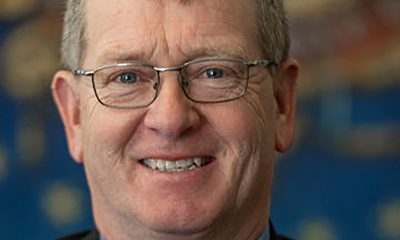
Author Michael Cunningham says he’s encountered very little homophobia during his career. (Photo by Anneli Salo; courtesy Wikimedia Commons)
Michael Cunningham, one of the most talented and renowned novelists of his generation, has been on a whirlwind book tour since the recent publication of his newest novel, “The Snow Queen.”
Cunningham, who was born in 1952 in Cincinnati and grew up in Pasadena, Calif., is the author of the novels “A Home at the End of the World,” “Flesh and Blood,” “The Hours,” “Specimen Days” and “By Nightfall” as well as the non-fiction book “Land’s End: A Walk in Provincetown.” In 1999, he was thrust into the spotlight when “The Hours” won the Pulitzer Prize and the PenFaulkner Award. His many other honors include fellowships from the Guggenheim Foundation and the National Endowment for the Arts. In 2011, Cunningham was a Lambda Literary Foundation award finalist for “By Nightfall.”
“The Snow Queen,” a lyrical, evocative, moving novel loosely based on the Hans Christian Andersen fairy tale of the same name, takes place in a run-down Bushwick, Brooklyn neighborhood over three different days between November 2004 (just before president George W. Bush is elected to a second term) to November 2008 (as the election returns in the Obama/McCain campaign are being tallied). Its story is centered on two middle-aged brothers – Barrett and Tyler Meeks and Tyler’s fiancee Beth. Barrett, who works in a vintage clothing store, searches for meaning and love after his boyfriend breaks up with him in a text message. Beth is gravely ill with cancer. Tyler, a musician, struggles to write music, kick his cocaine addiction and to care for Beth. One evening in Central Park, Barrett looks up at the sky and sees a celestial light. Though he’s not religious, Barrett feels that the “pale, translucent light” regards him in a godlike way.
In a wide-ranging e-mail interview with the Blade, Cunningham discussed the impact of fame, how music influences his writing, the political shift in his work and other topics.
Washington Blade: You’ve said that, as a teenager, you read “Mrs. Dalloway” [by Virginia Woolf] and that it reminded you of listening to Jimi Hendrix. Music, in a different way, runs through “The Snow Queen.” Would you talk about that?
Michael Cunningham: All of my books are related to music in a fairly literal way. When I get to my studio in the mornings I put on music, just for a little while, to get the dormant molecules of the air agitated again, after their night’s sleep. I just use the music as a starter-upper … But I do find that, with each new novel, I’m drawn to specific kinds of music. “The Hours” was pretty much entirely the Brahms requiem, and a lot of Schubert. “Snow Queen” was almost entirely Laurie Anderson, Steve Reich and John Cale. Oh, and some Clash.
Blade: In “The Snow Queen,” Barrett sees this spiritual, mystical “celestial” light. Some of your readers might be skeptical. How have readers reacted to the “celestial light?”
Cunningham: So far, no one has scoffed at Barrett’s vision or his subsequent search for some kind of spiritual life. I suspect that’s partly due to the fact that a lot of people are looking for some sort of spiritual life, if only a life that extends beyond working, shopping and eating. And frankly I was careful to avoid anything too specific in Barrett’s vision. I didn’t want … the Blessed Virgin Mary tap dancing in the sky for him. Or anything else that would have required dogmatic beliefs on the part of readers.
Blade: You won a Pulitzer Prize for “The Hours.” How did winning the Pulitzer affect your life?
Cunningham: Winning the prize was a strange experience. I was at first shocked. Then I was happy for about two days. And then, depressed for about six months. Depressed (this remains slightly mysterious to me) because I felt like it was probably all downhill from there, that no one will let me write any other kind of book, ever again (I’ll never, ever escape it). And partly – this is perverse, I know – some surprising reluctance about recognition. I’d always thought I’d wanted it. And was taken aback when I found it a little hard to tolerate.
But the depression passed, and I got back to work. Which is what a writer does, right? Sometimes the news is good, sometimes the news is bad, but either way, you get through it, and start on the next book.
Blade: Your novels delve into the inner mysteries of human personality. Not to get all Freudian, but do you ever feel, figuratively, like a psychoanalyst?
Cunningham: As opposed to what – novels that don’t delve into the inner mysteries of the human personality? I mean, isn’t that the point of novels? But yes, and it’s funny – I lived for years with a psychoanalyst, and we used to joke that we were essentially doing the same work, he with actual people and me with invented ones.
Blade: “The Snow Queen” seems more political than most of your work. Has there been some kind of a shift in your work toward being more political?
Cunningham: There has been a bit of a shift, in that I’m becoming increasingly aware of how apolitical much American fiction is. Most South American writers, most Eastern European writers, wouldn’t think of writing novels that didn’t incorporate the system in which their characters operated … American fiction tends to take place on some kind of blank field, as if it made no difference who the President is, how various corporations are manipulating us, etc.
For quite a while, including the AIDS epidemic in my fiction seemed liked politics enough. The AIDS epidemic is, of course, far from over. But I’m not on its front lines anymore. And so, no to other concerns.
Blade: You’re gay. Have you encountered homophobia in relation to your work?
Cunningham: Honestly, I’m amazed at how little homophobia I’ve encountered in my writing career. I suspect it’s mainly because the ludicrous, clueless, mean-spirited people who are homophobic don’t read novels at all.
Kathi Wolfe, a writer and poet, is a regular contributor to the Blade.





Just as humans have always had meals, queer humans, too, have enjoyed meals. Yet what is it that makes “queer food” distinct?
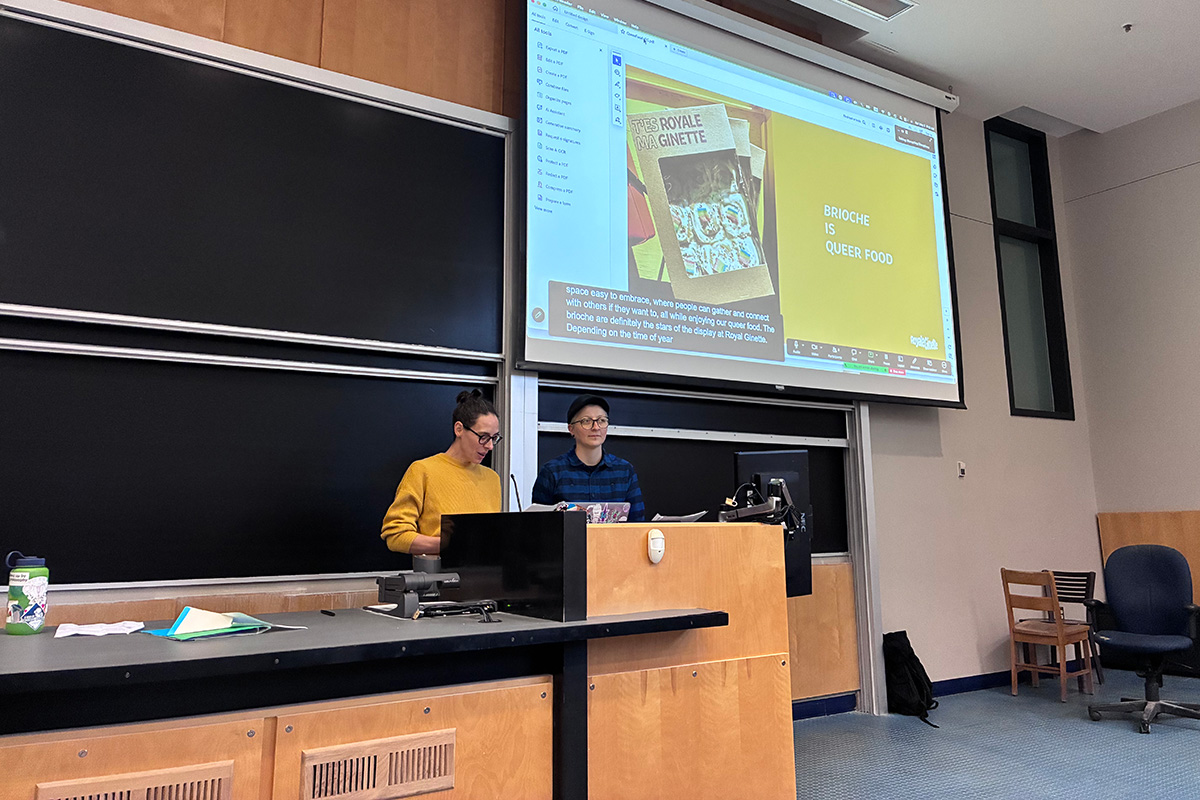
At the beginning of May in Montreal, the Queer Food Conference 2026 sought not to answer that question, but to further interrogate it. The conference united scholars, activists, artists, journalists, farmers, chefs, and other food industry professionals for three days of panels, workshops, discussions, and, yes, meals, in an inclusive, thoughtful, contemplative-yet-whimsical environment, taking a comprehensive view of the landscape of queer food.
The two organizers – Professor Alex Ketchum, at the Institute for Gender, Sexuality, and Feminist Studies of McGill University in Montreal, and Professor Megan Elias, Director of Food Studies & Gastronomy at Boston University – met in 2022 when Elias acted as a peer reviewer for Ketchum’s second book, “Ingredients for a Revolution,” a wide-ranging history of more than 230 feminist and lesbian-feminist restaurants, cafes, and coffeehouses from 1972 to the present in the US.
Elias, taken by the book and its exploration, invited Ketchum to speak at one of Elias’s courses, at which pastries were served and feminist bread making was baked into conversation. Elias floated the idea of co-organizing a queer food conference – and a hot 24 hours later, Ketchum said yes, with plans sketched out, from grants to topics to speakers. In parallel, the duo started to conceptualize “Queers at the Table,” a book based on their work (published last year).
The conference, the book, the research: their work is, in part, grounded in the question: What is queer food? True to queer theory, each has her own nuanced response as drivers of their research, challenging the traditional and looking beyond norms of food studies. Ketchum’s view is that it is grounded on food by and for the queer community, in specific histories, and especially in the labor behind the food. Elias posits that queer food is at the intersection of queerness and culinary studies, beyond gender norms and binaries, back to the societal basics of queer food as part of queer humans always having meals. “Queer food destabilizes assumptions about food, gender and sexuality, making space for a wider range of relationships to food,” she says.
The academics’ professed enthusiasm, however, rarely reached beyond small circles.
“I regularly attended big food studies conferences, but almost never saw presentations about gender identity beyond women’s roles,” says Elias about her prior work, and when her students would ask for additional literature about sexuality and food, results had been sparse. Ketchum echoed this gap: When she was in graduate studies, she received hesitation from leadership about her chosen field of study. By 2024, however, queer food as an area of study and practice had grown, whether in popular culture or well as in publishing, setting the stage for the first Queer Food Conference in 2024 in Boston. Their aim at that even was to launch the subfield of queer food studies into the mainstream, so that fellow academics, students, and those interested in the space could convene, “creating space for others to build,” says Ketchum. “People were enthusiastic.”
Once Ketchum and Elias published “Queers at the Table” in 2025 (notably, gay author John Birdsall also published a book examining queer identity through food last year, “What Is Queer Food?”), they laid the foundation for the 2026 conference in Montreal. This edition was an “embodied” conference, inclusive of various ontologies in queer food studies: theory, labor, art, taste, an interdisciplinary, expansive grounding.
Topics ranged from cookbooks and influencers to farming and land movements, bars and cafes, brewing and baking, history and sociology, writing and printmaking, healthcare and community, and centering marginalized – especially trans – voices.
Naturally, food was centered. The conference’s keynotes were not academics, but the chefs themselves who created the food with their own hands that attendees ate over the three days. “Not to disregard a pure academic space,” says Ketchum, “but to not have food in a room when we talk about food would be wild.”
Jackson Tucker, a Distinguished Graduate Fellow at the University of Delaware, said that “What I found [at the conference] was a genuinely diverse gathering: scholars who did grounded social research but also practitioners, organizers, and people who had never thought about an academic conference in their lives and didn’t need to. That mix is the soul of this whole project for me. Without the people who are out in the world doing queer food, the conference wouldn’t exist.”
Ketchum – her home being Montreal – also worked to fold in community-driven events so that attendees could get a taste of queer food in the city outside of classroom walls; for example, attendees participated in a collaborative evening pizza-making class at a queer-owned pizzeria.
The interdisciplinary nature of the conference led to sharing of research, thoughts, activities, and planning. There was a “value of bringing people together of different backgrounds, which leads to richer discussion,” she says.
Elias picked up on this theme: “I saw people bonding and connecting and believing in Queer Food Studies,” – one of the central goals that Ketchum noted, further legitimizing a nascent field. As both professors continue their research and leadership, they envision a continued layering of centering the queer experience and community through the shared value and study of food.
a&e features
Gay Men’s Chorus celebrates 45 years at annual gala
‘Sapphire & Sparkle’ Spring Affair held at the Ritz Carlton
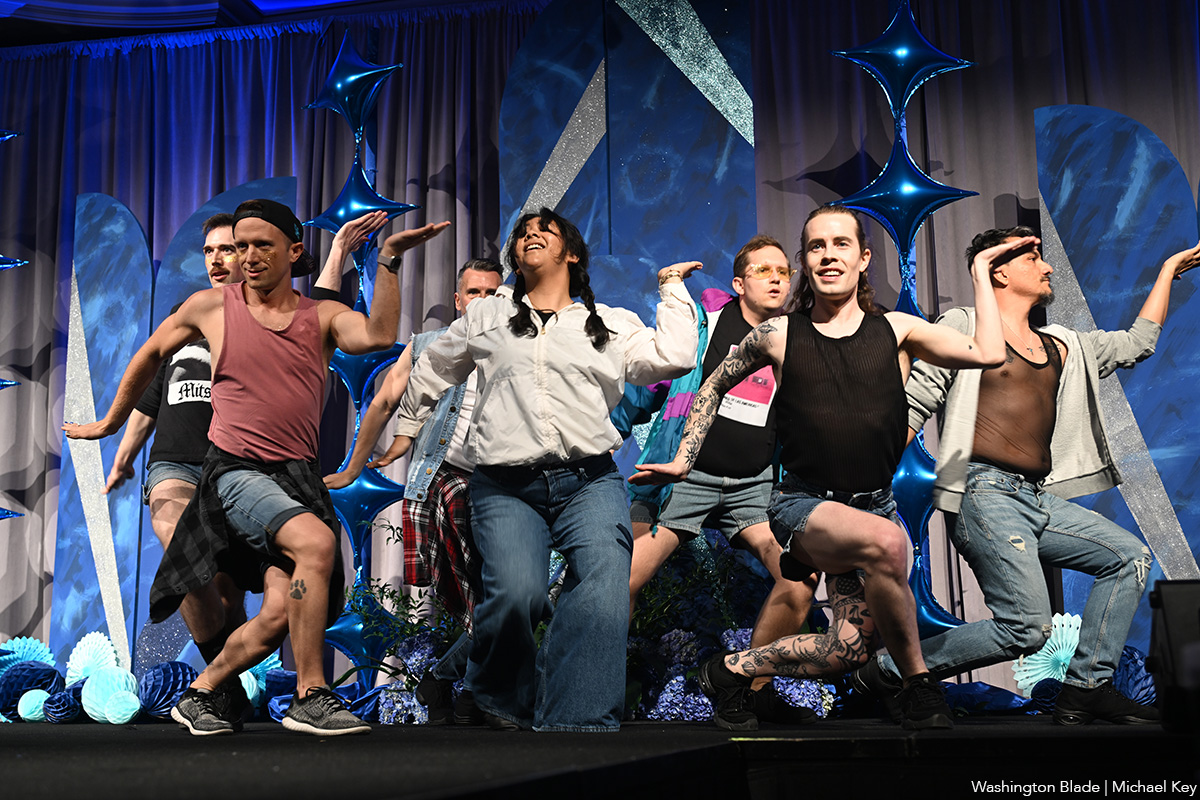
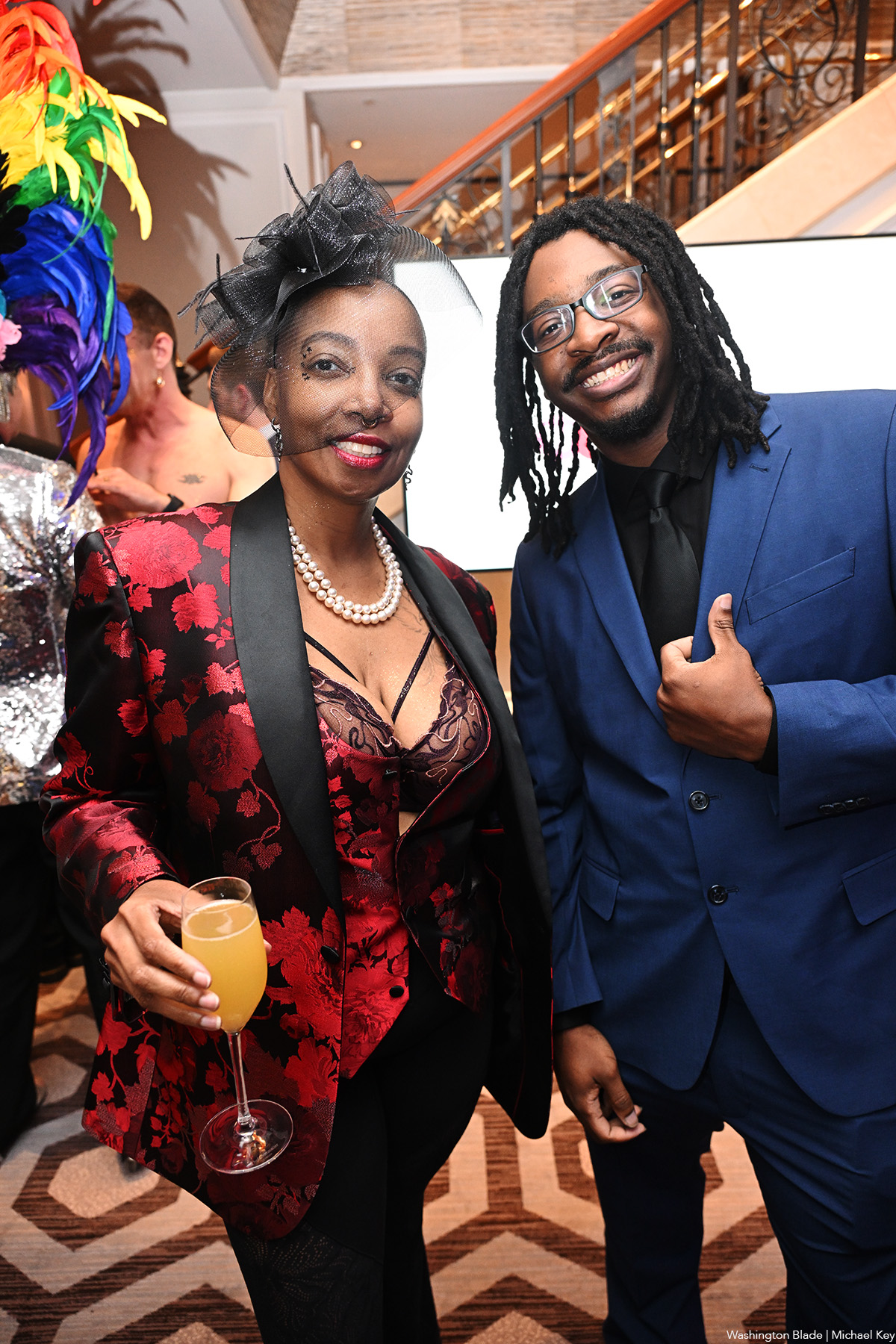
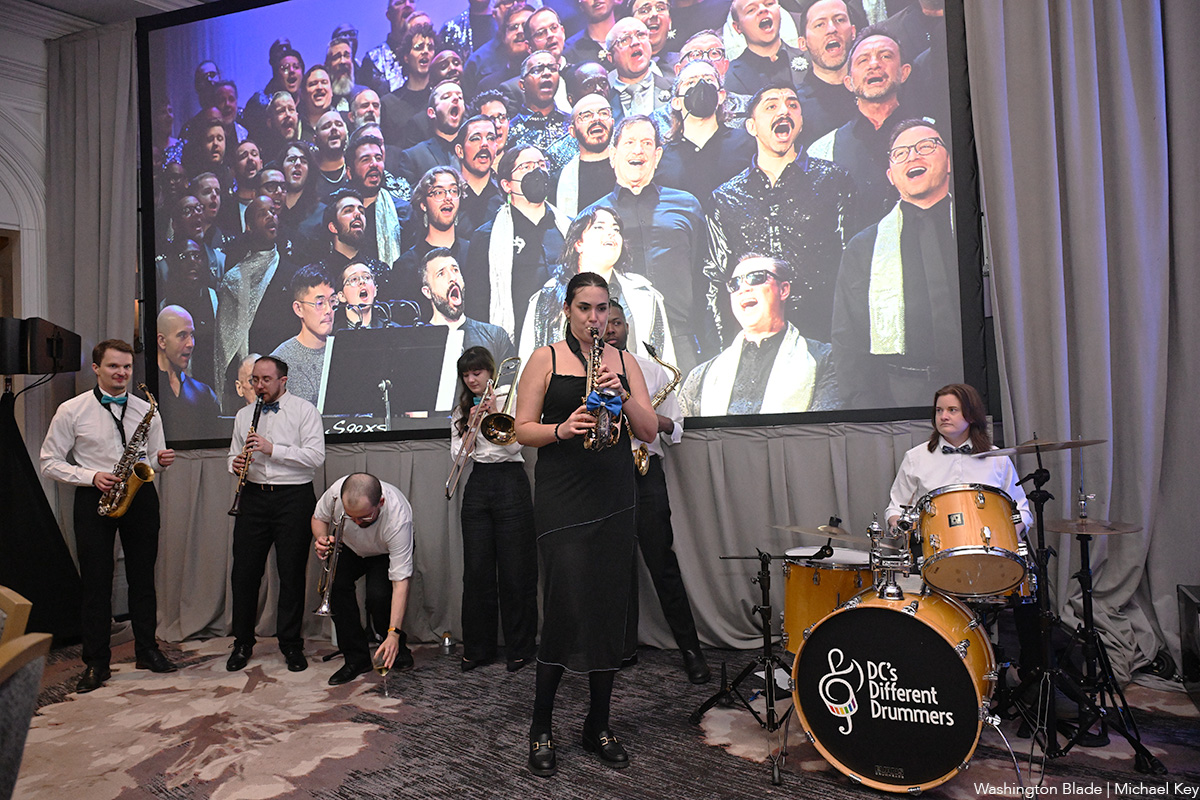
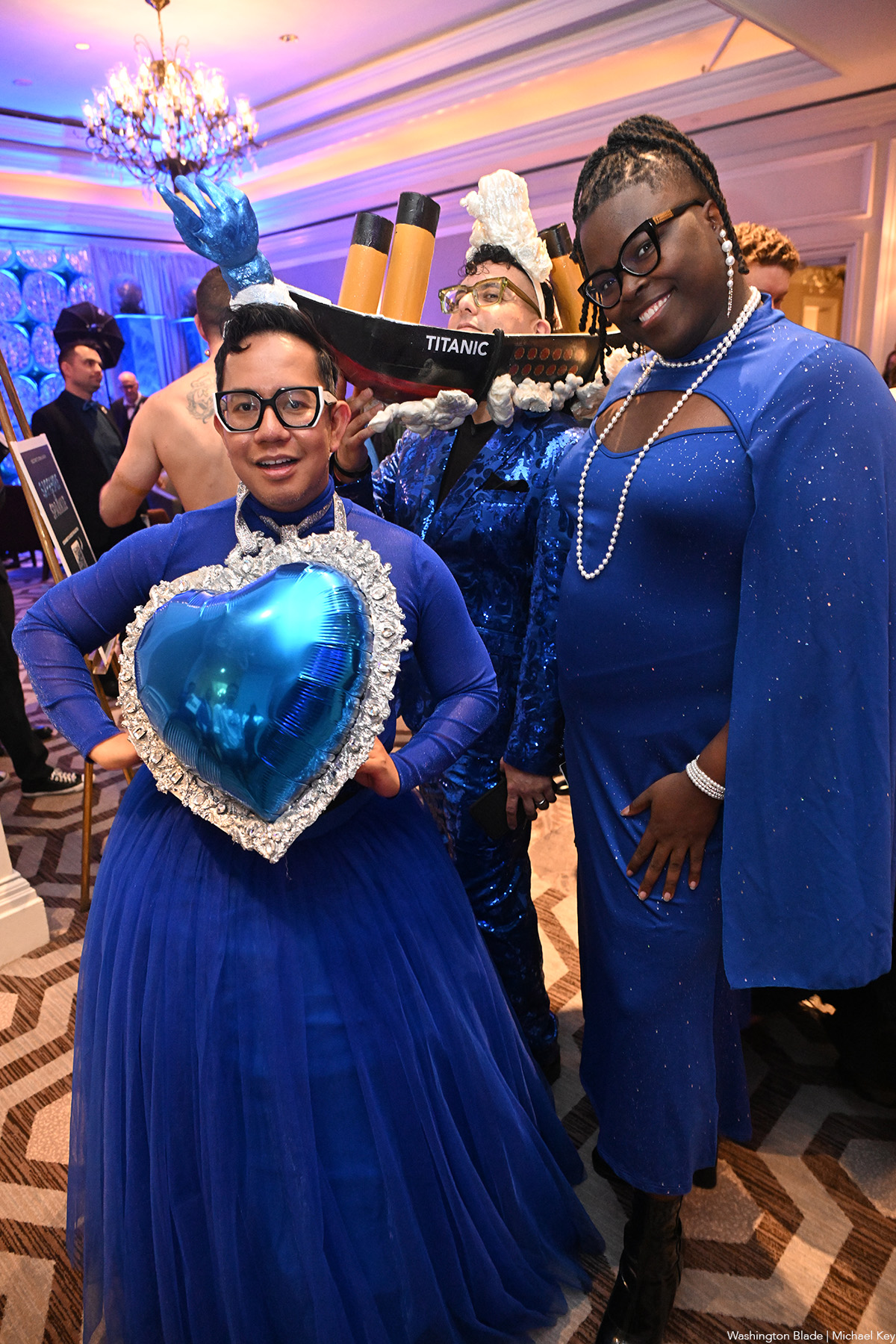
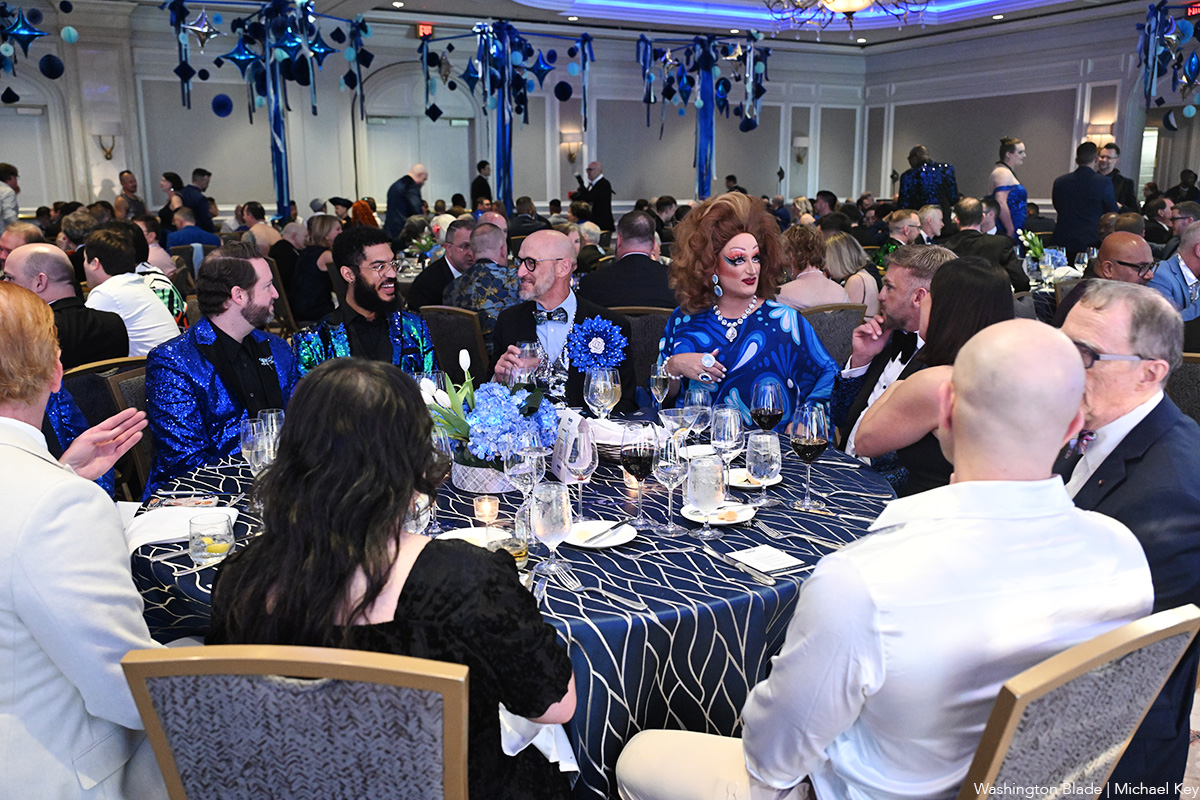
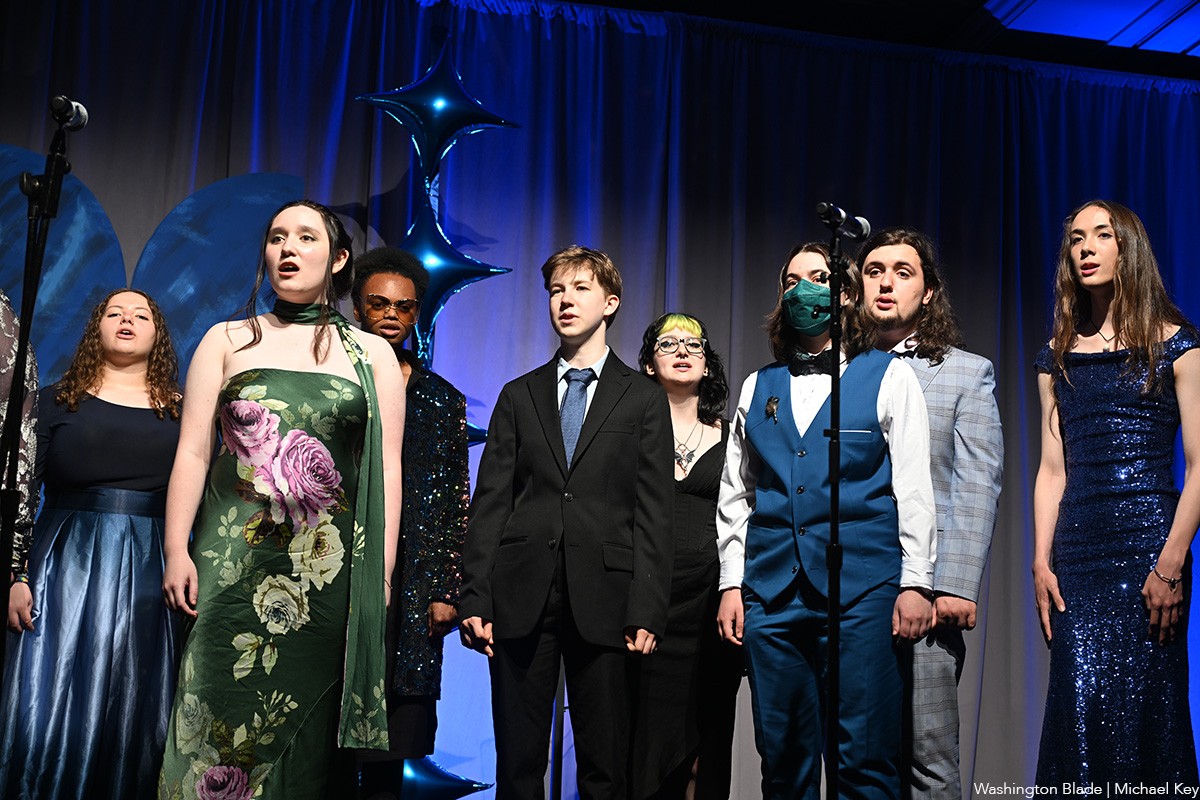
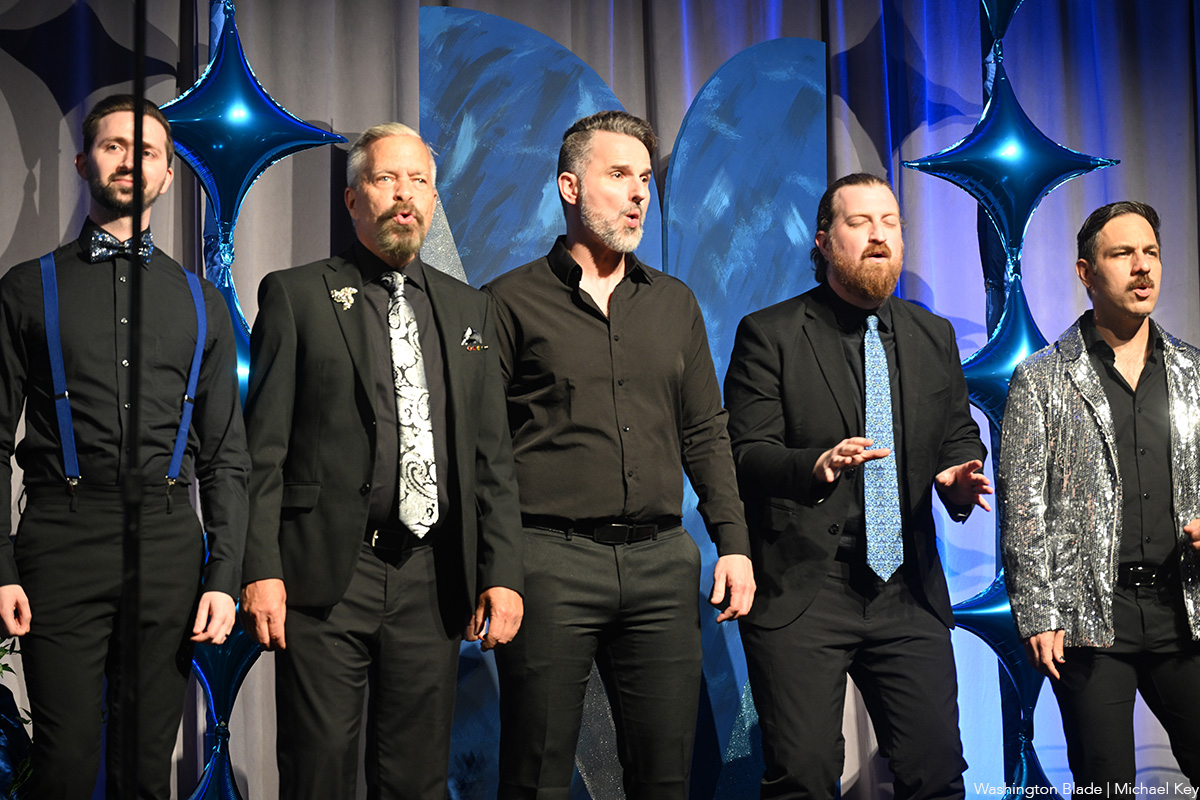
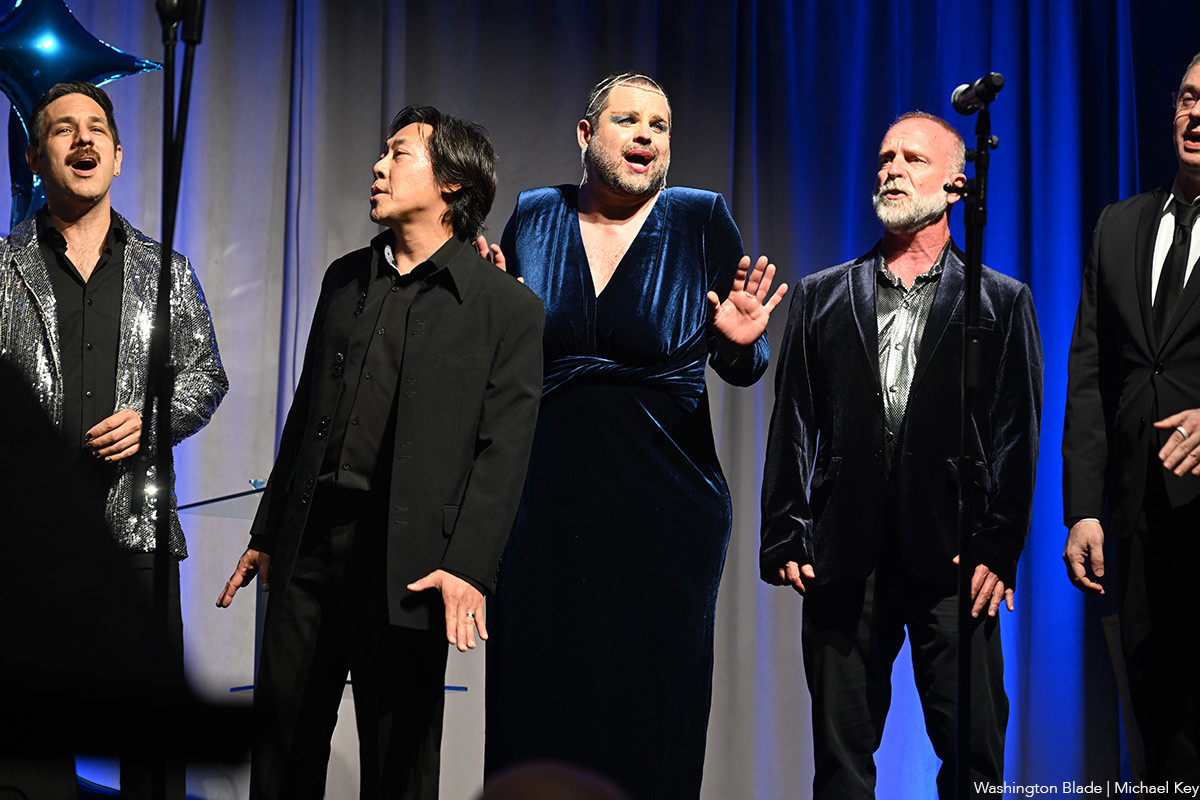
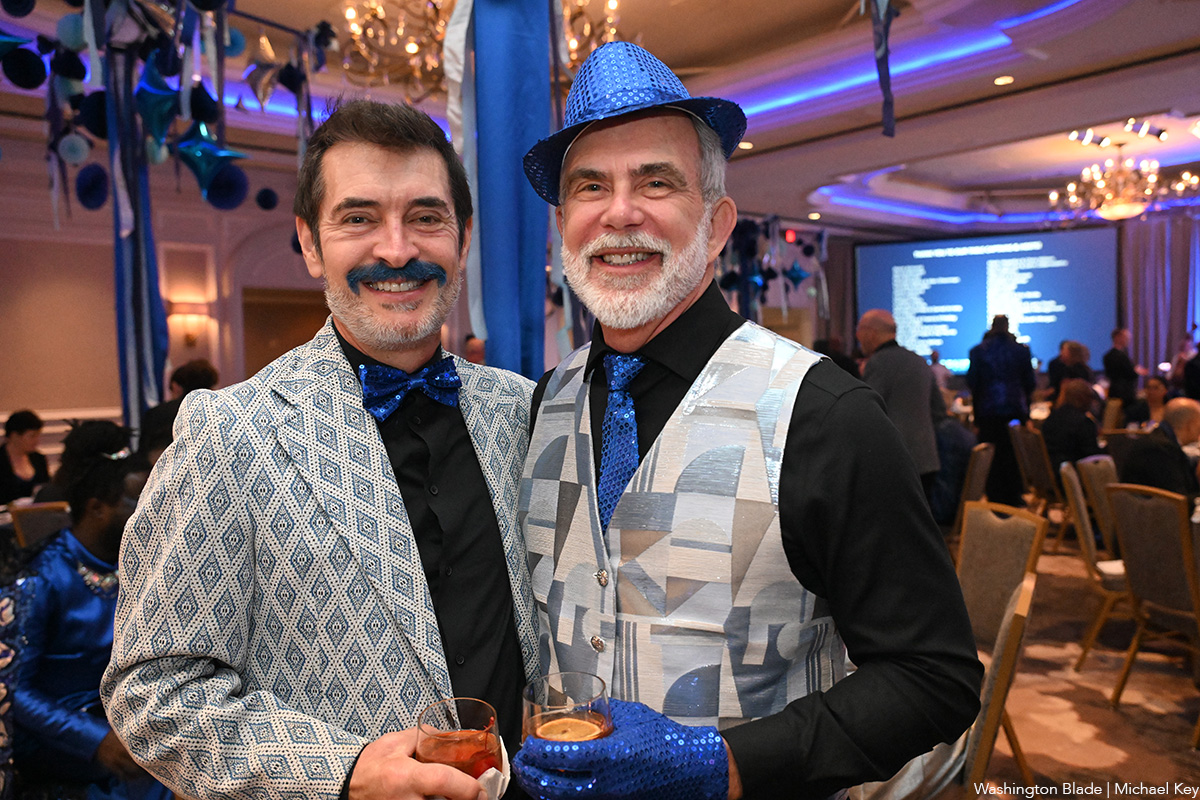
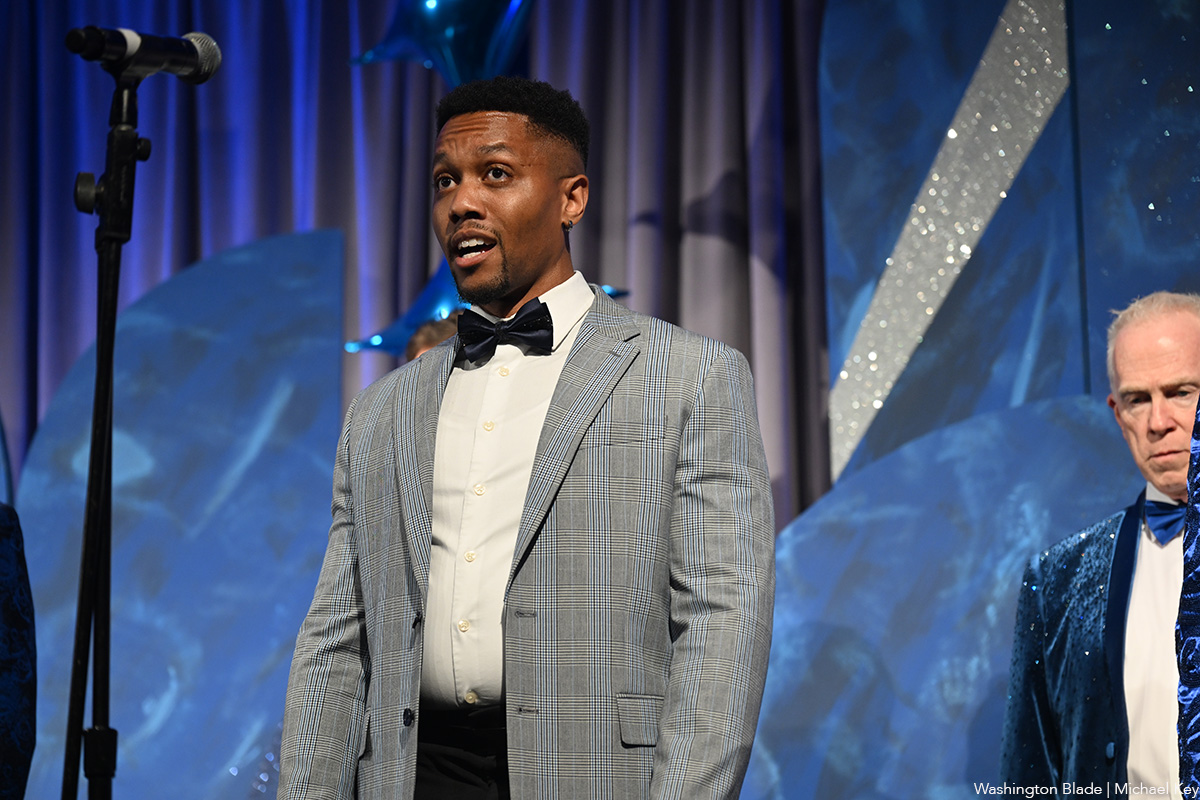
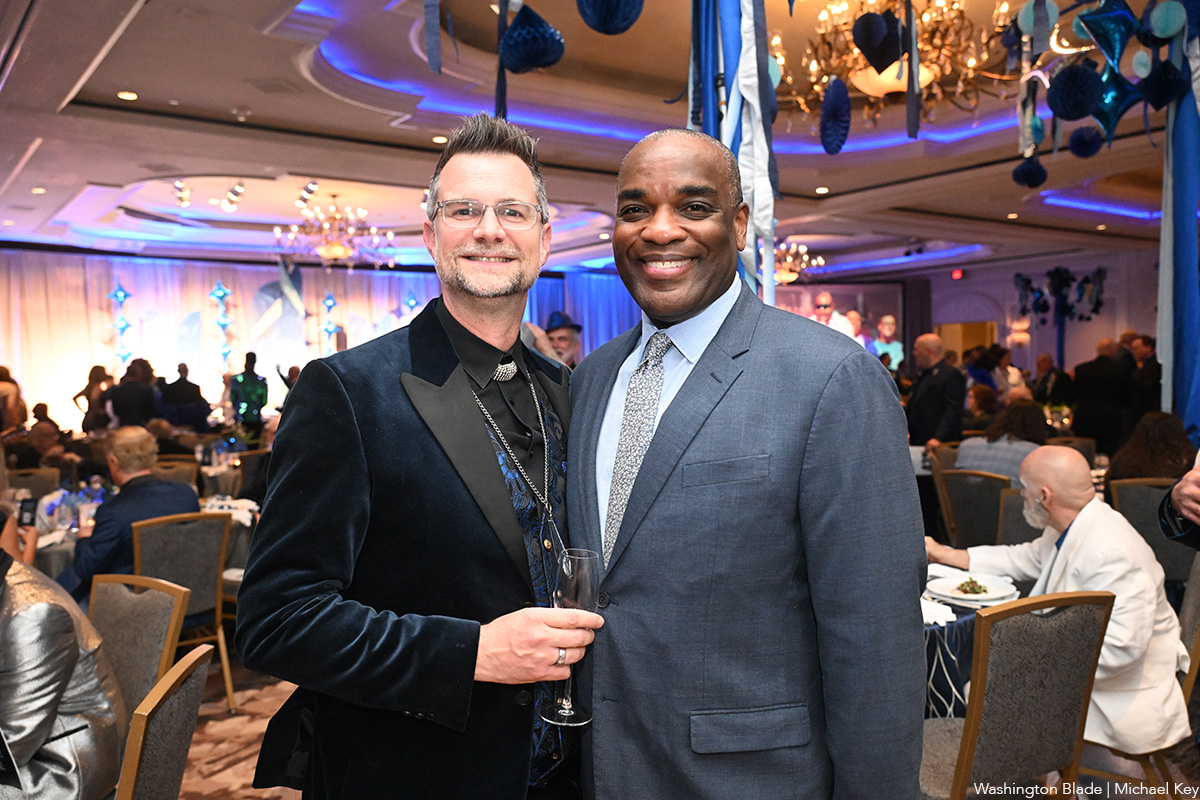
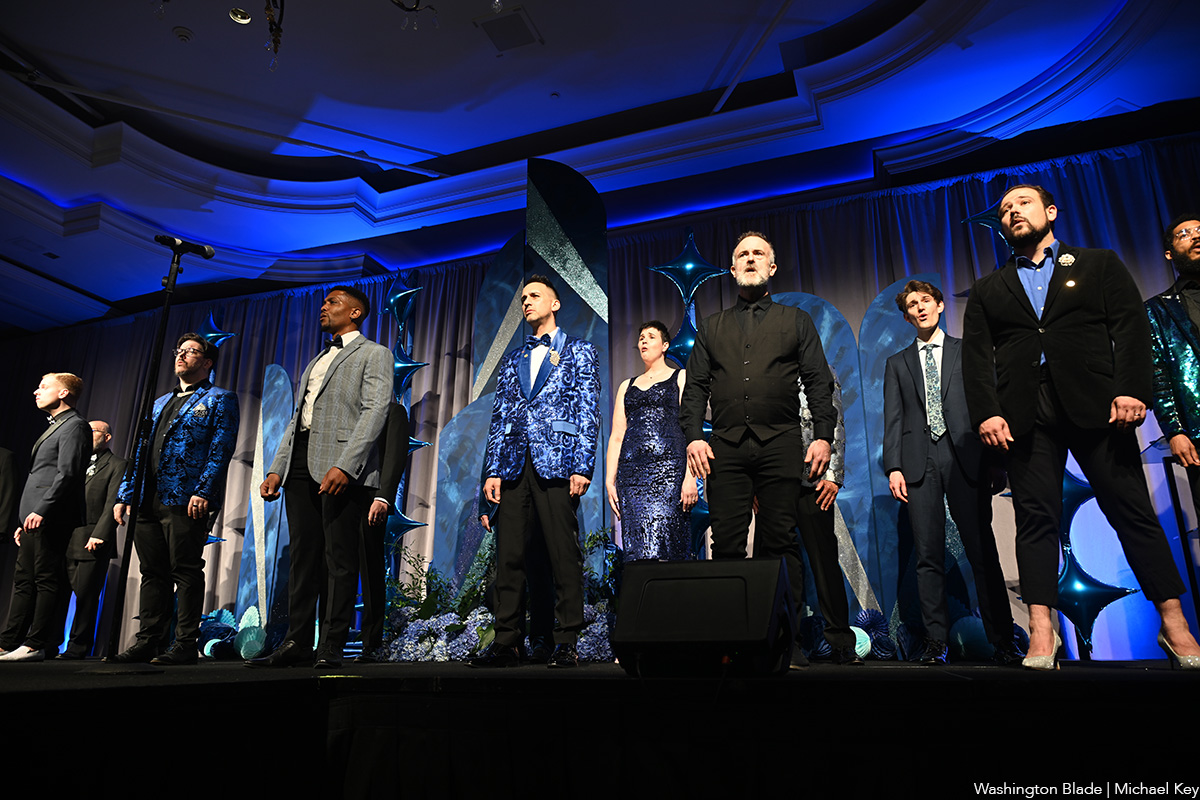
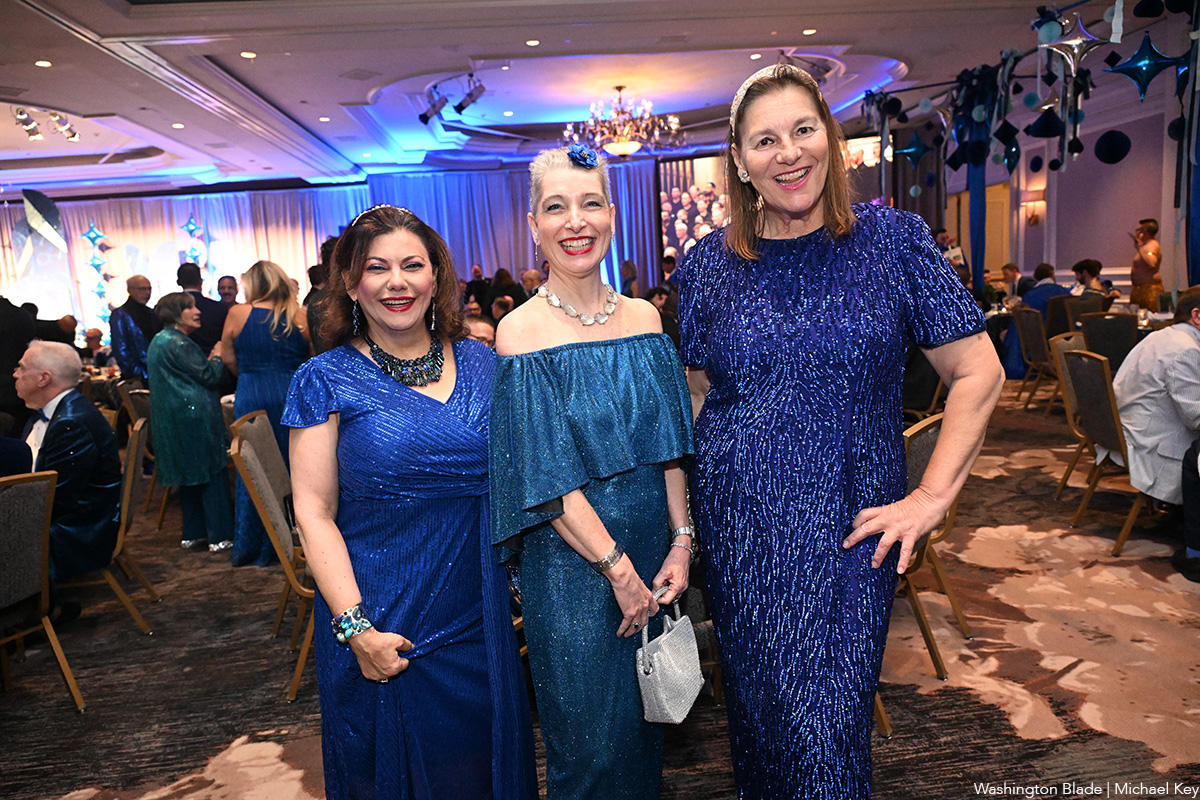
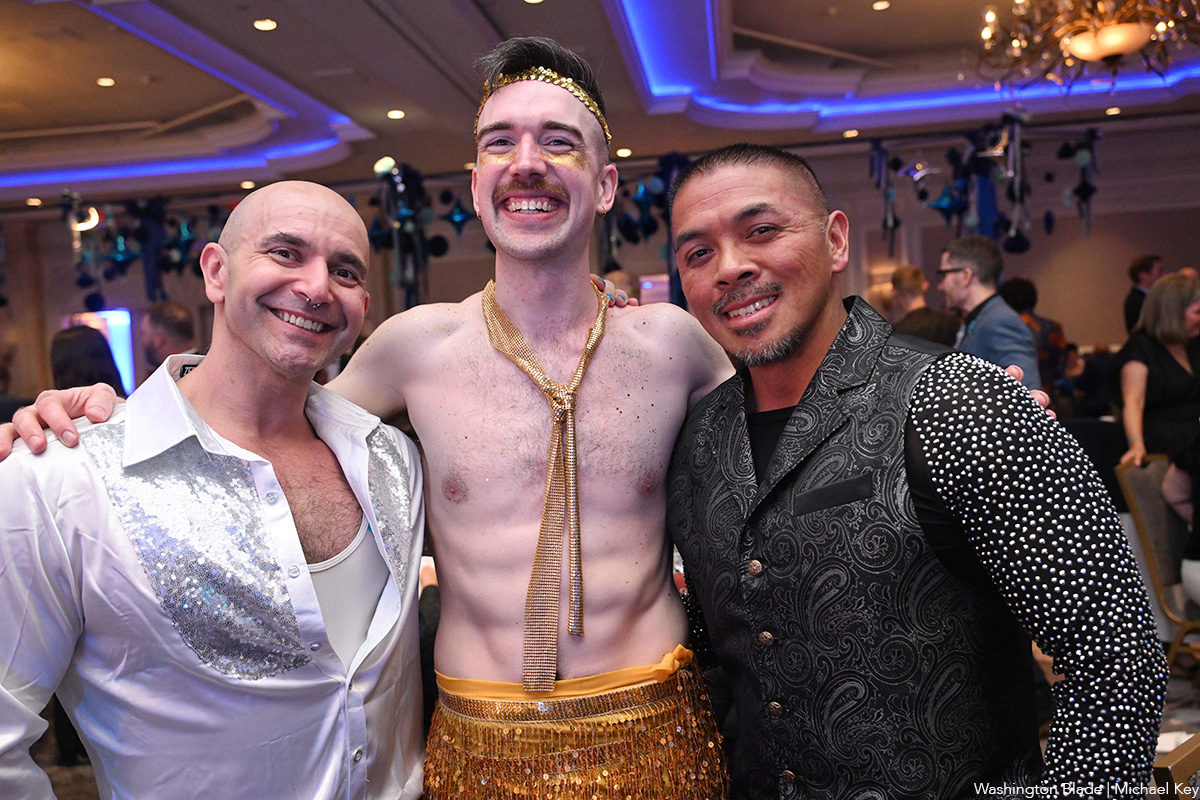
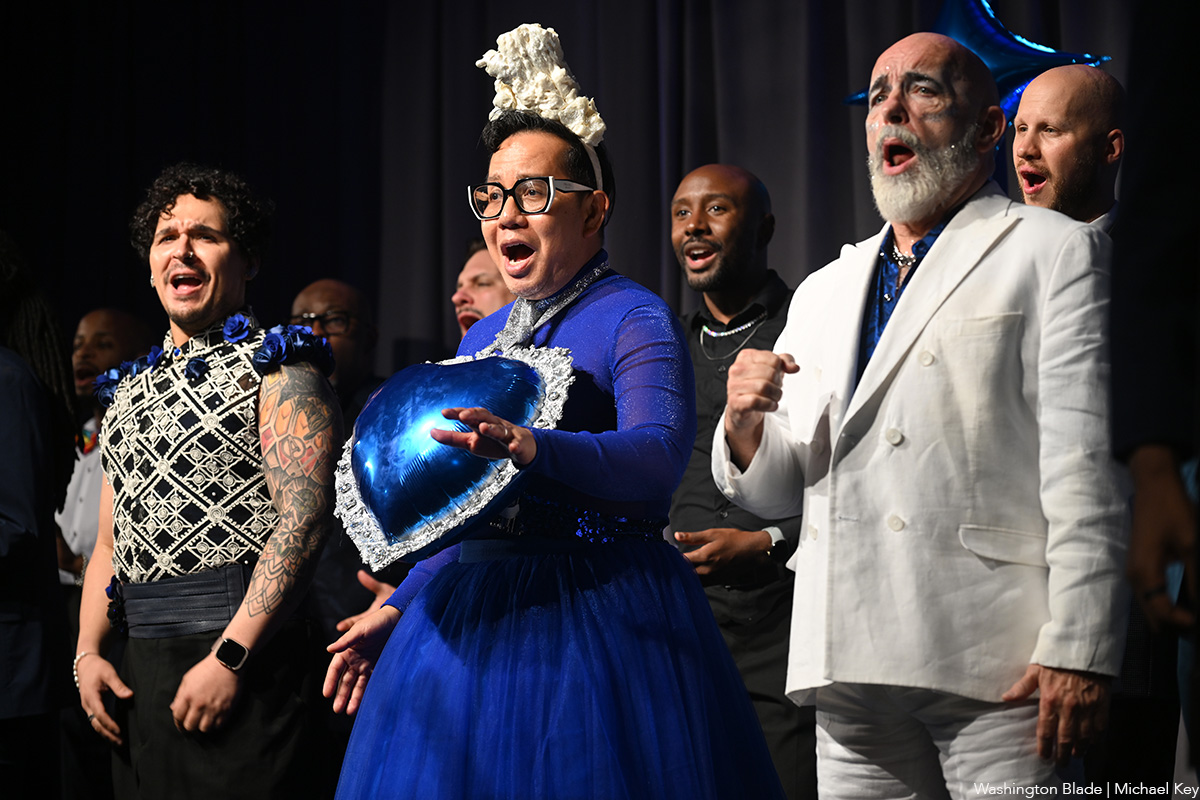
The Gay Men’s Chorus of Washington held the annual Spring Affair gala at the Ritz Carlton Washington, D.C. on Saturday. The theme for this year’s fete was “Sapphire & Sparkle.” The chorus celebrated 45 years in D.C. with musical performances, food, entertainment, and an awards ceremony.
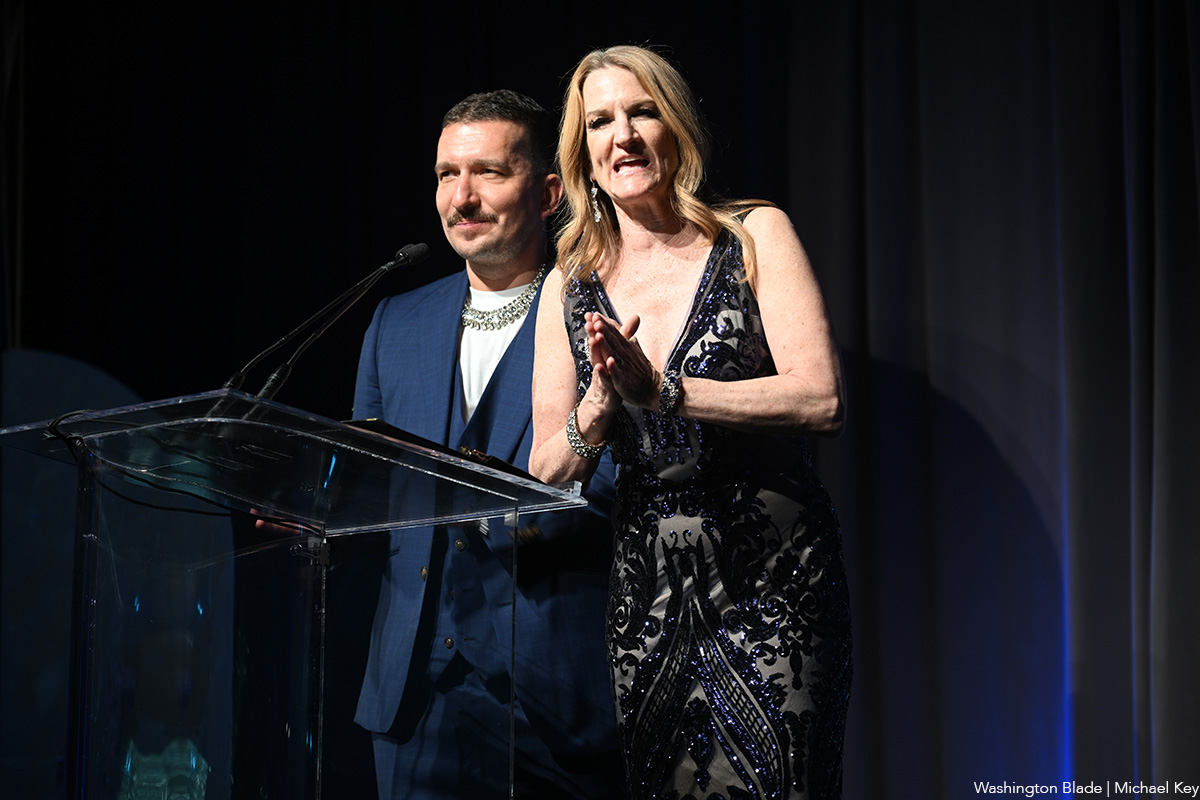
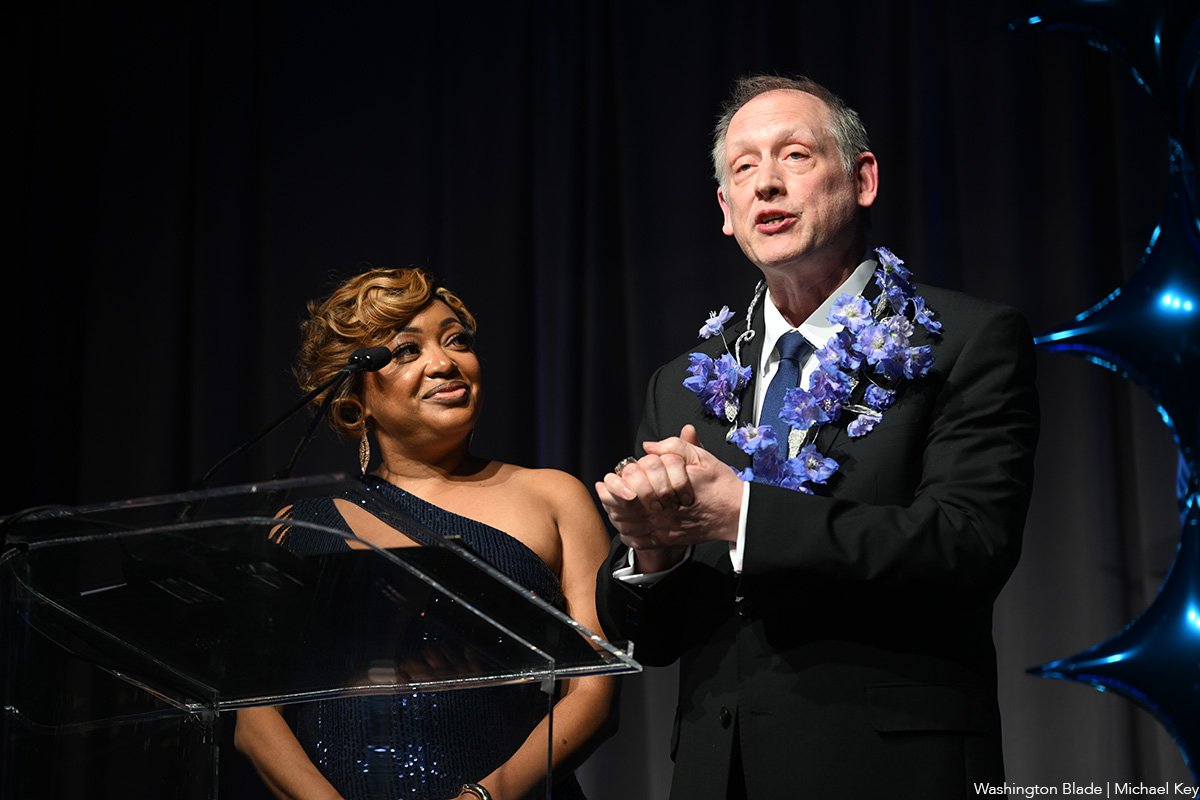
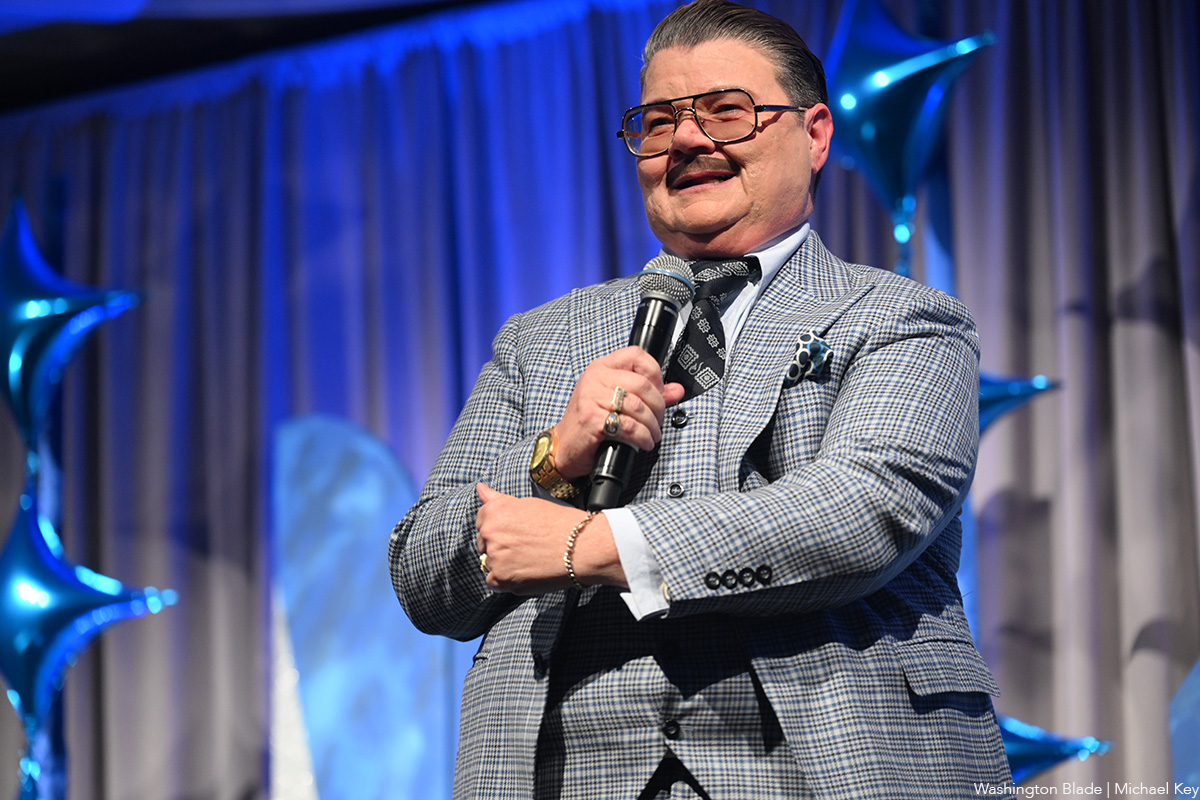
Gay Men’s Chorus of Washington Executive Director Justin Fyala and Artistic Director Thea Kano gave welcoming speeches. Opening remarks were delivered by Spring Affair co-chairs Tracy Barlow and Tomeika Bowden. Uproariously funny comedian Murray Hill performed a stand-up set and served as the emcee.
There were performances by Gay Men’s Chorus of Washington groups Potomac Fever, 17th Street Dance, the Rock Creek Singers, Seasons of Love, and the GenOUT Youth Chorus.
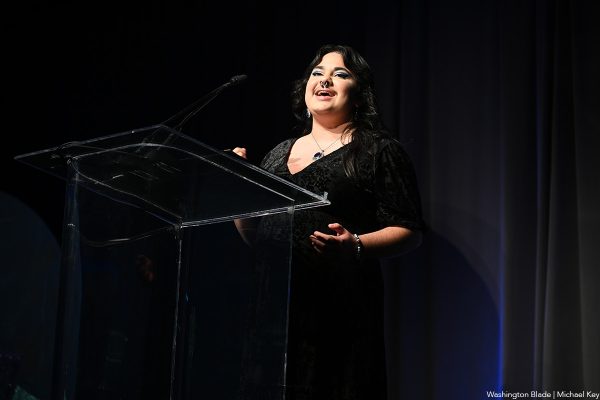
Anjali Murthy, a member of the chorus and a graduate of the GenOUT Youth Chorus, addressed the attendees of the gala.
“The LGBTQ+ community isn’t bound by blood ties: we are brought together by shared experience,” Murthy said. “Being Gen Z, I grew up with Ellen [DeGeneres] telling me through the TV screen that it gets better: that one day, it’ll all be okay. The sentiment isn’t wrong, but it’s passive. What I’ve learned from GMCW is that our future is something we practice together. It exists because people like you continue to show up for it, to believe in the possibilities of what we’re still becoming”
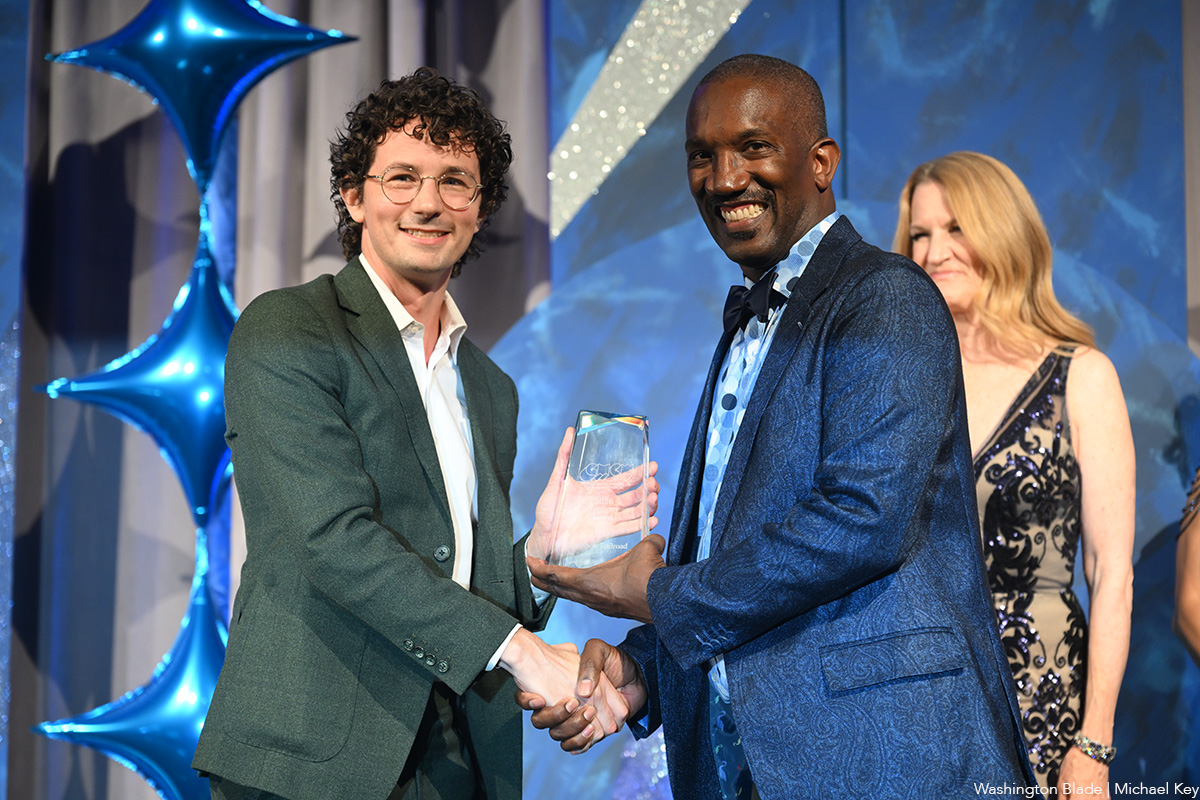
The event concluded with the presentation of the annual Harmony Awards. This year’s awardees included local drag artist and activist Tara Hoot, the human rights organization Rainbow Railroad as well as Rocky Mountain Arts Association Executive Director, Dr. Chipper Dean.
(Washington Blade photos and videos by Michael Key)











a&e features
Yes, chef!
From military service in Syria to cooking in coastal Delaware, Justin Fritz delivers comfort and connection
Driving down the long stretch of road that connects Rehoboth to Bethany Beach, I’m thinking about the morning ahead of me. I’ve done tough jobs before on subjects I knew nothing about. But when it comes to this assignment – profiling a local chef – I can’t help but worry that I’ve bitten off more than I can chew.
I eat food. I love food. Ironically, I can’t cook.
Sure, I can make a passable meal in a pinch, but when it comes to innate culinary skills, I don’t have the gene. That means I eat out often. Even when the food is good, the experience is rarely inspiring. I have no doubt that the guy I’m about to profile can cook, but for me, food is fuel, not fun. Writing about eating feels like reading about dancing. You can understand the mechanics, but the magic is harder to capture.
Sooner than I expected, I reach my destination. Rising quietly from the dunes, the weathered cedar shingles and wraparound porch of The Addy Sea Inn gives off the kind of understated confidence money can’t buy. Built in 1904, it doesn’t try to impress you. It just does. I pull into a gravel parking space, step out of the car, and take a breath. Already, I sense that I’ve misjudged what this morning will be.
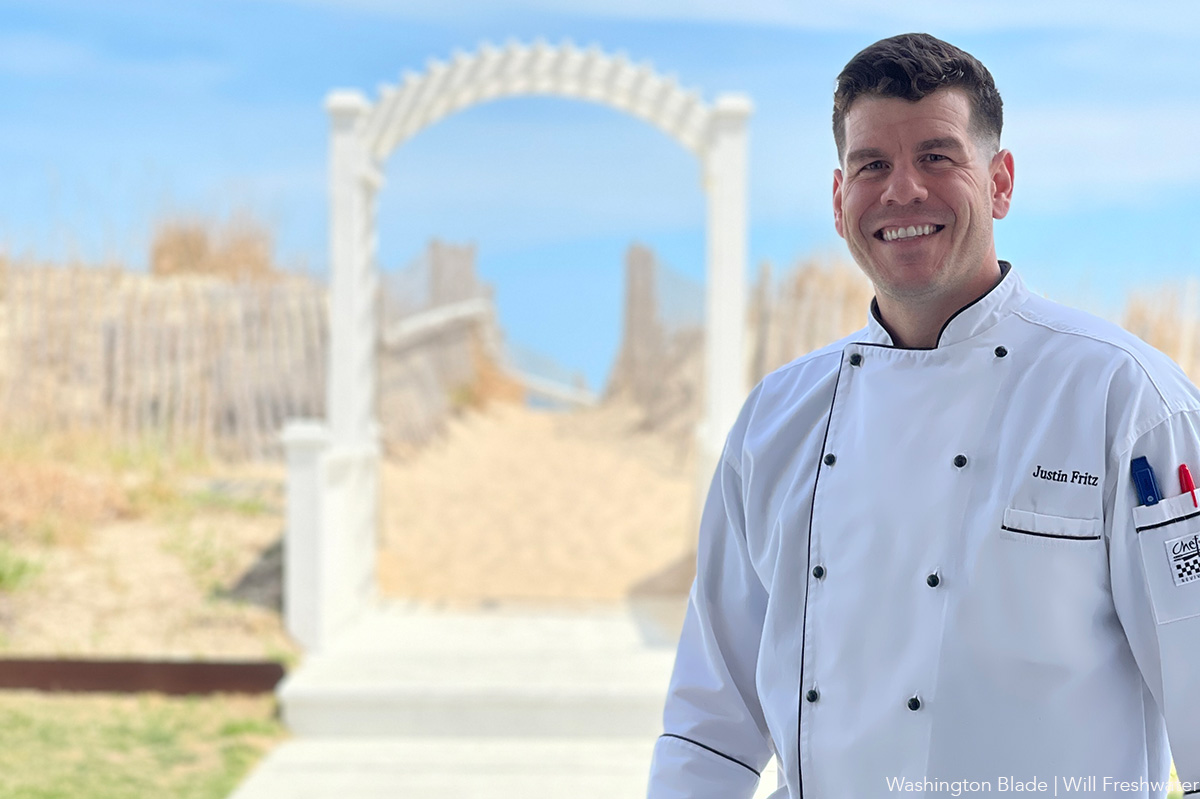
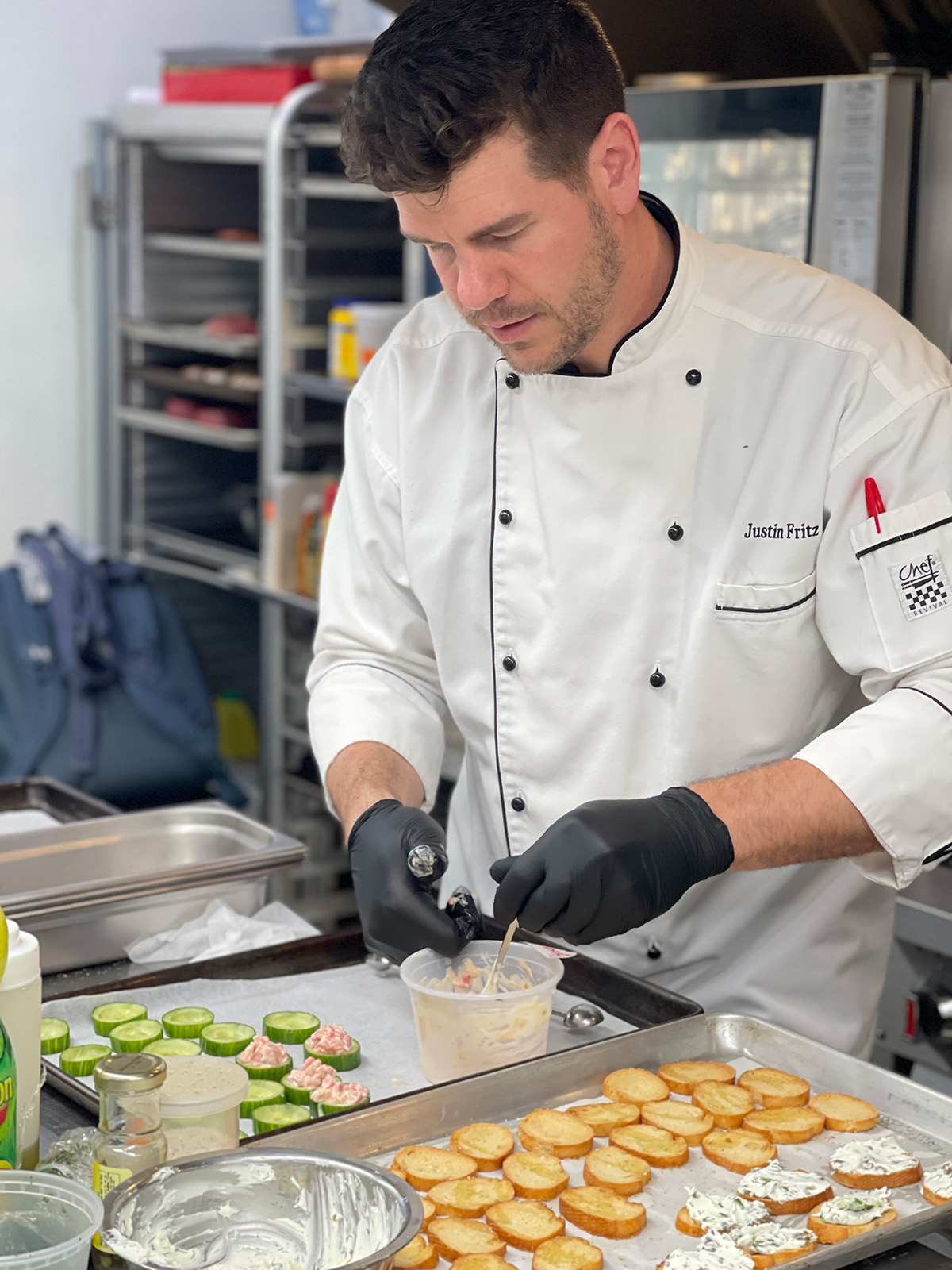
Inside, breakfast service has just wrapped, but the dining room is still humming with energy. Plates clink. Fresh coffee is brewing. After a quick round of introductions with the staff, I’m ushered back to the kitchen, where Executive Chef Justin Fritz is waiting.
The room is modest, only slightly larger than my kitchen at home, anchored by a narrow stainless-steel island that serves as the operational center. Whatever the kitchen lacks in space it makes up for in technology. The appliances are state-of-the-art and the multi-tiered glass oven on the wall looks smarter than I am.
There’s no brigade of line cooks. No shouted orders. No “Hands” or “Yes, chef!” echoing off the walls. There’s just me and him. It’s a one-man show.
His first wedding tasting is less than an hour away, but instead of rushing, Justin offers me the grand tour. Pride radiates from him — not ego, but something quieter. We move through the inn, past guests and staff he greets by name, out onto a porch overlooking the beach and Atlantic, where meticulously planned weddings unfold like carefully choreographed dreams.
“This whole place transforms,” he says, gesturing toward the lawn. “We pitch a 90-foot tent in a yard that can accommodate 150 guests. We set the DJ and the bar up in the back on a floating deck that becomes a dance floor.”
On our way back inside, we stop to see herbs growing in a double row of hanging planters — mint, basil, strawberries trailing down the wall like decorations you can eat. It’s not performative. It’s practical. Everything here has a purpose.
Back in the kitchen, the tempo shifts. There are no printed-out recipes or neatly arranged mise en place. Justin stops talking just long enough to consult the whiteboard hanging on his refrigerator. There are notes – words, not sentences – cueing him on all the things he needs to remember.
When he finally goes into action, it’s intense, but controlled. Justin knows every inch of his kitchen and moves efficiently to gather what he needs to get five different entrees into the oven. I try to be a fly on the wall, but I’m the elephant in the room. I try, and fail, to move out of his way.
After our fifth near-collision, he laughs. “You just stay there,” he says. “I’ll move around you.” And he does.
Justin’s path to The Addy Sea Inn wasn’t linear, and in many ways, that’s what defines him. After culinary school and early professional success, he made a decision that shifted everything: He enlisted in the Army Reserves alongside his younger brother. In an unexpected twist, Justin completed the enlistment process first, while his brother’s path was delayed pending a medical waiver.
Initially, Justin’s role had nothing to do with food. He worked as a computer technician, repairing advanced equipment — a technical, methodical position that stood in stark contrast to the creative environment of a kitchen. Then, as often happens in Justin’s stories, his circumstances changed. A casual conversation with a commanding officer one afternoon led to a sudden reassignment.
“He said, ‘You’re supposed to be at the range. Get in the car — I’ll explain on the way.’” Justin recalls. “Next thing I know, I’m deploying.”
The destination was Syria. And instead of working with electronics, he found himself back in a kitchen — only this time, under conditions that redefined what cooking meant.
“They didn’t want military cooking,” he says. “They wanted home cooking.”
That expectation, simple on the surface, became extraordinarily complex in practice. Ingredients had to be sourced from local markets where quality and safety were inconsistent. Refrigeration was limited. Water couldn’t be trusted. Meat arrived butchered in ways that required improvisation rather than precision.

“One time I ordered lamb,” he says. “It came back as bones. Just bones. I scraped the meat off and turned it into sausage because I couldn’t waste it.”
So, Justin adapted. He baked bread from scratch, created meals that could be eaten days later, and found ways to bring a sense of normalcy into an environment defined by uncertainty. French toast, burritos, pretzels, tiramisu — dishes that, under different circumstances, might have felt routine became something else entirely.
“I think people underestimate what food means,” he says. “It’s not just eating. It’s memory. It’s comfort. It’s safety.”
That last word lingers.
By the time Justin arrived at The Addy Sea Inn, he carried more than just professional experience. He brought discipline, resilience, and a perspective shaped by environments far removed from coastal Delaware. But he also brought uncertainty.
The new role required something different from what he’d done before. Here, he wasn’t executing someone else’s vision — he was responsible for creating one.
“I realized I get to do this,” he says. “I get to build this.”
What he has built is both ambitious and carefully controlled. Under new ownership and with a growing team, The Addy Sea Inn has evolved into a sought-after destination for weddings and events. The scale has increased, but the operation remains intentionally lean, which puts more pressure on Justin to deliver.
A single day might include breakfast service, take-away lunch preparation, afternoon tea, wedding tastings, and a full-scale event execution. Layered on top of that are cooking classes, early-stage digital content, and a catering business Justin has deliberately paused so he can focus on something more cohesive.
“I want to grow the culinary side of this place,” he says. “Not just more events, but better experiences. Classes, tastings — things that bring people into it. I love teaching. I love sharing it.”
It’s a vision rooted less in expansion and more in depth. Not more for the sake of more, but more meaningfully.
When I return a few days later for breakfast service, the experience feels both familiar and entirely new.
The day begins with sunrise. Before anything else, Justin pauses and brings his team outside. It isn’t a long break, and it isn’t framed as anything formal. It’s simply a moment — watching the light shift over the water, occasionally catching sight of dolphins moving just beyond the shoreline.
Then, without ceremony, the work begins.
Eggs crack. Bacon sizzles, potato pancakes bake on the grill. Orders move in and out with steady consistency. There’s no frantic energy, no sense of scrambling to keep up. Instead, there’s a flow — continuous, measured, almost meditative.
“It doesn’t always feel like work,” he says.
Watching him move through the morning, it’s easy to understand why.
Hours later, after the hustle and bustle of the first meal has ended, Justin turns his attention to a larger, albeit more creative task — cupcakes for two themed parties. Already inspired, he lifts a heavy electric mixer onto the counter and pushes a flour-dusted binder in front of me.
“I’ll bake the cupcakes. You make the butter-cream frosting,” he says, flipping to the page with the recipe. “Double it.”
The request sends me into a mild panic, especially since it requires math. But Justin believes I can do it. To my surprise, so do I. The first batch of chocolate cupcakes are already out of the oven before I finish the first bowl of frosting. Since all I have to do is repeat the process, I’m starting to feel relieved and maybe even a little cocky. That’s when it hits me.
“Chef, I made a mistake…I forgot to double the amount of vanilla. I need to do it over.”
“It’s fine,” Justin says casually, swiping a small disposable plastic spoon across the silky surface. “It tastes great. Focus on the next batch.”
The result, two exquisitely decorated cupcakes, are almost too pretty to eat.
“These are yours to take home,” he says as he carefully packs them away in a to-go box.
I start to protest, to tell him he should save the best for himself or the other guests. But I stop myself and pause and savor the moment. This one, I keep.
Chef Justin Fritz resists easy categorization, and that may be part of what makes him so compelling. He is classically trained, but without pretense. His military background suggests rigidity, yet his approach is flexible and intuitive. He carries himself with a quiet confidence, never needing to announce it. Part Jason Bourne, part Willy Wonka. Justin isn’t just cooking food, he’s making magic.
By the time I leave, my understanding of the assignment has shifted. What I expected to be a story about food has become something broader, more nuanced. It’s about care. About connection.
That sense of purpose extends beyond the kitchen. When I ask Justin what’s next, he speaks not just about growth and ambition, but about balance — about building a life that allows space for both. There’s a quiet acknowledgment of Cheyenne, his partner of five years, woven into that answer. Not as a headline, but as something steady and grounding, part of how he measures what comes next.
I arrived thinking I would write about a chef. What I found instead was someone who uses food as a language — a way to communicate, to connect, and to create something that stays with you.
The only way to experience Chef Justin’s cooking is to step inside his world — by checking into The Addy Sea Inn (www.addysea.com) or securing a ticket to one of the inn’s limited public events, including the Spring Soirée and the Toys for Tots Holiday Fundraiser. There’s no standalone restaurant, no reservation to book online. His food exists within the rhythm of the inn itself.
In louder, larger kitchens, “Yes, chef!” is a command — sharp, immediate, unquestioned.
But here, at the edge of the ocean, it lands differently.
Not as an order.
As trust.
And maybe that’s the real story — not the food, not the title, but the quiet, deliberate way Chef Justin Fritz makes people feel something they don’t forget.

PHOTOS: Black Pride Opening Reception

PHOTOS: Black Pride Pageant and Unity Ball

PHOTOS: Helen Hayes Awards

A magical Mercedes

When impunity meets history

Vt. lawmaker equates transgender identity with bestiality

BREAKING NEWS: Barney Frank dies at 86

U.S. attorney nominee confirmed despite anti-LGBTQ history, no trial experience

Gay Men’s Chorus celebrates 45 years at annual gala

Intersex lives, constitutional freedom, and the dangerous future of Ghana’s Human Sexual Rights and Family Values Bill
-

 Vermont4 days ago
Vt. lawmaker equates transgender identity with bestiality
-
National5 days ago
BREAKING NEWS: Barney Frank dies at 86
-
Wyoming4 days ago
U.S. attorney nominee confirmed despite anti-LGBTQ history, no trial experience
-
a&e features5 days ago
Gay Men’s Chorus celebrates 45 years at annual gala