Connect with us

Arts & Entertainment

East Coast extravaganzas

Philly’s Pride also this weekend, Baltimore next; others later in June
Published

on

Baltimore Pride, gay news, Washington Blade, East Coast

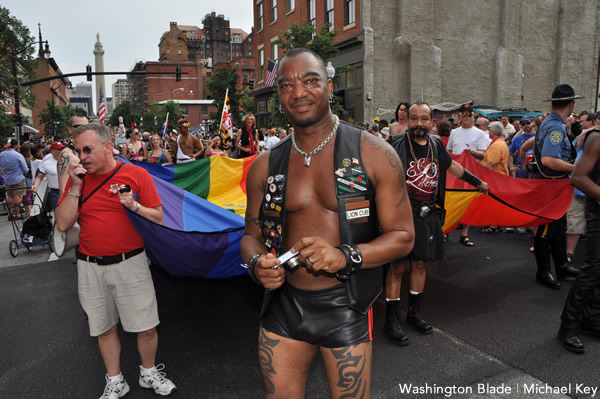
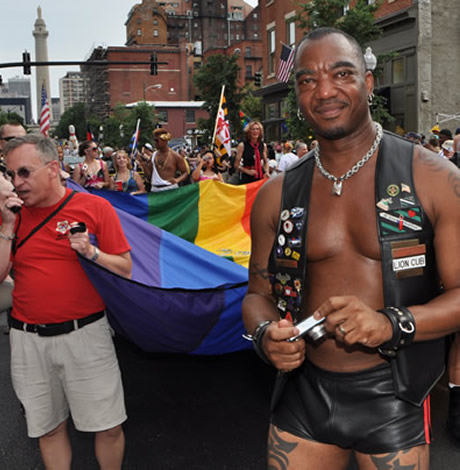
Baltimore Pride (Washington Blade photo by Michael Key)

The Baltimore Pride Celebration kicks off June 13 with “Twilight on the Terrace,” a cocktail party and fundraiser at Gertrude’s Restaurant at the Baltimore Museum of Art. The festival continues throughout the weekend, including a high heel race on Saturday and a block party on Sunday.

“We’ve expanded our footprint for Pride,” says Kelly Neel, interim executive director of the GLBT Community Center of Baltimore and Central Maryland, noting potential for a growing number of attendees.

Unlike previous years, this year’s Pride will feature entertainment and vending booths on both Saturday and Sunday instead of keeping those attractions separate from the parade, an adjustment Neel is looking forward to.

Baltimore Pride, which expects about 10,000 each day of the weekend-long celebration, will likely host a mass wedding this year, making a tradition out of a ceremony first held at last year’s Pride, the first year same-sex marriage was legal in the state.

Decades after the first Pride festivals were celebrated, Neel says there is still a place for them each summer, even as barriers fall for LGBT couples across the country.

“It’s great that there’s more awareness now and people are being more accepting of the LGBT community,” Neel says. “But I think that will just serve to make the parades bigger. Pride is not only a celebration of what’s going on in the now. It’s more a celebration of the past and a history of activism as well as the future.”

The city of brotherly love celebrates Philly Pride this weekend with a parade starting Sunday at noon from Philadelphia’s 13th and Locust streets. At this year’s pride — the first in Pennsylvania since same-sex marriage was legalized last month — the Hon. Dan Anders of the Philadelphia Court of Common Pleas will conduct marriage ceremonies at Independence Hall. Married couples will receive wristbands to the Pride festival.

The entertainment headliner is the Village People. Other Pride weekend events include a kick-off block party from 6-11 p.m. tonight on 12th Street between Walnut and Spruce, and the annual Dyke March on Saturday in Kahn Park at 3 p.m. For more details, visit phillypride.org.
New York City Pride, gay news, Washington Blade, East Coast

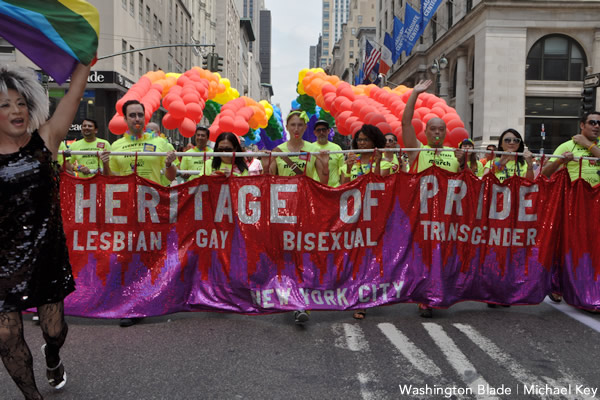
New York City Pride (Washington Blade photo by Michael Key)

The weeklong New York City Pride celebration starts June 24 this year, beginning with a family movie night featuring “The Wizard of Oz” at Hudson River Park’s Pier 46.

Other events include the rally on June 27, hosted by “RuPaul’s Drag Race” judge Michelle Visage and featuring performances from season four winner Sharon Needles as well as Betty Who, also set to play D.C. this weekend.

The centerpiece of the city’s Pride weekend is the New York Pride March, which steps off at noon. It begins at 36th St. and Fifth Ave., and ends at Christopher and Greenwich streets. What began as a 500-person “gay power” demonstration in June 1969 after the Stonewall Riots, has since grown into an annual civil rights celebration featuring 50 floats and more than 300 organizations.

This year’s Pride boasts big-name grand marshals: “Orange is the New Black” star Laverne Cox; lead actor in the hit HBO television series “Looking” Jonathan Groff; and Rea Carey, executive director of the National Gay and Lesbian Task Force.

Following the parade is Dance on the Pier from 4-10 p.m. on Hudson River Park Pier 26. All proceeds from this year’s dance, featuring a live performance from pop performer Demi Lovato, benefit the city’s official Pride events and LGBT community organizations. For more details on pride celebrations in New York City, visit nycpride.org.

Frederick’s third annual pride festival takes place June 28 from noon-6 p.m. in Carroll Creek Linear Park. Attractions include a pie eating contest, music performances, booths from local businesses, as well as an interfaith service at 11 a.m. the morning of Pride, a new addition this year. For more information, visit thefrederickcenter.org.

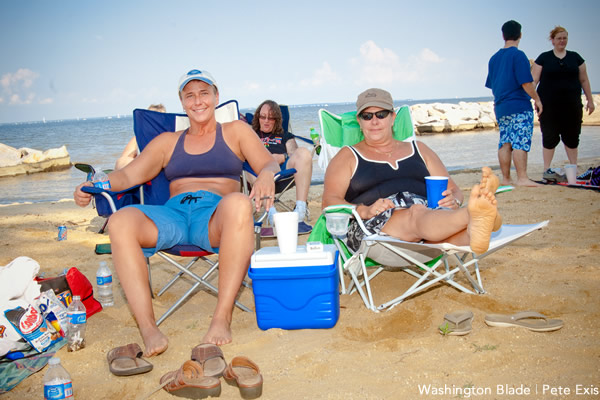
Chesapeake Pride festival kicks off later in the summer on Aug. 2 from noon-6 p.m at the Mayo Beach Park in Edgewater, Md. Head to the beach for “fun in the sun and a fabulous drag show,” Chesapeake Pride’s website says. Visit chesapeakepridefestival.org for details and updates.
Chesapeake Pride, gay news, Washington Blade, Maryland, East Coast

Chesapeake Pride (Washington Blade file photo by Pete Exis)
 

Advertisement
FUND LGBTQ JOURNALISM
SIGN UP FOR E-BLAST

a&e features

Memorial for groundbreaking bisexual activist set for May 2

Loraine Hutchins remembered as a ‘force of nature’

Published

on

Loraine Hutchins died last year. (File photo courtesy of Hutchins)

The Montgomery County Pride Center will host a celebration honoring the life and legacy of Loraine Hutchins, Ph.D., on May 2. People are invited to attend the onsite memorial or a livestream event. The on-site event will begin at 10 a.m. with a meet-and-greet mixer before moving into a memorial service around the theme “Loraine a Force of Nature!” at 11 a.m., a panel talk at 12 p.m., break out sessions for artists, academics, and activists to build on her legacy at 1 p.m. and a closing reception at 2 p.m. 

Attendees are encouraged to register for the on-site memorial gathering or the livestreamed memorial. The goal of this event is also to collect stories and memories of Loraine. Attendees and others can share their stories at padlet.com. 

An obituary for Hutchins was published in the Bladelast Nov. 24, where people can learn more about her activism in the bisexual community. A private service for friends and family was held in December but this memorial service is open to all. 

Alongside her groundbreaking work organizing for U.S. bisexual rights and liberation including co-editing “Bi Any Other Name: BIsexual People Speak Out” (1991), she also integrated faith into her sexual education and advocacy work. Her 2001 doctoral dissertation, “Erotic Rites: A Cultural Analysis of Contemporary U.S. Sacred Sexuality Traditions and Trends,” offered a pointed queer and feminist analysis to sex-neutral and sex-positive spiritual traditions in the United States. Her thesis was also groundbreaking in exploring the intersections between sex workers and those in caregiving professionals, including spiritual ones.

In an oral history interview conducted by Michelle Mueller back in August 2023, Hutchins described herself as a “priestess without a congregation.” While she has occasionally had a sense of community and feels part of a group of loving people, she admitted that “I don’t feel like we have the shape or the purpose that we need.”

“I’ve often experienced being the Cassandra in the room, the Cassandra in the community. Somebody who’s kind of way out there ahead, thinking through the strategic action points that my community hasn’t gotten to yet, and getting a lot of resistance and hostile responses from people who are frightened by dissent and conflict and not ready for the changes we have to make to survive,” she said.

“For somebody who’s bisexual in an out political way and who’s been a spokesperson for the polyamory movement in an out political way, it’s very exposing. And it’s very important to me to be able to try to explain and help other people understand the connection between spirituality and sexuality,” she explained citing how even as a graduate student she was “exploring how to feel erotic and spiritual, and not feel them in conflict with each other in my own spiritual contemplative life and my own sensual body awareness of being alive in the world.”

“Every religion has a sense of sacred sexuality. It’s just they put a lot of boundaries and regulations on it, and if we have a spiritual practice that is totally affirming of women’s priesthood and of gay people, queer people’s ability to minister to everyone and to be ministered to be everyone, what does that do to the gender of God, or our understanding of how we practice our spirituality and our sexuality in community and privately?”

“There’s no easy answer,” she concludes, and she continued to grapple with these questions throughout her life, co-editing another seminal text, “Sexuality, Religion and the Sacred: Bisexual, Pansexual, and Polysexual Perspectives,” published in 2012. Her work blending spiritual and queer liberation remains groundbreaking to this day. 

Rev. Eric Eldritch, a local community organizer and ordained Pagan minister with Circle Sanctuary who has worked for decades with the DC Center’s Center Faith to organize the Pride Interfaith Service, is eager to highlight this element of her legacy at the memorial service next month.  

Continue Reading

History

Julius’ Bar ‘sip-in’ laid groundwork for Stonewall

Tuesday marked 60 years since four gay activists held protest

Published

on

(Washington Blade photo by Ernesto Valle)

While Stonewall is widely considered the birthplace of the modern LGBTQ rights movement in the U.S., a lesser-known protest inside a Greenwich Village bar three years earlier helped lay critical groundwork for what would follow.

Tuesday marked 60 years since the Julius’ Bar “sip in.”

On April 21, 1966, four gay rights activists — Dick Leitsch, Craig Rodwell, John Timmons, and later Randy Wicker — walked into Julius’ Bar and staged what would become known as a “sip-in” to challenge state liquor regulations on serving alcoholic beverages to gay men — with a drink.

Modeled after the sit-ins that challenged racial segregation across the American South, the protest was designed to confront discriminatory practices targeting LGBTQ patrons in public spaces.

At the time, the Mattachine Society — one of the country’s earliest gay rights groups — was actively pushing back against policies enforced by the New York State Liquor Authority. One of those policies could have resulted in the loss of liquor licenses for serving known or suspected gay men and lesbians. The participants had visited multiple establishments, openly identified themselves as homosexual, and requested a drink — with the anticipation of being denied.

Their final stop was Julius’, where reporters and a photographer had gathered to document the moment. When Leitsch declared their identity, the bartender covered their glasses and refused service, reportedly saying, “I think it’s against the law.” The next day, the New York Times ran a story with the headline, “3 Deviates Invite Exclusion by Bars,” cementing the moment in the public record.

Though initially framed with disrespect — the term “sip-in” itself was coined as a play on civil rights protests — the action marked a turning point. It brought national attention to the systemic discrimination LGBTQ people faced and helped catalyze changes in how liquor laws were enforced. In the years that followed, the protest contributed to the emergence of licensed, more openly gay-friendly bars, which became central social and organizing spaces for LGBTQ communities.

The Washington Blade originally covered when the bar was officially added to the National Park Service’s National Register of Historic Places in 2016.

Today, historians and advocates increasingly recognize the “sip-in” as a key pre-Stonewall milestone. According to the New York City LGBTQ Historic Sites Project, the protest not only increased visibility of the early LGBTQ rights movement but also exposed widespread surveillance and entrapment tactics used against the community.

Marking the 60th anniversary of the event, commemorations have taken place in New York and across the country. Reflecting on its enduring legacy, Amanda Davis, executive director of the NYC LGBTQ Historic Sites Project, spoke about the event.

“Julius’ Bar is a place you can visit and viscerally connect with history,” said Davis. “We’re thrilled to have solidarity locations across the country join us in commemorating the ‘sip-in’’s 60th anniversary and the queer community’s First Amendment right to peaceably assemble.”

For current stewards of the historic bar, the responsibility of preserving that legacy remains front of mind.

“It’s a privilege and a responsibility to be the steward of a place so important to American and LGBTQ history,” said current owner of Julius’ Bar, Helen Buford. “The events of the 1966 Sip-In here at Julius’ resonated across the country and inspired countless others to stand proud for their rights.”

The timing couldn’t have come at a more important moment, Kymn Goldstein, executive director of the June L. Mazer Lesbian Archives, explained.

“At a time when our community faces renewed challenges, coming together in resilience and solidarity reminds us of the power in our collective resistance,” Goldstein said.

The American Civil Liberties Union, an organization dedicated to defending rights and liberties guaranteed by the Constitution, is currently tracking 519 anti-LGBTQ bills across the U.S. The majority are targeted at restricting transgender rights — particularly related to gender-affirming care, sports participation, and the use of public bathrooms.

Some additional groups and bars that held their own “sip-in” as solidarity events to uplift this historic milestone are from across the country include:

Alice Austen House at Steiny’s Pub, Staten Island, N.Y.

Bellows Falls Pride Committee at PK’s Irish Pub, Bellows Falls, Vt.

Brick Road Coffee, Mesa, Ariz.

Brick Road Coffee, Tempe, Ariz.

Dick Leitsch’s Family at Old Louisville Brewery, Louisville, Ky.

The Faerie Playhouse & LGBT+ Archives Project of Louisiana at Le Cabaret, New Orleans

Harlem Pride & John Reddick at L’Artista Italian Kitchen & Bar, New York

JOYR!DE KiKi at Loafers Cocktail Bar, New York

Matthew Lawrence & Jason Tranchida / Headmaster at Deadbeats Bar, Providence, R.I.

Mazer Lesbian Archives at Alana’s Coffee, Los Angeles

New Hope Celebrates at The Club Room, New Hope, Pa.

Queer Memory Project at the University of Evansville Multicultural Student Commons / Ridgway University Center, Evansville, Ind.

Sandy Jack’s Bar, Brooklyn, N.Y.

St. Louis LGBT History Project at Just John Club, St. Louis

Continue Reading

Photos

PHOTOS: National Champagne Brunch

Gov. Beshear honored at annual LGBTQ+ Victory Fund event

Published

on

Gov. Andy Beshear (D-Ky.) speaks at the LGBTQ+ Victory Fund National Champagne Brunch on Sunday, April 19. (Washington Blade photo by Michael Key)

The LGBTQ+ Victory Fund National Champagne Brunch was held at Salamander Washington DC on Sunday, April 19. Gov. Andy Beshear (D-Ky.) was presented with the Allyship Award.

(Washington Blade photos by Michael Key)
Continue Reading

Popular