Books
Books for the beach
Short stories, comedic novels, gripping non-fiction among summer tomes
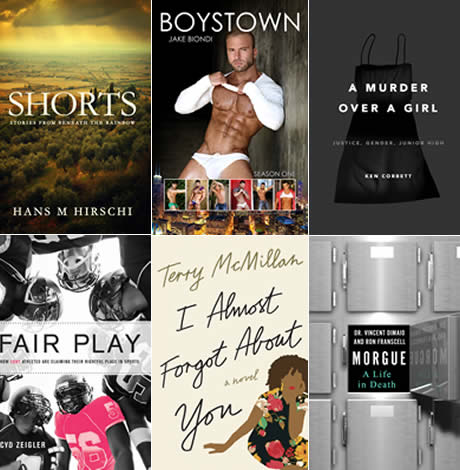
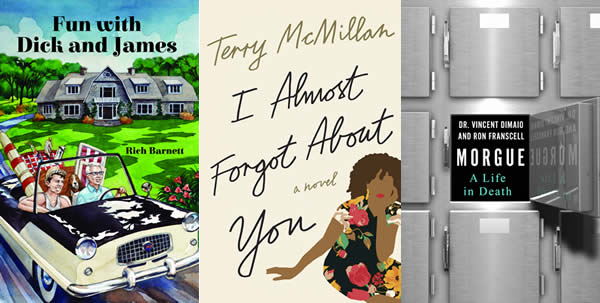
(Book covers courtesy of the publishers)
The beach beckons.
Who can resist its siren call, the lure of sun, relaxation and pink drinks with little umbrellas? Not you, which is why you’re packing for vacation — so don’t forget something new to read in the sand.
This may have been said before: You can’t go wrong with “The Absolutist” by John Boyne. It’s the story of a former soldier in the aftermath of World War I who’s been injured both physically and emotionally. In his possession is a handful of letters written by his best friend during the war, and the man decides that his friend’s sister is the rightful heir to the letters, since the friend has died. When the sister asks how her brother was killed, the man tells her.
Brutal, quietly moving, and with an ending that will leave you out of breath, it’s a novel you won’t forget.
If you’ve ever loved and lost, then “I Almost Forgot About You” by Terry McMillan is what you want to pack.
On the way toward a meaningful birthday, Georgia Young is reminded of a man she was once deeply in love with — but she can never tell him how much he meant to her back then, because he was killed in a traffic accident. This makes Georgia think about all the men to whom she never said, “I love you,” and that was a wrong that definitely needed righting.
Much like McMillan’s “How Stella Got Her Groove Back,” this is a book you’ll cheer about.
True crime fanatics will want to pack “A Murder Over a Girl” by Ken Corbett, the true story of a transgender teen, his death at the hands of a classmate, and the trial that’ll leave your jaw on the floor. Also look for “Morgue: A Life in Death” by Dr. Vincent Di Maio and Ron Franscell. Di Maio is a forensic pathologist, which is he guy who does autopsies. ‘Nuff said.
If the Olympics are on your radar this summer, take “Fair Play” by Cyd Zeigler with you on your vacay. It’s about gay and lesbian pro athletes — mostly, but not entirely, in the NFL — the inequality they’ve endured, and how the tide seems to be turning. There are a few surprises in this book, and encouragement.
And finally, if you like light reading, what you’re going to want to pack is “A Million Years in a Day: A Curious History of Everyday Life from the Stone Age to the Phone Age” by Greg Jenner. This book, filled with witty comments, fun facts and a narrative that starts with an alarm clock and ends with lights out, is enjoyable, gently humorous, and oh-so-addictive.
A spring release you might have missed is gay author Edmund White’s “Our Young Man,” a ‘70s- and ‘80s-set story of a gorgeous French model on the edge of 40 attempting to extend his shelf life as long as humanly possible. It’s a witty and breezy read that turns unexpectedly poignant at times.
Local author Rich Barnett tells of a “Delaware blue blood with a talent for shaking cocktails, a street-smart personal trainer and a flamboyant heir to a fading french fry empire” in his new book “Fun With Dick and James,” set in Rehoboth Beach. A release party is planned for Monday, July 18 from 5-8 p.m. at Miss Pixie’s (1626 14th St., N.W.). Details at funwithdickandjames.com.
“Boystown Season Five” is the latest installment in the Jake Biondi-penned gay series now featuring the photography of James Franklin. It was released in June and is available online and in print at all the usual outlets.
“Femme,” a new novel from author Marshall Thornton, is slated for a July 28 release at Amazon and Kindle Unlimited and in paperback. It tells of a “queeny” cocktail waiter Lionel who wakes up one morning to find himself in bed with a “straight-acting” softball player, Dog. They embark on a “rocky road to romance.”
“Shorts: Stories from Beneath the Rainbow” is a short-story collection that features characters from “across the queer spectrum” by author Hans Hirschi. It’s slated for a July 9 release in paperback and digital formats.





Books
Eliot Glazer’s new book an engaging collection of essays
From growing up gay to turning down ‘Queer Eye’
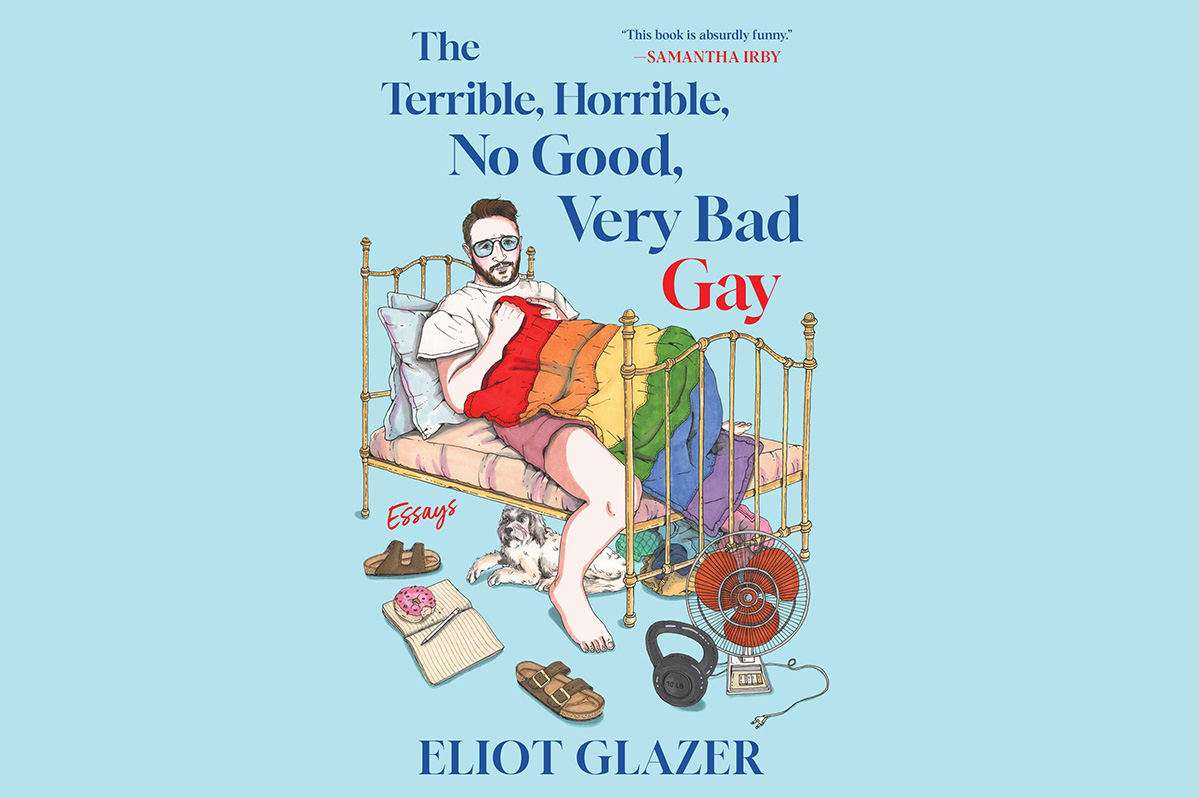
“The Terrible, Horrible, No Good, Very Bad Gay: Essays”
By Eliot Glazer
c.2026, Gallery Books
$28.99/240 pages
You try and you try.
Once, twice, you go back at that thorny issue, the dream you have, the punchline that’s not hitting quite right. Sometimes, time is all you need to make it better, or a new approach, or a second look. And then there are days when you actually get things right, as in “The Terrible, Horrible, No Good, Very Bad Gay” by Eliot Glazer, and it’s all good.

Throughout his life, Eliot Glazer has made mistakes. And it’s OK, everybody trips and falls now and then. In his case, though, he’s perfectly willing to document his failures, foibles, and whoopsies in this book.
He writes of his mother, Sandi, “a Queens-born balabosta” who wouldn’t tolerate laziness in herself or Glazer. He found work as soon as he was legally able to do so, and he had many jobs throughout high school. He was a gardener, ice cream scooper, camp counselor, golf caddy, chocolatier, telemarketer, and video store clerk. The one that fit him best, however, was working at Talbots, a department store for older women, where he found his people.
Even with all those jobs, he was a theater kid in his time off, little though it was. Back then, he was just a boy growing up on Long Island but swagger was important, so swagger he did. He still appreciates a good Broadway show, even the silliest ones.
Glazer says that he had just recently come out when gayness exploded on TV with “Will & Grace” and “Queer Eye for the Straight Guy,” with which he was obsessed. It helped him feel not othered, he says. Producers of the reboot asked him to be a second-generation Eye, but Glazer turned them down, though he thinks he’d have been good at it.
The show helped him with love of décor. His unexpected advisory skills came naturally, through age and wisdom and learning that wild partying isn’t really so much fun.
As for finding love, well, that’s a long, boy-meets-boy-meets-boy story…
So you’re looking for something to easily pick up and put down, something that speaks to your inner impatience? You’ll find that in “The Terrible, Horrible, No Good, Very Bad Gay,” a book that’s practically meant for you to skip around and you don’t have to read everything.
Essays can be like that, which is nice, even refreshing. Author Eliot Glazer is entertaining enough to make things work, engaging enough to keep it moving, and funny enough to make you want more of what he has to say. He’s open with his life and, despite his fame, his writing isn’t lofty; you can expect stories that’ll make you snort and ones with spice, but also some surprisingly tender moments that soften this book in a way that’s just right.
Readers who want a quick, mostly light book to finish will find something appealing in this collection of essays. If you don’t mind a bit of non-linearity and you need a laugh, “The Terrible, Horrible, No Good, Very Bad Gay.” is worth a try.
The Blade may receive commissions from qualifying purchases made via this post.
Books
Curl up with a good book this fall
New releases include mysteries, biographies, religion, and more
The fall books season offers lots of options so curl up and get ready to read.
FICTION
For the mystery fan who likes a sprinkle of thriller, look for “The Longest Death” by Kevin Jagernauth (Soho Crime, December). Richard Cobson hates his small town, he’s bored and desperate to get away. Stealing from his employer is the only thing that makes life bearable. That all changes when Marlon Montgomery comes to town and the two fall in love because if one guy can steal so easily, what can two do?
If you like graphic novels, try the “Tripping Over You” trilogy by Suzana Harcum and Owena White. Milo and Liam are finally able to be open about their relationship, no more hiding their love. They’re living together now, but can it last? “Tripping Over You Book 3” (First Second Books) is in stores in early November.
Also try “Diana: The Punk Singer Who Ripped Through Time” by Nate Powell (Abrams ComicArts, October). It’s about a young woman who’s trying desperately to escape her past, until a mysterious murder sidetracks her plans.
So you say you’re a romantic at heart? Then look for “Unspeakable Things: A Novel” by Elizabeth Hand (Little, Brown & Company, October). It’s a story set in the 1920s, when two young women arrive in the English Countryside to a dark and ancient manor. But, of course, nothing in a Gothic novel is easy, right? And you’ll love this tale.
NONFICTION
So this upcoming year is going to be one of exploration, right? Then look for “Free Love: Adventures in Marriage and Polyamory” by Michelle Tea (HarperOne, November). It’s a well-researched, personal, and interesting look at the lives of polyamorous couples and what it’s like to live what used to be called an “alternative” lifestyle.
If “fall” says “biography” to you, then look for “Showbiz! My Life as a Middle-Aged Man” by Murray Hill (Gallery Books, October). For decades, Hill has been making audiences laugh with his signature humor, but getting laughs hides his past all too well. He grew up in an abusive family and learning to hone his talents took some ingenuity. If you’re not a Hill fan yet, you will be, once you read this book.
For the reader who’s searching for a spiritual place, “Reading the Bible Through Queer Eyes: Good News for LGBTQ+ People from Genesis to Revelation” by podcasters Brian G. Murphy and Shannon T.L. Kearns (HarperOne, December) might help. Here, the authors look deeply at Scripture to find the queerness that’s there, proving to readers that the Word is not always what it seems.
Young readers may want to check out “Bitter Pill: Randy Shilts and the Dawn of the HIV/AIDS Epidemic” by Clement Xavier, illustrated by Heloise Cochois, foreword by Michael Lee (Abrams ComicArts, November). It’s a highly researched true story of activist Shilts, but also of Harvey Milk, and the earliest days of the AIDS crisis, when gay men needed a loud voice to advocate for them.
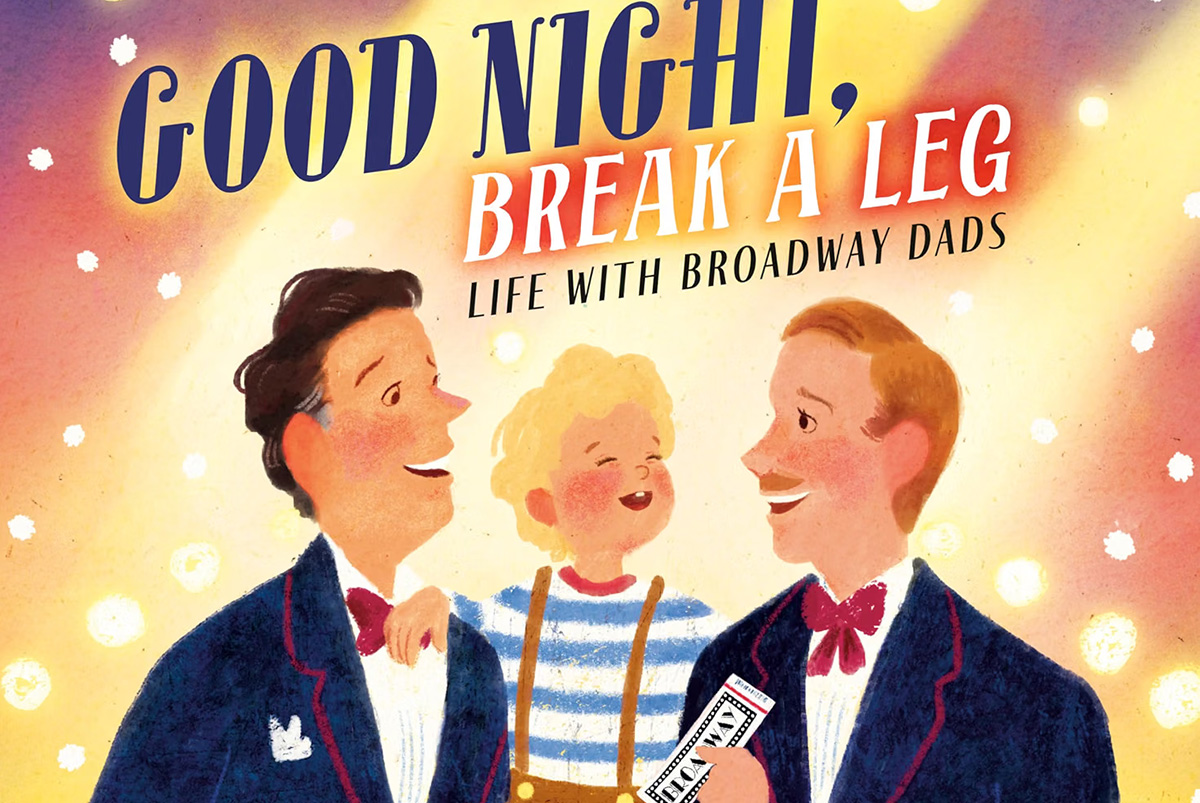
And finally, if you want a fun book for your kids or a child you love, look for “Good Night, Break a Leg: Life with Broadway Dads” by Bret Shuford, illustrated by Elena Hager (Penguin Workshop). What do parents do when they go to work? A little boy learns that his dads have very special jobs by day – and by night! It’s a cute book for kids, but a special tale for lovers of Broadway.
Be aware that publication dates change, titles change, books can be canceled, and your librarian or favorite bookseller can help you find what you need. Season’s readings!
Books
Dolly Parton biography puts her hardships into context
‘Ain’t Nobody’s Fool’ a highly researched tome not to be missed
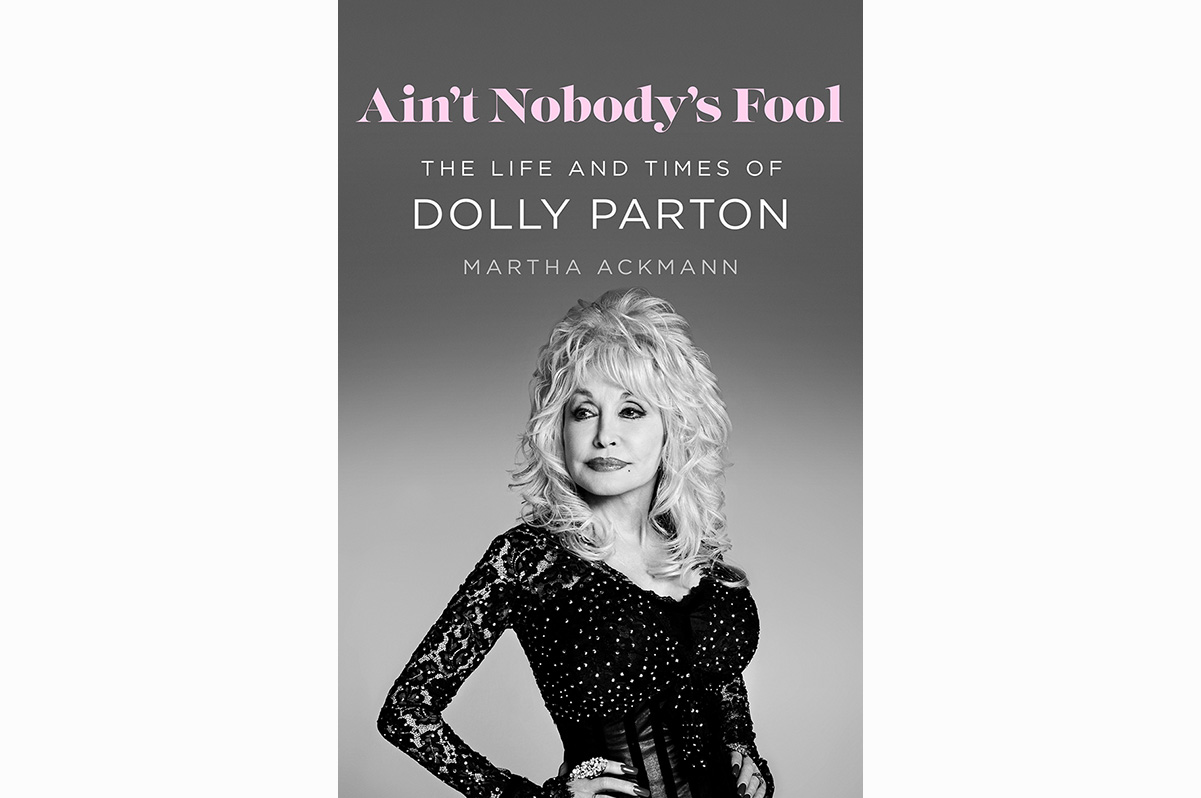
‘Ain’t Nobody’s Fool: The Life and Times of Dolly Parton’
By Martha Ackmann
c.2026, St. Martin’s Press
$30/304 pages
Not too bright.
That’s what people once thought about you. Your language didn’t conform, you had your own sense of style, and you were ignorant about modern things and places and foods. But you were no dummy. You were different, and you had a secret: as in the new biography, “Ain’t Nobody’s Fool: The Life and Times of Dolly Parton” by Martha Ackmann, you knew exactly where you were going.
When Avie Lee Owens and Lee Parton first married, they had the very basics: “two knives, two forks, two spoons, a skillet, a butcher knife, and an old iron kettle.” He was 17; she was 15. Babies came quick. The fourth one was named Dolly, after two great-aunts.
Almost from the time she could walk, Dolly sang. Before she was old enough to attend school, she wrote poetry, and she’d begun to notice rhythms and beats she could make with her fingers. As a schoolchild, she created her own musical instruments out of scraps, and she was eager to perform whenever anyone asked her – and they asked often, because Dolly Parton was a nice girl, and her sense of humor conveyed a warmth that drew people in.
Growing up in the Tennessee mountains, Parton was independent, shunning marriage and child-raising, instead focusing on a dream of being a star. By the time she was in high school, she’d had a regular gig on local television but she recognized that there were few opportunities for fame in the mountains, so she left for Nashville the day after high school graduation, with the snickers of naysayers ringing in her ears.
She stayed with an aunt and uncle there, and she beat the streets, dined on grocery store samples to get by, and missed her family and friends. And they worried about her, but they knew nothing would derail her plans. They knew Dolly would be fine.
As a friend said, “’She had her head on pretty good.’”
Chances are that if you’ve listened to music any time in the last 60 years, you’ve heard Dolly Parton through her words or her music or both. Now you need to learn more about her, and “Ain’t Nobody’s Fool” is where to do it.
Here’s a biography that grabs you on the first page with the tiniest bit of family tree, but not so much that you get bored with it. Author Martha Ackmann writes about Dolly Parton’s early life, putting hardships and experiences in context, both personally and historically. There are name-drops, but not overly so, as Ackmann takes you through Parton’s career, her heartbreaks, her marriage, and her years with Porter Wagoner, in detail but not dramatically embellished or outrageously told. It’s a biography that’s just right, sourced well and written with a fresh take that, like its subject, tells a good story.
Fans, of course, will want this highly researched book but music lovers of any age or type will eat it up. That means you, so use up that Christmas gift certificate. “Ain’t Nobody’s Fool” just shines.
The Blade may receive commissions from qualifying purchases made via this post.

Evan Low is not the leader the Victory Fund needs at this moment

Transgender woman elected to Brazilian Chamber of Deputies

Lula, Flávio Bolsonaro to face off in second round of Brazilian presidential election

The financial realities facing LGBTQ+ first-time buyers

‘Merrily’ is for Sondheim super fans, the uninitiated, and anyone in between

Meet the LGBTQ candidates running for U.S. House, Senate

Ana Brnabić becomes world’s first openly lesbian head of state

Vote now! Best Of LGBTQ DC readers’ choice awards

Gay Va. couple hopeful voters will enshrine marriage equality in state constitution

Victory Fund board investigates former staffers’ allegations against CEO Evan Low
-

 2026 Midterm Elections5 days ago
Meet the LGBTQ candidates running for U.S. House, Senate
-
Serbia5 days ago
Ana Brnabić becomes world’s first openly lesbian head of state
-
Arts & Entertainment5 days ago
Vote now! Best Of LGBTQ DC readers’ choice awards
-
Virginia4 days ago
Gay Va. couple hopeful voters will enshrine marriage equality in state constitution