Movies
Oscar’s baby steps
Look for slight improvements in diversity in Tuesday’s nominations
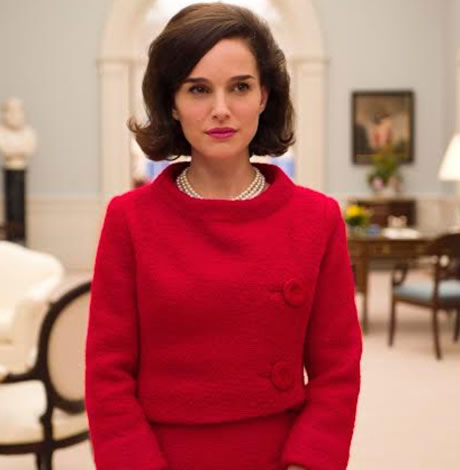
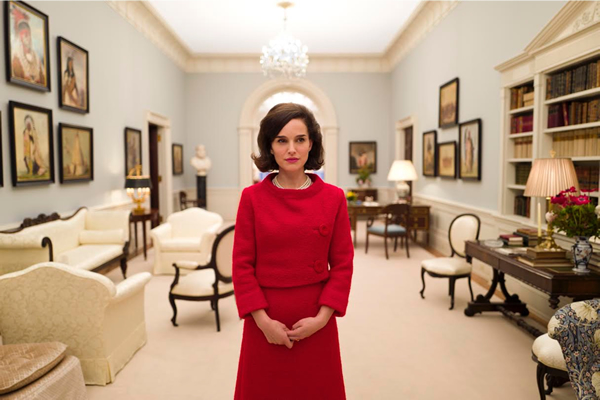
Natalie Portman is considered a likely Oscar nominee for her work in ‘Jackie.’ (Photo courtesy Fox Searchlight)
Without a doubt, when the ceremony for the 89th Academy Awards is broadcast on Feb. 29, it will look much different than last year’s show. For one thing, mild-mannered Jimmy Kimmel will serve as host for the first time, although some of the winners will still undoubtedly choose to follow in Meryl Streep’s footsteps and make political statements.
For another, there will be a definite shift away from the male-centered dramas that dominated last year’s Best Picture category. In fact, the most interesting and hotly contested categories may be for Best Actress and Best Supporting Actress.
And most importantly, there will almost definitely be several African Americans among the nominees for Best Director, Best Actor and Best Actress.
On the other hand, while the Academy has made some baby steps toward diversity, there is still a long way to go. Asian Americans and Hispanics are underrepresented across all categories, as are openly LGBT artists. Women are still underrepresented in the directing category.
In fact, many of the movies generating Oscar buzz this year would not be eligible for consideration for key awards offered by the British Academy of Film and Television Arts. In December, BAFTA announced new diversity standards that provide a shared framework for measuring diversity so that the industry can track progress over time and can adopt a shared language for understanding diversity.
According to the BAFTA press release, “beginning in 2019, the Outstanding British Film and Outstanding Debut by a British Writer, Director or Producer categories will adhere to the diversity standards set out by the British Film Institute. That means productions will need to demonstrate that they have worked to increase the representation of under-represented groups in two of the four following areas: on-screen representation, themes and narratives; project leadership and creative practitioners; industry access and opportunities; and opportunities for diversity in audience development.”
In addition, membership in the British Academy will no longer be dependent on a recommendation from a current member. This move is expected to further diversify BAFTA membership, which has already shown significant change.
As for Hollywood, 2016 did see an explosion of excellent Oscar-caliber movies that focused on the African-American experience, some of which were also helmed by black directors. These included “Hidden Figures,” “Moonlight,” “Fences,” “Loving,” “The Fits,” “The Birth of a Nation,” “The Queen of Katwe,” “Southside With You” and the outstanding documentaries “13th,” “O.J.: Made in America” and “I Am Not Your Negro.”
Unfortunately, despite this cluster, Oscar is still pretty white, male and straight.
Nonetheless, there are some great movies to celebrate in this year’s race. Here are some of the names to look for when the nominees are announced next Tuesday morning:
“Moonlight,” the groundbreaking movie about a gay, African-American youth has already won several major awards, including several honors from the African-American Film Critics Association and the Black Film Critic Circles Award. Look for nominations for writer and director Barry Jenkins, supporting actor Mahershala Ali, supporting actress Naomie Harris and cinematographer James Laxton.
While “La La Land” swept the Golden Globes, winning a historic seven awards, it will face a tougher challenge at the Oscars, since the Academy does not have a separate category for musical or comedy. Nominations can be expected for director Chazelle, stars Stone and Gosling, and the musical team of Hurwitz, Paul and Pasek. Choreographer Mandy Moore will sadly go unrecognized for her stunning work in the opening number “Another Day” since there is no choreography Oscar.
“Manchester by the Sea,” “Fences” and “Loving” deserve nominations across the board, and “Hell or High Water” is also considered a major contender in several categories.
In addition to Stone and Negga (“Loving”), other top contenders for nominations in the sizzling Best Actress category include Viola Davis (“Fences”), Natalie Portman (“Jackie”), Golden Globe winner Isabelle Huppert (“Elle”) and Amy Adams (“Arrival”). Some intriguing long shots include Meryl Streep (“Florence Foster Jenkins”), Annette Benning (“20th Century Women) and Taraji P. Henson (“Hidden Figures”).
Rounding out the expanded Best Picture category, look for “Lion,” “Jackie,” “Hidden Figures” and “Arrival,” with such long shots as “Silence,” “Eye in the Sky,” “Hacksaw Ridge” and “The Lobster.”
While you’re waiting for Tuesday’s announcements, be sure to check out some of this year’s Oscar contenders on the big screen. No matter how good your home entertainment system, it won’t do full justice to “Hidden Figures,” “Jackie” or “Arrival.”





Movies
‘Spaced out on sensation’: a 50-year journey through a queer cult classic
Excellence of ‘Rocky Horror’ reveals itself in new layers with each viewing

Last week’s grab of nine Tony nominations for the new Broadway revival of “The Rocky Horror Show” – coming in the midst of the ongoing 50th anniversary of the cult-classic movie version – seems like a great excuse to look back at a phenomenon that’s kept us “doing the Time Warp” for decades.
It’s a big history, so instead of attempting a definitive conclusion about why it matters, I’ll just offer my personal memories and thoughts; maybe you’ll be inspired to revisit your own.
First, the facts: Richard O’Brien’s campy glam-rock musical became a London stage hit in 1973; that success continued with a run at Los Angeles’s Roxy Theatre in 1974, and a Broadway opening was slated for early 1975. In the break between, the movie was filmed, timed to ride the presumed success of the New York premiere and become a mega-hit – but it didn’t happen that way. The Broadway show closed after a mere handful of performances, and the movie disappeared from theaters almost as soon as it was released.
This, however, was in the mid-1970s, when “cult movies” had become a whole countercultural “scene,” and the film’s distributor (20th Century Fox) found a way to give “The Rocky Horror Picture Show” another chance at life. It hit the midnight circuit in 1976, and everybody knows what happened after that.
When all of this was happening, I was still a pre-teen in Phoenix, and a sheltered one at that. It wasn’t until 1978 – the summer before I started high school – that it entered my world. Already a movie fanatic (yes, even then), I had discovered a local treasure called the Sombrero Playhouse, a former live theater converted into an “art house” cinema; my parents would take me there and drop me off alone (hey, it was 1978) for a double feature. I remember that place and time as pure heaven.
It was there that “Rocky Horror” found me. The Sombrero, like so many similar venues across the country, made most of its profits from the midnight shows, and “The Rocky Horror Picture Show” was the star attraction. I saw the posters, watched the previews, got my first peeks at Tim Curry’s Frank, Peter Hinton’s Rocky, and all the rest of the movie’s alluringly “freaky” cast; when I came out of the theater after whatever I had watched, I would see the fans lining up outside for the midnight show. I could see their weird costumes, and smell the aroma I already knew was weed, and I knew this was something I should not want to have any part of – and yet, I absolutely did.
After I started high school and found my “tribe” with the “theater kids,” I was invited by a group of them – all older teenagers – to go and see it. I had to ask my parents’ permission, which (amazingly) they granted; they even let me ride with the rest of the “gang” in our friend’s van – with carpeted interior, of course – despite what I could see were their obvious misgivings about the whole situation.
It would be over-dramatic to say that night changed my life, but it would not be wrong, either. I was amazed by the atmosphere: the pre-movie floor show, the freewheeling party vibe, the comments shouted at the screen on cue, the occasional clatter of empty liquor bottles falling under a seat somewhere, and that same familiar smell, which delivered what, in retrospect, I now know was a serious contact high.
As for the movie, I had already been exposed to enough “R” rated fare (the Sombrero never asked for ID) to keep me from being shocked, and the gender-bent aesthetic seemed merely a burlesque to me. I was savvy enough to see the spoof, to laugh at the lampooning of stodgy 1950s values under the guise of a retro-schlock parody of old-school movie tropes; I “got it” in that sense – but there was so much about it that I wasn’t ready to fully understand. Because of that, I enjoyed the experience more than I enjoyed the film itself.
I’m not sure how many times I saw “Rocky Horror” over the next few years, but my tally wasn’t high; I drifted to a different friend group, became more active in theater, and had little time for midnight movies in my busy life. I was never in a floor show and rarely yelled back at the screen (though I did throw a roll of toilet paper once), and I didn’t dress in costume. Even so, I went back to it periodically before the Sombrero closed permanently in 1982, and as I gradually learned to embrace my own “weirdness,” I came to connect with the weirdness that had always been calling me from within the movie. Each time I watched it, I did so through different eyes, and they saw things I had never seen before.
That process has continued throughout my life. I’ve frequently revisited “Rocky” via home media (in all its iterations) and special screenings over the years, and the revelations keep coming: the visual artistry of director Jim Sharman’s treatment; the dazzling production design incorporating nods to iconic art and fashion that I could only recognize as my own knowledge of queer culture expanded; the incomparable slyness of Tim Curry’s unsubtle yet joyously authentic performance; the fine-tuned perfection of Richard O’Brien’s ear-worm of a song score. The excellence of “The Rocky Horror Picture Show” revealed itself in new layers with every viewing.
There were also more intimate realizations: how Janet was always a slut and Brad was always closeted (I related to both), and how Frank’s seduction becomes the path to sexual liberation for them both; how Rocky was the “Über-Hustler,” following his uncontrolled libido into exploitation as a sex object while only desiring safety and comfort (I related to him, too), and how the “domestics” were driven to betray their master by his own diva complex (I could definitely relate to both sides of that equation). How Frank-N-Furter, like the tragic Greek heroes that still echo in the stories we tell about ourselves, is undone by hubris – and anybody who can’t relate to that has probably not lived long enough, yet.
The last time I watched (in preparation for writing this), I made another realization: like all great works of art, “The Rocky Horror Picture Show” is a mirror, and what we see there reflects who we are when we gaze into it. It’s a purely individual interaction, but when Frank finally delivers his ultimate message – “Don’t dream it, be it” – it becomes universal. Whoever you are, whoever you want to be, and whatever you must let go of to get there, you deserve to make it happen – no matter how hard the no-neck criminologists and Nazi-esque Dr. Scotts of the world try to discourage you.
It’s a simple message – obvious, even – but it’s one for which the timing is never wrong; and for the generations of queer fans that have been empowered by “The Rocky Horror Picture Show,” it probably feels more right than ever.
Movies
The queer appeal of ‘The Devil Wears Prada’
Tying the feminist and LGBTQ rights movements together on screen

“Would we have fashion without gay people? Forgive me, would we have anything?”
Those words, spoken by Miranda Priestley herself (actually by Meryl Streep, the 76-year-old acting icon who played her), may well sum up why “The Devil Wears Prada” has been a touchstone for queer audiences for two decades now.
Streep, who returns to big screens this weekend in the sequel to director David Frankel’s beloved 2006 classic (succinctly titled “The Devil Wears Prada 2”), expressed this nugget of allyship in a recent interview with Out magazine, promoting the new film’s upcoming release. It would be hard, as a member of the queer community, to disagree with her assessment. The world of fashion has always been inextricably linked with queer culture, and the whims of taste that drive it are so frequently shaped by queer men – and women, too – who have adopted it as a means of expressing their sense of identity from the very first time they thumbed through a copy of Vogue.
At the same time, the notion that “Prada” has been claimed by the community as “canon” simply because of the stereotypical idea that “gay people love fashion” feels like a lazy generalization. After all, fashion is about discernment – about knowing, if you will, whether a sweater is simply blue or if it is cerulean, and, importantly, understanding why it matters – and just because something ticks off a few basic boxes, that doesn’t mean it qualifies as “haute couture.”
So yes, the setting of the “Devil Wears Prada” universe in what might be called “ground zero” of the fashion industry plays a part in piquing queer interest, but to assume our obsession with it is explained as simply as that is, frankly, insulting. The fashion angle catches our interest, but it’s the story – and, more to the point, the central characters (all of which return in the sequel) – that reels us in.
First, there’s the ostensible heroine, Anne Hathaway’s Andrea (or rather, Andy) Sachs, who falls into the world of fashion almost by accident. She’s a recent college grad who wants to be a journalist, to write for a publication that operates on a less-superficial level than Runway magazine, but fate (for lack of a better word) places her in the job that “a million girls” would kill to have – assistant to Streep’s Miranda Priestly (based on Vogue editor Anna Wintour), who can determine an entire season’s fashion trends merely by pursing her lips. She’s idealistic, and dismissive of fashion in the overall scheme of human existence; she’s also stuck with a truly terrible boyfriend (Nate, played by Adrian Grenier) and trying to live up to the self-imposed expectations and ideals that have been foisted upon her since birth.
It’s clear from the start that none of this “fits” her particularly well. More significantly, the natural grace with which she blossoms, from “sad girl” fashion-victim to the epitome of effortless style, tells us that she was meant to be exactly where she is, all along.
Then, of course, there is Nigel (Stanley Tucci), the ever-loyal art director and “Gay Best Friend” that’s always there to provide just the right saving touch for both Miranda and Andy, helping to boost the former while gifting the latter with his own insight, “tough love,” and impeccable taste. Never mind that he’s a queer character played by a straight actor – Tucci avoids stereotype and performative flamboyance by simply playing it with pure, universally relatable authenticity – or that he ends up, at the end of the original film, betrayed by his goddess yet deferring his own dream to double down on his commitment to hers. Anyone who has ever been a gay man in the orbit of a remarkable woman knows exactly how he feels. Of course, they also probably know the precarious life of being a queer person in the workplace – something that carries its own set of compromises, disappointments, and determinations to go above-and-beyond just to make oneself invaluable to the powers that be.
Which brings us to Emily (Emily Blunt), the cutthroat “first assistant” who does her level best to keep Andy in her place, who goes to extremes (“I’m just one stomach flu away from my goal weight”) to be the “favorite” no matter how much cruelty she has to unleash on those who threaten her status. Some see her as merely an obstacle in the way of Andy’s rise to success, an antagonist whose efforts to embody the “no mercy” persona of an ascendent girl boss only expose her own mediocrity. But for many, she’s just another victim doomed to fail and fall while watching others rise to the top. Queer, straight, or in-between, who among us hasn’t been there?
Finally, of course, there is Streep’s Miranda Priestley, the presumed “devil” of the title and the epitome of mercilessly autocratic authority, who has earned her status and her power by embracing the toxic modus operandiof a misogynistic hierarchy in order to conquer it. Yes, she’s more than just a little horrible, a strict gatekeeper who hones in on perceived weaknesses with all the vicious premeditation of a hawk with its eyes on a luckless rabbit, and it would be easy to despise her if she weren’t so damn fabulous. But thanks to the incomparable Oscar-nominated performance from Streep – along with the glimpses we are afforded into her “real” life along the way – she is not just aspirational, but iconic. Stoic, imperturbable, always three steps ahead and never affording an inch of slack for any perceived shortcoming, there’s an undeniable excellence about her that inspires us to see beyond the obvious dysfunction of the “work ethic” she represents; and sure, there’s enough emotionally detached enthusiasm in her torment/training of Andy to fuel countless volumes of erotic lesbian fan-fiction (Google “MirAndy,” if you dare), but when we eventually recognize that she might just be the ultimate “fashion victim” of them all, it doesn’t just cut us to the core – it strikes a chord that should be universally recognizable to anyone who has had to make their own “deal with the devil” in order to claim agency in their own lives. In this way, “The Devil Wears Prada” comes closer than probably any mainstream film to tying the feminist and queer rights movements together in common cause.
In any case, each character, in their way, can easily be tied to a facet of queer identity – and indeed, to the identity of anyone who must work twice (or more) as hard as a straight white Christian male to succeed. We can see ourselves reflected in all of them – and whether we aspire to be Miranda (I mean, who wouldn’t?), identify with Andy, recognize our worst traits in Emily, or empathize with Nigel and his deferential suffering, there’s something in “The Devil Wears Prada” that resonates with everyone.
Now let’s see if the sequel can say the same.

Sir Ian McKellen may now be known as much for being a champion of the international LGBTQ equality movement as he is for being a thespian. Out and proud since 1988 and encouraging others in the public eye to follow his lead, he’s a living example of the fact that it’s not only possible for an out gay man to be successful as an actor, but to rise to the top of his profession while unapologetically bringing his own queerness into the spotlight with him all the way there. For that example alone, he would deserve his status as a hero of our community; his tireless advocacy – which he continues even today, at 86 – elevates him to the level of icon.
Those who know him mostly for that, however, may not have a full appreciation for his skills as an actor; it’s true that his performances in the “Lord of the Rings” and “X-Men” movies are familiar, however, this is a man who has spent more than six decades performing in everything from “Hamlet” to “Waiting for Godot” to “Cats,” and while his franchise-elevating talents certainly shine through in his blockbuster roles, the range and nuance he’s acquired through all that accumulated experience might be better showcased in some of the smaller, less bombastic films in which he has appeared – and the latest effort from prolific director Steven Soderbergh, a darkly comedic crime caper set in the dusty margins of the art world, is just the kind of film we mean.
Now in theaters for a limited release, “The Christophers” casts McKellen opposite Michaela Coel (“Chewing Gum,” “I May Destroy You”) for what is essentially a London-set two-character game of intellectual cat-and-mouse. He’s Julian Sklar, an elderly painter who was once an art-world superstar but hasn’t produced a new work in decades; she’s Lori Butler, an art critic and restoration expert who is working in a food truck by the Thames to make ends meet when she is approached by Sklar’s children (James Corden, Jessica Gunning) with a proposition. Hoping to cash in on their father’s fame, they want to set her up as his new assistant, allowing her access to an attic containing unfinished canvases he abandoned decades ago – so that she can use her skills to finish them herself, creating a forged series of completed paintings that can be “posthumously discovered” after his death and sold for a fortune.
She takes the job, unable to resist an opportunity to get close to Sklar – who, despite his renown, now lives as a bitter and unkempt recluse – for reasons of her own. Though his health is fading, his personality is as full-blown as ever; he’s also still sharp, wily, and experienced enough with his avaricious children to be suspicious of their motives for hiring her. Even so, she wins his trust (or something like it) and piques his interest, setting the stage for a relationship that’s part professional protocol, part confessional candor, and part battle-of-wits – and in which the “scamming” appears to be going in both directions.
That’s it, in a nutshell. A short synopsis really does describe the entire plot, save for the ending which, of course, we would never spoil. Even if it’s technically a “crime caper,” the most action it provides is of the psychological variety: there are no guns, no gangsters, no suspicious lawmen hovering around the edges; it’s just two minds, sparring against each other – and themselves – about things that have nothing to do with the perpetration of artistic forgery and fraud, but perhaps everything to do with their own relationships with art, fame, hope, disillusionment, and broken dreams. Yet it grips our attention from start to finish, thanks to Soderbergh’s taut directorial focus, Ed Solomon’s tersely efficient screenplay, and – most of all – the star duo of McKellen and Cole, who deliver a master class in duo acting that serves not just as the movie’s centerpiece but also its main attraction.
The former, cast in a larger-than-life role that lends itself perfectly to his own larger-than-life personality, embodies Sklar as the quintessential misanthropic artist, aged beyond “bad boy” notoriety but still a fierce iconoclast – so much so that even his own image is fair game for being deconstructed, something to be shredded and tossed into fire along with all those unfinished paintings in his attic; he’s a tempestuous, ferociously intelligent titan, diminished by time and circumstance but still retaining the intimidating power of his adversarial ego, and asserting it through every avenue that remains open to him. It’s the kind of film character that feels tailor-made for a stage performer of McKellen’s stature, allowing him to bring all the elements of his lifelong craft in front of the camera and deliver the complexity, subtlety, and perfectly-tuned emotional control necessary to transcend the cliché of the eccentric artist. His Sklar is comedically crotchety without being doddering or foolish, performatively flamboyant without seeming phony, and authentic enough in his breakthrough moments of vulnerability to avoid coming off as over-sentimental. Perhaps most important of all, he is utterly believable as a formidable and imperious figure, still capable of commanding respect and more than a match for anyone who dares to challenge him.
As for Coel’s Lori, it’s the daring that’s the key to her performance. Every bit Sklar’s equal in terms of wile, she also has power, and yes, ego too; we see it plainly when she is deploys it with tactical precision against his buffoonish offspring, but she holds it close to the chest in her dealings with him, like a secret weapon she wants to keep in reserve. When he inevitably sees through her ploy, she has the intelligence to change the game – her real motivation has little to do with the forgery plan, anyway – and get personal. Coel (herself a rising icon from a new generation of UK performers) plays it all with supreme confidence, yet somehow lets us see that she’s as wary of him as if she were facing a hungry tiger in its own cage.
It’s after the “masks” come off that things get really interesting, allowing these two characters become something like “shadow teachers” for each other, forming a shaky alliance to turn the forgery scheme to their own advantage while confronting their own lingering emotional wounds in the process; that’s when their battle of wits transforms into something closer to a “pas de deux” between two consummate artists, both equally able to find the human substance of Soderbergh’s deceptively cagey movie and mine it, as a perfectly-aligned team, from under the pretext of the trope-ish “art swindle” plot – and it’s glorious to watch.
That said, the art swindle is entertaining, too – which is another reason why “The Christophers” feels like a nearly perfect movie. Smart and substantial enough to be satisfying on multiple levels, it’s also audacious enough in its murky morality to carry a feeling of countercultural rebellion into the mix; and that, in our estimation, is always a plus.

‘The Inheritance’ is most-nominated at this year’s Helen Hayes Awards

HIV Vaccine Awareness Day set for May 18

DC Black Pride is around the corner

United Night Out set for Saturday

Calendar: May 15-21

America’s broken pipeline of mental healthcare for trans youth

PHOTOS: ‘Studio 69’

Blade finalist for D.C. Society of Professional Journalists awards

He is 16 and sitting in a Cuban prison