
Opinions
Enough boycotts, Blade is going to the White House Correspondents Dinner
Media outlets playing into Trump’s narrative by skipping tradition
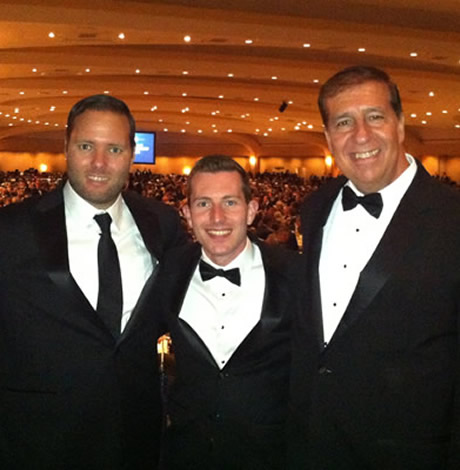
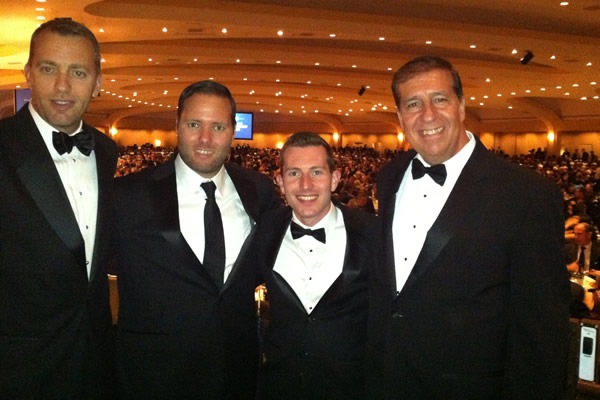
Blade staffers at the White House Correspondents Association Dinner. (Washington Blade photo)
There’s been much manicured hand wringing in big corporate media offices lately over whether to boycott the annual White House Correspondents Dinner.
So far, Vanity Fair and the New Yorker have announced plans to skip the dinner and posh after-parties. The Atlantic’s David Frum and Robert Schlesinger of US News & World Report have called on media outlets to boycott the dinner.
The Washington Blade will not be among them.
Mainstream media helped create the Trump phenomenon and now they’re appalled by his (predictable) behavior and want to boycott him? The time for that was during the primaries, when he could have been stopped. Back then, the network morning shows and cable outlets like CNN allowed Trump to phone in interviews almost daily to insult his Republican opponents and rant about whatever trivia was on his mind. Trump was good for ratings and those shows frequently led with Trump’s outrageous late-night tweets. No word yet on whether any of the major cable networks will join the boycott.
Trump’s attacks on the “dishonest media” and his rough treatment of reporters at rallies are red meat to his base. Trump probably doesn’t believe half of what he’s said about the media but he knows it plays with his supporters.
As usual, Trump is playing those media outlets like a fiddle — a boycott of the Correspondents Dinner and images of Trump speaking to an empty ballroom feed his narrative of the media as the “opposition party.” “See, I told you they were against me,” he’ll rant. And you can be sure he’ll show up. Trump’s probably been rehearsing for this night since he attended the 2011 dinner and President Obama skewered him. “No one is prouder to put this birth certificate matter to rest than the Donald,” Obama quipped then, “and that’s because he can finally get back to focusing on the issues that matter, like did we fake the moon landing?” Some have even speculated that Obama’s broadsides helped inspire Trump to seek the presidency.
Before those boycotting mainstream outlets get too impressed with themselves and their courageous stance against the president, they should consider the results of a new poll from Emerson College. It shows more Americans think Trump is truthful compared to the media; 48 percent described Trump as truthful, while only 39 percent believe the media are truthful.
Politics aside, the White House Correspondents Dinner is a fundraiser; 18 scholarships were awarded to aspiring journalists at last year’s event. The dinner is also an opportunity to network with sources and fellow journalists. Perhaps it’s easier for the big corporate outlets to skip a dinner as they’ve been privileged to be at the table since it began in 1921. Networking opportunities like the dinner are rare and valuable, especially for niche outlets like the Blade. As the saying goes, “If you’re not at the table, you’re on the menu.” The Blade only received tickets to the dinner a few years ago, the result of countless hours of hard work by our team. The Blade’s political reporter, Chris Johnson, is in the White House nearly each day; President Obama chose him to ask one of the final questions of his presidency. In addition, Johnson shadows the president one day per month and writes the pool report. We take these responsibilities seriously.
None of this is to suggest the media should normalize Trump’s administration. His attacks on underrepresented groups are chilling. But attending the dinner and holding the president accountable are not mutually exclusive endeavors. We look forward to the dinner on April 29.
Kevin Naff is editor of the Washington Blade. Reach him at [email protected].
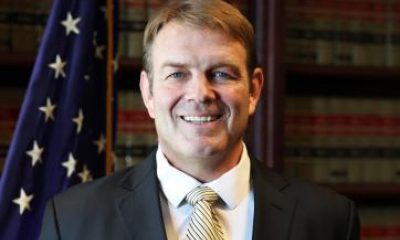



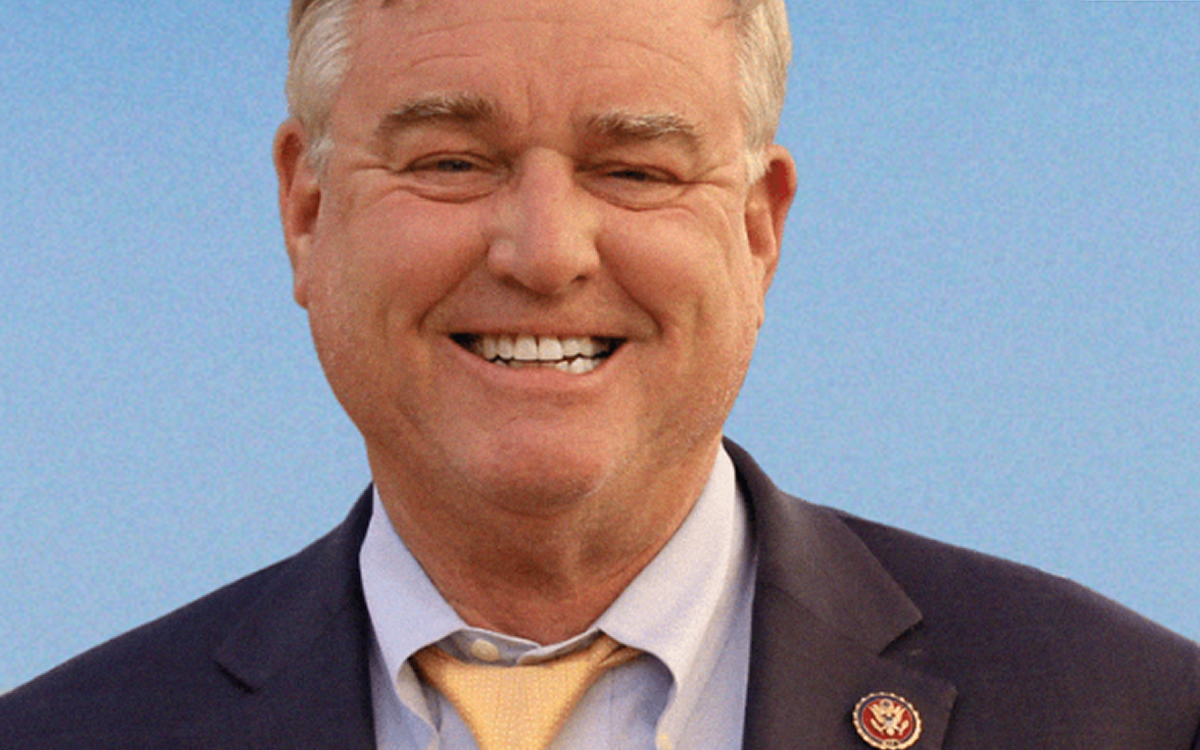
David Trone’s commercials keep telling us what he has done for women. But apparently, he doesn’t trust them to fight for themselves, or he wouldn’t keep spending countless millions to defeat them.
Trone is trying to buy back his seat in Congress, this time running in a primary in Maryland’s 6th District against incumbent Democrat April McClain Delaney. Once again, Maryland voters should say a loud NO to David Trone. He is doing this after spending nearly $60 million trying to buy a United States Senate seat, which he thankfully lost to Angela Alsobrooks, now one of only two Black women in the United States Senate. Clearly, that was a blow to his ego, and now he is trying again to defeat another very competent woman. He has already spent close to $7 million on commercials attacking Delaney, telling us how much money he has spent on what he calls ‘good deeds.’ Delaney is accurately calling him out for working with Florida Gov. Ron DeSantis, and donating through his business, nearly $800,000 to Republicans, including MAGA ones. When he was buying his first seat in Congress, the Washington Post reported, “Wine retailer David Trone… has contributed more than $150,000 to Republicans in states across the country since 2000, according to a nonpartisan site that tracks money in politics. Most went to candidates and officeholders in states where he sought legislation or regulatory changes favorable to his company, Total Wine & More. Among the Republicans who received funds were Gov. Greg Abbott and Lt. Gov. Dan Patrick of Texas and North Carolina Gov. Pat McCrory.” The same Pat McCrory who signed anti-LGBTQ legislation and Abbott who wants to close all Planned Parenthood sites in Texas.
I urge voters in Maryland’s 6th, to speak out for, and vote for, April McClain Delaney. Join with me, and a host of others, who have endorsed her as of March 31. They include Sen. Angela Alsobrooks (D-Md.), Sen. Chris Van Hollen (D-Md.), Maryland Gov. Wes Moore (D), Rep. Nancy Pelosi (D-Calif.), Rep. Sarah McBride (D-Del.), and every Democrat in the Maryland U.S. House delegation.
McClain Delaney says, “Now, David Trone says I should step aside, so he can have his old office back after he ran for the Senate, lost, and has been sitting on the sidelines. He’s a distraction. This race isn’t about one man’s ego. … And as a member of team Maryland, I forged strong relationships with Governor Moore and the entire federal delegation, as well as with local leaders across the district.” She adds, “On behalf of my district, I stand up to bullies. That’s why I’ll continue to take on Trump’s assault on our government workers, defend our diverse community, protect choice and women’s reproductive rights, and work against inflation-creating tariffs.”
Again, this isn’t the first time Trone spent a fortune trying to get into Congress. It cost him about $25 million, and two tries, to win the first time. Then his ego had him give up the seat he bought to run for the U.S. Senate. Apparently he has unlimited amounts of money to spend and at nearly 72 thinks he needs to get back in by defeating a strong woman nearly 10 years younger, who is doing a great job. He is clearly not needed in Congress.
Trone always made the basis of his campaigns not taking any money from PACs, lobbyists, and big donors. Seems hypocritical considering he thought it was OK to influence others to build his own business. To give Trone credit he always runs on a very liberal platform, which is pro-LGBTQ, pro-women, and pro-equal and human rights for all. But then Democrats like April McClain Delaney, who he is now running against, has the same platform, and is doing a good job for her constituents.
Trone’s commercials are mostly about what he has done for women. But again, he clearly doesn’t trust women to do for themselves. He spent $60 million running against a great woman for U.S. Senate, and now is spending more millions running against another strong woman, trying to reclaim a House seat he gave up. Marylanders, make sure he loses again, by voting for April McClain Delaney for Congress.
Peter Rosenstein is a longtime LGBTQ rights and Democratic Party activist.
Opinions
Skipping Memorial Day crowds in Rehoboth Beach
After 30 years, I’ve become allergic to large gatherings

There are a lot of things about getting older that are great. I love retirement, love the cruises I take, time at my favorite coffee shops, both in D.C. and at the Coffee Mill in Rehoboth. Then there are some not so great things. I have had a few health issues, which luckily, I have fully overcome. Some issues you can do something about, others you can’t. One of the things I have come to realize is, I no longer enjoy big crowds, and this is something I can do something about. Just avoid them.
I have spent every holiday weekend since buying my place in Rehoboth, and that is going on 30 years, at the beach. I go for Christmas and New Year’s, Martin Luther King, Jr. weekend, President’s Day, Memorial Day, and Labor Day. Add a few extra holidays I may be missing like Veterans’ Day, if it falls on a weekend. This is the first year I won’t be there on Memorial Day, and it is by choice. Instead, will be staying in D.C. Some will ask why, and my simple answer is to avoid the crowds. I keep thinking of the crowds last Memorial Day and decided to see how it goes skipping it this year.
Don’t get me wrong, I am thrilled for all the businesses at the beach when they are swamped with people. And glad those people who want to be there are having a great time, and don’t mind when the lines to get into Aqua and Diego’s are around the block. Or when my favorite place for coffee, The Coffee Mill, has a line when I get there at 7 a.m. When you can’t get a reservation at the Pines or even Ava’s. But last year it finally occurred to me why I wasn’t having as much fun as I used to, and realized it was because I have become allergic to crowds. So, for the first time this year, I determined I was going to stay away and see how it feels. I may regret it after a few hours at home in D.C., or when seeing friends’ posts on Instagram and Facebook. But am going to take that chance. One thing I do regret missing is the incredible annual brunch thrown by my friend Robert, and his husband, but am determined to see what it feels like not being at the beach for the kick-off holiday weekend of the summer.
To wean myself away, I did go last weekend. Had a great time seeing friends. Had fun at Aqua each evening for happy hour; went to a great party at CAMP in honor of their new Executive Director Dr. Robin Brennan. I’ve had a chance to chat with her, and believe they made a great choice when hiring her. Then on Friday evening I went to the Washington Blade annual season kick-off party at Diego’s and met the new Steve Elkins Fellow, Thomas Weaverling, and am sure he will do a great job. It was wonderful to see Ashley Biden there accepting the award given posthumously to Beau Biden for all he did for the LGBTQ community. Then on Saturday I stopped in at Freddie’s Beach Bar for the Cloud Nine reunion. That brought back so many good memories. It was coordinated by the inimitable Fay Jacobs. It was back then when I did like crowds, the more the merrier, and remember dancing all evening on the small crowded dance floor. Some people at the reunion reminded me of all the years I hosted an annual Memorial Day party, actually the first 10 years I had my place at the beach. It was catered by the Blue Moon, when my friend Rob was there, and they brought the Champagne, hors d’oeuvres, and even a bartender. I just had to have fun, and I did. The thought of doing that today is a little overwhelming, and I think it is about age.
So, this year I will see how much I miss being at the beach for the holiday weekend. Then after my June trip to France, will decide whether I want to do the same for the Fourth of July. I kind of look forward to seeing what my thoughts on it are, and how it goes.
For those of you at the beach, I hope the place is a zoo, of the best kind, and you all have a fabulous time.
Peter Rosenstein is a longtime LGBTQ rights and Democratic Party activist.
Opinions
GLAA’s 2026 primary election ratings show candidates agree on basics
We applaud all who are standing up for human rights in D.C.
Our local elections in D.C. this year will be the most consequential in a long time, as we will get a new mayor, several new Council members, and a new delegate to Congress. It also comes amid the most intensive and far-ranging federal attacks on our self-determination in the history of Home Rule, along with concerted efforts to deprive members of our communities of their rights and well being. As always, GLAA publishes our policy brief and ratings on candidates to help inform voters as they make these momentous decisions. This year, our policy brief and candidate questionnaire are a recommitment to promoting the basics: basic human rights, basic human needs, and basic human decency.
Though GLAA does not issue endorsements, we do rate candidates. Of the candidates who responded, mayoral candidate Janeese Lewis George, and Ward 1 Council candidates Rashida Brown, Miguel Trindade Deramo, and Aparna Raj received a +10, the highest possible rating a candidate can receive from GLAA. This indicated strong agreement with GLAA, thoughtful answers, and an impressive record of action on the issues presented in our brief and policy questionnaire. Other high scores include Oye Owolewa, the highest scoring candidate for the Council At-Large primary election, with a score of 9, and Doni Crawford, who scored the highest in the Council At-Large special election, with 6.5.
For the 2026 primary and special elections, candidates are in broad agreement with GLAA’s policy priorities. In seven out of 10 of our priorities, each candidate indicated agreement. Total consensus on core issues signals that whomever is elected to Council and mayor, we should expect to hold our elected officials accountable to our goals of protecting home rule, resisting federal overreach, advancing transgender healthcare rights, and eliminating chronic homelessness in the District. Other areas of agreement include ending food insecurity, building equitable energy infrastructure, and ensuring robust access points to public benefits. While candidates agree on the basics, they distinguish themselves in the depth and creativity in their responses, and their record on the issues. To read and review their responses in depth, visit glaa.org or outvotedc.org.
As D.C.’s oldest LGBTQ advocacy organization, we know the power that queer people have in local elections. Our queer siblings are among the privileged and the dispossessed. For our communities, this can be an opportunity and an obligation. GLAA’s policy brief is an invitation and call to action. When we do better to support those at the margins, we see an increase in our collective wellbeing. Using a “queer lens” we can see radical and concrete ways that the District can use our power to uplift us all.
We hope the candidate ratings, their responses, and our policy brief are useful to the community as we make decisions during this consequential year. We applaud all who are standing up for D.C., for human rights, for civil rights. We invite you to join us in the work to create the queer future we all deserve.
Benjamin Brooks is president of GLAA; Darby Hickey is secretary.

Comings & Goings

I’m a 64-year-old single gay man and I hate my life

Quest for fame becomes an obsession in entertaining ‘Lurker’

Here’s how to celebrate Black queer joy

Calendar: May 22-28

PHOTOS: Blade Summer Kickoff Party

PHOTOS: Taste of Point

Cuba marks IDAHOBiT amid heightened tensions with U.S.

Texas Children’s Hospital reaches $10 million settlement with DOJ over gender-affirming care


