Arts & Entertainment
Colton Haynes reveals his mother is terminally ill
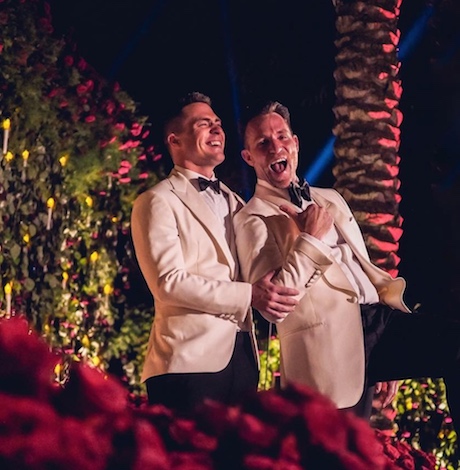
the actor shared his mom’s health status in an emotional Instagram post
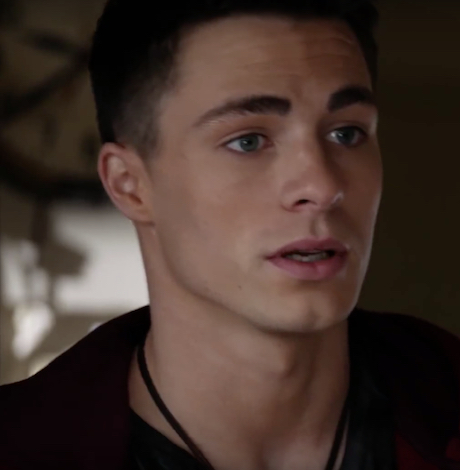
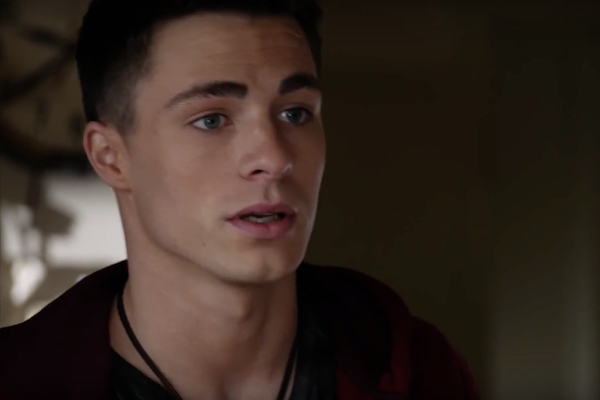
Colton Haynes (Screenshot courtesy of YouTube)
Colton Haynes has opened up to the public that his mother is terminally ill.
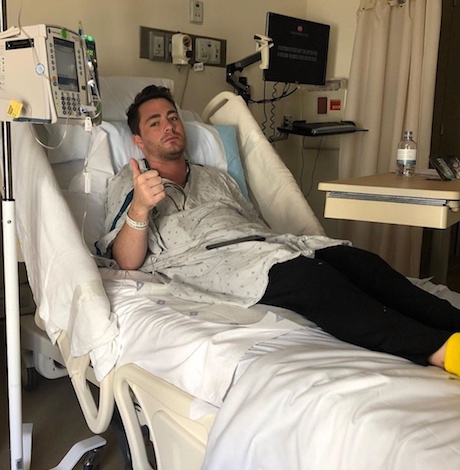
In an Instagram post, Haynes shared that his mother, Dana Denise Mitchell, has been in and out of the hospital since January with liver and kidney failure. He says that his mother is in need of a new liver but there isn’t much time left.
“The doctors suggested that we now focus on my mother’s quality of life rather than quantity of life,” Haynes writes. “It’s heartbreaking. My strong mother has always been the anchor of this family and our best friend. Now we’re being forced to say goodbye to her.”
Haynes’ family had started a GoFundMe page to raise money for Mitchell to have a full-time nurse. The funding surpassed its goal of $10,000 and additional funds will be donated to the American Liver Foundation.
Movies
‘Heartstopper Forever’ delivers satisfying conclusion
Beloved queer phenomenon shows us hope can belong to everyone

When I wrote my review of the first season of “Heartstopper,” I said that if the series could only be summed up in one word, it would be “adorable.”
After an additional two seasons and a movie length series finale (which began streaming on Netflix July 17), I’m going to make up a new rule and say that I can choose a second word to close things out. By the time I reach the end of my review of “Heartstopper Forever,” in which our adorable Nick and Charlie must face the possibility that their tender young romance may not be able to survive their graduation to college, I hope I’ll have figured which word it would be.
Directed by Wash Westmoreland and written (as always) by Alice Oseman, artist and creator behind the YA webcomic/graphic novel that launched the whole “Heartstopper” phenomenon, this final installment finds a very different Nick and Charlie than we met in those early episodes – yet in many ways they’re still very much the same. Far from the timid and bullied queer lad of the first season, Charlie (Joe Locke) is now boldly out and confident enough to win the election for “head boy” in his final year at school, and Nick (Kit Connor) no longer struggles with being open about his bisexuality; yet as the stress of their impending separation – each to a different college in a different city – begins to become more urgent, both of them fall back on old patterns.
To those of us who have been around long enough to re-examine such a crisis with 20/20 hindsight, that’s bound to strike chords of recognition. To the younger “Heartstopper” fans, however, it’s likely to feel like high drama – exactly as it did for us when we were going through it ourselves. It’s not just Nick and Charlie, either; other characters, like transgender prodigy Elle (Yasmin Finney) and her cis-het boyfriend Tao (William Gao), must also come to terms with the changing dynamics of their relationships. The result is multiple mirrors through which queer teens can see their own experience reflected, which has always been the appeal of “Heartstopper” in the first place. And as it has from the beginning, Oseman’s intent to provide her teen audience with positive perspectives shines through, ensuring that the story’s final chapter lands in a place where hope can belong to everyone.
That doesn’t mean it doesn’t have its share of dark moments – it wouldn’t be “Heartstopper” if it didn’t, would it? Part of the show’s value for its fans, young and old alike, has always come through its various characters’ growing pains; their missteps and misjudgments, their confused emotions, their fumbling efforts at “first times,” their struggles toward self-esteem. All these and more have provided the necessary “weight” to counter the show’s bubbly optimism and keep it from becoming as insubstantial as spun sugar. More importantly, these issues have always been the real core of the story: We love the sweetness of the romance, but the deeper satisfaction comes from watching these young people navigate all their challenges, sometimes alone but more often together, and build a community through the shared experience of working through them.
The final installment, having brought Charlie, Nick, and all the rest to the cusp of young adulthood, brings a suitably more mature level of problems into the mix. Sure, Charlie has grown into the hero he once needed himself, but the uncertainty that emerges between himself and Nick as they ponder their impending separation is enough to spark a relapse of his eating disorder; likewise, Nick may be confident and unguarded about his sexuality and openly proud of being Charlie’s boyfriend, but that doesn’t stop him from slipping back into self-doubt (and bad behavior) when he contemplates the possibility that their love story might be coming to an end. We know they have the “tools” to get back on track, but with everything so up in the air, will they be able to remember how to use them?
So, too, throughout the series, we have seen these kids come to terms with their individual queerness, navigating those personal journeys and learning how to embrace who they are in an environment where, for the most part, they get a lot of support. At the same time, there have been shadows around the edges, encounters and circumstances that remind them (and us) that, outside the protective circle provided by their school and each other, bigotry still exists. In “Heartstopper Forever,” those reminders are still there, and they feel all the more ominous – not just because of the worldwide rise in anti-LGBTQ+ sentiment, though that’s tied to it, but because these bright young things will soon be moving into a larger world where safety and shelter from the hate is not quite so certain.
Still, it’s Nick and Charlie’s story above all else, and naturally the main focus of this finale is on them. There has always been a too-good-to-be-true perfection to their romance, but Locke and Connor are so good at bringing it to life we believe it; here, fittingly for a final chapter, these boys finally face the crossroad that comes with adulthood – the recognition that, one way or another, there will be an ending to their relationship. How they handle that, we won’t spoil; once again, though, this is “Heartstopper,” one can feel sure that Oseman’s characters will work their way through it in the most imperfectly perfect – and emotionally satisfying – way possible.
Deserving of mention: characters like Isaac (Tobie Donovan), Imogen (Rhea Norwood), and Charlie’s sister Tori (Jenny Walser) return to get their fair share of the spotlight, and gay teachers Mr. Ajayi (Fisayo Akinade) and Mr. Farouk (Nima Taleghani) get the chance for a new beginning of their own; and out UK acting legend Derek Jacobi (“I, Claudius”) appears alongside real-life partner Richard Clifford as an elderly couple in a quiet but important scene at the cafe where Charlie works.
With any “franchise” as popular as “Heartstopper,” the task of bringing closure to a story that has emotionally involved so many fans is almost always a thankless one (just ask George Lucas), so there are sure to be some who have objections to the way Oseman brings her beloved story to an end; but it’s her story to end, and in choosing to uphold its sensational (yet sentimental) imagining of the world as it could be, “Heartstopper Forever” doubles down on the idea that we can make it the way that it should be.
That’s why my choice for the second word we can use to sum up “Heartstopper” is “aspirational.” In the relative innocence and un-ironic preciousness of Nick and Charlie’s enduring love story, we can find no excuses; not all of us can keep our first love alive for an entire lifetime (nor, often, should we), but maybe we can learn to follow our hearts as surely and openly as they do.
That’s about as aspirational as any of us can hope to be – but don’t worry: it’s still adorable, too.
a&e features
Rainbows in Revolt on a mission to make LGBTQ artists’ voices heard
Rainbows in Revolt on a mission to make LGBTQ artists’ voices heard
Last month’s Pride celebration in D.C. was so fun. Walking around my first Capital Pride with a $15 lemonade I was loving the madness and the color. Artists and small businesses battling banks you’ve never heard of collecting your personal information so you can spin a wheel to snag free merch. Great music blaring, people actually smiling and enjoying themselves, the “Great” American State Fair could never!
The Monument Stage was on Pennsylvania Avenue, directly in front of the National Gallery of Art and I can’t think of a better venue to see live music. How does someone get on the lineup for Pride? How do we accelerate the visibility of the most talented voices in our community to perform in places like this?
There is certainly not a talent gap, but there is a visibility gap. Chappell Roan went from playing for two people in a parking lot to owning the main stage at Coachella in one year. Whether it is shadowbanning or bias in AI, algorithms have been shown to suppress queer artists. In a digital age, how can queer people break through and show the world how talented they are?
Allison and Matt of Rainbows in Revolt are on a mission to make openly LGBTQ+ artists’ voices heard. Their goal is to find “musicians whose queerness is central to their identity as an artist,” and accelerate them to a place where they can actually reach fans.
The only time queer events seem to be in the spotlight is June, but this should be year round, according to Allison and Matt. Rainbows in Revolt wants to act as a “nucleus” for different sub-communities, finding common ground in the universal language of music.
Matt and Allison founded Rainbows as a way to make cheaper, higher quality merchandise for queer artists. While Rainbows has already pledged 20% of their profits to the LGBTQ+ community, with 10% to Whitman-Walker Health and 10% to LGBTQ+ organizations in need, this is just the beginning of the work that they do.
Rainbows “does the dirty work” that artists normally struggle to do on their own with limited resources. Interviews, artist profiles, social promotion, playlist discovery, radio outreach, and merch-funded support. This work is normally expensive, time consuming, and requires lots of different skills. Musicians don’t want to be editing clips to post online. Standup comedians don’t want to make graphics for their tour dates. They want to write more. They want to focus on their craft.
In addition to helping artists find their audience, Rainbows has built other digital tools to help queer people connect, including an interactive Safe Space Map for most major cities. It is hard to know which places are truly safe and supportive just from a simple Google search. Attitudes and actions change, and there should be a simple way for queer people to find other places that align with them. The Safe Spaces Maps are all up to date, and are tagged and filterable. Instead of relying on forums and word of mouth, Rainbows has created a centralized way to find authentic community quickly.
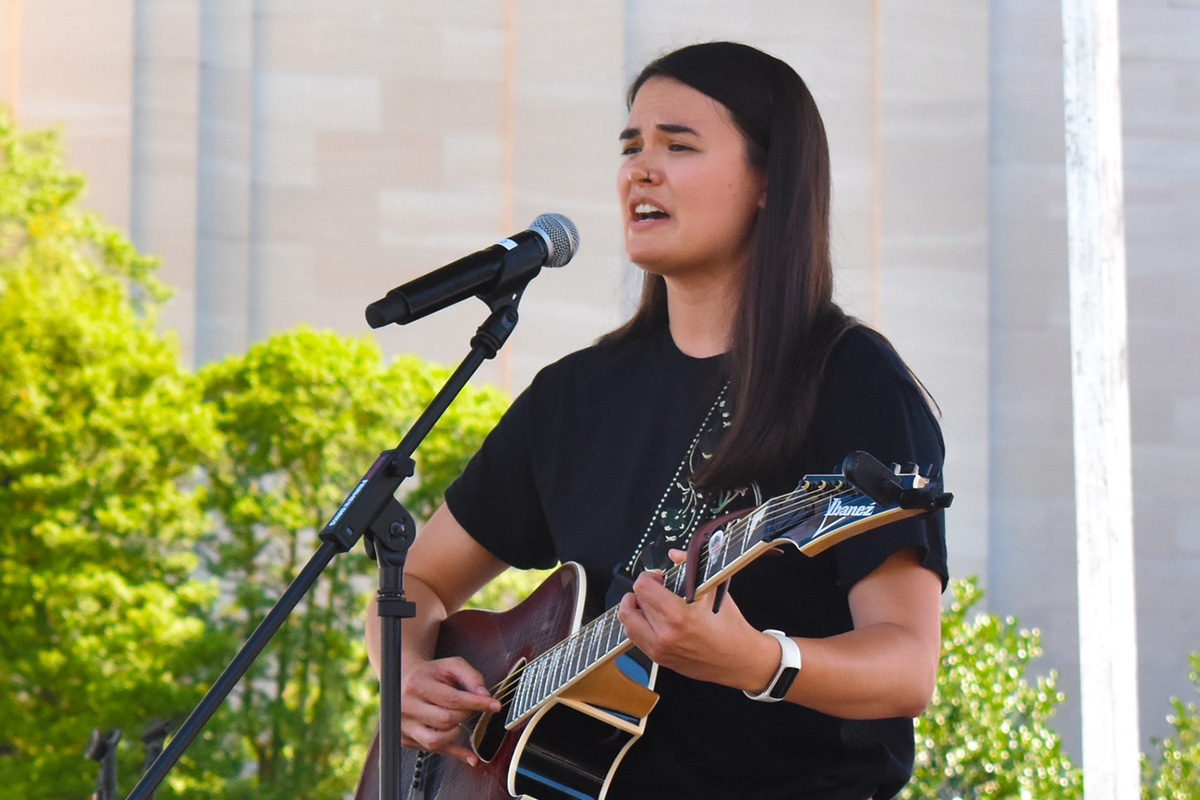
I had a chance to talk with Allison and Matt at Pride where Lily Erin, one of their signature artists, was performing on the Monument stage. Lily Erin is a folk singer who is familiar and forging her own path. Her bittersweet sound echoes through Acadia, and her garb mirrors the New England athletes I grew up with. Gorp Core meets streetwear. A graphic tee, hiking shorts, and creamsicle Jordans.
Her debut single, “Bus Stop,” tells a sad story about unconditional love, and the conditions that still seem to come with it. Graduating into lockdown, Erin needed a new way to connect with herself and others. Lily made “Bus Stop” without an intention to share it, but doing so was a liberation. People have been responding to her honesty around queer-ness, family, and the “ghosts which haunt us” even in the daytime.
Rainbows in Revolt has helped Lily Erin go from bars and backyards to The Monument Stage at Pride. This is a meteoric rise, and a testament to both Erin’s talent and the work of Rainbows to promote her. “A little encouragement goes a long way with early artists,” and by “planting a seed” Rainbows is already seeing their artist garden grow. Community is power, and Erin is a perfect example of how effective simple modern techniques of promotion can be.
A next step for Rainbows is putting on shows themselves. On Oct. 3, Rainbows in Revolt will host an Evening with Ray Boltz at the National City Christian Church. Boltz grew up in the Catholic Church and for many years was the soundtrack to many services, youth camps, and church groups. He was celebrated by millions until he came out in 2008. Allison remembers her community “never playing his music again.”
Rainbows in Revolt is helping him to return to the church, and proving that identity does not need to be exclusive. We live in a complicated world with complicated lines being drawn. Boltz proves that these lines don’t exist, and will be breaking down barriers to bring together communities. To Allison, “a trans woman standing next to a straight white man in church is a powerful teacher.”
The Safe Space maps bridge all types of spaces, and one of the unlikely ones is, perhaps, churches. Matt said that “BYU has only nine safe spaces around their campus and seven of them are churches.” Not all churches are anti-gay, and many times they are the only place for people to find community.
Rainbows in Revolt is just getting started bridging gaps and building community.
Arts & Entertainment
‘Heated Rivalry’ star takes it off in new ads for Under Armour
François Arnaud becomes global brand ambassador

Actor François Arnaud made a splash as gay hockey player Scott Hunter in “Heated Rivalry.” Now the Under Armour athletic apparel company is counting on the actor to make a splash promoting its HeatGear sportswear line.
The Baltimore-based company announced on July 23 that it has made Arnaud its newest global brand ambassador and that he will headline “For When It’s Hot,” a promotional campaign celebrating its HeatGear franchise.
A 45-second video released by the company features Arnaud exercising in Under Armour gear – lifting weights, doing crunches and battling ropes while the neighbors gawk — and then taking his shirt off, wiping his face with it and throwing it at the camera. A jogger passing by is apparently so flustered that he runs into a couple of trash cans.
“It’s hot out there,” an announcer says. “Temperatures are expected to keep rising.”
Arnaud, 41, never made it to The Cottage, but he had a prominent role in the steamy gay hockey romance show, which debuted last fall on HBO Max and the Canadian streaming service Crave. His character wore tight-fitting Under Armour products throughout the series, including a memorable scene where he meets his love interest Kip, played by Robbie G. K. (Robbie Graham-Kuntz), at the fictional Straw + Berry smoothie shop. Hunter’s Under Armour logo is hard to miss as he waits for his extra-banana blueberry smoothie.
“Arnaud has earned international recognition for his dynamic work across film and television, most recently captivating audiences with his breakout role in ‘Heated Rivalry,’” Under Armour said in announcing its partnership with the actor. “His performance sparked widespread fan engagement and conversation online, including enthusiasm around the character’s connection to sport, training and Under Armour products featured throughout the series.”
“What drew us to François was more than his obvious talent and looks, it was what he represents,” said Matt Dornic, chief communications officer for Under Armour, in a statement. “The character he portrays ultimately finds his greatest success when he stops trying to fit someone else’s mold and embraces who he truly is. That’s a lesson that resonates deeply with us. The best athletes perform with confidence, conviction and authenticity, and we believe the strongest brands do too. As Under Armour continues to evolve, we’re focused on being unmistakably ourselves, and François embodies that mindset in everything he does.”
Long known for its partnerships with professional athletes, Under Armour also names ambassadors from the fields of entertainment and culture. Others include country music star Parker McCollum and Grammy-nominated rapper Gunna. These partnerships, the company says, “reflect the brand’s expanding view of performance and its belief that athletic mindset extends far beyond the field of play.”
“The connection between sport and culture is stronger than ever, and that’s creating exciting opportunities to engage athletes and fans in new ways,” said Tyler Rutstein, Under Armour’s Senior Vice President of Global Brand and Americas Marketing, in a statement.
“François is at the center of a moment that fans are genuinely passionate about, and we’re excited to be part of it,” he continued.” As a brand, we’re focused on showing up in authentic sport moments and clever cultural crossovers. When we recognized François wearing Under Armour organically, we knew a partnership would feel authentic to both of our fan bases.”
“François’s character held a cultural mirror up to the brand and we liked what it reflected — hardworking, relentless and an athlete whose performance improved when he embraced his authentic self,” Dornic told ADWEEK. “That is especially meaningful at this moment for UA. With [founder] Kevin [Plank] returning as CEO, we’ve been really intentional about connecting with our roots and reigniting what makes UA great.”
Arnaud identifies as bisexual. His “For When It’s Hot” campaign for Under Armour has launched globally and will run across Under Armour’s social channels, including Instagram, TikTok, and YouTube.
To celebrate the occasion, Under Armour had a pop-up “HeatGear Smoothie Bar” at its headquarters over the weekend. One popular flavor was named “Blue Moon over Baltimore” – a nod to Scott Hunter’s favorite smoothie in the show, “Blue Moon over Brooklyn.”
“If you’d told the skinny awkward kid I used to be that one day I’d be an ambassador for a sportswear brand, I would’ve laughed,” Arnaud said in Under Armour’s announcement. “What makes this moment feel so special is that it’s [a] reminder that we don’t always end up where we expect, and growth can look very different from what we imagined. Grateful and honored to partner with Under Armour who were willing to meet me right where I want to be.”
Fan reaction to the collaboration was overwhelmingly positive, with one commenter on social media suggesting that Under Armour rename itself “Under Arnaud.”
“It’s a great day to be bisexual,” said a second.
“Such a big deal to have an out and proud bisexual man to be the new ambassador of a major sports brand campaign like this!” said a third. “Love our bi king François and shoutout to Under Armour!”

‘Heartstopper Forever’ delivers satisfying conclusion

Matthew Rosenstein in ‘Make Me French’ a hit at Clear Space Theatre

White House orders warning signs at Smithsonian over gender identity exhibits

Rainbows in Revolt on a mission to make LGBTQ artists’ voices heard

Officials raise troubling concerns about Rehoboth mayoral candidate Suzanne Goode

1 dead, 29 injured in Berlin Pride attack

‘Into the Grey’ unites Cavill, Gyllenhaal for thrills and gay love

D.C. summer theater offers something for every taste

Summer in the City: Free exhibits, movies, more fill D.C.’s calendar

With gas prices soaring again, a staycation is a good plan
-

 Germany4 days ago
1 dead, 29 injured in Berlin Pride attack
-
Movies4 days ago
‘Into the Grey’ unites Cavill, Gyllenhaal for thrills and gay love
-
Theater3 days ago
D.C. summer theater offers something for every taste
-
a&e features3 days ago
Summer in the City: Free exhibits, movies, more fill D.C.’s calendar