Books
YA novel ‘Titanic Summer’ is flawed yet authentic gay dramedy
Plot tells of teen dragged along on dad’s obsession with famed ocean disaster
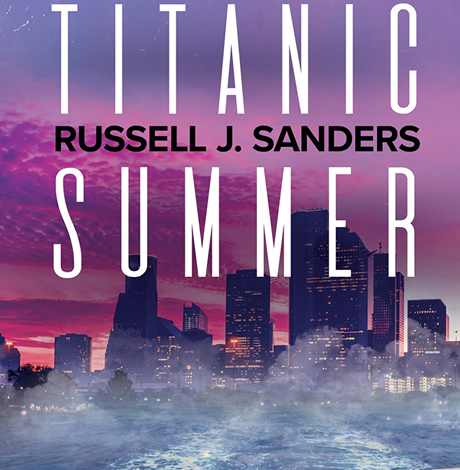
(Image courtesy of Harmony Ink Press)
‘Titanic Summer’
By Russell J. Sanders
Harmony Ink Press
$16.99
250 pages
Parents can be so weird.
Take your dad, for instance: he’s got hobbies that defy logic and he’s obsessed with them. Your mom, well, let’s not go there, except to say that if you became her mini-me, she’d be fine with that. Irritating, yes, but what are you gonna do? As in the new book, “Titanic Summer” by Russell J. Sanders, whatever floats their boats.
“Your mom and I have some news.”
Those are words that no 12-year-old boy wants to hear, but Jake Hardy heard them and everything in between: his parents were getting a divorce.
That was four years ago, and Jake survived, more or less. He wasn’t happy when his dad moved from Houston to Philly. He wasn’t happy that his mom got all churchy, either, but he knew that his parents both loved him. He wasn’t sure, though, how they’d feel if they knew that he was gay.
Jake had, in fact, just come to that realization himself in the past year or so but he wasn’t sure where to go with it. His school was conservative Christian and homosexuality was forbidden in the school code. Jake couldn’t risk being thrown off the basketball team, so he hid his physical desires. He now had the whole summer to think about everything and make some decisions.
Fortunately, he’d do that while hanging out with his dad in Philadelphia.
Unfortunately, his dad had other plans: he was a history buff and was seriously obsessed with the Titanic. He’d watched the movie hundreds of times and, to Jake’s dismay, had scheduled a 10-day father-son trip to Halifax, Nova Scotia. That’s where some of the Titanic’s dead were buried.
That’s also where gay-boy Jake learned that his dad was gay, too.
Which was just great, because Dad could’ve been less secretive and that would’ve helped Jake deal, but no. Instead, Jake got secrets and omissions from both his parents, which made him angry and his bestie offered no sympathy. He found a new friend, but even that was awful. Was pretending not to be gay the easiest way to live?
Though it tends to be somewhat overly long and overwrought, “Titanic Summer” is better than average.
Part of that may be because author Russell J. Sanders puts authentic teen language into the mouth of his main character. Sanders’ Jake speaks in the style and manner you’d expect from an attitudinal 16-year-old boy who’s trying to please everyone; that he fails, and sometimes becomes unlikeable, only enhances his realism.
That authenticity affects the story itself, but in one distracting way: the plot is enough to keep a reader’s attention, but it’s also too long and contains inconsequential details, as if every second of the titular summer needs recording. A few editorial snips would have been a lifesaver.
Even so, that’s minor compared to the waves of enjoyment you’ll get from this story, whether you’re 13-to-17-years-old, or an adult who’s well past those years. Readers craving a coming-of-age novel will find “Titanic Summer” to be a boatload of goodness.
Books
Liza’s book a tale that’s better than most celebrity memoirs
‘Kids, Wait Till You Hear This!’ dishes on marriages, heartbreak

‘Kids, Wait Till You Hear This! My Memoir’
By Liza Minnelli, as told to Michael Feinstein
c.2026, Grand Central
$36/ 421 pages
Twenty feet In front of you, and you can’t see a thing.
Even the closest faces are in shadow – lit, but not quite enough for you to see for sure what the people there are thinking. Still, you can hear them, their gasps, their laughter, and applause. Such is life, on-stage. Now read “Kids, Wait Till You Hear This! My Memoir” by Liza Minnelli, as told to Michael Feinstein, and read about it beyond the spotlight.

Almost from the moment she was born, Liza Minnelli was famous.
It was inevitable: her mother was Judy Garland. Her father was director Vincente Minnelli. Her godparents were Hollywood glitterati, her neighbors were famous, her playmates would be famous someday, too.
But her life wasn’t all starlight and happiness.
She made her stage debut as a toddler. She became her “mother’s caretaker” at age 13.
At 16, she had a growing career of her own – one that her mother tried to stop. But, she says, “In her own way, Mama was wonderful to me. Try understanding – she was my mother, not a movie star…. I knew her as the person who loved me and always would.”
At 19, Minnelli was working, happy, and madly in love with the man who’d become her first husband, and life was wonderful – until she came home one day to find him in their bed with another man. Before they were divorced, she lost her beloved mother, and became “engaged” to two other men simultaneously, neither of which made it to the altar with her.
She married her second husband, the son of one of her mother’s former co-stars, in 1974 but her love affairs and addictions led to a second divorce.
Her third husband was a stage manager.
She doesn’t have much good to say about her fourth, and last, husband.
Overall, she says, “You gotta play the comedy for all it’s worth and leave ‘em laughing. Even when your heart is breaking.”
Are you expecting bluntness, sass, or attitude here? Good, because that’s what you get inside “Kids, Wait Till You Hear This!” It’s strong on honesty and don’t-give-a-flip. It’s wonderfully edited, so it moves fast. It’s eye-opening and funny and a pleasant surprise for a first, and only (so far), memoir.
Even better, author Liza Minnelli (with best friend, Michael Feinstein) is really quite candid and nicely gossipy, starting from the beginning. There are some Hollywood folks, in fact, who are feeling edgy because of what’s inside this book and the secrets spilled. Minnelli and Feinstein seemed to have fun telling her story, and they comfortably lure readers in.
That’s not to say that it’s all a cabaret. Minnelli tells about her addictions and recoveries, her marriages and why she wed two gay men, and the losses she endured, including miscarriages, deaths, and broken relationships. The bad balances well with the good for a tale that’s several notches above most celebrity memoirs. “Kids, Wait Till You Hear This!” is, in fact, a real joy to read, a genuine bright spot.
The Blade may receive commissions from qualifying purchases made via this post.
Books
New book reveals what we can learn from animal sex
‘Poking the Squid’ on homosexuality, gender swapping, and more
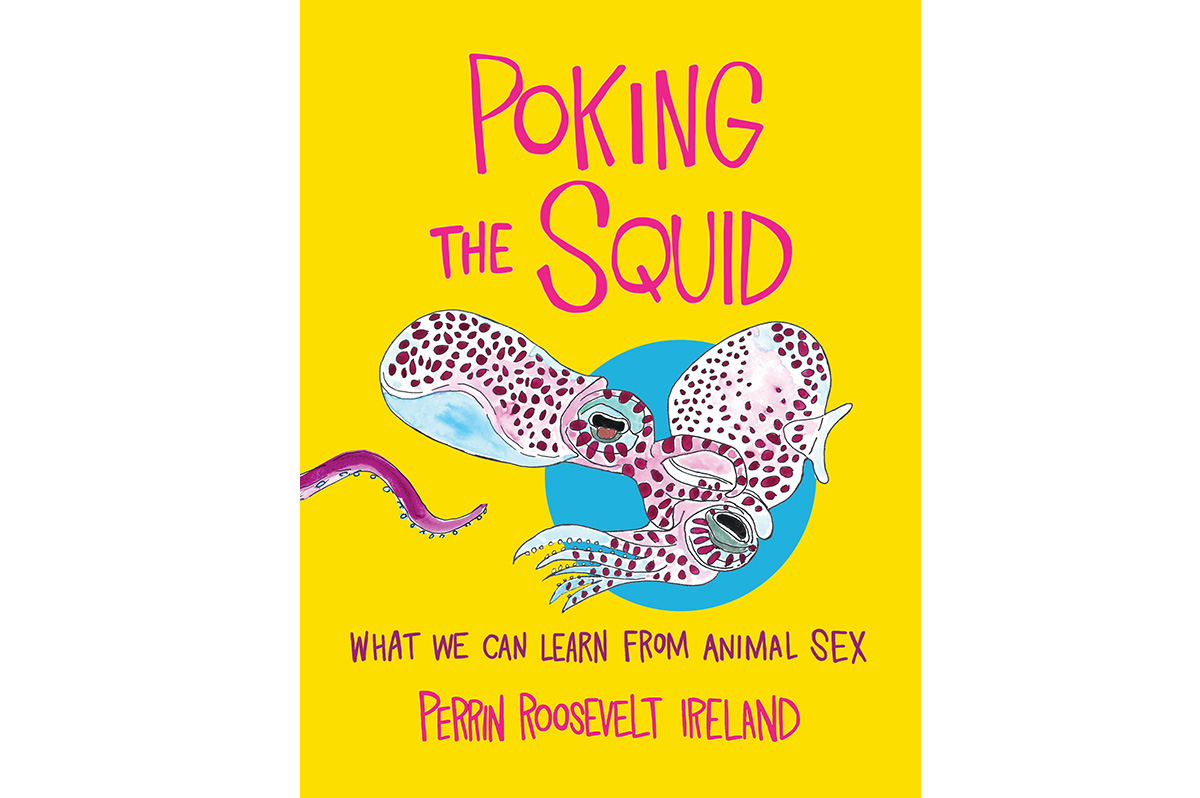
‘Poking the Squid: What We Can Learn from Animal Sex’
By Perrin Roosevelt Ireland
c.2026, W.W. Norton
$29.99 241 pages
Birds do it.
According to Cole Porter, bees do, too, but it’s not exactly what he imagined. Wild and tame, avians, insects, and mammals all have sex – although not always as you’ve been told or for reasons you might think. Even educated fleas do it and, as in the new book, “Poking the Squid” by Perrin Roosevelt Ireland, humans can learn from them all.
If you read through scientific papers on animal reproduction, you might notice something unusual: for scientists, the word “sex” means a lot of different things.
Says Ireland, “It’s used to describe behaviors, biology, life histories, and more.”
That might be because animals are not simply binary.
Take, for instance, hyenas. It’s easy for the casual observer to mistake a male hyena for a female and vice versa because of stereotypes of anatomy. Mating, for hyenas, requires subordination for the male and a nifty trick on the part of the female’s body to get things done.
Our feathered friends are no birdbrains, either: black-browed albatrosses were once thought to be monogamous but global warming seems to have changed their nesting habits sometimes. Male flamingos have sex with one another, as a territorial thing; other birds and animals form same-sex pairs for other reasons.
The Chinese mantis eats her mate after fertilization. Female snakes, alpacas, guinea pigs, and monkeys are anatomically able to enjoy sex. Genitalia between species varies quite a bit; in fact, the vaginas of ducks “are highly complex.” Lionesses will mate up to 100 times when in heat. Female damselflies will change into a “third sex” to avoid overly aggressive mating males. Bearded dragons can change their sex, if needed, as can yellow clown goby fish. And seahorse pregnancy and birth sparked a book banning in Tennessee.
So, asks Ireland, if animals, including us, vary so much in biology and life, “… why are we using the word sex like it means something, anything, consistent?!”
Pick up “Poking the Squid,” page through it a few seconds, and you’ll see that the information here is largely told through cartoon-like drawings mixed with captions. It seems to be something on the lighter side, but don’t let that artwork fool you.
Author Perrin Roosevelt Ireland offers readers solid information that cozies up to the scholarly, with hard science, philosophy, feminism, and quotations from researchers to support it, thus furthering the narrative and hitting the points squarely. If you see the art and expect something lighthearted, comic, and small-talk-worthy, you could be disappointed.
On the other hand, if you want solid, wryly serious facts, you’re in for a treat.
There’s lots of learning to be gleaned here, and some slight nudge-wink whimsy to emphasize the absurdity of wrong-headed thinking. This can make readers feel like they’re in-the-know on the jokes, and the playfulness balances the seriousness of the information well.
So, serious, scholarly, or slightly silly, none of these are negative but you’re going to know what you want from a book like this. For the right reader, someone in the mood, “Poking the Squid” is wild.
The Blade may receive commissions from qualifying purchases made via this post.
Books
‘Transcendent’ a tough but important read
Laverne Cox’s memoir recounts horrific abuse as a child
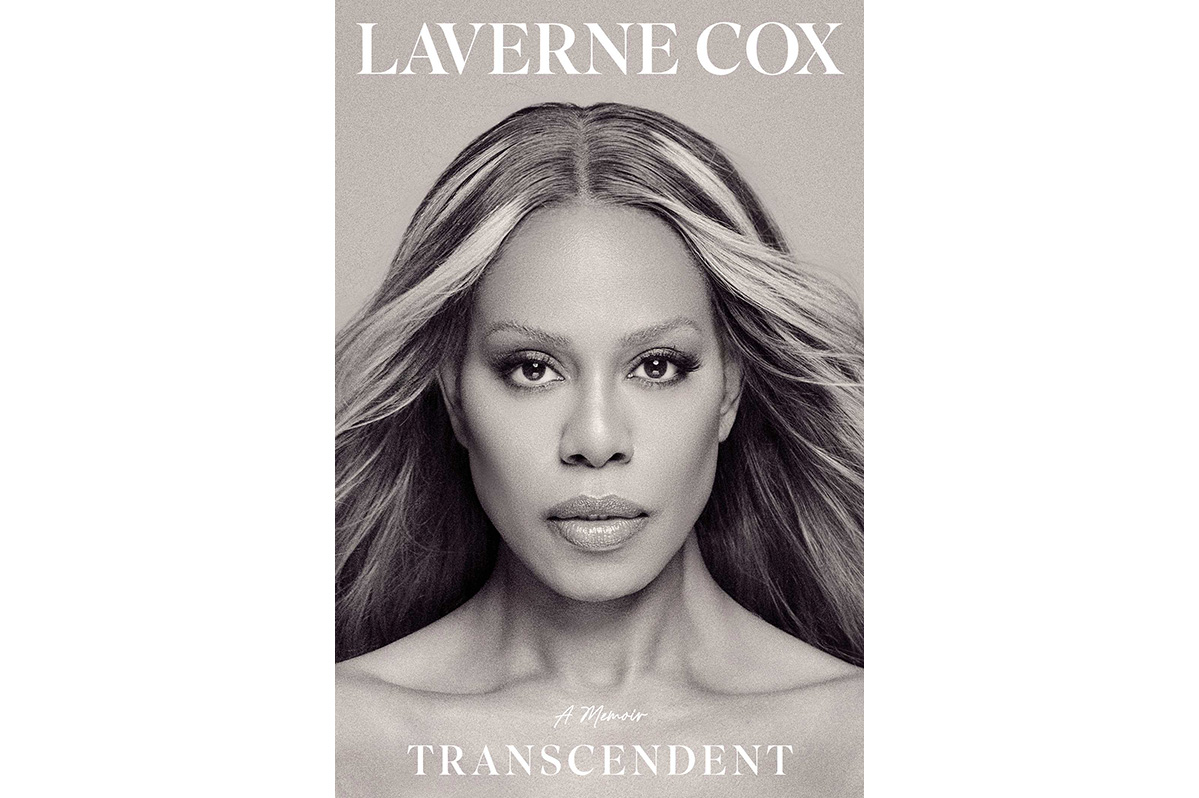
‘Transcendent: A Memoir’
By Laverne Cox
c.2026, Gallery Books
$30/238 pages
OK, let’s just say it: You’re tired of lies.
They come from above, behind, from either shoulder. They’re repeated, laid out in a line, told as if they’re true but they’re not. You wish people would stop lying to you. As in the new memoir “Transcendent” by Laverne Cox, you wish you could tell the truth about yourself.
Sissy.
If the bullies in the neighborhood weren’t constantly calling Laverne Cox that name, then Cox’s mother was. “Sissy,” was just one word, though; the others were worse. The boys would say those things while they beat Cox, when they could catch her. Her mother screamed at her gentle child who didn’t like “boy” activities.
Even at eight years old, says Cox, “I was a prim and proper lady.”
Despite the verbal abuse about her perceived feminine behavior and a furtive, failed attempt at conversion therapy, Cox’s mother sent her and her brother to the Alabama School of Fine Arts, where Cox learned to dance. It was a lifeline for her, and the talent gained there helped Cox get into college in Indiana.
From there, Cox expected to find fame and fortune in New York City.
And yet, the abuse she suffered as a child held Cox back, and the words “There is something wrong with me” became a daily mantra.
“I didn’t know how to say it.” Cox says. “I’m a girl.”
There were therapy sessions to get to that point, as Cox learned the language and skills needed to speak the truth. Landing a sense of style helped, as did her brother’s support, a handful of friends, and happy, scent-infused memories of her mother’s make-up table.
At each step, Cox says, “I was expressing myself, I was also allowing myself to edge closer to my girlhood.”
Let’s start here: “Transcendent” is a difficult read – not for style, but for substance.
From her earliest memory of being sexually abused as a toddler; to verbal and physical abuse from many sources; to what, judging by photo captions, seems perhaps like forgiveness, author Laverne Cox glosses over nothing. Be ready, in other words, for pages and pages of memories that, like a roller-coaster, will make you cringe and want to hide your eyes, although doing so would be a mistake.
As this book progresses, Cox’s story does, too. We see a child who knows a truth but has no words for it. The child becomes a teen with a bursting sense of self, then a young adult who craves love as she’s stretching her wings. By the time Cox advances to writing about her career and the abuse is (mostly) over, readers will breathe a well-deserved sigh of relief. Whew, you’ve winced through a harrowing tale to reach a satisfying but not complete update.
Fans of Cox’s work will want “Transcendent,” as will anyone who’s transitioned, is thinking about it, or loves someone who has. It’s a rough read, but a necessary one, then, and that’s no lie.
The Blade may receive commissions from qualifying purchases made via this post.

1 dead, 15 injured when van drives into crowd at Berlin Pride

‘Into the Grey’ unites Cavill, Gyllenhaal for thrills and gay love

Winsome Earle-Sears launches campaign against Va. marriage equality amendment

Calendar: July 24-30

Pentagon says hormones make trans troops unfit but gives them to men

Tickets on sale for chef Patrick O’Connell’s book launch event

Remembering Victoria Cruz, Stonewall veteran and beloved trans activist

In the middle of the Bible Belt, a summer camp lets trans kids exhale

Polish president vetoes same-sex relationship recognition bills

LGBTQ ‘human rights crisis is unfolding in Puerto Rico’
-

 a&e features4 days ago
Tickets on sale for chef Patrick O’Connell’s book launch event
-
National4 days ago
Remembering Victoria Cruz, Stonewall veteran and beloved trans activist
-
North Carolina4 days ago
In the middle of the Bible Belt, a summer camp lets trans kids exhale
-
Poland4 days ago
Polish president vetoes same-sex relationship recognition bills