Connect with us

Arts & Entertainment

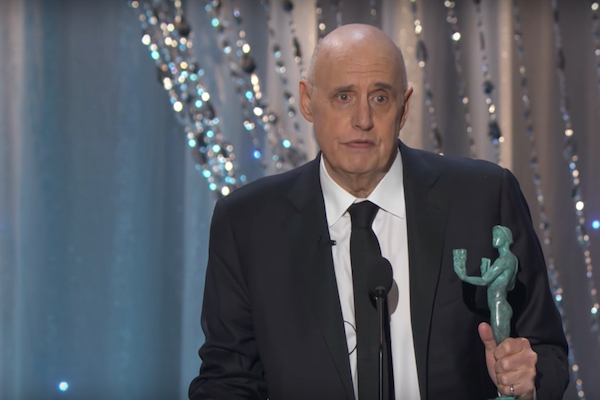
Jeffrey Tambor opens up about ‘Transparent’ sexual harassment allegations

The actor will return for the fifth season of ‘Arrested Development’
Published

on

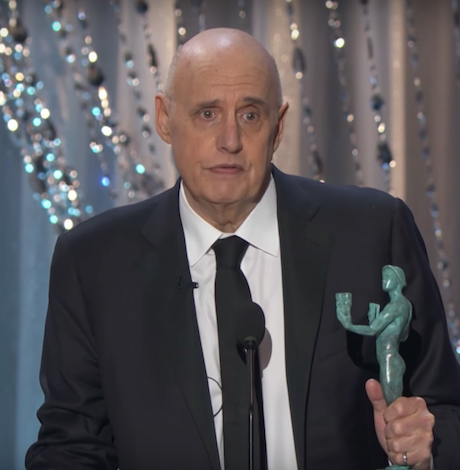
Jeffrey Tambor (Screenshot courtesy of YouTube)

Jeffrey Tambor has addressed the sexual harassment allegations against him for the first time since his firing from Amazon’s “Transparent.”

Van Barnes, a transgender actress and Tambor’s former assistant, accused Tambor of sexual misconduct in November. Transgender actress Trace Lysette, who appeared on “Transparent,” also accused Tambor of making “many sexual advances and comments” on set.

In an interview with the Hollywood Reporter, Tambor admitted to having anger issues but continued to deny Barnes’ sexual harassment allegation that he watched her sleep naked.

As for Barnes’ other allegations, which included propositioning and physical touching, the story notes that Tambor grew “reticent.”

“I don’t want to characterize them,” Tambor says. “What I said was that she was a disgruntled assistant. I think that was generous of me. I dispute her account. I did raise my voice at times, I was moody at times, there were times when I was tactless. But as for the other stuff, absolutely not.”

He does admit to yelling at staff on set including showrunner Jill Soloway and executive producer Bridget Bedard. Tambor says his fear of portraying the transgender character of Maura Pfefferman correctly was the root of his anger.

“I was scared because I was a cisgender male playing Maura Pfefferman,” he continued. “And my whole thing was, ‘Am I doing it right? Am I doing it right? Am I doing it right?’ To the point that I worried myself to death.”

Tambor will return as George Bluth Sr. on the fifth season of Arrested Development which streams on Netflix on May 29.

Advertisement
FUND LGBTQ JOURNALISM
SIGN UP FOR E-BLAST

Theater

Diverse cast tackles ‘Aguardiente’ at GALA Hispanic Theatre

Best friends rediscover their Caribbean heritage in new musical

Published

on

Sebastián Treviño plays Alejandro in GALA Theatre's musical ‘Aguardiente.’

‘Aguardiente: Where Magic Transcends Borders’
Through May 24
GALA Hispanic Theatre
3333 14th St., N.W.
$25–$65
Galatheatre.org
(surtitles in English and Spanish)

With its latest musical offering “Aguardiente: Where Magic Transcends Borders,” GALA Hispanic Theatre has cast its net wide in gathering a blend of talent including the production’s diverse 18-person cast. 

Commissioned by GALA, the spanking new musical is about best friends Alberto and Alejandro (two New York writers from Puerto Rico and Colombia respectively). Together, within a short timeline under unrelenting pressure, they struggle to write the project musical of their dreams. 

Along the way, the friends rediscover their Caribbean heritage through cumbia, bomba, currulao, and the magical realism of García Márquez.

Offstage, the work has been created by Luis Salgado (book), and Daniel Alejandro Gutiérrez (music), also respectively from Puerto Rico and Colombia. Multiple Helen Hayes Award-winning Salgado is directing and choreographing the GALA production. 

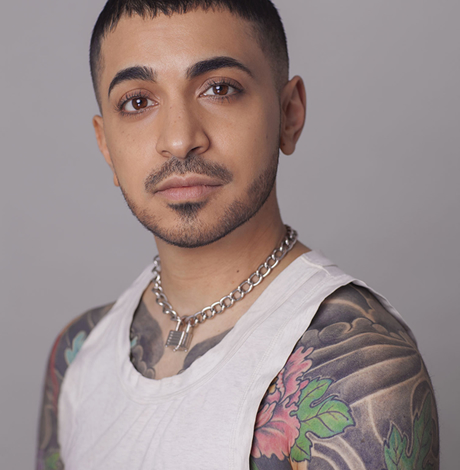
In the role of Alejandro, out actor Sebastián Treviño is making his GALA debut opposite Samuel Garnica who plays librettist Alberto. Alejandro is the music composer who doesn’t come from a musical background. He’s simply a lover of Latin music.  

Is Alejandro recognizably similar to Gutiérrez?  

“Oh yeah,” says Treviño, 36. “Like Gutiérrez, Alejandro doesn’t necessarily follow musical theater rules and etiquette, and it’s his uniqueness that brings a spark to their partnership. 

“I got to know him and Luis [Salgado] while touring with ‘On Your Feet!’ in 2022. You really get to know people by spending endless hours together on a bus.” 

Language and voice are intertwined for Treviño, and fortunately for the amiable New York-based actor, he enjoys the challenge of a new way of speaking. To play Alejandro, it helps to sound Colombian.

As a native of Monterrey, Mexico, Spanish and Mexican dialects are Treviño’s first languages. He attended American school starting in kindergarten, consequently acquiring flawless English; and because his mother is Colombian, he is familiar with that accent too.

GALA Spanish speaking patrons can be a tough crowd. For instance, when a Mexican actor is playing a Cuban character, they know at once. And while they may embrace the performance and the production, there sometimes remains a niggling dislike for what feels a vocal inaccuracy.

“Since I’ve arrived in D.C., I’ve been practicing my Colombian accent at restaurants and other places. When a Spanish speaking server asks if I’m from Colombia, I know I’m doing something right.”

 “Aguardiente” (translates as “Firewater”) is composed of several layers of reality. He explains: “First it’s us creating the show, the work, and all of those pressures and limitations that the industry places on Latino centered projects; and then there’s the fantasy layer.”

A talented tenor, his lengthy bio includes Mexico City (“Wicked,” “Rent”), Off Broadway (“Kowalski”) and North American national tours (“On Your Feet!”).

He says his “Aguardiente” solo specifically feels like ‘80s Latin rock. Also, he enjoys a fun medley number where they’re playing around with “Tropipop” (Colombian pop), classic Broadway sounds, and there’s even a Beatles moment. 

In this show, we meet two determined friends, one is holding an American passport because he’s Puerto Rican, while the other, a Colombian, struggles to secure a visa.

 “It’s not a stretch for me to relate to that. I’m here on a working visa, so I know all about the stress and costs that comes with that,” says Treviño.  

“So much reflects their own story. That includes the setbacks and obstacles faced when trying to build something from very little, and writing about themes that aren’t considered mainstream to white American audiences.” 

At just eight years old, Treviño saw “A Chorus Line” at Mont Tecnológico de Monterrey, the same college that he’d later attend. He remembers, “Seated in the second row, the young actors were rock stars to me. When I asked my father who loved the arts if one day I could perform onstage, he said yes, instantly his son’s new dream.”

Looking forward, is there a role he yearns to play? Treviño ponders the trite query with some seriousness before answering “I think it’s yet to be written.”

Continue Reading

Books

New books reveal style trends for a more enlightened century

Guidelines that hint about gendering clothing are out

Published

on

Books about Fashion and Style
By various authors
c.2026, various publishers
$19.95 – $29.95

Don’t look now, but your legs are showing.

It’s OK, it’s almost summertime and you want to show both skin and style. So how about a few hints for looking your best? Check out these great books and get stylin’.

Who says there are rules about fashion? Wearing white before Memorial Day is OK; socks with sandals not so much? Fine, but in “Bending the Rules: Fashion Beyond the Binary” by Camille Benda with Gwyn Conaway (Princeton Architectural Press, $29.95), you’ll see that any guidelines that hint about gendering clothing are oh-so-last century.
Along with lively, fun narrative, there are lots of photos in this book, ads for how clothing used to be worn along male-female lines, and short biographies of some of today’s best designers. Here, you can check out prom dresses from the 1950s and new haute couture gowns practically right off the runway – and see how one parallels with the other. The timeline reaches back centuries, so you get a nice idea of where certain kinds of clothing originated and how it’s relevant today – making what’s inside here perfect for browsing.

Pick up this book, in fact, and you might also pick up some ideas for filling your closet and creating your very own style.

The fashion you wear on your body isn’t all you’ll find in “Pretend to Be Fancy: A Field Guide to Style and Sophistication” by Whitney Marston Pierce (Chronicle Books, $19.95). You’ll also read about other nice things you can have.

So you’re not a pinky-in-the-air kind of person, whatever. You can easily hang with those who are, once you read and absorb this book.

Tongue-tied at fancy soirees? Not anymore, there are tips for talking here. What do you know about canapes, hors d’oeuvres, and the kind of foods you don’t get at the corner c-store? How do you make a charcuterie that everyone will Ooooooh over? And how do you give a gift for the person whose taste seems scads better than yours? That’s all in here, along with what to drink, how to dress, and how to make every corner of your home look like something right out of a high-end magazine.

Will this book make you chic? Possibly, yes. Will it help you get invited to all the best parties? Maybe, but for sure, it’ll make you laugh, it’ll make you feel fabulous, look fabulous, and live your best life with the surroundings you deserve. Out May 5, so put it on your list.

But let’s say you need more ideas. You have questions or thorny issues with fashion that you really need answering. That’s when you ask for a talented fashionista at your local bookstore or library, that knowledgeable someone knows books and knows how to get what you need to be your most dazzling, best-dressed, finest-appointed self in a home you can be proud of, with comfortable furniture that will be the envy of everyone who sees it.

In the meantime, grab the above titles, because these books got legs.

Continue Reading

Movies

The queer appeal of ‘The Devil Wears Prada’

Tying the feminist and LGBTQ rights movements together on screen

Published

on

Meryl Streep, Anne Hathaway, and Stanley Tucci in The Devil Wears Prada 2.’
(Photo courtesy of 20th Century Studios)

“Would we have fashion without gay people? Forgive me, would we have anything?”

Those words, spoken by Miranda Priestley herself (actually by Meryl Streep, the 76-year-old acting icon who played her), may well sum up why “The Devil Wears Prada” has been a touchstone for queer audiences for two decades now.

Streep, who returns to big screens this weekend in the sequel to director David Frankel’s beloved 2006 classic (succinctly titled “The Devil Wears Prada 2”), expressed this nugget of allyship in a recent interview with Out magazine, promoting the new film’s upcoming release. It would be hard, as a member of the queer community, to disagree with her assessment. The world of fashion has always been inextricably linked with queer culture, and the whims of taste that drive it are so frequently shaped by queer men – and women, too – who have adopted it as a means of expressing their sense of identity from the very first time they thumbed through a copy of Vogue.

At the same time, the notion that “Prada” has been claimed by the community as “canon” simply because of the stereotypical idea that “gay people love fashion” feels like a lazy generalization. After all, fashion is about discernment – about knowing, if you will, whether a sweater is simply blue or if it is cerulean, and, importantly, understanding why it matters – and just because something ticks off a few basic boxes, that doesn’t mean it qualifies as “haute couture.”

So yes, the setting of the “Devil Wears Prada” universe in what might be called “ground zero” of the fashion industry plays a part in piquing queer interest, but to assume our obsession with it is explained as simply as that is, frankly, insulting. The fashion angle catches our interest, but it’s the story – and, more to the point, the central characters (all of which return in the sequel) – that reels us in.

First, there’s the ostensible heroine, Anne Hathaway’s Andrea (or rather, Andy) Sachs, who falls into the world of fashion almost by accident. She’s a recent college grad who wants to be a journalist, to write for a publication that operates on a less-superficial level than Runway magazine, but fate (for lack of a better word) places her in the job that “a million girls” would kill to have – assistant to Streep’s Miranda Priestly (based on Vogue editor Anna Wintour), who can determine an entire season’s fashion trends merely by pursing her lips. She’s idealistic, and dismissive of fashion in the overall scheme of human existence; she’s also stuck with a truly terrible boyfriend (Nate, played by Adrian Grenier) and trying to live up to the self-imposed expectations and ideals that have been foisted upon her since birth.

It’s clear from the start that none of this “fits” her particularly well. More significantly, the natural grace with which she blossoms, from “sad girl” fashion-victim to the epitome of effortless style, tells us that she was meant to be exactly where she is, all along.

Then, of course, there is Nigel (Stanley Tucci), the ever-loyal art director and “Gay Best Friend” that’s always there to provide just the right saving touch for both Miranda and Andy, helping to boost the former while gifting the latter with his own insight, “tough love,” and impeccable taste. Never mind that he’s a queer character played by a straight actor – Tucci avoids stereotype and performative flamboyance by simply playing it with pure, universally relatable authenticity – or that he ends up, at the end of the original film, betrayed by his goddess yet deferring his own dream to double down on his commitment to hers. Anyone who has ever been a gay man in the orbit of a remarkable woman knows exactly how he feels. Of course, they also probably know the precarious life of being a queer person in the workplace – something that carries its own set of compromises, disappointments, and determinations to go above-and-beyond just to make oneself invaluable to the powers that be.

Which brings us to Emily (Emily Blunt), the cutthroat “first assistant” who does her level best to keep Andy in her place, who goes to extremes (“I’m just one stomach flu away from my goal weight”) to be the “favorite” no matter how much cruelty she has to unleash on those who threaten her status. Some see her as merely an obstacle in the way of Andy’s rise to success, an antagonist whose efforts to embody the “no mercy” persona of an ascendent girl boss only expose her own mediocrity. But for many, she’s just another victim doomed to fail and fall while watching others rise to the top. Queer, straight, or in-between, who among us hasn’t been there?

Finally, of course, there is Streep’s Miranda Priestley, the presumed “devil” of the title and the epitome of mercilessly autocratic authority, who has earned her status and her power by embracing the toxic modus operandiof a misogynistic hierarchy in order to conquer it. Yes, she’s more than just a little horrible, a strict gatekeeper who hones in on perceived weaknesses with all the vicious premeditation of a hawk with its eyes on a luckless rabbit, and it would be easy to despise her if she weren’t so damn fabulous. But thanks to the incomparable Oscar-nominated performance from Streep – along with the glimpses we are afforded into her “real” life along the way – she is not just aspirational, but iconic. Stoic, imperturbable, always three steps ahead and never affording an inch of slack for any perceived shortcoming, there’s an undeniable excellence about her that inspires us to see beyond the obvious dysfunction of the “work ethic” she represents; and sure, there’s enough emotionally detached enthusiasm in her torment/training of Andy to fuel countless volumes of erotic lesbian fan-fiction (Google “MirAndy,” if you dare), but when we eventually recognize that she might just be the ultimate “fashion victim” of them all, it doesn’t just cut us to the core – it strikes a chord that should be universally recognizable to anyone who has had to make their own “deal with the devil” in order to claim agency in their own lives. In this way, “The Devil Wears Prada” comes closer than probably any mainstream film to tying the feminist and queer rights movements together in common cause.

In any case, each character, in their way, can easily be tied to a facet of queer identity – and indeed, to the identity of anyone who must work twice (or more) as hard as a straight white Christian male to succeed. We can see ourselves reflected in all of them – and whether we aspire to be Miranda (I mean, who wouldn’t?), identify with Andy, recognize our worst traits in Emily, or empathize with Nigel and his deferential suffering, there’s something in “The Devil Wears Prada” that resonates with everyone.

Now let’s see if the sequel can say the same.

Continue Reading

Popular