News
127 House Dems urge White House to keep rule for trans health care
Reports indicate Trump administration poised to reverse Obama-era change
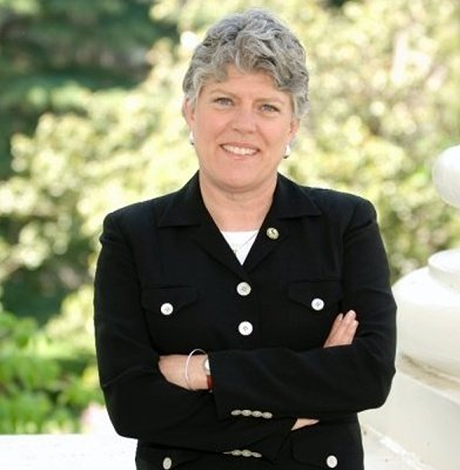
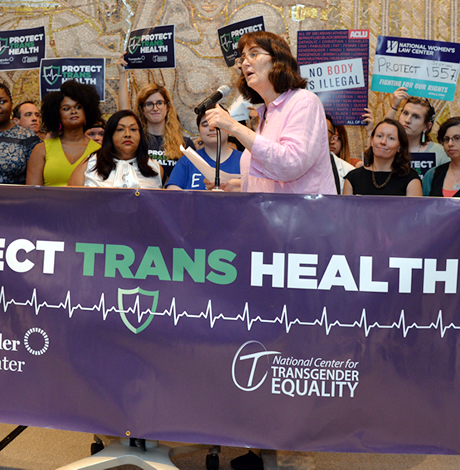
Rep. Julia Brownley (D-Calif.) is urging the White House to preserve a proposed rule in favor of trans health care. (Photo public domain)
A group of 127 House Democrats led by Reps. Julia Brownley (D-Calif.) is calling on the White House to keep intact an Obama-era rule barring medical providers from denying health care to transgender patients, including gender reassignment surgery.
The letter, dated May 23 and sent to Office of Management & Budget Director Mick Mulvaney, points to reports a rule change is pending before the White House and calls on Mulvaney “to reject a proposed rule that undermines these important protections.”
“We urge you to abandon any proposal that would erode the Health Care Rights Law’s important protection, undermine Congress’ sole lawmaking authority and allow health care providers to discriminate against their patients,” the letter says.
Other lawmakers who spearheaded the letter are Rep. Jerrold Nadler (D-N.Y.), Diana DeGette (D-Colo.) and Barbara Lee (D-Calif.).
The Obama-era rule is based on Section 1557 of the Affordable Care Act, which prohibits discrimination on the basis of sex in health care. The Obama administration interpreted that language to apply to transgender people seeking health care, including transition-related care such as gender reassignment surgery.
Although the Trump administration hasn’t explicitly stated it plans to repeal the rule, that seems to be the intent based on media reports and filings by the Justice Department in litigation against the rule. Another possibility is the Trump administration would seek to impose a religious exemption.
The letter to the White House warns Mulvaney that even a religious exemption would have deleterious consequences.
“Adding any type of religious exemption, or enforcing the Health Care Rights Law in a way that allows for a religious exemption, is antithetical to the purpose and language of the Health Care Rights Law and would undermine Congress’ lawmaking authority,” the letter says.
Earlier this month, Secretary of Health & Human Services Alex Azar told the Blade during an appearance at the White House press briefing he had no knowledge of potential repeal of this rule. An HHS spokesperson said later the secretary was briefed on the matter.
The Obama-era rule is currently moot in any event. Last year, U.S. District Judge Reed O’Connor issued an injunction barring the U.S. government from enforcing the rule as a result of litigation filed by Texas Attorney General Ken Paxton.
Despite this court order — and even if the Trump administration were to reverse the underlying rule — transgender people could still sue medical providers in court based on the underlying law in the Affordable Care Act that prohibits discrimination in health care on the basis of sex. A growing number of courts are interpreting laws against sex discrimination to apply to LGBT people regardless of the views of the Trump administration.
The White House Office of Management & Budget didn’t respond to the Blade’s request to comment Wednesday on the letter.


National
LGBTQ Catholic groups slam Trump over pope criticism
‘Moral truth and compassion always overcome ignorant hate’
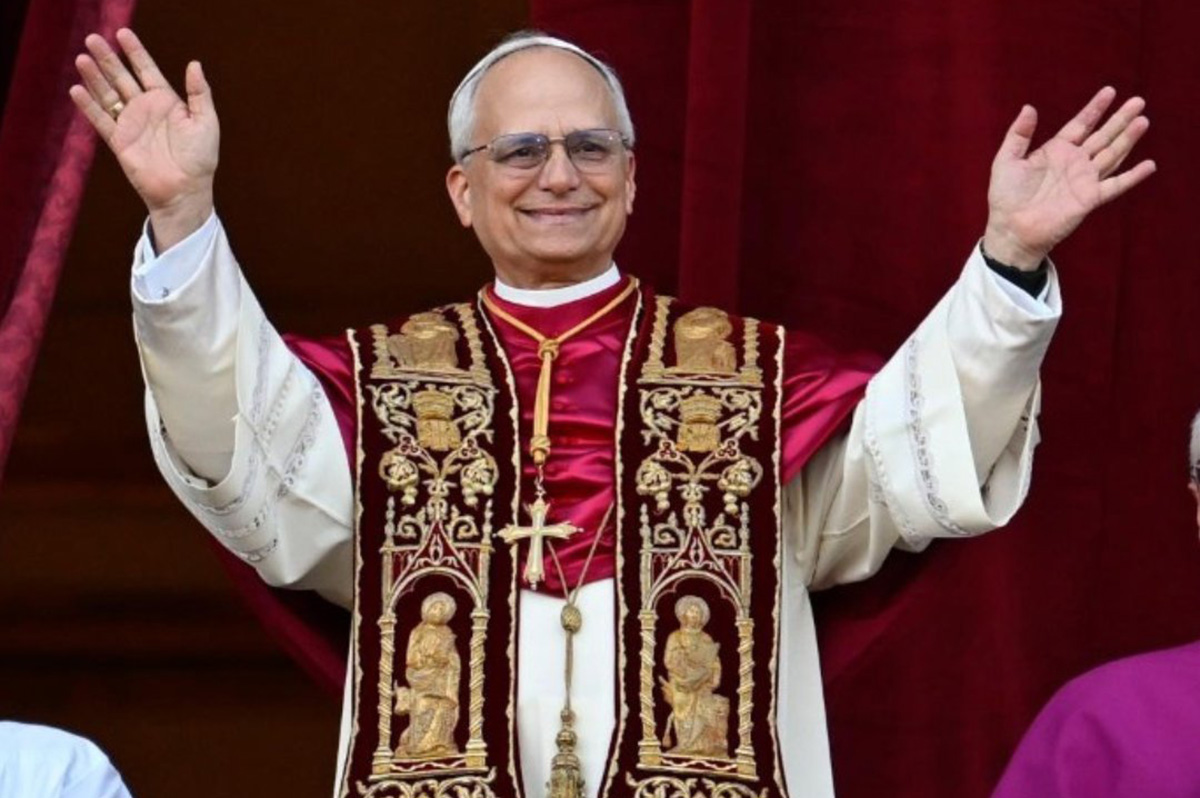
LGBTQ Catholic groups have sharply criticized President Donald Trump over his criticisms of Pope Leo XIV.
Leo on April 13 told reporters while traveling to Algeria that he had “no fear of the Trump administration” after the president described him as “weak on crime” and “terrible for foreign policy” in response to his opposition to the Iran war. (Trump on the same day posted to Truth Social an image that appeared to show him as Jesus Christ. He removed it on April 13 amid backlash from religious leaders.)
Vice President JD Vance, who is Catholic, during a Fox News Channel interview on the same day said “in some cases, it would be best for the Vatican to stick to matters of morality, to stick to matters of what’s going on with the Catholic church, and let the president of the United States stick to dictating American public policy.” Vance on April 14 once again discussed Leo during an appearance at a Turning Point USA event in Athens, Ga., saying he should “be careful when he talks about matters of theology.”
Italian Prime Minister Giorgia Meloni; former U.S. Ambassador to the Vatican Miguel Díaz; and Oklahoma City Archbishop Paul Coakley, president of the U.S. Conference of Catholic Bishops, are among those who have criticized Trump over his comments. The president, for his part, has said he will not apologize to Leo.
“The world is being ravaged by a handful of tyrants,” said Leo on Thursday at a cathedral in Bamenda, Cameroon.
Francis DeBernardo is the executive director of New Ways Ministry, a Maryland-based LGBTQ Catholic organization. He told the Washington Blade on Thursday that Trump’s comments about Leo “are one more example of the ridiculous hubris of this leader (Trump) whose entire record shows that he is nothing more than a middle-school bully.”
“LGBTQ+ adults were often bullied as children, and they have learned the lesson that bullies act when they feel frightened or threatened,” said DeBernardo. “But secular power does not threaten the Vicar of Christ, and Pope Leo’s response illustrates this truth perfectly.”
DeBernardo added Trump “is obviously frightened that Pope Leo, an American, has more power and influence than the president on the world stage.”
“Like most Trumpian bullying, this strategy will backfire,” DeBernardo told the Blade. “Moral truth and compassion always overcome ignorant hate. Trump’s actions are not an example of his power, but of his impotence.”
Marianne Duddy-Burke, executive director of DignityUSA, an LGBTQ Catholic organization, echoed DeBernardo.
“He [Trump] has demonstrated throughout both presidencies that he doesn’t understand the basic concepts of any faith system that is founded on the dignity of human beings, the importance of common good,” Duddy-Burke told the Blade on Thursday during a telephone interview. “It’s just appalling.”
Duddy-Burke praised Leo and the American cardinals who have publicly criticized Trump.
“The pope’s popularity — given how much more respect Pope Leo has than the man sitting in the White House — is a blow to his ego,” Duddy-Burke told the Blade. “That seems to be a sore sport for him.”
“It’s such an imperialistic world view,” she added.
Leo ‘is the real peacemaker’
The College of Cardinals last May elected Leo to succeed Pope Francis after his death.
Leo, who was born in Chicago, is the first American pope. He was the bishop of the Diocese of Chiclayo in Peru from 2015-2023.
Francis made him a cardinal in 2023.
Juan Carlos Cruz — a gay Chilean man and clergy sex abuse survivor who Francis appointed to the Pontifical Commission for the Protection of Minors — has traveled to Ukraine several times with Dominican Sister Lucía Caram since Russia launched its war against the country in 2022. Cruz on Thursday responded to Trump’s criticism of Leo in a text message he sent to the Blade from Kyiv, the Ukrainian capital.
“I am in Ukraine under many attacks,” said Cruz. “Trump is an asshole and has zero right to criticize the Pope who is the real peacemaker.”
The White House
Grindr to host first-ever White House Correspondents’ Dinner party
App’s head of global government affairs a long-time GOP-aligned lobbyist
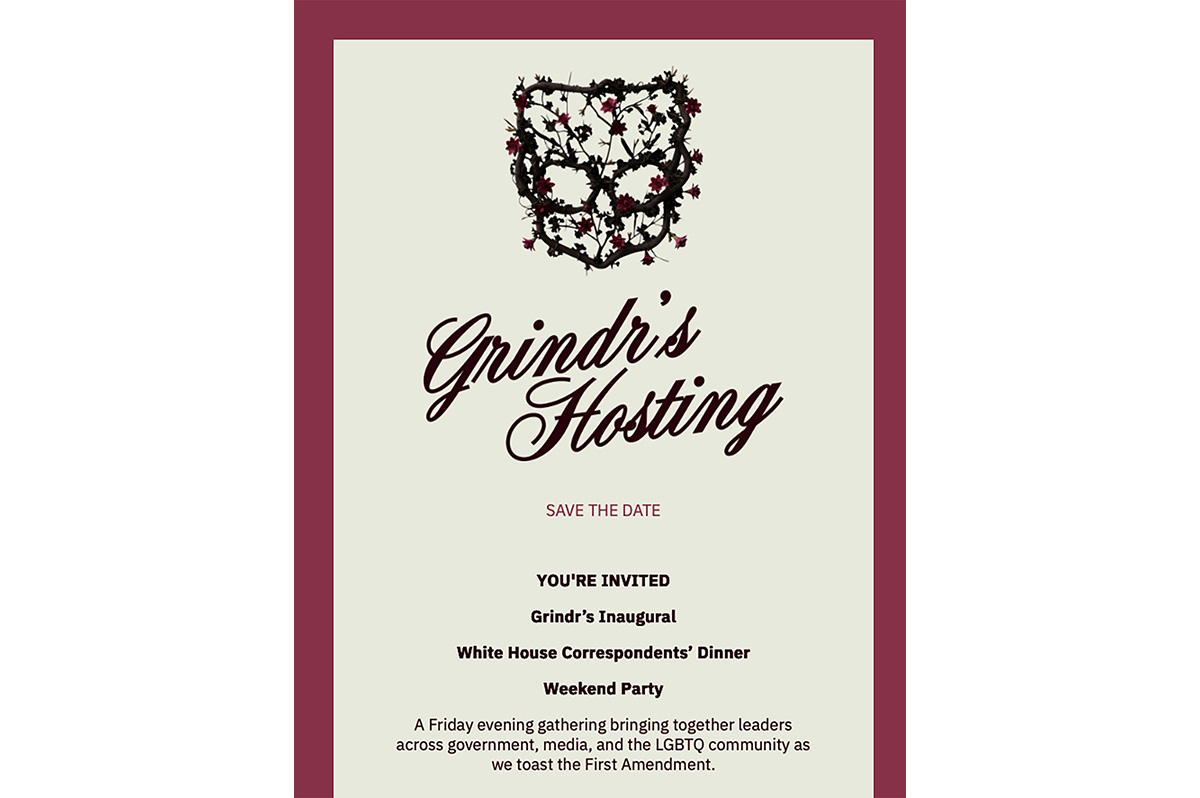
Gay dating and hookup app Grindr will host its first-ever White House Correspondents’ Weekend party on April 24.
The event is scheduled for the night before the White House Correspondents’ Dinner, an annual gathering meant to celebrate the First Amendment, honor journalism, and raise money for scholarships.
The White House Correspondents’ Dinner is organized by the White House Correspondents’ Association, a group of journalists who regularly cover the president and the administration.
An invitation obtained by the Washington Blade’s Joe Reberkenny and Michael K. Lavers reads:
“We’d be thrilled to have you join us at Grindr’s inaugural White House Correspondents’ Dinner Weekend Party, a Friday evening gathering to bring together policymakers, journalists, and LGBTQ community leaders as we toast the First Amendment.”
The Blade requested an interview with Joe Hack, Grindr’s head of global government affairs, but was unable to reach him via phone or Zoom. He did, however, provide a statement shared with other outlets, offering limited explanation for why the company decided 2026 was the year for the app to host this event.
“Grindr represents a global community with real stakes in Washington. The issues being debated here — HIV funding, digital privacy, LGBTQ+ human rights — are daily life for our community. Nobody does connections like Grindr, and WHCD weekend is the most iconic place in the country to make them. We figured it was time to host.”
Hack said the company has been “well received” by lawmakers in both parties and has found “common ground” on issues such as HIV funding and keeping minors off the app. He credited longstanding relationships in Washington and what he described as Grindr’s “respectful” approach to lobbying.
Hack, a longtime Republican-aligned lobbyist, previously worked for several GOP lawmakers, including U.S. Sens. Deb Fischer (R-Neb.), Jon Kyl (R-Ariz.), George Voinovich (R-Ohio), Bill Frist (R-Tenn.), and U.S. Rep. Randy Forbes (R-Va.).
According to congressional disclosure forms compiled by OpenSecrets, Grindr spent $1.3 million on lobbying in 2025— more than Tinder and Hinge’s parent company Match Group.
“This is going to be elevated Grindr,” Hack told TheWrap when describing the invite-only party that has already generated buzz on social media. “This isn’t going to be a bunch of shirtless men walking around. This is going to be very elevated, elegant, but still us.”
He also pointed to the company’s work on HIV-related initiatives, including efforts to maintain federal funding for healthcare partners that distribute HIV self-testing kits through the app.
The event comes at a particularly notable moment for an LGBTQ-focused connection platform to enter the Washington social circuit at a high-profile political weekend, as LGBTQ rights remain under constant attack from conservative lawmakers, particularly around transgender healthcare, sports participation, and public accommodations.
Tennessee
Charlie Kirk Act advances in Tenn.
Bill would limit protests, protects speakers opposing ‘transgender’ identities
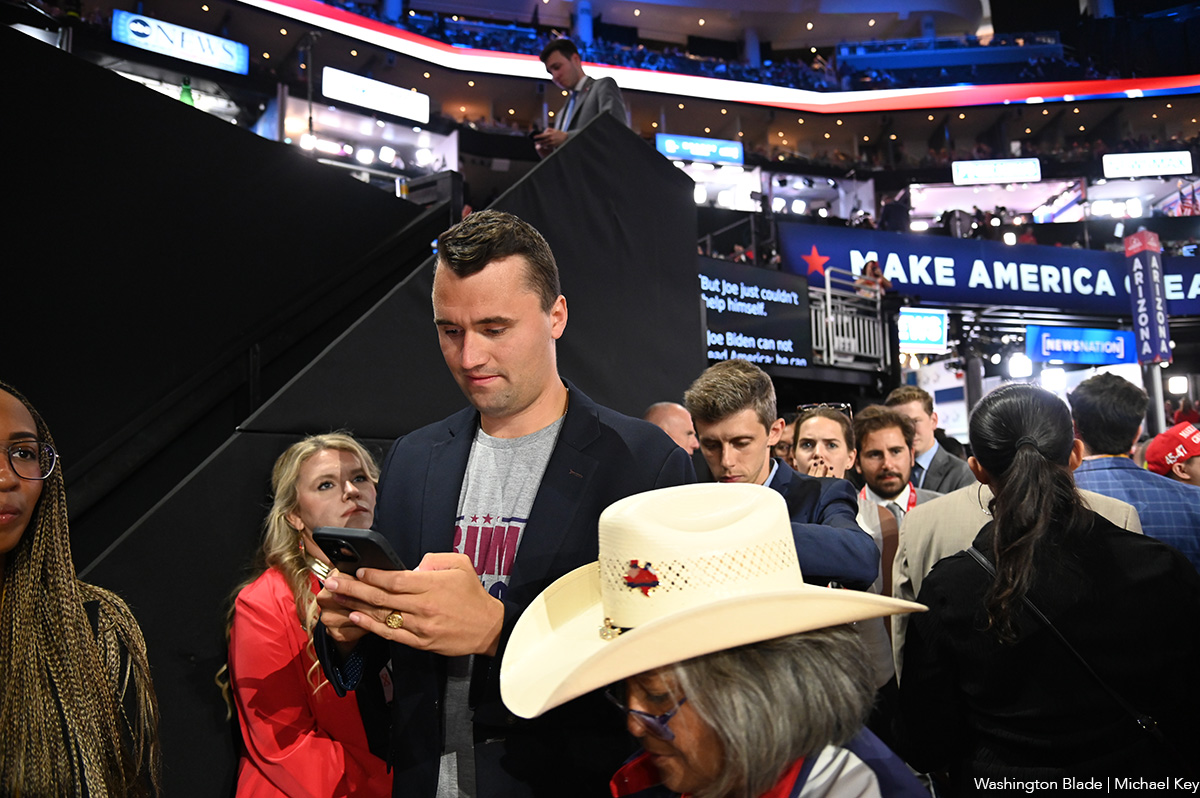
The Tennessee legislature has passed Senate Bill 1741 / House Bill 1476, dubbed the “Charlie Kirk Act,” which, if signed by Republican Gov. Bill Lee, would reshape how public colleges and universities regulate speech on campus.
The measure targets all public higher education institutions and requires them to adopt a “free expression” policy modeled on the University of Chicago’s framework. That framework emphasizes that universities should not shield students from controversial or offensive ideas and requires state schools to formally embrace institutional neutrality — meaning they do not publicly take a stance on political or social issues.
Under the legislation, publicly funded schools cannot disinvite or cancel invited speakers based on their viewpoints or in response to protests from students or faculty. Student organizations, however — like Turning Point USA, an American nonprofit that advocates for conservative politics on high school, college, and university campuses, founded by Charlie Kirk, and often lack widely represented liberal counterparts — would retain broad authority to bring speakers to campus regardless of controversy.
The law includes broad protections for individuals and organizations expressing religious or ideological beliefs, including opposition to abortion, homosexuality, or transgender identity, regardless of whether those views are rooted in religious or secular beliefs. It further prohibits public institutions from retaliating against faculty for protected speech or scholarly work.
The bill, which has been hailed by supporters as an effort to “preserve campus free speech,” ironically also limits protest activity. Shouting down speakers, blocking sightlines, staging disruptive walkouts, or physically preventing entry to events are now considered “substantial interference” under the legislation, making those who engage in such actions subject to discipline.
Some of those disciplinary consequences include probation, suspension, and even expulsion for students, while faculty who protest in ways deemed to violate the policy could face unpaid suspensions and termination after repeated violations.
Supporters of the bill argue it strengthens free expression on campus. State Rep. Gino Bulso (R-Brentwood), the bill’s sponsor, said it reinforces a commitment to “civil and robust” debate at public universities.
“The Charlie Kirk Act creates critical safeguards for students and faculty and renews the idea that our higher education institutions should be centers of intellectual debate,” Bulso told Fox 17. “This legislation honors the legacy of Charlie Kirk by promoting thoughtful engagement and defending religious freedom.”
Critics, including Democratic lawmakers, have raised concerns that the legislation effectively elevates certain ideological viewpoints — particularly those tied to religious objections to LGBTQ identities — while exposing students and faculty to punishment for protest or dissent.
“It’s ironic that this body is talking about free speech when we had professors in Tennessee schools expelled and suspended when they did not mourn the death of Charlie Kirk — when they said that his statements were problematic and that the way he died did not redeem the way he lived,” state Rep. Justin Jones (D-Nashville) told WKRN.
Kirk, the right-wing activist and founder of Turning Point USA, for whom the bill is named, was assassinated in September 2025 at a public event at Utah Valley University. His legacy and rhetoric remain deeply polarizing, particularly among LGBTQ advocates, who have cited his history of anti-LGBTQ statements in opposing his campus appearances.
The bill now heads to Lee’s desk for his signature.

LGBTQ Catholic groups slam Trump over pope criticism

Grindr to host first-ever White House Correspondents’ Dinner party

Charlie Kirk Act advances in Tenn.

Belarusian president signs bill to allow LGBTQ rights crackdown

‘The Pitt’ stars discuss what season two gets right about queer representation

Trump budget targets ‘gender extremism’

Viktor Orbán ousted in Hungarian elections

How to navigate shifting tenant expectations

Court orders Pride flag to return to Stonewall