World
Harris meets with LGBTQ activists in Vietnam
Roundtable with advocacy groups took place in Hanoi
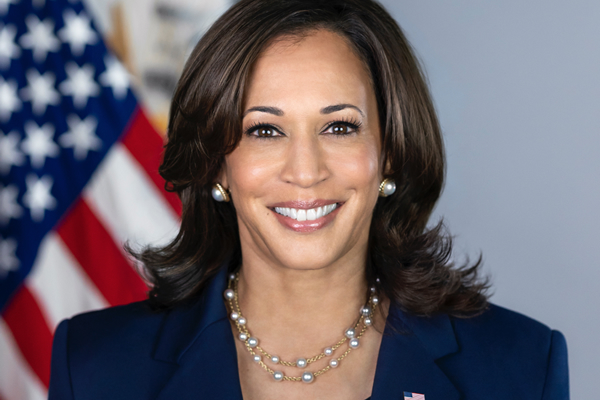
Vice President Kamala Harris on Thursday met with two LGBTQ rights activists in Vietnam.
Harris’ office said Chu Thanh Hà Ngoc, a transgender activist, and Đoàn Thanh Tùng, an LGBTQ advocate, participated in a “roundtable discussion with the vice president and Vietnamese social advocacy organizations” that took place at the U.S. Chief of Mission’s home in Hanoi, the Vietnamese capital.
“It is critical that if we are to take on the challenges we face that we do it in a way that is collaborative, that we must empower leaders in every sector, including of course government but community leaders, business leaders, civic society if we are to maximize the resources we collectively have,” said Harris.
Harris specifically noted the Vietnamese Health Ministry “helped craft the draft — and draft — the (country’s) transgender rights law” that took effect in 2017.
“Transgender people deserve and need equal access to healthcare services,” she said. “This is an issue that we still face in the United States, and it is an issue here in Vietnam, I know. And we will work together and support you and the work you are doing in that regard.”
Ann Marie Yastishock, the U.S. Agency for International Development’s mission director in Vietnam, moderated the roundtable.
It took place on the last day of Harris’ trip to Southeast Asia that began on Sunday in Singapore, one of the dozens of countries in which consensual same-sex sexual relations remain criminalized. The trip also coincided with growing calls for the U.S. to evacuate LGBTQ Afghans from Afghanistan after the Taliban regained control of the country.
Ted Osius, who co-founded GLIFAA, an association of LGBTQ employees of Foreign Service agencies, was the U.S. ambassador to Vietnam from 2014-2017. The late-U.S. Supreme Court Justice Ruth Bader Ginsburg in 2015 presided over the Hanoi ceremony during which Osius and his husband, Clayton Bond, renewed their wedding vows.
President Biden in February signed a memorandum that committed the U.S. to promoting LGBTQ rights abroad.
Visibles Executive Director Daniel Villatoro and Ingrid Gamboa of the Association of Garifuna Women Living with HIV/AIDS were among the members of Guatemalan civil society who participated in a roundtable with Harris in June when she was in Guatemala City. USAID Administrator Samantha Power also met with LGBTQ activists in Guatemala and El Salvador when she was in the countries at around the same time.




Brazil
529 openly LGBTQ candidates running in Brazilian election
Lula running against Jair Bolsonaro’s son in presidential contest
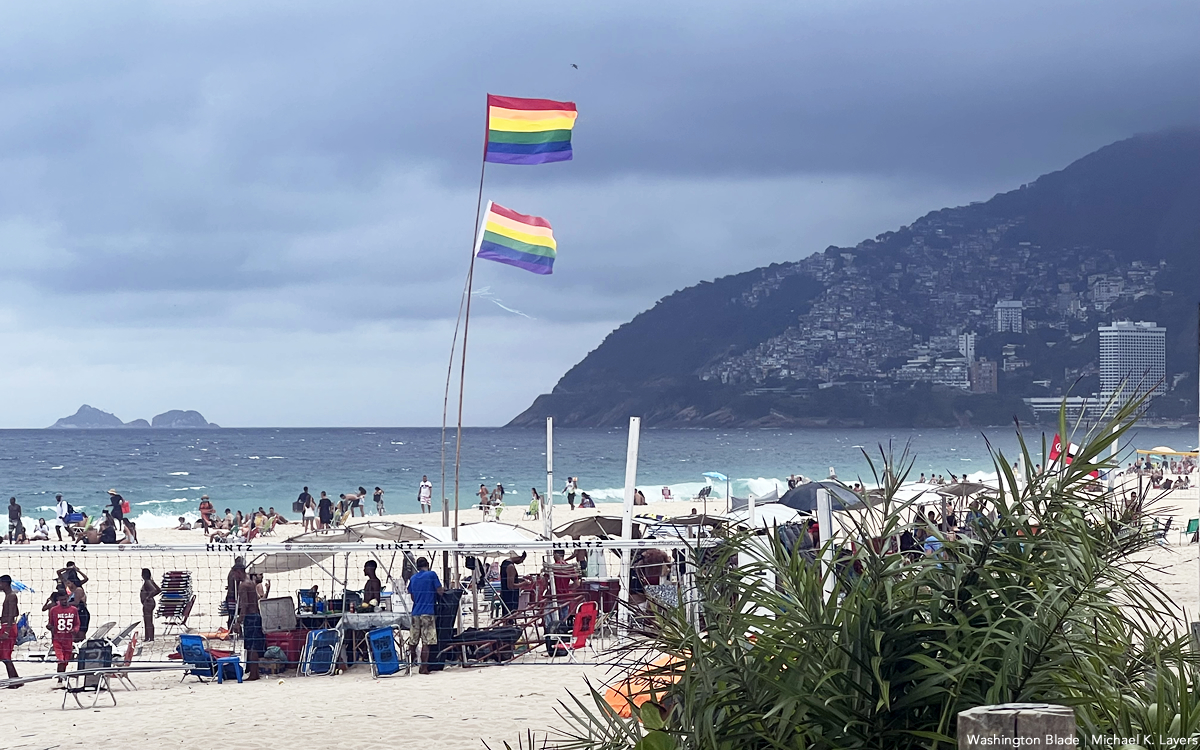
Editor’s note: International News Editor Michael K. Lavers will be on assignment in Brazil through Oct. 6.
SÃO PAULO — 529 openly LGBTQ candidates are running for in the Brazilian election that will take place on Sunday.
VoteLGBT, an organization that seeks to increase LGBTQ representation in Brazilian politics, notes 109 of these candidates are either transgender or travesti. They include Congresswomen Erika Hilton and Duda Salabert, who made history in 2022 as the first travesti and first trans women respectively to win seats in the Brazilian Congress.
Hilton, a member of the leftist Socialism and Liberty Party, known by the acronym PSOL, is a former sex worker who was a member of the São Paulo Municipal Council before her election to Congress. She currently chairs the Chamber of Deputies’ Women’s Rights Commission.
The Chamber of Deputies is Congress’s lower house.
Salabert, who is also a member of PSOL, represents Minas Gerais state in the Chamber of Deputies. Both she and Hilton in 2025 sharply criticized the Trump-Vance administration after it listed their gender as “male” on American visas that would have allowed them to travel to the U.S.

Benny Briolly is a travesti woman and member of President Luiz Inácio Lula da Silva’s Workers’ Party who is running to represent Rio de Janeiro state in the Chamber of Deputies. Thabatta Pimenta is a trans woman of mixed ethnicity who is running to represent Rio Grande do Norte state in the Chamber of Deputies as a member of the Green Party.
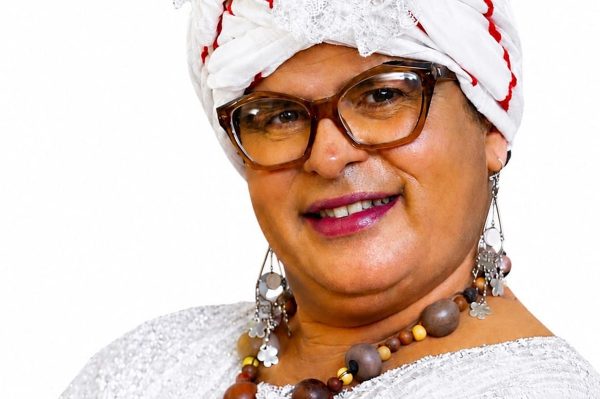
Nicolas is a trans masculine bisexual man from Pará state who is part of the Banca Transformer, a “collective candidature” for the Chamber of Deputies that VoteLGBT notes is “100 percent trans and lead by a trans masculine person.” Mãe Kaká Garcia is a gay travesti woman of African descent who is running to represent Mato Grosso state in the Chamber of Deputies as a member of PSOL.
“My bid for Congress stems from my life story and the need to bring voices that have historically been marginalized into the political arena,” Garcia told the Washington Blade.
“I am a Black travesti woman and a leader within the African-derived religious community, with a background in work, entrepreneurship, and community activism in Mato Grosso,” she added. “I am intimately familiar with the challenges faced by the LGBTQIA+ community, the Black population, women, and terreiro communities.”
Garcia added she is running because she believes “these spaces must also be occupied by people who live these realities.”
“I want issues such as combating violence against trans people, racism, religious intolerance, protections for women, LGBTQIA+ rights, and social policies to be treated as permanent public policies,” she said.
Associaçao Nacional de Travestis e Transexuais (National Association of Travestis and Transsexuals) President Bruna Benavides in a statement to the Blade praised all of the trans and travesti candidates.
“For ANTRA, the strength of trans and travesti candidacies lies in what our representatives already demonstrate through their work in office — acting beyond the LGBTQIA+ agenda in areas such as education, health, labor, human rights, culture, the environment, public safety, and the fight against inequality,” she said. “The presence of trans people is already a reality, and democracy needs them in politics — not merely as representatives of an identity, but as agents capable of shaping initiatives that benefit society as a whole.”
“Politics will only be truly transformed when it incorporates the perspectives and experiences of those historically excluded from centers of power — people who have nonetheless envisioned a nation where everyone can be free and live with dignity and security,” she added.
The Blade also spoke with other openly gay, lesbian, and bisexual candidates.
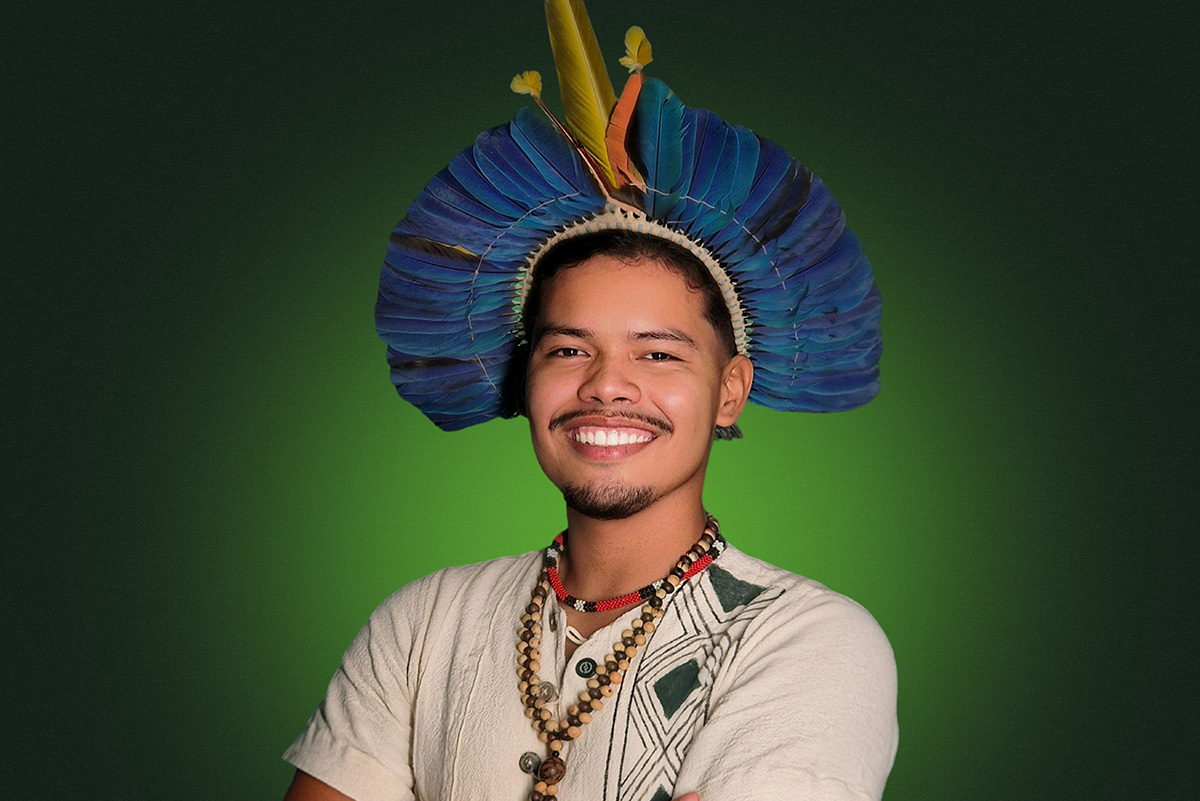
Uédem Lima is a bisexual, Makuxi Indigenous man who is running to represent Roraima state in the Chamber of Deputies as a member of the centrist Brazilian Democratic Movement.
“I am 23-years-old, a Makuxi Indigenous man, and bisexual,” he told the Blade. “I come from a reality where young people, Indigenous people, and LGBTQ+ individuals often still face difficulties in occupying spaces where decisions are made.”
“My candidacy is also a way to show that these spaces can — and must — be occupied by people who know these realities firsthand,” added Lima.
He told the Blade that education, health, climate justice, and Indigenous rights are among the top issues on which he will work in Congress if elected. Lima added his life in Roraima state, which borders Venezuela and Guyana in northern Brazil, and his identity will further shape his tenure.
“I know what it is like to grow up in Roraima, experience the shifts between the interior and the capital, and forge my path while carrying multiple identities,” he said. “I do not want to separate these parts of who I am. They are part of my story and also help explain why I chose to enter politics.”
Former Congressman Jean de Wyllys, who is the first openly gay man elected to the Brazilian Congress, resigned in 2019 and fled the country after he received death threats that he claimed came from supporters of then-President Jair Bolsonaro. De Wyllys at the time of his resignation represented Rio de Janeiro state and had just been elected for a third term.
De Wyllys has returned to Brazil and is running to represent São Paulo state in the Chamber of Deputies as a member of the Workers’ Party.
“My decision to return to present myself as a candidate is linked to the public responsibility with respect to this year’s elections, the most important for the future of Latin America in the last two decades,” he told the Blade. “Everyone knows that not just our region, but the whole world is a stage for a clash between two projects: one led by Donald Trump and his far-right (supporters) internationally that is neofascist, neocolonial, and neofeudalistic, and the other spearheaded by China that advocates for multipolarity, nations’ sovereignty, and global cooperation to overcome challenges, such as the climate crisis and possible pandemics.”
“As someone who enjoys national popularity and international connections, and having served two highly productive terms regarding human rights and cultural diversity, I could not ignore the electorate’s calls to participate in this global contest — and not merely as an intellectual and artist,” added de Wyllys.
Mônica Benício is a Rio de Janeiro Municipal Councilwoman who is running for the Brazilian Senate as a PSOL member.
Her widow, Rio de Janeiro Municipal Councilwoman Marielle Franco, and her driver, Anderson Gomes, were murdered on March 14, 2018. One of the two former police officers later convicted lived in the same condominium complex in the city’s exclusive Barra da Tijuca neighborhood in which Bolsonaro lived at the time. (Bolsonaro was not president when the murders took place, and strongly denied media reports that suggested one of the suspects visited his home before Franco and Gomes were killed.)
Franco was also friends with De Wyllys and a political ally.
“After Marielle’s assassination, the LGBTQIAPN+ (lesbian, gay, bisexual, transgender/transsexual/travesti/, queer, intersex, asexual, pansexual, nonbinary) community was one of the networks that embraced me and gave me the strength to carry on,” Benício told the Blade on Tuesday. “My Senate candidacy stems from this very commitment: to transform that affection and collective strength into a voice, protection, and rights within Congress.”
Benício stressed the LGBTQ and intersex community “needs to occupy more decision-making spaces.”
“I want to reach the Senate so that our rights, families, and lives are represented where laws are made,” she said.
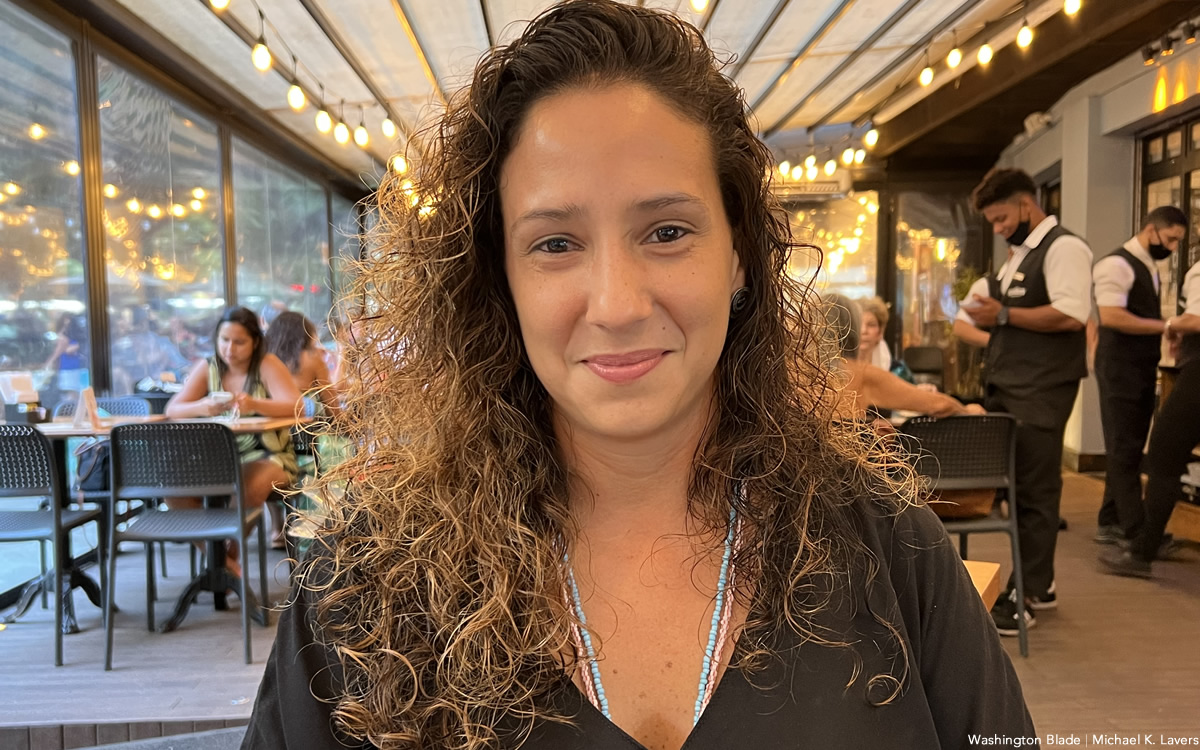
Lula is running for a second consecutive term.
He defeated Bolsonaro in the second round of the 2022 presidential election.
The Brazilian Supreme Court last year sentenced Bolsonaro — who repeatedly targeted LGBTQ Brazilians and other groups while in office — to more than 27 years in prison for his role in an attempted coup that saw thousands of his supporters storm the Congress, presidential palace, and the Supreme Court itself on Jan. 8, 2023. Bolsonaro is currently serving his sentence at his home in Brasília, the country’s capital, because of his poor health.
Lula main challenger in this year’s presidential election is Bolsonaro’s son, Sen. Flávio Bolsonaro.
A second round will take place on Oct. 25 if no candidate receives at least 50 percent of the vote.
Colombia
Colombia withdraws from Equal Rights Coalition
International LGBTQ group ‘not a priority’ for country’s new government
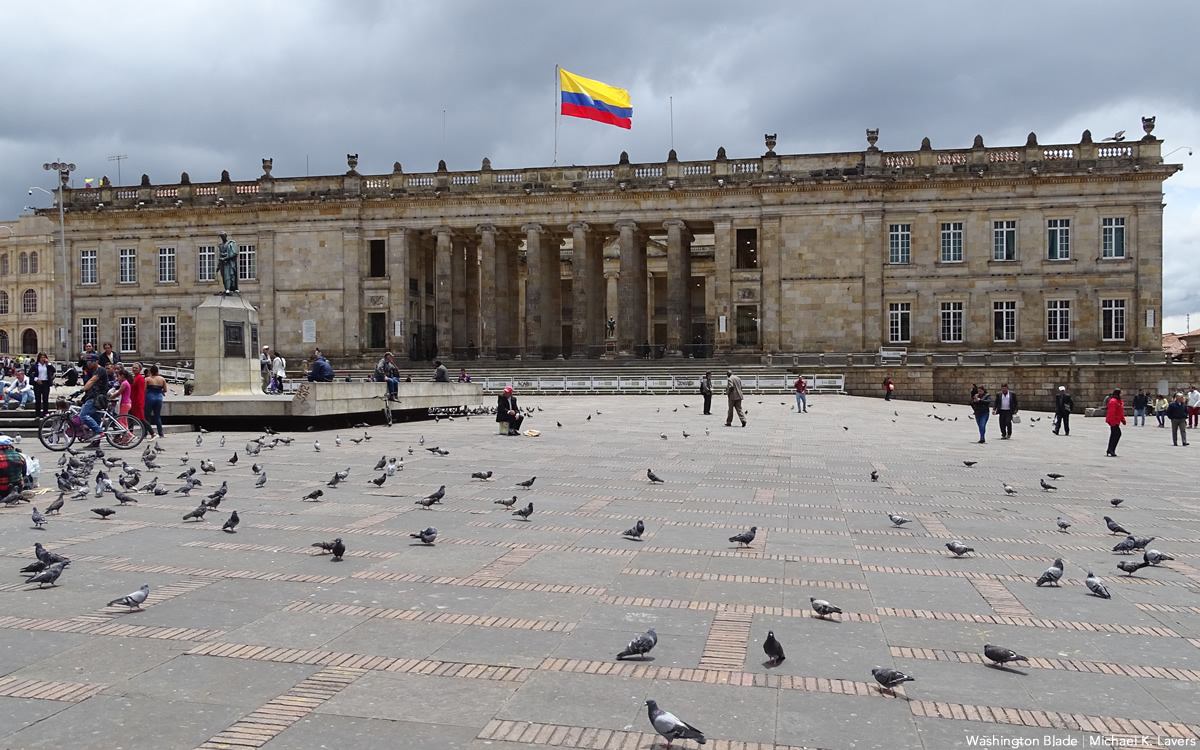
Colombia last week withdrew from a coalition of more than 40 countries that pledges to champion LGBTQ and intersex rights.
The Bogotá Post, an English-language news website in the Colombian capital, reported the country officially withdrew from the Equal Rights Coalition on Sept. 17.
The Equal Rights Coalition formed in 2016.
The group’s current members are Albania, Argentina, Australia, Austria, Belgium, Brazil, Canada, Cabo Verde, Chile, Costa Rica, Cyprus, the Czech Republic, Denmark, Ecuador, Estonia, Finland, France, Germany, Greece, Iceland, Ireland, Israel, Italy, Lithuania, Luxembourg, Malta, Mexico, Montenegro, Netherlands, New Zealand, North Macedonia, Norway, Portugal, Serbia, Slovenia, Spain, Sweden, Switzerland, Thailand, Ukraine, the U.K., and Uruguay. Civil society organizations from Colombia and dozens of other countries, including the U.S., work with the Equal Rights Coalition.
Colombia had co-chaired the group alongside Spain.
The decision to withdraw from the Equal Rights Coalition took place less than two months after far-right Colombian President Abelardo de la Espriella took office.
El Páis, a Spanish newspaper, reported Colombian Vice Minister for Consular and Migration Affairs Pedro Agustín Roa said the Equal Rights Coalition “is not a priority” for his government and the country’s participation in it was “something from a previous government.”
Caribe Afirmativo is a Colombian LGBTQ advocacy group that works with the Equal Rights Coalition. Wilson Castañeda, its director, criticized his country’s withdrawal from it.
Ecuador
Caso Karlina: Una sentencia histórica contra las terapias de «conversión»
Karlina Quiroz, una mujer trans de Chone, fue internada contra su voluntad
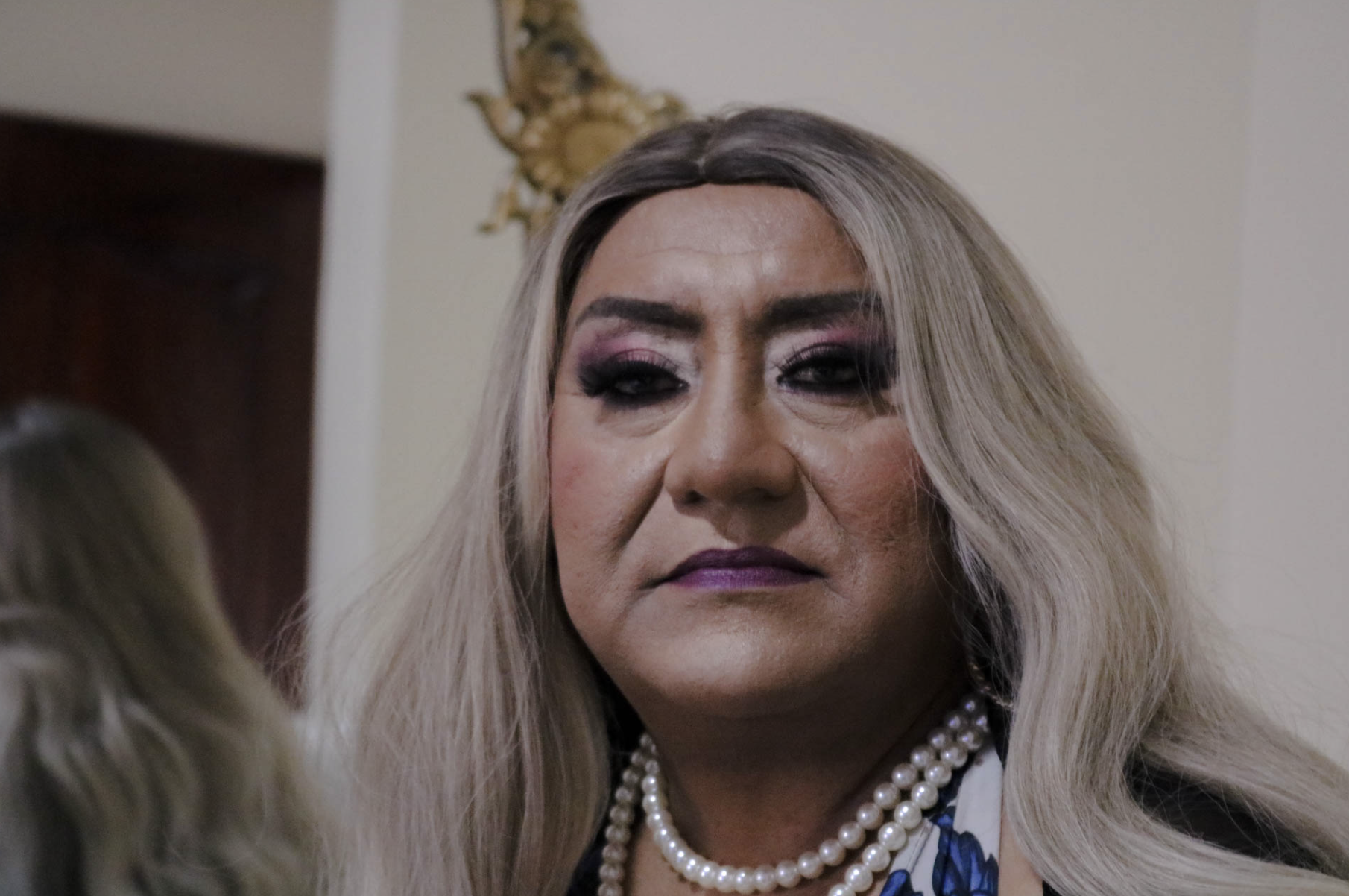
La última vez que Karlina Quiroz, una mujer trans de 57 años, salió sola a la calle en Chone, terminó encerrada contra su voluntad en un centro de rehabilitación donde intentaron “corregir” su identidad de género mediante humillaciones, amenazas y agresiones.
Han pasado cinco años desde ese episodio, ocurrido en 2021; y el 11 de septiembre de 2026 Karlina por fin obtuvo justicia.
La Fiscalía informó, el 14 de septiembre, que el Tribunal de Garantías Penales de Chone sentenció a seis personas por actos de odio contra Karlina, al ser víctima de violencia basada en su identidad de género.
Entre los seis sentenciados están sus dos hermanos, que —según la denuncia de Karlina— ordenaron su encierro a este centro.
El caso de Karlina refleja el odio y la violencia hacia personas trans en Ecuador y vuelve a poner bajo la lupa la existencia de centros conocidos como clínicas de “deshomosexualización” o espacios de “terapias de conversión”.
De acuerdo con la denuncia presentada por Karlina, en julio de 2021 fue interceptada por varios hombres y trasladada contra su voluntad a un centro para el tratamiento de adicciones ubicado en Chone, Manabí, en la vía a Pedernales. Allí permaneció retenida y sometida a tratos degradantes, violencia psicológica y agresiones físicas.
Según su testimonio, durante el encierro recibió insultos relacionados con su identidad de género y amenazas orientadas a “modificarla”.
Karlina denunció, además, que esta no habría sido la primera vez. Según su relato, en 2019 permaneció aproximadamente tres meses internada de manera forzada en otro centro de rehabilitación, también ubicado en la vía a Pedernales, en Chone. Durante ese período habría sido sometida a dinámicas similares de aislamiento, control y presiones dirigidas a modificar su identidad y expresión de género.
Según información de la Fiscalía, en septiembre de 2021, como parte de las diligencias investigativas, se allanó el centro clandestino en Chone. Allí se recabaron indicios relacionados con el internamiento forzoso de Karlina durante tres meses.
Con esos y otros elementos de convicción obtenidos durante la investigación, la Fiscalía inició un proceso penal contra las seis personas, quienes fueron luego llamadas a juicio.
El proceso, explicó Karlina, incluyó los dos casos: el de 2019 y 2021. “El crimen se investigó desde que comenzó la primera gota de sangre”, señaló Karlina, en alusión a la violencia física que sufrió en su primer encierro.
De los seis sentenciados, tres fueron condenados como autores directos a cuatro años de pena privativa de libertad. Se trata de los dos hermanos de Karlina y un sobrino, por ordenar su encierro al centro de adicciones.
Los otros tres recibieron una pena de dos años, como cómplices.
De acuerdo con Karlina, uno de ellos es el director del primer centro al que fue ingresada contra su voluntad en 2019 por tres meses, y los otros dos son quienes la interceptaron la segunda ocasión, en julio de 2021, para llevarla al centro. Ella los señala como “capturadores” de las personas que son recluidas en los centros.
“Cuando recibí la noticia (el viernes 11 de septiembre durante la audiencia de juzgamiento) no podía creerlo. Las piernas me temblaron y las lágrimas se me salieron. Estoy tranquila y satisfecha”, señaló Karlina en una llamada telefónica.
Para Pedro Gutiérrez, abogado especialista en derechos humanos, la sentencia es importante no solo por reconocer un delito de odio, sino también por las características de los hechos: el ingreso (por orden de sus hermanos) a un centro de “deshomosexualización” en el que se cometen actos de tortura y violencia física.
Durante la audiencia, constó el testimonio de Karlina. La Fiscalía también presentó el informe de reconocimiento del lugar de los hechos, la inspección ocular técnica, el levantamiento de evidencias y los testimonios de personas que confirmaron que los actos de violencia por perjuicio hacia su identidad de género fueron ejecutados de manera reiterada por los ahora sentenciados.
El caso volvió a poner la atención sobre las llamadas terapias de conversión en Ecuador, prácticas ampliamente cuestionadas por organismos internacionales de derechos humanos y señaladas como formas de tortura o violencia psicológica. Aunque el Estado ecuatoriano ha realizado operativos y clausuras de algunos centros en los últimos años, organizaciones sociales sostienen que estos espacios continúan funcionando de manera clandestina o bajo otras denominaciones.
La legislación ecuatoriana penaliza los actos de tortura con la intención de modificar la orientación sexual o identidad de género, pero no existe una sanción contra los centros que ofrecen las denominadas terapias de conversión.
En 2020, la Asamblea aprobó el Código Orgánico de Salud y una de sus disposiciones fue prohibir expresamente este tipo de terapias, pero fue vetado totalmente por el expresidente Lenín Moreno en medio de una campaña de sectores antiderechos.
La sentencia también dispuso, como reparación integral a favor de Karlina, tratamiento psicológico e indemnizaciones por daños materiales e inmateriales.
Gutiérrez considera que la reparación para Karlina es limitada, pues -por ejemplo- no hay llamados de atención al Ministerio de Salud o disculpas públicas a la víctima.
“Mi nombre es Ariel Karlina Zambrano, soy una mujer trans de Chone, Manabí. Desde niña supe que quería ser mujer, quería ser bonita, libre. Pero mi familia nunca lo aceptó. Mis hermanos y mi padre, profundamente machistas, me maltrataban constantemente”, contó Karlina en un testimonio en 2025 que recogió el Comité Permanente por la Defensa de los Derechos Humanos (CDH).
Para activistas y defensores de derechos humanos, el caso de Karlina evidencia además un patrón de violencia que suele permanecer oculto dentro de círculos familiares, religiosos y comunitarios. En muchos casos, explican, los internamientos forzados son promovidos bajo la idea de “corregir” orientaciones sexuales o identidades de género consideradas inaceptables.
Karlina intentó vivir en Chone, creyendo que con la denuncia y las medidas cautelares estaba a salvo, pero su hermano le pagaba a personas para que la acosaran, según su relato. Por ello, tuvo que esconderse por meses.
Las personas trans en Ecuador enfrentan altos niveles de discriminación, violencia y exclusión social, especialmente fuera de las grandes ciudades. Según la Encuesta Nacional sobre las Condiciones de Vida de la Población LGBTI+ del INEC, el 53,5 por ciento de las personas LGBTQ mayores de 18 años en el país ha sufrido algún tipo de discriminación o violencia a lo largo de su vida, siendo el entorno familiar uno de los principales espacios de agresión.
En materia de violencia letal, organizaciones como Asociación Silueta X y el Observatorio Runa Sipiy documentaron 30 asesinatos de personas LGBTQ y transfemicidios en Ecuador durante 2025. De esos casos, alrededor del 70 por ciento corresponden a mujeres trans, lo que las posiciona como el grupo más expuesto a crímenes de odio y violencia extrema.
Diversas organizaciones de derechos humanos han advertido además sobre la persistencia de centros de “deshomosexualización” o internamientos forzosos, prácticas denunciadas desde hace más de una década en Ecuador pese a prohibiciones estatales y operativos de control insuficientes.
El caso de Karlina pone a prueba algo más grande que una sentencia individual: si Ecuador está dispuesto o no a reconocer que estas prácticas siguen existiendo y que la violencia contra personas LGBTQ continúa ocurriendo, muchas veces con la complicidad o el silencio de sus propios entornos familiares.
“Con mi caso, debe quedar un precedente. Debemos luchar contra el odio que podemos encontrarlo dentro de nuestras propias familias. Por nuestra libertad y derechos, debemos luchar”, indicó Karlina.

529 openly LGBTQ candidates running in Brazilian election

Lesbian Bar Project co-founder: purity politics could destroy our remaining spaces

HRC report: LGBTQ students face ‘far greater challenges’ in non-supportive states

HRC National Dinner 2026: A night of music, activism, LGBTQ history

Trump asks Supreme Court to allow restrictions on gender-affirming care in prisons

‘Star Trek: Strange New Worlds’ star Celia Rose Gooding breaks down that finale time travel twist

Center for Black Equity’s annual gala to take place Oct. 3

Grace Meng sharply criticizes DOJ over hospital settlements

Tyler Clementi Foundation to host fundraiser in Rehoboth

Former Capital Pride board member reiterates sexual harassment allegation
-

 Television5 days ago
‘Star Trek: Strange New Worlds’ star Celia Rose Gooding breaks down that finale time travel twist
-
 District of Columbia5 days ago
Center for Black Equity’s annual gala to take place Oct. 3
-
New York5 days ago
Grace Meng sharply criticizes DOJ over hospital settlements
-
Out & About4 days ago
Tyler Clementi Foundation to host fundraiser in Rehoboth