Galleries
BMA exhibit traces friendship between Matisse and Etta Cone
Baltimore collector helped build world’s preeminent repository of French master’s work
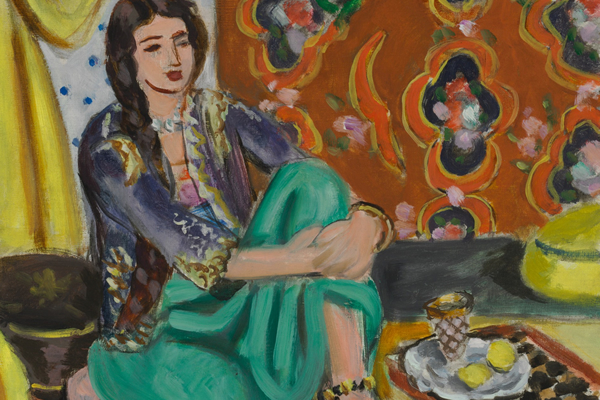
The Baltimore Museum of Art is the world’s most important repository of French modern master Henri Matisse’s work and this fall, a new exhibition will explore the friendship between the artist and Etta Cone, the Baltimore collector who befriended Matisse in 1906.
The two maintained a close 43-year friendship, during which time Matisse traveled to Baltimore and created works with Etta and the BMA in mind. Etta and her sister Claribel ultimately collected about 700 of Matisse’s works, according to the BMA, including Blue Nude (1907), The Yellow Dress (1929-31), and Large Reclining Nude (1935).
This new exhibit, “A Modern Influence: Henri Matisse, Etta Cone, and Baltimore” will trace their friendship through letters they exchanged and includes more than 160 paintings, sculptures, prints, drawings, and illustrated books.
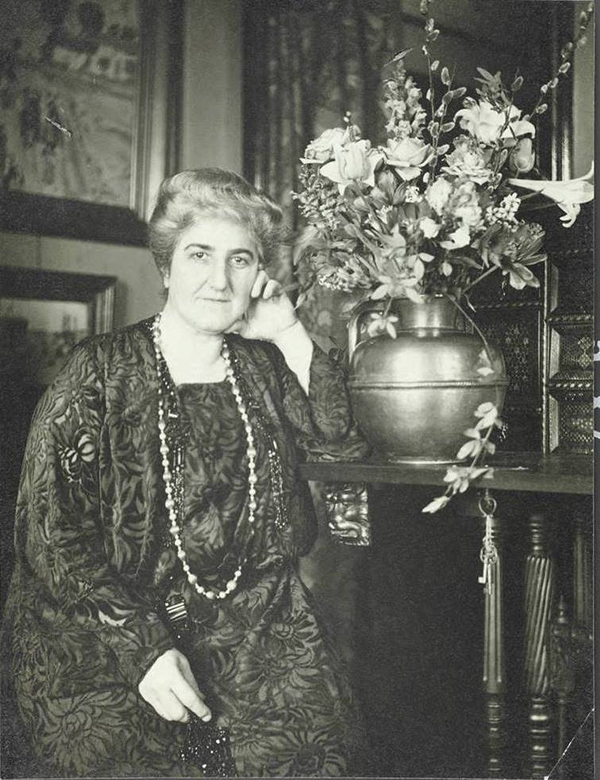
“For years, scholars have debated the purchases made by both Cone sisters, with much more credit given to the important acquisitions of major paintings by older sister Claribel,” the BMA said in a statement. “‘Modern Influence: Henri Matisse, Etta Cone, and Baltimore’ will for the first time fully recognize Etta’s achievements as a collector and acknowledge her role in building the majority of the sisters’ Matisse collection, particularly the sculpture, drawings, and prints.”
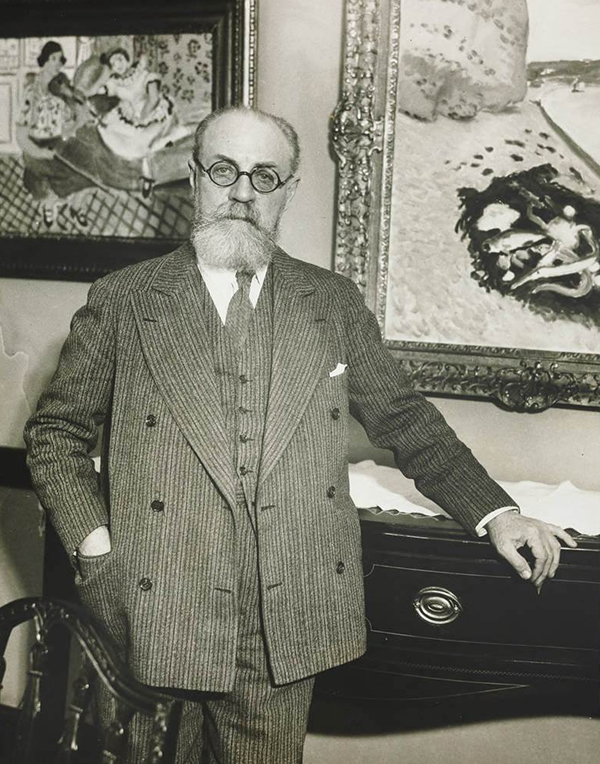
“Etta Cone and Matisse shared a love of gesture and the female form, expressed not only through her collection of his major paintings, but through an early and sustained interest in his print making and drawing practices. The exhibition begins with work on paper and ends there as well,” said Leslie Cozzi, BMA associate curator of prints, drawings, and photographs.
The exhibition will feature a large selection of drawings, including masterpieces that are rarely on view due to light exposure restrictions, the BMA announced.
“Etta Cone’s dedication to art, and to Matisse’s work in particular, has had a profound impact on the BMA and the focused and studied ways in which the museum continues to develop its collection. The forthcoming exhibition captures the exciting possibilities that can be achieved when artists, collectors, and public institutions join in a shared vision and commitment. We are delighted to present visitors with the incredible story of Etta Cone and the significant works of art that she brought to our museum, and to have this exhibition serve as a prelude to the presentations, programs, and publications that we’ll be able to create through our soon to be opened Ruth R. Marder Center for Matisse Studies,” said Christopher Bedford, the BMA’s Dorothy Wagner Wallis Director.
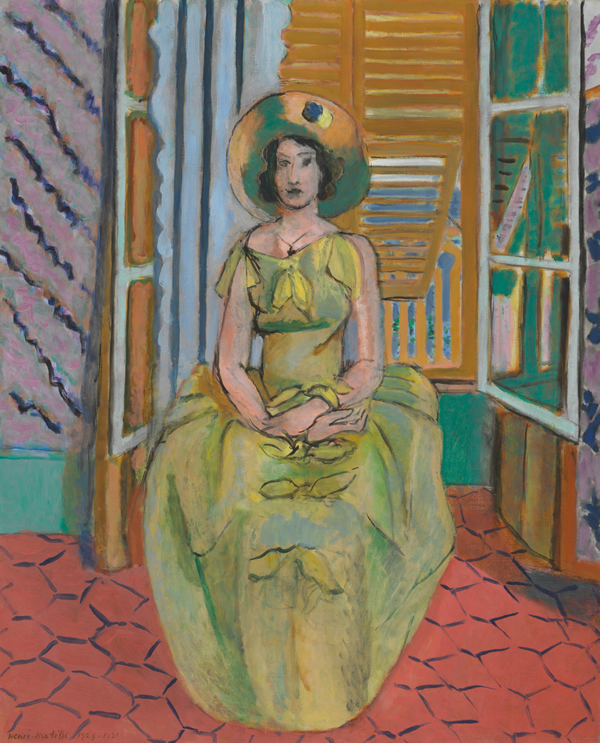
Henri Matisse. The Yellow Dress. 1929-31. (The Baltimore Museum of Art: The Cone Collection, formed by Dr. Claribel Cone and Miss Etta Cone of Baltimore, Maryland. BMA 1950.256 © Succession H. Matisse, Paris/Artists Rights Society (ARS) New York)
The Marder Center, which is scheduled to open in December, will present the breadth of the BMA’s Matisse holdings, while supporting the development of new scholarly publications that advance discussions on the trajectory of modern art, according to a statement.
“A Modern Influence: Henri Matisse, Etta Cone, and Baltimore” opens Oct. 3 and will be on view until Jan. 2, 2022. Tickets are available through artbma.org. Prices are $15 for adults, $13 for seniors, $12 for groups of 7 or more, $5 for students with ID, and $5 for youth ages 7-18. BMA Members, children ages 6 and under, and student groups are admitted free. For more information, call 443-573-1701.


Galleries
BMA celebrates enduring influence of Henri Matisse
Exhibit features iconic works juxtaposed with gay artist’s paintings inspired by French legend
The Baltimore Museum of Art is on a roll.
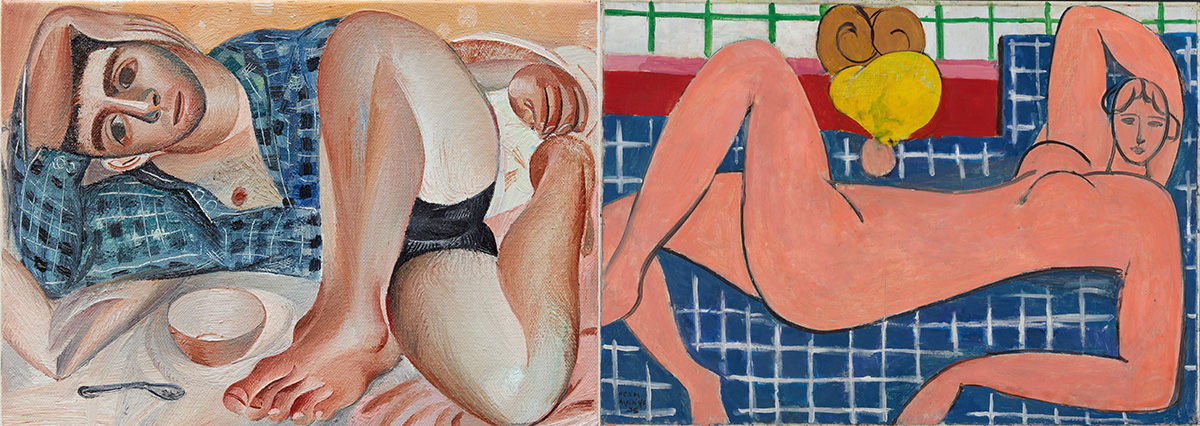
After landing the coveted Amy Sherald “American Sublime” exhibit (through April 5) when the National Portrait Gallery attempted to censor her work, the BMA is debuting a breathtaking and thought-provoking new exhibit, “To See This Light Again” featuring master works by Henri Matisse paired with new paintings by Louis Fratino, who is inspired by the French modernist legend.
Fratino, who’s gay, was born in Annapolis and studied at Baltimore’s Maryland Institute College of Art. As an art student, he found himself spending lots of time in the BMA’s Matisse galleries, the largest collection of his works in the world, encompassing more than 1,600 paintings, drawings, and illustrations. At just 33, Fratino has enjoyed a “meteoric” rise in the art world, according to BMA Director Asma Naeem, who introduced Fratino at an event previewing the exhibit last week. This is Fratino’s first major U.S. exhibition, but he was featured in the 2024 Venice Biennale and his paintings can be found at the Rhode Island School of Design Museum, the Whitney Museum of American Art, and elsewhere.
The exhibit aims to explore Matisse’s lasting influence by juxtaposing his works with Fratino’s.
“It’s the idea that art manifests a kind of attention or a vision for your life, that it can be a beautiful life despite certain circumstances that may be happening around you,” Fratino said in a statement released by the BMA. “In Matisse’s case, he lived through the First and Second World Wars. Painting can confirm that life is beautiful and that it’s worth looking at.”
The influences are apparent, from the use of light and pattern to the choice to focus on everyday objects and subjects. And the exhibit is unabashedly queer with male couples depicted in a couple of paintings. Fratino told the Blade that as an out gay man, it was important to embrace that visibility.
He describes a “joy of looking” at the male form, just as Matisse portrayed female figures that often celebrated the tradition of painting nudes.
In “Tom,” Fratino captured his subject in casual repose that includes a bowl and spoon in the foreground. It is presented alongside Matisse’s iconic “Large Reclining Nude.” Tom’s checkered shirt echoes the blue and white grid background of the Matisse work and both figures are holding casual, relaxed poses.
“Fratino and Matisse: To See This Light Again” runs through Sept. 6 at the Baltimore Museum of Art (artbma.org.)
For Matisse lovers, the BMA has another exhibit debuting March 29 titled, “Matisse in Vence: The Stations of the Cross” featuring more than 80 drawings revealing how the artist “shaped his late‑career masterpiece, the Stations of the Cross mural, for the Chapel of the Rosary in Vence, France.”
Galleries
Blockbuster Amy Sherald exhibit opens in Baltimore
Artist has emerged as LGBTQ hero after refusing to cave to censorship
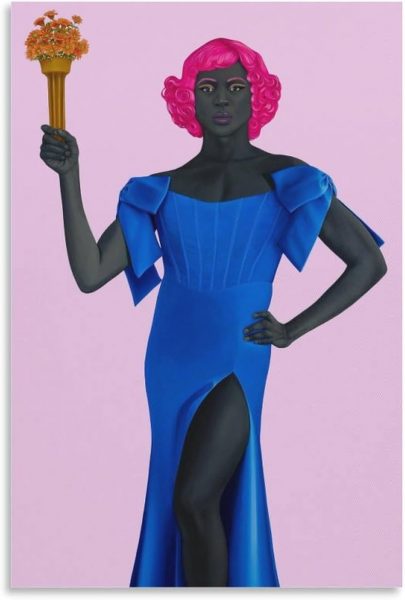
Artist Amy Sherald has emerged as a hero in the LGBTQ community following her controversial decision to pull her blockbuster new exhibit “American Sublime” from the National Portrait Gallery in D.C. and move it to Baltimore after Smithsonian officials sought to censor her painting “Trans Forming Liberty.”
That painting depicts transgender model Arewà Basit as the Statue of Liberty, which conflicts with President Trump’s war on DEI and his efforts to erase transgender people from the American narrative.
Sherald issued a statement over the summer that the Smithsonian had “concerns” about the painting. “These concerns led to discussions about removing the work from the exhibition,” Sherald said in the statement. “While no single person is to blame, it is clear that institutional fear shaped by a broader climate of political hostility toward trans lives played a role.”
She said the Smithsonian had proposed including a video in the exhibit that would “contextualize” the painting and likely include anti-trans views. It was then she announced her decision to pull the exhibit entirely and move it to the Baltimore Museum of Art, a major coup for the museum.
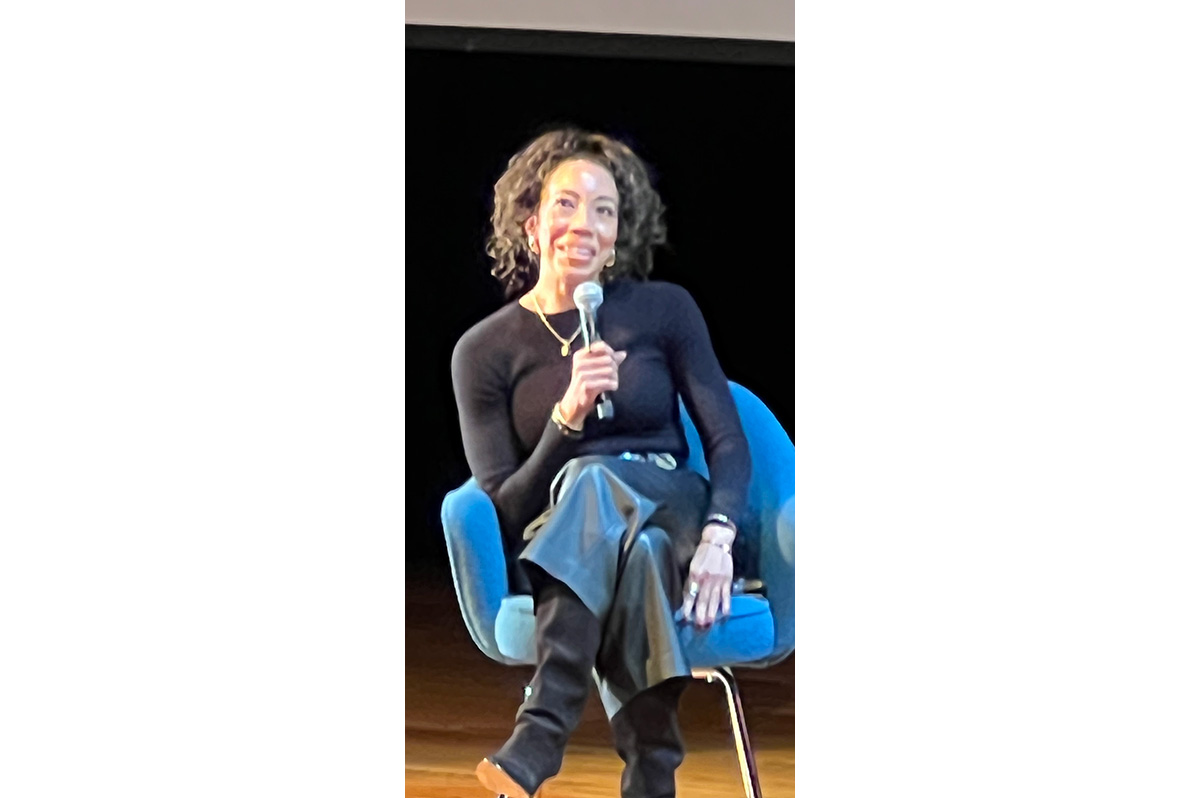
Sherald studied at Baltimore’s Maryland Institute College of Art, which she described as “the best decision I ever made,” during a sold out Q&A on Nov. 2 moderated by the BMA’s director, Asma Naeem. Unfortunately, the subject of censorship and the last-minute decision to move the exhibit to the BMA didn’t come up during the discussion. But Naeem rightly described Sherald as “one of the most important painters of our time.”
“American Sublime,” billed as a mid-career retrospective, features 38 of Sherald’s paintings, including her portraits of former first lady Michelle Obama and Breonna Taylor, along with “Trans Forming Liberty.”
Sherald and Naeem joked throughout the breezy hour-long conversation and reminisced about spending time at MICA and in Baltimore. The artist said she still finds inspiration and even potential portrait subjects in grocery stores and on the streets of Baltimore and New York, where she now lives. Many of the portraits in the exhibit were painted in Baltimore.
Although Sherald and Naeem kept it light and avoided discussing censorship, the one serious and non-negotiable subject Sherald addressed was the paramount importance of integrity. Her insistence on the integrity of the work and the inclusion of trans representation in the exhibit brought her to the difficult decision to pull her work from the Smithsonian. It was a bold and inspiring move in a time when so many public figures, CEOs, and politicians have shown a disappointing and dangerous lack of integrity in the face of an administration that seeks to subvert the Constitution and erode the First Amendment. Sherald stands as a powerful symbol of resistance and, yes, integrity in these dark times. Her refusal to cave to authoritarian impulses and blatant censorship will be remembered for years to come. The nation’s top tech CEOs and congressional leaders should see this exhibit and learn from her brave example.
“American Sublime” is open now through April 5 at the Baltimore Museum of Art and requires a paid ticket for entry. (Admission is free on Thursday evenings and free on Jan. 15 and Feb. 19. The museum is closed Mondays and Tuesdays.) For more information and tickets visit artbma.org.
Galleries
New gallery opening in D.C.
Dandelion Collective exhibition features works by John Von Sauerhoff

Dandelion Collective, a new space in Columbia Heights for LGBTQ healers and artists, will open on Saturday, Aug. 24 with an opening reception at 2 p.m. at 3417 14th St., N.W.
This first exhibition features the incredible, ethereal artwork of John Von Sauerhoff. His stunning pop surrealist paintings will transport you to another world.
More information is available at dandelioncollectivedc.com/art-gallery.

Authorities investigate officer-involved shooting outside Asheville gay bar

Popular Mount Vernon gay bar Leon’s to temporarily close after owner’s death

30 years on, ‘The Birdcage’ remains a landmark

Comings & Goings

Whitman-Walker to host legal services workshop

Democrats are trying to disqualify trans candidates. Here’s how

Political drama in Angie Craig’s Minn. Senate race heats up

Aparna Raj expected to become second LGBTQ member of D.C. Council

Suzanne Goode wants efficient spending, better infrastructure for Rehoboth

Mexico’s first openly gay mayor killed
-

 National5 days ago
Democrats are trying to disqualify trans candidates. Here’s how
-
Congress5 days ago
Political drama in Angie Craig’s Minn. Senate race heats up
-
District of Columbia5 days ago
Aparna Raj expected to become second LGBTQ member of D.C. Council
-
Rehoboth Beach5 days ago
Suzanne Goode wants efficient spending, better infrastructure for Rehoboth