World
Columbia University researcher helps evacuate LGBTQ Afghans
Taylor Hirschberg working with Belgian lawmaker
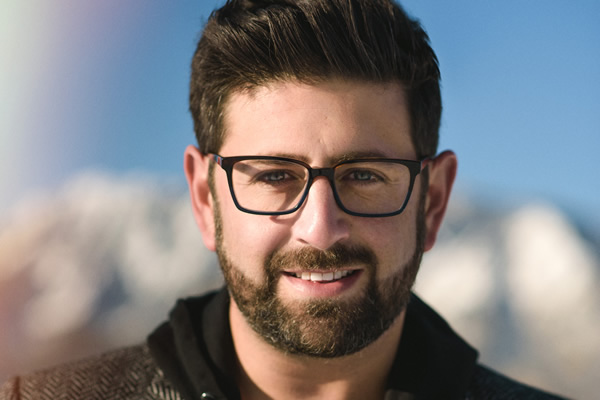
Some of the 50 human rights activists that a Columbia University researcher has helped evacuate from Afghanistan since the Taliban regained control of the country are LGBTQ.
A press release the Washington Blade received notes Taylor Hirschberg — a researcher at the Columbia Mailman School of Public Health who is also a Hearst Foundation scholar — has worked with Belgian Sen. Orry Vandewauwer to help 50 Afghan “activists leave the country.”
“The refugees included those who identify as LGBTQI+ or gender non-conforming and their families,” notes the press release.
The Blade has seen the list of names of the more than 100 people that Hirschberg and Vandewauwer are trying to evacuate from Afghanistan. These include the country’s first female police officer, the independent U.N. expert on Afghanistan and a number of LGBTQ activists.
“There are many more human rights advocates we are still trying to get out of the country,” said Hirschberg.
Hirschberg has previously worked in Afghanistan.
He and Vandewauwer were also once affiliated with Skateistan, an NGO that works with children in the Middle East and Africa. The documentary “Learning to Skateboard in a Warzone” features it.
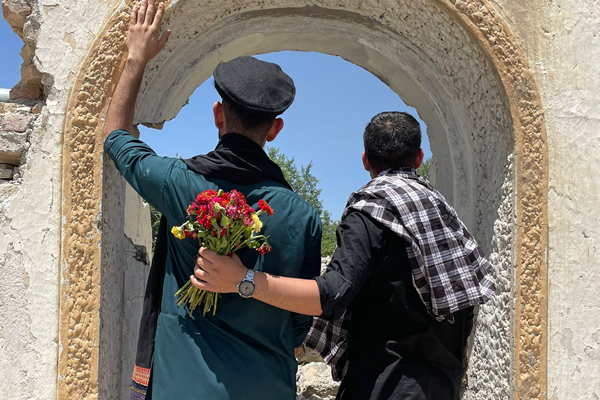
The Taliban entered Kabul, the Afghan capital on Aug. 15 and toppled then-President Ashraf Ghani’s government.
A Taliban judge over the summer said the group would once again execute gay men if it were to return to power in Afghanistan.
The U.S. evacuated more than 100,000 people from the country before American troops completed their withdrawal from the country on Aug. 30. It remains unclear whether the U.S. was able to successfully evacuate LGBTQ Afghans from Kabul International Airport, but Immigration Equality earlier this month said it spoke “directly” with 50 LGBTQ Afghans before the U.S. withdrawal ended.
Secretary of State Antony Blinken on Sept. 13 during a House Foreign Affairs Committee hearing expressed concern over the fate of LGBTQ Afghans who remain in the country.
The Human Rights Campaign; Immigration Equality; the Council for Global Equality; Rainbow Railroad; the International Refugee Assistance Project and the Organization for Refuge, Asylum and Migration have called upon the Biden administration to develop a 10-point plan to protect LGBTQ Afghans that includes prioritizing “the evacuation and resettlement of vulnerable refugee populations, including LGBTQI people.” Canada is thus far the only country that has specifically said it would offer refuge to LGBTQ Afghans.
Hirschberg on Monday told the Blade that he and Vandewauwer have charted an airplane to evacuate Afghans, but they have not secured a “third country” to which they can bring them.
“Currently, we are working towards a multi-country collaboration for resettlement,” he said. “Our work has now expanded to include election officials and women activists, including those from the LGBTQI+ community.”
Hirschberg also urged the U.S. and humanitarian organizations to do more to help evacuate LGBTQ people, human rights activists and others from Afghanistan
“I understand that this is complicated and that I do not have all the working pieces but why does the United States ignore those who helped in building their agenda in Afghanistan. The same goes for multilateral organizations,” he told the Blade. “Why are neither funding charters and creating agreement with partnering states? If they are why have the not contacted the countries that we are creating collaborations with?”



Celebrity News
My evening with Madonna
Gay icon headlined the World Pride Music Festival in Amsterdam

Editor’s note: International News Editor Michael K. Lavers and Photo Editor Michael Key will be on assignment in the Netherlands through Aug. 10. They will be covering World Pride in Amsterdam.
AMSTERDAM — Madonna and 6,000 of her closest friends celebrated World Pride at Amsterdam’s AFAS Live concert hall early Sunday morning. I was fortunate enough to be one of them.
Madonna last Wednesday nearly broke the internet when she said on social media in Dutch that “I got somethin’ I wanna talk about,” referring to an opening line in “Danceteria,” one of the tracks on her “Confessions II” album that has received rave reviews since its July 2 release. The track has been on near constant replay on my playlist since I first heard it.
— Madonna (@Madonna) July 28, 2026
MISTR — a telehealth platform that offers free access to PrEP, Doxy PEP, STI testing, and long-term care that has organized Madonna’s Club Confessions shows in the U.S. and the U.K. — later confirmed the rampant speculation. I woke up on July 30 to an email in my inbox from MISTR and the World Pride Music Festival PR team that said I was on the press list.
Madonna was indeed going to headline the World Pride Music Festival that Jake Resnicow and Insomniac produced, and I was going to be there. OMFG!!!!
The gay icon had one more surprise in store.
The Dutch internet on Saturday once again broke over speculation that Kylie Minogue was going to appear alongside Madonna. I was getting ready to leave our hotel in Amsterdam on Saturday night when I saw a video of the two of them together.
“Madonna is now teasing Kylie Minogue on her social media … she may be one of her ‘special guests’ tonight,” I wrote in a text to Washington Blade Editor Kevin Naff at 8:46 p.m.
“Have fun! This is turning into the gayest concert ever,” he responded.
I arrived at AFAS Live shortly before 11 p.m. My press contact walked me and two other Dutch journalists into the venue’s cavernous main room known as the Black Box. We made small talk for a few minutes before I started to walk around and listen to Josh Harrison who was on the decks.
Madonna was scheduled to take the stage at 1:30 a.m., but she is known for being late — she is Madonna and she does what she wants. Hayla, a British singer, and Bebe Rexha are among those who performed ahead of Madonna. Thousands of sweaty men — including a group of Australians next to me who were eagerly awaiting Kylie’s anticipated appearance — packed the Black Box and were dancing, anticipating what was to come.

MISTR CEO Tristan Schukraft at one point came on stage and declared Madonna was indeed in the building. The moment for which we were all eagerly waiting finally came shortly before 2:30 a.m.
“Mother is here and this is gay heaven,” said Madonna when she took the stage.
Stuart Price, who produced her “Confessions on a Dance Floor” album in 2005, manned the decks during Madonna’s set.
She opened it with “I Feel So Free” from “Confessions II.” Madonna then sang “Bring Your Love” and “Danceteria” to which this reporter — and everyone else — sang along.
Madonna then teased a surprise before she began to perform “Love Sensation.” Kylie soon appeared on stage. It was nearly too much for my fellow partygoers from Australia. It was indeed the gayest concert ever!
Madonna and Kylie performed “Love Sensation” together. They then sang “Hung Up” and “Sorry” from “Confessions on a Dance Floor” to round out the set that ended shortly after 3 a.m.
Madonna and I share the same birthday — Aug. 16 — and I would like to think she and Kylie gave me an early birthday present. In all seriousness though, it was an amazing night for me and for everyone else who was fortunate enough to be there.
“On the dance floor I feel so free,” says Madonna in the opening of “I Feel So Free.”
For those few precious hours at AFAS Live I did not think about the Trump-Vance administration and the myriad ways it is destroying the U.S. I did not think about the National Guard troops deployed to D.C. I did not think about the pointless wars that continue to ravage Ukraine and other countries around the world. I simply lost myself on the dance floor and celebrated an icon who has always stood with my community.
Thank you, Madonna.
Netherlands
Amsterdam Pride Canal Parade draws hundreds of thousands
Gay Dutch Prime Minister Rob Jetten among participants

Editor’s note: International News Editor Michael K. Lavers and Photo Editor Michael Key are on assignment in the Netherlands through Aug. 10.
AMSTERDAM — Hundreds of thousands of people lined Amsterdam’s canals on Saturday for the city’s annual Amsterdam Pride Canal Parade.
Dutch Prime Minister Rob Jetten, who is openly gay, is among those who participated in the parade that featured more than 80 boats. Participants held signs and posters that, among other things, read “proud to be intersex” and “lesbians love you and a free Palestine.”
The Washington Blade saw at least two attendees holding fans that read “fuck Trump.” One of the boats also compared President Donald Trump and Russian President Vladimir Putin as “the kissing couple.”

(Washington Blade video by Michael K. Lavers)
(Washington Blade video by Michael K. Lavers)
The parade took place a week after a terrorist attack at Berlin’s Christopher Street Day left one person dead and more than two dozen others injured.
It passed the Homomonument, a memorial to gays and lesbians who have suffered persecution. The Homomonument has been transformed into a makeshift memorial to the victims of the July 25 terrorist attack in the German capital.
View on Threads
The Canal Parade took place during World Pride, which will end in Amsterdam on Aug. 9.
European Union
Poland’s top court rejects recognition of same-sex marriages from other EU countries
Ruling sets up potential clash with bloc
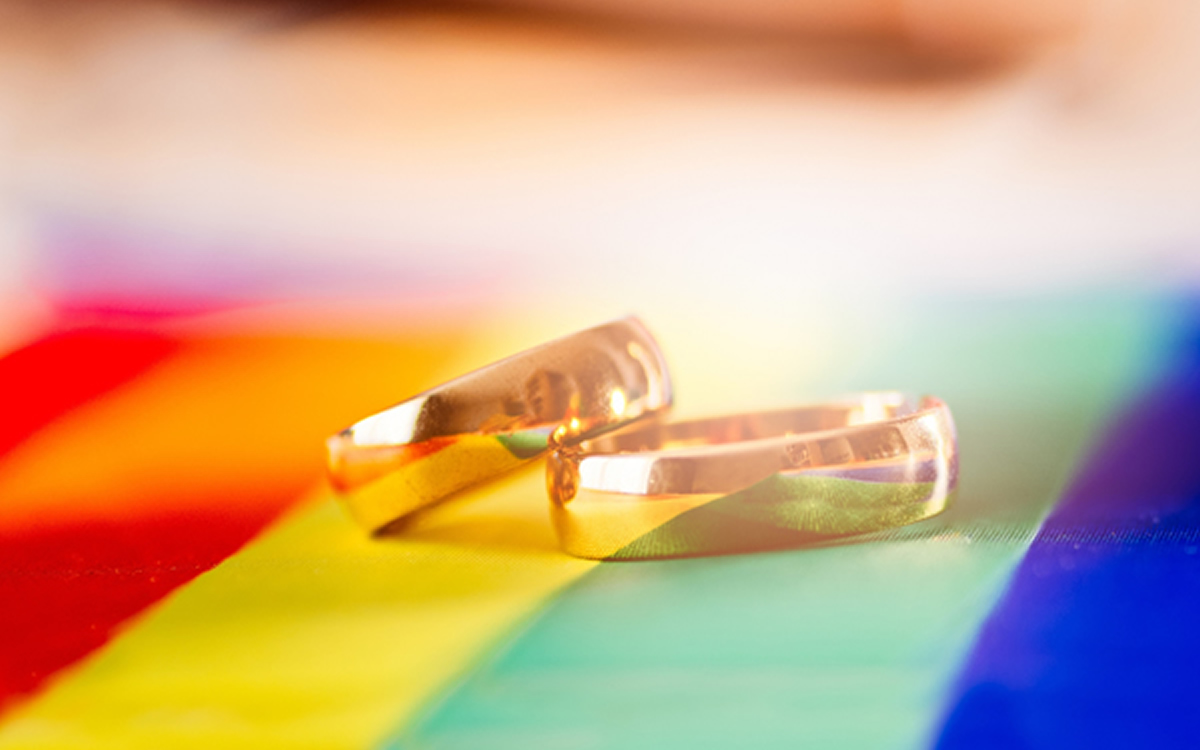
Poland’s top court this week rejected the recognition of same-sex marriages legally performed in other EU countries.
The EU Court of Justice in Luxembourg last November ruled in favor of a same-sex couple who challenged Poland’s refusal to recognize their German marriage. Poland’s Supreme Administrative Court in March reaffirmed the decision.
The couple, who lives in Poland, brought their case to Polish courts in 2019. The Supreme Administrative Court referred it to the EU Court of Justice.
The Polish government in May announced it will recognize same-sex marriages legally performed in other EU countries. Polish President Karol Nawrocki on July 17 vetoed bills that would have extended rights to same-sex couples.
The Constitutional Tribunal ruling, which it issued on July 28, was unanimous and final. It also sets up a potential clash between it and the EU Court of Justice.

Buttigieg indicates he may run for president in 2028

Remembering Elliot Leonard, generous visionary who helped LGBTQ communities thrive

My evening with Madonna

PHOTOS: Petal Release Party

Madonna headlines World Pride Music Festival in Amsterdam

PHOTOS: Lambda Legal in the Pines

Calendar: July 31-August 6

Taiwan’s government has failed to update process to change gender markers on ID documents

Come showcase your singing, poetry talent