European Union
Student brutally beaten in Ireland because he is gay
Attack against 14-year-old streamed on social media

A 30 second video that circulated on TikTok, Twitter and Instagram this past week showed a 14-year-old boy being jumped by a group of other young men, one punching the victim in the face, knocking him to the ground at which point the others joined in kicking and pummeling him.
A spokesperson for An Garda Síochána, the national police service of Ireland, told the Washington Blade that the victim had been transported to Our Lady of Lourdes Hospital in Drogheda, where he was treated for serious facial injuries. The spokesperson also noted that the attack had taken place on May 15 at approximately 2.30 p.m.
Some of the teens in the video are wearing school uniform jackets from Beaufort College, a post-primary school in Navan, a medium-sized city located roughly 34 miles northwest of the Irish capital city of Dublin.
According to witnesses and in an interview with British LGBTQ media outlet PinkNewsUK, the teen was attacked over his sexual orientation. A family member, who wanted to remain anonymous, said the victim had been verbally harassed since the beginning of the last term.
“The whole family is aware of this, and that it’s been an ongoing issue,” the relative told PinkNewsUK.
The boy, who was hospitalized after the assault, suffered from a concussion, broken teeth and a shoe print on his forehead, the family member and the Garda confirmed.

“No 14-year-old should be beaten like that for anything at all, especially because of who he is. He is only a child and it happened across the road from a family member, where he was trying to get to,” the family member told Irish media adding: “We are shocked, horrified and upset at what can happen in this day and age. It was a number of people against one boy, while others filmed it and posted it online. That is horrific and wrong.”
The Garda spokesperson confirmed that investigators are aware of the video online.
“An Garda Síochána is aware of a video circulating on social media of this incident and out of respect for the victim in this case we would request that people refrain from sharing this video. An Garda Síochána is appealing to any person with information on the assault to contact Navan Garda Station at 046 9079930,” the spokesperson said.
Irish Prime Minister Leo Varadkar, who is openly gay himself, condemned the attack on the boy, telling Irish media outlet RTÉ Radio 1 that he hoped “everyone would condemn [the attack] utterly.” He added: “I want to send my solidarity to the person who was harmed and injured in this way. I would say to them that life does get better.
“It is very sad that people experience violence and bullying in school, but life does get better and I’d say not to give up. I would say how sad I am that in this day and age we still see this kind of bullying and violence in our schools.
“I understand there is a Garda investigation underway and that the victim has been treated for their injuries [and] I would ask anyone who has information to co-operate with the investigation.”
The prime minister also condemned the bystanders in the video who took no action to intervene and to stop the beating.
“I think for a lot of people that maybe had a hard time in school life does get a lot better.”
— RTÉ Radio 1 (@RTERadio1) May 18, 2023
Taoiseach, Leo Varadkar talks to @TodaywithClaire about the violent attack on a student in Co. Meath on Monday. pic.twitter.com/Epw7HPEgAL
PinkNewsUK reported that five male teenagers were taken into custody by the Gardaí in Navan on May 19 and have been released without charge.
A Gardaí spokesperson said: “Gardaí in Navan are continuing to investigate the assault of a teenage boy which occurred in Navan on Monday.
“Yesterday, Gardaí arrested five juvenile teenagers in the Navan area for alleged offenses under Section 3 of the Non-Fatal Offenses Against the Person Act, 1999. All five were detained under Section 4 of the Criminal Justice Act, 1984 at Garda stations in the Meath Region.
“The five juvenile teenagers were later released without charge and a file will be referred in the first instance for consideration for admission to the Juvenile Diversion Program in accordance with Part 4 of the Children Act, 2001.”
Ireland has a reputation for being LGBTQ-friendly according to Rainbow Europe — ILGA-Europe’s annual benchmarking tool. It shows Ireland as in the upper tier of European nations, being scored in seven thematic categories: Equality and non-discrimination; family; hate crime and hate speech; legal gender recognition; intersex bodily integrity; civil society space and asylum.
A recent article by Dylan O’Sullivan writing for Queer Majority noted that Ireland is considered the 9th most gay-friendly country in the world, the fourth country to elect an openly gay head of state, the first country to legalize same-sex marriage by popular vote, and the list goes on. And all this from a country that, as recently as 1993, considered homosexuality a criminal act.
Additional reporting by PinkNewsUK





European Union
Poland’s top court rejects recognition of same-sex marriages from other EU countries
Ruling sets up potential clash with bloc

Poland’s top court this week rejected the recognition of same-sex marriages legally performed in other EU countries.
The EU Court of Justice in Luxembourg last November ruled in favor of a same-sex couple who challenged Poland’s refusal to recognize their German marriage. Poland’s Supreme Administrative Court in March reaffirmed the decision.
The couple, who lives in Poland, brought their case to Polish courts in 2019. The Supreme Administrative Court referred it to the EU Court of Justice.
The Polish government in May announced it will recognize same-sex marriages legally performed in other EU countries. Polish President Karol Nawrocki on July 17 vetoed bills that would have extended rights to same-sex couples.
The Constitutional Tribunal ruling, which it issued on July 28, was unanimous and final. It also sets up a potential clash between it and the EU Court of Justice.
European Union
European Commission says all EU countries should ban conversion therapy
Recommendation ‘an important step forward for LGBTI rights across Europe’
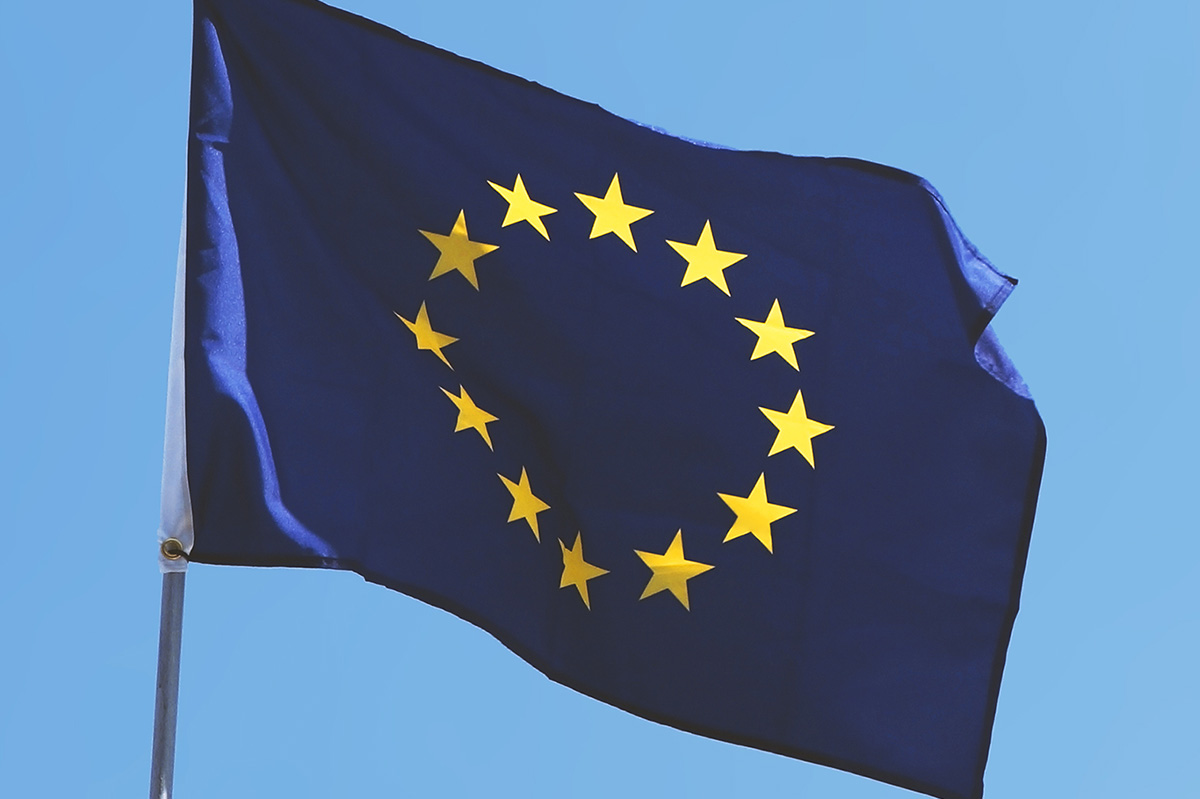
The European Commission on Wednesday said all European Union countries should ban so-called conversion therapy.
The recommendation comes weeks after the European Parliament voted in favor of prohibiting the widely discredited practice across the EU. More than 1.2 million people signed a campaign in support of the ban that ACT (Against Conversion Therapy) LGBT launched in 2024 through the EU’s European Citizens Initiative framework.
“We warmly welcome today’s commitment from the European Commission to a recommendation on ending conversion practices, an important step forward for LGBTI rights across Europe,” said ILGA Europe in a statement.
Seven EU countries — Belgium, Cyprus, France, Malta, Norway, Portugal, and Spain — have banned conversion therapy outright.
Greece in 2022 banned the practice for minors. German lawmakers in 2020 passed a law that prohibits conversion therapy for minors and for adults who have not consented to undergoing the widely discredited practice.
ILGA Europe said the European Commission’s recommendation “highlights how much work remains to be done.”
“Ending conversion practices cannot stop at symbolic commitments or fragmented national approaches,” stressed the advocacy group. “We need coordinated EU action, proper training for professionals, and survivor-centered support systems that recognize the serious harm these practices cause.”
“More than one million people supported the European Citizens’ Initiative calling for change,” added ILGA Europe. “The message is clear: conversion practices are not therapy or belief, they are a form of violence that Europe can and should end.”
European Union
European Parliament backs EU-wide conversion therapy ban
More than 1.2 million people backed campaign
The European Parliament on Wednesday voted in favor of banning so-called conversion therapy across the European Union.
ACT (Against Conversion Therapy) LGBT in 2024 launched a campaign in support of the ban through the EU’s European Citizens Initiative framework. More than 1.2 million people ultimately signed it.
The proposed ban had the support of 405 MEPs. The European Commission is expected to formally respond to it by May 18.
Seven EU countries — Belgium, Cyprus, France, Malta, Norway, Portugal, and Spain — have banned conversion therapy outright.
Greece in 2022 banned the practice for minors. German lawmakers in 2020 passed a law that prohibits conversion therapy for minors and for adults who have not consented to undergoing the widely discredited practice.

Annie Andrews denounces trans athletes after Trump targets her

On Republican Long Island, gay Democrat Chris Gallant bets on public service over politics

Report: LGBTQ exclusion costs Japanese economy billions a year

Center for Black Equity honors leaders, activists at BE. Gala

In ‘The Lost Brontë,’ a complicated lie can lead to danger

U.S. int’l trade negotiator, consultant James Bedore dies at 82

Campaign urges Virginia High School League to reverse stance on trans athletes

Trump, Netanyahu, and Putin are all war criminals

Center Arts Gallery celebrates 10 years with reception, auction

Calif. GOP gubernatorial candidate ad ‘disgusting attempt to exploit lesbian intimacy’
-

 Obituary5 days ago
U.S. int’l trade negotiator, consultant James Bedore dies at 82
-
Virginia5 days ago
Campaign urges Virginia High School League to reverse stance on trans athletes
-
Opinions5 days ago
Trump, Netanyahu, and Putin are all war criminals
-
California5 days ago
Calif. GOP gubernatorial candidate ad ‘disgusting attempt to exploit lesbian intimacy’