Opinions
In debate, Biden must stay on offense
President needs more lines like ‘I am running against a 6-year-old’
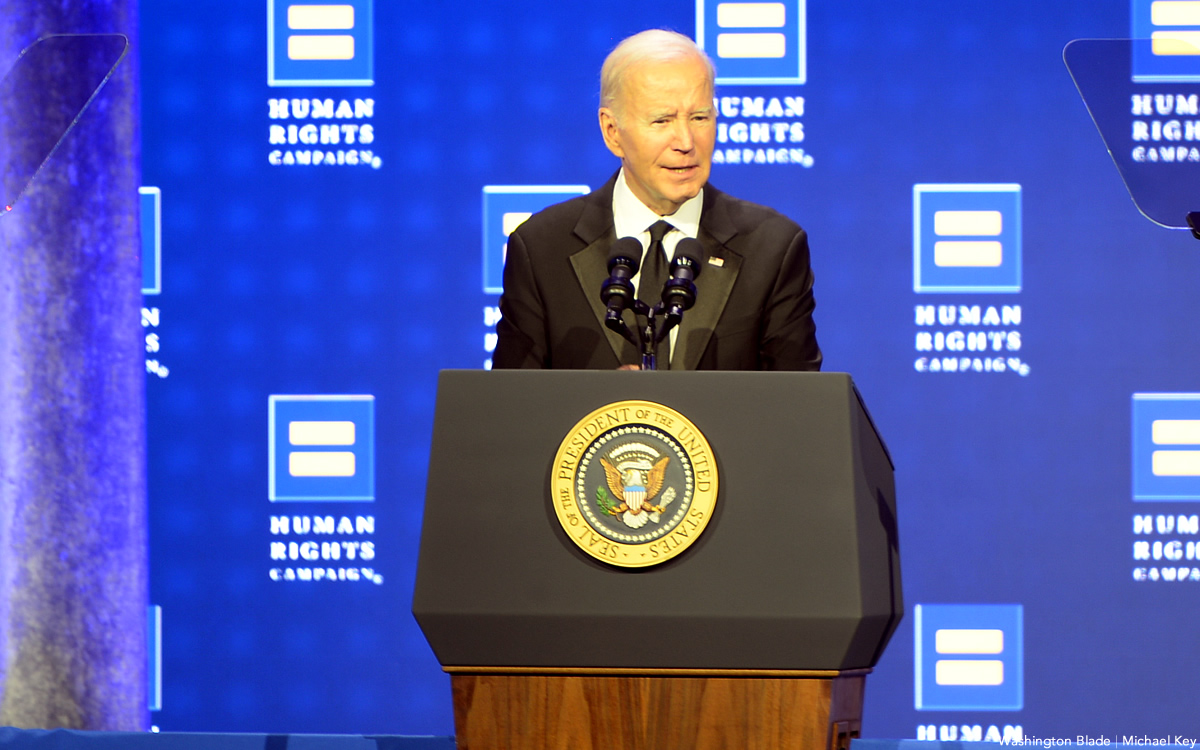
On June 27, President Joe Biden will debate the man he has called a six-year-old. A great line, and he needs a few more like that. Unless there is a clear stumble by either candidate, we know what they will say. Trump will call Biden ‘sleepy Joe,’ among other names. But the reality is, people are used to it. They are not as used to Biden returning the favor. And Biden, aside from referring to Trump as a convicted felon, needs some lines that will make headlines the next day. Something with a little humor in it, but still making a strong point.
Trump is scary. The recent column in the Washington Post on how Russ Vought, the former president’s budget director, is laying the groundwork for a broad expansion of presidential powers, is truly frightening. Now if it were me, I would be able to use my usual litany of words when referring to Trump: racist, sexist, misogynist, homophobic pig, found liable for sexual assault, and convicted felon. I may even go as far as suggesting society replace the word felon with “Trump.” People at trials could be convicted of 34 “Trumps.” But Biden can’t really use that. Maybe Biden can do something like look him in the eye and say, “You can’t really believe all the BS you keep spouting!” Then add, “The world is a complicated place, and even most six-year-olds seem to have a better understanding and grasp of it than you do.”
Then there is the focus on the very serious part of the debate. The discussion of issues including the economy, abortion, contraception, and foreign policy. Reminding people, it was Trump who killed the immigration bill in Congress, telling energy billionaires if they raise him a billion dollars, in essence bribe him, they can “drill baby drill.” The president needs to speak to African Americans, Latinos, women, and the young. He needs to tell each of those groups what will happen if the six-year-old he is running against, were to become president again.
Then he needs to look directly into the camera and say to the audience at home, “It isn’t only Trump you need to fear, it is the people he will surround himself with. His sycophants and cult, who will let him get revenge on anyone who says a word against him.” You can count on the fact it will be much worse than the last time around when he tried to stage a coup, because no decent person will work for him.
The first debate will take place 18 weeks before the Nov. 5 election. So much can change between then and the election. Remember when we talked about an October surprise? In today’s world there could be July, August, and September surprises as well. Between now and election day we will be treated to an overload of polling, most of it wrong. We will read hundreds of headlines, many of them clickbait. If you watch TV you will get to listen to hundreds of talking heads, many knowing no more than you. The difference being, they are being paid to spout off on the election, giving not facts, but their opinions.
It seems every four years we hear this could be the most important, the most crucial, election of our lifetime. Well, this time those who say it just may be telling the truth. One candidate, convicted of 34 “Trumps,” is telling you he will be a dictator, and using Hitler’s words. He has the likes of Russ Voight advising him, and openly says he will seek revenge. Nothing could be more frightening. He is telling the young he doesn’t care about climate change, and telling the poor their programs will be cut because he will cut taxes for the rich.
He calls our soldiers, those who sacrificed their lives and died in wars, “suckers and losers.” He called John McCain “a war hero because he was captured,” saying, “I like people who weren’t captured.” This frightening, sick man, with the world view of a warped six-year-old, will lead the United States if we aren’t willing to stand up to him, and his MAGA cult. Yes, I am afraid! And you should be too! If you are a woman, a minority, a member of the LGBTQ community, or just poor, be scared, be very afraid! If Trump and his cult win, you will lose what little you think you now have.
Peter Rosenstein is a longtime LGBTQ rights and Democratic Party activist. He writes regularly for the Blade.


Ghana
Intersex lives, constitutional freedom, and the dangerous future of Ghana’s Human Sexual Rights and Family Values Bill
Lawmakers continue to consider draconian measure

There is a dangerous silence surrounding intersex lives in Ghana — a silence shaped by fear, misinformation, cultural misunderstanding, and institutional neglect. Today, amid discussions around the possible passage of the Human Sexual Rights and Family Values Bill, 2025, that silence risks becoming law, reinforcing exclusion and deepening the marginalization of already invisible lives.
Much of the national debate surrounding the bill has focused on LGBTQ+ identities. Yet buried within it are implications for intersex persons that many Ghanaians do not fully understand because intersex realities remain largely invisible.
Intersex persons are born with natural variations in chromosomes, hormones, reproductive anatomy, and/or genital characteristics that do not fit typical definitions of male or female bodies. Intersex is not a sexual orientation or gender identity. It is a biological reality. Ghana’s Commission on Human Rights and Administrative Justice (CHRAJ) has clearly acknowledged this distinction.
Despite this distinction, the bill mistakenly collapses intersex realities into a legal framework linked to LGBTQ+ criminalization.
Although the bill contains only limited references to intersex persons, under certain medical exceptions, these references do not amount to recognition or protection. Instead, they frame intersex bodies as abnormalities requiring regulation, correction, and institutional management. This approach is inconsistent not only with Ghana’s constitutional guarantees of dignity, equality, privacy, and liberty, but also with emerging African and international human rights standards. The African Commission on Human and Peoples’ Rights Resolution on the Promotion and Protection of the Rights of Intersex Persons in Africa – ACHPR/Res.552 (LXXIV) 2023 affirms protections relating to bodily integrity, dignity, freedom from discrimination, and against harmful medical practices. Additionally, the United Nations has repeatedly condemned medically unnecessary and non-consensual interventions on intersex children. Rather than affirming the humanity and autonomy of intersex persons, the bill risks legitimizing systems of surveillance, coercion, violence, and institutional erasure.
This is not protection.
It is managed erasure.
A child born intersex in Ghana already enters a society shaped by secrecy and stigma. Families are often pressured to hide intersex children or seek “correction” to make their bodies conform to social expectations.
The bill risks intensifying this pressure.
Clause 17 creates space for “approved service providers” to support interventions relating to intersex persons, yet offers little protection around informed consent, bodily autonomy, confidentiality, or coercive treatment. Under the language of “correction” or “support,” harmful interventions may become normalized.
The intersex community has documented painful lived experiences of intersex Ghanaians that reveal the devastating consequences of stigma and invisibility.
One heartbreaking case involved intersex twins born in Ghana’s Eastern Region in 1993, who were repeatedly forced to move from village to village because of rejection and ridicule. After losing their father, their main source of protection and support, they became even more vulnerable and reportedly experienced severe emotional distress, including suicidal thoughts linked to years of stigma and exclusion. This is what invisibility looks like in practice.
Another painful example is the story of Ativor Holali, whose lived experience exposed the cruel realities intersex persons face in sports and public life. Ativor Holali endured invasive scrutiny, public humiliation, and social suspicion because her body did not conform to rigid expectations of femininity. Rather than being protected as a Ghanaian athlete deserving dignity and privacy, she became the subject of speculation, gossip, and institutional discomfort.
Her experience reflects a broader social crisis: when society insists that every body must fit a narrow binary definition, intersex people are forced to defend their humanity in spaces where dignity should already be guaranteed.
Intersex Persons Society Of Ghana (IPSOG)’s Ŋusẽdodo research further revealed that approximately 70 percent of intersex respondents reported depression, anxiety, trauma, or severe emotional distress linked to medical mistreatment, family rejection, bullying, and social exclusion.
The bill risks transforming these existing prejudices into institutional policy. Several provisions risk deepening surveillance, restricting advocacy, weakening confidentiality, and discouraging public education around intersex realities. Intersex-led organizations providing healthcare guidance, legal referrals, psychosocial support, and community services may face serious challenges.
This places IPSOG and other intersex-led organizations in Ghana at serious risk.
For many intersex Ghanaians, these spaces are not political luxuries.
They are survival mechanisms.
Governments derive legitimacy by protecting the natural rights of all persons, including dignity, liberty, bodily autonomy, and freedom from arbitrary interference. The bill raises concerns because it risks weakening these protections for intersex persons through surveillance, coercive interventions, and restrictions on advocacy.
Ghana’s Constitution declares that “the dignity of all persons shall be inviolable.” Articles 15, 17, 18, and 21 specifically protect dignity, equality, privacy, expression, and freedom of association. These protections should apply equally to intersex persons.
Intersex persons are not threats to Ghanaian culture.
Intersex children are not moral dangers.
Intersex bodies are not political weapons.
They are human beings deserving dignity, healthcare, safety, and constitutional protection.
The true measure of a democracy is how it protects those most vulnerable to exclusion. At this moment, Ghana faces a choice: deepen fear and silence, or uphold dignity, bodily autonomy, and constitutional freedom for intersex persons.
History will remember the choice we make.
Fafali Delight Akortsu is the founder and president of the Intersex Persons Society of Ghana (IPSOG).
Opinions
A case of retaliation, not stalking
Disbelief in how Capital Pride Alliance continues to portray me
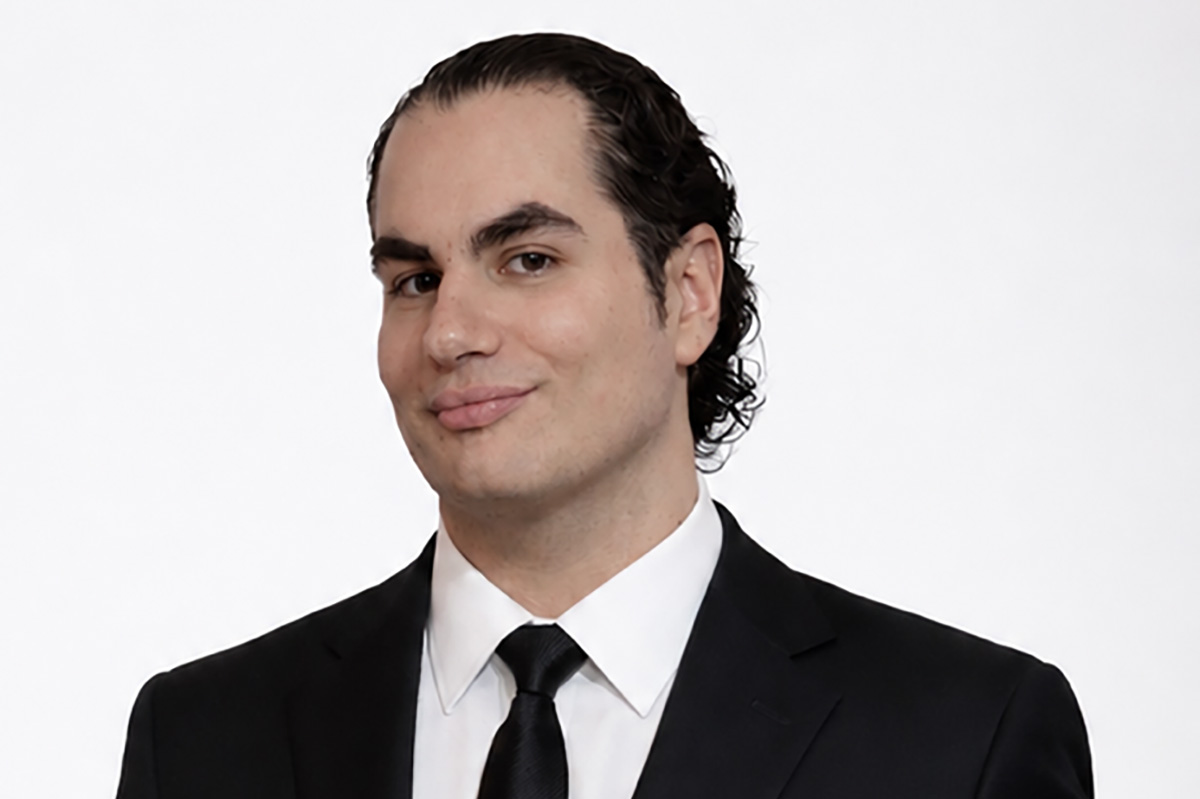
You don’t know me, but you have heard of me. What you’ve heard are rumors, stories, and narratives repeated by others. People often prefer labels and gossip over facts because it is easier than asking questions. But truth does not stay buried forever; it eventually comes forward.
I am grateful to the Washington Blade and Lou Chibbaro Jr., who has written multiple articles about this case. But I want to be clear: This matter is about retaliation, not stalking. Since I raised concerns during World Pride month, several individuals connected to Capital Pride Alliance have resigned or stepped away. One of them was Ashley Smith. Whether he resigned or left under pressure, there has been no clear explanation provided.
What matters to me is that I chose to speak up when I believed I was treated unfairly. Many people stay silent out of fear of backlash or social consequences. I chose not to remain silent. I am reserving many details for trial, where facts will be examined properly. I am confident in representing myself.
Under D.C. law, an Anti-Stalking Order requires two or more qualifying incidents, with at least one within 90 days before filing. That timing requirement is important. CPA intends to present numerous individuals, but I will address how those claims fit the legal standard in court. I recognize only a few of the individuals mentioned, and there are inconsistencies I will respond to in the proper setting.
I do not accept the label often used online to describe me. From the beginning, my position has been consistent: The truth will be established through the legal process.
My concerns began during World Pride when I confided in someone I trusted, June Crenshaw. I believed I was speaking to someone supportive. My experience since then has been one of feeling misled, which I consider a betrayal.
This case is retaliation, not stalking.
Crenshaw wrote an opinion piece published by the Blade that reflected advocacy more than neutral reporting. It suggested broader social implications and directly referenced me. It also framed court rulings in a way that implied risk, even though the order was limited and modified.
Opinion writing can influence public perception while legal matters are ongoing.
The article also questioned my visibility and framed it in a negative way, which feels discouraging to my ability to respond publicly.
The article suggested the court failed by modifying the order and allowing access to community spaces, implying danger simply because the outcome was not fully aligned with CPA’s position. I believe the court acted within its authority.
At this point, it feels as though CPA would prefer my exclusion from their spaces. That is difficult, given that CPA promotes pride, inclusion, and visibility in Washington, D.C.
I continue to believe that accountability and clarification will come.
Truth is established through evidence, not repetition. I will continue addressing these matters through the legal process rather than public speculation. I also want to emphasize that my intention has never been to escalate conflict outside of proper legal channels, but rather to ensure that my concerns are documented and addressed in a structured setting. I understand that public discussion can often blur important distinctions, which is why I am focusing on the court process itself. I am prepared to respond to all claims with evidence and clarity when the time comes, and I expect that process to provide a full and fair opportunity for the record to be examined. My position remains consistent throughout, and I will continue to rely on facts rather than speculation as this matter proceeds forward. I also recognize that misunderstandings can arise when information is shared in fragments, as the legal proceedings move forward in a careful and orderly manner based on evidence in court. I will let the facts speak for themselves in court proceedings.
Darren Pasha is a D.C.-based LGBTQ advocate.
Commentary
IDAHOBiT a reminder we all must stand up against transphobia
Trans rights remain under attack in U.S., around the world

May 17 is the International Day Against Homophobia, Transphobia, and Biphobia.
In 2026, transphobia is the biggest issue out there: all the stereotypes that were used against the LGBTQ community in general in the past are now used to attack the rights of transgender people and to create a moral panic against them. As a person who understood that they were not a girl — despite being assigned female at birth — since they were four, and who in their 30s had to wait in line for a gender clinic, I am obviously worried about this situation. Trans people continue to be seen less as people and more as part of an “agenda,” and there is a greater risk that the international trend of attacks on trans rights is just a first step in a broader attack on the LGBTQ community, and that soon bi, gay, and lesbian people will lose part of their hard-won rights to have the same protections and opportunities as heterosexual people.
When, in U.S. states such as Kansas, trans people face escalating legal and political restrictions on recognition that affect their everyday lives — for example, requiring their driving licenses to match the gender assigned at birth even after transition — while trans people in the U.S. are banned from military service and federal funding is stopped for gender-affirming care for trans youth, it is obvious to everyone that the problem is real. It is also global.
For example, there have been significant attacks on trans rights in the UK in recent years, especially against trans youth, many of whom have been denied gender-affirming care. The day when I finally found the energy to write this story was the day of the local British elections, when surprisingly many seats in city and town councils were won by the queerphobic populist Reform Party, creating some new Reform-dominated councils. Reform Party leader Nigel Farage has praised U.S. President Donald Trump and expressed admiration for Russian dictator Vladimir Putin — both of whom are known for endangering the lives of their trans citizens and rejecting trans identity as something that should be accepted.
So, who can challenge it? The general public often takes cues from public figures. Celebrities play a significant role in shaping public opinion and framing how different social issues are understood.
We need trans celebrities to speak up against transphobia when “anti-trans” celebrities like JK Rowling oppose our rights. It seemed that when conservatives around the globe stood up together to support each other, the trans community should unite, and trans celebrities should protect their trans siblings, while the broader LGB community should recognize the threat and unite around trans rights.
But not everything is so simple. Surprisingly, at a time of the greatest attack on trans rights in this century, many lesbian, gay, bi and even trans celebrities and influencers openly support transphobic policies and ideologies.
One of the clearest examples is Caitlyn Marie Jenner, a retired Olympic gold medal–winning decathlete and public figure known for her participation in the reality show “Keeping Up with the Kardashians.” She is one of the most famous trans people in the world.
From 2015 to 2016, she starred in the reality television series “I Am Cait”on E!, which focused on her gender transition and on telling a story to inspire the younger generation of trans people. In the first episode, Jenner also visited the mother of Kyler Prescott, a 14-year-old trans child who died by suicide earlier that year, and spoke openly about using her privilege to fight for awareness, equality, and dignity for trans people. The idea of supporting trans youth was one of the core themes of her TV series.
That was then.
Jenner’s perspective on trans rights became more and more transphobic. For example, in 2021 she opposed trans girls participating in girls’ school sports. In 2023, she launched a PAC campaign attacking trans youth rights. She also expressed support for Donald Trump and said about herself that she would never be a “real woman.”
Another famous example is transmasculine sex educator and activist Buck Angel, a former adult film actor. He was seen as a modern and progressive person in the 2000s and early 2010s, praised for increasing visibility for trans men through sex education, documentaries, public speaking, and media work. But later he started calling himself “transsexual” rather than “transgender,” following a more transphobic and rigid view of trans identity, and openly showed support for Trump and MAGA.
Of course, there are plenty of trans celebrities who continue to fight for trans rights — the most obvious example is Lana and Lilly Wachowski, notable film directors who gave us “The Matrix” films and the “Sense8” TV series. But the Wachowski sisters were known for being politically left-wing and progressive even before their transition. They are part of a progressive movement, not just a “famous trans person” like Jenner was.
So, why is this happening? Why have more mainstream and conservative trans celebrities, as well as some LGBTQ groups, turned away from trans rights? And what do we need to do?
One of the reasons is fear.
Popular and privileged people — whether they are socialites, actors or leaders of big organizations — are not used to being outcasts, and so they follow dominant trends. For them, the fear of not fitting in, being rejected by the audience and losing their position in society became bigger than their sense of justice. This is probably one of the reasons why some LGBTQ groups, such as the Log Cabin Republicans in the U.S., became more transphobic, or why the LGB Alliance in the UK became more popular.
Another reason is the polarization of society.
Some LGBTQ activists may hate me for saying this, but it is partly our fault. Mainstream trans communities sometimes make trans identity look like a “trend” or part of an ideology. The media — especially tabloids — are even more to blame for this stereotype than the trans community itself. When uninformed people hear about trans people today, many of them imagine left-wing, maybe even socialist, non-religious young supporters of Palestine who are good at understanding ecological issues and worried about global warming. Of course, many trans people are like that. But many are not. And those who are not often feel excluded and become more prone to public self-hatred.
It created a cycle in which people who did not feel part of the community started searching for an alternative that rejected them for being trans and encouraged them to accept transphobic rhetoric, betraying themselves and their trans siblings. This led to greater polarization and hatred against conservative trans people, pushing them even further away.
The International Day Against Homophobia, Transphobia, and Biphobia needs to be a day when we stand up against all transphobia, including the kind expressed by trans people, while at the same time supporting all trans people, no matter how uncomfortable their views may be for us.

Iran war causes condom shortage in India

U.S. attorney nominee confirmed despite anti-LGBTQ history, no trial experience

Vt. lawmaker equates transgender identity with bestiality

Gay Men’s Chorus celebrates 45 years at annual gala

BREAKING NEWS: Barney Frank dies at 86

Disillusioned about democracy? Think of it as a community garden

Honey, have we been priced out of gay paradise?

IDAHOBiT a reminder we all must stand up against transphobia

PHOTOS: Blade Summer Kickoff Party