Virginia
Rainbow crosswalks, street murals installed in Alexandria, Arlington
Street painting received support from government officials

With approval by local government officials, rainbow-colored crosswalks were installed this month on a street in Virginia’s Old Town Alexandria and what officials are calling rainbow street murals were painted on a street in the Crystal City section of nearby Arlington, Va., in time for this year’s Pride celebrations.
Kirk McPike, a gay member of the Alexandria City Council, said the Council gave unanimous approval for the installation of two bright rainbow-colored crosswalks at the intersection of King and Royal streets at Old Town’s Market Square “right there in front of City Hall.”
McPike said he first proposed the rainbow crossings in June 2023, and with support from the Council, the city’s Human Rights Commission brought the proposal to him as the gay member of the Council, and he introduced it. He said the Council approved it last November. According to McPike, the crosswalks were officially dedicated with a ribbon cutting ceremony on June 1 during Alexandria’s annual Pride festival in Old Town.
“And this year, we had one of our Pride wrapped Dash buses drive through the ribbon to snap the ribbon and officially open the new Pride crosswalks,” he told the Washington Blade.
In Arlington’s Crystal City neighborhood, rainbow stripes were painted on June 12 and 13 on South 23rd Street at the intersections of Eads Street and Fern Street. The Fern Street intersection is located steps away from Freddie’s Beach Bar and Restaurant, which is Arlington’s only gay bar. Freddie Lutz, owner of Freddie’s, was among the community leaders who advocated for the rainbow crosswalks.
Kellen MacBeth, president of the LGBTQ group Equality Arlington, said the Arlington Department of Environmental Services, which oversees street and roadway issues, gave approval of the installation of the two rainbow stripes as “street murals” rather than crosswalks, even though they are located next to or parallel to the crosswalks. He said for reasons he is unsure of, the Environmental Services Department didn’t want the crosswalks themselves to be painted with rainbow stripes.
“If you compare what Alexandria did and what Arlington did, Alexandria has the full crosswalk painted in rainbow,” he said. “Whereas Arlington did the rainbow stripes on either side of the crosswalk,” MacBeth told the Washington Blade. “For whatever reason, the county said they weren’t able to do the full rainbow crosswalk this year. And we’re hoping to have the full rainbow crosswalks for next year.”
Kathryn O’Brien, a spokesperson for the Environmental Services Department, told the Blade that painting crosswalks in rainbow strips “is not allowable” under the Manual on Uniform Traffic Control Devices for Streets and Highways (MUTCD), which she said defines national standards for traffic signs, road markings, and other road related issues that Arlington adheres to.
MacBeth praised the National Landing Business Improvement District, an organization that promotes community-based businesses in the area known as National Landing, which includes the Pentagon City, Crystal City and Potomac Yard neighborhoods, with playing a lead role in advocating for the rainbow street mural project, among other things, by paying for the street installations.
“Located at key intersections along S. Fern Street and S. Eads Street, these installations are the first of their kind in Arlington, designed to show solidarity and support for the LGBTQIA+ community,” the organization, known as National Landing BID, said in a statement. “Beyond their aesthetic appeal, they foster a sense of community pride and inclusivity, transforming National Landing into a vibrant and welcoming neighborhood,” the statement says. “Their presence encourages dialogue, celebration, and reflection, making them integral to the cultural fabric of our community.”
The installation of the rainbow crosswalks in Alexandria and the rainbow street murals in Arlington came about seven years after D.C. first installed two full rainbow-colored crosswalks on 17th Street, N.W. near Dupont Circle in 2017 near the gay bar JR.’s and the LGBTQ supportive restaurant Annie’s Paramount Steakhouse. Additional rainbow crosswalks were installed in that section of 17th Street in subsequent years.



Maryland
Va., Md., advocates brace for next fight after Supreme Court sports ruling
Neither state has statewide ban on trans student athletes
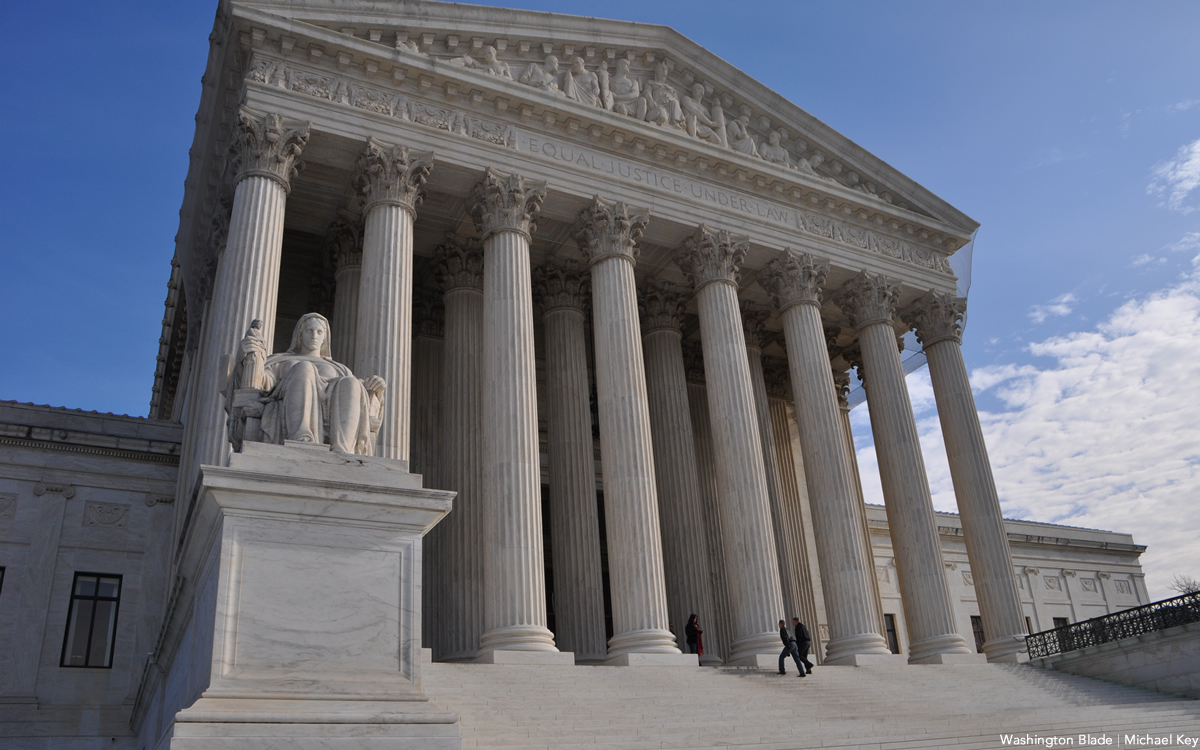
On June 30, the U.S. Supreme Court cleared the way for states to enforce laws barring transgender students from participating on school sports teams consistent with their gender identity, a decision LGBTQ advocates say could encourage additional restrictions across the country.
While neither Maryland nor Virginia currently has a statewide ban on trans student athletes, advocates say the decision could reshape future legislative battles and school policies throughout the region.
Directly following the case, attorneys for trans student athletes spoke out about the case and how detrimental it could be to students.
“This ruling is deeply harmful for transgender women and girls who only asked for the ability to participate in sports with their peers,” said Sasha Buchert, senior attorney and director of the Nonbinary and Transgender Rights Project for Lambda Legal, in a press release from the American Civil Liberties Union.
The next step is figuring out how states will move forward, specifically in Maryland and Virginia.
As of right now, neither state has bans on trans athletes in schools. The new Supreme Court decision also does not require states to enact bans, only that bans are allowed if states or school districts choose to enforce them.
According to the ACLU, 27 states have banned trans youth from participating in school sports since 2020. Most of these states also require sex testing, which the organization says is invasive for all female athletes.
Equality Virginia Executive Director Narissa Rahaman said that while she has heard a lot of frustration following the decision, people are ready to take action.
“Families, parents and youth have lived through disappointing changes to the Virginia Department of Education’s model policies for the treatment of transgender students, and the Virginia High School League’s decades-old policy that allowed transgender students an opportunity to play sports with their friends,” Rahaman said in a statement to the Washington Blade.
She believes they are not ready to give up this fight quite yet.
As of now, trans and nonbinary students are protected under Virginia law, and Rahaman wants that to continue.
“This ruling will likely embolden right-wing members of the General Assembly to pursue trans athlete bans, and we will continue to defeat every bill like we have the past five legislative sessions. Now is our time to be proactive,” Rahaman said.
She also calls upon Democratic Gov. Abigail Spanberger to defend trans youth in Virginia from what she describes as bullies and to continue to stand up to federal attacks on the trans community in general.
For trans students, Rahaman wants to ensure that they continue to know that they belong and have a place in school sports.
“To the transgender young people watching this decision unfold: you belong on your team, in your school, in your community, and here in Virginia. This ruling does not change that. A single Supreme Court decision cannot define your worth or your future,” Rahaman said.
For people who may be outside the community but want to help, she encourages them to speak with trans and nonbinary people in their community, befriend the families of youth to show their support, and continue to speak up on these issues when needed.
According to ACLU of Virginia, high schooler Eliza Munshi was told she could not compete on the girls’ track team because she was trans. To prove a point, she decided to compete with the boys.
She had previously competed on the girls’s track team before her Virginia school decided to enforce the ban demanded by President Donald Trump. With pink hair and pink makeup, she decided to continue her love for the sport alongside boys. According to Munshi, her entire community rallied for her.
“I did it to prove a point. I knew I could do it. I knew it wouldn’t phase me. My gender itself and that label has been the least important part of my transition: I want to look how I want to look. I want to dress how I want to dress. If you don’t like that, then that’s not my business,” Munshi said.
DOE has launched Title IX probe against Md. school districts
In the weeks leading up to the ruling, multiple Maryland school districts were included in a Title IX probe stating that not enforcing sex-based protections guaranteed by federal law. Currently, there have been no updates on the lawsuit or the district’s decisions.
According to the U.S. Department of Education, the federal probe is based on parent complaints that the school districts were violating a specific Trump-Vance administration addition to Title IX, stating it aligned the sex-based protections “with biological reality, not ideological fantasy.”
According to FreeState Justice, an LGBTQ advocacy group in Maryland, while this is a disappointing ruling to see, they will continue to fight for trans student-athletes in Maryland and want trans youth to know that they belong.
“Every young person deserves the opportunity to participate in school and community life without being singled out because of who they are. These decisions send a harmful message to transgender youth that they are somehow less deserving of that opportunity,” said Phillip Westry, the group’s executive director.
Westry wants to make sure the community knows that their commitment to the organization has not changed and will continue to provide the same legal services they have prior and to advance policy solutions, to ensure “every LGBTQ+ Marylander can live with dignity, safety, and equal opportunity.”
Another issue brought up by trans advocates is the issue of testing women to determine whether they are biologically female or not.
According to Human Rights Watch, as of 2023, World Athletics required cis women with increased testosterone levels to undergo medical procedures to have it reduced to avoid advantages. Other forms of “sex verification” may include genetic testing, screenings of an athlete’s anatomy or chromosomes.
However, this can become detrimental because not all women have ovaries, a uterus, or XX chromosomes, meaning cisgender women could potentially be included in these bans, depending on how the specific state plans to enforce them.
Virginia
Gay teacher, LGBTQ-supportive parent win $1 million in Fairfax County defamation lawsuits
Separate claims allege teacher and parent falsely called ‘notorious child sex perverts’

Juries in two separate civil trials in Fairfax County, Va., last month awarded a gay teacher and an LGBTQ-supportive parent a combined total of just over $1 million in damages from a conservative group and its leader accused in their lawsuits of falsely and maliciously linking the two to a “child abduction ring” and other illegal actions involving children.
The teacher, Robert Rigby Jr., and the parent, Vanessa Hall, have been active members for many years of Fairfax County Public Schools Pride, an organization of teachers, school administrators and parents that advocates for LGBTQ-supportive school policies.
Their respective lawsuits were filed last year against what they describe as a Republican-supportive political action committee or PAC called the Virginia Project and its founder and chairperson, David Gordon. The lawsuits say Gordon “is responsible for curating and managing TVP’s social media content, including its posts and comments on Twitter,” which has renamed itself as X.
“Beginning in early 2025, defendants amplified an ongoing harassment and intimidation campaign they previously launched against Mr. Rigby by and through TVP’s Twitter handle, @ProjectVirginia,” Rigby’s lawsuit states.
It adds that on Jan. 3, 2025, “defendants retweeted a post by Bill Ackman stating that ‘hundreds of thousands of young British girls have been gang raped by members of principally one ethnic group.’” According to the lawsuit, “preceding” that post, the defendants tweeted, “in NoVA they call it Rigbyhalling.”
In response to a question that someone else posted asking what was “Rigbyhalling,” the defendants responded that it corresponded to “a pair of notorious child sex perverts with free run of FCPS (Fairfax County Public Schools) that for some reason aren’t yet in prison,” Rigby’s lawsuit states. The lawsuit states that the defendants, referring to the Virginia Project PAC and Gordon, used the word “pair” to refer to Rigby and Hall.”
It says the defendants tweeted that the FCPS Pride group, which Rigby co-founded, is a “grooming gang” and included a photo of Rigby in that post. In a Feb. 6, 2025, tweet, according to the lawsuit, the defendants stated, “[w]e need to talk about this child abduction scheme that we caught running out of Fairfax County Public Schools.”
Hall’s lawsuit also mentions the “Rigbyhalling” allegation. In addition, it states that Hall was subjected to “numerous false and defamatory statements,” among other things claiming she is an “unemployed crazy person” who has been given access to children “to ask them about sex.” Her lawsuit quotes one of the Virginia Project PAC’s postings as saying her actions were an “obscene scandal that for some reason is allowed to continue.”
It adds, “defendants’ false and defamatory statements were published with actual malice, as defendants knew the statements were false and acted with reckless disregard for the truth.”
Hall’s lawsuit describes her as a longtime community, school and church volunteer who has provided public input at Fairfax County School Board meetings “to support the safety, education, and civil rights of public school students, staff, and their families, primarily focusing on LGBTQIA+ and disability rights.”
The jury trials for both cases were held in the Fairfax County Circuit Court.
Jason Zellman, the Virginia attorney who represented both Rigby and Hall, said the trial for Rigby’s case took place June 8 through June 10. He said the trial for Hall’s case was held June 15 through June 17.
D. Hayden Fisher, the attorney listed in court records as representing the Virginia Project and Gordon, did not respond to a request from the Washington Blade for comment on the jury verdicts against his client.
In his initial “answer” to the Rigby lawsuit filed in court on July 23, 2025, Fisher’s court filing says his client denies the allegations that “it engages in intimidation, publishes disinformation, or engages in any of the other tactics and untoward conduct alleged herein.” It says that any statements made by the defendants that express opinions are protected under the First Amendment as free speech.
NBC Washington reported that the attorney for Gordon and the Virginia Project PAC sent it a statement saying his client will appeal the two jury verdicts, which he said were “improper as a matter of law.” Without identifying the lawyer by name, NBC Washington said the lawyer’s statement added, “The verdicts will be tossed, and a new trial ordered.”
Zellman, the attorney representing Rigby and Hall, told the Blade he believes both cases are strong and would prevail if the defendants appeal. He said any appeal would likely argue that the Twitter posts about Rigby and Hall were opinions protected by free speech.
“I don’t think that’s going to be a very good legal argument for them,” he said. “Maybe there could have been some qualifying language like in my opinion or ‘I think.’” Zelman said. “There was no language like that with these statements. It was all very declarative, actual assertions,” he added. “So, I think we’re in good shape.”
The juries awarded Rigby $350,000 in compensation for damages from the Virginia Project and Gordon and awarded $750,000 for Hall. It couldn’t immediately be determined if Gordon and his PAC have the financial resources to pay that money.
Rigby said he retired as a teacher after more than 20 years of teaching in 2022 but has since returned to continue teaching part time.
“I can tell you if I don’t see any money out of this, that’s ok,” he told the Blade. “Because I stood up for myself. I stood up for teachers who get accused of things all the time,” he said. “I stood up for people in the LGBTQ community and for parents who have terrible things said about them – I stood up for them.”
Virginia
Gay 1920s-era Hollywood star to be honored in Staunton, Va.
Billy Haines became acclaimed designer after anti-gay policies ended his acting career
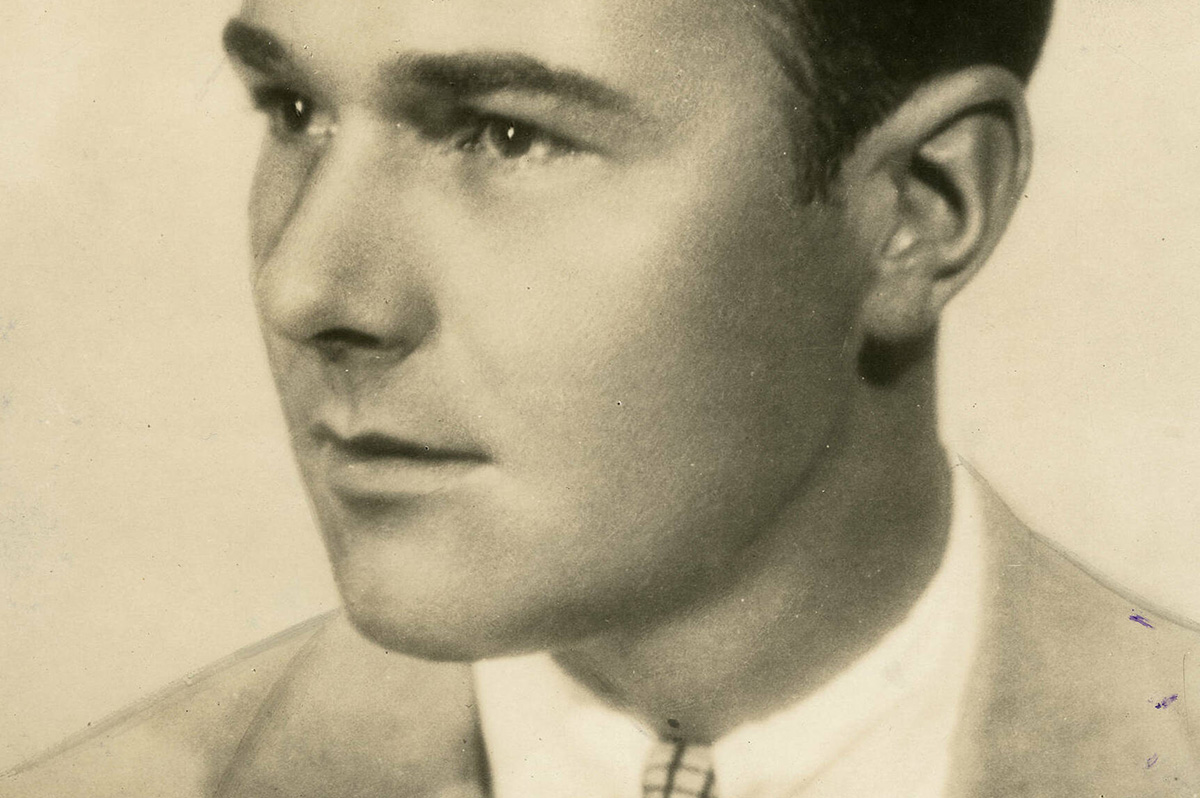
A project is underway in Staunton, Va., to honor William ‘Billy’ Haines, who was born and raised in Staunton before becoming an out gay 1920s and early 1930s-era Hollywood movie star whose acting career ended around 1934 when he refused demands that he conceal his sexual orientation and end his relationship with his male partner.
Haines left the movie business around that time to start what became a highly successful interior design and furniture business in Los Angeles that he led until his death in 1972 at age 72, and which remains in business today, according to the Arcadia Project, a Staunton-based nonprofit initiative.
In a statement released last month, Arcadia Project announced it is working to revitalize a long-vacant movie theater in downtown Staunton that it plans to rename after Haines. It says a fundraising campaign is under way to support efforts to reopen the theater and the larger building in which it is housed as a “dynamic mixed-use cultural center.”
The statement notes that Haines left Staunton at age 14 and resided in Hopewell, Va., and Greenwich Village in New York City until 1922, when he was “discovered” by a talent scout and sent to Hollywood.
“Between 1922 and 1934, Haines appeared in 54 movies during his meteoric and highly successful career,” the Arcadia Project statement continues, noting he transitioned from silent movies to talkies and was fully open about being gay. “But when Hollywood’s moral crackdown of the 1930s demanded that he end his relationship with his longtime partner Jimmie Shields, Haines refused,” it says.
“For LGBTQ people – then and now – Haines’s choice resonates deeply. Rather than deny who he was, he reinvented himself as an interior designer to the stars,” according to the statement.
It says he helped invent the so-called Hollywood Regency style home and designed homes for Hollywood legends such as Joan Crawford, Gloria Swanson, Carole Lombard, George Cukor, and Jack Warner as well as for political figures like Ronald Reagan when he was governor of California.
“As there is no monument, marker or public recognition for Haines in his hometown of Staunton, Va., Arcadia Project, in collaboration with the LGBTQ+ community in Staunton seeks to commemorate him inside a new cultural center,” the statement says.
It quotes Arcadia Project Executive Director Pamela Mason Wagner as saying, “Naming the movie theater in Haines’ honor is more than an act of historical recognition – it is a powerful statement about visibility, belonging, and whose stories are valued in our community.”
The statement says project leaders hope to open the cultural center in early 2027, with a fundraising campaign seeking to raise $250,000 to renovate the theater.
“If the full goal is not reached, a smaller space within the building will be named for Haines, scaled to the amount of funds raised,” it says. “We truly hope friends and admirers of Billy Haines everywhere will want to participate.”
Donations for the project can be made through this site: www.thearcadiaproject.org

Authorities investigate officer-involved shooting outside Asheville gay bar

Popular Mount Vernon gay bar Leon’s to temporarily close after owner’s death

30 years on, ‘The Birdcage’ remains a landmark

Comings & Goings

Whitman-Walker to host legal services workshop

Democrats are trying to disqualify trans candidates. Here’s how

Mexico’s first openly gay mayor killed

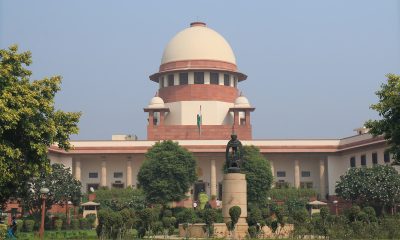
Expected India Supreme Court ruling could shape future LGBTQ rights cases

Celebrate Pride in Rehoboth Beach this weekend

Christa Tichy hopes to preserve LGBTQ representation in Md. House of Delegates
-

 National5 days ago
Democrats are trying to disqualify trans candidates. Here’s how
-
Mexico5 days ago
Mexico’s first openly gay mayor killed
-
India4 days ago
Expected India Supreme Court ruling could shape future LGBTQ rights cases
-
Rehoboth Beach4 days ago
Celebrate Pride in Rehoboth Beach this weekend