District of Columbia
D.C. Drag Awards roar with queer power, politics, and panther prints
The annual drag celebration spotlights LGBTQ activism, community, and fierce performances
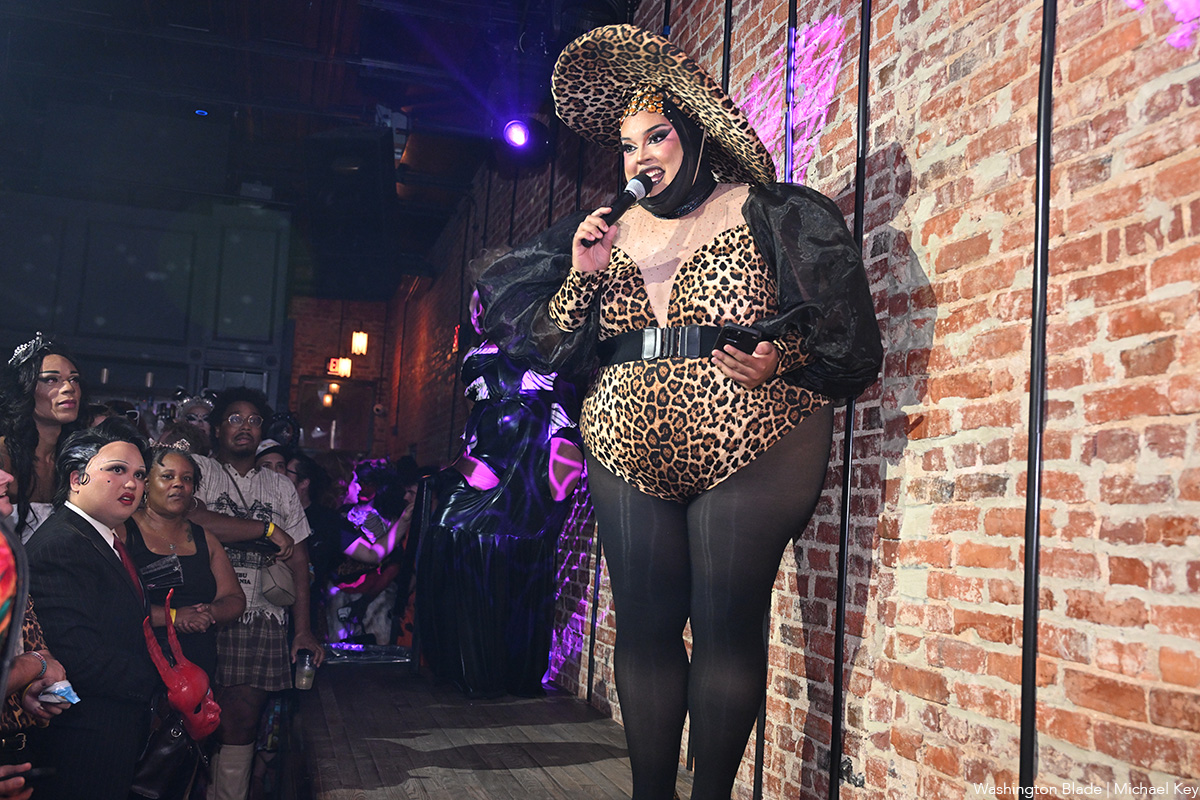
The third annual D.C. Drag Awards were held Sunday at Trade Bar in Washington’s Logan Circle neighborhood. The night was full of lewks, performances, and unapologetic queer existence.
This year’s hosts — Cake Pop!, Crystal Edge, and Evry Pleasure — all wore animal-themed outfits to match this year’s theme, “Welcome To The Jungle; Show Us Your Wild Side.” LGBTQ people from all over the DMV showed up in their beastly best attire, with animal prints being the most consistent motif.
This year, there were 26 categories ranging from best hair, DJ, party — if it had anything to do with D.C.’s drag culture and queer nightlife, there seemed to be an award for it.
The vibe for the night was mostly lighthearted, with lots of love for the whole LGBTQ community being shared loud and proud.
“I feel amazing,” Frieda Poussáy told the Blade before winning Comedy Performer of the Year. “I feel like I look phenomenal tonight… a cheetah print gown with roses on it, which I got and I stoned the absolute shit out of. It took me about seven and a half days to do and we finally got her looking right.”
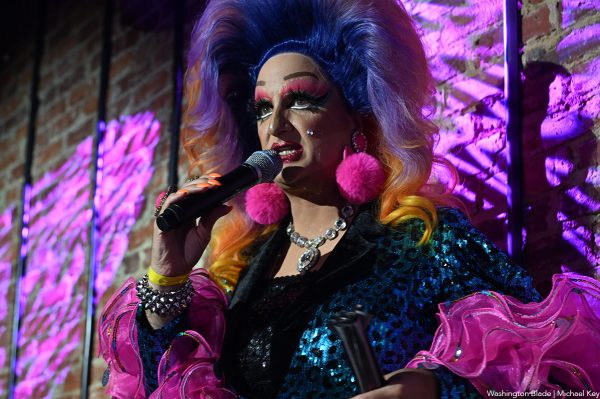
Tara Hoot, who has recently made national headlines for attending the opening night of ‘Les Misérables’ at the Kennedy Center in full drag while Trump was in the audience and led protests against Trump’s continued crusade on marginalized communities, won two awards: Community Changemaker and Social Media Star.
“Thanks for watching a 50-year-old man in a wig who started doing drag during the pandemic,” Tara Hoot said while accepting her award. “I know it’s not everybody’s cup of tea, but listen — you do what you can to make a little mark on the social media world. So thanks for following me. You’re all gorgeous. I love you.”
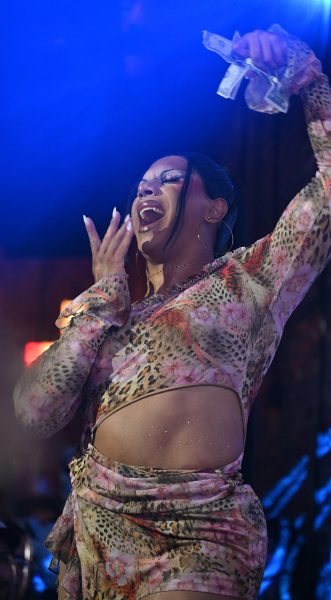
Drag queen Citrine spoke to the Blade after the show, saying that for her, drag is a strong instrument in being authentically herself.
“Drag is a powerful tool, because it allows you to express yourself in a way that you wouldn’t otherwise allow yourself to be,” she said. “It gives you the courage to say, ‘I’m here, I’m me, and I’m going to do whatever the fuck I want to do unapologetically.’ So use that tool to be yourself, even if you’re not going to put the makeup on. Just do it. If you love something, if you want to be something, do it. Be that person.”
The full list of nominees and winners is below:
Breakthrough Artist:
Danika Volkova
Grey Glowing
Makayla Starr
Manny Quinn
Sapphica Star- Winner
DJ of the Year:
Alex Love- Winner
Cake Pop!
DJ Drom
Samson
Wess the DJ
Scene Queen:
Bombshell Monroe
Delight
Girliepop
Rigatoni
Venetian- Winner
Best Comedy Performer:
Ani So Exotic
Dabatha Christie
Frieda Poussáy- Winner
Jaxknife Complex
Olive Ghardon
Community Changemaker:
Blaq Dinamyte
Brooke N. Hymen
Destiny B. Childs
Lord Henry
Tara Hoot- Winner
Best Dancing Performer:
Druex Sidora- Winner
Shelita Ramen
Sirene Nior Sidora-Jackson
Tiara Missou-Sidora
Venetian
Best Show Host:
Citrine- Winner
Desiree Dik
Destiny B. Childs
Druex Sidora
Tara Hoot
Best Party:
Church @ Trade
Deep Underground @ Bunker
Flower Factory @ Zebbie’s Garden- Winner
House Down Boots @ Flash
Sweet Spot @ Trade
Best Drag Brunch:
City Tap Drag Brunch Dupont- Winner
DC Drag Brunch
Perry’s Drag Brunch
Reggaeton Brunch
Tara Hoot’s Campy Bingo Brunch at Whitlow’s
Best Hair:
Anamosity
Crimsyn
Jasmine Blue
Labianna- Winner
Seneca Gemini
Social Media Star:
Aave Blue
Bombshell Monroe
King Molasses
Silver Ware Sidora
Tara Hoot- Winner
Best Makeup:
Andromeda
Baphomette
Crimsyn- Winner
Sapphica Star
Silver Ware Sidora
Best Duo/Group:
Cake Pop! & Venus Valhalla- Winner
Evry Pleasure & Jaxknife Complex
Jane Saw & King Molasses
Kora Edge & Nubia Love-Jackson
Tiara Missou-Sidora & TrevHER
Best At-Large Performer:
Bombshell Monroe
Evry Pleasure- Winner
Laylah Alexander
Mama Naytch
Queenie Iman Glamazon
Mx. Congeniality:
Anamosity
India Larelle Houston
Labianna
Sarah Tonin
Whitney Gucci Goo- Winner
Most Creative Performer:
De’ior Kouture
Desiree Dik- Winner
Johnny Alucard
Silver Ware Sidora
TrevHER
Gender Non-conforming Performer:
Andromeda
Brooke N. Hymen- Winner
Hennessey
Silver Ware Sidora
Sirene Nior Sidora-Jackson
Best LGBTQ Venue:
JR’s
Kiki
Shakers
Spark Social House
Trade- Winner
Best Drag Show:
Banshees @ JR’s
Brown Sugar @ Shakers
Freddie’s Follies @ Freddie’s Beach Bar
Shook @ Shakers- Winner
Vitamin C @ JR’s
Best Non-D.C. Performer:
Aave Blue
Daya B. Tease- Winner
Jasmen Clitopatra
Shenandoah
Stefon Royce
Best Dressed:
Citrine
Daya B. Tease
Hennessey
Jasmine Blue
Labella Mafia- Winner
Best Bartender:
Aaron @ Trade- Winner
Brendan @ Kiki
Levi @ JR’s
Martin @ Pitchers
Nate @ Kiki
Best Legacy Performer:
India Larelle Houston
Monet Dupree
Natalie Cole
Pussy Noir- Winner
Shiqueeta Lee
Trans Performer:
Baphomette
Brooke N. Hymen
Indiana Bones
Labella Mafia- Winner
Queenie Iman Glamazon
Drag King Of The Year:
Blaq Dinamyte
Johnny Alucard
King Flirty Xperince
King Molasses- Winner
Ricky Rosé
Drag Queen of the Year:
Citrine
Mari Con Carne- Winner
Sasha Adams Sanchez
Tara Hoot
Venetian
*Winners were decided through public voting via the D.C. Drag Awards Instagram page*




District of Columbia
How Pepper the courthouse dog helps victims of abuse
Reshaping how the legal system balances compassion with procedure
Deborah Kelly’s blind husband, Alton, was dragged for blocks to his death by a hit-and-run driver who had already plowed into her on Alabama Ave., S.E., in June 2024.
But her trauma had only just begun. It took 10 months before the driver, Kenneth Trice, Jr., was arrested, and another six months before he was sentenced to just six months behind bars.
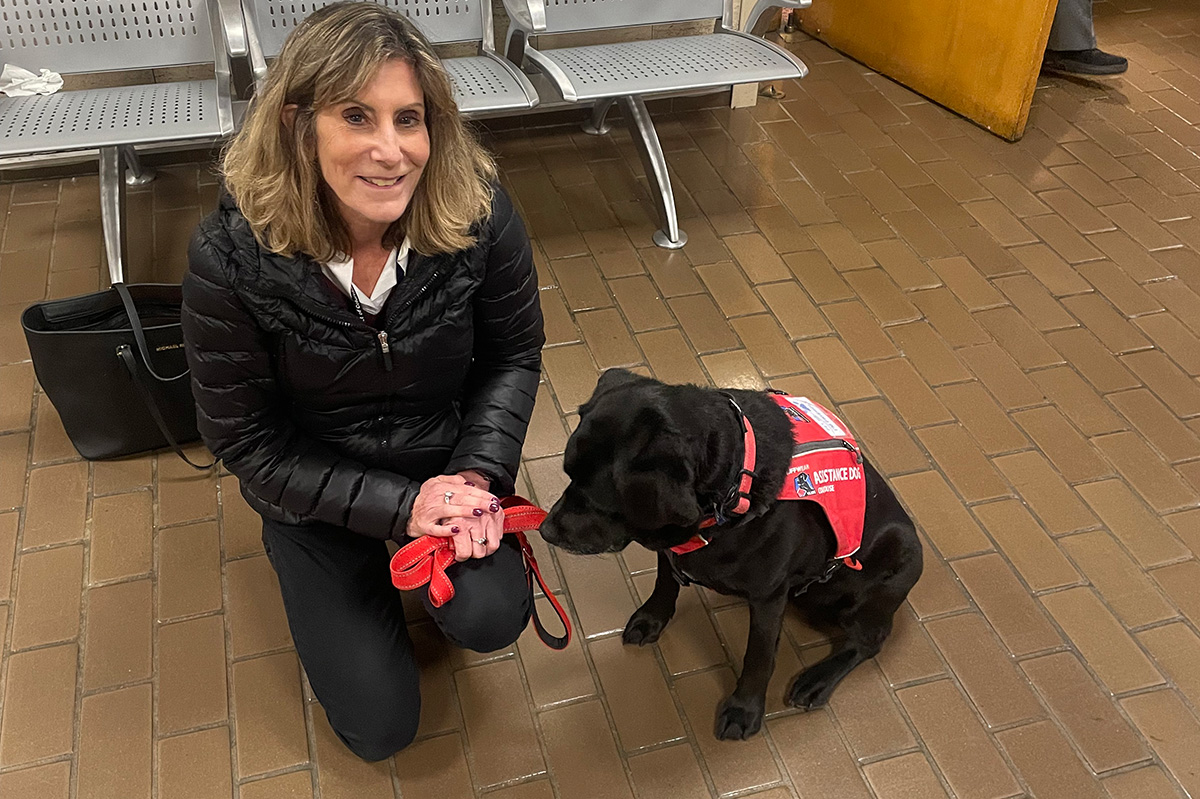
As she heaved and sobbed in the courtroom in November, Kelly had a steady four-legged presence by her side: Pepper the Courthouse Dog, as the black Labrador retriever is known in D.C. Superior Court.
Abby Stavitsky, a former federal prosecutor who now serves as a victims’ advocate, is the owner and handler of nine-year-old Pepper. She says that one of the things that has made Pepper such a great asset in the court in the past six years is the emotional support and comfort she provides to victims.
“She absorbs all of the feelings and the emotions around her, but she’s very good at handling it,” Stavitsky said.
Pepper and Stavitsky started working in Magistrate Judge Mary Grace Rook’s courtroom — and now works in Magistrate Judge Janet Albert’s — to provide support for youth who suffer trauma, especially young survivors of commercial sexual exploitation.
These specially trained dogs offer emotional support to trauma victims of all ages. Courthouse dogs can reduce victims’ and witnesses’ anxiety and stress, making it easier for them to provide clear statements in the courtroom, according to a 2019 report in the Criminal Justice Review.
“Having something to pet and interact with is a distraction that results in victims being calmer when testifying in court,” says Stavitsky. “This gives them an extra level of comfort.”
What brought Stavitsky and Pepper together
Stavitsky, who spent 25 years as an assistant U.S attorney, handled a lot of victim-based crimes, mostly domestic violence and sex offenses. She was also a dog lover, and once she learned about courthouse dogs and their use, she was inspired.
In 2019, Pepper was given to Stavitsky by a Massachusetts-based organization, NEADS, formerly known as the National Education for Assistance Dog Services. Although Pepper was originally trained to be a service dog, evaluators determined her character was best suited for a courthouse dog.
Pepper now works regularly in various treatment court cases involving juveniles, many of whom have experienced trauma or are involved in the child welfare system. She also sits with victims while they are testifying in a trial.
“She loves people, especially children,” Stavitsky said. “She loves that interaction.”
Courthouse dogs have a long history
In courthouses across the U.S. specially trained “facility dogs” are becoming an important part of how the justice system supports vulnerable victims and witnesses.
Since the late 1980s, these dogs were used to help trauma survivors and anxious children during testimonies and interviews. The first dog to make an appearance in a courtroom was Sheba, a German shepherd who assisted child sexual abuse victims in the Queens (N.Y.) District Attorney’s Office. Courthouse dogs help them communicate more clearly, especially in these settings that make them anxious and stressed.
Unlike service dogs, courthouse facility dogs are professionally trained through accredited assistance dog organizations and work daily alongside prosecutors, victim advocates, and forensic interviewers. For example, courthouse dogs can have more social interaction, unlike service dogs.
Courthouse dogs’ growing use has prompted state laws and professional guidelines to recognize the dogs as a trauma-informed tool that helps victims participate in the justice process without compromising courtroom fairness.
As more jurisdictions adopt these programs, courthouse dogs are reshaping how the legal system balances compassion with procedure, ensuring that victims’ voices can be heard in environments that might otherwise silence them.
Pepper makes it easy to see why.
“I really love people, especially kids, and can provide emotional support and comfort during all stages of the court process,” reads the business card Stavitsky hands out with Pepper’s picture. “I’m calm, quiet and can stay in place for several hours.”
(This article was written by a student in the journalism program at Bard High School Early College DC. This work is part of a partnership between the Washington Blade Foundation and Youthcast Media Group, funded through the FY26 Community Development Grant from the Office of D.C. Mayor Muriel Bowser.)
District of Columbia
How new barriers to health care coverage are hitting D.C.
Federally qualified health centers bracing for influx of newly uninsured patients
Washington, D.C. has the second-lowest rate of people who lack health insurance in the country, but many residents are facing new barriers to health care due to provisions of the sweeping federal law passed in July, which threatens access for thousands.
Changes to insurance eligibility and the rising cost of premiums, which kicked in for some in October and others more recently, are expected to leave many more patients uninsured or unable to afford medical care. Federally qualified health centers, including D.C.’s Whitman-Walker Health, where 10 to 12 percent of patients are uninsured, are bracing for an influx of newly uninsured patients while facing their own financial challenges.
Even in D.C., where uninsured rates have been among the lowest in the country, changes brought on by the passage of the Republican mega bill (known as the “Big Beautiful Bill”) will have major effects.
The changes from the bill affect Medicaid, which is free to low-income patients, and subsidies for insurance that people buy on the health insurance exchanges that were started under the Affordable Care Act, which were allowed to expire on Dec. 31.
Erin Loubier, vice president for access and strategic initiatives at Whitman-Walker Health, says some Whitman-Walker Health patients have received notices about premium increases, including several who say the increases are up to 1,000 percent more than they were paying.
“That is like paying rent,” she says. “We live in an expensive city, so any increases are going to be really, really hard on people.”
Whitman-Walker Health and other healthcare providers are expecting the changes to have multiple effects — some patients may not be able to afford coverage or may avoid going to the doctor and allow health conditions to worsen because they can’t afford care, and many more will be seeking care who don’t have insurance.
“I’m worried that we’re going to not just have people who can’t get care, but that they delay care until they’re really sick, and then the care is not as effective because they might have waited too long, and then we may have a less healthy population,” Loubier says.
Loubier says delaying care, and serving more people without insurance has major implications for Whitman-Walker Health and other health centers serving the community.
“There’s going to be a lot of pressure on us to try to find and raise more money, and that’s going to be harder, because I think all organizations who provide health care are going to be facing this,” she says.
The U.S. health care system is the most expensive in the world, and has much higher out-of-pocket costs for individuals. But in other countries like the United Kingdom, Australia, Canada, and many others, health care is much less expensive — or even free.
Even though the U.S. has a high-priced healthcare system, critics say there are still ways to bring down costs by forcing insurance and pharmaceutical companies to absorb more of the costs, rather than transferring the costs to patients.
“In the U.S., they end up trying to cut costs at the person’s level, not at the level of the different corporations or structures that are making a lot of money in healthcare,” said Loubier. “Our system is so complicated and there is probably waste in it, but I don’t think that that cost and waste is at the ‘people’ level. I think it’s higher up at the system level, but that is much, much harder to get people to try to make cuts at that end.”
Ultimately at Whitman-Walker Health, healthcare providers and insurance navigators are planning to help with everyday necessities when it comes to healthcare coverage and striving to provide healthcare in partnership with patients, said Loubier.
“The key here is we’re going to have a lot of people who may lose insurance, and they’re going to rely on places like Whitman-Walker Health and other community health centers, so we have to figure out how we keep providing that care,” she said.
(This article was written by a student in the journalism program at Bard High School Early College DC. This work is part of a partnership between the Washington Blade Foundation and Youthcast Media Group, funded through the FY26 Community Development Grant from the Office of D.C. Mayor Muriel Bowser.)
District of Columbia
Mayor Bowser signs bill requiring insurers to cover PrEP
‘This is a win in the fight against HIV/AIDS’

D.C. Mayor Muriel Bowser on March 20 signed a bill approved by the D.C. Council that requires health insurance companies to cover the costs of HIV prevention or PrEP drugs for D.C. residents at risk for HIV infection.
Like all legislation approved by the Council and signed by the mayor, the bill, called the PrEP D.C. Amendment Act, was sent to Capitol Hill for a required 30-day congressional review period before it takes effect as D.C. law.
Gay D.C. Council member Zachary Parker (D-Ward 5) last year introduced the bill.
Insurance coverage for PrEP drugs has been provided through coverage standards included in the Affordable Care Act, known as Obamacare. But AIDS advocacy organizations have called on states and D.C. to pass their own legislation requiring insurance coverage of PrEP as a safeguard in case federal policies are weakened or removed by the Trump administration, which has already reduced federal funding for HIV/AIDS-related programs.
Like legislation passed by other states, the PrEP D.C. Amendment Act requires insurers to cover all PrEP drugs approved by the U.S. Food and Drug Administration.
Studies have shown that PrEP drugs, which can be taken as pills or by injection just twice a year, are highly effective in preventing HIV infection.
“I think this is a win for our community,” Parker said after the D.C. Council voted unanimously to approve the bill on its first vote on the measure in February. “And this is a win in the fight against HIV/AIDS.”

Surviving spring cleaning

Iconic Eddie Izzard takes on 23 characters in ‘Hamlet’

How Pepper the courthouse dog helps victims of abuse

Women’s FEST returns to Rehoboth Beach next week

Belarusian lawmakers approve bill to crackdown on LGBTQ rights

Supreme Court rules against Colo. law banning conversion therapy for minors

Senegalese president signs bill that further criminalizes homosexuality

Trans activists gather on National Mall for Transgender Day of Visibility

Md. lawmakers reaffirm legislative priorities

Kristi Noem ‘devastated’ as husband’s alleged fetish spending surfaces
-

 U.S. Supreme Court5 days ago
Supreme Court rules against Colo. law banning conversion therapy for minors
-
Senegal5 days ago
Senegalese president signs bill that further criminalizes homosexuality
-
District of Columbia4 days ago
Trans activists gather on National Mall for Transgender Day of Visibility
-
Maryland5 days ago
Md. lawmakers reaffirm legislative priorities