Maryland
Salisbury, Md. rainbow crosswalk removed on Veterans Day
Mayor’s order denounced by LGBTQ activists as act of bigotry
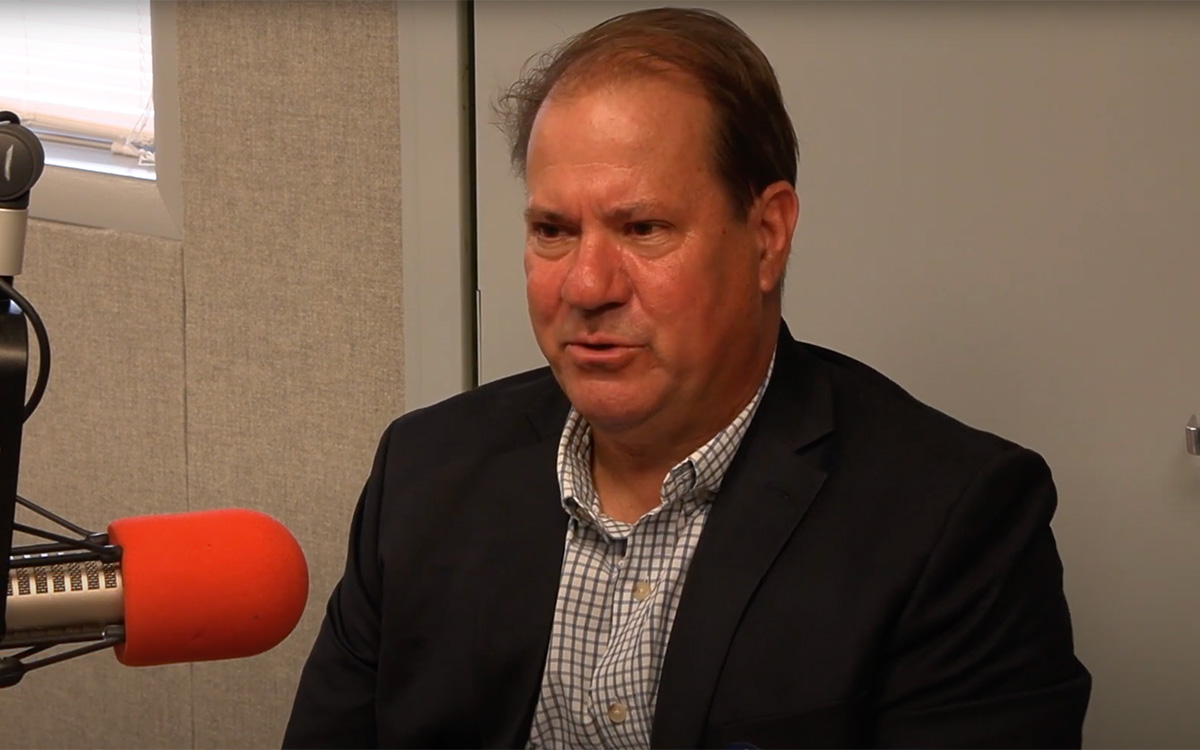
Under the directive of its mayor and over strong objections from LGBTQ rights advocates and their supporters, the city of Salisbury, Md. on Nov. 11 removed a rainbow crosswalk from a prominent intersection across from the mayor’s office and the city’s public library.
Salisbury LGBTQ rights advocate Mark DeLancey, who witnessed the crosswalk removal, said instead of painting over it as other cities have done in removing rainbow crosswalks, a powerful grinding machine was used to rip apart the asphalt pavement under the crosswalk in what he believes was an effort by the mayor to “make a point.”
Like officials in other locations that have removed rainbow crosswalks, Salisbury Mayor Randy Taylor said the crosswalk removal was required under U.S. Department of Transportation regulations put in place by the Trump administration that do not allow “political” messages on streets and roadways.
“Since taking office, I’ve been transparent about my concerns regarding the Pride crosswalks installed in Downtown Salisbury,” Taylor said in a statement. “While I have made every effort to respect the decisions of previous administrations and the folks that supported them, it has become clear that a course of correction – as planned – is necessary to align with current Department of Transportation standards for roadway markings,” he said in his Nov. 7 statement that was posted on the city’s Facebook page.
DeLancey is among the activists and local public officials in many cities and states that dispute that the federal Department of Transportation has legal authority to ban the Pride crosswalks. D.C. and the Northern Virginia jurisdictions of Arlington and Alexandria are among the localities that have refused to remove rainbow crosswalks from their streets.
“He decided to take this on himself,” DeLancey said of Taylor’s action. “It’s not a law. It’s not a ruling of any kind. He just said that was something that should happen.”
DeLancey points out that Salisbury became the first jurisdiction in Maryland to install a rainbow crosswalk on a public street in September 2018.
“This is another blatant attempt by our Republican mayor to remove any references to groups that don’t fit with his agenda,” Salisbury LGBTQ advocate Megan Pomeroy told the local publication Watershed Observer. “The rainbow crosswalk represents acceptance for everyone. It tells them, ‘You matter. You are valued. You are welcome here,’” she was quoted as saying.
The publication Delmarva Now reports that a longtime Salisbury straight ally to the LGBTQ community named K.T. Tuminello staged a one-person protest on Nov. 10 by sitting on the sidewalk next to the rainbow crosswalk holding a sign opposing its removal.
“Tuminello said Nov. 10 he had been at the embattled crosswalk since 12 a.m. that morning, and only three things could make him leave: ‘I get arrested, I have to get into an ambulance because of my medical difficulties, or Randy Taylor says you can keep that one rainbow crosswalk,’” the Delaware Now article states.
DeLancey said he has known Tuminello for many years as an LGBTQ ally and saw him on the night he staged his sit-in at the site of the crosswalk.
“I actually went to him last night trying to give him some water,” DeLancey told the Washington Blade. “He was on a hunger strike as well. He was there for a total of 40 hours on strike, not eating, no sleeping in the freezing cold”
Added DeLancey, “He has been supporting our community for decades. And he is a very strong ally, and we love his contribution very much.”
Political observers have pointed out that Salisbury for many years has been a progressive small city surrounded by some of Maryland’s more conservative areas with mostly progressive elected officials.
They point out that Taylor, a Trump supporter, won election as mayor in November 2023 with 36.6 percent of the vote. Two progressive candidates split the vote among themselves, receiving a combined total of 70.8 percent of the vote.



Maryland
Md. groups receive state grants to fight hate crimes
Pride Center of Maryland among recipients
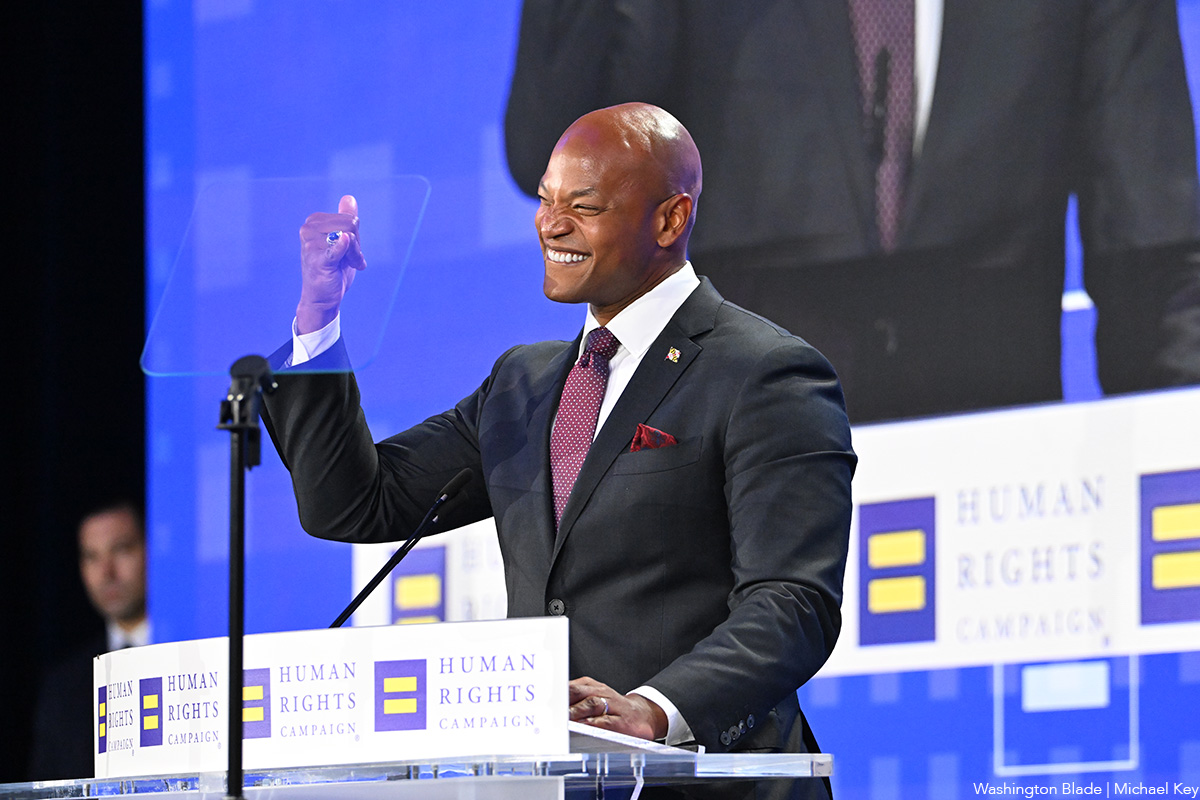
Maryland Gov. Wes Moore and the Governor’s Office of Crime Prevention and Policy are awarding a total of $10 million in grants in the 2027 fiscal year to nonprofit organizations that work to prevent hate crimes in the state.
The funds will be used to support those who feel targeted or discriminated against because of their race, religion, sexual orientation, gender identity, or disability status.
The Pride Center of Maryland is among the recipients. Churches, synagogues, mosques, and LGBTQ organizations are all eligible to receive grants
“The safety and security of all Marylanders is my top priority, so we are drawing a hard line because we have no tolerance for hate,” said Moore, according to media reports. “We are committed to protecting and ensuring safe and sacred spaces stay that way by investing in non-profit organizations, houses of worship, and community centers to protect and honor every community that makes our state so diverse and special.”
“Protection Against Hate Crime funding has strengthened the Pride Center of Maryland’s ability to protect, educate, and support the communities we serve … at a time of heightened concern associated with the Trump administration’s anti-LGBTQ/SGL (same-gender-loving) policies and pressures,” Pride Center of Maryland CEO Cleo Manago said. “PAHC funding helps us do more than improve physical security — it strengthens our community’s knowledge, preparedness, connection to resources, and ability to respond to hate with greater awareness and support.”
Maryland’s hate crimes law includes both sexual orientation and gender identity. The state’s nondiscrimination statute is also LGBTQ-inclusive.
Maryland
Anne Arundel schools now need parent permission to call trans students by preferred names
Conservative groups challenged system’s policy
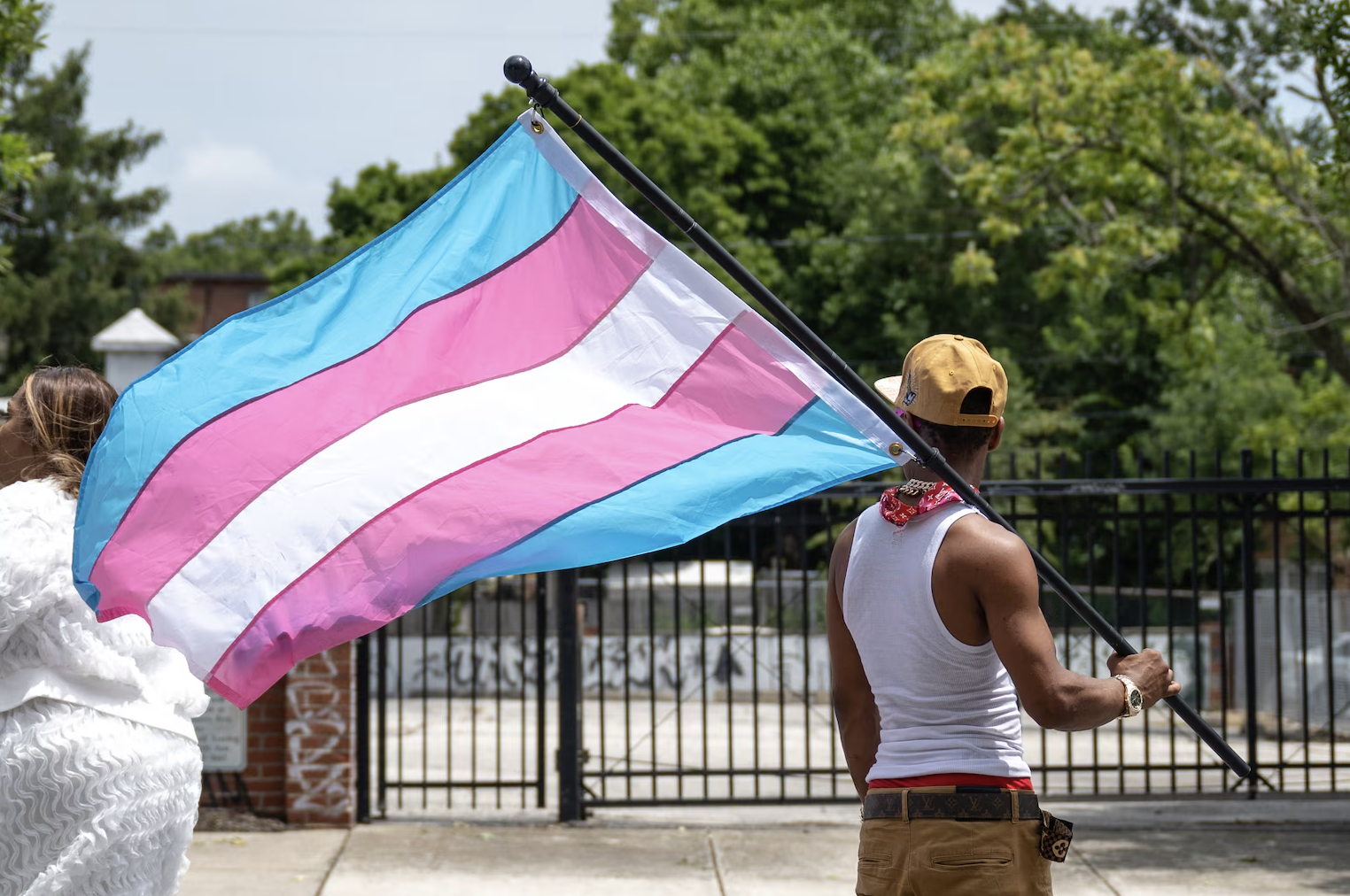
By JESSICA CALEFATI | Anne Arundel County Public Schools staff cannot use transgender students’ preferred names if their parents oppose it, according to an internal document reviewed by the Banner, a change that comes after conservative groups challenged the school system’s approach to gender identity.
Teachers union president Kristina Korona told members in an Aug. 20 email that the new guidance undermines district policy on acceptance and inclusivity and “will begin harming affected students immediately.”
Previously, the district didn’t require parental permission to use a high school student’s chosen name and pronouns corresponding to their gender identity, the internal document says. Now it does. The change comes as parents challenge the suburban school system’s gender identity policy and regulation in court and the Trump-Vance administration threatens the district’s funding.
The rest of this article can be found on the Baltimore Banner’s website.
Maryland
Girlfriends charged with Silver Spring murder to go on trial in 2027
Prosecutors charged both women with killing mother of one of them

Two women identified as a couple who are charged with the May 22, 2026, murder of the mother one of them in her Silver Spring home and who were arrested three weeks later in Ohio are scheduled to go on trial for murder April 19, 2027.
According to online records filed with Montgomery County Circuit Court in Rockville, Vanessa Tjongarero-Henderson, 29, of Clarksburg, Md., and Samantha Raebel, 36, of Phoenix are being held without bond in the Montgomery County Correctional Facility until the time of their trial.
Statements from Montgomery County police show the two women were arrested June 10 in Genoa, Ohio, after fleeing from the scene of the murder in Silver Spring. Police statements and court records show they were extradited back to Maryland in July, where prosecutors with the Montgomery County State’s Attorney’s Office obtained indictments against them for murder.
Earlier statements from Montgomery County police say their investigation into the murder led to their decision to initially charge the two women with first-degree murder for the death of Hilde Henderson, 67, who was Tjongarero-Henderson’s mother.
“Through the course of the investigation, detectives identified Henderson’s daughter, Vanessa Tjongarero-Henderson, and Vanessa’s girlfriend, Raebel, as the suspects,” one of the police statements says. It says police obtained arrest warrants for both women and launched a nationwide search seeking help from the public in in locating them.
One of the police statements says an autopsy determined the cause of Hilde Henderson’s death was blunt-force trauma injuries brought about by a murder. Police and the State’s Attorney’s Office, which is prosecuting the case, have yet to disclose whether they have determined a motive for the murder.
Court records show that prior to the start of the April 19, 2027, trial a “motion” hearing was scheduled for Oct. 30, 2026, a pre-trail conference was scheduled for Feb. 12, 2027, and another motion hearing and a status hearing were scheduled for March 12, 2027.
Court records also show that Tjongarero-Henderson is being represented by attorneys with the Montgomery County court system’s public defender service. The records show that Raebel initially had been represented by a public defender service attorney, but updated records show Aug. 14 is listed as the “removal date” for that attorney.
The docket shows that on Aug. 20, two new attorneys with the prominent D.C. law firm of Covington & Burling made their official appearance as her attorneys in the murder case. One of them, Daniel Solomon, told the Washington Blade in response to an inquiry that the defense has no comment at this time on the case.
He confirmed that Covington & Burling is representing Raebel on a no-cost, pro bono bass.
The office of the Montgomery County public defender service didn’t immediately respond to a phone message from the Blade asking for a comment on the Tjongarero-Henderson case.

Vote now! Best Of LGBTQ DC readers’ choice awards

Meet the LGBTQ candidates running for U.S. House, Senate

Ana Brnabić becomes world’s first openly lesbian head of state

529 openly LGBTQ candidates running in Brazilian election