Local
John Michael Fry dies at 64
Beloved longtime bartender at Mr. Henry’s
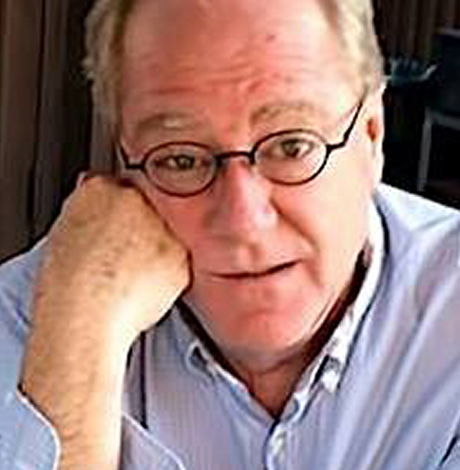
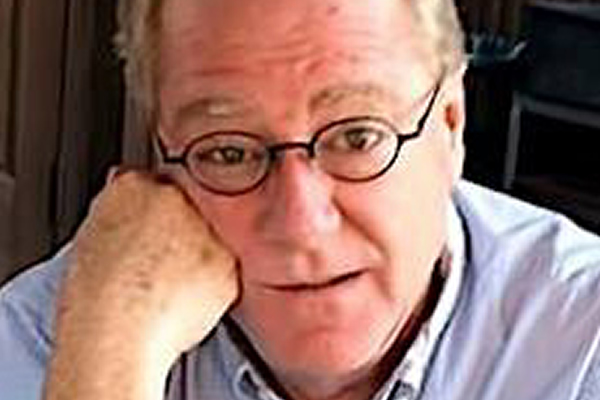
John Michael Fry
John Michael Fry (“Mike”), for more than three decades the welcoming face of Mr. Henry’s of Capitol Hill, died at his home on T Street, N.W., Wednesday morning, Nov. 25. He was 64.
The cause of death was cancer, according to his friend Tom Faison, a Capitol Hill Realtor, and Rick Hauser, Fry’s long-time housemate. Faison and Hauser were primary care givers during his illness.
Fry spent most of his working life as a waiter, bartender and assistant manager at the iconic Mr. Henry’s, the venue where singer Roberta Flack was introduced to the world in the 1960s. Fry and the restaurant and bar hosted the staffs of the old Washington Evening Star and the Southeast Washington Navy Yard, Capitol Hill real estate agents, members of Congress and their staffs, and employees of the Library of Congress, all just a half-dozen blocks from Henry’s location at Sixth and Pennsylvania Avenue, Southeast.
The gay and lesbian community, of which Fry was part, was a large portion of his clientele, mingling with House members like D.C. Del. Eleanor Holmes Norton; tourists, celebrities and entertainers visiting Capitol Hill; journalists and writers like the late Diana McLellan; political operatives and TV commentators, including Donna Brazile of CNN.
“Over all those years, Michael made us soar,” Brazile said on learning of Fry’s death. “He was the music when the jukebox went silent.”
“Michael was like an uncle to my kids,” said Faison, at whose vacation home on Cape May, N.J., “Mikie” was a frequent guest. Fry enjoyed European travel, including several trips with Capitol Hill friends Ann Bradley and Caroline Shook. And he visited his ancestral Ireland with long-time friend Don Blackmon, pursuing his interest in genealogy.
“Many of us anchored our weekends to Michael’s Saturday bar at Henry’s, where he held court,” said Walter Quetsch, a resident of Capitol Hill for six decades. “Michael would always have a favorite taunt for each of us. If a bar regular made a whining comment, he would respond with, ‘Do you think I give a fuck?’”
Fry was a frequent visitor to Quetsch’s summer home on Fire Island’s Cherry Grove.
“On nearly every one of my visits to Henry’s, anyone in earshot would hear Mike ask, ‘Do you remember that time in 1980 when Terry got drunk over there by the window,'” said Terry Michael. “He paired that with, ‘You’re almost 70, you know,’ his favorite way to harass me.” Michael is a former political press secretary who has lived near Mr. Henry’s for four decades.
John Michael Fry was born March 15, 1951 in Kensington, Md., son of Gorman and Dorothy Fry, who preceded him in death. He is survived by two brothers, Chris Fry and Bill Fry, and a sister, Mary Patricia McDonnell, and by a sister-in-law Linda Fry and a brother-in-law Tom McDonnell, all of Maryland, along with many nieces and nephews.
He is also survived by numerous friends, those noted above, plus Ed McManus and Karen Lyon of Capitol Hill, with whom Fry helped promote the Capitol Hill BookFest; Alvin Ross, the retired manager of Mr. Henry’s, with whom Fry worked for more than 30 years; and Library of Congress staffers, led by Ana Lupe Cristan, who dined at Henry’s every Friday for lunch.
Tributes to Michael Fry can be made with donations to the Washington Animal Rescue League, in the name of “Scooter.” Memories can be shared at his Facebook page, “Mike Fry.” Friends are planning a memorial service.



Maryland
Md. groups receive state grants to fight hate crimes
Pride Center of Maryland among recipients
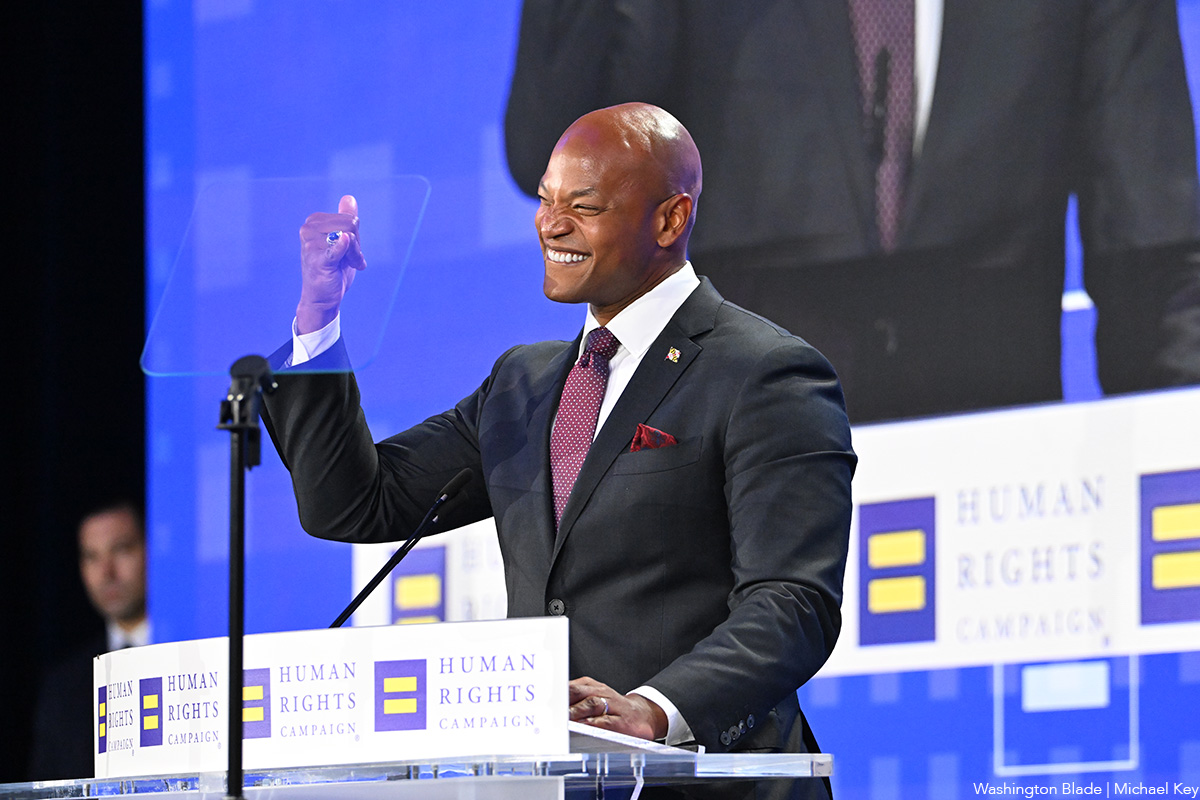
Maryland Gov. Wes Moore and the Governor’s Office of Crime Prevention and Policy are awarding a total of $10 million in grants in the 2027 fiscal year to nonprofit organizations that work to prevent hate crimes in the state.
The funds will be used to support those who feel targeted or discriminated against because of their race, religion, sexual orientation, gender identity, or disability status.
The Pride Center of Maryland is among the recipients. Churches, synagogues, mosques, and LGBTQ organizations are all eligible to receive grants
“The safety and security of all Marylanders is my top priority, so we are drawing a hard line because we have no tolerance for hate,” said Moore, according to media reports. “We are committed to protecting and ensuring safe and sacred spaces stay that way by investing in non-profit organizations, houses of worship, and community centers to protect and honor every community that makes our state so diverse and special.”
“Protection Against Hate Crime funding has strengthened the Pride Center of Maryland’s ability to protect, educate, and support the communities we serve … at a time of heightened concern associated with the Trump administration’s anti-LGBTQ/SGL (same-gender-loving) policies and pressures,” Pride Center of Maryland CEO Cleo Manago said. “PAHC funding helps us do more than improve physical security — it strengthens our community’s knowledge, preparedness, connection to resources, and ability to respond to hate with greater awareness and support.”
Maryland’s hate crimes law includes both sexual orientation and gender identity. The state’s nondiscrimination statute is also LGBTQ-inclusive.
District of Columbia
Blade welcomes fall intern
Alexis McLean is student at University of North Florida
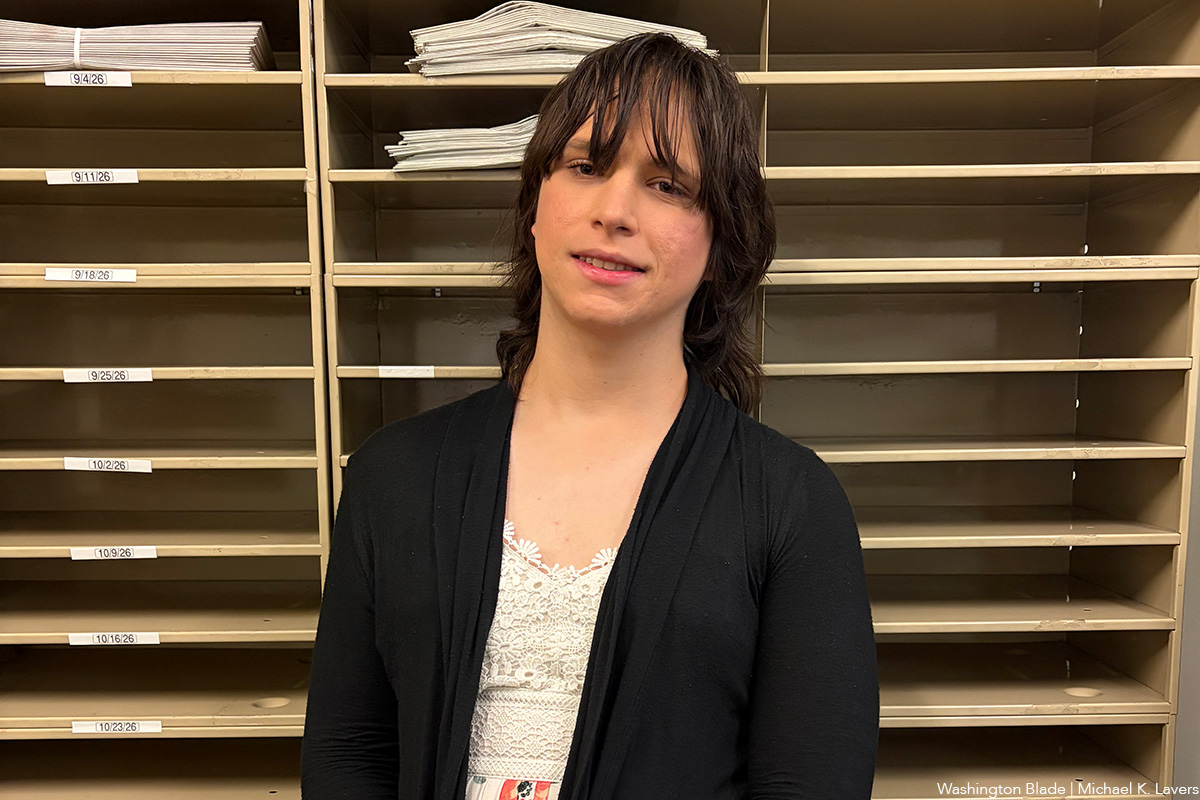
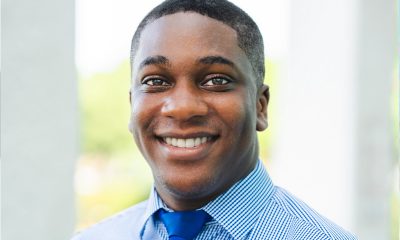
The Washington Blade this week welcomed Alexis McLean as its fall intern.
Alexis is studying political science at the University of North Florida in Jacksonville, Fla. She is interning with the Blade as part of a continued partnership with the Washington Center.
“I am looking forward to spending my time in the fall with the Washington Blade, as this is a new experience for me,” said Alexis. “I have not experienced any journalist jobs in the past so this would be my first time, and I am excited to better my writing and communications skills with this internship.”
Alexis’s internship with the Blade ends in early December.
Rehoboth Beach
SUNFESTIVAL takes center stage as Rehoboth Beach closes out summer
Labor Day Weekend bustling with events, including David Archuleta performance

Labor Day Weekend marks the unofficial end of summer in Rehoboth Beach, but there will be no shortage of LGBTQ events, with CAMP Rehoboth’s annual SUNFESTIVAL taking over town this weekend.
Thursday (9/3)
Get your Labor Day Weekend started early Thursday night with happy hour from 5-7 p.m. at Diego’s Bar & Nightclub, followed by Naughtee Bingo hosted by Magnolia Applebottom at 8:30 p.m.
After bingo, the party continues with Dancing at Diego’s from 9 p.m. to 1:30 a.m.
Aqua Bar & Grill will also kick off its Labor Day Weekend festivities Thursday with a DJ spinning from 9 p.m.-1 a.m.
Friday (9/4)
The weekend ramps up Friday night at Aqua, where DJ Matt Bailer will keep the dance floor moving from 9 p.m.-1 a.m.
Over at Diego’s, DJ Steve Sidewalk will then take over Diego’s for Freedom Friday from 9 p.m.-1:30 a.m.
Saturday (9/5)
The main event of the weekend arrives Saturday with the opening night of CAMP Rehoboth’s SUNFESTIVAL.
Billed as the ultimate party to close out the summer, SUNFESTIVAL has become one of Rehoboth’s signature Labor Day Weekend events. The annual celebration sells out each year, with proceeds benefiting CAMP Rehoboth.
Doors open at 6:30 p.m. with refreshments available at the cash bar while attendees are invited to socialize and find their seats.
Saturday night will feature local singer Ashley Williams as the opening performer, followed by headliner David Archuleta. The event will also feature a live auction.
Back across town Saturday, Aqua will continue its Labor Day Weekend DJ lineup from 9 p.m. to 1 a.m.
Diego’s will also have plenty happening, with ‘Splash Party’ hosted by Magnolia Applebottom at 5 p.m., followed by a Saturday Dance Party with Brett Oosterhaus from 9 p.m.- 1:30 a.m.
The Blue Moon hosts its popular Legends Show at 9 p.m. It’s an all-live singing show by the Blue Moon cast of celebrity impersonators.
Etienne Pilon has taken Rehoboth by storm this summer. Check out the talented singer/pianist at The Pines from 7-10 p.m.
Sunday (9/6)
Sunday’s SUNFESTIVAL event will shift the focus to the dance floor, with globally renowned DJs Robbie Leslie and James Anthony scheduled to perform. Doors open at 7 p.m., with dancing continuing until 1 a.m.
On Sunday, Aqua will throw its annual White Party, with DJs spinning from 9 p.m.-1 a.m. Guests are encouraged to dress in white for the holiday weekend celebration.
Diego’s will host its Sunday High T-Dance with Pamala Stanley at 5 p.m. Later that evening, DJ Tannr will be spinning at 9 p.m.
John Flynn is on the piano from 6-8 p.m. at the Blue Moon.
Monday (9/7)
The final day of Labor Day Weekend brings one last chance to hit the dance floor before summer officially winds down.
Aqua will close out its five-day Labor Day Weekend celebration with DJ Biff from 3-7 p.m.

Ind. prosecutor declines to press charges over false Buttigieg child welfare complaint

Historiography with heart

Remembering the LGBTQ heroes of 9/11 terrorist attacks

How Dolly became a folk saint for Appalachian queers

Report: 90 percent of LGBTQ groups around the world have lost funding since 2025

‘Here the Whole Time’ delivers queer coming-of-age comedy

New book examines fashionista Audrey Smaltz’s fabulous life

Blade Foundation to host fundraiser in Rehoboth on Sept. 12

Actress takes on bisexual ‘Ma’ Rainey in new Round House production

Iceland implements gender-neutral blood donor rules
-

 Movies4 days ago
‘Here the Whole Time’ delivers queer coming-of-age comedy
-
Books3 days ago
New book examines fashionista Audrey Smaltz’s fabulous life
-
Out & About3 days ago
Blade Foundation to host fundraiser in Rehoboth on Sept. 12
-
Theater3 days ago
Actress takes on bisexual ‘Ma’ Rainey in new Round House production