Living
N.J. gay couple celebrates 51st anniversary
Vince Grimm and Will Kratz met at a downtown Reading, Pa., gay bar

VILLAS, N.J.—Vince Grimm had just left the U.S. Army Security Agency after a two-year deployment in Korea when he returned to the Reading, Pa., gay bar scene in 1961. A 20-year-old farm boy quickly caught his eye at the Big Apple Bar.
“We saw each other on and off at the bar,” said Grimm. “He was cute, blonde and kind of flamboyant — just my type.”
More than five decades later, Will Kratz pointed out with a hearty chuckle during an interview at their home that overlooks Delaware Bay a few miles north of New Jersey’s southernmost point that they consummated their relationship in the back of a 1957 Cadillac. “There was plenty of room,” added Grimm.
Kratz, who joked he was 13 when asked his age (he turns 73 later this year,) noted that Reading crime boss Abe Minker essentially allowed the gay bars to flourish because they provided a steady stream of revenue to what Grimm described as the “most corrupt city on the East Coast.” He said this pre-Stonewall scenario was a far cry from nearby Philadelphia where undercover officers regularly shook down the city’s gay bars.
“That didn’t really happen in Reading because there was income coming in from everywhere,” said Grimm. “There was a price to pay for people that had businesses and everything like that, but he kind of controlled everything. The bars were basically a safe place to go.”
“So were the streets,” added Kratz. “Nothing bad ever happened on the streets.”
The couple, who celebrated their 51st anniversary the day before the Blade interviewed them on Aug. 9, stressed that they never experienced any sort of harassment or discrimination outside of Kratz’s much older brother who never accepted his homosexuality. Their sexual orientation was never a secret to their parents and classmates. “Everybody knew us,” said Grimm, 75. “We were sexually active in school; never had any problems.”
“We had no idea we were setting a precedent”
Kratz began to perform in drag on stage in the backroom of the Zanzibar, another downtown Reading gay bar, in 1959. Grimm quickly noted that Kratz was underage at the time, but management overlooked this fact.
“They didn’t give a shit at the bar, as long as you behaved, as long as you weren’t too small to get over the bar,” added Kratz.
Kratz decided a couple of years later that he wanted to make the shows bigger. He approached the owner of the Big Apple Bar whose relatives owned a picnic grove outside Reading with buildings and a pavilion. They agreed to rent the space to him.
“Then we decided, well we’ve got to have money for these drag shows and where are we going to get it? Well let’s have barbecue chicken parties, so we had three a summer at that location,” said Kratz.
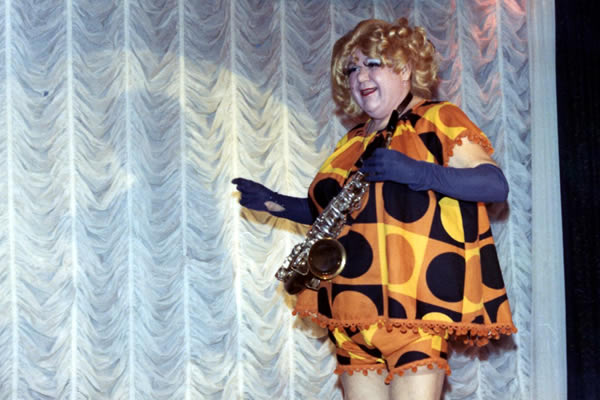
Kratz and Grimm also organized drag shows that became increasingly popular among locals (Photo courtesy of Vince Grimm and Will Kratz)
Nearly 300 people paid $5 to attend the first party that took place in 1961, but they quickly grew in popularity. Up to 1,500 revelers who came from as far away as northern New Jersey, Baltimore and even D.C. on themed buses that included those dressed as Vatican officials and the Pope attended the parties. A lesbian once arrived on an elephant with two tigers she borrowed from a local circus.
Grimm noted that they were the Reading Brewery’s largest single customer — the company delivered beer to the parties in tractor trailer trucks. Organizers also hired local firefighters, police officers and justices of the peace to work in the parking lot to thwart underage people who wanted to sneak into the gatherings.
“There was no other place for them to go, so that was like our first line of defense,” said Grimm. “Plus it made us kind of look legitimate.”
They soon, however, began to draw the attention of the Pennsylvania State Police because they created traffic jams on the local roads. Grimm noted that some of the troopers who investigated them were homophobic.
“We had some stand offs when they would come in and just kind of sit there in a car and try to intimate people,” said Grimm, who was the president of the group that organized the party. Kratz was its treasurer. “One time I think I must have stood out — stood there just staring at ‘em for like an hour, not making a move: well, when you’re ready to ask me questions I’ll be happy to answer.”
Grimm recalled one incident in which the state police claimed that underage people had attended the party. Troopers called the state Liquor Control Board that subsequently confiscated the tractor trailer that had delivered beer.
“We got on the phone with the Reading Brewery and said we have a problem,” recalled Grimm. “They said you don’t have any problem. We’re going to be there with another tractor-trailer of beer within the hour. Don’t worry about the Liquor Control Board; we’ll take care of them. Another tractor-trailer full of kegs of beer showed up within the hour.”
The only other incident that the couple said they had was a rumored police raid. The couple sought advice from another local District Justice about what to do if authorities arrested them, but she was initially confused about the entire situation.
“‘Oh my God you’re having these huge parties and all you guys are queer,’” said the judge, according to Grimm. “I said, ‘Yeah.’ She said, ‘Well … the law is the law and I’ll abide by the law. If you’ve not done anything, if everything is in place you don’t have anything to worry about.’”
Grimm then reached out to a Reading lawyer who worked for the American Civil Liberties Union to “cover my bases.” He also didn’t understand the potential problem that the couple faced.
“I tried to explain everything to him and he said the ACLU doesn’t have anything to do with a group like yours,” said Grimm. “They haven’t even gotten involved yet in gay groups. This was something totally new.”
In addition to the three parties they organized each year, Grimm and Kratz also staged drag shows that featured choreographers and up to 10 performers on stage at any given time. Judy Garland and Barbra Streisand proved popular muses, but some participants wrote entire operettas and made their costumes.
“The fire police people and the local JPs kind of found out that we were having these shows and they said, well how come you never ask us to come to these shows. We said you can come,” said Grimm. “They started to come to the Sunday matinees; they would come in suits. Their wives would come in their furs. It was totally unbelievable. This was their theater. We were their theater and they were actually the best audience that we had. We got standing ovations. They would go crazy. They couldn’t wait for us.”
A combination of Philadelphia’s burgeoning drag scene and a lack of interest among younger people prompted the couple to end their parties in 1979.
“It sounds like we were doing great things only in retrospect now because back then, we knew what we were doing, but we had no idea what we were doing,” said Kratz, who designed displays for the Strawbridge and Clothier department store at the time. “We knew our drag. We knew how to sew costume. We had no idea we were setting a precedent, for anybody. We just wanted to provide a safe place for the 1,500 or so people who ended up coming and the 500-600 who came to our shows in four weekends. We had no idea we were pre-anything else like Stonewall. We weren’t out on the streets looking for freedom. We already had it.”
Couple’s activism, generosity expands beyond Pa.
Grimm, a former engineer, joined a Bucks County group that supported people with AIDS at the beginning of the epidemic in the early 1980s that became the template for Pennsylvania’s statewide service organization for those with the virus. He also volunteered for the South Jersey AIDS Alliance and became a board member after he and Kratz retired to Cape May in 1996.
They also joined GABLES Cape May, an LGBT community and support group with more than 200 members from across the county that formed in the mid-1990s in response to homophobic commentaries about the area’s growing gay population that began to appear in the local newspaper. The organization has raised nearly $150,000 for the local Red Cross chapter and other community organizations. Both Grimm and Kratz are also on the Lower Cape May Regional High School’s advisory board.
“We know that the gays that are going to the high school over here are being harassed and are being harassed by their classmates,” said Grimm, who said this bullying does not occur at a nearby technical school where the students are more accepting of their LGBT classmates. “The kids are basically walking around hand-in-hand and nobody cares.”
The group also played a role in efforts to secure passage of both New Jersey’s domestic partnership registry and civil unions law — the couple entered into one two days after the state’s civil unions law took effect in 2007. Grimm, who is also a minister, continues to officiate these ceremonies throughout the Cape May area.
“The biggest reason for us to do it immediately was death things,” said Kratz. “When you die, the tax rate is astronomical. Now that’s going to be somewhat less. Domestic partnership is not marriage, but it’s close. We’ve heard stories and meet people that one lover died and they had to sell the house and the business to pay the tax.”
He added that he does not think that he and Grimm will live to see the day when gays and lesbians can legally tie the knot in New Jersey. Gov. Chris Christie in February vetoed a same-sex marriage bill, but Kratz stressed he expects gay weddings will eventually happen in the Garden State.
“I thought if marriage passes, am I going to have yet another dress because we had to do two ceremonies,” he joked.
When asked about the most romantic thing the couple had done for each other, Kratz immediately said travel. He and Grimm went to India and Egypt in the 1970s and have traveled around the world twice. They established the Nguyen Zian Quynh-Vince Will Education Foundation to help fatherless Vietnamese children attend school after they visited the Southeast Asian country in 2006 and befriended a guide after whom they named it.
“That’s probably one of the best, rewarding things we do,” said Grimm.
Both men stressed they remain in love with each other after 51 years.
“I’ve never had a day in my life that I wanted to kill him,” said Kratz, although he joked he came close last month after Grimm left his passport in his suitcase when they boarded a cruise ship in Copenhagen. “Never, never have I had a moment where I said I didn’t want to be here.”
Grimm added that Kratz has “backed me all of the way.”
“If I had one wish it would be that everyone could have a supporting partner like he is,” he said.






One of the biggest headaches of the new home process is the actual moving part. By the time someone is buying a home, most people are beyond the “I just need a pickup truck, a pizza and a case of beer for my friends.”
If that is still someone’s preferred way to move, that’s great. However, many people find they need a much more robust plan. It can also trigger a lot of feelings about items one owns, what to do with them, do they have too much, should I keep this memento that I never use? Etc.
Moving is a chance for a person to “clean house” literally, figuratively, spiritually and energetically. A person can figure out which items they want to keep, and which need to go. As someone who recently moved across the country, I can speak to this experience. It’s also time for what people call “the fresh start effect.” This phenomenon, according to psychologists, can happen in little moments (like the start of a new work week) and bigger moments (such as moving from one home to the next).
The fresh start effect offers these benefits often mentioned by psychologists:
- Mental Accounting: Dates act as chapter breaks, letting you put past failures into a previous period.
- Psychological Distance: You separate your flawed past self from your aspirational future self (“That was the old me”).
- Optimism Boost: New beginnings clear mental clutter and increase your sense of agency and control
Does this mean that “the new you” will be the perfect version you envisioned? Probably not. We are humans. But it might mean you get a chance to “leave some of the old you behind” within the walls you used to live in, and now have a chance to have a new layout, a new décor, a new color pattern, new wallpaper, donate old furniture and books or magazines, throw out clothes you no longer use or fit in, and enjoy the opportunity to literally use the, “Does this spark joy?” method that was made so popular by Marie Kondo in her Netflix series.
So, for all its hassle and headache, moving is a chance to shake off the “old you” and try on the new you, to incorporate the items you would like to keep and use more of, and shed the items, habits, and ways of thinking that you feel no longer serve you.
I can speak to the experiences that several of my clients had when they moved from a previous residence to a newer one. It usually coincided with a change in relationship status, a change in employment, a change in family size, but sometimes it just seemed to correlate to a new attitude and perspective that the client was really hoping for.
I have literally had clients come to me after the fact, in tears, that they were so happy they made the decision to move out of a situation that no longer served them, and move into one that felt like a much better fit.
Change can be annoying and overwhelming at times, but usually most people come out the other side, not wanting to return to the way they were before.
Joseph Hudson is a referral agent with RLAH. Reach him at 703-587-0597 or [email protected].
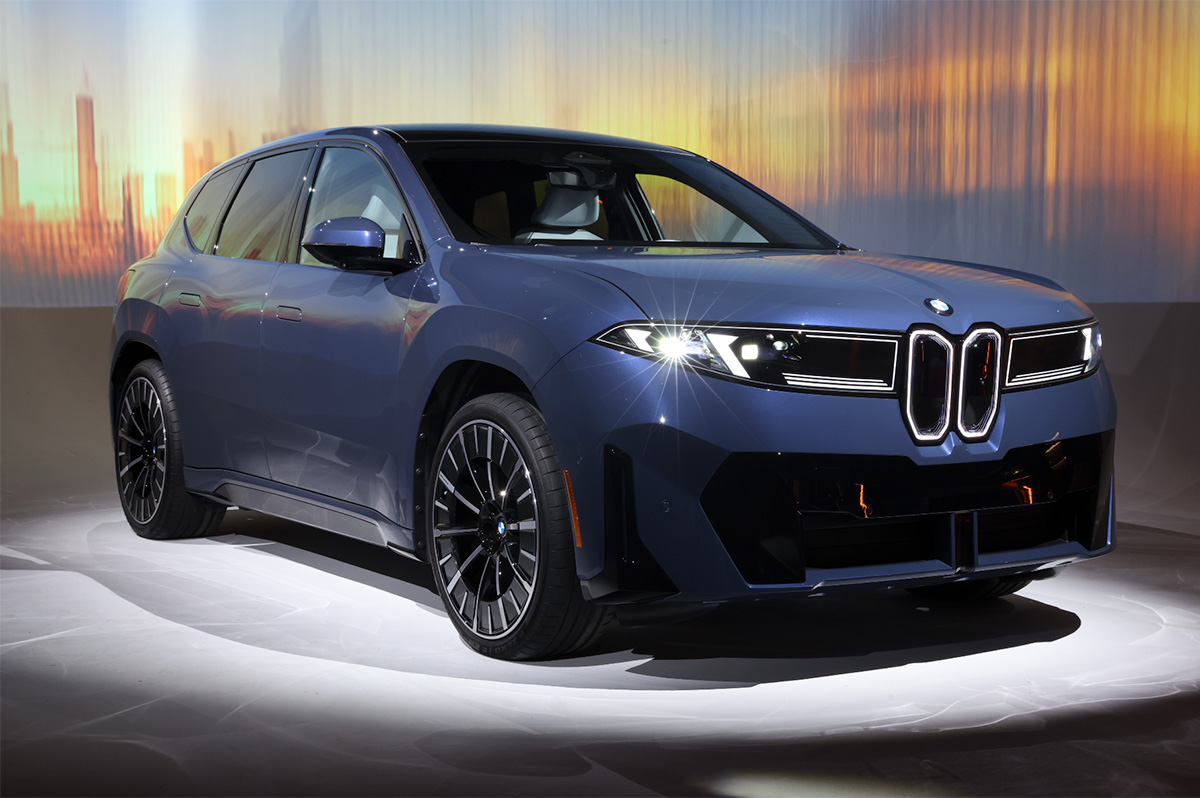
Despite a U.S. political climate that has made electric vehicles about as welcome as a vegan at a Texas barbecue, automakers haven’t gotten the memo. The 2027 BMW iX3 and Rivian R2—in showrooms soon—prove the point. But think of them as distant cousins: one arrives impeccably dressed; the other probably has a kayak strapped to the roof.
BMW iX3
$62,000
Range: Up to 434 miles
0 to 60 mph: 4.7 seconds
Cargo space: 30.4 cu. ft.
PROS: Huge driving range. Distinctive styling. Cutting-edge interior.
CONS: Quirky digital controls. Only one U.S. trim level. Pricey options.
WHAT’S NEW: This is BMW’s first production model on its state-of-the-art Neue Klasse platform, radically changing the technology, cabin and electric drivetrain.
The iX3 arrives on our shores in one trim level, the iX3 50 xDrive. Load it up with options and you can sail well past $80,000.
Depending on configuration, this luxe EV delivers an astonishing range before recharging. And a dual-motor, all-wheel-drive system produces 463 horsepower, which allows you to tootle around as fast as a Porsche 718 sportster.
The new “Panoramic iDrive” spreads information across the base of the windshield, supplemented by a central display and steering-wheel controls. An available 3D head-up display adds even more info. It’s futuristic, busy and unmistakably BMW—like someone decided the dashboard needed its own coming-out party.
Then there’s the “Heart of Joy” computer, which coordinates the motors, braking and steering for sharper responses and smoother control. The name may sound like something from a self-help retreat, but the innovation makes the iX3 seriously entertaining to drive.
You also can charge the iX3 from 10 percent to 80 percent in just 21 minutes. Nice.
This isn’t merely an electric X3 with the gasoline bits removed. It’s a tech reset for BMW. Compared with the R2, the iX3 is more polished, more luxurious…but, alas, considerably pricier.
RIVIAN R2

$45,000
Range: Up to 345 miles
0 to 60 mph: 5.9 seconds
Cargo space: 28.7 cu. ft.
PROS: Affordable luxury. Rugged looks. Clever storage.
CONS: No smartphone integration. No glass-roof shade. Touchy touchscreen.
WHAT’S NEW: Everything—the R2 is Rivian’s all-new, smaller electric SUV, and it brings the brand’s adventure-first attitude to a price point far below the larger R1S.
If the BMW iX3 is wearing a beautifully tailored jacket, the Rivian R2 has its sleeves rolled up.
With edgy styling, this is no anonymous crossover wearing an EV costume. Chunky details. Upright proportions. Distinctive lighting all give off an outdoorsy vibe without turning the R2 into a rolling REI catalog.
There are four configurations, with pricing from $45,000 to $58,000. That’s a big difference from the BMW—and potentially the R2’s biggest weapon.
The stats aren’t shabby, either. Driving range is from 275 to 345 miles. The dual-motor, all-wheel-drive setup produces between 350 horsepower and a frankly bonkers 656 horsepower. And the high-performance model lets you zip from 0-to-60 mph in just 3.6 seconds.
Drag-racing credentials? Absolutely!
Inside, there is lots of clever packaging, with flexible seating and generous storage. This EV is designed to carry actual stuff, not merely impress your neighbors.
Yes, there are quirks. Rivian skips Apple CarPlay and Android Auto, while everyday controls—some of which are less than intuitive—live on the touchscreen. And the panoramic glass roof lacks a conventional shade. Huh?
For some owners, those will be minor annoyances. For others, they’ll become daily reminders that Rivian marches to its own beat.
Perhaps that’s not a bad thing, though. The R2 feels less buttoned-up, more mischievous. It’s the automotive equivalent of Billy Porter ignoring the dress code and somehow looking better than everyone who followed it.
Advice
We’re getting married but our parents object
Will their disapproval and shortcomings derail our hopes for a happy life?

Dear Michael,
My girlfriend and I are getting married! We’re really excited, but we’ve got some big concerns as well.
All of our parents have had multiple marriages. I think 10 between the four of them. So we don’t have much in the way of role models for a successful marriage.
Also, we don’t have any parental support. Except for one of my ex-stepmothers whom I’m close to, none of our parents are happy that their daughter is getting married to another woman. That’s an understatement. Religious objections, moral objections, being angry that we’re “embarrassing them,” these are some of the things we’ve been told.
We do have some supportive siblings and step-siblings, which is great, although they’re getting pushback from parents about attending our wedding.
Given all this, what suggestions do you have for how we can make a go of our marriage? The divorce rate is over 50 percent for everyone. With all this baggage, we’re worried that we have even less of a chance. Thank you.
Michael replies:
First, congratulations!
Regarding your lack of family support: I’m sorry that you both have to deal with so much criticism, disdain, and judgment. Please don’t let your parents’ negativity influence your own views of yourselves and your relationship. Focus instead on the love and caring you will get from friends, community and the family who are present on your big day (I hope your siblings are brave enough to make it!). Being the recipients of that support is one of the sweetest parts of getting married.
Don’t worry about the high divorce rate. While some couples really shouldn’t stay married, lots of people get divorced because they don’t know what is required to have a good marriage, or don’t put in the effort to do so. That does not have to be your fate.
Similarly, your parents’ terrible track record doesn’t mean you have to repeat their marital histories. The skills to have a strong marriage are learnable.
To that end, here are the best tips I can offer the two of you:
- If you want a loving marriage, be a loving partner. Don’t snipe, sulk, or do the silent treatment when you’re mad. Unconditional love is largely a myth. Even our dogs won’t love us if we are mean to them.
- Don’t spend much time or effort focusing on what your spouse is doing wrong or how she is letting you down. Doing so leads to resentment and feeling like you’re a powerless victim. Instead, ask yourself what your own contribution is to the problem, and what you can do to make things better. You don’t have much power over your partner, but you have a lot of power over yourself.
You can certainly ask your spouse for what you’d like from her, but don’t expect to always get it. And don’t base your own wellbeing or good behavior on what your partner does or doesn’t do.
- Because any two people are always different in some important ways, there is no way that you both can always want the same things, or think the same way, or have the same priorities. Accept this! There has to be room for each of you to be an individual, not only part of a couple.
- Be generous as often as you can be, and have a boundary when it’s important for you to have one.
- When your spouse states that she has a boundary, respect it. Do not push her to back off from something that is important to her.
- Don’t keep score, including how much more you do or how often you don’t get your way. Instead, work together to have a collaborative marriage where you work together to make decisions and get things done.
- Strive not to weigh the relationship down with neediness. Once we’re grownups, it’s mainly our own job to soothe ourselves. You don’t want to burn out your partner’s empathy.
Of course you can ask for a hug, love, reassurance, support, advice, and a shoulder to cry on when you’re down. Just aim be the first person you turn to when you’re upset, and do your best to keep your own mood steady.
- Do not wait for your significant other to go first. Not on planning a date, not on apologizing, not on loading the dishwasher or cleaning the bathroom. If you wait for her to make the first move, you will have a resentful relationship where nothing good ever happens.
Keeping these principles part of your operating system, even — and especially — at those moments when your spouse isn’t doing her best, will go a long way toward helping you build and maintain a loving and happy marriage.
Michael Radkowsky, Psy.D. is a licensed psychologist who works with couples and individuals in D.C., Maryland, Virginia, New York, and all PSYPACT states. He can be found online at michaelradkowsky.com. All identifying information has been changed for reasons of confidentiality. Have a question? Send it to [email protected].

United States Conference on HIV/AIDS grapples with federal budget cuts

For lesbian victims of domestic violence, competent care is scare

UN human rights chief sounds alarm over ‘comprehensive onslaught’ against LGBTQ rights

White House press pool pushes back after Trump bars three outlets

PHOTOS: Shenandoah Valley Pride

Queer mega stars coming to D.C. this fall

Republican challenger misgenders McBride during forum, forced to leave

Activists protest outside Turkish Embassy in D.C.

A roundup of fall events not to be missed