Connect with us

Arts & Entertainment

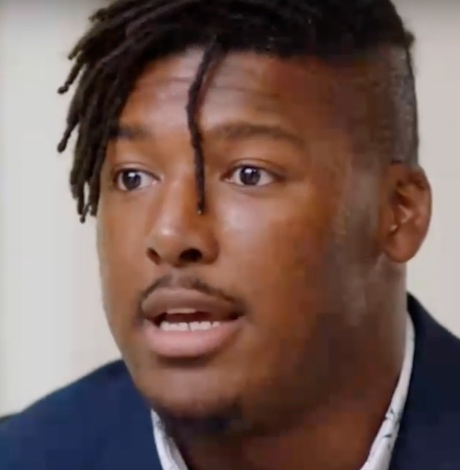
NFL free agent Ryan Russell comes out as bisexual

The former Cowboys player wants to ‘live openly’
Published

on

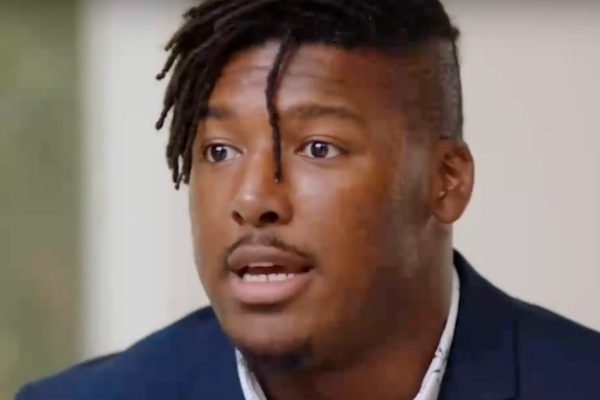
Ryan Russell (Screenshot via YouTube)

NFL veteran Ryan Russell has come out as bisexual in a feature for ESPN.

The 27-year-old defensive end was drafted by the Dallas Cowboys in 2015 but was cut after one season. He went on to play two seasons with the Tampa Bay Buccaneers. Russell missed all of last season due to a shoulder injury. He attempted to tryout in the offseason but didn’t land a position.

Russell told ESPN that after trying out he regretted not coming out as bisexual to the team.

“Have I lied to teammates, coaches, trainers, front-office executives and fans about who I am?” Russell told ESPN. “Not exactly. But withholding information is a form of deceit. And I want the next part of my career – and life – steeped in trust and honesty. During the season you spend more time with your team than with your own family; truth and honesty are the cornerstones of a winning culture. My truth is that I’m a talented football player, a damn good writer, a loving son, an overbearing brother, a caring friend, a loyal lover, and a bisexual man.”

He explained that growing up he struggled with identity issues and stereotypes surrounding being gay and straight.

“I always felt as though my existence slipped between the cracks of two worlds. I wasn’t flamboyant, tidy, or any other stereotypes kids are forced to construct their world around. I wasn’t straight, hyper-masculine or aggressive; I cried quite a bit, and, as a young black man, I didn’t fit the bill. I played football — so I put that in the straight column. I wrote poetry and romance stories — so I put that in the gay column,” he says.“Those two objectives shouldn’t be in conflict. But judging from the fact that there isn’t a single openly LGBTQ player in the NFL, NBA, Major League Baseball or the NHL, brings me pause. I want to change that – for me, for other athletes who share these common goals, and for the generations of LGBTQ athletes who will come next.”

Russell revealed he has dated men and women but was more careful about dating men, especially while in the NFL.

He recalled a time during his first season in the NFL when an unidentified blogger recognized Russell in the Instagram story of a man he was dating at the time. The blogger messaged Russell saying that he had figured out the pair were a couple.

“If the blogger outed me, I was sure that would kill my career, one that was supporting not just me, but my mother and grandfather,” Russell says. “He’d eradicate a childhood dream that was the product of years of work and sacrifice.”

Russell messaged the blogger back “reminding him that there were implications about his actions he didn’t fully understand.”

The blogger said he would do Russell a “favor” by not outing him.

“Let that sink into your brain: Even though openly LGBTQ people are thriving in every area of public life — politics, entertainment, the top corporations in America — they are so invisible in pro sports that a gossip blogger is doing a favor for a bisexual football player by not disclosing that he happens to date men,” Russell said.

Now, Russel just wants to live his life openly.

“Today, I have two goals: returning to the NFL, and living my life openly. I want to live my dream of playing the game I’ve worked my whole life to play, and being open about the person I’ve always been,’ Russell says.
Advertisement
FUND LGBTQ JOURNALISM
SIGN UP FOR E-BLAST

Sports

More than a dozen LGBTQ athletes medal at Olympics

Milan Cortina games ended Sunday

Published

on

Gay French ice dancer Guillaume Cizeron, left, is among the LGBTQ athletes who medaled at the Milan Cortina Winter Olympics that ended on Feb. 22, 2026. (Screenshot via NBC Sports/YouTube)

More than a dozen LGBTQ athletes won medals at the Milan Cortina Winter Olympics that ended on Sunday.

Cayla Barnes, Hilary Knight, and Alex Carpenter are LGBTQ members of the U.S. women’s hockey team that won a gold medal after they defeated Canada in overtime. Knight the day before the Feb. 19 match proposed to her girlfriend, Brittany Bowe, an Olympic speed skater.

French ice dancer Guillaume Cizeron, who is gay, and his partner Laurence Fournier Beaudry won gold. American alpine skier Breezy Johnson, who is bisexual, won gold in the women’s downhill. Amber Glenn, who identifies as bisexual and pansexual, was part of the American figure skating team that won gold in the team event.

Swiss freestyle skier Mathilde Gremaud, who is in a relationship with Vali Höll, an Austrian mountain biker, won gold in women’s freeski slopestyle.

Bruce Mouat, who is the captain of the British curling team that won a silver medal, is gay. Six members of the Canadian women’s hockey team — Emily Clark, Erin Ambrose, Emerance Maschmeyer, Brianne Jenner, Laura Stacey, and Marie-Philip Poulin — that won silver are LGBTQ.

Swedish freestyle skier Sandra Naeslund, who is a lesbian, won a bronze medal in ski cross.

Belgian speed skater Tineke den Dulk, who is bisexual, was part of her country’s mixed 2000-meter relay that won bronze. Canadian ice dancer Paul Poirier, who is gay, and his partner, Piper Gilles, won bronze.

Laura Zimmermann, who is queer, is a member of the Swiss women’s hockey team that won bronze when they defeated Sweden.

Outsports.com notes all of the LGBTQ Olympians who competed at the games and who medaled.

Continue Reading

Theater

José Zayas brings ‘The House of Bernarda Alba’ to GALA Hispanic Theatre

Gay Spanish playwright Federico García Lorca wrote masterpiece before 1936 execution

Published

on

Luz Nicolás in ‘The House of Bernarda Alba’ at GALA Hispanic Theatre (Photo by Daniel Martinez)

‘The House of Bernarda Alba’
Through March 1
GALA Hispanic Theatre
3333 14th St., N.W.
$27-$52
Galatheatre.org

In Federico García Lorca’s “The House of Bernarda Alba,” now at GALA Hispanic Theatre in Columbia Heights, an impossibly oppressive domestic situation serves, in short, as an allegory for the repressive, patriarchal, and fascist atmosphere of 1930s Spain

The gay playwright completed his final and arguably best work in 1936, just months before he was executed by a right-wing firing squad. “Bernarda Alba” is set in the same year, sometime during a hot summer in rural Andalusia, the heart of “España profunda” (the deep Spain), where traditions are deeply rooted and mores seldom challenged. 

At Bernarda’s house, the atmosphere, already stifling, is about to get worse.

On the day of her second husband’s funeral, Bernarda Alba (superbly played by Luz Nicolás), a sixtyish woman accustomed to calling the shots, gathers her five unmarried daughters (ages ranging from 20 to 39) and matter-of-factly explain what’s to happen next.  

She says, “Through the eight years of mourning not a breeze shall enter this house. Consider the doors and windows as sealed with bricks. That’s how it was in my father’s house and my grandfather’s. Meanwhile, you can embroider your trousseaux.”

It’s not an altogether sunny plan. While Angustias (María del Mar Rodríguez), Bernarda’s daughter from her first marriage and heiress to a fortune, is betrothed to a much younger catch, Pepe el Romano, who never appears on stage, the remaining four stand little chance of finding suitable matches. Not only are they dowry-less, but no men, eligible or otherwise, are admitted into their mother’s house.  

Lorca is a literary hero known for his mastery of both lyrical poetry and visceral drama; still, “Bernarda Alba’s” plotline might suit a telenovela. Despotic mother heads a house of adult daughters. Said daughters are churning with passions and jealousies. When sneaky Martirio (Giselle Gonzáles) steals the photo of Angustias’s fiancé all heck kicks off. Lots of infighting and high drama ensue. There’s even a batty grandmother (Alicia Kaplan) in the wings for bleak comic relief.  

At GALA, the modern classic is lovingly staged by José Zayas. The New York-based out director has assembled a committed cast and creative team who’ve manifested an extraordinarily timely 90-minute production performed in Spanish with English subtitles easily ready seen on multiple screens.

In Lorca’s stage directions, he describes the set as an inner room in Bernarda’s house; it’s bright white with thick walls. At GALA, scenic designer Grisele Gonzáles continues the one-color theme with bright red walls and floor and closed doors. There are no props. 

In the airless room, women sit on straight back chairs sewing. They think of men, still. Two are fixated on their oldest siter’s hunky betrothed. Only Magdelena (Anna Malavé), the one sister who truly mourns their dead father, has given up on marriage entirely. 

The severity of the place is alleviated by men’s distant voices, Koki Lortkipanidze’s original music, movement (stir crazy sisters scratching walls), and even a precisely executed beatdown choreographed by Lorraine Ressegger-Slone.

In a short yet telling scene, Bernarda’s youngest daughter Adela (María Coral) proves she will serve as the rebellion to Bernarda’s dictatorship. Reluctant to mourn, Adela admires her reflection. She has traded her black togs for a seafoam green party dress. It’s a dreamily lit moment (compliments of lighting designer Hailey Laroe.)  

But there’s no mistaking who’s in charge. Dressed in unflattering widow weeds, her face locked in a disapproving sneer, Bernarda rules with an iron fist; and despite ramrod posture, she uses a cane (though mostly as a weapon during one of her frequent rages.) 

Bernarda’s countenance softens only when sharing a bit of gossip with Poncia, her longtime servant convincingly played by Evelyn Rosario Vega.

Nicolás has appeared in “Bernarda Alba” before, first as daughter Martirio in Madrid, and recently as the mother in an English language production at Carnegie Melon University in Pittsburgh. And now in D.C. where her Bernarda is dictatorial, prone to violence, and scarily pro-patriarchy. 

Words and phrases echo throughout Lorca’s play, all likely to signal a tightening oppression: “mourning,” “my house,” “honor,” and finally “silence.”

As a queer artist sympathetic to left wing causes, Lorca knew of what he wrote. He understood the provinces, the dangers of tyranny, and the dimming of democracy. Early in Spain’s Civil War, Lorca was dragged to the the woods and murdered by Franco’s thugs. Presumably buried in a mass grave, his remains have never been found.

Continue Reading

Photos

PHOTOS: Cupid’s Undie Run

Annual fundraiser for NF research held at The Wharf DC

Published

on

A dance party was held at Union Stage before Cupid's Undie Run on Saturday. (Washington Blade photo by Michael Key)

Cupid’s Undie Run, an annual fundraiser for neurofibromatosis (NF) research, was held at Union Stage and at The Wharf DC on Saturday, Feb. 21.

(Washington Blade photos by Michael Key)

Continue Reading

Popular