National
Biden administration shifts monkeypox vaccine approach amid shortage
Health experts sees new guidance as mixed bag
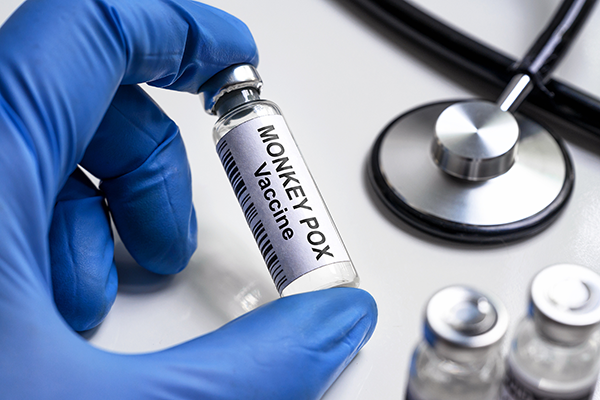
The Biden administration, amid criticism it was slow to act on the monkeypox outbreak and still not meeting the demand for vaccines as the number of cases continues to grow, has announced a shift in guidance for implementation of the shot in an effort to enhance availability.
As the estimated number of monkeypox cases in the United States reaches 8,900, top health officials announced the new move on Tuesday as part of a decision by Secretary of Health & Human Services Xavier Becerra to issue a determination under Section 564 of the Federal Food, Drug and Cosmetic Act to justify emergency use authorization of vaccines. The announcement follows up on the Biden administration’s announcement last week declaring the monkeypox outbreak a public health emergency.
Becerra said in a conference call with reporters the 564 determination and change in approach to vaccines would “boost and strengthen” the Biden administration’s response to monkeypox, which has overwhelmingly affected gay and bisexual men, and “safely accelerates and multiplies our supply of effective vaccines by up to fivefold.”
“Today’s action also reaffirms HHS and this administration’s commitment to using all available resources and capabilities to end the monkeypox outbreak and provide the best possible care to those suffering from the virus,” Becerra added.
The new vaccine approach, which may may be considered minor to non-medical observers, would change injections of the JYNNEOS vaccine from the subcutaneous route (delivery of the vaccine under the fat layer underneath the skin) to the intradermal route (delivery of the vaccine into the layer of skin just underneath the top layer). In theory, that would allow for greater accessibility of monkeypox vaccines as it increases the number of doses from each vial of vaccine.
The change was made amid criticism the Biden administration failed to meet the demand for vaccines during the outbreak and geographic inequity as certain metropolitan areas of the country have more access to vaccines than other places.
As The New York Times reported last week, the Biden administration has faced criticism for not moving quickly enough in acquiring and distributing vaccines, including bulk stocks already owned by the U.S. government manufactured in Denmark by Bavaria Nordic now being given to other clients.
“The government is now distributing about 1.1 million doses, less than a third of the 3.5 million that health officials now estimate are needed to fight the outbreak,” the Times reported. “It does not expect the next delivery, of half a million doses, until October. Most of the other 5.5 million doses the United States has ordered are not scheduled to be delivered until next year, according to the federal health agency.”
Biden officials, nonetheless, touted the numbers of vaccines and tests in response to monkeypox as a positive, acknowledging the 1.1 million vaccines being made available as well as delivery of more than 620,000 of those doses, deployment more than 15,000 courses of the monkeypox treatment and increasing the country’s capacity to administer tests on a weekly basis to around 80,000. Meanwhile, officials also promoted the change in approach in vaccines as means to allow greater accessibility to the shots.
Rochelle Walensky, director of the Centers for Disease Control & Prevention, promoted during the conference call the use of intradermal injections and said they’re “often used for TB skin tests and have been used for other types of vaccines.”
Although Walensky conceded some health care providers “may not be as familiar with intradermal administration” as they are with subcutaneous injection, she said CDC would make additional guidance materials available, including a clinician alert message to the Association of State & Territorial Health Officials, outreach to key clinician partners and an education resource video. The change in guidance, Walensky said, is for vaccine implementation in adults, but children — where single digit monkeypox cases have been reported — would continue to receive vaccination in the traditional subcutaneous approach.
But health experts aren’t responding with overwhelming praise to the decision to change the guidance on vaccine implementation from subcutaneous injections to intradermal injections, expressing concerns the new approach may be insufficient.
Jennifer Kates, director of global health & HIV policy at the Kaiser Family Foundation, was among those saying the change in guidance on vaccine approach was a mixed bag and told the Blade more data is needed to evaluate the effectiveness.
“As we saw with COVID, using these authorities in the context of public health emergencies is an important strategy,” Kates said. “In this case, this step will significantly expand access to vaccines for those most at risk. However, there remain questions about the effectiveness of this approach — real world studies are needed — and challenges to translating vaccines into vaccinations.”
Peter Marks, director of the Center for Biologics Evaluation & Research (CBER) at the Food & Drug Administration, was asked during the conference call with reporters to respond to concerns the change in guidance was insufficient and downplayed the novelty of implementing the vaccines through the intradermal route as “not at all new.”
“In fact, the reason why the Bavaria part of this equation comes from the fact that in Germany, this vaccine was given intradermally originally, in an effort to replicate the original version of the smallpox vaccine,” Marks said. “It’s been given to thousands of people intradermally, so this isn’t the first time it’s been done.”
Walkensky said the intradermal vaccine approach has been implemented amid policies among localities to implement a one-dose approach to the JYNNEOS vaccine through the subcutaneous route. (The D.C. government is one of the jurisdictions that had enacted a one-dose approach amid a vaccine shortage.) There is not data, Walkensky said, to support that approach and “in fact, if anything, there are data saying that that is not protective enough.”
“So by using this alternative strategy of intradermal dosing, not only do we have more doses, but we actually allow people to get two doses in a way that shows immunologic response that’s superimposable from the subcutaneous dosing,” Walkensky said. “So we have more doses, and in fact, we have the ability to doubly vaccinate people so that they get the protection that they need.”





U.S. Military/Pentagon
Pentagon expands testosterone screening as trans troops face hormone therapy restrictions
Defense Department says updated guidelines to be issued shortly

The Pentagon has announced that new clinical guidance will be released establishing mandatory testosterone deficiency screening for active-duty and reserve cisgender male service members ages 30 and older, advancing a policy that expands hormone-related care for cisgender troops.
The Defense Department said the existing clinical guidelines, which are not currently available on the Defense Health Agency’s website, are being updated and that the final guidance will be issued shortly.
The announcement comes amid a wave of anti-transgender policies from both the DoD and the Trump-Vance administration, which continue to prohibit trans men from receiving the same treatment.
Under the forthcoming guidance, men ages 30 and older will be forced to undergo testosterone blood tests as part of their medical care. Younger male service members will be tested if they request screening or if clinicians identify warning signs of low testosterone.
The new guidelines formalize a screening program Defense Secretary Pete Hegseth announced in July, when he said the Pentagon would begin testing service members to ensure that “you have the right testosterone levels to operate at your absolute best.”
“Taking care of your long-term health means ensuring you remain strong, resilient, and capable — not just for your next deployment, but for the rest of your life, so you can thrive long after you take off the uniform,” Hegseth said at the time.
The Defense Health Agency’s clinical guidance says the program is intended to address “hormonal and energy-availability issues.” Hegseth said in July that testosterone replacement therapy would remain voluntary for service members if treatment is recommended.
The Food and Drug Administration is also scheduled to hold a meeting later this month with experts to discuss the medical use of testosterone.
The Pentagon’s push to routinely test testosterone levels runs counter to current medical guidance, which generally recommends considering testosterone therapy only for men who have symptoms consistent with low testosterone and have documented low hormone levels on two separate blood tests.
Testosterone is a sex hormone naturally produced by people of all sexes. It plays a role in regulating muscle mass, bone density, and sex drive. Testosterone levels in men naturally decline with age and have been associated with symptoms including erectile dysfunction, low libido, mood changes and weight gain, although experts continue to debate when testosterone therapy is medically appropriate.
The policy has drawn scrutiny from LGBTQ advocates because the Pentagon and Hegseth have simultaneously cited hormone therapy as part of the rationale for removing trans service members from the military.
Under President Donald Trump’s 2025 executive order, “Prioritizing Military Excellence and Readiness,” the military has moved to bar trans people diagnosed with gender dysphoria from serving and has begun formal administrative separation proceedings against trans personnel.
The Pentagon continues to pursue implementation of the trans military ban as litigation over the policy proceeds. As a result, some trans service members have had their gender-affirming hormone therapy halted even as the Pentagon expands testosterone screening and potential treatment for cisgender service members.
SPARTA Pride, a nonpartisan nonprofit organization made up of trans service members, veterans and their allies, criticized the disparity to the Washington Blade when Hegseth first announced the screening program.
“If hormone therapy helps warfighters perform at their best, then it cannot simultaneously be used as evidence that transgender service members are unfit to serve,” said Kara Corcoran, executive director of SPARTA Pride. “The same class of evidence-based medical treatment cannot be characterized as readiness-enhancing for one group and readiness-destroying for another.”
On June 1, the U.S. Court of Appeals for the D.C. Circuit ruled that trans service members already serving in the military could continue to do so while allowing the armed services to continue refusing to enlist new trans recruits.
The Blade reached out to the Pentagon when the testosterone screening program was first announced in July, asking why cisgender service members could receive testosterone therapy while transgender service members could not. The Pentagon did not respond.
National
Lou Chibbaro Jr. documentary wins award from NLGJA
‘Lou’s Legacy’ produced by D.C.’s Mattachine Society

“Lou’s Legacy: a Reporter’s Life at the Washington Blade,” a documentary produced by The Mattachine Society of Washington, D.C., will receive an Excellence in Journalism Award from NLGJA, the Association of LGBTQ+ Journalists.
The film premiered on WETA PBS in D.C. and Maryland Public Television (MPT) in June of 2025. The documentary’s Emmy-nominated director and producer Patrick Sammon will accept the award for Excellence in Local Television on Sept. 11 at NLGJA’s National Convention in San Francisco.
“Lou’s Legacy” was produced in association with the Mattachine Society of Washington, D.C., a non-profit LGBTQ history society dedicated to conducting original archival research. Aside from Sammon, the NLGJA is recognizing other members of the film’s production team including Producer Julianne Donofrio, Editor Amir Jaffer, Executive Producer Charles Francis, and Executive Producer Pate Felts.
“Lou’s Legacy” tells the story of two D.C. icons — legendary Washington Blade reporter Lou Chibbaro Jr. and beloved drag performer Donnell Robinson, known to generations of Washington audiences as “Ella Fitzgerald.” Through Lou’s nearly five-decade career at the Blade and Ella’s return to the stage after a three-year hiatus following COVID, the 29-minute documentary explores the history of Washington’s LGBTQ community and today’s rising backlash against LGBTQ rights, including laws targeting drag performers.
“All students of journalism can learn a lot from the story of Lou Chibbaro, Jr. Lou has chronicled nearly five decades of LGBTQ+ life and the community’s struggle for equality in Washington, D.C. Lou’s work and the role of the queer press has been essential in covering stories the mainstream media would often ignore or erase,” said Ryan Levi, president of the D.C. chapter of the NLGJA.
“We are thrilled to receive this award from the NLGJA,” said the film’s director Patrick Sammon. “Lou Chibbaro’s nearly five decade career at the Washington Blade demonstrates the essential role LGBTQ journalism plays in telling our community’s stories and documenting its history. This recognition from journalists who follow in Lou’s footsteps is particularly meaningful to me and the rest of our production team.”
Arizona
Shooting outside gay bar in Ariz. leaves three dead
Tucson police investigating double murder-suicide as a hate crime

Three people were fatally shot outside a gay bar in Tucson, Ariz., early Monday morning, about a mile from the city’s nightlife district.
Police have said the shooting, which took place in the parking lot of Venture-N bar at 1239 N. 6th Ave., was likely a hate crime and a double murder-suicide following a verbal altercation.
The suspect, Ousman Ceesay, allegedly shot Vincent Anthony Siqueiros and Cameron Davis Capara while they were outside the club around 12:30 a.m. Monday.
Reports show Capara and Siqueiros were pronounced dead at the scene. Ceesay died after being taken to a local hospital with gunshot wounds.
Police have also said that Ceesay was carrying a list of LGBTQ businesses at the time of the shooting.
Arizona Public Media has said police are investigating the case as a hate crime because the suspect was carrying a note containing the names of multiple LGBTQ-associated businesses.
“I am deeply saddened that another senseless loss of life has happened in our community,” Tucson Police Chief Monica Prieto said in a statement. “Bias-based crimes are especially heinous and have no place in our community.”
According to Prieto, there is no imminent threat to the community, and the Tucson Police Department is working to provide extra protection to various LGBTQ businesses across town.
Congresswoman Adelita Grijalva, who represents the area, issued a statement condemning the act of violence, which appears to have been at least in part motivated by homophobia.
“I am disgusted and deeply saddened to learn of a targeted act of hate and the cold-blooded murder of two members of our LGBTQIA+ community, Vincent Siqueiros and Cameron Capara, at the Venture-N bar in Tucson last night. This horrific attack is a painful reminder that even in welcoming communities like Tucson, hate and violence against the LGBTQIA+ community still exist.”
“When that hate is combined with easy access to firearms, the consequences can be deadly. I am sick and tired of Congress refusing to lift a finger to protect our communities while, every day, dozens of people are shot and killed across the country. It does not have to be this way. The House of Representatives is returning to session this week, and our first action should be passing common-sense gun safety reforms that we know can save lives.”
Other federal lawmakers also condemned the shooting.
The Congressional Equality Caucus, which is made up of federal legislators advancing LGBTQ interests, issued a statement after news broke.
“Our hearts are with the friends and loved ones of the victims of this devastating attack outside a Tucson gay bar and with the Tucson LGBTQI+ community,” it said on X. “No one should fear violence because of who they are — and we’re going to continue fighting to build a world where no one does.”
The Human Rights Campaign, the largest LGBTQ organization in the country, released a statement following the shooting.
“We are heartbroken by the loss of Vincent Anthony Siqueiros and Cameron Davis Capara and our hearts are with their families, loved ones, and the entire Tucson LGBTQ+ community. Once again, we are reminded that gun violence robs people of their lives, destroys families, and devastates communities.”
A candlelight vigil honoring the victims is planned for Sept. 2 at 6:30 p.m. at Catalina Park in North Tucson.

Pentagon expands testosterone screening as trans troops face hormone therapy restrictions

Calendar: September 4-10

Swiss government backs nationwide conversion therapy ban

Gloria Steinem dies at 92

The mastery of love

Prominent French activist attacked outside Paris bar

Whitman-Walker’s 40th Walk & 5k Run to End HIV set for Sept. 19
Shooting outside gay bar in Ariz. leaves three dead

PHOTOS: Miss Gay Old Bay