Connect with us

THE MAGIC TOUCH

Published

on


Contact Information
Contact Seller
202-486-6183
More Information

Swedish, Massage or Deep Tissue. Appts.
Low Rates, 24/7, In-Calls.

202-486-6183

Advertisement
FUND LGBTQ JOURNALISM
SIGN UP FOR E-BLAST

Theater

D.C.’s 10 best theater productions of 2025

Published

on

Lee Osorio as Ryan and Jaysen Wright as Keith in Mosaic Theater’s production of ‘A Case for the Existence of God’ by Samuel D. Hunter. (Photo by Chris Banks)

It’s been a year filled with drama and music, re-imaginings and new works. There was a lot on offer in 2025, and much to enjoy. Here are 10 now-closed productions that come to mind. 

On Valentine’s Day at Folger Theatre on Capitol Hill, out actor Holly Twyford served as narrator for “The Love Birds” a Folger Consort work that melds medieval music with a world-premiere composition by acclaimed composer Juri Seo and readings from Geoffrey Chaucer’s “A Parlement of Foules” 

Standing behind a podium, Twyford beautifully read Chaucer’s words (translated from Middle English and backed by projected slides in the original language), alternating with music played on old and new instruments.  

While Mosaic Theater’s “A Case for the Existence of God,” closed in mid-December, it’s proving a production not soon forgotten. Precisely staged by Danilo Gambini, and impressively acted by Lee Orsorio and Jaysen Wright, the soul-searching two hander by out playwright Samuel D. Hunter, tells the story of two men who form an unlikely friendship based on single-fatherhood, a specific sadness, and hope. 

The action unfolds in a small office in southern Idaho, where the pair discuss the perplexing terms of a mortgage loan while delving deep into their lives and backgrounds. Nothing is left off the table.

Shakespeare Theatre Company’s spring production of “Uncle Vanya” gave audiences something both fresh yet enduring. Staged by STC’s artistic director Simon Godwin, the production put an impeccably pleasing twist on Russian playwright Anton Chekhov’s classic. It ranks among the very best area productions of the year.

Featuring a topnotch cast led by Hugh Bonneville (TV’s “Downton Abbey”) in the title role, the play was set on an unfinished stage cluttered with costume racks and assorted props, all assembled by crew uniformed in black and actors in street clothes. Throughout the drama tinged with comedy, the actors continued to assist with ever increasingly period set changes accompanied by an underscore of melancholic cello strings. It was innovative and wonderful. 

GALA Hispanic Theatre’s production of Manuel Puig’s “Kiss of the Spider Woman” was an intimate and affecting piece of theater. Staged by José Luis Arellano, it starred out actors Rodrigo Pedreira and Martín Ruiz as two very different men whose paths cross as convicts in an Argentine prison.  

Arena Stage scored with a re-imagined and updated take on the widely liked musical “Damn Yankees.” Directed by Sergio Trujillo, the Broadway bound production has been “gently re-tooled for its first major revival in the 21st century,” moving the action from the struggling Washington Senators baseball team to the turn-of-the-century Yankees lineup. Ana Villafañe’s charmingly seductive Lola and a chorus of fit ball players made for a good time. 

Also at Arena, out playwright Reggie D. White’s new work “Fremont Ave.” was very well received. A semi-autobiographical glimpse into home and the many definitions of that idea specifically relating to three generations of Black men, the work boasts a third act with a deeply queer storyline to boot. 

Before his smash hit “Hamilton” transformed Broadway, Lin-Manuel Miranda wrote “In the Heights,” a seminal musical set against the vicissitudes of an upper Manhattan bodega. Infused with hip-hop, rap, and pop ballads, the romance/dramedy takes place over a lively few days in the vibrant, close-knit Latin neighborhood, Washington Heights. 

Signature Theatre’s exciting take on “In the Heights” featured a talented cast including out actor Ángel Lozado as the bodega owner who figures prominently in the barrio and the action. 

Studio Theatre’s recent production of lesbian playwright Paula Vogel’s newest work “The Mother Play,” a drama with humor, is about a well put together alcoholic mother and her two gay children living under difficult circumstances in the less glitzy parts of suburban Maryland. With nuanced performances and smart direction, the production was terrific. 

Keegan Theatre surpassed expectations with its production of “Lizzie” a punk rock opera about Miss Borden, the fabled axe wielding title character. Performed by a super all-female cast, they belted a score that hits hard on subjects like money, queerness, and strained (to say the least) family relationships. 

Round House Theatre impressed autumn audiences with “The Inheritance,” a two-part drama sensitively staged by out director Tom Story and acted by a mostly queer cast that included young actor Jordi Bertrán Ramírez in a breakout performance.     

Penned by out playwright Matthew López, the epic work inspired by E.M. Forster’s novel “Howards End,” explores themes of love, legacy, and the AIDS crisis through the lives of three generations of gay men in New York City.

Prior to opening, Story commented that with the production’s predominately queer cast you get actors who “really understand the situation, the humor, and the struggle. It works well.” And he was right. 

Continue Reading

Books

A look back at the best books of 2025

From health care to horror, something for every taste

Published

on

(Book cover images courtesy of the publishers)

This past year, you’ve often had to make do.

Saving money here, resources there, being inventive and innovative. It’s a talent you’ve honed, but isn’t it time to have the best? Yep, so grab these Ten Best of 2025 books for your new year pleasures.

Nonfiction

Health care is on everyone’s mind now, and “A Living: Working-Class Americans Talk to Their Doctor” by Michael D. Stein, M.D. (Melville House, $26.99) lets you peek into health care from the point of view of a doctor who treats “front-line workers” and those who experience poverty and homelessness. It’s shocking, an eye-opening book, a skinny, quick-to-read one that needs to be read now.

If you’ve been doing eldercare or caring for any loved one, then “How to Lose Your Mother: A Daughters Memoir” by Molly Jong-Fast (Viking, $28) needs to be in your plans for the coming year. It’s a memoir, but also a biography of Jong-Fast’s mother, Erica Jong, and the story of love, illness, and living through the chaos of serious disease with humor and grace. You’ll like this book especially if you were a fan of the author’s late mother.

Another memoir you can’t miss this year is “Between the Devil and the Deep Blue Sea: A Veterans Memoir” by Khadijah Queen (Legacy Lit, $30.00). It’s the story of one woman’s determination to get out of poverty and get an education, and to keep her head above water while she goes below water by joining the U.S. Navy. This is a story that will keep you glued to your seat, all the way through.

Self-improvement is something you might think about tackling in the new year, and “Replaceable You: Adventures in Human Anatomy” by Mary Roach (W.W. Norton & Company, $28.99) is a lighthearted – yet real and informative – look at the things inside and outside your body that can be replaced or changed. New nose job? Transplant, new dental work? Learn how you can become the Bionic Person in real life, and laugh while you’re doing it.

The science lover inside you will want to read “The Grave Robber: The Biggest Stolen Artifacts Case in FBI History and the Bureaus Quest to Set Things Right” by Tim Carpenter (Harper Horizon, $29.99). A history lover will also want it, as will anyone with a craving for true crime, memoir, FBI procedural books, and travel books. It’s the story of a man who spent his life stealing objects from graves around the world, and an FBI agent’s obsession with securing the objects and returning them. It’s a fascinating read, with just a little bit of gruesome thrown in for fun.

Fiction

Speaking of a little bit of scariness, “Dont Forget Me, Little Bessie” by James Lee Burke (Atlantic Monthly Press, $28) is the story of a girl named Bessie and her involvement with a cloven-hooved being who dogs her all her life. Set in still-wild south Texas, it’s a little bit western, part paranormal, and completely full of enjoyment.

Evensong” by Stewart ONan (Atlantic Monthly Press, $28) is a layered novel of women’s friendships as they age together and support one another. The characters are warm and funny, there are a few times when your heart will sit in your throat, and you won’t be sorry you read it. It’s just plain irresistible.

If you need a dark tale for what’s left of a dark winter season, then “One of Us” by Dan Chaon (Henry Holt, $28), it it. It’s the story of twins who become orphaned when their Mama dies, ending up with a man who owns a traveling freak show, and who promises to care for them. But they can’t ever forget that a nefarious con man is looking for them; those kids can talk to one another without saying a word, and he’s going to make lots of money off them. This is a sharp, clever novel that fans of the “circus” genre shouldn’t miss.

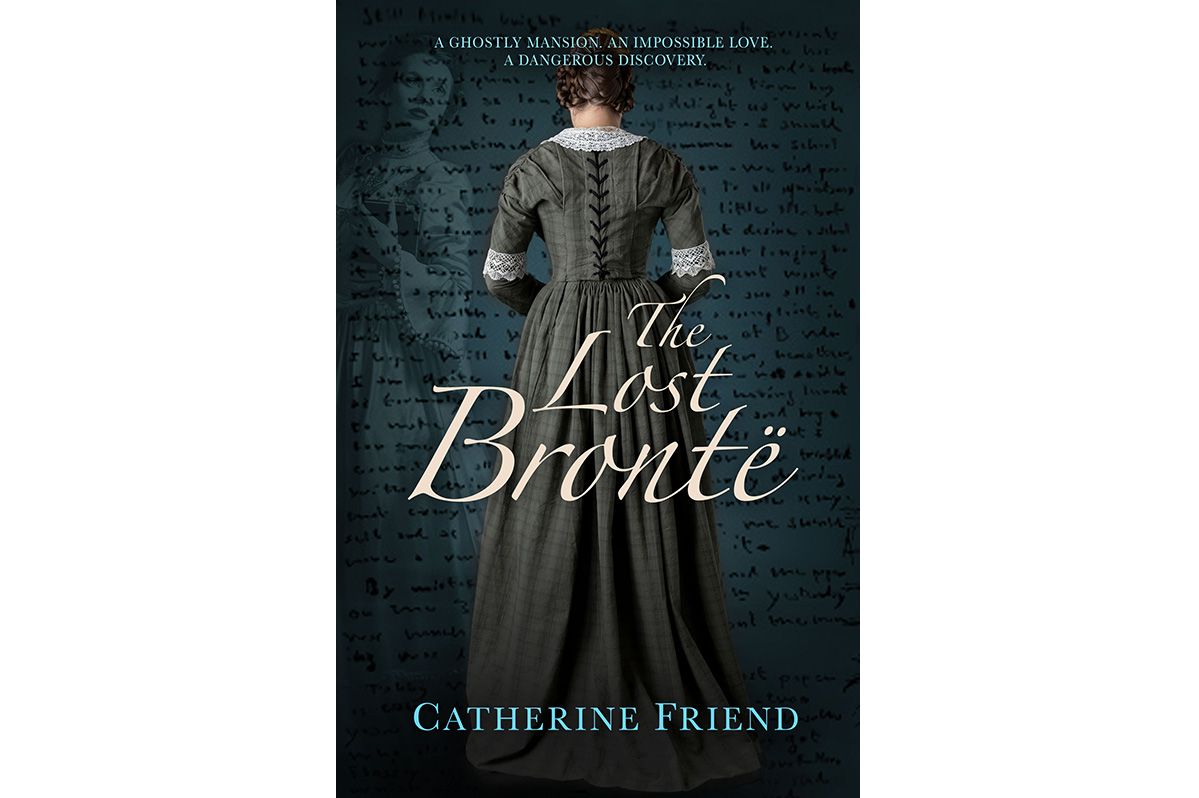
When the Harvest Comes” by Denne Michele Norris (Random House, $28) is a wonderful romance, a boy-meets-boy with a little spice and a lot of strife. Davis loves Everett but as their wedding day draws near, doubts begin to creep in. There’s homophobia on both sides of their families, and no small amount of racism. Beware that there’s some light explicitness in this book, but if you love a good love story, you’ll love this.

Another layered tale you’ll enjoy is “The Elements” by John Boyne (Henry Holt, $29.99), a twisty bunch of short stories that connect in a series of arcs that begin on an island near Dublin. It’s about love, death, revenge, and horror, a little like The Twilight Zone, but without the paranormal. You won’t want to put down, so be warned.

If you need more ideas, head to your local library or bookstore and ask the staff there for their favorite reads of 2025. They’ll fill your book bag and your new year with goodness.

Season’s readings!

The Blade may receive commissions from qualifying purchases made via this post.

Continue Reading

Opinions

A dangerous precedent on trans rights in Texas

State compiling list of those who have updated gender on driver’s licenses

Published

on

A sign outside Dallas City Hall. (Photo by dallaspaparazzo/Bigstock)

Recent reporting from Texas Standard revealed what should alarm every American who values privacy, civil rights, and constitutional restraint: the state of Texas is compiling a list of transgender residents who have attempted to update the gender marker on their driver’s licenses.

Under a policy quietly implemented after August 2024, the Texas Department of Public Safety stopped accepting court orders or amended birth certificates as valid documentation for gender marker changes. Instead, DPS employees were instructed to forward the names and identifying information of applicants seeking such updates to a dedicated internal email channel labeled “Sex Change Court Order.” Those records, which include sensitive personal information, are now being collected internally by the state.

Texas officials have not offered a clear explanation for why this information is being gathered, how long it will be retained, or what it will ultimately be used for. That lack of transparency is deeply troubling on its own. But in the broader context of Texas’s recent legislative trajectory on transgender rights, the implications are far more serious. This is not merely a bureaucratic shift. It is the creation of a targeted registry of transgender people.

The discriminatory nature of this practice is difficult to ignore. Governments are generally prohibited from singling out individuals based on protected characteristics for special monitoring or record-keeping. Since the Supreme Court’s decision in Bostock v. Clayton County, discrimination against transgender people has been understood as a form of sex discrimination under federal law. Compiling a list of people solely because they sought to align their identification documents with their gender identity runs directly counter to that principle.

Even states with restrictive policies around gender marker changes have historically focused on procedural barriers rather than surveillance. Texas has crossed a new threshold by moving from denial to documentation. The state is no longer just refusing recognition; it is actively cataloging those who seek it.

This practice also represents a profound violation of privacy. Driver’s license records contain some of the most sensitive personal data the government holds. Associating that data with a person’s transgender status without consent or statutory justification creates obvious risks, particularly in a political environment where transgender people are already subject to heightened hostility.

The chilling effect is unavoidable. Trans Texans will now have to weigh whether engaging with basic state services could land them on a government list. That fear will discourage people from updating identification, interacting with public agencies, or asserting their legal rights at all. When a government’s actions deter a specific population from participating in civic life, the harm extends well beyond administrative inconvenience.

What makes this development especially dangerous is how neatly it fits into a broader pattern. Texas lawmakers have spent years advancing legislation that narrows the legal definition of sex, restricts access to gender-affirming care, and limits the recognition of transgender people across public institutions. The creation of this list does not stand apart from those efforts; it complements them.

Once such a database exists, it becomes a tool. Data collected today for “administrative review” can be used tomorrow to justify new exclusions, enhanced scrutiny, or punitive enforcement. History shows that registries built around identity rarely remain benign. They become mechanisms of control.

Other states are watching. Texas has increasingly functioned as a testing ground for anti-trans policy, with lawmakers elsewhere ready to replicate measures that survive legal or political backlash. If compiling a list of transgender residents becomes normalized in Texas, it will not remain isolated. Red states searching for new ways to restrict trans lives will take notice.

The constitutional issues raised by this practice are significant. The Equal Protection Clause forbids states from treating similarly situated individuals differently without sufficient justification. Singling out transgender people for special tracking invites heightened scrutiny. There are also serious Fourth Amendment concerns when the government collects and retains sensitive personal information without a clear, lawful purpose.

At stake is not just the safety of transgender Texans, but the integrity of government itself. If states are permitted to quietly assemble lists of disfavored populations, the precedent does not stop with gender identity. It becomes easier to rationalize similar measures against other groups, under different political conditions.

This moment demands scrutiny and resistance. Texas must be compelled to explain why this data is being collected, how it will be protected, and whether it will be shared across agencies. Civil rights organizations and federal authorities should treat this practice as a serious warning sign, not a minor administrative quirk.

The United States has made meaningful progress toward recognizing the rights and dignity of transgender people, but that progress is fragile. It can be reversed not only through sweeping legislation, but through quiet bureaucratic maneuvers that evade public attention.

A list of transgender citizens is not a neutral administrative artifact. It is a signal. It tells a vulnerable population that their government is watching them differently, recording them differently, and preparing to treat them differently. That should concern everyone, regardless of where they live.

If we allow this to stand, Texas will not be the last state to do it.


Isaac Amend is a writer based in the D.C. area. He is a transgender man and was featured in National Geographic’s ‘Gender Revolution’ documentary. He serves on the board of the LGBT Democrats of Virginia. Contact him on Instagram at @isaacamend

Continue Reading

Popular