National
Despite compromise, advocates celebrate votes to repeal ‘Don’t Ask’
McCain pledges to derail ‘Don’t Ask’ momentum
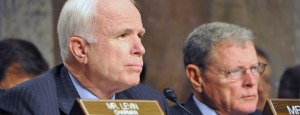
U.S. Sen. John McCain (Blade photo by Michael Key)
Gay veterans are celebrating congressional action last week to repeal “Don’t Ask, Don’t Tell,” 17 years after Congress passed a law banning gays from serving openly in the U.S. military.
The House and Senate took separate actions that would lead to an end of the statute. Both chambers approved amendments repealing “Don’t Ask, Don’t Tell” as part of major defense budget legislation known as the fiscal year 2011 defense authorization bill.
On May 27, the House voted 234-194 on the floor in favor of an amendment sponsored by Rep. Patrick Murphy (D-Pa.). The next day, the chamber voted 229-186 in favor of passing the entire defense bill.
Five Republicans voted in the affirmative on the amendment: Reps. Judy Biggert (Ill.), Joseph Cao (La.), Charles Djou (Hawaii), Ron Paul (Texas) and Ileana Ros-Lehtinen (Fla.). Joining other Republicans to vote against the measure were 26 Democrats.
The Senate Armed Services Committee voted 16-12 in favor of an identical repeal measure sponsored by Sen. Joseph Lieberman (I-Conn.).
In that chamber, Sen. Susan Collins (R-Maine) was the only Republican to vote in favor of repeal. The sole Democrat who voted against the amendment was Sen. Jim Webb (D-Va.). He had earlier told media outlets that he sees no need to preempt the Pentagon’s “Don’t Ask, Don’t Tell” study by voting in favor of repeal at this time.
The legislative compromise adopted by both chambers of Congress would repeal “Don’t Ask, Don’t Tell” only after the Defense Department completes its study on the issue, due Dec. 1.
Additionally, President Barack Obama, Defense Secretary Robert Gates and Chairman of the Joint Chiefs of Staff Adm. Michael Mullen would have to certify that repeal won’t undermine military readiness — and 60 days would have to pass after this certification before repeal would take effect.
The measure also notably lacks the non-discrimination language for gay, lesbian and bisexual service members that standalone repeal bills contained.
Even with the compromise, though, many gay former service members were delighted with Congress for taking action.
Mike Almy, a gay former Air Force communications officer who was discharged under “Don’t Ask, Don’t Tell” in 2006 and recently testified before the Senate on the issue, witnessed the vote in the House chamber.
“The whole floor and the gallery erupted with a cheer,” he said. “There were quite a few tears of joy and disbelief, including myself. I still get choked up when I think about it.”
Following the vote in the Senate Armed Services Committee, Almy said repeal supporters visited the office of Sen. Ben Nelson (D-Neb.) to thank him for his vote in favor of ending “Don’t Ask, Don’t Tell.”
Nelson told the Blade last month that he wouldn’t vote in favor of a measure repealing “Don’t Ask, Don’t Tell.” But after Sen. Joseph Lieberman (I-Conn.) unveiled his compromise legislation, Nelson signaled he would vote in favor of the measure.
Almy said Nelson’s staffers told repeal supporters that they received 40,000 phone calls in Nebraska for repeal and 1,100 against.
“I was speechless,” Almy said. “I was completely dumbfounded there was that much support in Nebraska for repeal. It was just an incredible week overall.”
Retired Navy Capt. Joan Darrah, a lesbian who retired from service in 2002 because of “Don’t Ask, Don’t Tell,” also said she was pleased with Congress, calling the votes “a tremendous effort and a great result.”
But Darrah, who lives in Alexandria, Va., said she’s “distressed” about Webb’s vote against repeal.
“I’ve met and corresponded with Sen. Webb many times and I’m disappointed,” she said.
Darrah said she’s willing to live with the compromise, though, and didn’t think Mullen would delay certification of repeal once the Pentagon study is complete.
“This approach that they’ve come up with allows the study to conclude — and the study is supposed to be how to implement it, not if we should,” she said. “I think that this is an excellent compromise. We need the Senate to vote on it and then get on with getting rid of this, frankly, un-American and discriminatory law.”
Also expressing excitement about the congressional votes was a gay man from Chesapeake, Va. The active duty Navy sailor, who served in Iraq and Afghanistan, spoke to the Blade on the condition of anonymity to avoid to being outed under “Don’t Ask, Don’t Tell.”
He called the action from Congress “long overdue” and said “it’s been a rough hell” serving in the military for seven of the 17 years since “Don’t Ask, Don’t Tell” was enacted.
He said he’s willing to accept the compromise advanced by Congress because “we’re standing on the right side of history” and didn’t think Obama, Gates or Mullen would delay certification of repeal.
“Adm. Mullen said it best — men and women are serving in an institution where integrity is key, but we’re asking them — asking us — to hide who we are,” said the man. “I don’t think we’ll have any problem at all.”
Following the vote, Obama issued a statement on the “Don’t Ask, Don’t Tell” action. The White House previously said it would support the compromise legislation because it allows the Pentagon to complete its study on the issue.
Obama said he was “pleased” with the outcome while stressing the importance of the Pentagon’s “Don’t Ask, Don’t Tell” study due at year’s end.
“I have long advocated that we repeal ‘Don’t Ask Don’t Tell,’ and I am pleased that both the House of Representatives and the Senate Armed Services Committee took important bipartisan steps toward repeal tonight,” Obama said.
The president said the Pentagon’s review was “key to successful repeal” and that he was grateful the amendments approved by Congress “will ensure that the Department of Defense can complete that comprehensive review that will allow our military and their families the opportunity to inform and shape the implementation process.”
Hurdles remain in repeal process
Even with Congress taking action to end “Don’t Ask, Don’t Tell,” the legislation approved by the House and the Senate committee still has to make its way to the president’s desk and win his signature before it’s enacted.
And a number of obstacles could prevent the bill from reaching the White House or being signed into law. However, supporters of repeal are saying these roadblocks are less numerous than obstacles before the congressional votes on “Don’t Ask, Don’t Tell.”
Alex Nicholson, executive director of Servicemembers United, said the legislation didn’t “have a lot” of possible roadblocks preventing it from being signed by the president.
Still, one problem that supporters of repeal could face is a filibuster of the defense authorization bill when it reaches the Senate floor.
Sen. John McCain (R-Ariz.), ranking Republican on the Senate Armed Services Committee and chief opponent of repeal in the Senate, had pledged to find the 60 votes in the Senate necessary to block the bill from moving forward.
Roll Call newspaper reported May 27 that McCain said he’ll “without a doubt” support a filibuster if the bill goes to the floor with repeal language.
“I’ll do everything in my power,” McCain was quoted as saying. “I’m going to do everything I can to support the men and women of the military and to fight what is clearly a political agenda.”
But mustering 60 votes to filibuster the defense bill could prove a challenge for McCain.
Two senators who voted against the inclusion of “Don’t Ask, Don’t Tell” repeal language in the defense bill — Jim Webb (D-Va.) and Scott Brown (R-Mass.) — later voted in favor of reporting out of committee the defense bill as a whole. Their votes could be seen as signs they wouldn’t support filibustering the legislation on the floor.
Nicholson said he believes Senate Majority Leader Harry Reid (D-Nev.) has the votes to shut down McCain’s filibuster threat on the bill, but added it’s “never a guaranteed thing.”
“I personally think Jim Webb and Scott Brown’s votes are still a little volatile,” Nicholson said. “While they voted to report the bill out of committee, I don’t know that they’re solid allies on this. If McCain figures out a way to try to block this with a filibuster, I wouldn’t count Brown and Webb in our camp 100 percent.”
During a press conference last week, Senate Armed Services Committee Chairman Carl Levin (D-Mich.), hailed as a champion of repeal in the Senate, dismissed the chances of a successful filibuster on the defense authorization bill.
“I think it’s hard to filibuster a defense bill,” Levin said. “There’s so much in here for our troops. The fact that there’s one provision in here that some people don’t like — it seems to me [that] would not be [a] sufficient deal for 41 senators to filibuster a defense bill.”
Levin said he wants to bring the legislation before the full Senate sometime before the August recess.
Nicholson said another threat on the Senate floor could be a strike-and-replace amendment modifying the “Don’t Ask, Don’t Tell” language, such as one that changes the scope of the Pentagon study on the issue.
Conservatives have called for legislation that reconfigures the study so that it would focus on whether repeal of “Don’t Ask, Don’t Tell” would have a significant impact on improving military readiness.
“Something like that could be very appealing, especially if it’s rather moderate in nature,” Nicholson said.
Making the language different in both bills would mean the differences would have to be hashed out by conference committee, which could jeopardize any repeal provision being in the final bill.
An unrelated issue that could preclude Obama from signing the defense bill is funding for an alternate engine program for a next generation military aircraft known as the Joint Strike Fighter.
The House version of the legislation authorizes $485 million in funds for the second engine for the aircraft. Last week, an amendment failed in the House that would have stripped the funding from the legislation. The Senate committee’s version of the legislation authorizes no funding for the program.
In a statement, Obama spoke out against the funds for the alternate engine program in a Statement of Administration Policy on the defense bill as a whole. He subsequently warned Congress he would veto the legislation if it reaches his desk with such funding.
“As the Statement of Administration Policy made clear, our military does not want or need these programs being pushed by the Congress, and should Congress ignore this fact, I will veto any such legislation so that it can be returned to me without those provisions,” Obama said.
The issue of funding for the alternate engine program has perennially been a point of contention between Congress and the White House. According to Reuters, 2010 marks the fourth consecutive year in which the Pentagon has voiced concern about the program.
Nicholson said he didn’t know if the veto threat was “too serious of a problem,” but noted it’s something supporters of repeal should monitor.
He said repeal supporters could either push Congress to take out funding for the alternate engine program or lobby Obama not to veto the bill over the funding.
“In the end, I don’t think that’s going to be a big problem,” Nicholson said. “Even if he did veto it and it went back, I feel certain with the majorities by which we won the House and the way it’s aligned in the Senate, I don’t really fear that the ‘Don’t Ask, Don’t Tell’ language will be threatened or in play.”
Levin, a supporter of funding for the alternate engine program, also said during the press conference last week that Congress and the administration would find a way to work through the disagreement on the issue.
“There’s all kinds of items in this bill,” he said. “It’s difficult for me to believe the president would veto an entire bill over just one provision.”





National
Man charged in Mall of America shooting plot inspired by Pulse massacre: report
Suspect exchanged hundreds of messages, pledged loyalty to ISIS
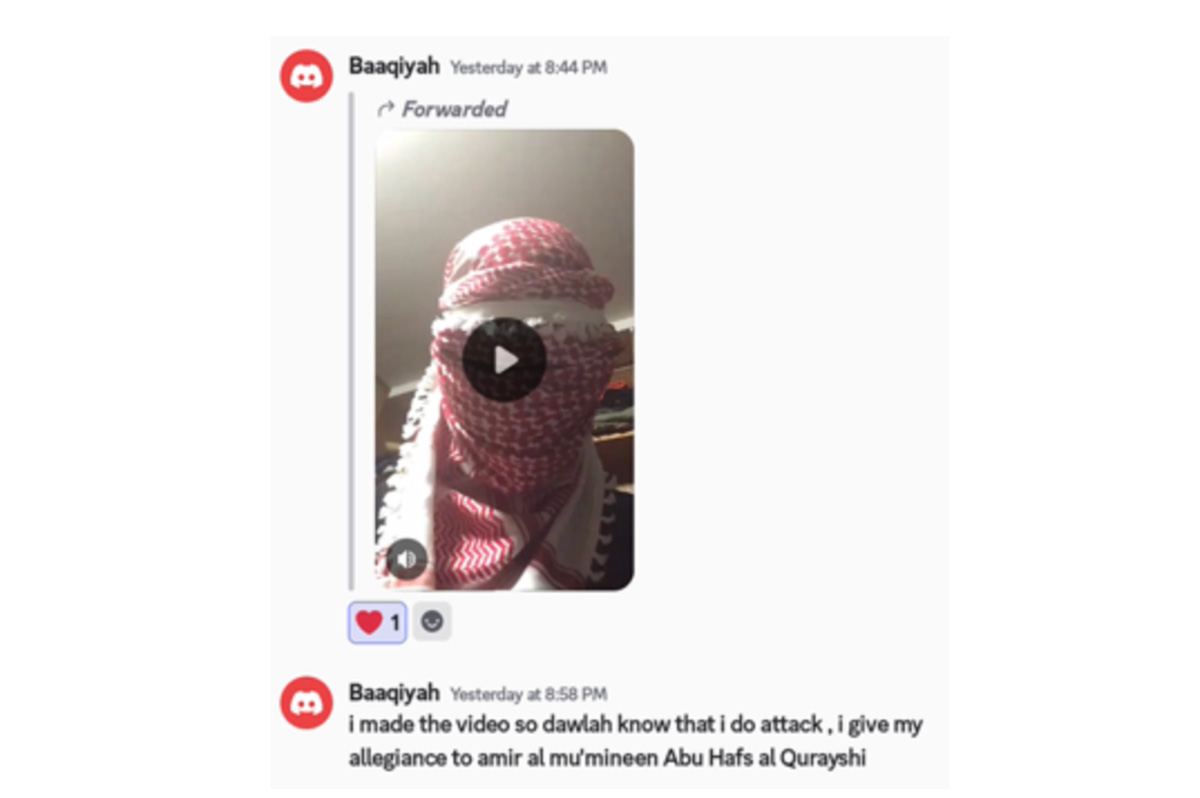
The U.S. Department of Justice charged Sheikhdoon Abdullahi Mohamud, 18, of Richfield, Minn., on Oct. 7 with one count of knowingly receiving a firearm and ammunition in order to commit a federal crime of terrorism. Mohamud allegedly planned to carry out a mass-casualty attack in support of ISIS, inspired in part by the Pulse nightclub massacre that took place on June 12, 2016 when then-29-year-old Omar Mateen murdered 49 people and wounded 58 – one of the deadliest mass shootings in U.S. history, and the deadliest targeting the LGBTQ+ community.
According to a DOJ statement release, Mohamud was arrested on Oct. 6 by the FBI, which had arranged to sell him an AK-47 assault rifle, magazines, and ammunition through an undercover FBI employee. Mohamud was arrested shortly after paying $600 in cash and taking possession of those items; he reaffirmed his intention to shoot people at the Mall of America during the transaction.
“Mohamud allegedly sought to carry out a mass-casualty shooting at the Mall of America, expressing a desire to emulate some of the most horrific ISIS-inspired attacks in the United States, including the atrocities at Pulse Nightclub and 2025 New Year’s Day attack in New Orleans,” said Assistant Attorney General for National Security John A. Eisenberg in the statement by the DOJ. “The National Security Division will continue to work closely with the FBI and Joint Terrorism Task Force to track down and prosecute ISIS-inspired terrorists in the United States.”
According to the complaint, beginning on or about December 2024, Mohamud had exchanged hundreds of messages through multiple social media and messaging apps with a confidential source, and expressed a desire to travel to Somalia to join a designated foreign terrorist organization to fight on their behalf.
The defendant stated many times that if he was unable to travel overseas because of a lack of funds, he planned to carry out a mass-casualty event in Minnesota in support of ISIS.
According to the DOJ, “In July 2026, Mohamud sent messages discussing his intent to carry out a mass-casualty shooting attack at the Mall of America because he claimed it was owned by Jews. He wrote that [he] wanted to kill 30 to 60 people so no one would go there.”
“During the course of his communications, Mohamud stated that he wanted to commit an attack similar to those of the Pulse Nightclub mass-shooting in Orlando, the Bondi Beach mass-shooting in Australia, and the New Year’s Day vehicle-ramming attack in New Orleans.”
This case is being prosecuted by Trial Attorney Ryan White of the National Security Division’s Counterterrorism Section and Assistant U.S. Attorney Benjamin Bejar for the District of Minnesota.
California
Calif. GOP gubernatorial candidate ad ‘disgusting attempt to exploit lesbian intimacy’
Activists, anti-LGBTQ religious leaders criticized Steve Hilton spot

Two women sit on a bed, a Pride flag hanging behind them. One is nervous; the other tells her to be calm and that she’ll do “all the work.” The music swells. The two hold hands and — fill out a ballot voting for Steve Hilton?
This is the new advertisement from the Hilton gubernatorial campaign that is drawing rebuke from both sides of the aisle, but for very different reasons.
Jorge Reyes Salinas, the communications director at Equality California, said the ad was an insult to the queer community.
“This ad is a disgusting attempt to exploit lesbian intimacy for political attention,” he said. The advertisement plays on media tropes that Salinas says “reduce lesbian and bisexual women … to sexual entertainment,” rather than showing them as well-rounded characters. “Any group of the LGBTQ+ community deserves the same dignity and respect as everyone else,” he said.
The ad is truly hyper-sexualized. It ends with one woman telling the other, “Now lick it.” The two pause and stare before she reveals an envelope to send the ballot, and large text pops up saying, “Just try it!”
Salinas characterized the ad as a desperate attempt to get attention from a candidate who is trailing far behind in the polls in heavily Democratic California. The Democratic candidate Xavier Becerra, who is endorsed by Equality California, holds a 25-point lead over Hilton according to recent polling by the UC Berkeley Institute of Governmental Studies.
Conservatives have also criticized the ad.
Influential evangelical Pastor Jack Hibbs thought the ad was distasteful and said, “lesbianism among college girls and some high school girls that right now is an actual pandemic of social ill.” Republican attorney general candidate Michael Gates said it undermines “the sanctity of the relationship between parents and their children.” This criticism is rather confusing because although the ad features two relatively young women, they both appear to be adults, not minors.
“The comments from Pastor Jack Hibbs should be criticized because there is nothing wrong with two women being attracted to each other,” Salinas said. “We’re calling out the ad’s stereotypes, while also rejecting the homophobia in the response to it … by other Republicans.”
The backlash from Hilton’s own party and supporters shows that an advertisement full of queer innuendo was ill-considered, considering the national GOP’s attacks on LGBTQ people in recent years. Hilton himself has been campaigning against transgender girls and women competing in school sports and using locker rooms that correspond with their gender identity. This context might be why Hilton’s political base responded to the ad just as poorly as the liberal voters he was attempting to court.
Hilton says the ad is part of a new series rolling out before Election Day, showing stereotypical California liberal archetypes voting for Hilton. He claims these ads are authentically filmed with real actors, as opposed to being A.I. generated, like many of his previous ads. One other advertisement has been released so far by the campaign showing a man at a spiritual retreat also being swayed to vote for Hilton, although it is notably absent of sexual innuendo.
Caleb Kaufman is a California Local News Fellow placed with the Los Angeles Blade. The California Local News Fellowship is a state-funded initiative to support and strengthen local news reporting. Learn more about it at fellowships.journalism.berkeley.edu/cafellows.
2026 Midterm Elections
Trump uses anti-trans slur against Democratic Senate candidate
President mocked Annie Andrews

President Donald Trump used an anti-trans slur against Democratic South Carolina Senate candidate Annie Andrews on Monday as he sought to rally support for Republicans in the state’s Senate race.
In a post on Truth Social, Trump attacked Andrews three times, referring to her as “trannie” while promoting U.S. Sen. Darline Graham (R-S.C.)’s campaign.
Andrews is running against Graham for a Senate seat in the solidly Republican state.
Earlier this year, Graham was specially appointed to the seat following the death of her brother, Lindsey Graham, who represented South Carolina in the Senate from 2003 to 2026.
Andrews, the Democratic nominee from the state, is a pediatrician that lives in Charleston with her three children. She told NBC News that she will “work with anyone to put South Carolina first.”
“As a mom and a pediatrician, I’m in this race to fight for my patients, my three kids, and South Carolina,” Andrews said, adding that “lowering costs and making life better for families across our state is going to take all of us working together.”
Andrews used the attention from the president’s attack to emphasize what she described as a focus on policy issues rather than the culture wars that have dominated much of the political debate.
“If you care more about your bills than the politics in Washington, this campaign is for you,” she added.
Trump’s remarks have drawn criticism from leaders on both sides of the aisle.
Senate Minority Leader Chuck Schumer (D-N.Y.) condemned Trump’s words Monday night on social media, calling his attacks on Andrews “despicable.”
“Annie Andrews is a mom and pediatrician who’s always put her community first — and she’s exactly who South Carolina needs representing them in the Senate,” Schumer said on X.
Former South Carolina Gov. David Beasley, a Republican, also criticized the president’s attack on Andrews, urging voters to “reject politics based on division and hate.”
“This is abhorrent. Elections don’t have to be about cruelty and lies. South Carolina deserves better,” Beasley wrote Monday night on X.
South Carolina has not elected a Democratic senator in nearly three decades.
Andrews’s campaign website does not mention her positions on LGBTQ issues.
The Washington Blade reached out to Andrews’s campaign for comment on Trump’s attack and her positions on transgender rights but did not hear back by time of publication.

Bet Mishpachah participates in D.C. Oct. 7 commemoration ceremony

Man charged in Mall of America shooting plot inspired by Pulse massacre: report

Bar Betsie, inviting and intimate, marks one-year anniversary

Trump, Netanyahu, and Putin are all war criminals

Center Arts Gallery celebrates 10 years with reception, auction

Eliot Glazer’s new book an engaging collection of essays

Equality Chamber hosts Pride in Business Expo and Profits & Pours

Learn more about Virginia’s queer history

The financial realities facing LGBTQ+ first-time buyers

‘Merrily’ is for Sondheim super fans, the uninitiated, and anyone in between
-

 Books5 days ago
Eliot Glazer’s new book an engaging collection of essays
-
Out & About5 days ago
Equality Chamber hosts Pride in Business Expo and Profits & Pours
-
Out & About5 days ago
Learn more about Virginia’s queer history
-
Real Estate5 days ago
The financial realities facing LGBTQ+ first-time buyers