Health
The benefits of wellness coaching
Sometimes it takes a holistic approach to get at the root of a health issue

Photo of Donna Dowdell (left), a doctor specializing in holistic nutrition, talking about the value of natural medicines to Cynthia Ricks-Brunson, Human Resource Department specialist, Enlisted Management Division, Directorate of Human Resources, U.S. Army Garrison. (Photo by Kevin Stabinsky via wikimedia commons)
Holistic is a buzz word that’s used a lot these days but the concept extends to the coaching world as well — certified wellness coaches are trained to assess and guide your overall health and well being.
Wellness coaching is a relatively new trend in life coaching that addresses the entire person and focuses on his or her overall life style rather than some of its elements. In particular, there is a more directed focus on eating strategies, fitness, exercise and the integration of healthy habits into daily lives.
The American College of Sports Medicine, the gold standard certifying agency in the fitness industry, stands by wellness coaching and now endorses a coaching certification program. There are several other wellness coaching certifications that are gaining respect as well. Some of the more reputable personal training certifications are integrating the wellness coaching paradigm into their certification programs.
Some physicians started referring their patients as they recognize they deal with physical and emotional manifestations of the impact unbalanced lives have on their patients. Stressors we have to deal with on a daily basis and might lead to all kinds of ailments require changing our attitude, life style, replacing bad habits with good ones, etc. It is very hard to do on our own, just as it’s hard to bring our physical fitness to the desired level without a personal trainer if we want long-lasting results.
Wellness coaching brings together several wellness disciplines together such as nutrition, physical training, yoga, meditation and spirituality. Some wellness coaches might be experts in any of those disciplines or none. What they are certainly experts in is helping clients develop a vision for a healthy life style where those elements are present and are part of the strategy for overall wellness.
It might be one or two, or all of these elements depending on the client’s needs and goals. Coaches have a comprehensive tool kit and extensive knowledge they acquired through their training that is designed to assess the client’s “current state of affairs,” set up goals, develop vision and a sound strategy to achieve those goals. Just as a physician might refer a patient to a wellness coach, a coach might refer a client to a personal trainer, a nutritionist, a yoga instructor, etc. The difference between doing it on our own and as part of wellness coaching is that the coach will keep us accountable on incorporating these elements in our daily/weekly/monthly activities in the context of our whole life while keeping us focused on our short term and long term realistic goals.
How many of us fail at New Year’s resolutions? How many diets fail in the long term? Just as the Japanese proverb says, “Vision without action remains just a dream; action without a vision is a nightmare,” we tend to stop at either having our vision of our life in a distant future or frantically trying to do this and that just because we saw it in a magazine or on TV having no idea how it applies to each of us individually.
We might be pretty good at vision but then we fail at acting consistently toward making our vision our reality. Or, we grab a trendy diet and rigorously follow it while ignoring daily stress, lack of exercise, dissatisfaction at work place, in the family, giving up on our passion and just being kind and nurturing to ourselves.
In a results-driven culture of high stress, wellness coaching is especially popular among those who woke up to the fact and realize that there is more to life than a hefty bank account, a promotion or a 10-hour work day. The realization is that there is something missing or I am missing out on something. How often is it pondered that a 10-hour work day can be utterly fulfilling if our work is our passion and not an obligation. If we get to change that one element our life can change completely. But those of us who are stuck at doing it need to realize that while we are thinking we are providing our needs, those needs are not met anyway due to lack of time, poor health, low energy level, bad relationships, etc.
I like to think of wellness coaching as a new awareness that can bring both peace and passion into our life while staying fit and healthy. It may seem like a lot of work if you have never worked with a coach, a nutritionist, a personal trainer, a spiritual advisor, yoga instructor, etc. Nonetheless, we are priceless commodities and wellness coaching can be one of the most effective investments you can make toward your overall health and well being.
Health
United States Conference on HIV/AIDS grapples with federal budget cuts
Annual gathering is largest of its kind in the country

Advocates, public health experts, and healthcare providers gathered for the United States Conference on HIV/AIDS on Sept. 17 in Anaheim, Calif.
The conference is the largest of its kind in the nation and came amid a wave of new challenges for HIV research and treatment. Since the beginning of the second Trump-Vance administration, federal spending cuts have targeted HIV/AIDS programs, including the gutting of the U.S. Agency for International Development and proposed cuts to PEPFAR, which supports HIV testing and treatment globally, in 2025.
Last year, Congress maintained funding for HIV programs after proposed cuts faced opposition from advocacy groups and bipartisan criticism. Yet, this year Congress has proposed similar cuts to many of the same programs, which would cut nearly one billion dollars in HIV funding. The majority of the cuts would impact HIV prevention and outreach, which includes ending nearly all Centers for Disease Control and Prevention HIV prevention activities.
“If we continue down this path,” said Jeremiah Johnson, the executive director of PrEP4ALL, an advocacy group that supports expanding access to HIV prevention. “We’re going to see more people falling off treatment. We’re going to see more wait lists. That’s going to lead to more people dying from AIDS-related complications.”
Cuts and challenges
The funding cuts loomed over the conference and inspired protest from activists.
On the first day of USCHA, activists with Save HIV Funding organized a mock funeral outside the convention center. Advocates living with HIV wrote eulogies for themselves, meant to show the consequences of diminished access to treatment. Then activists marched through the conference carrying fake coffins.
Johnson, who helped organize the protest, said that “the Trump administration has eviscerated global aid … and the fears that many of us are just talking about hypothetically for ourselves at the moment are already happening [internationally]. And so we wanted to place that front and center at this conference.”
The attacks on funding for HIV research and outreach come at a complicated time for the movement to end the AIDS epidemic. While options for prevention and treatment have never been more accessible, such as PrEP and antiretroviral therapy, there have been some concerning upticks in infections, particularly among communities of color.
Southern states account for the majority of new HIV infections in the country, despite making up only 38 percent of the population. And these infections impact disproportionately Black and Latino communities. According to the CDC, even as overall HIV infections decreased from 2018 to 2022, diagnoses of HIV among Latinos grew by 17 percent, with a majority of this increase happening in the South.
Stigma is still the biggest barrier for people seeking out HIV treatment, said Guillermo Chacón, president of the Latino Commission on AIDS.
“The progress that we [made] in the past two years has been demolished,” he said.
Chacón blames the federal government for stigmatizing HIV treatment by using harmful rhetoric about queer people.
“The level of homophobia and transphobia right now is even higher because it has been used as a political message to create fear and division in our country,” he said.
Chacón believes that research and outreach must be done to reverse the rising HIV infections among Latinos. However, this is exactly the type of research that the Trump-Vance administration is targeting most intensely. Research into “health disparities” — why some health problems impact certain communities more than others — has been heavily criticized by the White House, along with other research that it considers “woke” and claims is not supported by science.
Impact felt at conference
The opening plenary for the conference addressed some of the funding challenges the movement was facing but tried to shift the focus to the victories the movement has seen over the years. Speakers highlighted historic successful activist campaigns like ACT UP, and recent improvements in medical care and access to treatment.
Randevyn Pierre, head of U.S. external affairs at ViiV Healthcare, the sponsor of the plenary, took the stage to celebrate the success of the U = U campaign (undetectable viral load =
untransmittable HIV virus), and ViiV’s investment of $33 million in HIV community organizations across the U.S. This comes as the Trump-Vance administration has made moves to end direct funding of community-based organizations, opting to give the funding to state healthcare agencies.
The speakers at the conference discussed reducing stigma for those living with HIV and the joy of living authentically. They also emphasized the diverse groups of people that are impacted by HIV and how they can come together to fight for a cure. Longtime AIDS activist Rae Lewis Thorton exclaimed, “When they tell me there’s a cure to HIV, I’m gonna take off my 4-inch heels and put on gold slippers,” to applause from the audience.
The opening plenary also featured song and dance from a variety of artists, many of whom spoke about how HIV has impacted their own lives and how advocacy has uplifted their spirits. However, the joyous atmosphere at the conference would not last.
On the final day of USCHA, Geri Donenberg, the associate director of AIDS research at the National Institutes of Health, took the stage to address the conference.
As she spoke, phones began to buzz around the room with breaking news: the Trump-Vance administration was drafting an executive order to create an external board to oversee NIH grants and screen them for political content. NMAC CEO Harold Philips took the stage after Donenberg to address the crowd. “It’s up to us,” Philips said, “to hold NIH accountable.” He added that HIV advocates “have supporters inside NIH who are struggling and working to do the right thing. We have to have their back.”
Chants of “stand up, fight back, fight AIDS” erupted from the crowd as Philips spoke. “We do have to fight back. We do have to continue to fight,” Philips replied.
Caleb Kaufman is a California Local News Fellow placed with the Los Angeles Blade. The California Local News Fellowship is a state-funded initiative to support and strengthen local news reporting. Learn more about it at fellowships.journalism.berkeley.edu/cafellows.
Health
AIDS Healthcare Foundation announces 3 million people globally in its care
Los Angeles-based group lauded ‘historic milestone’

The AIDS Healthcare Foundation, a Los Angeles-based nonprofit group founded in 1987 that has become the world’s largest HIV/AIDS organization, has announced it has three million people in care around the world.
In a statement released on May 26, the organization, known worldwide as AHF, said the latest accomplishment reflects its global commitment to HIV prevention, care, and treatment. It says the accomplishment comes at a time when AHF marks the 25th anniversary of its first global programs launched in South Africa and Uganda in early 2001.
The statement says the three million people in care milestone also comes while the group approaches the 40th anniversary of its founding in 1987.
“Today, AHF provides lifesaving services in 50 countries across Africa, the Americas, Asia, and Europe, supporting millions of people living with HIV through a network of 1,056 global clinics, 79 healthcare centers in the U.S., 67 pharmacies, 96 wellness centers, 26 Out of the Closet thrift stores, outreach programs, and community partnerships,” the statement says.
“This accomplishment is far more than a number — it represents 3 million individuals whose lives have been touched by compassion, commitment, and the belief that healthcare is a human right,” Condessa M. Curley, the AHF board chair, said in a statement. “We extend our deepest gratitude to every member of the AHF team whose dedication made this milestone possible,” Curley said.
The AHF website notes the organization was founded in 1987 in Los Angeles as a network of hospices committed to “fighting for the living and caring for the dying” at a time when there was no effective treatment for HIV/AIDS. A statement on the website says since that time AHF has greatly expanded, converting its hospices into healthcare centers “and building a new paradigm for HIV care both in the United States and around the world.”
The statement adds, “Under the leadership of president and co-founder Michael Weinstein, AHF has grown from a group of friends dedicated to creating dignified hospice care to the largest AIDS organization in the world.” It says Weinstein “has been at the forefront of creating cutting-edge healthcare and advocacy programs and continues to drive the organization forward with the aim of saving more lives around the world.”
The statement announcing the milestone has also come at a time when more than 40 million people worldwide are living with HIV, “while hundreds of thousands continue to die annually from AIDS-related illnesses despite the availability of effective treatment.”
It says AHF’s response has included an expansion of its prevention and public health programs worldwide. In 2025 alone, according to the statement, AHF and its affiliated programs provided nearly five million free HIV tests globally and distributed more than 54 million free condoms, “underscoring the organization’s continued emphasis on both prevention and treatment.”
In D.C. AHF operates health care centers at 1701 K St., N.W., Ste. 400 [202-293-8680], 650 Pennsylvania Ave., S.E., Ste. 310 [202-350-5000], and 1647 Benning Road, N.E., Ste. 300 [202-350-5000].
Cannabis Culture
LGBTQ people, weed, and mental health: what you need to know
Community uses marijuana at much higher rates than general population

Uncloseted Media published this story on May 7.
By SPENCER MACNAUGHTON | In 2025, the global cannabis market size was valued at nearly $103 billion. By 2034, that number is expected to explode by roughly 1,400 percent to more than $1.43 trillion.
In short, as an increasing number of countries legalize marijuana use, everyone is starting to consume a lot more weed. And LGBTQ people tend to use cannabis at much higher rates than the general population. One study found that 55 percent of lesbian and 45 percent of gay young adults use marijuana, compared to about 33 percent and 37 percent, respectively, of their straight counterparts.
As LGBTQ people face a mental health crisis, the mainstream stereotypes that depict weed as an antidote for anxiety, panic and depression aren’t painting the full picture. And that could be exacerbating the mental health struggles so many queer people, and especially youth, face.
Here’s what the research demonstrates about marijuana and its effects on mental health:
- Multiple studies suggest a link between marijuana use and an increased risk of mental health disorders, including schizophrenia, depression and anxiety in individuals who are genetically predisposed.
- One study found that daily marijuana use, especially among younger people, makes some individuals seven times more likely to develop psychosis.
The increase in higher-potency strains of marijuana could pose unknown risks. In 1995, the average content of Tetrahydrocannabinol (THC) in confiscated marijuana was less than 4 percent. In 2022, it was more than 16 percent. Researchers don’t know the full extent of the impact that these higher concentrations can have on mental health and especially on younger people whose brains are still developing.
- A systematic review of studies published between 2013 and 2025 found damning results for the mental health of young cannabis users:
They were 51 percent more likely to experience depression, 58 percent more likely to experience anxiety, between 50 and 65 percent more likely to experience suicidal ideation and 80 to 87 percent more likely to have attempted suicide.
- While the above stats paint a grim picture, there is also some research that suggests benefits of cannabis use:
- A 2025 systematic review found that “medicinal” weed showed some efficacy in relieving withdrawal symptoms of opioid use disorder. THC use has been associated with improvement of post-traumatic stress disorder symptoms, bipolar symptoms and sleep quality.
- Other studies found that THC administered in a controlled setting was associated with a decrease of symptoms and adverse effects for a range of mental health disorders, including schizophrenia, psychotic symptoms, and anorexia nervosa.
Beyond what we pulled from academia, there is an astounding lack of information about the interplay between weed and mental health. As we dive deeper into Mental Health Awareness Month, I hope advocacy organizations, influencers and news outlets ramp up their coverage of this important topic that affects the countless LGBTQ weed smokers, many of whom are already struggling.

Essential queer horror classics for Halloween

Solidarity beyond the parade: the actual cost of Pride

Physician: addiction doesn’t always look the way you think it does

Calendar: October 9-15

ICC unseals arrest warrants for Taliban officials accused of persecuting LGBTQ people, women

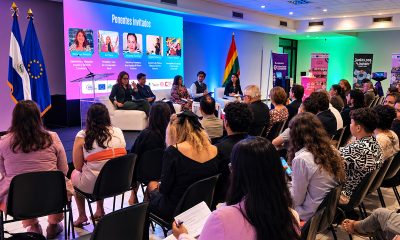
Alianza para la Inclusión fortalece la defensa de derechos LGBTQ en Centroamérica

The facts about Victory Fund’s investigation and the path forward

In Ga., 2 trans candidates believe voters are ready for them

Bessent says Trump chose him for his qualifications, not his sexuality

10 years later, we still can’t shake Barry Jenkins’s ‘Moonlight’
-

 Central America5 days ago
Alianza para la Inclusión fortalece la defensa de derechos LGBTQ en Centroamérica
-
Opinions5 days ago
The facts about Victory Fund’s investigation and the path forward
-
Georgia5 days ago
In Ga., 2 trans candidates believe voters are ready for them
-
Federal Government5 days ago
Bessent says Trump chose him for his qualifications, not his sexuality