World
Zimbabwe president: Arrest gays who don’t conceive children
Robert Mugabe made comments during July 5 rally in country’s capital
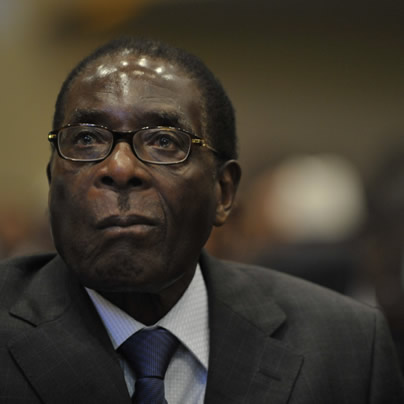
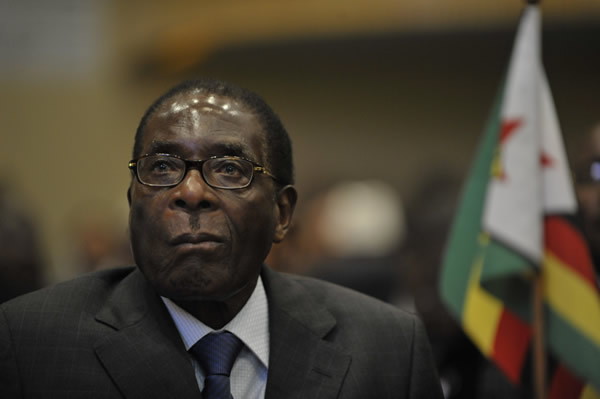
Zimbabwe President Robert Mugabe. (Photo public domain)
Zimbabwean President Robert Mugabe on July 5 said authorities should arrest gays and lesbians who don’t conceive children.
“I should like to shut them-up in some room and see if they get pregnant; if they don’t then it’s jail because they have claimed they can have children,” the tabloid New Zimbabwe quoted Mugabe as saying during a rally in Harare, the country’s capital, at which he unveiled the platform of his party, ZANU-PF, ahead of the African nation’s July 31 elections. “So, to that kind of rot, we say no, no, no, no!”
The tabloid further reported that Mugabe criticized the Anglican Church for blessing same-sex marriages.
The Zimbabwean Broadcasting Corporation noted Mugabe also blasted President Obama’s support of nuptials for gays and lesbians.
“Obama said he wished that we in Africa accepted gay marriages,” Mugabe said. “Parents, tell your children that we are against gay marriage.”
Mugabe, whom Zimbabweans elected president in 1987 after he had served as the country’s first post-independence prime minister from 1980, has previously used homophobic rhetoric against gays and lesbians.
He described gay men and lesbians who participated in the annual International Book Festival in Harare in 1995 as “dogs and pigs.” LGBTQ Nation reported Mugabe said during a speech he gave a Roman Catholic-run teacher’s college in the city of Masvingo in southeastern Zimbabwe last month that gays and lesbians “should rot in jail” as he suggested the country’s anti-homosexuality laws are too lenient.
The State Department last August criticized the Zimbabwean government’s crackdown on LGBT rights activists after police arrested more than 40 members of Gays and Lesbians of Zimbabwe (GALZ) inside the advocacy group’s Harare office. GALZ members, who routinely face harassment and even death threats, said authorities confiscated computers and pamphlets from the same office a few days earlier.
New Zimbabwe also reported that Mugabe during his Harare speech on July 5 referenced former President Canaan Banana, who in 1998 received a 10 year prison sentence after his conviction on charges sodomy, attempted sodomy and indecent assault against his former male employees.
Mugabe’s comments came less than two weeks after Obama applauded the U.S. Supreme Court ruling that found a portion of the Defense of Marriage Act unconstitutional in response to a question he received during a press conference with Senegalese President Macky Sall in Dakar, Senegal.
Obama also reaffirmed his opposition to the criminalization of homosexuality.
“When it comes to how the state treats people, how the law treats people, I believe that everybody has to be treated equally,” he said. “I don’t believe in discrimination of any sort. That’s my personal view.”
Amnesty International noted in a report it released on June 24 — two days before Obama left for his week-long trip to Africa that also included visits to South Africa and Tanzania — that 38 African countries continue to criminalize consensual same-sex conduct.
A senior administration official on Monday declined to comment, saying the White House would not “dignify Mugabe’s comments with a response.”
The Zimbabwean embassy in D.C. did not return the Washington Blade’s request for comment.
A GALZ member with whom the Blade spoke earlier this year in the nation’s capital said ZANU-PF is going to “use the issue of homosexuality as one of their campaign tools” ahead of the July 31 elections.
GALZ Chair Samba Chesterfield urged Mugabe to “desist from making such hate filled statements that impact on the lives of LGBT people” during an interview with LGBTQ Nation.
“Mugabe needs to deal with issues such as unemployment, impunity, access to clean water and corruption in government, rather than such rhetoric that does not do much to win over a despondent electorate,” Chesterfield told the website.



Eswatini
The emperor has no clothes: how rhetoric fuels repression in Eswatini
King Mswati III’s anti-LGBTQ comments can have deadly consequences
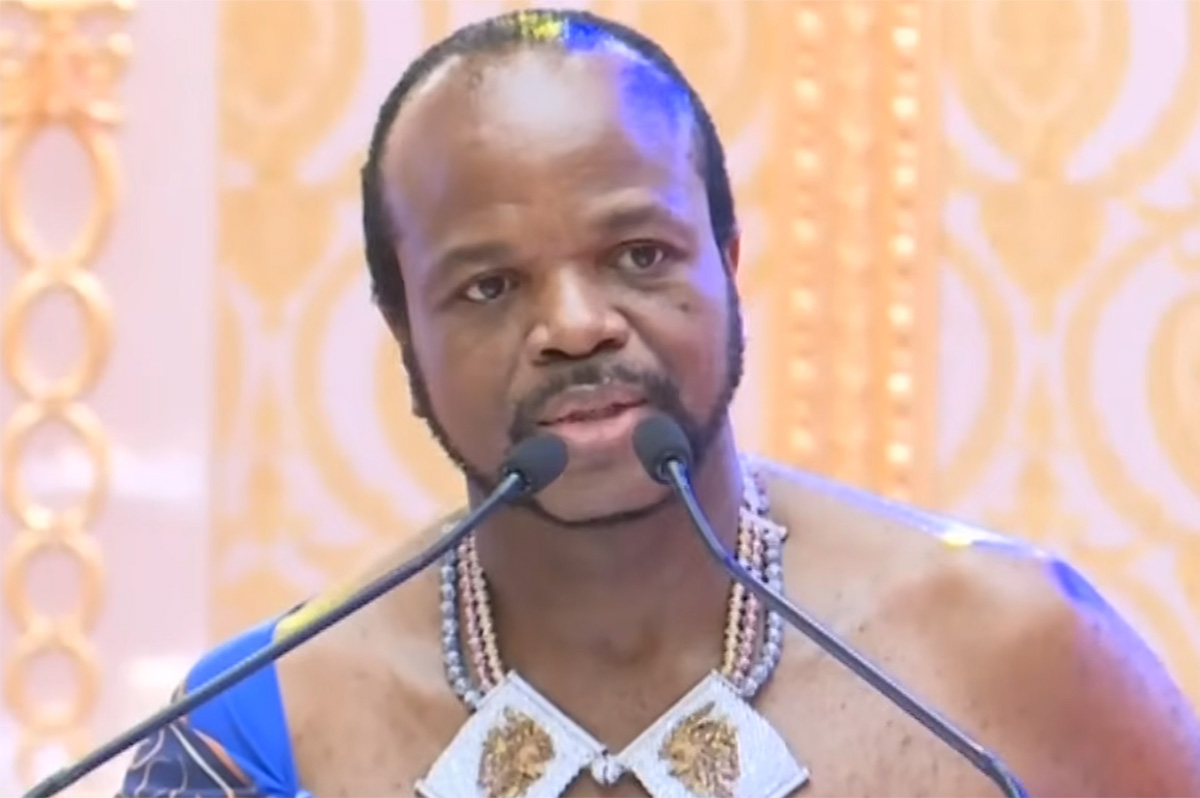
In an absolute monarchy, the words spoken by the sovereign can swiftly become a baton striking a citizen. When King Mswati III speaks, his words do not simply drift into the air as political “opinion”; they often quickly turn into, sometimes violently, state policy. This reflects the reality of Eswatini, where the right to freedom of expression, including the right to hold dissenting political views, is increasingly being systematically eroded by the very voice that claims to uphold “traditional values.”
To understand the current crisis facing the LGBTIQ+ community in Eswatini, one must view it through the lens of a broader strategy: the weaponization of culture to justify the erosion of democratic institutions, the rule of law, and human rights protections. As observed across Africa, from the streets of Harare and Dar es Salaam to the parliamentary courtrooms of Dakar and Kampala, African leaders are increasingly using the marginalised as an entry point to dismantle civil society. In Eswatini, this strategy has manifest its most brutal expression in the king’s recent harmful rhetoric concerning sexual orientation and gender identity.
The danger of the king’s words lies in how the state apparatus interprets them as a divine mandate for persecution. Recently, we have seen this “Rhetoric-to-Policy Pipeline” operate with chilling efficiency. Shortly after the Minister of Education made public vitriol against the existence of LGBTIQ+ students, reports emerged of children being expelled from schools. In a country where the king is culturally and traditionally called the “ingwenyama” (the lion), the bureaucracy acts as his pride; when leadership suggests that a particular group is “un-African” or “deviant,” the machinery of the state, along with the emboldened segments of the public, moves to purge that group from society.
For an openly gay man who has dedicated most of his adulthood to advancing equality and dignity for all, especially marginalized communities, these are not merely policy changes; they pose existential threats. When a powerful leader speaks, they offer a moral shield for the dogmatist and a legal roadmap for the policeman. In Eswatini, where political parties are banned, and the “tinkhundla” system (constituency-based system) — a system that systematically silences dissent and favors those aligned with the sovereign — is celebrated as the sole “authentic” form of governance, any identity that falls outside the narrow, state-defined “tradition” is seen as treason. By branding LGBTIQ+ rights as “ungodly” and essentially unwelcome in Eswatini, the monarchy effectively views the mere existence of queer Swazis as a subversive act against the crown.
The most harrowing example of this pattern is the assassination of human rights lawyer Thulani Maseko in January 2023. Maseko’s murder did not happen in isolation. It followed a period of heated rhetoric directed at those calling for democratic reforms. The king had publicly warned those demanding change that they would face consequences. On the evening after the king had said, “[t]hese people started the violence first, but when the state institutes a crackdown on them for their actions, they make a lot of noise blaming King Mswati for bringing in mercenaries,” Maseko was shot dead at his home in front of his family.
The parallel here is unmistakable. When the king targets the LGBTIQ+ community with his words, he is aiming at the most vulnerable. If a world-renowned human rights lawyer can be silenced following royal condemnation, what chance does a queer youth in a rural area stand when the king’s words reach the local chief or school head? This is what I call “Chaos as Governance”: a state where the law is replaced by the monarch’s whims, leaving the population in a constant cycle of managed chaos that renders collective opposition nearly impossible. Despite strong condemnation from the organization I founded, Eswatini Sexual and Gender Minorities (ESGM), recent reports already suggest growing support for the rhetoric shared by the king, indicating treacherous weeks and months ahead for ordinary queer people in Eswatini.
The monarchy’s defense of these actions is almost always based on “African tradition.” As Mswati has shown, the ban on political parties and the suppression of minority rights are framed as a return to indigenous governance, the “tinkhundla” system. But we must ask: whose culture is being defended? Is it a culture that historically valued communal care and diverse social roles, or is it a modern, imported authoritarianism cloaked in the robes of the ancestors?
When he uses his platform at the “sibaya” (traditional gathering) to alienate a segment of his own people, he is not engaging in dialogue; he is delivering a monologue of exclusion. This weaponized version of culture serves a dual purpose. First, it offers a “neocolonial” defense against international criticism, portraying human rights as a foreign threat. Second, it creates an internal enemy, the “terrorist” political dissident or the “immoral” LGBTIQ+ person, to distract from the fact that nearly two-thirds of the population live below the poverty line. In contrast, the royal family resides in obscene luxury, acquiring fleets of expensive vehicles.
The silence of Eswatini’s neighbors worsens its situation. The Southern African Development Community (SADC), a regional organization ostensibly committed to democracy and human rights, has repeatedly allowed Mswati to evade accountability. By agreeing to remove Eswatini from the Organ Troika agenda at the king’s request in 2024, SADC sent a message to every authoritarian in the region. If you conceal your repression behind the guise of tradition, we will not intervene.
The call for freedom of expression, including LGBTIQ+ rights, is a fundamental human right vital for safety and dignity. It demands that a child should not be expelled from school because of who they are. It insists that a lawyer should not be murdered for expressing their beliefs. It states that a king’s word should not be a death sentence. We must resist the “politics of distraction” that portrays the fight for minority rights as separate from the fight for democratic reform. The dissolution of political parties in Burkina Faso, the attack on lawyers in Zimbabwe, and the criminalization of advocacy in Senegal, Tanzania, and Uganda are all parts of the same pattern. They reflect a leadership class that fears its own people.
It is time for the African Union and SADC to decide whether to uphold the ideals of their lofty charters or to prioritize political convenience across Africa. For the people of Eswatini, improving livelihoods and human development can only occur when the king’s words are limited by a constitution that protects every citizen, regardless of whom they love or how they pray. Until then, the chaos is not a failure; it is the purpose. The monarch’s word may be law today, but the universal right to dignity is the only law that will endure. We must demand an Eswatini, and by extension, an Africa that seeks to improve the lives of its people, and where the “lion” protects all his people, rather than hunting those he deems “unworthy” of the shade.
Melusi Simelane is the founder and board chair of Eswatini Sexual and Gender Minorities. He is also the Civic Rights Program Manager for the Southern Africa Litigation Center.
Cuba
Cuba bajo presión y sin respuestas
Cubanos no hablan en términos geopolíticos. Hablan de sobrevivir

Las tensiones entre Estados Unidos y Cuba han vuelto a subir de tono. No es algo nuevo, pero este momento se siente distinto. Las medidas más recientes desde Washington buscan cerrar aún más los espacios financieros del gobierno cubano, limitar sus fuentes de ingreso y presionar sectores clave de la economía. No es simbólico. Es una política directa.
Desde Estados Unidos, el mensaje es claro. Se busca provocar cambios que no han ocurrido en más de seis décadas. También hay un componente interno, una presión política que responde a sectores del exilio que llevan años exigiendo una postura más dura. Todo eso forma parte del escenario.
Pero esa es solo una parte.
Del lado cubano, la respuesta sigue un patrón conocido. El gobierno habla de agresión externa, de guerra económica, de un embargo que se endurece. Cada medida se convierte en argumento para reforzar su narrativa y cerrar filas. No hay espacio para reconocer errores propios. Todo apunta hacia afuera.
Mientras tanto, la vida en la isla va por otro camino.
La crisis energética que hoy vive Cuba no empezó con estas medidas. Lleva años acumulándose. El sistema eléctrico está deteriorado, sin mantenimiento suficiente, con fallas constantes. Los apagones no son nuevos. Lo que ha cambiado es la frecuencia y la duración.
Durante años entró petróleo a Cuba, especialmente desde Venezuela. Hubo acuerdos. Hubo suministro. Y aun así, la vida del cubano no mejoró. La electricidad seguía fallando, el combustible seguía racionado, el transporte seguía siendo un problema diario.
Entonces la pregunta sigue siendo la misma.
Si el petróleo estaba entrando, ¿por qué nada cambiaba?
¿Dónde fue a parar ese recurso?
¿Dónde está el dinero que generó?
Hoy se habla de restricciones al petróleo como si fueran la causa principal de la crisis. No lo son. Empeoran una situación ya frágil, pero no la explican completamente.
Hay una historia más larga que no se puede ignorar.
Lo mismo ocurre con las brigadas médicas.
Durante años se presentaron como un gesto de solidaridad internacional. Y en muchos casos lo fueron. Médicos cubanos trabajaron en condiciones difíciles, salvaron vidas, sostuvieron sistemas de salud en otros países. Eso es real.
Pero también funcionaron como una de las principales fuentes de ingreso del Estado cubano.
Muchos de esos profesionales no recibían el salario completo por su trabajo. Una parte significativa quedaba en manos del gobierno. En algunos casos, ni siquiera tenían control sobre el dinero que generaban.
Y hay algo más duro.
Si uno de esos médicos decidía no regresar a Cuba, ese dinero no llegaba a su familia. Se quedaba retenido.
Hoy varios países están revisando o cancelando esos acuerdos. Y otra vez, la respuesta oficial es señalar hacia afuera. Pero la pregunta sigue siendo inevitable.
¿Se está perdiendo un modelo de cooperación o un sistema que dependía del control sobre sus propios profesionales?
Dentro de Cuba, la conversación suena diferente.
La gente no habla en términos geopolíticos. Habla de sobrevivir. De cómo llegar al final del día. De los apagones, de la comida que no alcanza, del transporte que no aparece, de una vida que cada vez se hace más difícil.
Hay quienes miran las medidas de Estados Unidos con cierta expectativa. No porque quieran más escasez, sino porque sienten que el sistema no cambia por sí solo. Hay una sensación de estancamiento que pesa.
Pero esa expectativa convive con una realidad concreta.
Las sanciones no golpean primero a quienes toman decisiones. Golpean al ciudadano común. Al que hace la fila. Al que pierde la comida por falta de electricidad. Al que no tiene cómo moverse.
Esa es la contradicción.
El gobierno cubano pide solidaridad internacional. Y la recibe. Países que envían ayuda, organizaciones que se movilizan, voces que defienden a la isla.
Pero hay otra pregunta que también está ahí.
¿Esa ayuda llega realmente al pueblo?
La falta de transparencia en la distribución de recursos es parte del problema. Porque no se trata solo de lo que entra, sino de lo que realmente llega a quienes lo necesitan.
Reducir lo que pasa en Cuba a un conflicto entre dos gobiernos es no querer ver el cuadro completo.
Aquí hay responsabilidades compartidas, pero no iguales.
Estados Unidos ejerce presión con efectos reales sobre la economía cubana. Eso no se puede negar. Pero dentro de la isla hay un sistema que ha tenido décadas para corregir, para abrir, para responder a su gente, y no lo ha hecho.
Esa parte no se puede seguir esquivando.
Yo escribo esto como cubano. Desde lo que vi, desde lo que viví y desde la gente que sigue allá tratando de resolver el día.
Porque al final, más allá de lo que se diga entre gobiernos, la realidad es otra.
Cuba hoy está más apretada, sí. Pero también lleva años arrastrando problemas que nadie ha querido enfrentar de verdad.
Y mientras eso siga así, da igual lo que venga de afuera. El problema sigue estando adentro.
Iran
LGBTQ groups condemn Trump’s threat to destroy Iranian civilization
Ceasefire announced less than two hours before Tuesday deadline

The Council for Global Equality is among the groups that condemned President Donald Trump on Tuesday over his latest threats against Iran.
Trump in a Truth Social post said “a whole civilization will die tonight” if Tehran did not reach an agreement with the U.S. by 8 p.m. ET on Tuesday.
Iran is among the handful of countries in which consensual same-sex sexual relations remain punishable by death.
Israel and the U.S. on Feb. 28 launched airstrikes against Iran.
One of them killed Supreme Leader Ayatollah Ali Khamenei. Iran in response launched missiles and drones against Israel and other countries that include Kuwait, Bahrain, Qatar, the United Arab Emirates, Jordan, Saudi Arabia, Azerbaijan, and Cyprus.
Gas prices in the U.S. and around the world continue to increase because the war has essentially closed the Strait of Hormuz, a strategic waterway that connects the Persian Gulf and the Gulf of Oman through which roughly 20 percent of the world’s crude oil passes.
Trump less than 90 minutes before his deadline announced a two-week ceasefire with Iran that Pakistan helped broker.
“We the undersigned human rights, humanitarian, civil liberties, faith-based and environmental organizations, think tanks and experts are deeply alarmed by President Trump’s threat regarding Iran that ‘a whole civilization will die tonight’ if his demands are not met. Such language describes a grave atrocity if carried out,” reads the statement that the Council for Global Equality more than 200 other organizations and human rights experts signed. “A threat to wipe out ‘a whole civilization’ may amount to a threat of genocide. Genocide is a crime defined by the Genocide Convention and by the Rome Statute of the International Criminal Court as committing one or more of several acts ‘with intent to destroy in whole or in part a national, racial or religious groups as such.'”
The statement states “the law is clear that civilians must not be targeted, and they must also be protected from indiscriminate or disproportionate attacks.”
“Strikes on civilian infrastructure — such as the recent attack on a bridge and the attacks President Trump is repeatedly threatening to carry out to destroy power plants — have devastating consequences for the civilian population and environment,” it reads.
“We urge all parties to respect international law,” adds the statement. “Those responsible for atrocities, including crimes against humanity and war crimes, can and must be held accountable.”
The Alliance for Diplomacy and Justice, Amnesty International USA, Human Rights Watch, the American Civil Liberties Union, the NAACP, MADRE, and the Robert and Ethel Kennedy Human Rights Center are among the other groups that signed the letter.

Calendar: April 10-16

BLUF leather social set for April 10 in Rehoboth

Celebrations of life planned for Sean Bartel

The ‘X’ returns to court

LGBTQ community explores arming up during heated political times

D.C. is the place for the Democratic Socialists of America

Key lifestyle changes can help patients cope with diabetes

Trump budget would codify expanded global gag rule

Man faces first S.C. ‘hate intimidation’ charge

Police mental health struggles gain growing attention
-

 Opinions5 days ago
D.C. is the place for the Democratic Socialists of America
-
District of Columbia5 days ago
Key lifestyle changes can help patients cope with diabetes
-
The White House5 days ago
Trump budget would codify expanded global gag rule
-
South Carolina5 days ago
Man faces first S.C. ‘hate intimidation’ charge