Commentary
My National Coming Out Day
As a teen coming out in the 90s, there were few role models to look up to
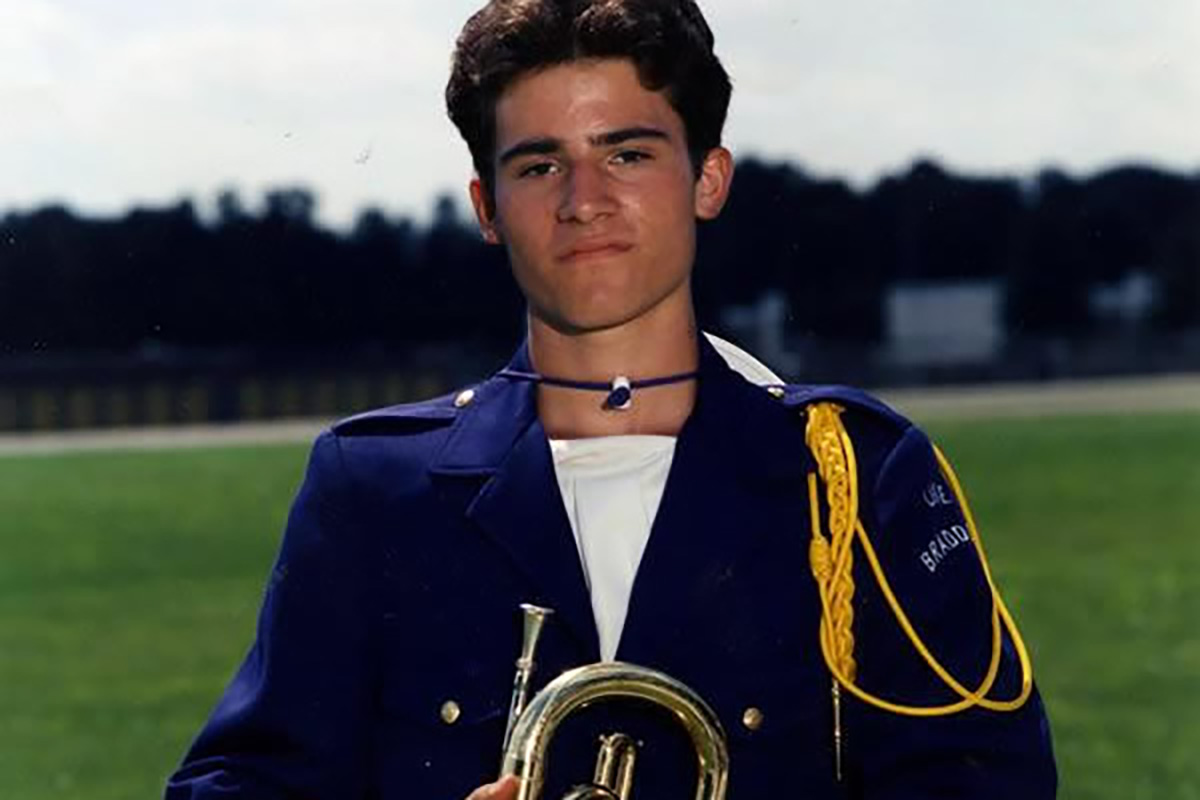
I parked my car on the tree-lined road behind my school. I had waited for months to do this: I reached into my glove compartment and pulled out the rainbow magnet that I had bought at Lambda Rising over the summer. I positioned the rainbow in its place of honor on my bumper and then stepped back to admire it. I didn’t dare get an actual bumper sticker: while my parents knew that I was gay, they were not yet in a place where they could conceive of me being out and proud. They would be pretty upset if I came driving into the neighborhood with a car that they bought for me sporting such a controversial symbol. The magnet would have to do.
It was Oct. 11, 1995. I was a 17-year-old senior at a large Northern Virginia high school and I was going to come out that day.
I started the process a year earlier. My family had just moved from ultra-conservative rural Oklahoma. I knew there was no life for me there. Growing up where the Bible Belt buckles, I had heard the most appalling things said about LGBT people by peers and even public school teachers. I recall with particular rage a bloated football coach who somehow passed for a social studies teacher spending an entire class period lecturing students on how he didn’t want his daughter to ever have to see two “faggots” holding hands walking down the street together. The one kid who came the closest to coming out was constantly humiliated by teachers and students alike: so much so that he attempted to kill himself and was sent away by his parents. So, when my father was offered a job in D.C., I enthusiastically gave my blessing and prepared for a new life.
When I got to D.C., I desperately sought a community I knew had to exist. In 1994, there were few positive images of LGBT life to be found in the mass media, but those that did exist, I voraciously consumed. Watching the lonely character of “Rickie” on “My So-Called Life” was the first time I had ever seen the struggles of a gay teen portrayed on television. Around the same time, the tragic story of Pedro Zamora on “The Real World: San Francisco” began to soften the hearts of the largely anti-gay American public, but we were far from the level of acceptance that we have achieved today. There were few Gay-Straight Alliances and certainly nothing of the sort existed in my new school.
But, there were resources. I found SMYAL, then called the Sexual Minority Youth Assistance League, and began to regularly attend its drop-in sessions each Saturday. I made friends and met my high school boyfriend there. My new friends and I would often go out after SMYAL meetings to Lambda Rising, an LGBT bookstore in the heart of what was then the “gayborhood.” Afterwards, we would go to a coffee shop and talk and hang out until the evening. My Saturdays were filled with joy and wonder, but every Monday, I would return to school. While I had several new friends at school, I felt completely alone.
My senior year came along. In many ways, I was excelling. I had good grades, I was president of my school’s Young Democrats, I was in the Honor Society, I was captain of the student congress team and was in the top symphonic band as a French horn player. But, I had a secret.
I wouldn’t dare tape pictures of my boyfriend in my locker, even though I was proud to be with him. I had a rainbow-colored “freedom rings” necklace (a ’90s fad that has thankfully long since been put to rest), but I wore it inside my shirt. Though the rings gave me strength, I would only take them out on Saturdays when no one from my school would see. But slowly, I was building the confidence that I would need to become the only openly gay student in a school of several thousand.
Finally, the day had come. I knew that Oct. 11 was National Coming Out Day and I had been mentally preparing all week. I stepped away from my car and walked toward my school. I clutched my freedom rings under my shirt and paused for a moment to catch my breath. As students began to stream into the building, I pulled out my rings and marched in. I spotted among the throng of students starting their day the biggest gossip I knew. I walked up to her and said, “Hi. It’s National Coming Out Day. I’m gay and coming out. Tell everyone.”
I didn’t stick around to see her reaction; instead I quickly went to my locker. I pulled three pictures of my beautiful boyfriend out of my backpack and prominently taped them to the inside of my locker door. It was then that I decided that I was going to ask him to be my date at the school’s upcoming Winterfest Dance and that we were going to dance as a couple, no matter what anyone else said or did.
I went through my day normally, though proudly displaying my freedom rings for anyone who knew what they were. As the day progressed, my peers began to stare at me and whisper to themselves as I walked down the hallway. Rather than feeling scared or ashamed, I felt emboldened and proud. It wasn’t to come to a head, though, until symphonic band practice.
Everyone in band reacted, mostly by giving me a wide berth or by flashing a knowing smile. I sat in my section and began to get out my instrument. I could feel the eyes of the tuba section behind me locked on the back of my neck. Before practice could start, the biggest bully of the bunch got my attention.
“Is it true what people are saying about you?” He asked with a “gotcha” smirk.
“What, that I’m gay?” I asked.
He nodded, ready to pounce.
“Yes. I’m gay. So?” I responded as nonchalantly as I could manage in such a nerve-wracking moment.
His face registered such a shock that I could never get it out of my mind. He, like the other bullies at school, derived his power from the fear in others. My refusal to deny and shrink back caught him completely unprepared.
“Uh,” he babbled, flabbergasted for a moment. “Just so long as you don’t hit on me.”
I looked up and down his flabby, pockmarked face and perhaps unkindly quipped, “You have absolutely nothing to worry about.”
I turned back around as the teacher began to start our warm-up.
And so the day passed largely without incident. All of my fears vanished and I was filled with so much peace and pride. By the next day, my coming out was old news and I began making new friends immediately. By the end of the semester, I had taken my boyfriend to the Winterfest Dance and had a magical night of slow dancing to Whitney Houston. By the end of the year, that removable rainbow magnet had been replaced with a permanent rainbow sticker that I proudly displayed as I drove into my neighborhood.
Michael Key is photo editor of the Washington Blade. Reach him at [email protected] and on twitter as MichaelKeyWB.




Commentary
Washington Blade responds to concerns over White House pool duties
Inaccurate media reports create confusion but we stand with our colleagues
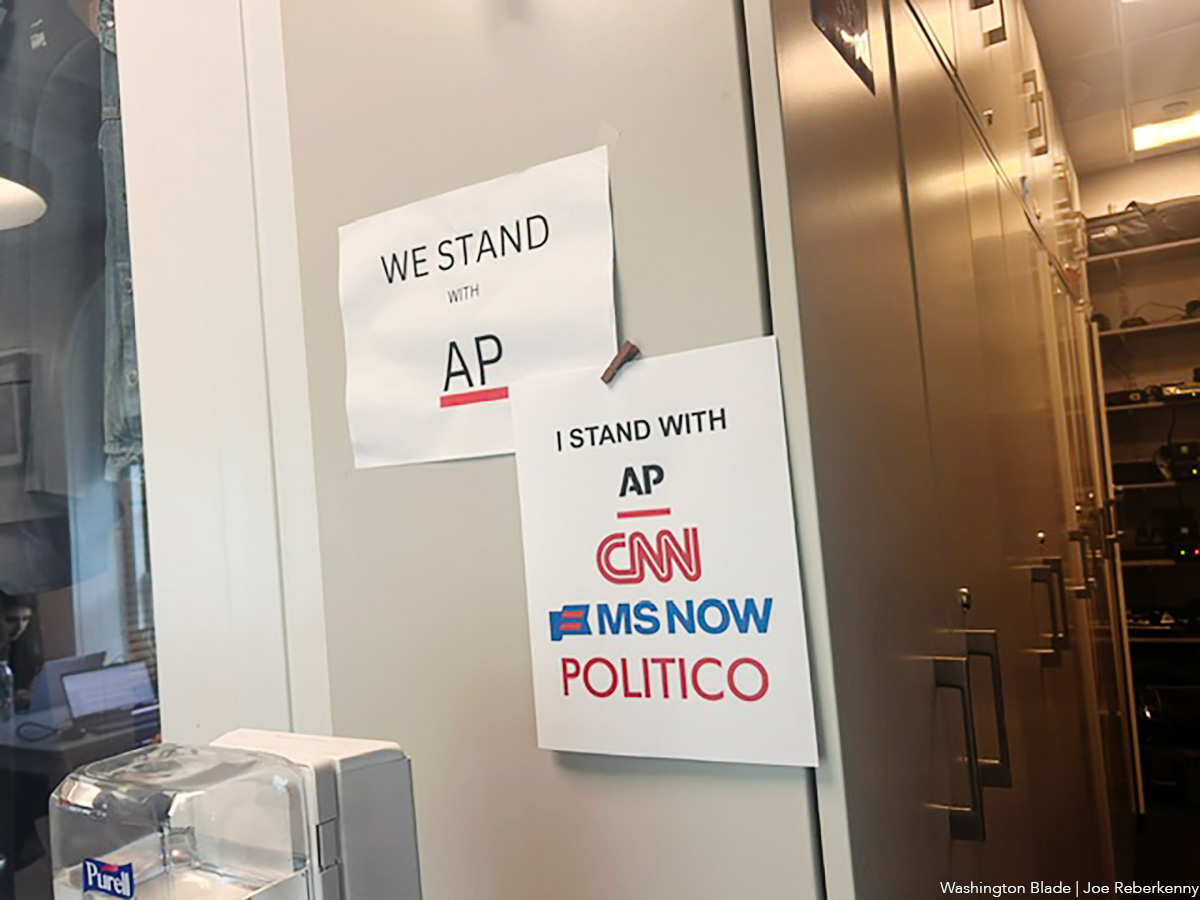
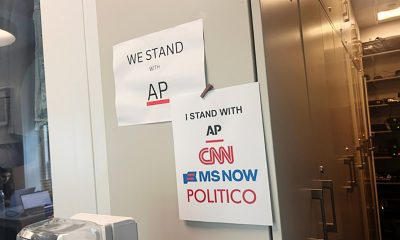
Last week, President Trump announced his unconstitutional ban of CNN, MSNow, and Politico from the White House. Coincidentally, on Monday, it was the Washington Blade’s turn to serve as the print pool reporter on duty covering the president’s actions that day. This important responsibility is shared and rotated among the print members with each serving roughly once per month. The Blade is the only LGBTQ outlet with a seat in the briefing room, a slot in the pool rotation, and membership in the White House Correspondents’ Association, something we fought for decades to secure after enduring years of discrimination, ridicule, and resistance to openly queer journalists working inside the White House. We take our responsibilities there seriously.
There are two pools that cover the president: broadcast and print. The other four members of the broadcast pool — ABC, CBS, NBC, and Fox News — agreed to boycott their pool duties. There has been no boycott among the print pool, which is a separate entity. I called the president of the White House Correspondents’ Association on Monday to confirm that no outlets in the print pool were boycotting.
A boycott by the Blade would set us back and lead to our expulsion from the pool and briefing room and our replacement by a right-wing outlet sympathetic to President Trump’s approach to attacking the media. The LGBTQ community is far better served with the Blade in the room than a far-right blogger taking our seat.
Let’s be clear: the Blade stands for diversity, equity, and inclusion and we stand for the First Amendment and freedom of the press. In solidarity with the broadcast pool, we made two important decisions on Monday — the first day anyone had to think about any of this. First, we refused to take or share any videos or still photos of the president, which would have undermined the broadcast boycott. Second, when Politico’s turn comes up for pool duty in mid-October, the Blade will not fill in and cover for them while they are banned. Politico must be readmitted and allowed to do their job.
After a rough day navigating and reporting on all of this, the Advocate published a reckless and inaccurate story suggesting that the Blade had crossed a picket line. Not true, as there is no print pool boycott. They claimed that I wouldn’t talk to their reporter. Also not true. I called their reporter within 90 minutes of receiving his message and he didn’t take the call or call me back. Their story named me and our White House reporter, immediately exposing us to public criticism and worse. The environment in D.C. is so toxic and even violent these days that subjecting our staff to unfair and false accusations like this invites harassment, doxxing, and worse. To do that without even talking to us is next level irresponsible and the antithesis of journalism.
On Tuesday, I talked to two reporters and an editor at the Advocate but they refused to retract anything in their inaccurate story. If the reporter had returned my call, I could have explained all of this but they are more concerned with clickbait and sensational headlines, a dangerous practice in these troubled times.
Back to the pool. The Blade was in the briefing room in the Reagan era, when Press Secretary Larry Speakes made jokes about AIDS and the reporters in the room laughed out loud. We endured all of that abuse and worse for decades, always standing in the back of the room and never being called on. The Blade’s journalists persevered. When President George W. Bush was re-elected in 2004, the Blade’s White House credentials were revoked amid an earlier press crackdown. Notably, no one boycotted or stood up for us. When Barack Obama won election in 2008, I received an email from his communications director informing me that effective midnight on Jan. 20, 2009, the Blade’s credentials would be restored.
So we have had quite a ride navigating administrations and their changing requirements for gaining access but always playing the long game. As Barney Frank used to say, “If you’re not at the table, then you’re probably on the menu.” The Blade is at the table and we do our best to ensure the LGBTQ community’s issues are addressed by both parties.
Thanks for reading and supporting the Blade’s work. If you have questions about our approach, you can reach me at [email protected].
Kevin Naff is editor of the Washington Blade. Reach him at [email protected].
Commentary
What LGBTQ veterans are building after ‘Don’t Ask, Don’t Tell’
DADT repeal took effect on Sept. 20, 2011. Trans servicemember ban reinstated
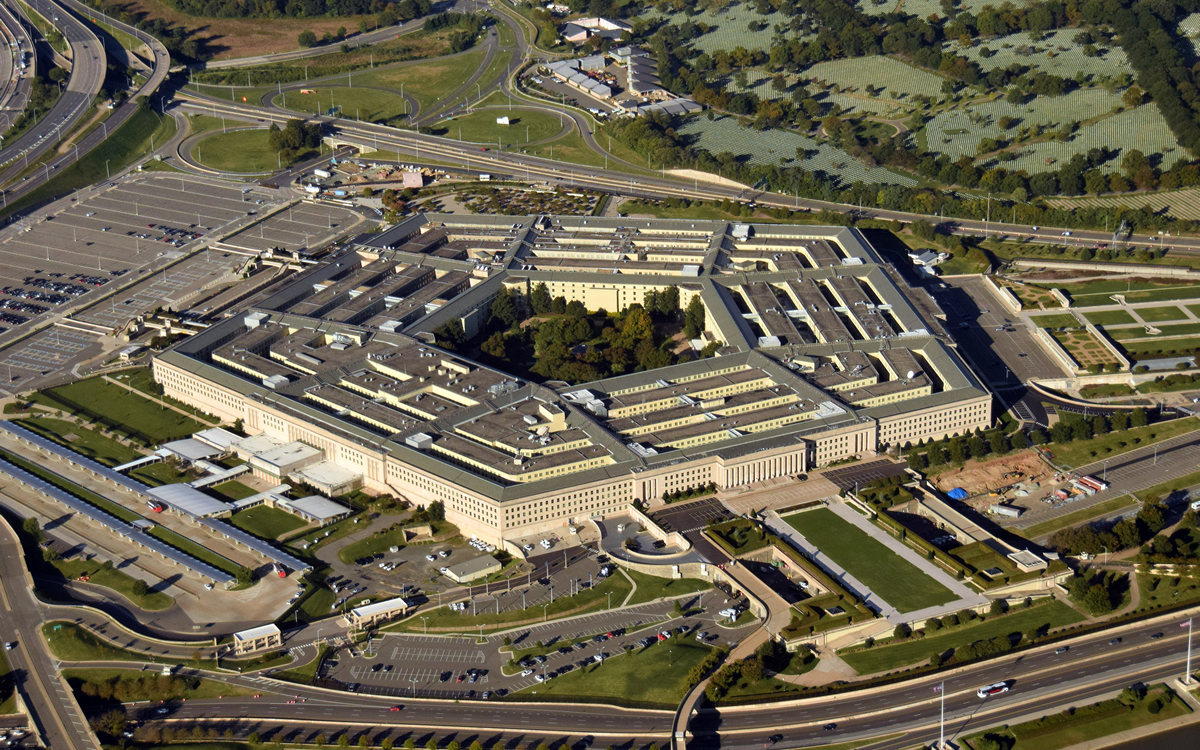
Fifteen years ago this month, the repeal of “Don’t Ask, Don’t Tell” took effect. At the time, the importance of the change was obvious: gay, lesbian, and bisexual Americans would no longer have to hide who they were to wear the uniform. What was harder to see was what would follow: a generation of LGBTQ veterans able to carry their service openly into American civic life.
Earlier this month, Alaska state Rep. Andrew Gray, an Army veteran, stood before the Anchorage Assembly and asked the city to recognize Sept. 20 as LGBTQ Veterans Day.
His former command sergeant major, Mike Grunst, followed him to the microphone. A 35-year veteran who had served in combat, Grunst called troops who had served while hiding who they were “the bravest I have ever served with.”
Then Denise Sudbeck stepped forward. A Vietnam-era Navy veteran, she thanked the country for the privilege of serving and asked that the next generation have the same chance.
The Assembly approved the recognition.
Nothing about the scene required a new vocabulary. A veteran made a request of his community. A commander vouched for those who served beside him. Another veteran asked that younger Americans inherit the opportunity she valued. They entered the civic record simply as veterans.
That identity can do more than win recognition.
When federal policy abruptly ended the careers of transgender servicemembers this year, veterans and servicemembers in California began asking a practical question: What happens when those Americans come home?
Republican Assemblyman Jeff Gonzalez, a Marine combat veteran, began one hearing with questions about transgender military service. He listened as veterans explained how the military handles medical care and deployment case by case.
Then the discussion turned to separation.
“I don’t wanna see any veteran homeless,” Gonzalez said. Before the hearing ended, he was asking: “How can I help? How can I understand? How can I be a good advocate?”
The legislation that followed would provide housing, employment and transition assistance to discharged servicemembers. Republican state Sen. Shannon Grove spoke for it. The Senate passed it 32 to 0.
Americans have plainly not settled their disagreements over transgender people. Nor should military service be a prerequisite for rights that belong to every citizen.
But military service creates relationships that are difficult to reduce to the abstractions of the culture war. Before a legislature, “the transgender issue” can become a veteran who deployed, an officer who led troops, or the person who once stood beside you.
The political question changes because the human relationship has already changed.
The pattern is beginning to appear across the country. Kansas is among the states recognizing LGBTQ Veterans Day for the first time this year. New York and Virginia are pursuing broader state-level programs for LGBTQ veterans.
Sept. 20 is deliberate. On that day in 2011, “Don’t Ask, Don’t Tell” ended.
We usually remember repeal for what LGBTQ Americans gained: the ability to serve openly. Fifteen years later, we can also see what the country gained.
A gay veteran can stand before his local government beside the commander who once led him. A transgender servicemember can sit before a legislator who begins with doubts and ends by asking how he can help. A veteran from an older generation can ask her neighbors to give those who follow her the same chance to serve.
This is citizenship in practice.
The enduring legacy of “Don’t Ask, Don’t Tell” repeal is not only that Americans were finally allowed to serve openly. It is also what they can now build after coming home.
Commentary
Anti-science, anti-LGBTQ movements go hand in hand
HHS under RFK Jr. has blocked gender-affirming care for youth

A newborn baby died after contracting measles in Pennsylvania last month, and, as if it wasn’t enough grief for his parents, anti-vax activists are trying to track down and harass his family. Apparently, Gov. Josh Shapiro tangled with Robert F. Kennedy Jr. over his “inaccurate and misleading claims.”
On Aug. 26, RFK Jr., the secretary of the U.S. Department of Health and Human Services, declared that the deaths could be fabricated. We live in peculiar times, when it is government officials, not freaks on the internet, who are spreading conspiracy theories. The new spread of measles in the United States since Donald Trump came to power is one of the most shameful parts of the story of modern American politics, and the tragedy of parents who lost their baby because more and more people refused to vaccinate may seem absolutely unrelated to LGBTQ rights, but actually, there is a pretty solid connection.
Because RFK Jr., the same man who was fighting vaccination, promoted the false idea that vaccines caused autism, and even curated the anti-vaccine organization Children’s Health Defense before going into politics, is also a known opponent of transgender rights. Under his “leadership,” gender-affirming care for trans minors was banned, and there were also created new healthcare guidelines recognizing only two genders.
All around the globe, there is a weird correlation between anti-LGBTQ — particularly anti-trans — ideas and anti-science movements. And it should be clearer to the general public. People who are speaking against LGBTQ rights are not just threatening minorities. They are a danger to everyone.
The Trump-Vance administration is an iconic example of such tendencies.
Trump himself is a known critic of modern scientific studies — for example, believing in the same anti-vax conspiracies that Kennedy promoted, and showing obvious skepticism that global warming exists, despite all the evidence that has been shown by climatologists. And he is also a man who used trans people as boogeymen. Under his command, trans people were kicked out of the military. And even worse, recently he made an extremely chilling statement about the 2026 midterm elections, urging voters to “pretend I’m on the ballot” and vote for Republicans, and while discussing what he says is at stake, he said that if Republicans win, “transgenderism” will “end.” This is an offensive statement at best and genocidal at worst.
And, of course, I think everyone remembers the Department of Government Efficiency (DOGE), which was led by infamous billionaire Elon Musk, who announced to the world that he would destroy the “woke mind virus” that killed his child just because his trans daughter, Vivian Wilson, well, is happy to be a trans person.
DOGE is known not just for cancelling academic research around LGBTQ studies and gender studies. No, this agency abruptly canceled and froze thousands of federal science, research, and health grants, attacking such vital health programs as cancer research, vaccination research, and diabetes research, among others. As you can see, they are not just attacking people who are “affected” by the “mind” virus — they are dangerous to everyone, even if most of the public standing of Musk was around his anti-trans politics and he tried to present himself as a pro-science, pro-progress man by supporting the space industry.
An even more vivid example is the so-called Dark Enlightenment movement.
This extremely reactionary political movement was born in the late 2000s, and originally grew from very democratical classical liberal ideas. Until it became anti-democratic itself. And also often It was created by American software engineer Curtis Yarvin (writing under the pseudonym Mencius Moldbug) and expanded by British philosopher Nick Land. The movement is popular among some Silicon Valley businessmen, and got support from PayPal founder Peter Thiel, and one of their main ideas is that modernity is bad. They are basically obscurantists, who see modern universities as part of “the Cathedral” — a system that, in their opinion, promotes equality and modern science that society doesn’t need. Of course, the movement’s followers are mostly anti-LGBTQ rights, and, as you can see, anti-queerness once again go hand in hand with obscurantism. Unfortunately, the movement got the support of extremely prominent politicians, including U.S. Vice President JD Vance.
In his speech from 2021, Vance proved to be an obscurantist when he claimed that universities are the enemy. He is also a known homophobe and transphobe.
So, why are anti-vaxxers, people who oppose modern scientific studies, and people who hate universities more likely to be queerphobic? Why do the same people who are defending their transphobia by showing that they support common sense actually often show zero such sense when it comes to protecting themselves and their children from measles or decreasing the chances of getting cancer?
We don’t have any statistics or studies that show that all obscurantists are queerphobic, but around the globe, the same dynamic is visible.
In Russian anti-LGBTQ censorship, books about animal biology and zoology have been censored because the censors saw “LGBT propaganda” in them. The famous pro-Putin philosopher Alexander Dugin, who is extremely anti-queer, also speaks up against modernity itself.
In Taliban’s Afghanistan, modern science and LGBTQ rights are attacked at the same time.
Even in the UK, Reform UK is known as the most anti-trans and anti-queer party, and they are facing widespread criticism from scientists and medical experts for promoting climate change denial and anti-vaccine ideas. It doesn’t mean that LGBTQ supporters never believe in conspiracy theories or that progressive politicians always support science.
No, it just means that explicit anti-science and anti-LGBTQ statements often go hand in hand.
I think there are two reasons for this correlation.
First, LGBTQ people are real. You cannot deny that sex is not binary, gender and sex are different, and transition improves the quality of life of actual trans people. Or that same-sex relationships are natural, because even animals have same-sex sexual contacts. To deny it, you need an ideology or a conspiracy theory.
The second reason is that anti-scientific populism and anti-LGBTQ conspiracy theories are popular among the same category of people. It’s a “bundle” of ideas — a trend that conservative voters often adopt together. Studies also show that people who are likely to believe in one conspiracy theory are more likely to believe in another.
But the question is more broad. We don’t speak enough about the harm anti-scientific conspiracy theories and obscurantist politicians around the globe create for mankind in general. Not all people would suffer from a prohibition of hormone therapy, or attacks on same-sex marriage. But anti-global warming ideas, anti-vax advocates, and restrictions on modern research, especially medical research, are potentially dangerous to any human being.
And one of the best things LGBTQ activists could do is just show society that they are being used — that the same people who are stealing LGBTQ rights are also destroying medicine and the environment, and it’s a threat to their own traditional families and future of all kids no less than to queer people.

Factors to consider when hiring an interior designer

PHOTOS: HRC National Dinner

The LGBTQ real estate map is being redrawn

I’m 66, he’s 27. Is it love or am I being played?

What’s frightening is also funny in ‘Venus’

Washington Blade responds to concerns over White House pool duties

Gov. Whitmer to serve as keynote speaker for Saturday’s HRC National Dinner

Spike in HIV cases prompts Fiji to declare national emergency

Clavicular charged in alleged rape of teenage influencer

Caso Karlina: Una sentencia histórica contra las terapias de «conversión»
-

 Commentary5 days ago
Washington Blade responds to concerns over White House pool duties
-
LGBTQ Non-Profit Organizations5 days ago
Gov. Whitmer to serve as keynote speaker for Saturday’s HRC National Dinner
-
Fiji5 days ago
Spike in HIV cases prompts Fiji to declare national emergency
-
Online Culture5 days ago
Clavicular charged in alleged rape of teenage influencer