National
Court rules for Maine trans student’s bathroom access
In first, state court says schools must allow use of bathrooms consistent with gender identity
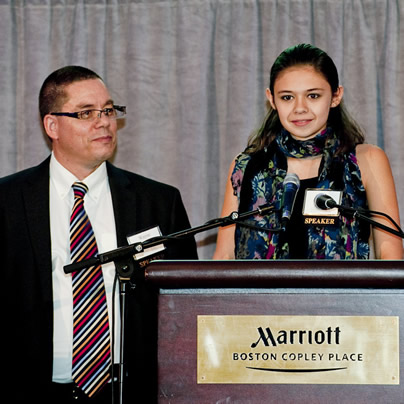

Kelly, Nicole, Jonas and Wayne Maines next to GLAD Attorneys Jennifer Levi and Ben Klein outside the court after oral argument. (Photo courtesy of GLAD)
Maine’s highest state court ruled on Thursday that schools within the state must permit transgender students to use communal bathrooms in accordance with their gender identity.
In a 5-1 decision, the Maine Supreme Judicial Court ruled in the case of Doe v. Clenchy that Regional School Unit 26 violated the Maine’s Human Rights Act by denying Nicole Maines, a transgender girl, access to the girl’s restroom.
It’s the first time a state court has ruled that trans students must be allowed to use a bathroom consistent with their gender identity.
Writing for the majority, Justice Warren Silver writes Nicole, named Susan Doe in the lawsuit, was “was treated differently from other students solely because of her status as a transgender girl.”
“RSU 26’s later decision to ban Susan from the girls’ bathroom, based not on a determination that there had been some change in Susan’s status but on others’ complaints about the school’s well-considered decision, constituted discrimination based on Susan’s sexual orientation,” Silver writes.
The lawsuit came about after officials at an Orono elementary school denied the fifth-grade trans student use of the girls’ restroom.
Although school previously allowed her access to girls’ facility, that changed when a male student began following her inside on two separate occasions, claiming he was also able to use the restroom. The student was acting under instructions from his guardian and grandfather, who was opposed to allowing Nicole access to the girl’s room.
According to the court decision, significant media attention resulted from the controversy. The school, over the Maines family’s objections, terminated Susan’s use of the girls’ communal bathroom and required her instead to use the single-stall, unisex staff bathroom.
Nicole was the only student that had to use the staff bathroom. As a result of the school’s decision, the Maines family decided to move to another part of the state after Nicole finished sixth grade.
The decision reached by the court applies not only to Nicole but to all transgender students who attend school within the state.
“Where, as here, it has been clearly established that a student’s psychological well-being and educational success depend upon being permitted to use the communal bathroom consistent with her gender identity, denying access to the appropriate bathroom constitutes sexual orientation discrimination in violation of the MHRA,” Silver writes.
The case was filed by Gay & Lesbian Advocates & Defenders and Jodi L. Nofsinger of Berman & Simmons in May 2011. Although the Maine trial court judge reviewing the case in November 2012 ruled in favor of the school’s decision to block Nicole, the decision from the high court vacates that ruling.
Jennifer Levi, GLAD’s Transgender Rights Project director and the attorney who argued the case before the court, called the decision “a huge breakthrough for transgender young people.”
“Schools have a responsibility to create a learning environment that meets and balances the needs of all kids and allows every student to succeed,” Levi said. “For transgender students this includes access to all school facilities, programs, and extracurricular activities in a way that is consistent with their gender identity.”
Maine’s Human Rights Act prohibits discrimination in public accommodations on the basis of sexual orientation, which is defined in the law to include gender identity.
The school argued it was allowed to bar Nicole from the girls’ room under a separate law, Section 6501, requiring schools to provide “clean toilets” that are separated by sex. But the court ruled the point of that law wasn’t to modify the Human Rights Act and schools cannot “dictate the use of the bathrooms in a way that discriminates against students in violation of the MHRA.”
Justice Andrew Mead was the sole dissenting justice in the case and ruled that it’s up to the legislature whether it wants to require policy for schools on transgender student’s access to bathroom facilities.
“I depart from the Court’s casual dismissal of the fact that the plain language of a specific statute explicitly requires segregating school bathrooms by sex,” Mead writes. “The plain language of the provisions of section 6501 and the MHRA are in conflict, and I believe that principles of comity require us to defer to the representative branch of government to resolve the issue.”
But the majority decision in the case was hailed by the family of the student who inspired the lawsuit.
Wayne Maines, Nicole’s father, expressed gratitude that transgender students like his daughter won’t be “singled out for different treatment” thanks to the court decision.
“As parents all we’ve ever wanted is for Nicole and her brother Jonas to get a good education and to be treated just like their classmates, and that didn’t happen for Nicole,” Maine said. “We are very happy knowing that because of this ruling, no other transgender child in Maine will have to endure what Nicole experienced.”






National
Queen Jean is Tony’s first transgender winner
Designer/activist wins for work on ‘Cats: The Jellicle Ball’
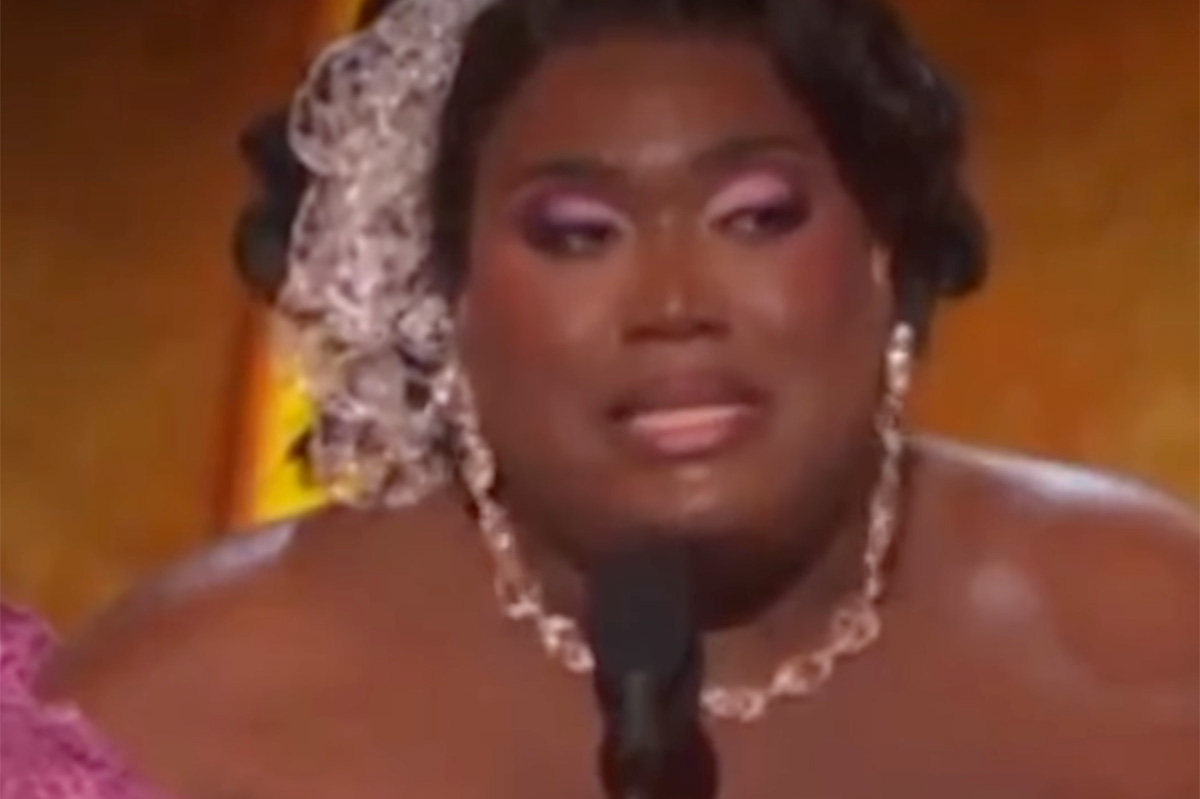
It was a historic night at the 79th annual Tony Awards on Sunday as Queen Jean won the award for Best Costume Design of a Musical, making her the first out transgender person to win a Tony.
“This experience has been monumental. We are here for the legacy of queer people, trans people,” she said. “We are taking up space in ways we have to take up space. We have to shift the paradigm. So I just want to say, thank you all so much for this incredible honor. The world right now is deeply, deeply combating so many ailments, and we know as a society that when we come together, we can make real, permanent change.”
She won the award for her work on “Cats: The Jellicle Ball” and was also nominated for best costume design of a play for “Liberation.”
In addition to her stage work, Queen Jean is the founder of Black Trans Liberation, an organization that supports trans and gender-nonconforming people in New York City.
National
Madonna turns Times Square into massive dance floor
Pop icon celebrates Pride month with surprise performance

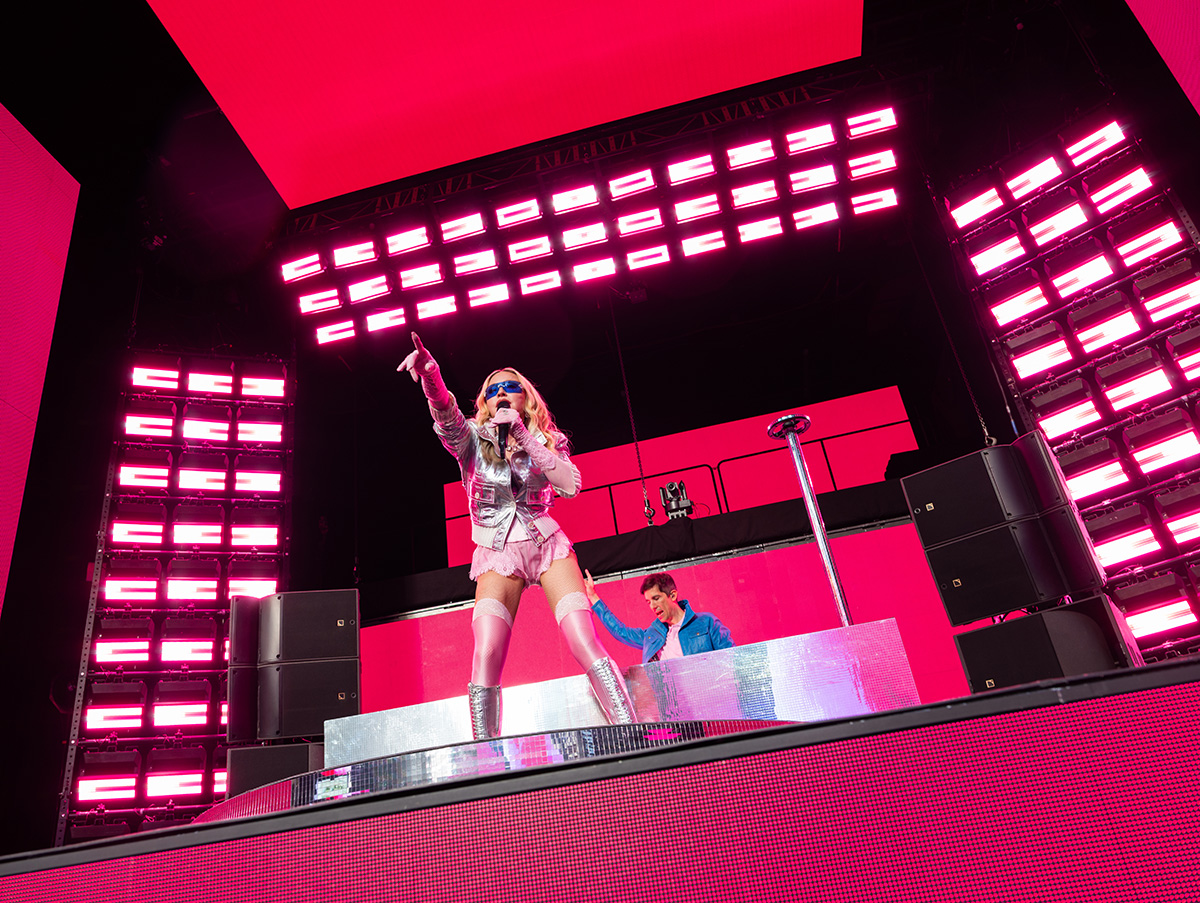
Pop icon Madonna celebrated Pride month with a pop-up performance in New York City’s Times Square on Thursday to the delight of 50,000 fans.
She performed for about 15 minutes high above street level, including several songs from her new album “Confessions II” due on July 3, along with a trio of songs from the first “Confessions on a Dance Floor.”
In addition to the brand new “Love Sensation,” she performed “I Feel So Free” and “Bring Your Love,” plus “Hung Up,” “Get Together” and “I Love New York.” She wished the crowd a happy Pride season; the event was shared with audiences through Grindr’s first-ever livestream.

National
Gallup finds LGBTQ support among Americans is dropping
Marriage equality support lowest since 2016
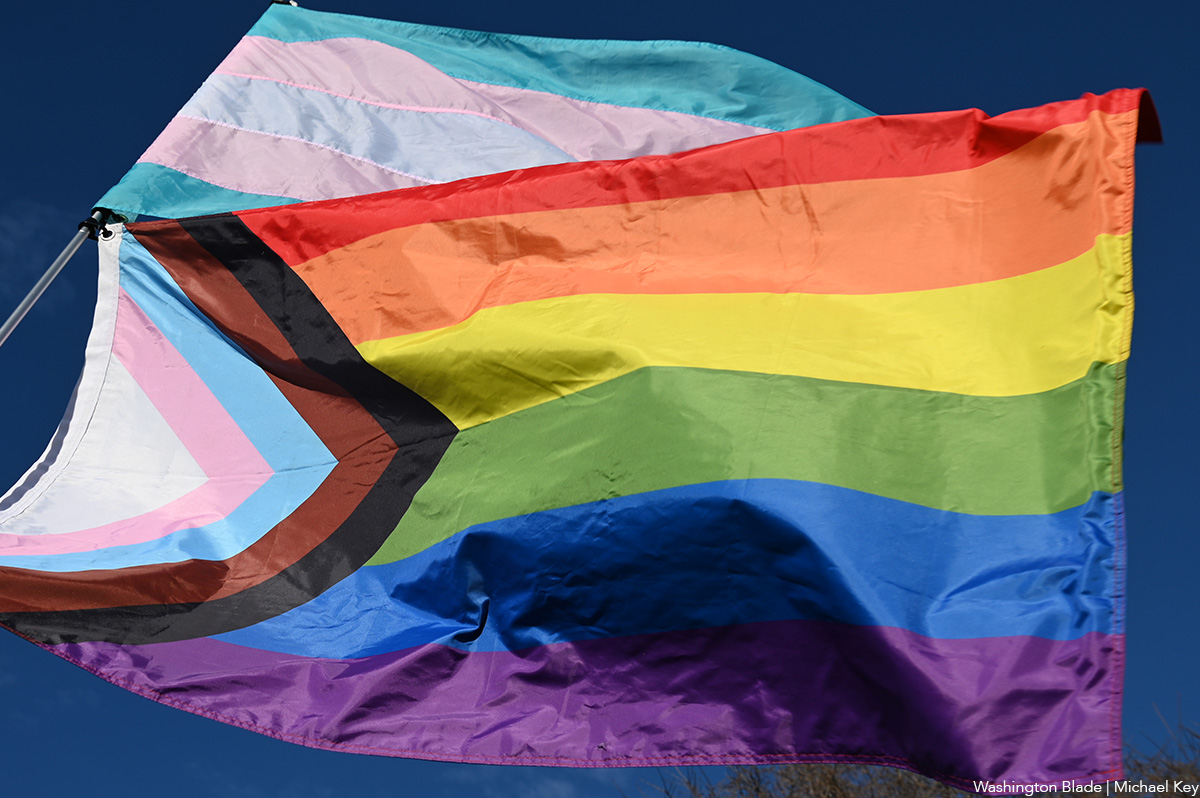
Gallup, one of the leading organizations in public opinion polling, has found that LGBTQ support among Americans is dropping.
The poll, whose data was collected using Gallup’s annual Values and Beliefs survey, was conducted in May and was published on Wednesday. The data was collected through telephone interviews from a sample of more than 1,000 adults living in all 50 states and D.C. using random digit dialing.
It highlights declining attitudes surrounding LGBTQ issues in multiple areas — from support for same-sex marriage to views on gender identity and the morality of one’s sexuality.
One of the most striking findings was that support for marriage equality fell six points from its 2022-2023 high.
The survey also found that 62 percent of Americans view gay and lesbian relations as morally acceptable, the lowest level since 2016 just after same-sex marriage was legalized nationwide by the U.S. Supreme Court.
One newer question on the poll found that the perceived morality of changing one’s gender has dropped eight points since 2021, indicating the American public is less supportive of transgender people.
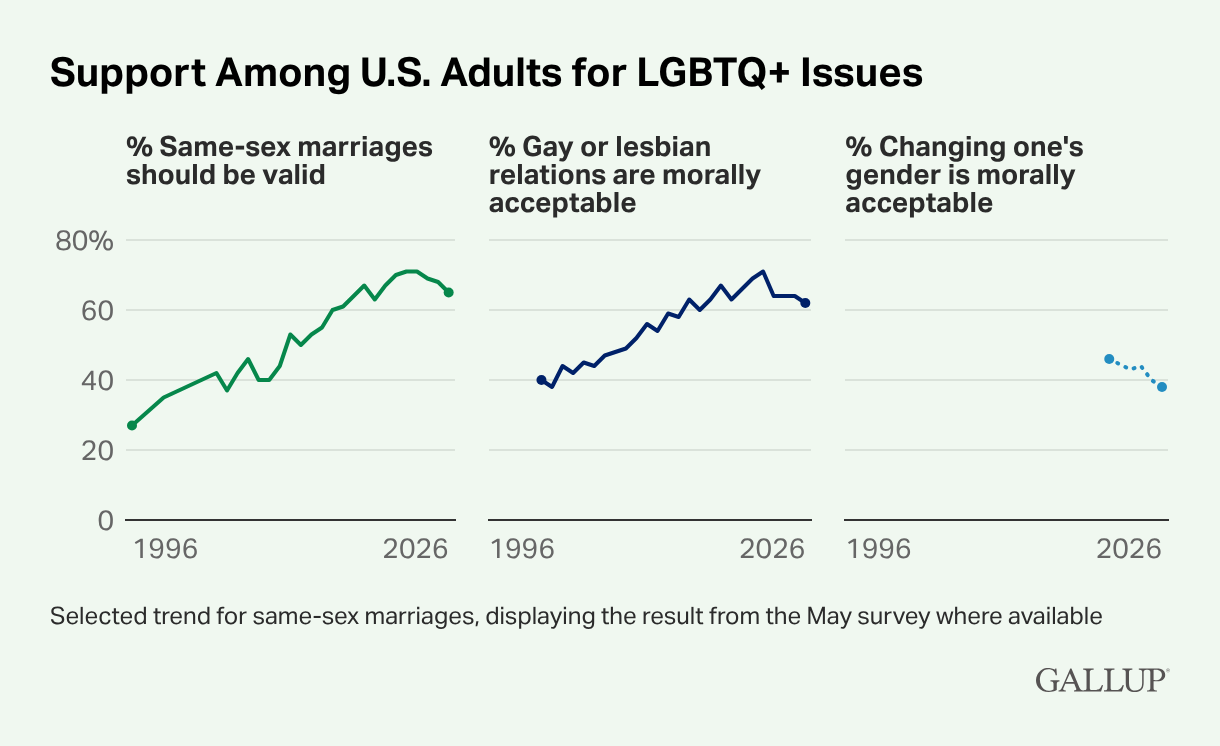
The data attributes much of the decline to shifting Republican views alongside the party itself. Conservative leaders have pushed back against diversity, equity, and inclusion programs that were intended to foster greater acceptance of LGBTQ people and other historically disadvantaged groups.
President Donald Trump has been a guiding force behind waves of anti-LGBTQ sentiment, particularly when it comes to trans rights. The president has enacted multiple executive orders, including Executive Order 14168, “Defending Women from Gender Ideology Extremism and Restoring Biological Truth to the Federal Government,” which mandates that gender be defined by one’s sex assigned at birth. He also signed Executive Order 14183, “Prioritizing Military Excellence and Readiness,” which barred qualified trans applicants from joining the military and led to the removal of trans service members already serving in the armed forces.
Additionally, he signed Executive Order 14201, “Keeping Men Out of Women’s Sports,” which prohibits trans female athletes from participating on women’s and girls’ sports teams.
In February, Gallup found that an estimated 9 percent of Americans identified as part of the LGBTQ community in some form.
The organization also found that 23 percent of adults under age 30 identify as LGBTQ, compared with 10 percent of those ages 30 to 49 and 3 percent or less among those ages 50 and older.

Rehoboth’s Pride on the Bay set for June 27

Blade editor inducted into D.C. Society of Professional Journalists Hall of Fame

Pride in a new world order

McDuffie on LGBTQ support and standing up to Trump

PHOTOS: Fairfax City Pride

Controversial ‘Blue Film’ pushes past taboos for gripping drama

Timothy Nelson on the premiere of his opera ‘Song of Sakuntala’

PHOTOS: ‘Soul Divas’

‘Mighty Real’ explores history of LGBTQ music