Arts & Entertainment
Harry Potter fans throw #JKRowlingIsOverParty, protest character’s sexuality
Twitter filled with disappointed readers
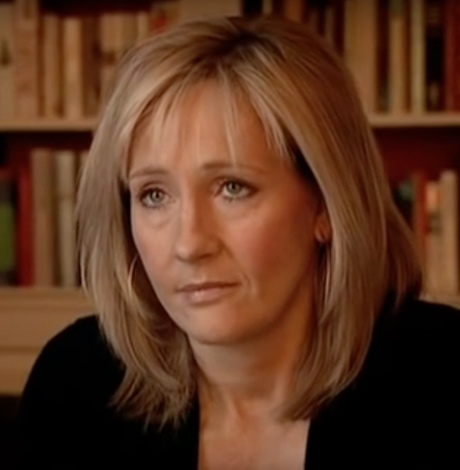
(Screenshot via YouTube)
J.K. Rowling is feeling the backlash on Twitter from Harry Potter fans who believed she had revealed the sexuality of a popular Harry Potter character.
One Harry Potter fan tweeted Rowling asking a series of questions, one of which included inquiring if fan favorite character Sirius Black was gay.
@jk_rowling 4) “Will Robin actually marry Matthew?”
5. “Is Sirius Black gay?”
6. “Are you sure he’s not gay?”
7. “Are you REALLY sure?”2/2
— Ardit Haliti (@ardit_haliti) September 6, 2016
Rowling changed her Twitter biography in what appeared to be answers to the questions and seemed to confirm that Black was a heterosexual character.
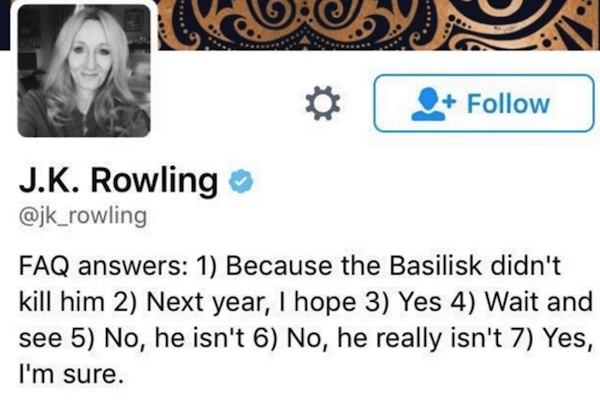
Some fans were disappointed to learn Black wasn’t an LGBT character and the trending hashtag #JKRowlingIsOverParty began. Although Rowling has said Hogwarts headmaster Albus Dumbledore was a gay character, some fans were still looking for more acknowledged representation in the series.
jk rowling says she supports lgbt which is great but would it kill her to make a character lgbt and actually acknowledge that in her books
— elisa⚡️ (@kingwallywest) August 31, 2016
remember that time when JK Rowling represented & supported our community and made LGBT+ youth everywhere feel empowered? me neither
— Rob (@robnoon7) September 1, 2016
Others didn’t see an issue with Rowling not confirming Black as a gay character and used the hashtag to address the upset fans.
So people are really trippin out over the sexuality of a fictional character? Someone that isn’t even real? ? #JKRowlingIsOverParty
— Darius Benson (@MrLegenDarius) September 6, 2016
#JKRowlingIsOverParty If you’re not liking the fact that Sirius is straight, wait until you find out he’s not even real…
— Polly Parrott (@PollyKParrott) September 6, 2016
So #JKRowlingIsOverParty bc a FICTIONAL character isn’t gay? pic.twitter.com/DvrEKGlwgY
— Gucci (@hesology) September 6, 2016
According to Rowling, she never revealed any information about Black’s sexuality and the answers in her Twitter biography were not responding to inquiries if Black is gay. Rowling also referred to some tweets about the situation as “a ton of abuse.”
@Danbo12 There was no news, none at all, just leaping to mistaken conclusions and a ton of abuse.
— J.K. Rowling (@jk_rowling) September 6, 2016
@hoImesnwatson No, the last three ‘answers’ in my bio refer to the person who has dominated my notifications for the past 5 days.
— J.K. Rowling (@jk_rowling) September 6, 2016
Rowling wrapped up the party by thanking fans for their support and love.
I’d just like to say, because it would be downright rude not to, THANK YOU for the huge number of wonderful messages I’ve been sent tonight.
— J.K. Rowling (@jk_rowling) September 6, 2016
Twitter’s a strange place at times, but for every bit of hate I’ve received I’ve always had so much more love and support. Obrigada a todos!
— J.K. Rowling (@jk_rowling) September 6, 2016




Photos
PHOTOS: Blade Summer Kickoff Party
Ashley Biden accepts award for Beau Biden at annual Rehoboth fundraiser

The 19th annual Blade Foundation Summer Kickoff Party was held on Friday, May 15 at Diego’s in Rehoboth Beach, Del. An award presentation was held for former Delaware Attorney General Beau Biden. Ashley Biden accepted the award on her brother’s behalf and gave remarks. Other speakers included Delaware state Rep. Claire Snyder-Hall, CAMP Rehoboth Executive Director Dr. Robin Brennan and Washington Blade Editor Kevin Naff. The event was a fundraiser for the Steve Elkins Memorial Fellowship in Journalism.
(Washington Blade photos by Daniel Truitt)


Photos
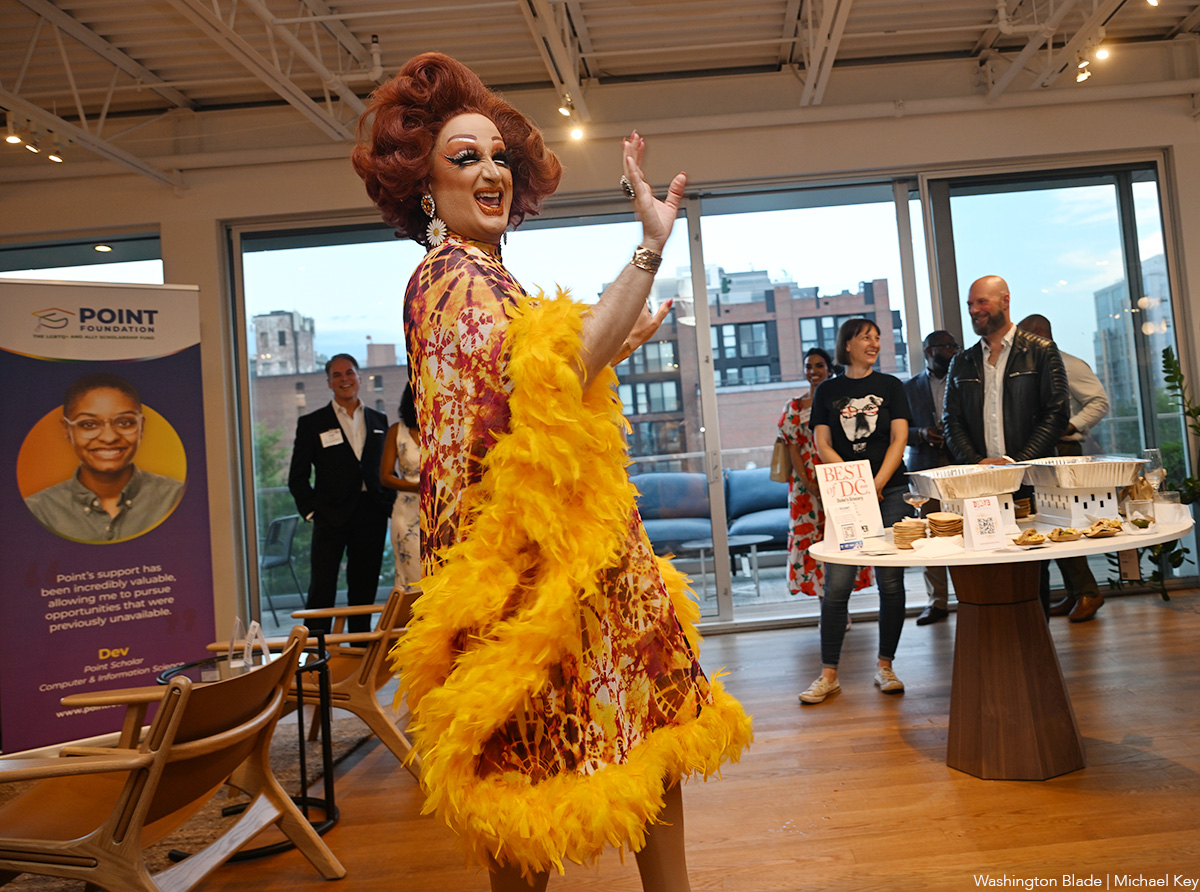
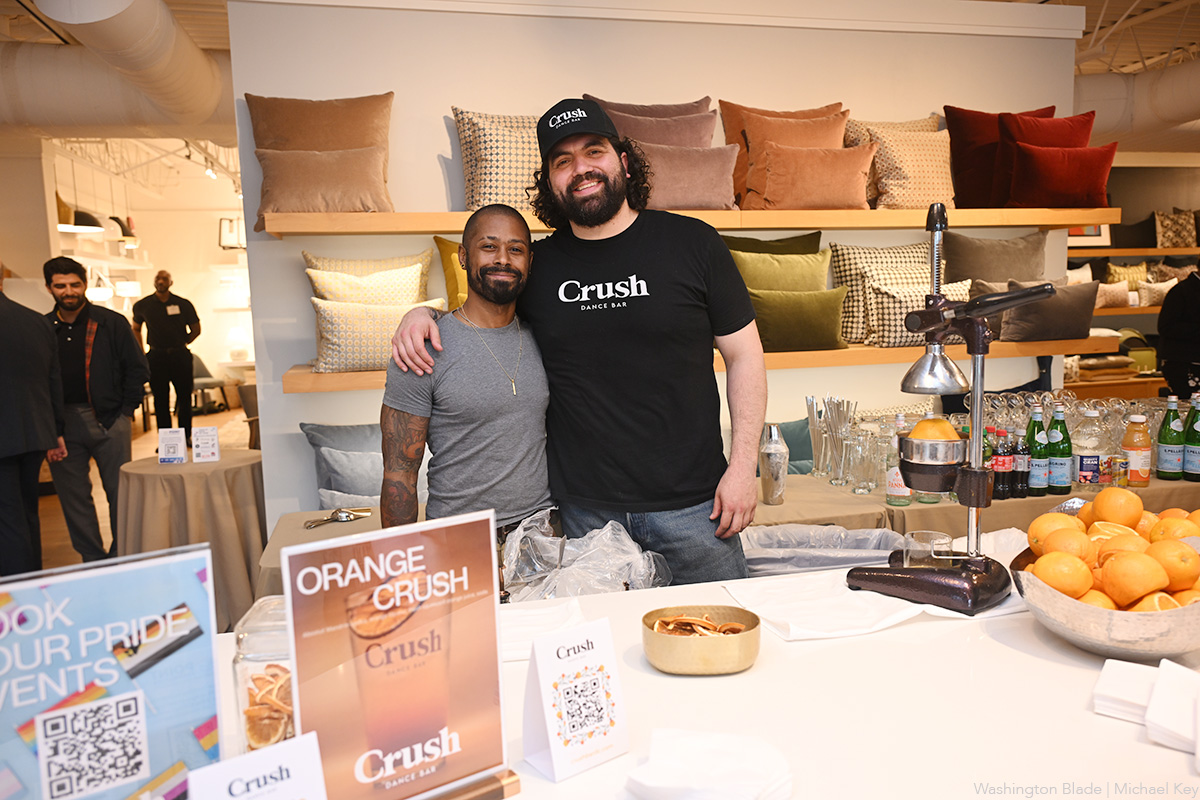
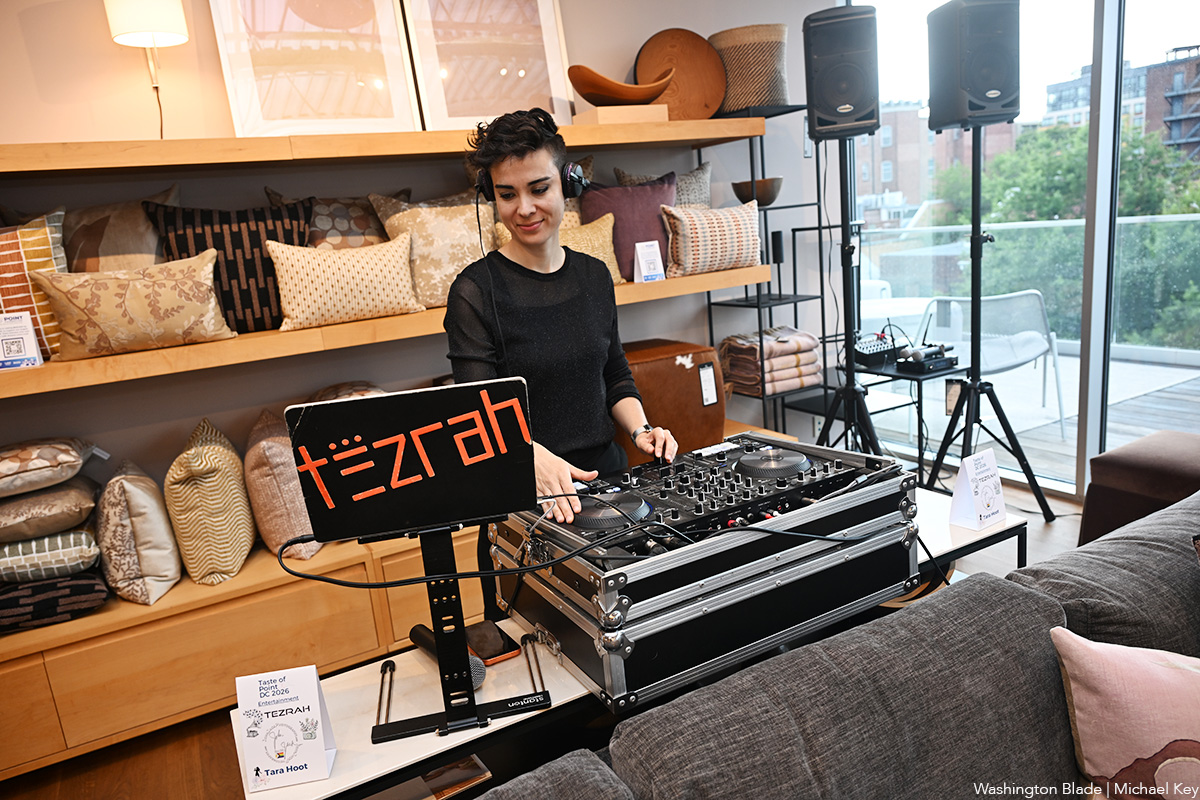
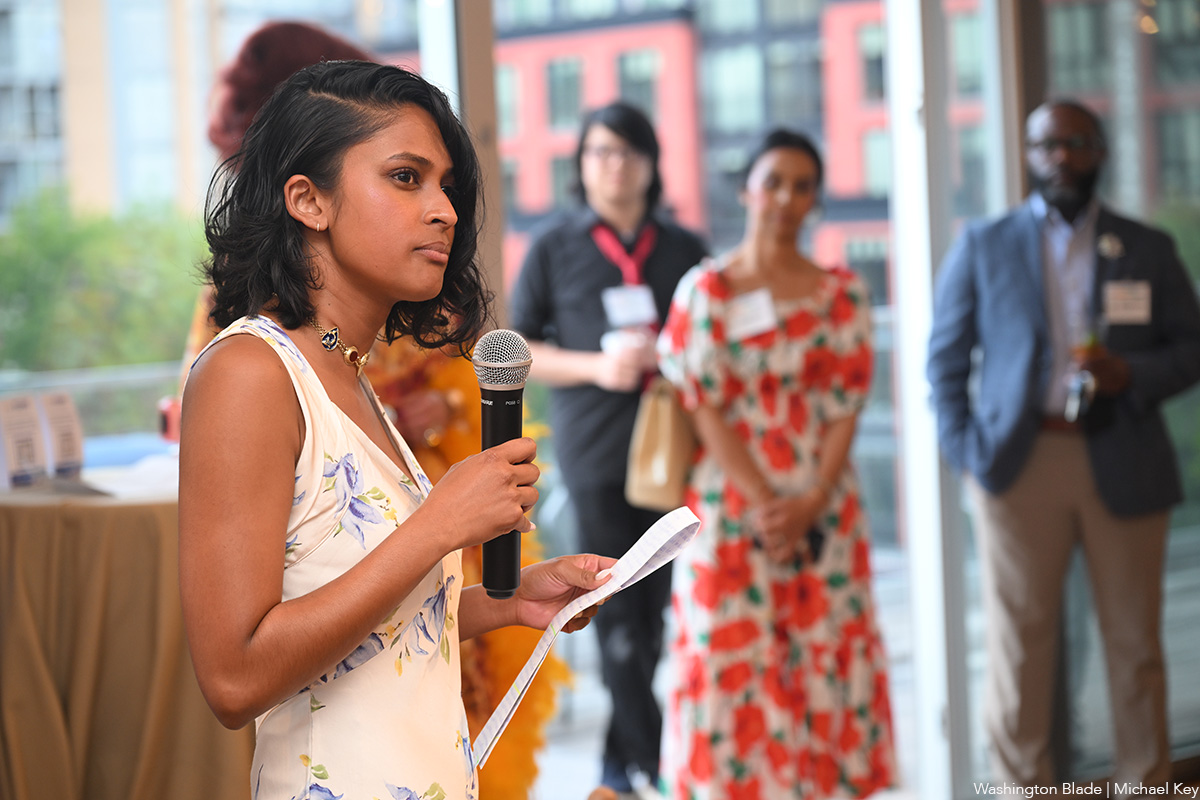
PHOTOS: Taste of Point
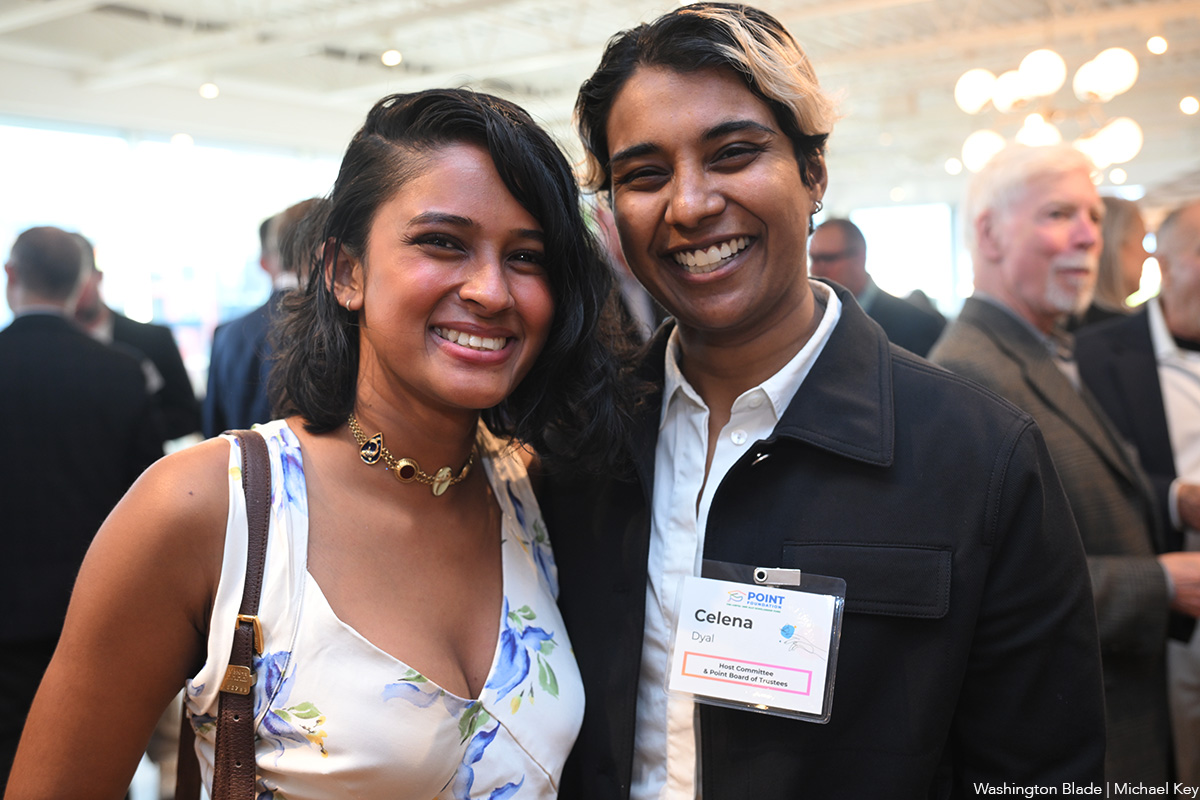
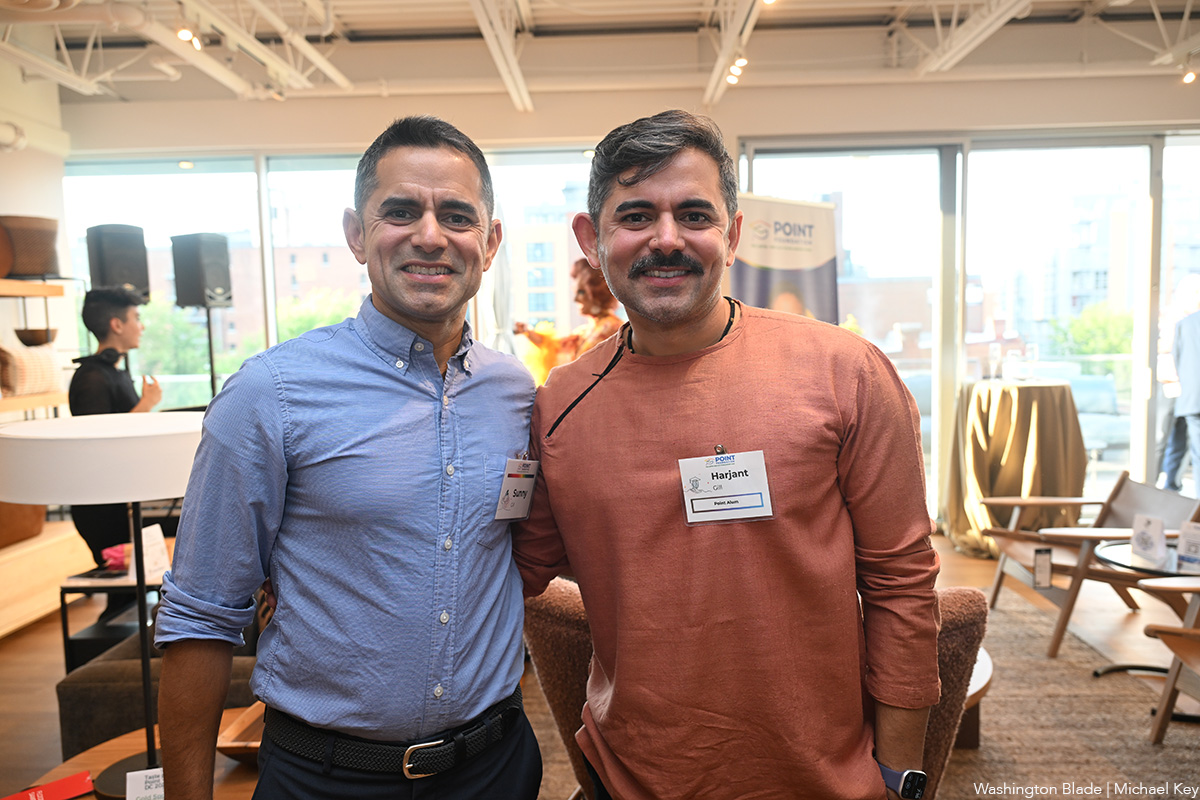
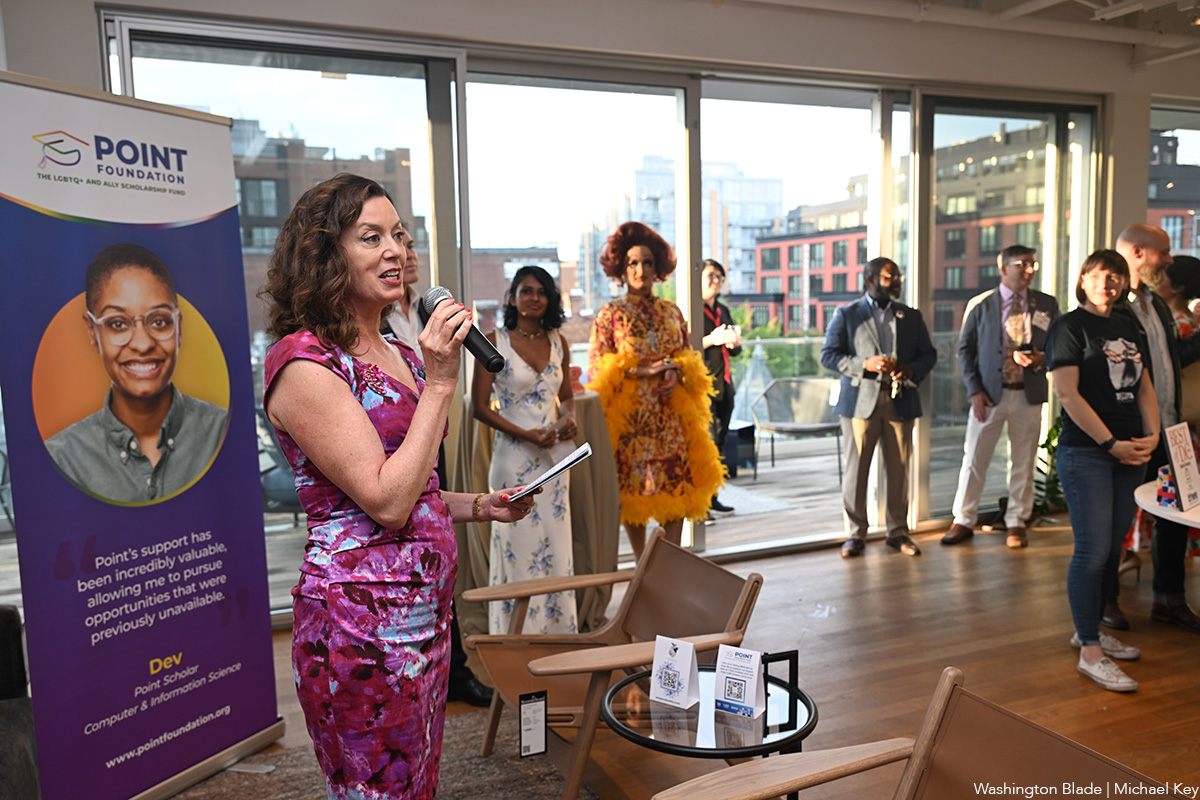
Annual fundraiser supporting LGBTQ youth scholarships and mentorships held at Room & Board

The Point Foundation held the annual Taste of Point fundraiser at Room & Board on Wednesday, May 13.
(Washington Blade photos by Michael Key)








Theater
‘The Inheritance’ is most-nominated at this year’s Helen Hayes Awards
42nd annual celebration of excellence in local theater set for May 18
Helen Hayes Awards 2026
May 18, 2026
For tickets go to theatrewashington.org
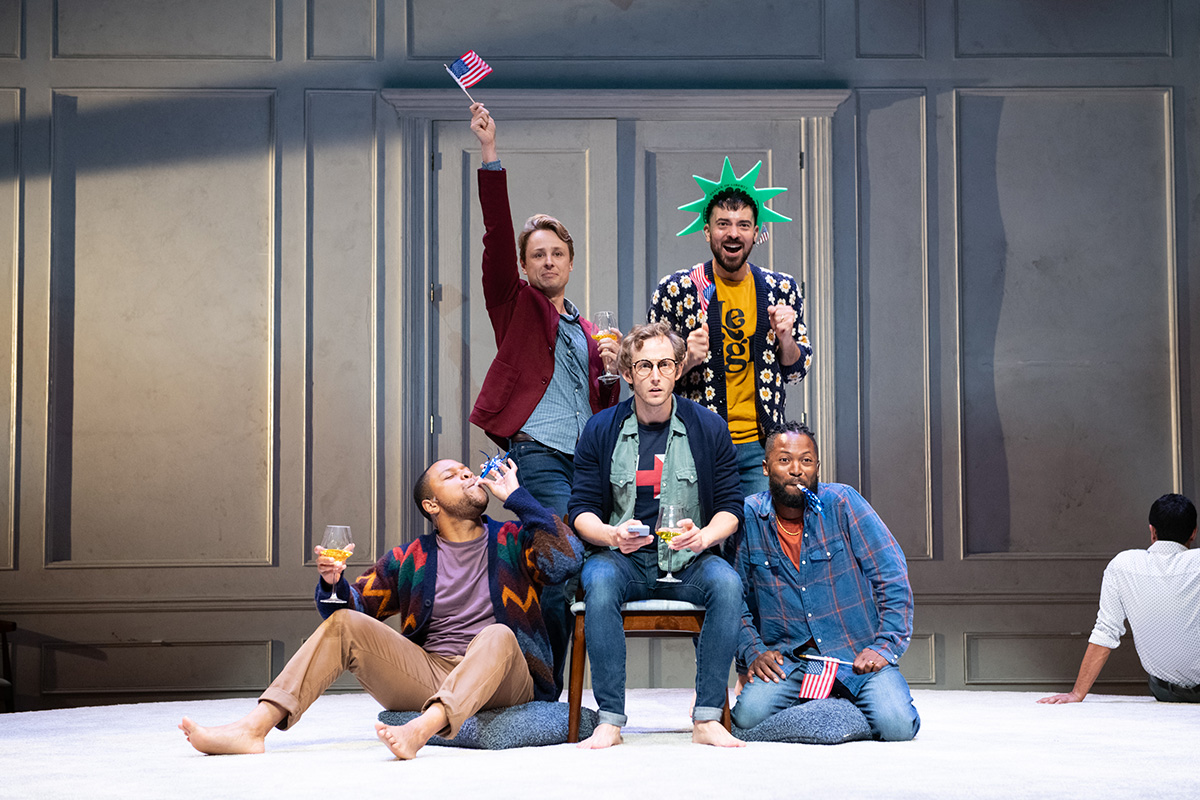
Last year, when out director Tom Story took on the daunting task of directing Round House Theatre’s production of “The Inheritance, Parts One and Two,” he knew that casting would be important, maybe even paramount, to the endeavor’s success. So, Story didn’t mess around.
Penned by queer playwright Matthew López, “The Inheritance” (inspired by E.M. Forster’s 1910 novel “Howards End”) is based on gay culture in the wake of the AIDS crisis.
Story looked at actors he knew, and some he didn’t. He wanted low drama and maybe players who could relate to the LGBTQ experience. In the end, the production’s 13-person cast was entirely queer except for brilliant local favorite Nancy Robinette as Margaret, the wise housekeeper.
Clearly, Story’s vision resonated with audiences. Round House’s production of “The Inheritance” is the most-nominated work of this year’s Helen Hayes Awards, earning 14 nominations. It’s also one of Round House’s highest grossing popular successes ever.
The queer cast members whose ages ranged from about 22 to 60, worked hard and enjoyed the process, and along the way garnered an Outstanding Ensemble in a Play (Hayes) nomination for their efforts.
The ensemble included Jamar Jones as Tristan, a brilliant doctor who leaves New York for Canada after deciding there’s no place for a gay, HIV-positive Black man in America. For the experienced actor, being part of “The Inheritance” was profound: “I think it was a divinely orchestrated production.”
He adds “I really feel that it’s so rare that you get to work on a show of that magnitude…size, time, where virtual strangers genuinely fell into rhythm. We became a cohort. I never felt a sense of unease, or reluctance to try things. I could be as big or bold as I wanted to be; or I could be small. Fail, mess up, try again. I didn’t feel judged.”
Jones considers Richmond his home, but says “I’m based where the work is.” Currently, he’s back at Round House rehearsing “Sally & Tom” (May 27-June28), a play within a play/meta exploration of the relationship between Thomas Jefferson and Sally Hemings by Suzan-Lori Parks.
Jones plays both a contemporary violinist and an enslaved fiddler, parts that have required him to learn to “air fiddle.” He’s all over it: “I want to represent the art and to be as precise as possible. Taught by an instructor, I’ve made strides with movement of the bow; next up is finger placement.”
Will he leave the play a violinist? “I’ll report back on closing night. Maybe I will have added something to the special skills list on my resume.”
For about a decade, Jones worked in living history, interpreting, performing, and writing pieces about the enslaved people of Colonial Virginia. Among the many historical characters he portrayed was Jupiter (Thomas Jefferson’s longtime enslaved manservant), an experience that’s proved a connection and preparation for his current role.
The 42nd Helen Hayes Awards celebration recognizing excellence in professional theater in the DMV will be held on Monday, May 18, 2026 at The Anthem on the District Wharf in Washington, D.C. Named for Helen Hayes, the legendary first lady of Broadway, the program consists of the awards presentation hosted by Felicia Curry, Awa Sal Secka, and Derrick Truby, followed by an after-party at nearby Whitlow’s.
With works selected from 149 eligible productions presented in the 2025 calendar year, nominations were made in 41 categories and grouped as either “Helen” (non-Equity/small Equity presence) or “Hayes” (Equity-heavy).
The many nominations are the result of 49 vetted judges considering 1,997 pieces of work, such as design, direction, choreography, performances, and more. The productions under consideration included 42 musicals, 107 plays, and 33 world premieres.
The following are more of this year’s queer nominees.
A past Helen Hayes Award recipient and nominee, Fran Tapia is competing against herself this year in the Outstanding Lead Performer in a Musical (Helen) category. Nominated for her memorable turn as the diva barkeep in GALA Theatre’s “Columbia Heights Bolero Bar,” an immersive musical centered on songs of longing and immigration set in a diverse neighborhood on the eve of a divisive presidential election
“It was a challenging time, because a lot of what was happening in the show was happening in the neighborhood,” says Tapia who lives in Columbia Heights just eight minutes from GALA.
Based in D.C. since 2019, Tapia says “Being recognized in a country that is not my homeland but where I’m building my artistic home, is deeply meaningful. And the variety of roles I have been able to play speaks to the richness of DC theater and the collaborators who trusted me with these roles.”
Her other individual nomination is for the title role in Spooky Action Theater’s “Professor Woland’s Black Magic Rock Show,” a passionately comedic political satire. She approached the mysterious central character as nonbinary.
Tapia (“Chilean, Latina, queer and proud immigrant”) says while very different, both performances involved particularly strong characters. She’s grateful audiences responded positively to her work.
Stanley Bahorek, who moved to D.C. with his husband four years ago, is best known as an accomplished actor with a long list of Broadway and regional credits (including playing Carl, the gay son in Studio Theatre’s recent production of “The Mother Play”). Now, he is nominated for Outstanding Music Direction (Helen) for his work on “A Strange Loop,” a production of D.C.’s Visionaries of the Creative Arts (VOCA) in collaboration with Deaf Austin Theatre. He shares this nomination with Walter “Bobby” McCoy.
Michael R. Jackson’s Tony and Pulitzer wining play “A Strange Loop,” is the story of Usher, a Black, queer theater usher trying to write a musical. VOCA’s take on the work is seen through a deaf BIPOC lens with a deaf Usher played by a deaf actor (out actor Gabriel Silva). Invited by director and longtime friend Alexandria Wailes (who is deaf), Bahorek (who is hearing) joined the creative team as a sort of hybrid associate director/ music supervisor.
“I’m fluent in conversational American Sign Language (ASL),” he says. “I sort of functioned as a sherpa between the hearing and deaf and hard-of-hearing creatives. It’s been a great thrill to be a part of VOCA’s biggest production to date.”
If he and McCoy take home the prize, who makes the acceptance speech? Bahorek takes a beat before replying “That’s something we still need to talk about. And soon.”
A full list of award recipients will be available at theatrewashington.org on Tuesday, May 19, 2026.

PHOTOS: Blade Summer Kickoff Party

PHOTOS: Taste of Point

Honey, have we been priced out of gay paradise?

Comings & Goings

IDAHOBiT a reminder we all must stand up against transphobia

UK government makes trans-inclusive conversion therapy ban a legislative priority

Bureau of Prisons declines to reconsider transgender inmate policy

Yes, chef!

What’s new in Rehoboth Beach for summer 2026

LGBTQ community must say NO to Janeese Lewis George
-

 United Kingdom4 days ago
UK government makes trans-inclusive conversion therapy ban a legislative priority
-
Federal Government4 days ago
Bureau of Prisons declines to reconsider transgender inmate policy
-
a&e features4 days ago
Yes, chef!
-
Rehoboth Beach4 days ago
What’s new in Rehoboth Beach for summer 2026