Connect with us

Arts & Entertainment

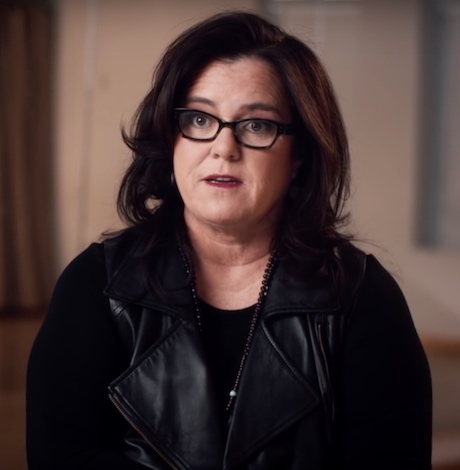
Rosie O’Donnell wants to play Steve Bannon on ‘SNL’

the comedian tweeted she is ‘available’ for the part
Published

on

(Screenshot via YouTube)

(Screenshot via YouTube)

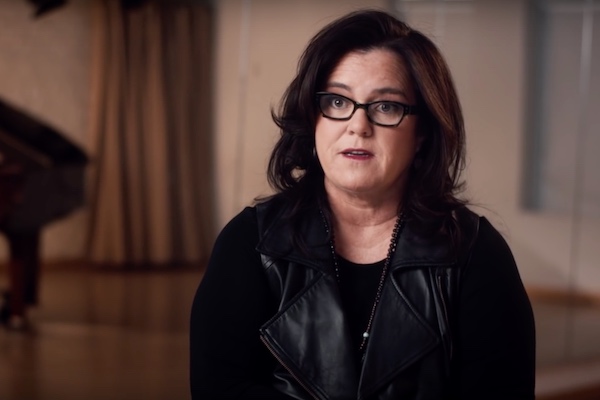
Rosie O’Donnell is available to play Steve Bannon on “Saturday Night Live.”

The comedian tweeted she would be interested in playing President Donald Trump’s chief strategist after someone tweeted she would be good for the role.

The suggestions for a female Bannon on “SNL” come on the heels of Melissa McCarthy’s scene-stealing sketch as press secretary Sean Spicer. The video has received more than 16 million views on YouTube.

Advertisement
FUND LGBTQ JOURNALISM
SIGN UP FOR E-BLAST

Movies

Moving doc ‘Come See Me’ is more than Oscar worthy

Poet Laureate Andrea Gibson, wife negotiate highs and lows of terminal illness

Published

on

The late poet Andrea Gibson with their wife Megan Falley in ‘Come See Me.’ (Photo courtesy of Apple TV)

When Colorado Poet Laureate Andrea Gibson died from ovarian cancer in the summer of 2025, the news of their passing may have prompted an outpouring of grief from their thousands of followers on social media, but it was hardly a surprise.

That’s because Gibson – who had risen to both fame and acclaim in the early 2000s with intense live performances of their work that made them a “superstar” at Poetry Slam events – had been documenting their health journey on Instagram ever since receiving the diagnosis in 2021. During the process, they gained even more followers, who were drawn in by the reflections and explorations they shared in their daily posts. It was really a continuation, a natural evolution of their work, through which their personal life had always been laid bare, from the struggles with queer sexuality and gender they experienced in their youth to the messy relationships and painful breakups of their adult life; now, with precarious health prohibiting a return to the stage, they had found a new platform from which to express their inner experience, and their fans – not only the queer ones for whom their poetry and activism had become a touchstone, but the thousands more who came to know them through the deep shared humanity that exuded through their online presence – were there for it, every step of the way.

At the same time, and in that same spirit of sharing, there was another work in progress around Gibson: “Come See Me in the Good Light,” a film conceived by their friends Tig Notaro and Stef Willen and directed by seasoned documentarian Ryan White (“Ask Dr. Ruth”, “Good Night, Oppy”, “Pamela, a Love Story”), it was filmed throughout 2024, mostly at the Colorado home shared by Gibson and their wife, fellow poet Megan Falley, and debuted at the 2025 Sundance Film Festival before a release on Apple TV in November. Now, it’s nominated for an Academy Award.

Part life story, part career retrospective, and part chronicle of Gibson and Falley’s relationship as they negotiate the euphoric highs and heartbreaking lows of Gibson’s terminal illness together, it’s not a film to be approached without emotional courage; there’s a lot of pain to be vicariously endured, both emotional and physical, a lot of hopeful uplifts and a lot of crushing downfalls, a lot of spontaneous joy and a lot of sudden fear. There’s also a lot of love, which radiates not only from Gibson and Falley’s devotion and commitment to being there for each other, no matter what, but through the support and positivity they encounter from the extended community that surrounds them. From their circle of close friends, to the health care professionals that help them navigate the treatment and the difficult choices that go along with it, to the extended family represented by the community of fellow queer artists and poets who show up for Gibson when they make a triumphant return to the stage for a performance that everyone knows may well be their last, nobody treats this situation as a downer. Rather, it’s a cause to celebrate a remarkable life, to relish friendship and feelings, to simply be present and embrace the here and now together, as both witness and participant.

At the same time, White makes sure to use his film as a channel for Gibson’s artistry, expertly weaving a showcase for their poetic voice into the narrative of their survival. It becomes a vibrant testament to the raw power of their work, framing the poet as a seminal figure in a radical, feminist, genderqueer movement which gave voice to a generation seeking to break free from the constraints of a limited past and imagine a future beyond its boundaries. Even in a world where queer existence has become – yet again – increasingly perilous in the face of systemically-stoked bigotry and bullying, it’s a blend that stresses resilience and self-empowerment over tragedy and victimhood, and it’s more than enough to help us find the aforementioned emotional courage necessary to turn what is ultimately a meditation on dying into a validation of life.

That in itself is enough to make “Come See Me in the Good Light” worthy of Oscar gold, and more than enough to call it a significant piece of queer filmmaking – but there’s another level that distinguishes it even further.

In capturing Gibson and Falley as they face what most of us like to think of as an unimaginable future, White’s quietly profound movie puts its audience face-to-face with a situation that transcends all differences not only of sexuality or gender, but of race, age, or economic status as well. It confronts us with the inevitability few of us are willing to consider until we have to, the unhappy ending that is rendered certain by the joyful beginning, the inescapable conclusion that has the power to make the words “happily ever after” feel like a hollow promise. At the center of this loving portrait of a great American artist is a universal story of saying goodbye.

Yes, there is hope, and yes, good fortune often prevails – sometimes triumphantly – in the ongoing war against the cancer that has come to threaten the palpably genuine love this deeply-bonded couple has found together; but they (and we) know that, even in the best-case scenario, the end will surely come. All love stories, no matter how happy, are destined to end with loss and sorrow; it doesn’t matter that they are queer, or that their gender identities are not the same as ours – what this loving couple is going through, together, is a version of the same thing every loving couple lucky enough to hold each other for a lifetime must eventually face.

That they meet it head on, with such grace and mutual care, is the true gift of the movie. 

Gibson lived long enough to see the film’s debut at Sundance, which adds a softening layer of comfort to the knowledge we have when watching it that they eventually lost the battle against their cancer; but even if they had not, what “Come See Me in the Good Light” shows us, and the unflinching candor with which it does so, delivers all the comfort we need.

Whether that’s enough to earn it an Oscar hardly matters, though considering the notable scarcity of queer and queer-themed movies in this year’s competition it might be our best shot at recognition.

Either way, it’s a moving and celebratory film statement with the power to connect us to our true humanity, and that speaks to a deeper experience of life than most movies will ever dare to do.

Continue Reading

Photos

PHOTOS: Queen of Hearts

Bev crowned winner of 44th annual pageant at The Lodge

Published

on

Bev is crowned Queen of Hearts 2026 at The Lodge in Boonsboro, Md. (Washington Blade photo by Michael Key)

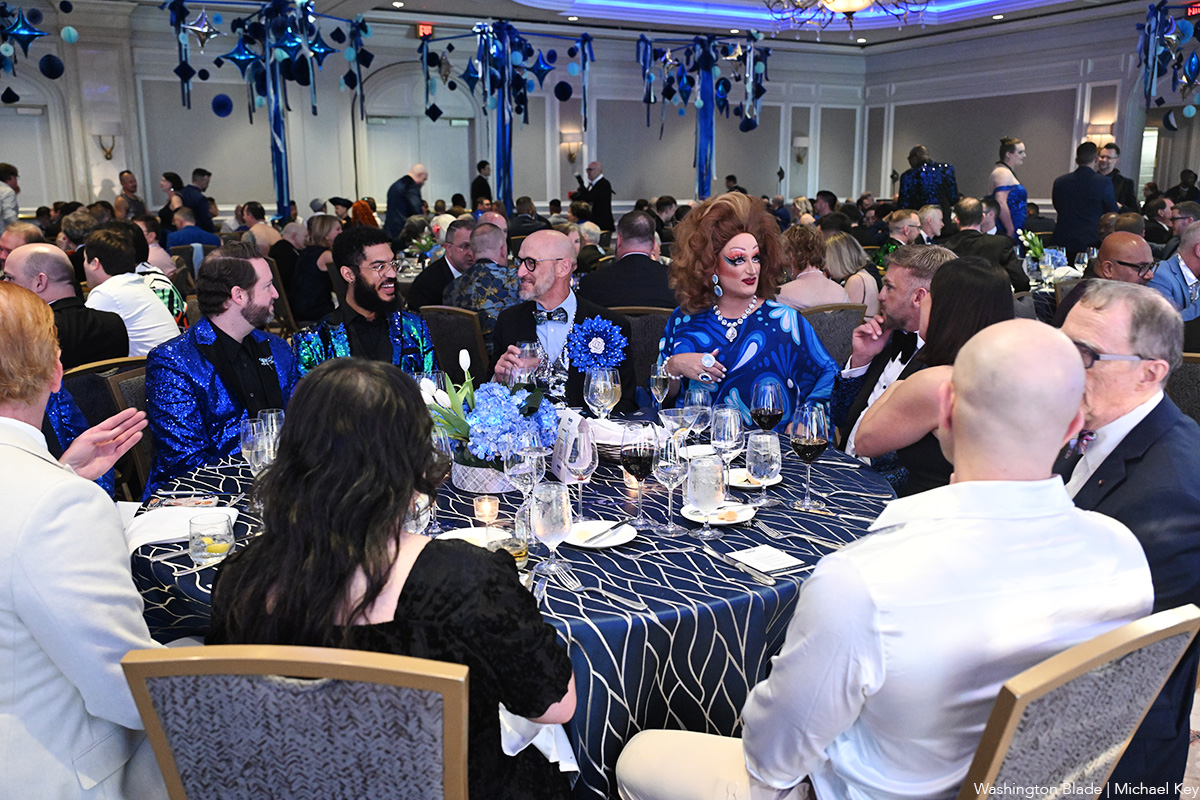
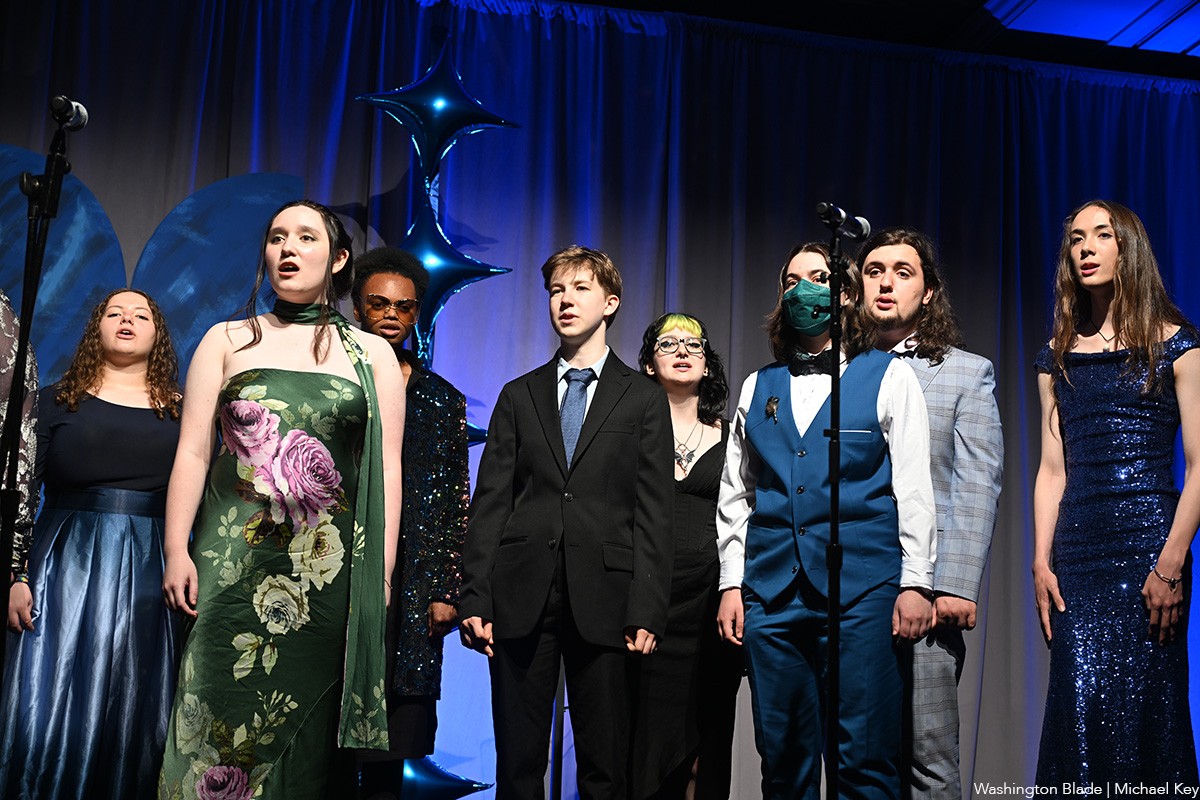
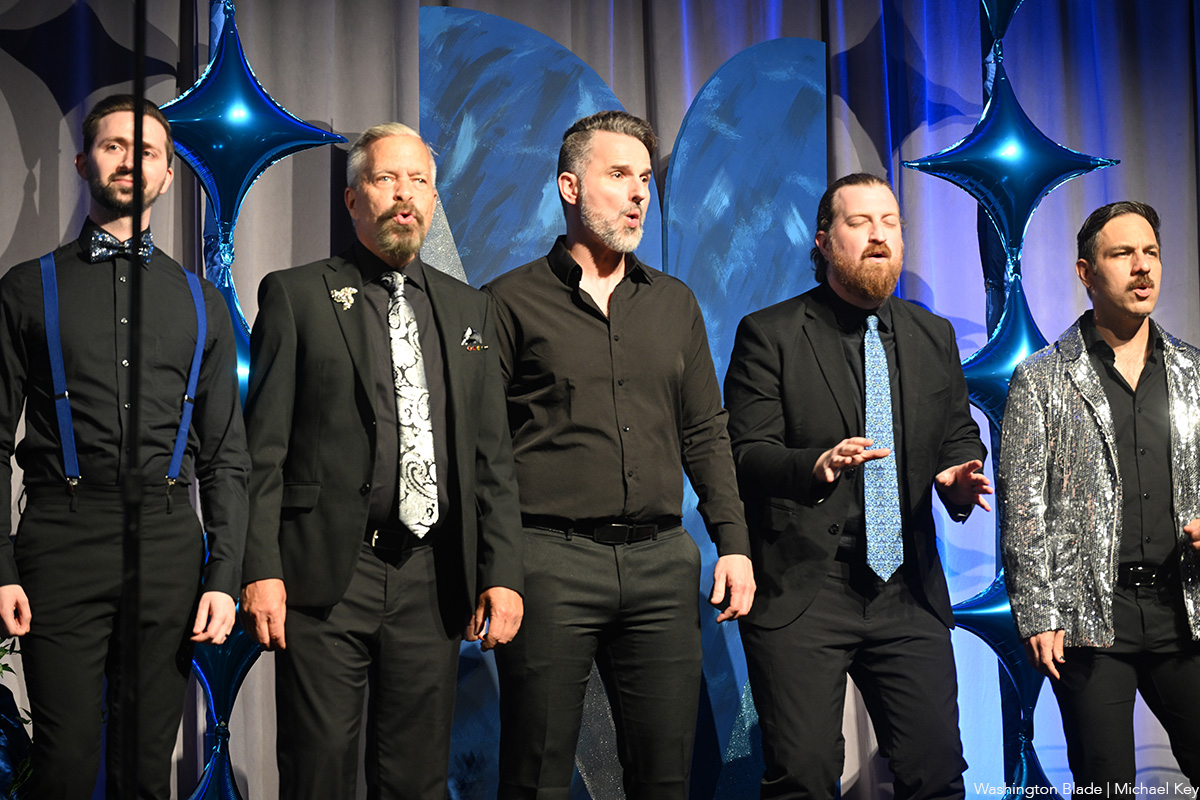
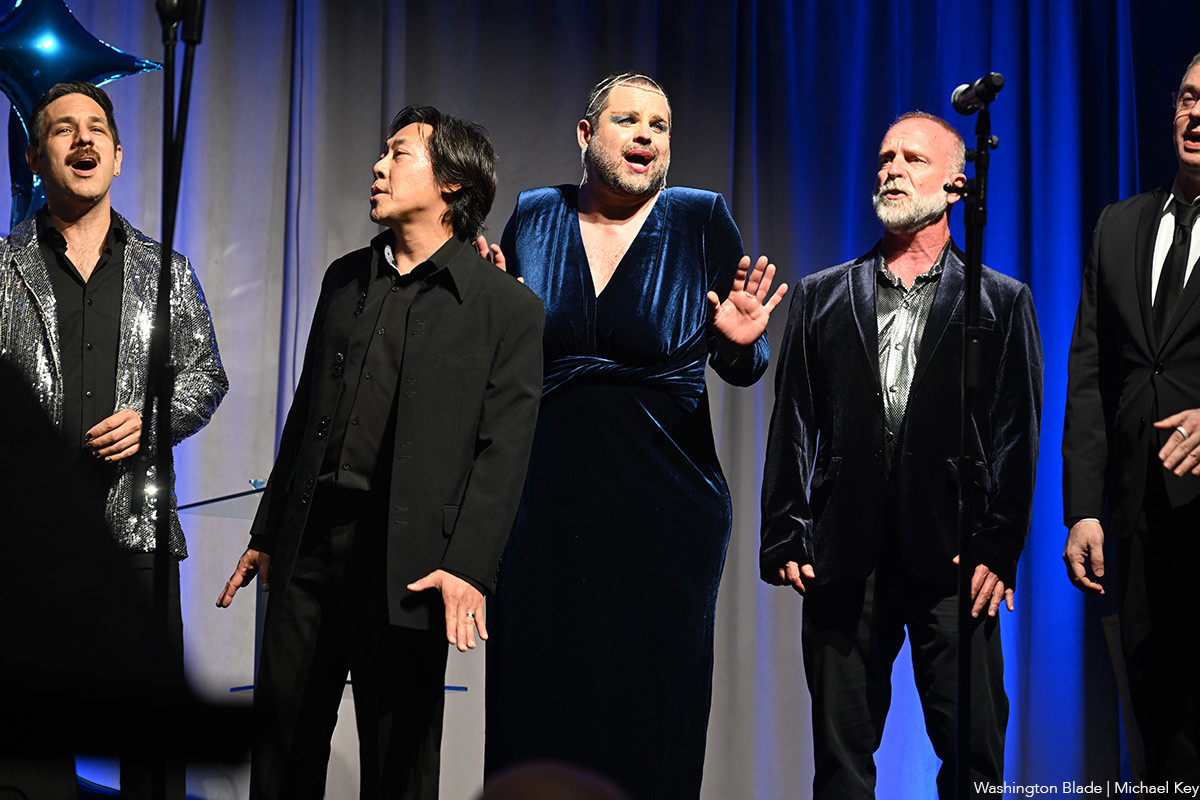
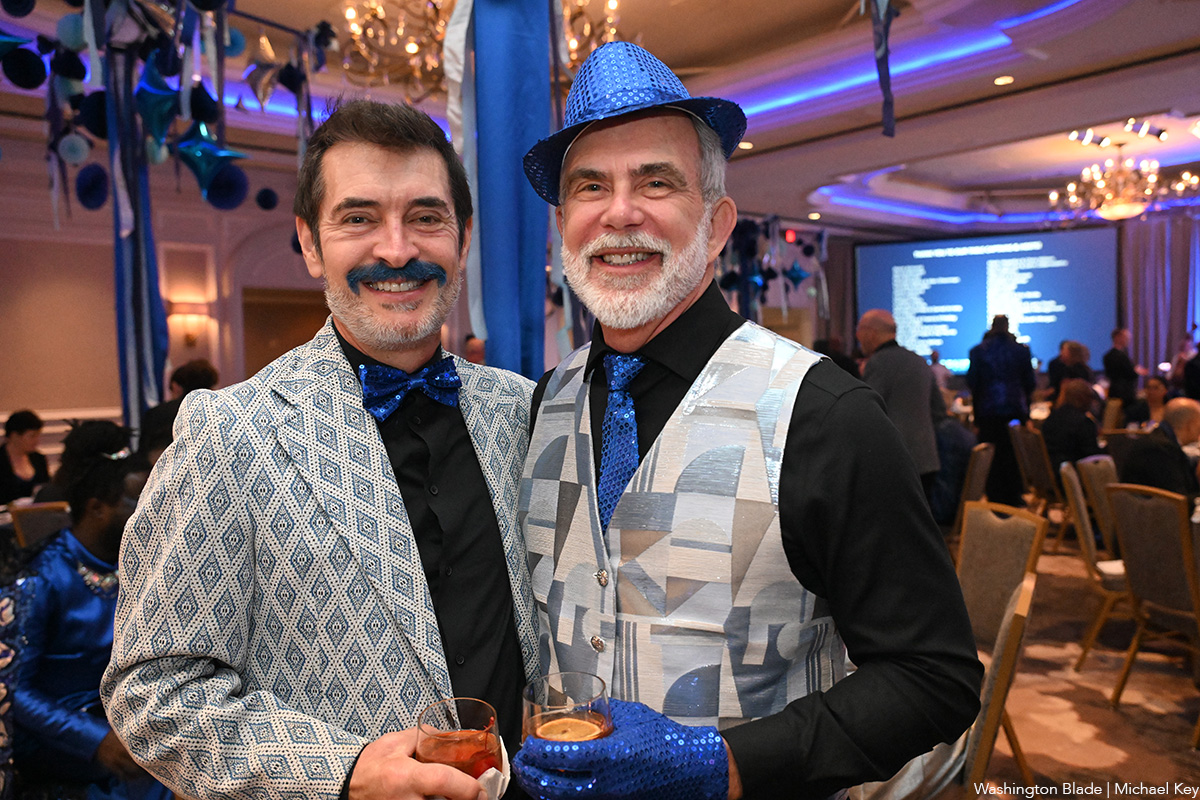
The 44th annual Queen of Hearts pageant was held at The Lodge in Boonsboro, Md. on Friday, Feb. 20. Six contestants vied for the title and Bev was crowned the winner.

(Washington Blade photos by Michael Key)
View on Threads
Continue Reading

Books

New book profiles LGBTQ Ukrainians, documents war experiences

Tuesday marks four years since Russia attacked Ukraine

Published

on

Artur Ozerov, a drag queen who performs as AuRa and works for the Kyiv City Military Administration, prepares to perform at a nightclub in Kyiv, Ukraine, on Dec. 10, 2022. Ozeroy is among the LGBTQ Ukrainians profiled in J. Lester Feder's new book, 'The Queer Face of War: Portraits and Stories from Ukraine' (Photo by J. Lester Feder, courtesy of Outright International)

Journalist J. Lester Feder’s new book profiles LGBTQ Ukrainians and their experiences during Russia’s war against their country.

Feder for “The Queer Face of War: Portraits and Stories from Ukraine” interviewed and photographed LGBTQ Ukrainians in Kyiv, the country’s capital, and in other cities. They include Olena Hloba, the co-founder of Tergo, a support group for parents and friends of LGBTQ Ukrainians, who fled her home in the Kyiv suburb of Bucha shortly after Russia launched its war on Feb. 24, 2022.

Russian soldiers killed civilians as they withdrew from Bucha. Videos and photographs that emerged from the Kyiv suburb showed dead bodies with their hands tied behind their back and other signs of torture.

Olena Hloba (Photo by J. Lester Feder, courtesy of Outright International)

Olena Shevchenko, chair of Insight, a Ukrainian LGBTQ rights group, wrote the book’s forward.

Olena Shevchenko, leader of Insight, poses for a portrait, in Kyiv, Ukraine, on Sept. 8, 2025. (Washington Blade photo by Caroline Gutman)

The book also profiles Viktor Pylypenko, a gay man who the Ukrainian military assigned to the 72nd Mechanized Black Cossack Brigade after the war began. Feder writes Pylypenko’s unit “was deployed to some of the fiercest and most important battles of the war.”

“The brigade was pivotal to beating Russian forces back from Kyiv in their initial attempt to take the capital, helping them liberate territory near Kharkiv and defending the front lines in Donbas,” wrote Feder.

Pylypenko spent two years fighting “on Ukraine’s most dangerous battlefields, serving primarily as a medic.”

“At times he felt he was living in a horror movie, watching tank shells tear his fellow soldiers apart before his eyes,” wrote Feder. “He held many men as they took their final breaths. Of the roughly one hundred who entered the unit with him, only six remained when he was discharged in 2024. He didn’t leave by choice: he went home to take care of his father, who had suffered a stroke.”

Feder notes one of Pylypenko’s former commanders attacked him online when he came out. Pylypenko said another commander defended him.

Feder also profiled Diana and Oleksii Polukhin, two residents of Kherson, a port city in southern Ukraine that is near the mouth of the Dnieper River.

Ukrainian forces regained control of Kherson in November 2022, nine months after Russia occupied it.

Diana, a cigarette vender, and Polukhin told Feder that Russian forces demanded they disclose the names of other LGBTQ Ukrainians in Kherson. Russian forces also tortured Diana and Polukhin while in their custody.

Polukhim is the first LGBTQ victim of Russian persecution to report their case to Ukrainian prosecutors.

Oleksii Polukhin (Photo by J. Lester Feder)

Feder, who is of Ukrainian descent, first visited Ukraine in 2013 when he wrote for BuzzFeed.

He was Outright International’s Senior Fellow for Emergency Research from 2021-2023. Feder last traveled to Ukraine in December 2024.

Feder spoke about his book at Politics and Prose at the Wharf in Southwest D.C. on Feb. 6. The Washington Blade spoke with Feder on Feb. 20.

Feder told the Blade he began to work on the book when he was at Outright International and working with humanitarian groups on how to better serve LGBTQ Ukrainians. Feder said military service requirements, a lack of access to hormone therapy and documents that accurately reflect a person’s gender identity and LGBTQ-friendly shelters are among the myriad challenges that LGBTQ Ukrainians have faced since the war began.

“All of these were components of a queer experience of war that was not well documented, and we had never seen in one place, especially with photos,” he told the Blade. “I felt really called to do that, not only because of what was happening in Ukraine, but also as a way to bring to the surface issues that we’d had seen in Iraq and Syria and Afghanistan.”

J. Lester Feder (Photo by J. Lester Feder)

Feder also spoke with the Blade about the war’s geopolitical implications.

Russian President Vladimir Putin in 2013 signed a law that bans the “promotion of homosexuality” to minors.

The 2014 Winter Olympics took place in Sochi, a Russian resort city on the Black Sea. Russia annexed Crimea from Ukraine a few weeks after the games ended.

Russia’s anti-LGBTQ crackdown has continued over the last decade.

The Russian Supreme Court in 2023 ruled the “international LGBT movement” is an extremist organization and banned it. The Russian Justice Ministry last month designated ILGA World, a global LGBTQ and intersex rights group, as an “undesirable” organization.

Ukraine, meanwhile, has sought to align itself with Europe.

Ukrainian President Volodymyr Zelenskyy after a 2021 meeting with then-President Joe Biden at the White House said his country would continue to fight discrimination based on sexual orientation and gender identity. (Zelenskyy’s relationship with the U.S. has grown more tense since the Trump-Vance administration took office.) Zelenskyy in 2022 publicly backed civil partnerships for same-sex couples.

Then-Ukrainian Ambassador to the U.S. Oksana Markarova in 2023 applauded Kyiv Pride and other LGBTQ and intersex rights groups in her country when she spoke at a photo exhibit at Ukraine House in D.C. that highlighted LGBTQ and intersex soldiers. Then-Kyiv Pride Executive Director Lenny Emson, who Feder profiles in his book, was among those who attended the event.  

“Thank you for everything you do in Kyiv, and thank you for everything that you do in order to fight the discrimination that still is somewhere in Ukraine,” said Markarova. “Not everything is perfect yet, but you know, I think we are moving in the right direction. And we together will not only fight the external enemy, but also will see equality.”

Feder in response to the Blade’s question about why he decided to write his book said he “didn’t feel” the “significance of Russia’s war against Ukraine” for LGBTQ people around the world “was fully understood.”

“This was an opportunity to tell that big story,” he said.

“The crackdown on LGBT rights inside Russia was essentially a laboratory for a strategy of attacking democratic values by attacking queer rights and it was one as Ukraine was getting closet to Europe back in 2013, 2014,” he added. “It was a strategy they were using as part of their foreign policy, and it was one they were using not only in Ukraine over the past decade, but around the world.”

Feder said Republicans are using “that same strategy to attack queer people, to attack democracy itself.”

“I felt like it was important that Americans understand that history,” he said.

Continue Reading

Popular