Local
Screening of ‘Major!’ at Morgan State
Documentary about transgender activist Griffin-Gracy to be shown in Baltimore

Miss Major Griffin-Gracy at San Francisco Pride in 2012. (Photo by Quinn Dombrowski; courtesy Wikimedia Commons)
There will be a screening of “Major!” a new documentary film about the pioneering elder black transgender activist, Miss Major Griffin-Gracy. It will take place on April 4 from 6-9 p.m. in Room 210A, Morgan State University Student Center, 1700 East Cold Spring Lane in Baltimore.
“Miss Major’s life and work are a testament to the urgency of justice for trans folk like Alphonza Watson, who was murdered in Baltimore on March 23,” said the Rev. Cedric A. Harmon, executive director for Many Voices: A Black Church Movement for Gay and Transgender Justice, the group that organized the event. The documentary is being presented in conjunction with the Women’s and Gender Studies Program of Morgan State University.
“At 76-years-old she is still helping communities across the country realize a world where hate crimes towards folks like Alphonza do not happen and where systemic conditions of poverty and discrimination are combated head-on. It is within these conditions that violence so often festers,” Harmon said.
“The gathering will be more than a film screening,” he adds. “It will also be a chance for the Baltimore community to reflect on justice for some of the most marginalized people in our nation: low-to-no income black transgender and gender-variant folk. The film also argues that trans justice must go hand-in-hand with criminal justice reform.”
The screening is free and will be followed by a discussion. For more information, email [email protected].




The Comings & Goings column is about sharing the professional successes of our community. We want to recognize those landing new jobs, new clients for their business, joining boards of organizations and other achievements. Please share your successes with us at [email protected].
The Comings & Goings column also invites LGBTQ college students to share their successes with us. If you have been elected to a student government position, gotten an exciting internship, or are graduating and beginning your career with a great job, let us know so we can share your success.
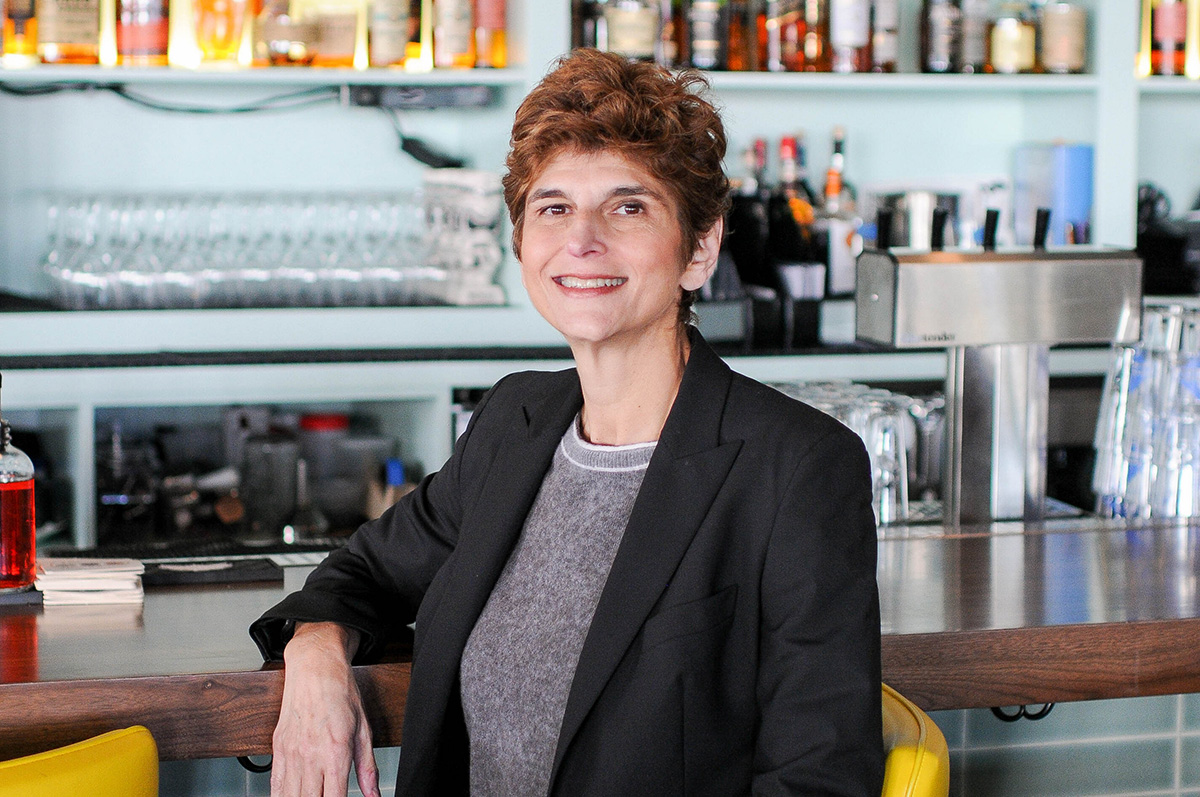
Congratulations to Jamie Leeds, chef extraordinaire, and owner of Hank’s Oyster Bars, as she ventures into some new areas. Leeds is an award-winning Washington, D.C.–area chef, restaurateur, and entrepreneur with more than three decades of experience shaping the region’s dining scene.
Her first new venture is a restaurant opening in Alexandria this week. It will be called Hank’s Pasta Bar, bringing a personalized twist to classic Italian dining with a hiddenrestaurant-inside-a-restaurant in Old Town, Alexandria. The new trattoria is above Hank’s Oyster Bar, and will feature a build-your-own menu, marking a new direction for Leeds in partnership with chef Darren Norris. Norris brings more than three decades of experience to Hank’s Pasta Bar, with a foundation grounded in Italian cooking. The grand opening was scheduled for May 14. The elevated casual eatery blends an inventive chef-driven menu with an easy-going, sit-down dining experience that puts guests in charge. Hank’s Pasta Bar bridges the gap between elevated fast casual, like Norris’s Shibuya, and full-service dining, like Leeds’s Hank’s Oyster Bar. Diners order electronically at the table, but unlike fast casuals, food and beverages are delivered on plate ware, and a server is on site at all times.
The restaurant-inside-a-restaurant, welcomes guests to dine in with a full bar, including Italian wines and craft cocktails, maintaining its focus on traditional Italian fare with contemporary touches, including a build-your-own pasta bowl experience starting at $16. Create your own pasta bowl from seven artisanal pastas (including gluten-free), nine made-in-house sauces, proteins, vegetables, and toppings. Leeds said, “It’s the kind of place you’d find down a side street in a Tuscan hill town, after being tipped off by a friend who says, ‘trust me.’ If you know, you know.”
The restaurant will continue Hank’s community partnerships, including with Real Food for Kids, supporting programs that improve school food and nutrition equity.
In addition to this you should try Jaimie’s other new venture. Back Door Taco at Hank’s in Dupont Circle. You walk down the alley from 17th Street to the back door of Hank’s, and enter a small patio to partake of great tacos and interesting cocktails.
District of Columbia
HIV Vaccine Awareness Day set for May 18
Whitman-Walker joins nationwide recognition of efforts to develop vaccine
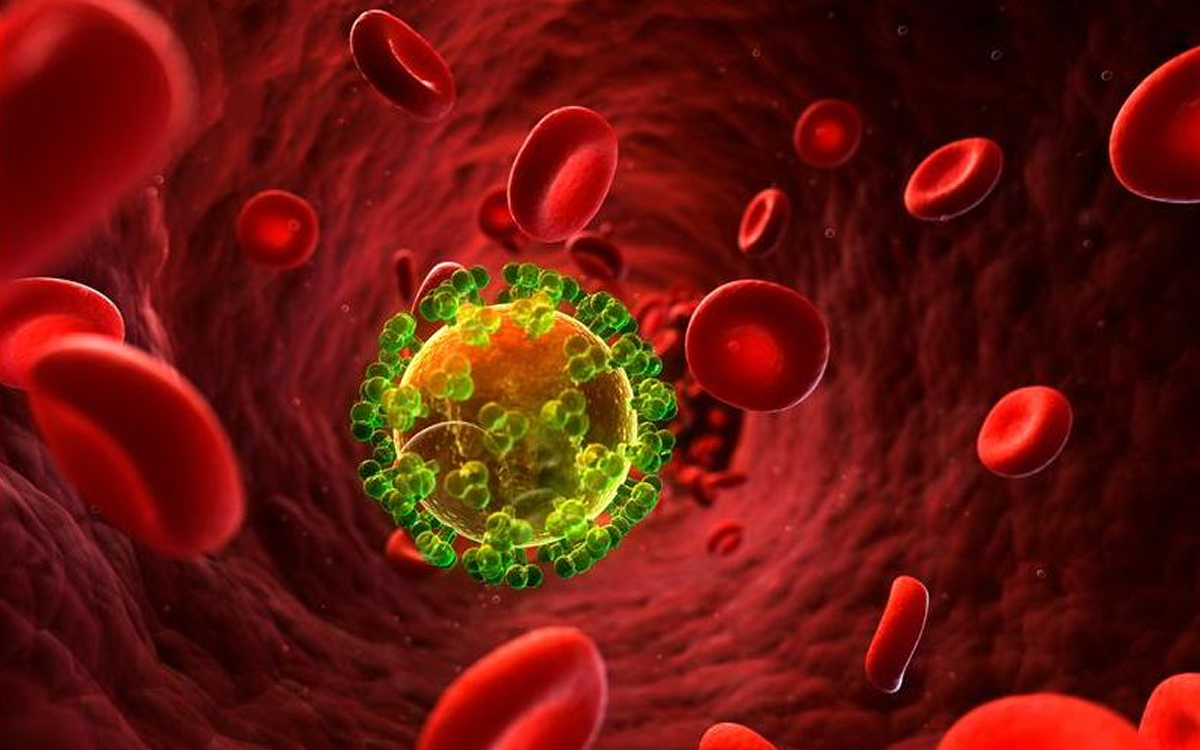
Whitman-Walker Health, the D.C.-based community healthcare center that specializes in HIV/AIDS and LGBTQ-related health services, will join health care advocates from across the country to support efforts to develop an HIV vaccine on HIV Vaccine Awareness Day on May 18.
“HIV Awareness Day, observed annually on May 18, was established to recognize and thank the volunteers, scientists, health professionals, and community members working toward a safe and effective prevention HIV vaccine,” Whitman-Walker said in a statement.
“Led by the National Institutes of Health’s National Institute of Allergy and Infectious Diseases (NIAID), the day is also an opportunity to educate communities about the critical importance of preventive HIV vaccine research,” the statement says.
It adds, “The reality is that any new vaccine discovery must be built community by community, institution by institution, and then it must reach everyone – especially the communities who have carried the heaviest burden of this epidemic.”
On its own website, the National Institutes of Health says HIV Vaccine Awareness Day also highlights its longstanding efforts, coordinated by its Office of AIDS Research, to support researchers’ efforts to develop an HIV vaccine.
“Researchers are making promising headway in efforts to develop a safe, effective HIV vaccine,” it says in a statement on its website.
A Whitman-Walker spokesperson said Whitman-Walker was not holding a specific event to observe HIV Vaccine Awareness Day, but it will recognize the day as a way of encouragement for its ongoing work to address the AIDS epidemic and support for vaccine research.
“Today, no one has to die from HIV,” said Whitman-Walker’s Health System division’s CEO, Dr. Heather Aaron in the Whitman-Walker statement. “We have the treatments, the technology, and the research to change outcomes, and yet people in our community are still dying from HIV//AIDS,” she said in the statement.
“That is unacceptable, and it is exactly why our work continues,” she added. “Here in D.C. with more focus on Southeast D.C., the Whitman-Walker Health System remains committed to making a difference through cutting-edge research, policy advocacy, and philanthropy, because fair access to life-saving treatment is not a privilege. It is a right.”
District of Columbia
Capital Stonewall Democrats endorses Janeese Lewis George for D.C. mayor
Group also backed D.C. Council, Congressional delegate, AG candidates

The Capital Stonewall Democrats, D.C.’s largest local LGBTQ political organization, announced on May 14 that it has endorsed D.C. Councilmember Janeese Lewis George (D-Ward 4) for mayor in the city’s June 16 Democratic primary.
Lewis George along with former D.C. Councilmember Kenyan McDuffie (D-At-Large) are considered by political observers to be the two leading candidates among the seven candidates competing in the Democratic primary election for mayor.
Both have strong, long-standing records of support on LGBTQ issues, indicating Capital Stonewall Democrats members, like LGBTQ voters across the city, are likely choosing a candidate based on non-LGBTQ related issues.
In a May 14 statement, the group announced its endorsements in seven other Democratic primary races, including D.C. Council Chair Phil Mendelson, who is running unopposed in the primary. Also endorsed is D.C. Councilmember Robert White (D-At-Large), who is one of five Democratic candidates competing for the position of D.C. delegate to the U.S. House of Representatives.
D.C. Councilmember Brooke Pinto (D-Ward 2) is among the four candidates competing with White for that post, and who like White has a strong record of support on LGBTQ issues.
In the At-Large D.C. Council race for which incumbent Anita Bonds is not running for re-election, Capital Stonewall Democrats has endorsed community activist and LGBTQ ally Oye Owolewa in a nine candidate race.
For the Ward 1 D.C. Council election, in which five LGBTQ supportive candidates are competing, the group did not make an endorsement because none of the candidate received a required 60 percent of the endorsement vote cast by Capital Stonewall Democrats members, according to the group’s former president, Howard Garrett.
The statement announcing its endorsements shows that it decided to list its “Preferred Ranking” of each of the Ward 1 Democratic candidates as part of the city’s newly implemented ranked choice voting system. It lists gay candidate Miguel Trindade Deramo as first, bisexual candidate Aparna Raj second, Jackie Reyes Yanes third, Rashida Brown fourth, and Terry Lynch fifth.
In the remaining ward Council races, Capital Stonewall Democrats endorsed Councilmember Matt Fruman (D-Ward 3), who is running unopposed for re-election; Councilmember Zachary Parker (D-Ward 5), the Council’s only gay member who is being challenged by two opponents; and Councilmember Charles Allen (D-Ward 6), who is running unopposed for re-election.
The group also chose not to make an endorsement in the special election for another At-Large D.C. Council seat that became vacant when then-Independent Councilmember McDuffie resigned to enable him to run for mayor as a Democrat. Under the city’s Home Rule Charter adopted by Congress, that at large sweat is restricted to a “non-majority party” candidate, meaning a non-Democrat.
The three candidates running for the seat, all Independents, include incumbent Doni Crawford, who was appointed to the seat earlier this year; former D.C. Councilmember Elissa Silverman; and Jacque Patterson. All three have expressed support on LGBTQ related issues.
“The organization’s endorsement process included candidate questionnaires, public forums, and direct voting by active CSD members,” the statement announcing its endorsements says. “Each endorsement reflects the collective voice of 173 LGBTQ+ Democrats who voted in the process and are committed to building lasting political power in the District,” according to the statement. “Candidates that reached 60 percent support received the endorsement.”
Garrett, the group’s former president, acknowledged that with nearly all candidates running in D.C. elections expressing strong support for the LGBTQ community, many if not most of the group’s members most likely chose a candidate based on issues other than LGBTQ related issues.
He said he believes Lewis George, who he is supporting and is viewed as a progressive candidate who self-identifies as a Democratic Socialist, compared to McDuffie, who is viewed as a moderate Democrat, captured the group’s endorsement based on the view that she is the best person to lead the city going forward.
“I believe that Capital Stonewall members voted for Janeese Lewis George because we’re tired of the status quo and we need a new, bold leader to not only move our city forward but also to stand up to Donald Trump and his administration,” Garrett told the Washington Blade.
McDuffie’s LGBTQ supporters, including former Capital Stonewall Democrats presidents David Meadows and Kurt Vorndran, have argued that McDuffie’s positions on a wide range of issues, including LGBTQ issues, show him to be the best candidates to lead the city at this time and In future years.
The group’s endorsement of Lewis George comes one week after GLAA DC, a nonpartisan LGBTQ advocacy group, awarded her its highest candidate rating of +10.

Honey, have we been priced out of gay paradise?

Comings & Goings

IDAHOBiT a reminder we all must stand up against transphobia

Disillusioned about democracy? Think of it as a community garden

‘The Inheritance’ is most-nominated at this year’s Helen Hayes Awards

Jason Collins dies at 47

Polish government to recognize same-sex marriages from EU countries

European Commission says all EU countries should ban conversion therapy

Pride faith services in Washington, D.C.