Opinions
Emily D, the Lady Gaga of poetry
New film on Dickinson disappoints, but her writing still enthralls
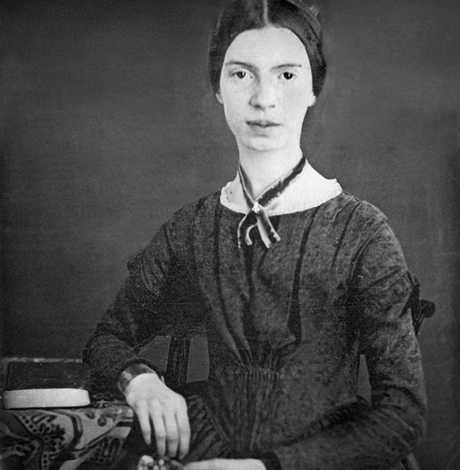
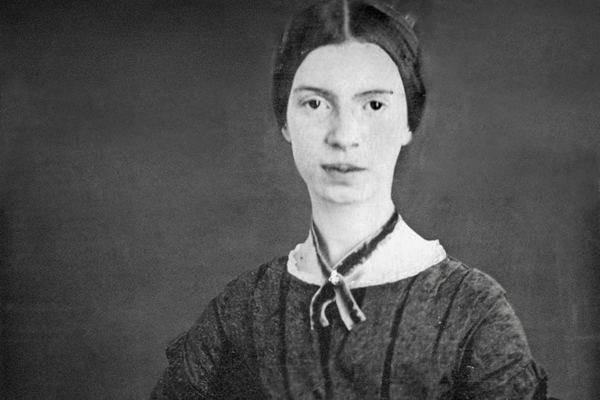
Emily Dickinson (Image public domain)
Egomaniacs, beware!
“Fame is a bee/It has a song/It has a sting/Ah, too, it has a wing,” Emily Dickinson, who lived from 1830-1886, tartly warned 19th century wannabe celebs.
Fleeting fame wasn’t a worry for Dickinson during her lifetime. Only 10 of her poems were published while she lived. Today, Emily D is the Lady Gaga of poetry; and we’re her “Little Monsters,” gobbling up her poems which sound like syncopated, razor-sharp Tweets.
In the Trump era, these poems, written by a single woman who didn’t submit to religious orthodoxy and is thought by some scholars to have been queer, speak to us more than ever. “If I can stop one heart from breaking/I shall not live in vain,” Dickinson wrote. Listening to the news of civil rights setbacks, Dickinson’s words echo in my brain.
“Truth is so rare that it is delightful to tell it,” Dickinson wrote. If only, Dickinson could be here in this time of “fake news!”
Emily D’s spirit is everywhere. The Morgan Library & Museum exhibition “I’m Nobody! Who are you? The Life and Poetry of Emily Dickinson” just closed. In 2013, the online Emily Dickinson archive combined manuscripts of Dickinson’s poems from Harvard University, Amherst College, the Boston Public Library and other institutions.
“A Quiet Passion,” a movie about Dickinson starring Cynthia Nixon (as Dickinson) and directed by Terence Davies, is the latest in Emily D buzz. If only, this picture had buzz.
There’s much that we don’t know about Dickinson. We don’t know for sure if Emily D ever had a male or female lover (though she had intense friendships with women). Any poet will tell you that Dickinson and Walt Whitman are the greats – the geniuses of American poetry. But I defy any bard to say, with certainty, what her poems mean. That’s the fun of reading Dickinson. It’s you and Emily D surfing the mysterious waves.
Yet, we do know one thing: Dickinson wasn’t boring. Until “A Quiet Passion.” Cynthia Nixon’s fab as Emily D. It’s lovely to hear her read Dickinson’s poetry. Nixon has great acting chops. This year, she’s a Tony Award nominee for Best Featured Actress in a Play for her performance in “The Little Foxes.”
Nixon played Miranda in “Sex and the City.” (Who could forget the “funky spunk?”) I wouldn’t want Emily D’s story to morph into SATC. But, “A Quiet Passion” could use some funky spunk! The film doesn’t have the sentimentality of “The Belle of Amherst,” the popular play about Dickinson. Some scenes (about 45 minutes) of this movie are engaging. (The film runs for two hours and five minutes.) We see young Emily D (Emma Bell) as she’s about to be asked to leave Mount Holyoke College, a women’s Christian school, for thumbing her nose at the religious orthodoxy of the day.
In a great scene in “A Quiet Passion,” a pastor (Miles Richardson) tells her that she’s being impious. “Will you not kneel and give yourself to God?” he asks her.
“No, sir, I will not kneel,” Emily D tells him, “Though, I think that God has already given Himself to me.”
Though the movie provides glimpses of her spirit and lively mind, too much of “Passion” presents Dickinson as an unhappy recluse. Emily D lived in one room in her Amherst home for most of her life. But, that one room gave Dickinson what Virginia Woolf called a “room of her own,” where she could write. Emily D corresponded with hundreds of people. “My friends are my estate,” she wrote.
Dickinson lived through the Civil War, grieved when her friends died and suffered from Bright’s disease. “Because I could not stop for death, He kindly stopped for me,” she wrote.
But, Dickinson wasn’t mournful or passive. “I dwell in possibility,” she wrote, and “Fortune befriends the bold.”
Be bold. Take a poetic ride with Emily D.
Kathi Wolfe, a writer and a poet, is a regular contributor to the Blade.



Commentary
Washington Blade responds to concerns over White House pool duties
Inaccurate media reports create confusion but we stand with our colleagues
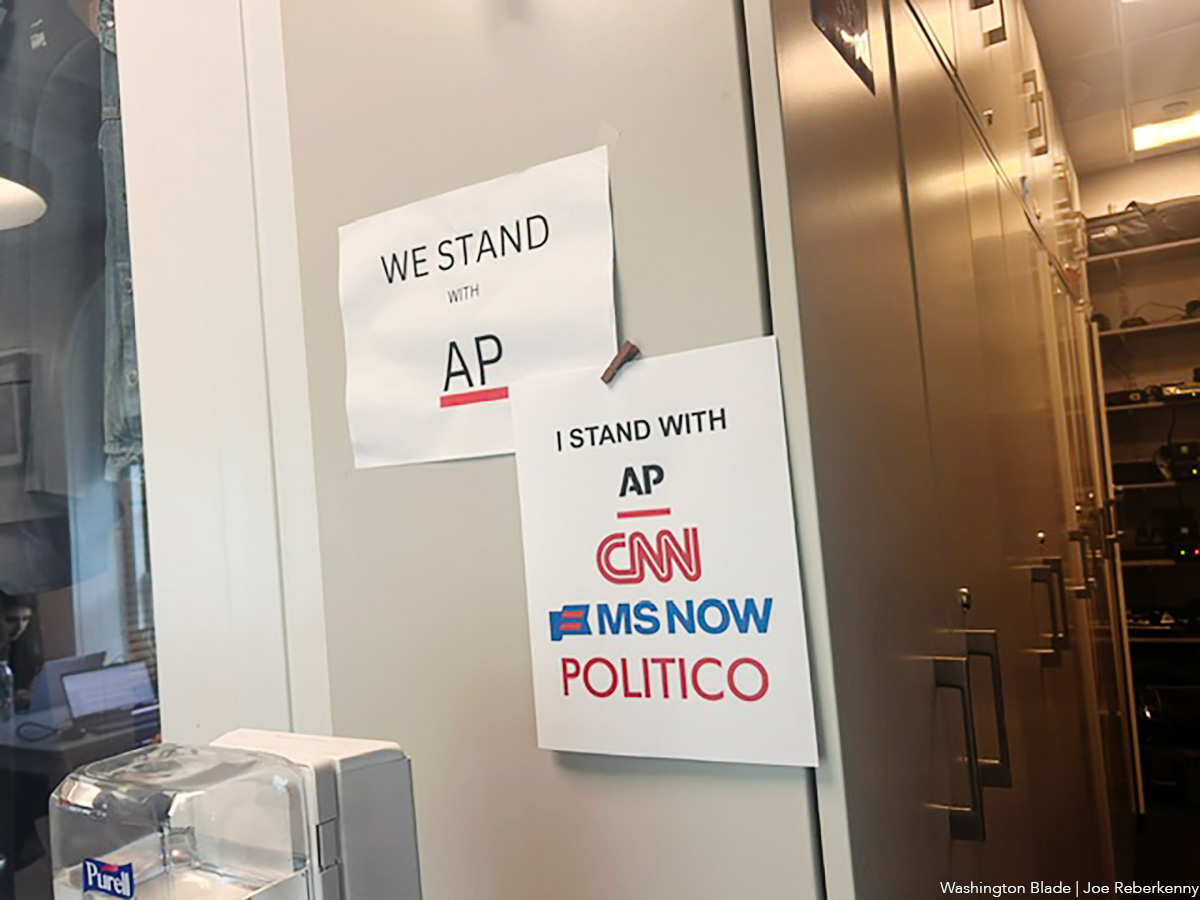
Last week, President Trump announced his unconstitutional ban of CNN, MSNow, and Politico from the White House. Coincidentally, on Monday, it was the Washington Blade’s turn to serve as the print pool reporter on duty covering the president’s actions that day. This important responsibility is shared and rotated among the print members with each serving roughly once per month. The Blade is the only LGBTQ outlet with a seat in the briefing room, a slot in the pool rotation, and membership in the White House Correspondents’ Association, something we fought for decades to secure after enduring years of discrimination, ridicule, and resistance to openly queer journalists working inside the White House. We take our responsibilities there seriously.
There are two pools that cover the president: broadcast and print. The other four members of the broadcast pool — ABC, CBS, NBC, and Fox News — agreed to boycott their pool duties. There has been no boycott among the print pool, which is a separate entity. I called the president of the White House Correspondents’ Association on Monday to confirm that no outlets in the print pool were boycotting.
A boycott by the Blade would set us back and lead to our expulsion from the pool and briefing room and our replacement by a right-wing outlet sympathetic to President Trump’s approach to attacking the media. The LGBTQ community is far better served with the Blade in the room than a far-right blogger taking our seat.
Let’s be clear: the Blade stands for diversity, equity, and inclusion and we stand for the First Amendment and freedom of the press. In solidarity with the broadcast pool, we made two important decisions on Monday — the first day anyone had to think about any of this. First, we refused to take or share any videos or still photos of the president, which would have undermined the broadcast boycott. Second, when Politico’s turn comes up for pool duty in mid-October, the Blade will not fill in and cover for them while they are banned. Politico must be readmitted and allowed to do their job.
After a rough day navigating and reporting on all of this, the Advocate published a reckless and inaccurate story suggesting that the Blade had crossed a picket line. Not true, as there is no print pool boycott. They claimed that I wouldn’t talk to their reporter. Also not true. I called their reporter within 90 minutes of receiving his message and he didn’t take the call or call me back. Their story named me and our White House reporter, immediately exposing us to public criticism and worse. The environment in D.C. is so toxic and even violent these days that subjecting our staff to unfair and false accusations like this invites harassment, doxxing, and worse. To do that without even talking to us is next level irresponsible and the antithesis of journalism.
On Tuesday, I talked to two reporters and an editor at the Advocate but they refused to retract anything in their inaccurate story. If the reporter had returned my call, I could have explained all of this but they are more concerned with clickbait and sensational headlines, a dangerous practice in these troubled times.
Back to the pool. The Blade was in the briefing room in the Reagan era, when Press Secretary Larry Speakes made jokes about AIDS and the reporters in the room laughed out loud. We endured all of that abuse and worse for decades, always standing in the back of the room and never being called on. The Blade’s journalists persevered. When President George W. Bush was re-elected in 2004, the Blade’s White House credentials were revoked amid an earlier press crackdown. Notably, no one boycotted or stood up for us. When Barack Obama won election in 2008, I received an email from his communications director informing me that effective midnight on Jan. 20, 2009, the Blade’s credentials would be restored.
So we have had quite a ride navigating administrations and their changing requirements for gaining access but always playing the long game. As Barney Frank used to say, “If you’re not at the table, then you’re probably on the menu.” The Blade is at the table and we do our best to ensure the LGBTQ community’s issues are addressed by both parties.
Thanks for reading and supporting the Blade’s work. If you have questions about our approach, you can reach me at [email protected].
Kevin Naff is editor of the Washington Blade. Reach him at [email protected].
Opinions
Young people should know history of the fight for human rights
Trump is working to erase contributions of marginalized people
When talking with otherwise really smart young people, I am amazed how little knowledge many of them have about the fight for human rights in the United States. Our country was founded by white men, who didn’t think about giving full rights to Black Americans, women, the LGBTQ community (what they knew of it, or called it). They wrote in the Declaration of Independence, “We hold these truths to be self-evident, that all men are created equal, that they are endowed by their Creator with certain unalienable Rights, that among these are Life, Liberty and the pursuit of Happiness.” But that referred to all white men, and intentionally didn’t mention women. For 250 years, the country has been trying to make up for that, and making progress in fits and starts. We have yet to fully succeed. Today the felon, and his fascist aides, in the White House, are working daily to take us backwards.
For that reason alone, it is important for younger generations to understand the fight for human rights, know who was fighting for those rights, and understand it is an ongoing fight. Often, when listening to some millennials speak, one would think the world began with them. They either forgot, or never learned, about all those who fought for the rights they now have. I realize this was true for previous generations as well. In 2016 I co-hosted a fundraiser for Pete Buttigieg during his run for president. He is an undeniably brilliant guy. Yet when he spoke of marriage equality, he just thanked Justice Kennedy for it. I reminded him after he spoke, while it’s nice to thank Kennedy for his vote, it shouldn’t be done without acknowledging the many activists who worked for decades, to get to the point that allowed Kennedy to cast that vote. In the same way it was clear to me during the Hillary Clinton campaign for president, many young women didn’t understand the work many of their own mothers had done, to fight for their right to control their own healthcare, and women’s rights in general. They took for granted the rights they had. Now, after losing some of them, many will realize the fight for their rights is never-ending.
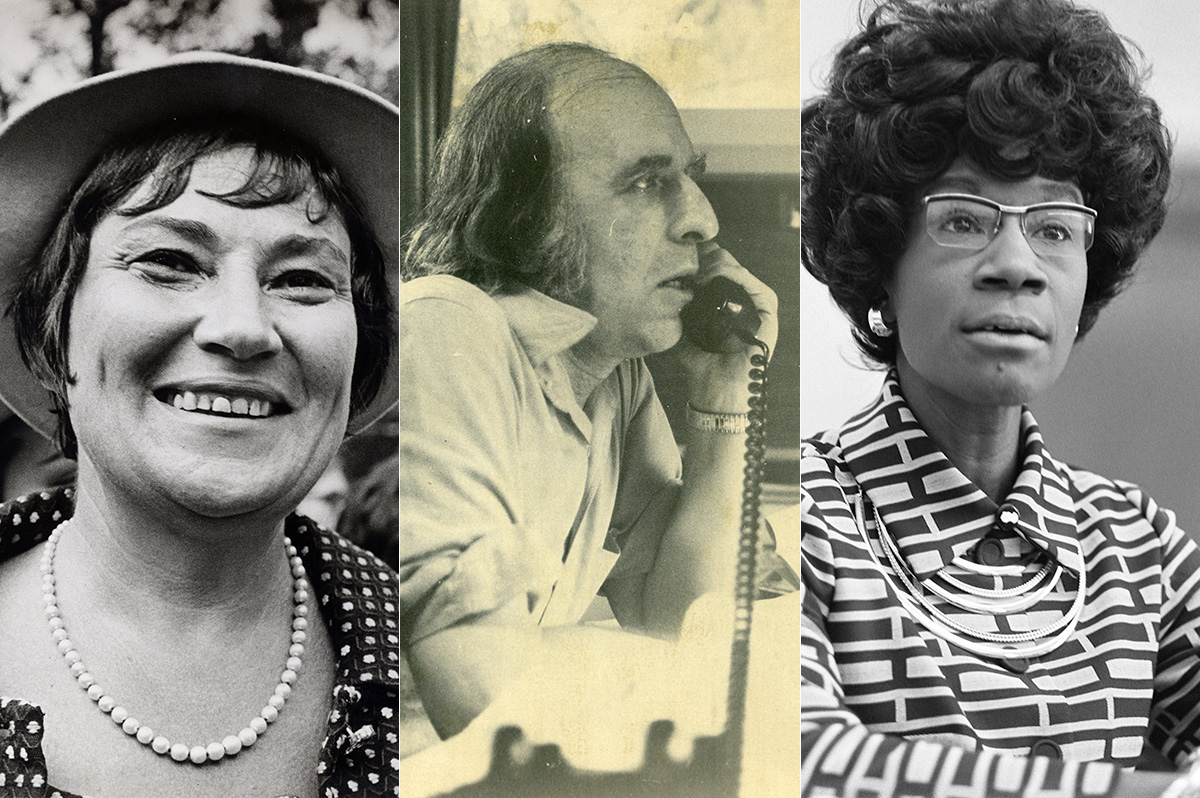
When I speak to younger members of the LGBTQ community, I am amazed how many don’t know the history of the AIDS epidemic, many thinking it was always a disease you could deal with by taking medication. They don’t understand the work so many activists did to bring attention to this devastating disease, and get the healthcare so many needed. Those like Cleve Jones, Larry Kramer, Dr. Anthony Fauci, and so many others. Recently, I realized how many young women don’t know the names of Gloria Steinem, Betty Friedan, Shirley Chisholm, Bella Abzug — women who fought for their rights. And this is just recent history, no less knowing about the Suffragettes, the strong women who fought for their right to vote. I’ve met young women who don’t know what the ERA is, and others who think it passed. Many don’t know the nation couldn’t get 38 states to approve an amendment to include them in the Constitution. The same for young members of the LGBTQ community who don’t know what the Equality Act is. Others think it passed, and are shocked when told it didn’t and in 27 states, they can be married on Sunday, and kicked out of their home, and fired from their job, on Monday. They don’t know names like Frank Kameny, Harvey Milk, Barney Frank, or the history of the Mattachine Society, or the Stonewall Riots.
Our current president is trying to wipe out all this history, and reverse any progress that has been made. Knowing this, it makes it even more important for school systems across the nation to fight to educate our children. We should ensure no child can graduate high school, without taking a course called “The 250-year fight for human rights in the United States.” They need to understand the history, and learn about the people who fought for their rights. They need to know how far we have come in 250 years, and understand, as we begin the next 250, how far we still have to go, to ensure real, full equality, for all.
Peter Rosenstein is a longtime LGBTQ rights and Democratic Party activist.
Opinions
How emerging drone tech can support LGBTQ workplace inclusion
Employers should establish clear policies governing data access

Workplace inclusion is increasingly becoming part of a broader conversation about employee safety, dignity, and equal access to secure working environments. For LGBTQ employees, an inclusive workplace is not simply one that communicates supportive values it is one where policies, infrastructure, and technology work together to help people feel protected and respected.
As organizations explore emerging technologies to strengthen workplace operations, drones are becoming a valuable tool for improving physical safety, situational awareness, and emergency preparedness. When deployed responsibly and with appropriate privacy safeguards, drone technology can contribute to safer workplaces without singling out employees based on identity.
Key Benefits of Drone Technology for Safety
- Reduced Employee Exposure to Hazards: Drones can inspect difficult or potentially dangerous areas without unnecessarily placing employees at risk.
- Faster Emergency Awareness: Aerial visibility can help safety teams assess incidents and make informed decisions more quickly.
- More Consistent Safety Coverage: Drones can support inspections across large workplaces, campuses, warehouses, and remote facilities.
- Safer, More Inclusive Environments: Technology can help organizations improve physical safety measures that protect employees equally, including LGBTQ team members.
- Privacy-Conscious Safety Practices: With responsible policies, drones can support workplace security without profiling individuals based on gender identity, sexual orientation, or other personal characteristics.
Improving Physical Workplace Safety
A clear application of drone technology lies in the inspection of facilities and infrastructure. Inspection of rooftops, industrial machines, construction zones, warehouses, remote locations, and other risky areas can be achieved using drones fitted with cameras and other sensors.
Such use of drone technology may help in reducing the risk of forcing employees to access such risky areas unnecessarily. Moreover, any technological advances in terms of improving workplace safety are equally beneficial to all workers irrespective of their sexual orientation, gender identity, and gender expression.
Supporting Emergency Preparedness and Response
An emergency can reveal flaws in your workplace safety program. In big settings like industrial campuses, warehouses, or outdoor workplaces, it might take security personnel longer to respond. Drones might supply better aerial visibility in several types of incidents. They make it possible to see circumstances rapidly, locate blocked paths, examine out- of-the-way or damaged areas and direct needed aid.
Enhanced situational awareness provides better answers while limiting exposure to risks. In a perfect safety world, all employees are served with dignity and attention while emergency actions are created with diversity in mind.
Creating Safer Shared Environments
Workplace safety also involves creating physical environments where employees can move through facilities confidently. Drone-based inspections can help organizations identify infrastructure concerns such as damaged lighting, inaccessible areas, perimeter issues, or other physical conditions that could create safety risks.
The technology does not need to identify who an employee is to provide value. Instead, organizations can use drones to evaluate spaces and infrastructure while maintaining clear boundaries around personal privacy.
This distinction is particularly important when discussing LGBTQ workplace inclusion. Technology designed for safety should protect employees rather than create an environment in which individuals feel watched, profiled, or treated differently.
Privacy Must Remain a Priority
The potential benefits of drones also come with important responsibilities. Cameras, sensors, and data collection capabilities can raise legitimate privacy concerns if organizations deploy them without transparent rules.
Employers considering workplace drone programs should establish clear policies governing where drones may operate, what information may be collected, who can access that information, and how long data is retained. Employees should also understand the purpose and boundaries of workplace drone operations.
Drone technology should never be used to infer, monitor, or profile an employee’s sexual orientation, gender identity, personal relationships, or other sensitive characteristics. Inclusion depends on trust, and responsible technology policies are essential to preserving that trust.
Technology Is Only Part of an Inclusive Workplace
No drone platform can create an inclusive workplace on its own. Meaningful LGBTQ inclusion still depends on organizational culture, anti-discrimination policies, fair employment practices, accessible reporting channels, employee education, and leadership accountability.
Technology can support these efforts by improving the physical conditions in which employees work. For example, drones may help reduce exposure to hazardous tasks or improve visibility during emergencies, while organizational policies ensure that these benefits are available fairly and respectfully.
Building Safety and Inclusion Together
As drone technologies continue to develop, there is a chance for businesses to expand their minds on what innovation should seek to achieve. Efficiency and increased operational intelligence are vital, but technology can equally play a part in creating safe and inclusive environments that show dignity to employees.
When it comes to LGBTQ employees, along with the workforce in general, the most effective approach to technology is one that enhances safety without threatening privacy and equality. Consequently, the future of workplace innovation should take into account not only what technology is capable of but also how wisely it is applied. By combining cutting-edge technologies like drones with responsible business practices, businesses can make strides in both areas at once.
Andrew Mabry is a technology researcher and analyst specializing in UAV and drone technology, AI, and emerging digital technologies.

Gay Va. couple hopeful voters will enshrine marriage equality in state constitution

Vote now! Best Of LGBTQ DC readers’ choice awards

Meet the LGBTQ candidates running for U.S. House, Senate

Ana Brnabić becomes world’s first openly lesbian head of state