Local
D.C. Fire & EMS issues trans ‘general order’
Honoring ‘all types of diversity’
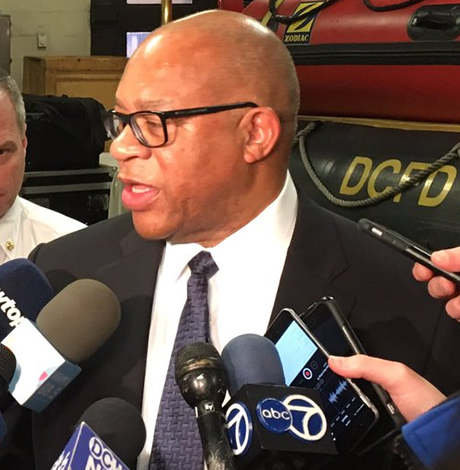
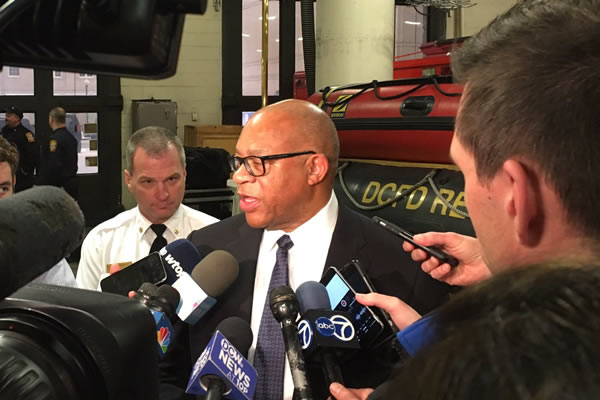
‘I think as an agency we have a responsibility … in trying to make sure we honor all types of diversity here within the agency,” said Fire and EMS Chief Gregory M. Dean. (Photo courtesy Twitter)
The D.C. Fire and Emergency Medical Services Department on June 1 issued a five-page General Order on Gender Identity and Expression that updates the department’s policy for dealing with transgender patients and employees.
Among other things, the order says Fire and EMS Department members are required to treat transgender patients and citizens with respect and without bias, including the way they address them by name.
“The Department shall ensure that all employees respect and use a transgender individual’s preferred names and pronouns, as repeated failure to do so can be considered harassment under the District of Columbia Human Rights Act and a violation of Department policy,” the order states.
“The gender identity expressed or presented by the individual shall be accepted and honored,” the order says, adding, “Transgender individuals shall not be subject to a more invasive medical exam or procedure than any non-transgender individual solely on the basis of their transgender identity.”
It says that if a transgender person’s legal name or birth gender is needed for legal or medical reasons, it must be kept confidential.
“The members shall provide to the relevant hospital staff information that is medically necessary regarding the transgender individual, so they may treat the person respectfully, while maintaining confidentiality of the information from non-relevant hospital staff,” the order says.
Concerning transgender employees at the Fire and EMS Department, the order says the department, when requested, “shall make reasonable accommodation, including medical leave, for transgender related and other health needs,” including but not limited to medical or counseling appointments, surgery, recovery from surgery, “and any other related procedures.”
Fire and EMS Chief Gregory M. Dean and the department’s Diversity Program Manager Kim McDaniel told the Blade last week that although the release of the general order at the start of LGBT Pride Month was a coincidence the department would be reaching out to the LGBT community this weekend.
Dean noted that department employees and officials, along with a fire truck, will be participating in the Capital Pride Parade on June 10. He said along the parade route paramedics would offer on-the-spot CPR chest compression training to parade bystanders as well as participants.
“I think as an agency we have a responsibility – and since Kim joined us we have been very diligent – in trying to make sure we honor all types of diversity here within the agency,” Dean said.




District of Columbia
Capital Stonewall Democrats endorses Janeese Lewis George for D.C. mayor
Group also backed D.C. Council, Congressional delegate, AG candidates

The Capital Stonewall Democrats, D.C.’s largest local LGBTQ political organization, announced on May 14 that it has endorsed D.C. Councilmember Janeese Lewis George (D-Ward 4) for mayor in the city’s June 16 Democratic primary.
Lewis George along with former D.C. Councilmember Kenyan McDuffie (D-At-Large) are considered by political observers to be the two leading candidates among the seven candidates competing in the Democratic primary election for mayor.
Both have strong, long-standing records of support on LGBTQ issues, indicating Capital Stonewall Democrats members, like LGBTQ voters across the city, are likely choosing a candidate based on non-LGBTQ related issues.
In a May 14 statement, the group announced its endorsements in seven other Democratic primary races, including D.C. Council Chair Phil Mendelson, who is running unopposed in the primary. Also endorsed is D.C. Councilmember Robert White (D-At-Large), who is one of five Democratic candidates competing for the position of D.C. delegate to the U.S. House of Representatives.
D.C. Councilmember Brooke Pinto (D-Ward 2) is among the four candidates competing with White for that pos, and who like White has a strong record of support on LGBTQ issues.
In the At-Large D.C. Council race for which incumbent Anita Bonds is not running for re-election, Capital Stonewall Democrats has endorsed community activist and LGBTQ ally Oye Owolewa in a nine candidate race.
For the Ward 1 D.C. Council election, in which five LGBTQ supportive candidates are competing, the group did not make an endorsement because none of the candidate received a required 60 percent of the endorsement vote cast by Capital Stonewall Democrats members, according to the group’s former president, Howard Garrett.
The statement announcing its endorsements shows that it decided to list its “Preferred Ranking” of each of the Ward 1 Democratic candidates as part of the city’s newly implemented ranked choice voting system. It lists gay candidate Miguel Trindade Deramo as first, bisexual candidate Aparna Raj second, Jackie Reyes Yanes third, Rashida Brown fourth, and Terry Lynch fifth.
In the remaining ward Council races, Capital Stonewall Democrats endorsed Councilmember Matt Fruman (D-Ward 3), who is running unopposed for re-election; Councilmember Zachary Parker (D-Ward ), the Council’s only gay member who is being challenged by two opponents; and Councilmember Charles Allen (D-Ward 6), who is running unopposed for re-election.
The group also chose not to make an endorsement in the special election for another At-Lage D.C. Council seat that became vacant when then-Independent Councilmember McDuffie resigned to enable him to run for mayor as a Democrat. Under the city’s Home Rule Charge adopted by Congress, that at large sweat is restricted to a “non-majority party” candidate, meaning a non-Democrat.
The three candidates running for the seat, all Independents, include incumbent Doni Crawford, who was appointed to the seat earlier this year; former D.C. Councilmember Elissa Silverman; and Jacque Patterson. All three have expressed support on LGBTQ related issues.
“The organization’s endorsement process included candidate questionnaires, public forums, and direct voting by active CSD members,” the statement announces its endorsements says. “Each endorsement reflects the collective voice of 173 LGBTQ+ Democrats who voted in the process and are committed to building lasting political power in the District,” according to the statement. “Candidates that reached 60 percent support received the endorsement.”
Garrett, the group’s former president, acknowledged that with nearly all candidates running in D.C. elections expressing strong support for the LGBTQ community, many if not most of the group’s members most likely chose a candidate based on issues other than LGBTQ related issues.
He said he believes Lewis George, who he is supporting and is viewed as a progressive candidate who self-identifies as a Democratic Socialist, compared to McDuffie, who is viewed as a moderate Democrat, captured the group’s endorsement based on the view that she is the best person to lead the city going forward.
“I believe that Capital Stonewall members voted for Janeese Lewis George because we’re tired of the status quo and we need a new, bold leader to not only move or city forward but also to stand up to Donald Trump and his administration,” Garrett told the Washington Blade.
McDuffie’s LGBTQ supporters, including former Capital Stonewall Democrats presidents David Meadows and Kurt Vorndran, have argued that McDuffie’s positions on a wide range of issues, including LGBTQ issues, show him to be the best candidates to lead the city at this time and In future years.
The group’s endorsement of Lewis George comes one week after GLAA DC, a nonpartisan LGBTQ advocacy group, awarded her its highest candidate rating of +10.
Rehoboth Beach
What’s new in Rehoboth Beach for summer 2026
Moon changes ownership, Market 59 debuts, and much more
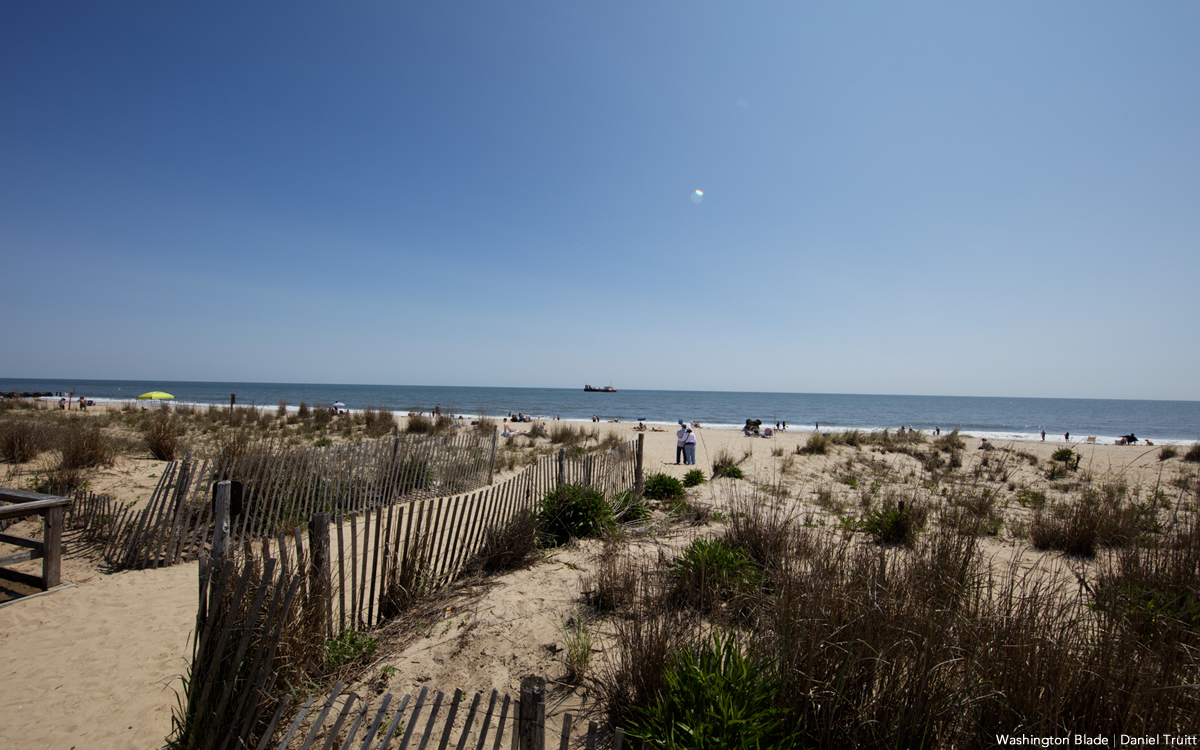
Another year and Rehoboth Beach, Del., is ready for the new summer season. The crowds will come for sun, sand, surf, and the boardwalk. It will cost a little more to get to the beach this year, as gas prices are way up. But once you are in Rehoboth, you know it’s worth it.
One aesthetic change you’ll notice at the boardwalk is the installation of a security gate and bollards near the bandstand, intended to enhance security during large events. The town plans an expanded fireworks show for July 4 to honor the nation’s 250th birthday.
Most of the commercial establishments in Rehoboth are along and between three blocks: Baltimore Avenue, Rehoboth Avenue, and Wilmington Avenue. This column will seem like I am walking back and forth because I am, and you will too. One thing to remember: Parking in Rehoboth is difficult and expensive and free parking is over as of May 15. There are parking permits available for either a day or longer at the non-metered spots.
During more than 40 years that I have been going to Rehoboth, including more than 30 owning a place in Sussex County, I have witnessed the town transform from a summer vacation spot to a vibrant, year-round community. This was hastened by the COVID pandemic, when lots of people moved to the beach when they could work virtually. Others, reaching retirement age, decided the beach was the place to be. This influx of residents has given many businesses a reason to stay open year round.
Over the years, Rehoboth has become a real foodie town, with many more restaurants, many of them high-end, opening. There are local gay-led restaurant groups like the award-winning Second Block Hospitality Group, which operates The Pines, Bodhi Kitchen, and Drift. Another group, JAM Holdings, owns Eden, which relocated to Route 1 in January after 20 years on Baltimore Avenue; and Jam, which is expected to reopen on Rehoboth Avenue later this year after leaving its Wilmington Avenue location that was demolished over the winter. That building was home to several beloved restaurants over the decades, including Chez la Mer and Azzurro.
Among the new businesses this year, be sure to stop at the gay-owned Bay Laurel Home and Garden, located at the old Farmer Girl site on Route 1 for your gardening needs. The Waypoint Hotel opened in December on Rehoboth Avenue, site of the former gay-owned Shore Inn.
Another of the newbies is the upscale Market 59 on Baltimore Avenue. The owners plan to add a restaurant and bar before July 4 called Fifty-Nine. The market offers grab-and-go options for the beach plus homemade breads and pastries, produce, and seafood. Then there is the renamed Frankie and Louie’s across the street, now called Pazzo Italiano. Still the same great takeout and now hooked up with The Pines leading to some new menu items. Then I hear there will also be a new Champagne Bar opening soon on Baltimore Avenue.
Then there are the established and stellar standbys, including the Back Porch, on Rehoboth Avenue; Megan Kee’s restaurants La Fable, Houston White, and Dalmata; and the restaurants on Wilmington Avenue, including Mariachi, Salt Air, and Henlopen Oyster House, where you can sample the Rehoboth Rose oysters from the gay-owned Nancy James Oysters. Then on 1st Street there is Goolee’s Grill for a comforting breakfast and Bloody. Walk up the second block of Rehoboth Avenue and you reach the Purple Parrot and its ever-popular Biergarten.
The iconic Blue Moon restaurant and bar was recently sold to new owners who have pledged to keep it an LGBTQ-affirming space, according to longtime owner Tim Ragan. Ragan and his partner Randy Haney sold the Blue Moon to Dale Lomas and Mike Subrick, owners of Atlantic Liquors on Route 1. “They don’t want to change a thing,” Ragan told the Blade. Happy hour continues all summer long from 4-6 p.m.
For morning coffee nothing beats The Coffee Mill, in the mews between Rehoboth and Baltimore Avenue, where I can be found every morning I am at the beach. The owners, Mel and Bob, also own the Mill Creamery ice cream shop, and another Coffee Mill in Dewey Beach. Mel is proud of his clothing store BRASHhh on 1st Street. On the Rehoboth Avenue side of the mews is the beloved Browseabout Books where you can find a beach read, grab a coffee, and shop for everything from toys to home decor. A few doors away on Rehoboth Avenue is the fun Gidget’s Gadgets.
My favorite place for happy hour is Aqua Bar & Grill for good drinks, food, and service. Say hi to Katie Lyell behind the bar at Aqua, winner of the Blade’s Best Of Award for Best Rehoboth Bartender. Aqua, which is celebrating its 20th anniversary this year, hosts Taco Tuesdays and half-price burgers on Thursdays, all on the spacious outdoor deck. While you are on Baltimore Avenue make sure to stop by CAMP Rehoboth, the LGBTQ community center. Pick up your copy of Letters and take a peek at the art exhibit in their offices. Maybe even say hello to the new executive director, Robin Brennan, Ph.D. I had the chance to stop in and meet her and my congratulations to the board. I think they made a great choice for executive director and the organization is clearly in good hands. Then stop in the CAMP Courtyard, and get something to eat at Lori’s Oy Vey café, celebrating her 30th season, and still the best chicken salad at the beach. Visit the newly relocated Gallery 50 on Baltimore Avenue, which moved from Wilmington Avenue. Then stop in at Elegant Slumming, also on Baltimore Avenue, say hi to Philip, and shop his exquisite jewelry, and some great artwork. If you have a pet and want to treat them to something nice, stop by Critter Beach on Rehoboth Avenue.
After a day in the sand, and a good dinner, there is the nightlife. Diego’s on Rehoboth Avenue Extended hosts regular entertainment, including drag shows and internationally renowned DJs. A new partially enclosed patio offers an expanded space to hang out. Don’t miss their Sundays with local icon Pamala Stanley, now in her 21st season at the beach; in addition to her Sunday dance party, she performs her “Piano Pam” show on Monday evenings. Then there is always fun at Freddie’s Beach Bar, on 1st Street with its video bar and regular entertainment. Clear Space Theatre on the first block of Baltimore Avenue has a busy summer of shows including “The Cher Show”(June 23-Aug. 27), “Mean Girls” (June 26-Aug. 29), and “Pretty Woman” (July 1-Aug. 25). Clear Space always hosts talented casts including many college students who are getting their first chance to shine. Some come back when they are a little more established. This year that includes Caetano de Sá who first performed at the beach in “Jersey Boys” when he was a student at the Boston Conservatory at Berklee, where he earned his BFA in musical theater. He will be back as of May 25 for the summer rep to play Sonny in the production of “The Cher Show,” Martin/Coach Carr in “Mean Girls,” and Mr. Hollister in “Pretty Woman,” along with some cabarets. The incredibly talented Ashley Williams is also back in town and will host a cabaret show on Aug. 2. Tickets for all the shows are available online and they sell out fast.
So, make your plans now to head to the beach. Stay a day, or a week, or more, in a hotel, or a rental house. But make those plans quickly, as things sell out fast in Rehoboth. Look forward to seeing you at the beach!
District of Columbia
Pride faith services in Washington, D.C.
Almost half of all LGBTQ adults in the U.S. are religious
Are you an LGBTQ person of faith or someone exploring spirituality? It is more common than people realize. According to a Williams Institute study published in October 2020, almost half of all LGBTQ adults in the United States are religious. This may seem counterintuitive as any LGBTQ people have complicated relationships with faith because of very real histories of abuse, trauma, and violence.
This violence still continues in the United States, especially following the Supreme Court’s March 2026 decision in Chiles v. Salazar, who ruled Colorado’s ban on conversion therapy for minors violates the First Amendment, but not everyone has encountered this violence, nor do people who have faced it, separate themselves completely from religion. Many people may seek out affirming faith traditions which are prevalent in the DMV area.
For individuals seeking out faith services during Pride 2026, please check out the list below, which will be updated as more events are publicized.
Memorial Service for SaVanna Wanzer
May 17th at 1 pm
Westminster Presbyterian Church (400 I St SW, Washington, DC 20024)
Westminster Presbyterian will host a celebration of life for legendary DC trans rights activist and founder of DC Trans Pride and Black Trans Pride SaVanna Wanzer who was a long-time member of the church. Live music will begin at 12:15 pm before the start of the memorial service. The service will be livestreamed on the Westminster DC Facebook page. A meal will follow the Sunday service.
There will also be a celebratory vigil held on Saturday, May 16th from 6:30-8 pm for friends and family at the church led by LGBTQ organizer Rayceen Pendarvis.
May 23th at 11 am
Downtown Westin (999 9th Street NW, Washington, DC 20001)
This intimate conversation is hosted by Janeé Lee, founder of Queer Ministry, between Black trans and queer people who are surviving religious trauma and navigating their relationship with the church. The workshop, hosted as part of Trans Pride DC, is a chance for people to share their stories at the intersection of queerness and spirituality and to walk away with a spiritual healing guide with affirming scriptures and inclusive theology.
DC Black Pride Worship Service
May 24th at 10 am
Remnant Christian Center (120 West Hampton Avenue, Capitol Heights, MD)
Hosted by The Community Church of Washington DC-UCC, this service will feature speakers and sessions on Black queer faith and unity, including host and speaker Robert D. Wise Jr. for a powerful Pentecost Unity Service. Attendees are encouraged to come dressed in and white.
June 5th at 7 pm
Sixth & I (600 I Street, NW, Washington, DC 20001)
Join Rabbi Jenna will be leading an inclusive, musical service celebrating the diversity of Jewish life in Washington, DC. Happy Hour, which is limited to people 21 and older, will start at 6 pm. The service will start at 7 pm, with dinner at 8:15 pm. The service is free but registration is required, and the kosher-style pescatarian meal does cost money. Register online here.
June 14th at 5 pm
Black Cat (1811 14th St NW, Washington, DC 20009)
Muslim Pride is a community-led and funded grassroots performance series centering queer and trans Muslim artists through music, drag and dance. The series was originally founded in 2020 as a way to create affirming spaces where faith, culture, and queerness can coexist. This year’s series features Mercedes Iman Diamond. This year, Muslim Pride expands to Washington, DC, New York City, and Los Angeles. Buy tickets here.
Pride Celebrations and Sunday Worship Service
June 14th all day
Riverside Baptist Church (699 Maine Avenue SW, Washington, DC 20024)
Join Riverside Baptist Church for a day-long Pride celebration beginning with Pride Weekend/Musical Theater Sunday worship service at 10 am. Later that morning and early afternoon, from 11:30 am to 1:30 pm, the church will be hosting a Pride Pageant, a technicolor celebration featuring a runway showcase, line dancing, food, and refreshments.
June 22nd at 7 pm
St. Mark’s Episocpal Church (301 A Street, SE, Washington, DC 20003)
Join this interfaith service celebrating affirming faith traditions and intertradition dialogue hosted by queer and trans faith leaders. The interfaith service has been hosted annually for over 40 years, and first began back in the 1980s with faith leaders and queer people of faith coming together to mourn and pray at the site of the AIDS Memorial Quilt on the National Mall. Learn more about the history of the interfaith service here.
June 23rd at 6 pm
Holy Trinity Catholic Church (3513 N St NW, Washington, DC 20007)
Holy Trinity will be hosting its 6th annual Pride Mass. After its debut this past summer, the Pride Mass choir will be singing at the Pride Mass in June, and following the Mass, there will be an annual reception with ice cream and other goodies. Learn more about attending the reception and Holy Trinity’s LGBTQ+ Ministry.

This year’s IDAHOBiT to highlight democracy

Capital Stonewall Democrats endorses Janeese Lewis George for D.C. mayor

UK government makes trans-inclusive conversion therapy ban a legislative priority

‘Live Your Pride’ is much more than a slogan

‘Spaced out on sensation’: a 50-year journey through a queer cult classic

America’s broken pipeline of mental healthcare for trans youth

Senate Democrats press DOJ over anti-trans prison directives

DJ Chanel Santini is bringing the heat and some gender-fluid diversity to XBIZ Miami

National tour of ‘Gatsby’ comes to National Theatre

Anti-LGBTQ violence prevention efforts highlighted at D.C. community fair
-

 National3 days ago
America’s broken pipeline of mental healthcare for trans youth
-
Federal Government4 days ago
Senate Democrats press DOJ over anti-trans prison directives
-
Music & Concerts5 days ago
DJ Chanel Santini is bringing the heat and some gender-fluid diversity to XBIZ Miami
-
Theater5 days ago
National tour of ‘Gatsby’ comes to National Theatre