News
Evan Wolfson habla sobre libertad religiosa, matrimonio igualitario
Fundador de Freedom to Marry viajó a Costa Rica este mes
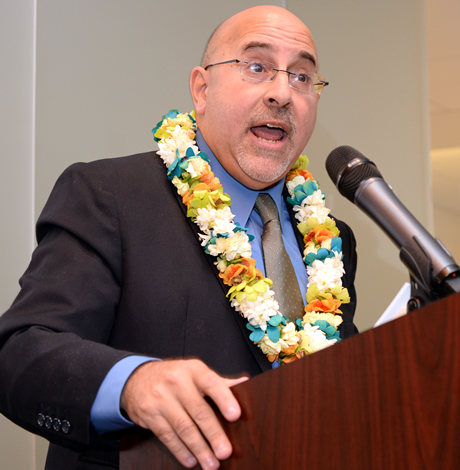
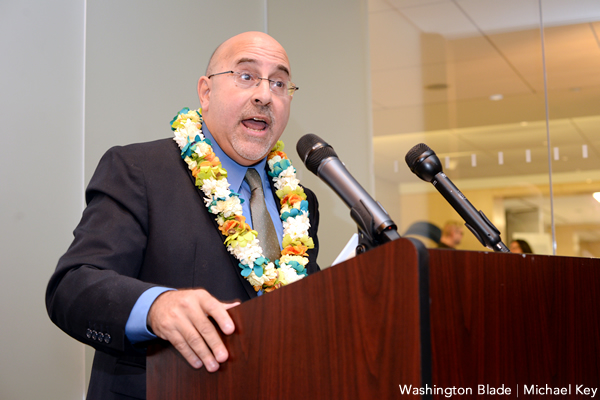
Evan Wolfson, el fundador de Freedom to Marry, asistió este mes a un congreso en Costa Rica enfocado en matrimonio igualitario en América Latina. (Foto del Washington Blade por Michael Key)
Nota del editor: Esta nota fue traducida al español por Alejandro Piercy.
SAN JOSÉ, Costa Rica — El fundador de Freedom to Marry dice que los esfuerzos de impulsar medidas y litigios anti-LGBT basados en la libertad religiosa no son “nada nuevos.”
“Es parte del patrón clásico del avance de los derechos civiles en la historia americana,” Evan Wolfson le dijo al Washington Blade el 10 de noviembre durante una entrevista en San José, la capital de Costa Rica. “Los opositores a la igualdad y la inclusión tratan de bloquear los avances del bloque de los derechos civiles y cuando fallan en bloquearlos, tratan de subvertirlos usando esta táctica de la supuesta libertad religiosa. Esto no es nada nuevo.”
“Las personas gays no son las primeras en experimentar esto,” agregó. “Las personas trans no son las primeras en experimentar esto. Todavía lo vemos aquí mismo con las mujeres en un esfuerzo para corroer el acceso a los derechos reproductivos en el cuidado de la salud.”
Wolfson habló con el Blade menos de un mes antes que la Corte Suprema (de los EEUU) tuviera programado escuchar los argumentos orales en un caso sobre si la Primera Enmienda le permite a Masterpiece Cakeshop en Colorado rehusarse a hornear pasteles de boda para parejas entre personas del mismo sexo, en razón de sus creencias religiosas.
El mes pasado, el Fiscal General de EEUU Jeff Sessions emitió una directriz general que dice que individuos y empresas pueden actuar con base en su libertad religiosa sin miedo a represalias del gobierno.
La ley de libertad religiosa de Misisipí que cuyos críticos aseguran que permite discriminación en contra de personas LGBT en el estado entró en vigor el mes pasado. Una orden ejecutiva sobre libertad religiosa que el presidente Trump firmó en mayo no contenía ninguna referencia LGBT específica.
“Es parte de una lucha en la cual progresamos, pero la oposición no nada más se derrite,” dijo Wolfson, quien ha presentado un escrito amicus en el caso Masterpiece. “Tratan de subvertirlo y esta es una técnica muy, muy común que utilizan.”
“La libertad religiosa es un escudo, no una espada,” agregó. “La libertad religiosa pretende proteger derechos muy importantes de las personas de libertad de culto, de orar y hablar como elijan y tener sus propias canciones dentro de sus templos, pero no es una espada para llevar al mercado y decir quiero todos los beneficios de participar en la esfera pública, pero no voy a seguir la ley, quiero una licencia para discriminar y sí, soy una empresa que pone un rótulo afuera que dice que está abierta al público, pero no voy a estar abierta al público.”
Wolfson le dijo al Blade que las personas y las cortes de Estados Unidos “han rechazado” este argumento “una y otra vez.”
“Aunque estamos en una especie de momento político disfuncional donde la oposición es más feroz de lo que en realidad es representativo del pueblo estadounidense, aún así estoy confiado que vamos a hacer retroceder estos ataques,” dijo. “No vamos a ganar todas las batallas, pero sí vamos a hacer retroceder estos ataques porque el pueblo estadounidense comprende esto como una gran amenaza a la democracia, ya que si cada quien se vuelve ley en sí mismo y puede simplemente decir ‘no quiero’ como defensa contra una ley sobre derechos civiles, abre una caja de pandora que asesta perjuicio real en personas reales, pero que además socava el estado de derecho y la cohesión misma de nuestra democracia y por todas estas razones creo que venceremos.”
‘Tenemos que aprender mutuamente’
Wolfson conversó con el Blade en el Congreso de Matrimonio Civil Igualitario, el cual fue el primero en su especie en América Latina y que estuvo enfocado exclusivamente en el derecho al matrimonio para parejas entre personas del mismo sexo.
Herman Duarte de Fundación Igualitos, un grupo de defensores del matrimonio igualitario basado en Costa Rica, organizó la conferencia junto con HduarteLex, su firma legal la cual lucha en contra de la discriminación por orientación sexual. Dos grupos de abogacía costarricenses — Acceder y Asociación Costarricense de Derecho Internacional — fueron coanfitriones del evento que atrajo más de 100 activistas provenientes de todo hemisferio occidental.
“Estamos aquí para aprender mutuamente,” dijo Wolfson.
En 2015 Wolfson presentó un testimonio a favor de los derechos maritales de las parejas entre personas del mismo sexo ante la Corte Constitucional de Colombia.
Ha presentado un escrito ante la Corte Suprema de Panamá a favor de la parte actora en un caso de matrimonio entre personas del mismo sexo. Wolfson además trabaja con dos grupos de abogacía LGBT Chilenos — Movimiento de Integración y Liberación Homosexual y Fundación Iguales — que trabajan para impulsar el asunto en el país.
“En ninguno de estos países … lo estoy manejando todo”, le dijo al Blade. Estoy aconsejando y compartiendo y tratando de ayudar y alentar y darle a las personas la experiencia y los elementos que puedan adoptar.”
En 2016, Wolfson se reunió con defensores en Cuba que promueven el derecho al matrimonio para parejas entre personas del mismo sexo en el país. También se ha reunido con activistas, dirigentes de empresas y oficiales de gobierno en Suiza, Austria, Alemania, Japón, Sudáfrica y otros países desde el 2015 cuando la Corte Suprema de los EEUU emitió su sentencia hito en el caso Obergefell.
Wolfson señaló que 1,100 millones de personas al rededor del mundo habitan en jurisdicciones donde parejas entre personas del mismo sexo pueden casarse legalmente. Conversó con el Blade a menos de dos semanas antes que oficiales australianos anunciaran que la mayoría de votantes que participaron de un plebiscito no vinculante sobre si los gays y lesbianas deberían poder casarse dijo que “sí.”
“Esto refuta los alegatos de la oposición de que cosas malas van a suceder,” dijo Wolfson, refiriéndose al creciente número de jurisdicciones que permiten el matrimonio igualitario. “Esto es parte importante del caso que tenemos que presentarle a la corte de la opinión pública, así como en las cortes de derecho en estos países. Pero también suministra esta montaña de experiencia y evidencia que puede traerse a las discusiones, ya sea con el público o con quienes toman las decisiones. Esta no es una nueva pregunta.”
“No estamos en los Estados Unidos en 1972. Estamos en Costa Rica en 2017,” señalando que el 70 por ciento de la población total de América Latina viven en jurisdicciones que han extendido el derecho al matrimonio para las parejas entre personas del mismo sexo. “Entonces, ¿Por qué no deberían tener los pueblos de Costa Rica, o del Perú, o Panamá o sigue la lista lo que todos sus hermanos y hermanas a través del continente — o alrededor del mundo — ya tienen.”






The Comings & Goings column is about sharing the professional successes of our community. We want to recognize those landing new jobs, new clients for their business, joining boards of organizations and other achievements. Please share your successes with us at [email protected].
The Comings & Goings column also invites LGBTQ college students to share their successes with us. If you have been elected to a student government position, gotten an exciting internship, or are graduating and beginning your career with a great job, let us know so we can share your success.
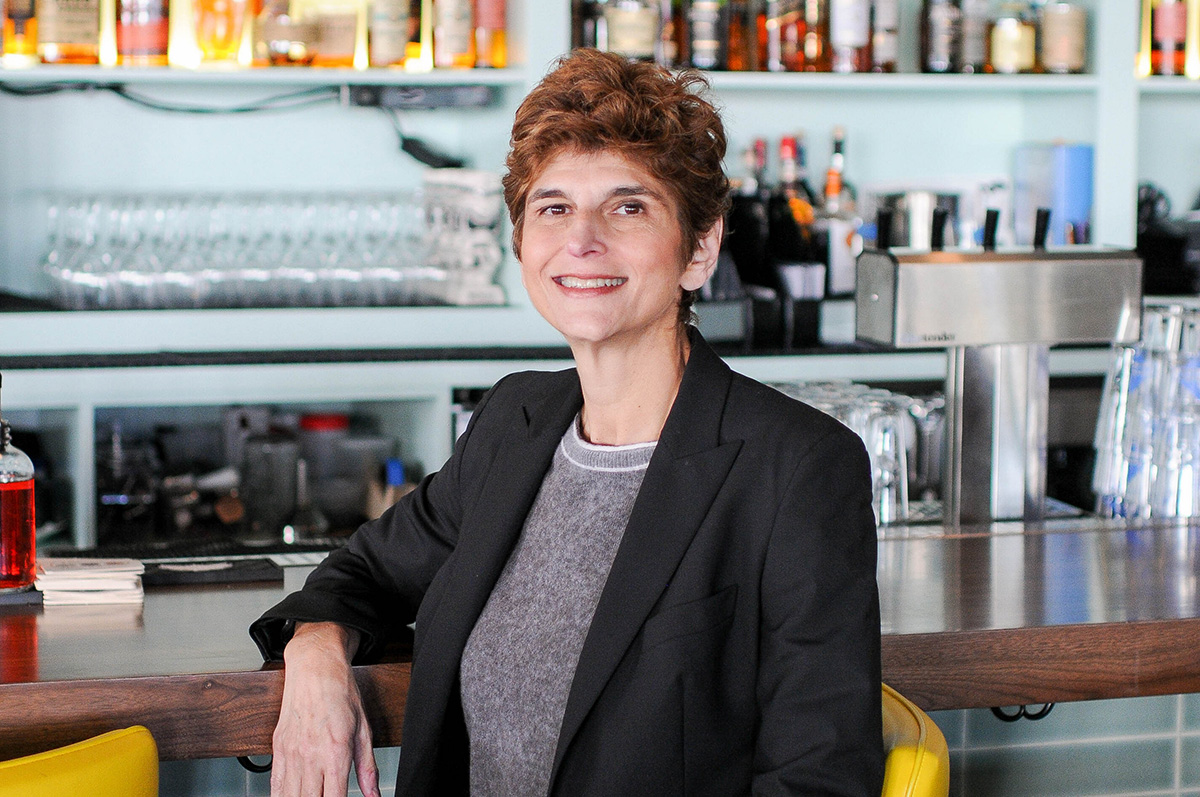
Congratulations to Jamie Leeds, chef extraordinaire, and owner of Hank’s Oyster Bars, as she ventures into some new areas. Leeds is an award-winning Washington, D.C.–area chef, restaurateur, and entrepreneur with more than three decades of experience shaping the region’s dining scene.
Her first new venture is a restaurant opening in Alexandria this week. It will be called Hank’s Pasta Bar, bringing a personalized twist to classic Italian dining with a hiddenrestaurant-inside-a-restaurant in Old Town, Alexandria. The new trattoria is above Hank’s Oyster Bar, and will feature a build-your-own menu, marking a new direction for Leeds in partnership with chef Darren Norris. Norris brings more than three decades of experience to Hank’s Pasta Bar, with a foundation grounded in Italian cooking. The grand opening was scheduled for May 14. The elevated casual eatery blends an inventive chef-driven menu with an easy-going, sit-down dining experience that puts guests in charge. Hank’s Pasta Bar bridges the gap between elevated fast casual, like Norris’s Shibuya, and full-service dining, like Leeds’s Hank’s Oyster Bar. Diners order electronically at the table, but unlike fast casuals, food and beverages are delivered on plate ware, and a server is on site at all times.
The restaurant-inside-a-restaurant, welcomes guests to dine in with a full bar, including Italian wines and craft cocktails, maintaining its focus on traditional Italian fare with contemporary touches, including a build-your-own pasta bowl experience starting at $16. Create your own pasta bowl from seven artisanal pastas (including gluten-free), nine made-in-house sauces, proteins, vegetables, and toppings. Leeds said, “It’s the kind of place you’d find down a side street in a Tuscan hill town, after being tipped off by a friend who says, ‘trust me.’ If you know, you know.”
The restaurant will continue Hank’s community partnerships, including with Real Food for Kids, supporting programs that improve school food and nutrition equity.
In addition to this you should try Jaimie’s other new venture. Back Door Taco at Hank’s in Dupont Circle. You walk down the alley from 17th Street to the back door of Hank’s, and enter a small patio to partake of great tacos and interesting cocktails.
District of Columbia
HIV Vaccine Awareness Day set for May 18
Whitman-Walker joins nationwide recognition of efforts to develop vaccine

Whitman-Walker Health, the D.C.-based community healthcare center that specializes in HIV/AIDS and LGBTQ-related health services, will join health care advocates from across the country to support efforts to develop an HIV vaccine on HIV Vaccine Awareness Day on May 18.
“HIV Awareness Day, observed annually on May 18, was established to recognize and thank the volunteers, scientists, health professionals, and community members working toward a safe and effective prevention HIV vaccine,” Whitman-Walker said in a statement.
“Led by the National Institutes of Health’s National Institute of Allergy and Infectious Diseases (NIAID), the day is also an opportunity to educate communities about the critical importance of preventive HIV vaccine research,” the statement says.
It adds, “The reality is that any new vaccine discovery must be built community by community, institution by institution, and then it must reach everyone – especially the communities who have carried the heaviest burden of this epidemic.”
On its own website, the National Institutes of Health says HIV Vaccine Awareness Day also highlights its longstanding efforts, coordinated by its Office of AIDS Research, to support researchers’ efforts to develop an HIV vaccine.
“Researchers are making promising headway in efforts to develop a safe, effective HIV vaccine,” it says in a statement on its website.
A Whitman-Walker spokesperson said Whitman-Walker was not holding a specific event to observe HIV Vaccine Awareness Day, but it will recognize the day as a way of encouragement for its ongoing work to address the AIDS epidemic and support for vaccine research.
“Today, no one has to die from HIV,” said Whitman-Walker’s Health System division’s CEO, Dr. Heather Aaron in the Whitman-Walker statement. “We have the treatments, the technology, and the research to change outcomes, and yet people in our community are still dying from HIV//AIDS,” she said in the statement.
“That is unacceptable, and it is exactly why our work continues,” she added. “Here in D.C. with more focus on Southeast D.C., the Whitman-Walker Health System remains committed to making a difference through cutting-edge research, policy advocacy, and philanthropy, because fair access to life-saving treatment is not a privilege. It is a right.”
World
This year’s IDAHOBiT to highlight democracy
Criminalization laws, US funding cuts among global movement’s challenges
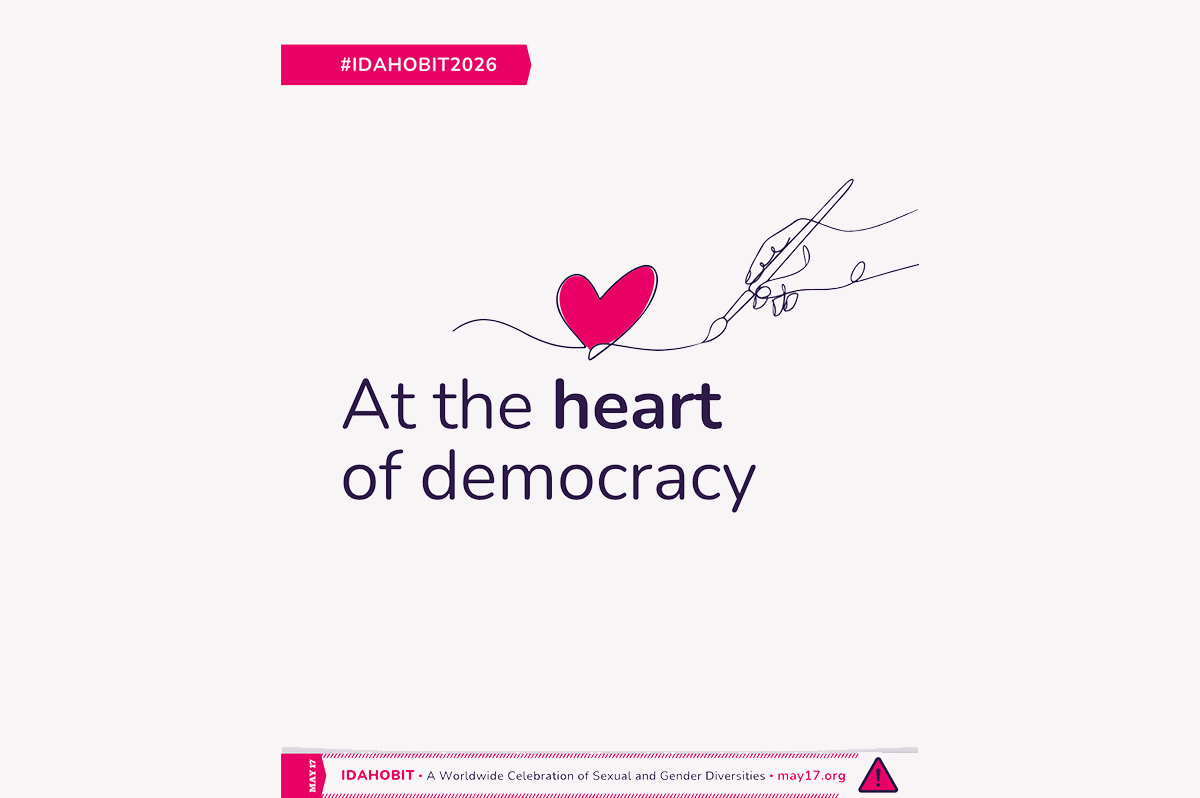
Activists around the world on Sunday will mark the International Day Against Homophobia, Transphobia, and Biphobia.
The IDAHOBiT Advisory Group — which includes 18 LGBTQ and intersex rights organizations around the world — in a press release notes IDAHOBiT events are expected to take place in more than 60 countries. Advocacy groups are also using IDAHOBiT to highlight discrimination and violence based on sexual orientation and gender identity and other LGBTQ-specific issues.
Caribe Afirmativo, a Colombian advocacy group, on May 8 released a report that notes one LGBTQ person was reported murdered in the country every 32 hours in 2025. Caribe Afirmativo also said the Colombian government has not done enough to address anti-LGBTQ violence.
“The evidence is clear: violence against LGBTIQ+ persons in Colombia does not begin with homicide, but with tolerated prejudice and ignored threats,” reads Caribe Afirmativo’s report. “In 2025, the State not only failed to protect — it also failed to count, investigate, and sanction. The crisis is not invisible. It is structural. And it requires an urgent, comprehensive, and sustained response.”
The Initiative for Equality and Discrimination, a Kenyan group known by the acronym INEND, issued a report that details how the country’s law enforcement treats LGBTQ and intersex people. “A widespread pattern of arbitrary arrests, extortion, and both physical and sexual violence” are among the abuses the INEND report notes.
“These abuses not only inflict severe physical and psychological trauma but also foster a widespread distrust of the law enforcement, further marginalizing the community and hindering its ability to seek justice, access essential services such as healthcare, and fully enjoy fundamental freedoms,” it reads.
IDAHOBiT commemorates the World Health Organization’s declassification of homosexuality as a mental disorder on May 17, 1990. This year’s IDAHOBiT theme is “At the Heart of Democracy.”
This year’s IDAHOBiT will take place against the continued impact that the lack of U.S. funding is having on the global LGBTQ and intersex rights movement.
The IDAHOBiT Advisory Group notes consensual same-sex sexual relations remain criminalized in 65 U.N. member states, and the number of countries with criminalization laws increased in 2025. The IDAHOBiT Advisory Group also indicates more than 60 countries have laws that restrict “freedom of expression related to sexual and gender diversity issues.”
“No matter where we live, who we are, or the faiths that drive us, most people want to nurture neighborhoods and communities where every life can bloom,” said the IDAHOBiT Advisory Group. “But today, reactionary governments worldwide are poisoning our gardens with the invasive weeds of their authoritarian policies and exclusionary legislations.”
‘Progress is still happening’
Activists around the world since last year’s IDAHOBiT have seen several legal and political victories.
New Hungarian Prime Minister Péter Magyar on April 12 defeated his predecessor, Viktor Orbán, whose government faced widespread criticism over its anti-LGBTQ crackdown.
The Eastern Caribbean Supreme Court last July struck down St. Lucia’s colonial-era laws. The Dominican Republic’s Constitutional Court a few months later ruled the country’s National Police and Armed Forces cannot criminalize consensual same-sex sexual relations among its members. Botswana late last month repealed a provision of its colonial-era penal code that criminalized homosexuality.
A Hong Kong judge last September ruled in favor of a lesbian couple who sought parental recognition for their son. The European Union Court of Justice over the last year issued two landmark decisions: one said EU countries must recognize same-sex marriages legally performed in other member states and another directed member states to allow transgender people to legally change their name and gender on ID documents.
“Time and again, LGBTQIA+ people have resisted, rolled up their sleeves together with all the good people caring about their communities, and sowed the seeds of change,” said the IDAHOBiT Advisory Group in its press release.

PHOTOS: Blade Summer Kickoff Party

PHOTOS: Taste of Point

Honey, have we been priced out of gay paradise?

Comings & Goings

IDAHOBiT a reminder we all must stand up against transphobia

UK government makes trans-inclusive conversion therapy ban a legislative priority

Bureau of Prisons declines to reconsider transgender inmate policy

Yes, chef!

What’s new in Rehoboth Beach for summer 2026

LGBTQ community must say NO to Janeese Lewis George
-

 United Kingdom4 days ago
UK government makes trans-inclusive conversion therapy ban a legislative priority
-
Federal Government4 days ago
Bureau of Prisons declines to reconsider transgender inmate policy
-
a&e features4 days ago
Yes, chef!
-
Rehoboth Beach4 days ago
What’s new in Rehoboth Beach for summer 2026