National
PFLAG rescinds award to MSNBC host Joy Reid amid ‘fabricated’ anti-gay posts
the journalist has denied posting homophobic rhetoric
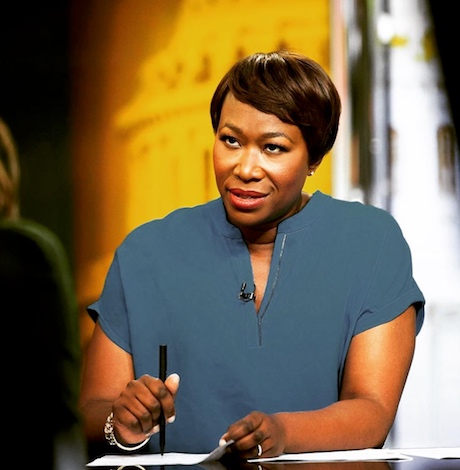
PFLAG has rescinded MSNBC host Joy Reid’s Straight for Equality in the Media award amid the release of old homophobic blog posts from Reid’s former blog, the Reid Report.
In December, Twitter user Jamie_Maz unearthed posts published between 2007-2009 which accused former Florida Gov. Charlie Crist of being a closeted gay man. One post, which is tagged “gay politicians,” references Christ as “Miss Charlie.”
“What wouldn’t Charlie Crist do to become John McCain’s running mate? Cross ‘marry an actual woman’ off the list,’” reads another post.
1/x From 2007 to 2009 @joyannreid authored a dozen homophobic posts not only attempting to out Charlie Crist as gay, she attacked & mocked him for being so.
She repeatedly referred to him as “Miss Charlie” and tagged posts about him under “gay politicians.” (thread) pic.twitter.com/tRYvJ3lTc8
— Not a bot (@Jamie_Maz) November 30, 2017
3/x She makes a joke about John McCain “tapping” Crist, says Crist spent his honeymoon ogling male waiters and thinking about how he didn’t want to see his wife naked, and mocked Crist’s big gay wedding. pic.twitter.com/KmWxJymc3J
— Not a bot (@Jamie_Maz) November 30, 2017
Reid apologized for those posts in a statement saying, “I regret the way I addressed the complex issue of the closet and speculation on a person’s sexual orientation with a mocking tone and sarcasm. It was insensitive,tone-deaf and dumb.”
More posts have since been released including one that states “most straight people cringe at the sight of two men kissing,” and another that says straight people have an “intrinsic nature” to find homosexual sex “gross.”
Reid is now accusing hackers of publishing these “fabricated” homophobic posts to the blog.
“In December I learned that an unknown, external party accessed and manipulated material from my now-defunct blog, The Reid Report, to include offensive and hateful references that are fabricated and run counter to my personal beliefs and ideology,” Reid said in a statement to Mediate. “I began working with a cyber-security expert who first identified the unauthorized activity, and we notified federal law enforcement officials of the breach. The manipulated material seems to be part of an effort to taint my character with false information by distorting a blog that ended a decade ago.”
“Now that the site has been compromised I can state unequivocally that it does not represent the original entries. I hope that whoever corrupted the site recognizes the pain they have caused, not just to me, but to my family and communities that I care deeply about: LGBTQ, immigrants, people of color and other marginalized groups,” she added.
The Internet Archive investigated Reid’s claims but said in a statement on its website, “When we reviewed the archives, we found nothing to indicate tampering or hacking of the Wayback Machine versions.”
“We let Reid’s lawyers know that the information provided was not sufficient for us to verify claims of manipulation. Consequently, and due to Reid’s being a journalist (a very high-profile one, at that) and the journalistic nature of the blog archives, we declined to take down the archives,” the statement continued.
Despite Reid’s denial of the posts, PFLAG National president Jean Hodges released a statement that the award will no longer be presented to Reid.
“When we extended our invitation to Ms. Reid to honor her at our 45th anniversary celebration, we did so knowing about the blog posts from the late 2000s regarding Charlie Crist. We appreciated how she stepped up, took ownership, apologized for them, and did better—this is the behavior and approach we ask of any ally. However, in light of new information, and the ongoing investigation of that information, we must at this time rescind our award to Ms. Reid,” Hodges says.




National
Queen Jean is Tony’s first transgender winner
Designer/activist wins for work on ‘Cats: The Jellicle Ball’
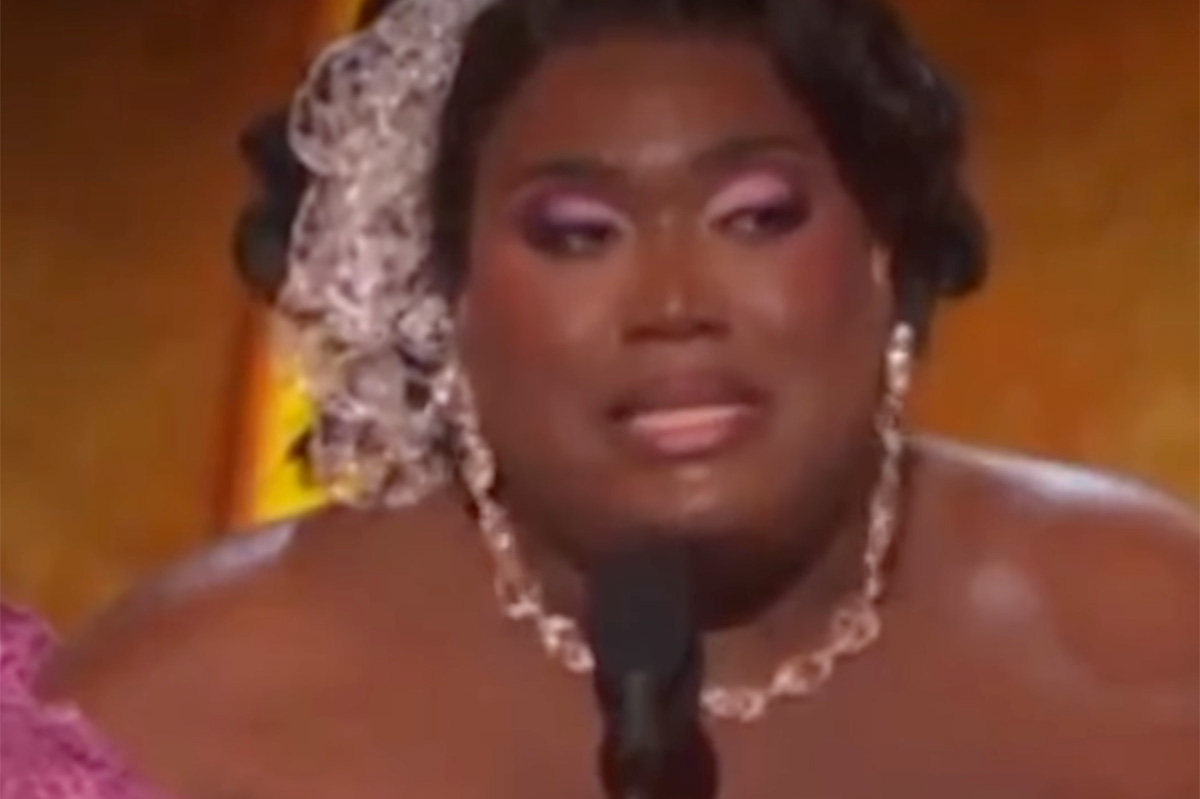
It was a historic night at the 79th annual Tony Awards on Sunday as Queen Jean won the award for Best Costume Design of a Musical, making her the first out transgender person to win a Tony.
“This experience has been monumental. We are here for the legacy of queer people, trans people,” she said. “We are taking up space in ways we have to take up space. We have to shift the paradigm. So I just want to say, thank you all so much for this incredible honor. The world right now is deeply, deeply combating so many ailments, and we know as a society that when we come together, we can make real, permanent change.”
She won the award for her work on “Cats: The Jellicle Ball” and was also nominated for best costume design of a play for “Liberation.”
In addition to her stage work, Queen Jean is the founder of Black Trans Liberation, an organization that supports trans and gender-nonconforming people in New York City.
National
Madonna turns Times Square into massive dance floor
Pop icon celebrates Pride month with surprise performance
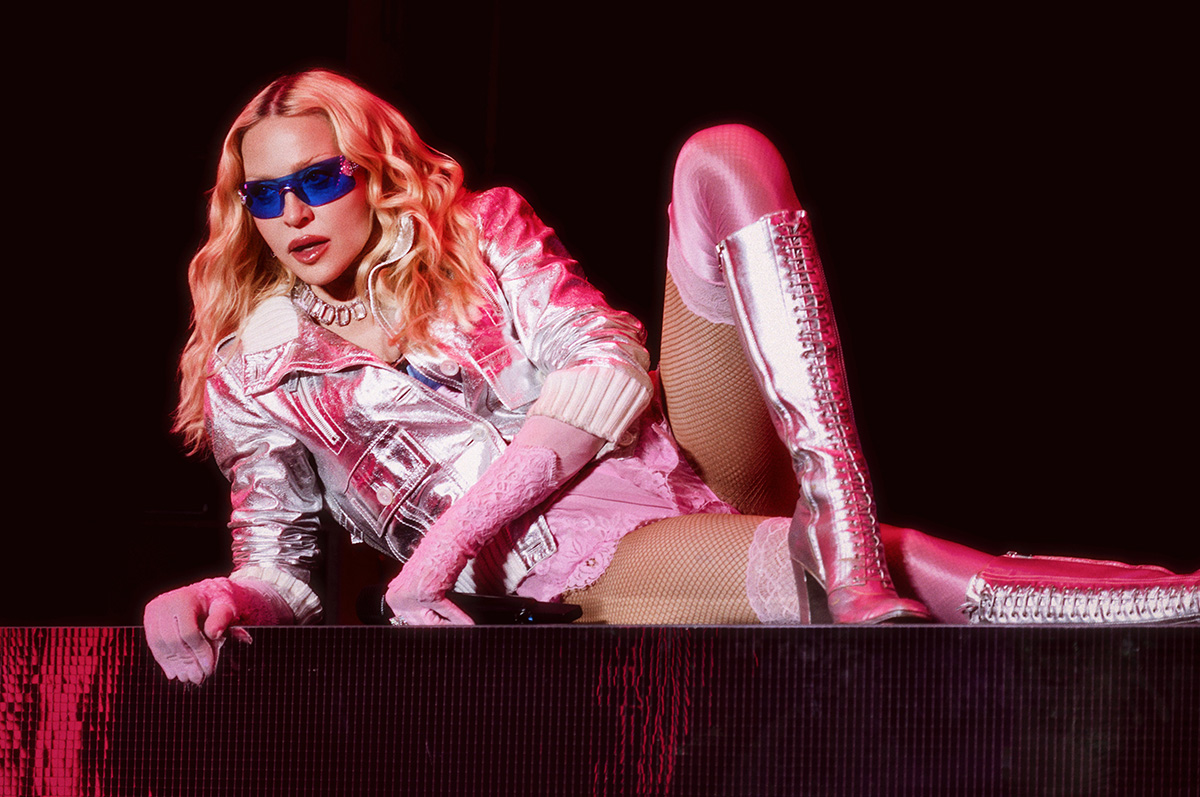
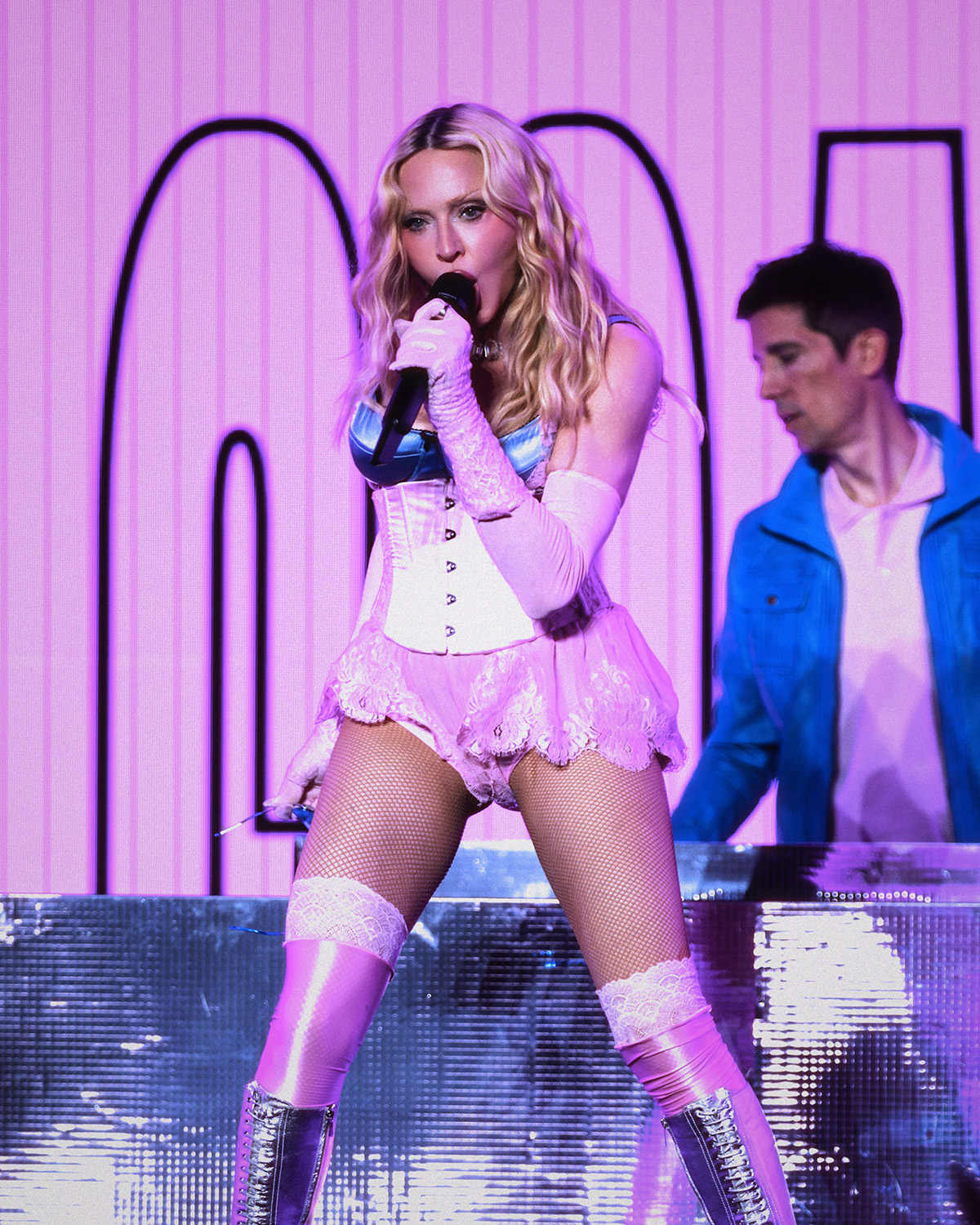
Pop icon Madonna celebrated Pride month with a pop-up performance in New York City’s Times Square on Thursday to the delight of 50,000 fans.
She performed for about 15 minutes high above street level, including several songs from her new album “Confessions II” due on July 3, along with a trio of songs from the first “Confessions on a Dance Floor.”
In addition to the brand new “Love Sensation,” she performed “I Feel So Free” and “Bring Your Love,” plus “Hung Up,” “Get Together” and “I Love New York.” She wished the crowd a happy Pride season; the event was shared with audiences through Grindr’s first-ever livestream.

National
Gallup finds LGBTQ support among Americans is dropping
Marriage equality support lowest since 2016
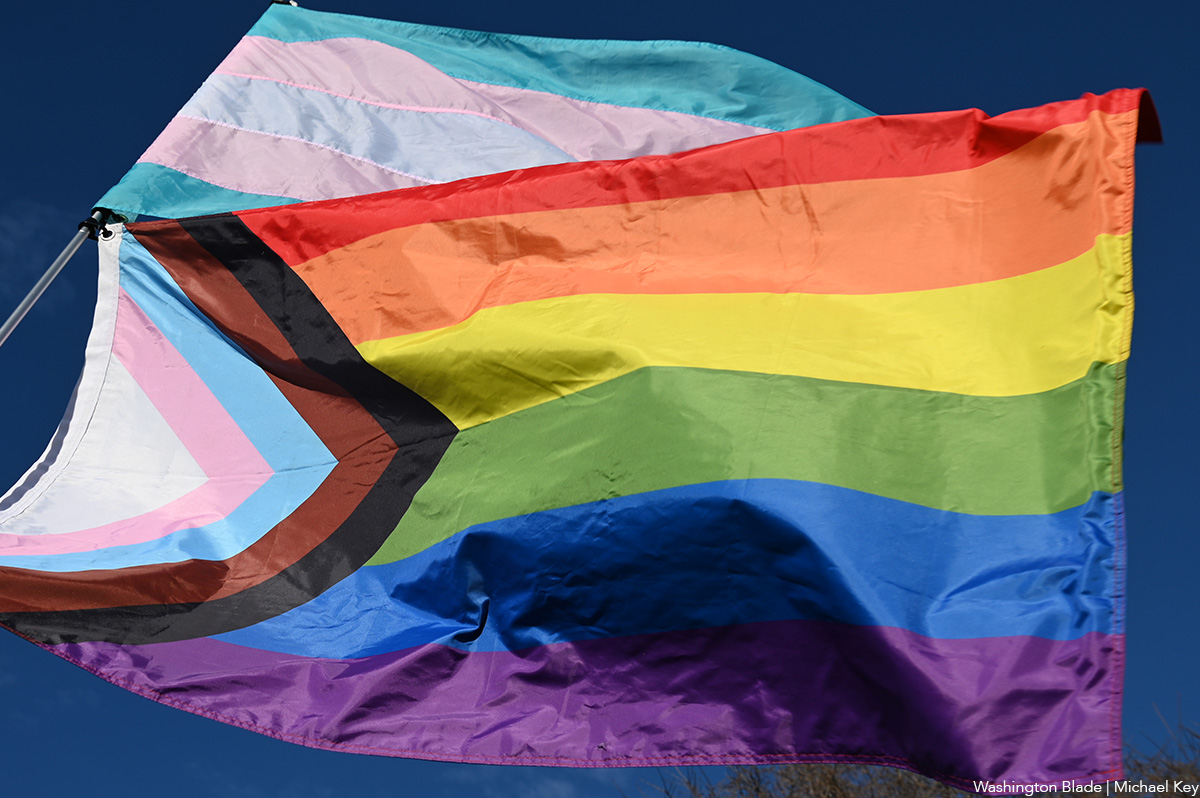
Gallup, one of the leading organizations in public opinion polling, has found that LGBTQ support among Americans is dropping.
The poll, whose data was collected using Gallup’s annual Values and Beliefs survey, was conducted in May and was published on Wednesday. The data was collected through telephone interviews from a sample of more than 1,000 adults living in all 50 states and D.C. using random digit dialing.
It highlights declining attitudes surrounding LGBTQ issues in multiple areas — from support for same-sex marriage to views on gender identity and the morality of one’s sexuality.
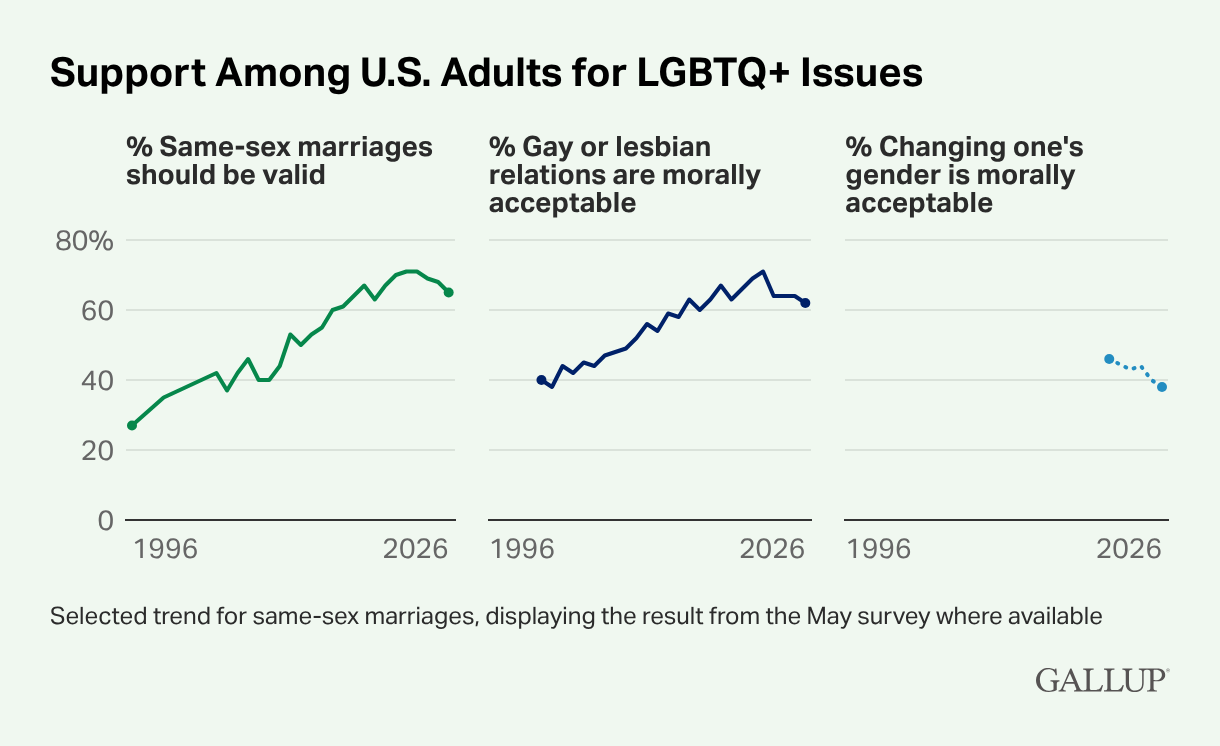
One of the most striking findings was that support for marriage equality fell six points from its 2022-2023 high.
The survey also found that 62 percent of Americans view gay and lesbian relations as morally acceptable, the lowest level since 2016 just after same-sex marriage was legalized nationwide by the U.S. Supreme Court.
One newer question on the poll found that the perceived morality of changing one’s gender has dropped eight points since 2021, indicating the American public is less supportive of transgender people.
The data attributes much of the decline to shifting Republican views alongside the party itself. Conservative leaders have pushed back against diversity, equity, and inclusion programs that were intended to foster greater acceptance of LGBTQ people and other historically disadvantaged groups.
President Donald Trump has been a guiding force behind waves of anti-LGBTQ sentiment, particularly when it comes to trans rights. The president has enacted multiple executive orders, including Executive Order 14168, “Defending Women from Gender Ideology Extremism and Restoring Biological Truth to the Federal Government,” which mandates that gender be defined by one’s sex assigned at birth. He also signed Executive Order 14183, “Prioritizing Military Excellence and Readiness,” which barred qualified trans applicants from joining the military and led to the removal of trans service members already serving in the armed forces.
Additionally, he signed Executive Order 14201, “Keeping Men Out of Women’s Sports,” which prohibits trans female athletes from participating on women’s and girls’ sports teams.
In February, Gallup found that an estimated 9 percent of Americans identified as part of the LGBTQ community in some form.
The organization also found that 23 percent of adults under age 30 identify as LGBTQ, compared with 10 percent of those ages 30 to 49 and 3 percent or less among those ages 50 and older.

PHOTOS: Fairfax City Pride

EXCLUSIVE: Pelosi reflects on four decades of LGBTQ advocacy

D.C. prepares to party as Pride celebrations kick off Saturday

David Archuleta, Monroe Alise named D.C. Pride parade marshals