Opinions
Will two angry old guys kill the parties?
Sanders, Trump could propel dual-party destruction

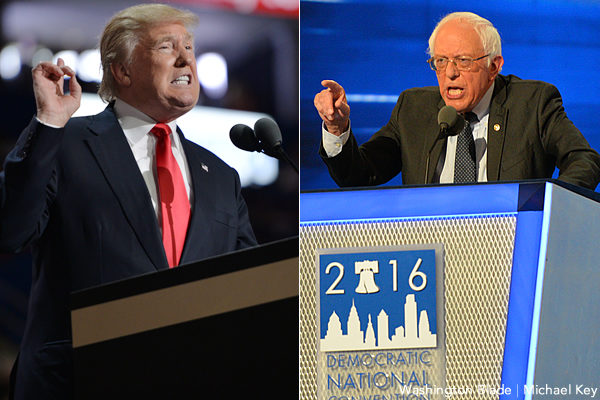
The “revolution” that finger-hectoring late-septuagenarian Bernie Sanders is promoting might turn out to be one he’s not overtly proposing. It could be the consequence, however, if the increasing odds of his being nominated for president results in the tsunami of electoral losses up-and-down the ballot for Democrats that many party activists and regulars now widely fear.
Sanders might not much care, not actually being a Democrat, but the socialist in both persona and policy could prompt an eventual massive realignment among voters toward multiple political parties with even fewer adherents. If nominated, and regardless of whether he wins or loses, destruction of the long-dominant two-party system could prove to be his legacy.
He would have to share responsibility, though, with norm-violating mid-septuagenarian President Trump. While the mirror-image populist takeover of the Republican Party by Trump, himself a former Democrat, is more original screen script to Bernie’s derivative movie remake, they share a similar storyline. Although Sanders is unlikely to generate the same ballot-box-office success, both internal insurgencies would prove Oscar-worthy for creating legions of formerly red-or-blue affiliated voters feeling abandoned by parties and alienated on principles.
It’s difficult to overstate the panic taking grip of Democratic leaders, elected officeholders, and party loyalists caused by the suddenly ascendant possibility that Sanders could garner enough convention delegates to claim he should become the presidential nominee without having won either a majority of them or much more than a third of primary votes cast. Because the leadership of a deeply divided party desperately hopes to avoid igniting the venom of Bernie-backers, the cacophony of trepidation about Sanders as standard-bearer has so far been strategically muted.
In contrast, the party’s cadre of nearly three-dozen moderates from swing districts elected in 2016 that allowed Democrats to claw back control of the U.S. House are starting to separate themselves from Sanders by speaking out against his proposals. Knowing they will have to fight for both political survival and House control if he wins the nomination, they’ve been less shy about sounding alarms.
It may already be too late for the majority of Democrats to stop Sanders. The March 3 Super Tuesday primaries will determine national convention pledged delegate allocations in 14 states, comprising more than a third of the total. A lingering litany of competitors splitting the somebody-but-Sanders vote produces the probability he’ll shoot far ahead in the delegate tally and arrive in Milwaukee with a large plurality. The far-left argues Sanders should be chosen even with insufficient delegates and only the support of a minority.
That scenario creates a dilemma for Democrats only Sanders could manage to cause: If he is bestowed the nomination, the party likely loses the election; if his supporters deem him to have been “denied” the nomination and revolt against supporting an alternate nominee, the party likely loses the election.
Even as the nominee, though, Sanders poses a threat to the party, win or lose in the general election.
Should Sanders be nominated and lose, perhaps by a large margin while also diminishing Democratic strength from statehouses to the Hill, the aftermath of dismay and despair borne by a defeat once believed a certain victory could split the party into irreconcilable factions. Likewise, should Sanders win the election but face recalcitrant elected party members unwilling or unable to adopt his proposals, the dashed dreams of his devotees would cause disillusionment and disengagement.
With only about a quarter of the voting-age population expressing allegiance to each major national political party, self-identified independents have consistently been a huge plurality for years and a voting-age majority of those under 35.
Weak party affiliation, feeble political parties, and political estrangement among dissatisfied partisans both Republican and Democratic is a formula for the gradual but eventual demise of the current two-party system.
Mark Lee is a long-time entrepreneur and community business advocate. Follow on Twitter: @MarkLeeDC. Reach him at [email protected].




Opinions
Why this Black Pride, I ranked Janeese Lewis George #1 for D.C. mayor
Compliance is not a strategy for defending D.C.

Washington, D.C. is at a crossroads. In uncertain moments, voters are encouraged to lower expectations, choose familiarity over vision, and look for leaders who seem most willing to accommodate hostile federal power. That approach misunderstands this moment and what leadership requires.
I ranked Janeese Lewis George #1 for mayor.
As a Black gay man whose career has moved through law, policy, media, and movement work and has called D.C. home for 15 years, I have seen the difference between performative allyship and meaningful action. Too often, politicians treat LGBTQ communities as symbolic talking points. They show up for Pride, issue polished statements, and expect support without taking risks that improve our lives. Our vote should be earned through policy, consistency, relationships, and accountability.
That is one of the many reasons I trust Janeese.
A recent Blade column tried to define Janeese through guilt-by-association politics, treating a passing association with someone else’s comments as proof of her values. I wholly reject that framing.
Coalition-building in a city as politically diverse and socially complex as D.C. will never be perfect. Anyone who has organized, legislated, or advocated understands that progress requires engaging people whose views or approaches may not align at every moment. The fair standard is a candidate’s values, priorities, judgment, and record.
Janeese’s record clears that standard. GLAA gave her a 10 out of 10, its highest possible rating. Capital Stonewall Democrats, the largest LGBTQ political organization in D.C., endorsed her by an overwhelming margin. Her platform shows a candidate who understands that LGBTQ safety depends on the ability to stay housed, access healthcare, protect bodily autonomy, and defend D.C.’s power to govern itself.
For a Black trans woman fighting eviction, safety starts with a lease she can keep. For a family with two dads choosing between medicine and a utility bill, freedom starts with a city willing to lower costs and stand up to greedy utility companies like Pepco and Washington Gas. For residents bounced between agencies, dignity starts with a government that can get help to people before crisis deepens.
Janeese’s campaign speaks to those conditions. She is running on tenant protections, affordable homes, lower utility costs, and a public safety plan that recognizes a problem residents already understand: D.C. has resources, yet too many people still get passed from agency to agency while their situation gets worse. She has also committed to rescinding the MPD order allowing local police to work with ICE.
The above-mentioned Blade column spends little time on those stakes. Its energy goes toward attacking Janeese’s endorsers and casting suspicion on her people-first politics. The writer has previously said he becomes wary when the Working Families Party endorses a candidate because he sees the party as anti-business. That critique reveals anxiety about a candidate challenging the corporation-friendly consensus that has made D.C. harder for working people to survive in. Yet it doesn’t speak to the many workers of those businesses who support a mayoral candidate like Janeese.
This election is also about how D.C. responds to Trump and federal overreach. Trump is not our mayor. The people of Washington, D.C. are. The argument that D.C. needs someone who can comfortably work with Trump sounds like preemptive surrender. There is little evidence that electing a more cautious Democrat would produce a respectful relationship with a president who has repeatedly treated D.C. residents as politically expendable.
D.C. needs a mayor willing to advocate for residents, defend the city’s interests, and resist attempts to bully or diminish the people who live here. Effective leadership requires negotiation. Negotiation from fear gives away power before the fight begins. Compliance is not a strategy for defending D.C.
Further, an ethics complaint against Janeese came with its own political baggage. City Paper reported that the nonprofit behind the complaint and investigation has a board member connected to a research firm her opponent’s campaign paid $20,000. Voters should weigh that connection against Janeese’s record and the LGBTQ organizations that have already vetted her.
This election will decide which communities are prioritized in D.C.’s future: working-class residents trying to stay in the city, or out-of-state elites treating D.C. like an investment portfolio. Black LGBTQ leadership carries responsibility here. Our communities know what it means to be praised in public and abandoned in budgets. We know the difference between symbolic allyship and policy that changes conditions.
I am ranking Janeese Lewis George #1 because, in this critical moment where inspiration is needed, Janeese is offering the kind of mayoral leadership D.C. needs. Black LGBTQ Washingtonians deserve a city we can afford, a government that works for people’s best interests, and leaders who will defend us.
Preston D. Mitchum is a D.C.-based policy consultant, attorney-activist, and television personality whose work focuses on the intersections of racial justice, democracy reform, health and gender equity, and LGBTQ+ rights.
Cuba
When impunity meets history
Raúl Castro indicted for alleged role in shooting down Brothers to the Rescue aircraft
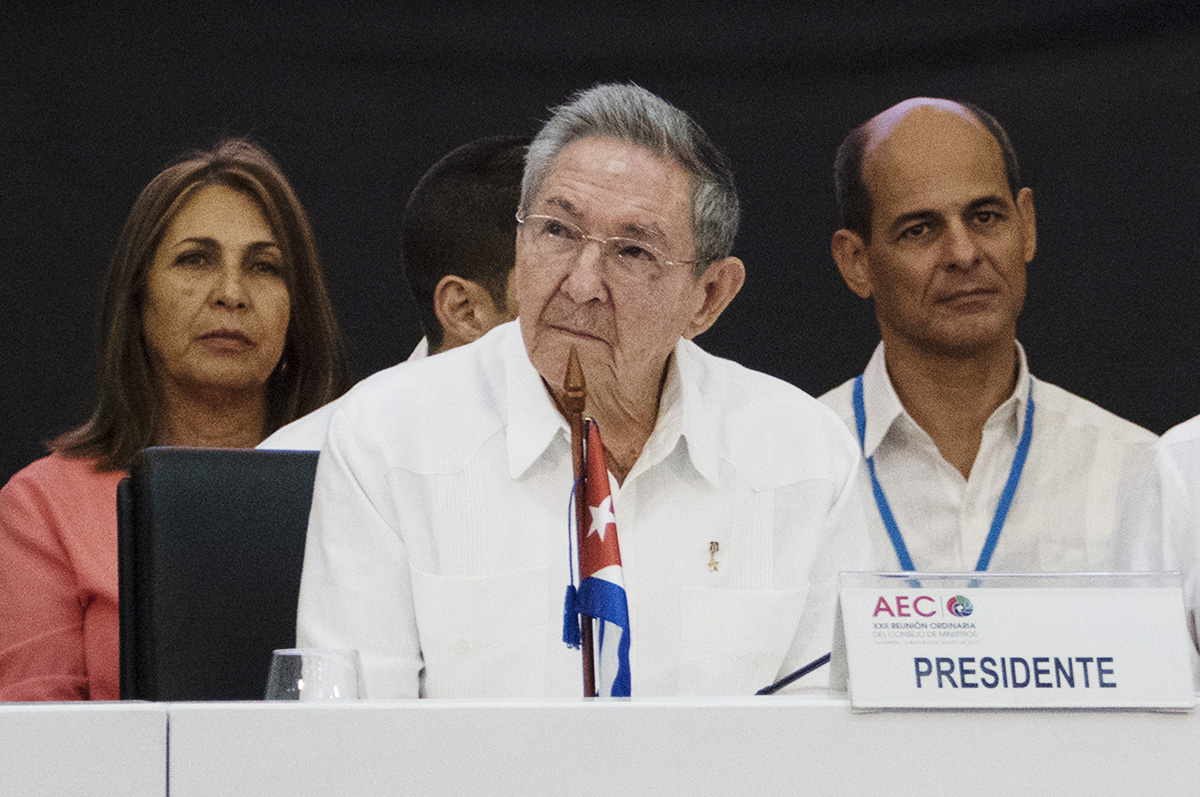
The scene would have seemed impossible only a few years ago.
The name of Raúl Castro Ruz appearing formally inside a United States federal criminal indictment. Cuba’s former general of the Army, for decades one of the most powerful figures inside the Havana regime, accused in connection with the shootdown of the Brothers to the Rescue aircraft and the deaths of American citizens in 1996. And all of it unfolding in Miami, inside the Freedom Tower, on May 20.
That detail matters.
Because this indictment arrives at one of the most fragile and politically tense moments in recent relations between Washington and Havana. It comes as Cuba faces deep economic collapse, growing political exhaustion, mass migration, blackouts, and increasing public frustration both inside and outside the island. It also arrives on a date carrying enormous symbolic weight for Cuban exiles — the anniversary of the founding of the Cuban Republic in 1902.
But the true significance of this moment goes far beyond symbolism.
What happened in Miami represents something much larger: the collapse of the idea that certain men would never face accountability.
For decades, Raúl Castro embodied the permanence of revolutionary power in Cuba. Defense minister. Military strategist. The man who oversaw the armed forces for generations. One of the central architects of the Cuban political and security apparatus built alongside Fidel Castro. A figure many believed would leave this world untouched by any court, shielded forever by power, time, and history itself.
Today the image is very different.
Today his name appears inside the language of American criminal prosecution.
And that changes the historical dimension of this case completely.
Because this is no longer simply a political accusation voiced by the Cuban exile community. It is now a formal federal criminal indictment publicly announced by the United States government against one of the highest-ranking figures in the history of the Cuban regime.
The setting itself carried enormous meaning.
The Freedom Tower is not just another building in Miami. For generations of Cuban exiles it represents memory, displacement, survival, and the beginning of a new life after fleeing Cuba. Thousands of Cubans passed through those doors after escaping the revolution. Families arrived carrying fear, uncertainty, grief, and hope all at once. Announcing these charges from that location transformed the moment into something far deeper than a legal proceeding.
And the people witnessing it were not only members of the exile community.
Among those present were relatives of the young men killed nearly 30 years ago. Families who spent decades waiting to hear words they feared might never come. Families who carried the weight of loss while believing the men responsible would never be formally accused by any court.
That emotional weight still surrounds this case.
On Feb. 24, 1996, two civilian aircraft operated by Brothers to the Rescue were shot down over the Florida Straits by Cuban military jets. Armando Alejandre Jr., Carlos Costa, Mario de la Peña, and Pablo Morales were killed. The flights were connected to humanitarian rescue efforts searching for Cubans attempting to flee the island during the migration crisis of the 1990s.
Those aircraft were not military bombers.
They were not attacking Cuba.
They were civilian planes associated with rescue operations involving Cubans risking their lives at sea.
That reality has always shaped how this tragedy lives inside the memory of the Cuban exile community.
For many, this was never viewed simply as a geopolitical conflict between hostile governments. It was seen as the use of military force against civilians connected to humanitarian missions during one of the darkest chapters in modern Cuban migration history.
But for many Cubans, the indictment reaches far beyond the Brothers to the Rescue case itself.
It touches decades of unresolved pain tied to one of the central figures behind Cuba’s military and political system.
It reaches mothers who buried sons lost in compulsory military service or in distant wars they never chose to fight. Families who spent years believing promises that were never fulfilled. Political prisoners who disappeared into silence. Relatives who watched loved ones die trying to flee the island.
And for many LGBTQ Cubans, the moment carries another layer of historical weight.
Long before official campaigns promoting tolerance and inclusion emerged from within the Cuban government, there were years of persecution, fear, forced silence, and humiliation carried out under the revolutionary system itself.
The UMAP labor camps remain one of the deepest scars in modern Cuban history. Gay men, pastors, religious believers, artists, and others considered incompatible with the revolutionary ideal were sent away under the language of “re-education” and forced labor.
In recent decades, public gestures toward LGBTQ inclusion promoted by figures close to the Cuban leadership attempted to project an image of progress and openness to the international community. But for many survivors, and for many Cuban LGBTQ people, those gestures never erased the trauma or the historical responsibility tied to the same structures of power that once persecuted them.
For many, acknowledgment without accountability still feels painfully incomplete.
That is why this indictment resonates so deeply today.
Because it arrives while Cuba once again faces profound national crisis. The island is losing entire generations through migration. Public frustration continues to grow. Economic collapse shapes daily life. And the revolutionary narrative that once projected permanence and control appears increasingly eroded by reality itself.
Against that backdrop, the image emerging from Miami becomes even more striking.
A man once viewed as untouchable by history now formally accused by the United States government and legally transformed into a fugitive wanted by American justice.
History moves slowly until suddenly it does not.
And for many Cubans, both on the island and throughout the diaspora, what happened today inside the Freedom Tower felt like witnessing something they once believed they would never live long enough to see.
As a Cuban, as an immigrant, and as someone who has lived close to that pain, one thought keeps returning tonight:
Justice takes time.
But when it finally arrives, it arrives with history behind it.
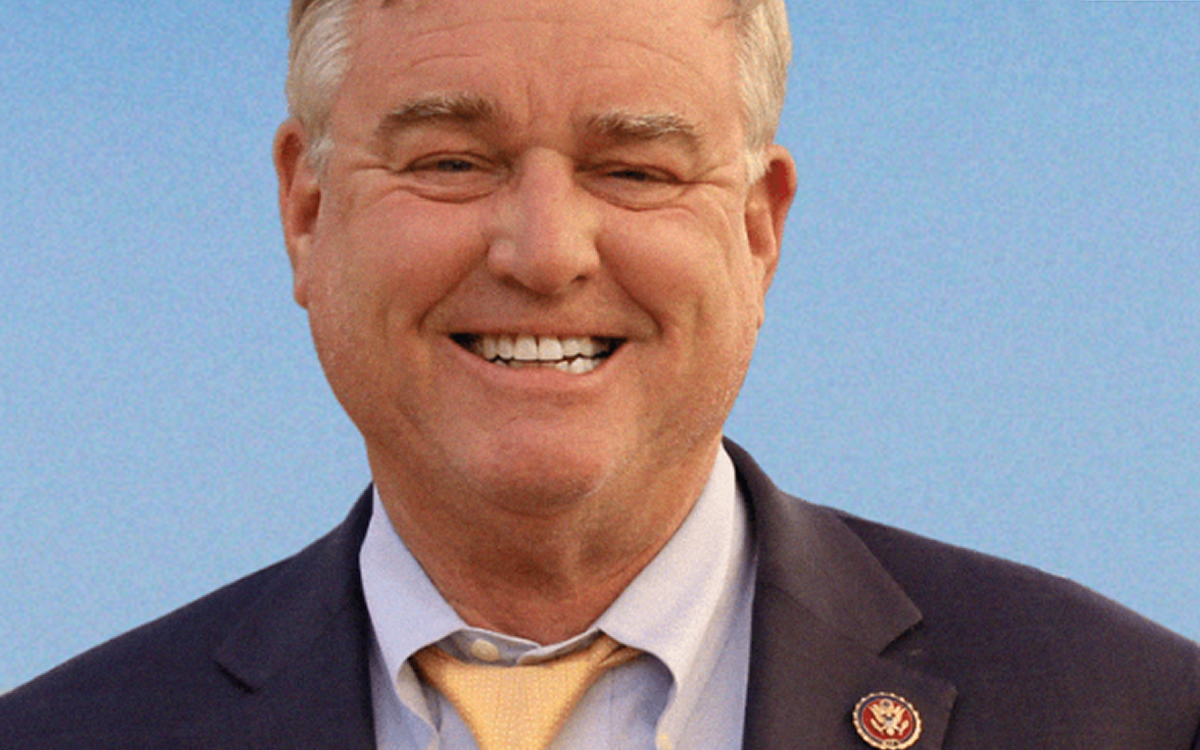
David Trone’s commercials keep telling us what he has done for women. But apparently, he doesn’t trust them to fight for themselves, or he wouldn’t keep spending countless millions to defeat them.
Trone is trying to buy back his seat in Congress, this time running in a primary in Maryland’s 6th District against incumbent Democrat April McClain Delaney. Once again, Maryland voters should say a loud NO to David Trone. He is doing this after spending nearly $60 million trying to buy a United States Senate seat, which he thankfully lost to Angela Alsobrooks, now one of only two Black women in the United States Senate. Clearly, that was a blow to his ego, and now he is trying again to defeat another very competent woman. He has already spent close to $7 million on commercials attacking Delaney, telling us how much money he has spent on what he calls ‘good deeds.’ Delaney is accurately calling him out for working with Florida Gov. Ron DeSantis, and donating through his business, nearly $800,000 to Republicans, including MAGA ones. When he was buying his first seat in Congress, the Washington Post reported, “Wine retailer David Trone… has contributed more than $150,000 to Republicans in states across the country since 2000, according to a nonpartisan site that tracks money in politics. Most went to candidates and officeholders in states where he sought legislation or regulatory changes favorable to his company, Total Wine & More. Among the Republicans who received funds were Gov. Greg Abbott and Lt. Gov. Dan Patrick of Texas and North Carolina Gov. Pat McCrory.” The same Pat McCrory who signed anti-LGBTQ legislation and Abbott who wants to close all Planned Parenthood sites in Texas.
I urge voters in Maryland’s 6th, to speak out for, and vote for, April McClain Delaney. Join with me, and a host of others, who have endorsed her as of March 31. They include Sen. Angela Alsobrooks (D-Md.), Sen. Chris Van Hollen (D-Md.), Maryland Gov. Wes Moore (D), Rep. Nancy Pelosi (D-Calif.), Rep. Sarah McBride (D-Del.), and every Democrat in the Maryland U.S. House delegation.
McClain Delaney says, “Now, David Trone says I should step aside, so he can have his old office back after he ran for the Senate, lost, and has been sitting on the sidelines. He’s a distraction. This race isn’t about one man’s ego. … And as a member of team Maryland, I forged strong relationships with Governor Moore and the entire federal delegation, as well as with local leaders across the district.” She adds, “On behalf of my district, I stand up to bullies. That’s why I’ll continue to take on Trump’s assault on our government workers, defend our diverse community, protect choice and women’s reproductive rights, and work against inflation-creating tariffs.”
Again, this isn’t the first time Trone spent a fortune trying to get into Congress. It cost him about $25 million, and two tries, to win the first time. Then his ego had him give up the seat he bought to run for the U.S. Senate. Apparently he has unlimited amounts of money to spend and at nearly 72 thinks he needs to get back in by defeating a strong woman nearly 10 years younger, who is doing a great job. He is clearly not needed in Congress.
Trone always made the basis of his campaigns not taking any money from PACs, lobbyists, and big donors. Seems hypocritical considering he thought it was OK to influence others to build his own business. To give Trone credit he always runs on a very liberal platform, which is pro-LGBTQ, pro-women, and pro-equal and human rights for all. But then Democrats like April McClain Delaney, who he is now running against, has the same platform, and is doing a good job for her constituents.
Trone’s commercials are mostly about what he has done for women. But again, he clearly doesn’t trust women to do for themselves. He spent $60 million running against a great woman for U.S. Senate, and now is spending more millions running against another strong woman, trying to reclaim a House seat he gave up. Marylanders, make sure he loses again, by voting for April McClain Delaney for Congress.
Peter Rosenstein is a longtime LGBTQ rights and Democratic Party activist.

‘How to Survive a Plague’ screens June 5

‘Queer Love’ campaign launched to address domestic violence

Ken Paxton wins Texas Republican primary runoff

China’s top court acknowledges anti-LGBTQ discrimination