Arts & Entertainment
Rainbow Families debuts 2nd virtual conference, ‘Forward Together’
Two-day digital event features Rep. Mondaire Jones, Indigo Girls
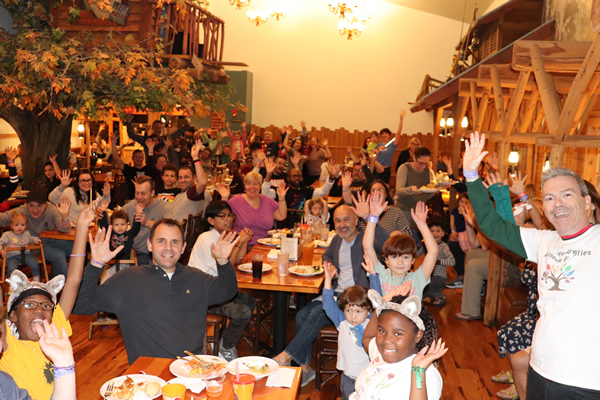
Prospective parents, families and kids — no matter your household makeup, Rainbow Families has you covered at its second annual virtual LGBTQ+ Family Conference this weekend.
This year’s conference, “Forward, Together…,” will offer a variety of resources, workshops and special guests like the Indigo Girls and Congressman Mondaire Jones, who is this year’s “Hero of the Year” and keynote speaker. Rainbow Families is one of the nation’s few non-profit organizations educating and empowering LGBTQ families, parents, and prospective parents.
“The theme of ‘Forward, Together…’ represented hope, to honor where we’ve been and what we’ve been through,” said Darren Paul-Vance, executive director of Rainbow Families. “And yet we still went through this year-plus, solid as a community, strong and motivated to make change.”
The conference will operate under a “come and go” model, Paul-Vance said, and will include events for kids and a silent auction. Attendees can select which programs suit their needs to avoid sitting in front of a screen all weekend, he said.
The cost of admission is reduced to $44 for two participants due to donations to the organization and the lack of in-person accommodations like meals and daycare. If families cannot afford the price, participants can email [email protected] to get the fee waived, Paul-Vance said.
“The economic hardship is by no means over for a vast majority of people,” he said. “All they have to do is reach out to us in confidence.”
Despite the event being virtual for the second year in a row, the incoming Rainbow Families board president and current Vice President Liz Dean said she’s excited to bring the digital conference to communities across the United States, especially where LGBTQ health care is not accessible.
“We’re offering our workshops and giving an overview of different elements of creating or starting or growing a family that you might not have access to in different parts of the country or the world,” she said.
Coming from an LGBTQ family himself, Paul-Vance knows first-hand the importance of resources and programming for LGBTQ families.
“We continuously hear from people how significant and powerful having these opportunities to be in safe spaces,” he said.
Rainbow Families began the Hero of the Year recognition three years ago to recognize revolutionary work in the LGBTQ community. Past honorees include local LGBTQ family law attorney, Michele Zavos; and Ellen Kahn, the senior director of programs and partnerships at the Human Rights Campaign.
Since beginning his tenure in January, Rep. Jones has introduced legislation aimed at supporting at-risk LGBTQ youth and reintroduced the Universal Child Care and Early Learning Act, which would establish a network of federally supported, locally administered child care options.
Jones said he’s honored to receive the award at this year’s LGBTQ Family Conference.
“Every LGBTQ+ family deserves the right to grow, and Rainbow Families works tirelessly to ensure that LGBTQ parents receive the support they need by offering educational programs, support groups, and so much more,” Jones wrote in an emailed statement to the Blade. “While we’ve made great strides toward true equality, our work is far from over. I’m so grateful to have partners like Rainbow Families in the fight to affirm justice for all LGBTQ+ people and families.”
The first Black and gay congressman along with fellow Democrat Ritchie Torres, Paul-Vance said Jones’s “existence at the table is revolutionary.”
“For many, he gives representation and voice to those who’ve had none,” Paul-Vance said. “He is radical. We’ve coined radicalism as a bad thing, but where would we be without radical leaders — especially queer ones.”
The Rainbow Families LGBTQ+ Family conference is set to feature 25 live workshop discussions on Saturday and a digital expo, school fair and kids programs on Sunday.
Tara Cheston, the LGBTQ and sexual health program specialist for D.C. Public Schools, will host the workshop, “Collaborating for Change: Finding, Accessing, and Advocating for LGBTQ+ Inclusion in Schools” at the school fair Sunday at 2 p.m.
Cheston will give her insider perspective to parents and caregivers on how to more effectively advocate for children in school and share what resources are available. She said she’s looking forward to collaborating with Rainbow Families, a frequent partner at DCPS resource fairs.
“It’s an opportunity for us to collaborate and create more of that intentional focus on parent caregiver outreach, so that folks feel supported and know where to go for information and resources,” Cheston said.
Dr. Jessica Fish, an assistant professor at the School of Public Health at the University of Maryland, will present a workshop, “Parenting Strategies to Support our LGBTQ+ Youth” on Saturday at 3:40 p.m.
In the workshop, Fish will provide tips for parents to have honest, educational and caring conversations with their LGBTQ kids about growing up and making positive choices in the outside world.
Laura Jones, a therapist in the District, will host the workshop, “Reviewing & Renewing Our Ideas of ‘Health'” and will address issues like body image and diet culture at 2:20 p.m. on Saturday.
In her practice, Jones specializes in eating disorders and gender identity and works in expanding treatment to better support marginalized identities. Jones discovered Rainbow families a few years ago and wanted to give back to the organization by presenting a workshop, she said.
“My wife and I are in the middle of family planning, and we’ve hit multiple obstacles,” Jones said. “It’s nice to know that we’re not alone.”
Sara Mindel, also a therapist in the area, will lead the workshop, “The In’s and Out’s of YELLING (for all ages!)” at 2:20 p.m. on Saturday. Mindel served on the Rainbow Families board of directors previously, as well.
“Living in the pandemic has created a pressurized system for so many folks,” Mindel said. “I’m hoping to spend the workshop time talking about what it means to even lower or lessen our relationship with yelling, and what it means to find different strategies, other than yelling so we can be effective and communicating boundaries.”
Rainbow Families delayed the conference in May 2020 like many other organizations at the beginning of the coronavirus pandemic to shift events to digital platforms. That effort in development last year helped the team develop this year’s programs, Paul-Vance said.
“There is a great deal that’s different about the scheduling because of doing it virtually, and that does take a great deal of careful attention,” he said.
Paul-Vance took on the role of executive director in December 2017 after undergoing an organ transplant due to kidney failure. This was “life-changing,” he said, and decided he wanted to turn his passion for LGBTQ rights and issues into a job after working in the entertainment travel industry.
Taking on the role of executive director “was the best decision, professionally, that I’ve made,” he said.
Rainbow Families also offers year-round programs like support groups, programs for kids and families and “Maybe Baby,” a multi-week course for prospective LGBTQ+ parents that educates on topics like adoption and assisted reproduction, financial and legal issues and how to build a support network.
To learn more about the Rainbow Families LGBTQ+ Family Conference, visit rainbowfamilies.org.
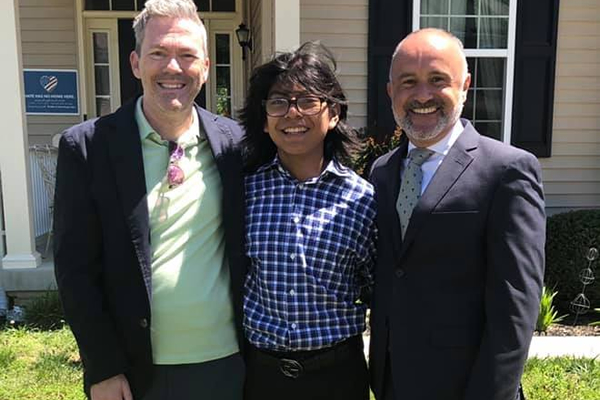
Darren Paul-Vance (left), Alex Paul (middle), John Paul (right). (Photo courtesy of Darren Paul-Vance)






Friday, October 9
Go Gay DC will host “Out in DC LGBTQ+ Community Social” at 7 p.m. at Hotel Zena. This is a chance to relax, new friends, and enjoy happy hour specials at this classic retro venue. Attendance is free and more details are available on Eventbrite.
Saturday, October 10
Go Gay DC will host “LGBTQ+ Community Brunch” at 11 a.m. at Freddie’s Beach Bar & Restaurant. This fun weekly event brings the DMV area LGBTQ+ community, including allies, together for delicious food and conversation. Attendance is free and more details are available on Eventbrite.
“Nellie’s DC Drag Brunch” will be at 12 p.m. at Nellie’s Sports Bar. Come get served like a queen by a queen. Join Sapphire Blue, Deja Diamond and their team of amazing drag performers for the most fun you’ll have all weekend. Tickets cost $58.51 and are available on Eventbrite.
Sunday, October 11
Spark Coffee Club will be at 12 p.m. at Spark Social. This is a laid-back daytime hangout built entirely around making new connections. Whether you’re new to the city, new to the community, or just looking to expand your social circle, this is an easy, low-pressure way to spark up a conversation with the person next to you. Come solo or with a friend — you never know who you might meet. For more details, visit Eventbrite.
Tuesday, October 13
Trans Discussion Group will be at 7 p.m. on Zoom. This event is intended to provide an emotionally and physically safe space for trans people and those who may be questioning their gender identity/expression to join together in community and learn from one another. For more details, email [email protected].
Coming Out Discussion Group will be at 7 p.m. on Zoom. This is a safe space to share experiences about coming out and discuss topics as it relates to doing so — by sharing struggles and victories the group allows those newly coming out and who have been out for a while to learn from others. For more details, visit the group’s Facebook.
Wednesday, October 14
Job Club will be at 6 p.m. on Zoom upon request. This is a weekly job support program to help job entrants and seekers, including the long-term unemployed, improve self-confidence, motivation, resilience and productivity for effective job searches and networking — allowing participants to move away from being merely “applicants” toward being “candidates.” For more information, email [email protected] or visit www.thedccenter.org/careers.
The DC LGBTQ+ Community Center will host “Movement for Healing” at 3 p.m. This trauma- and yoga therapy–informed class is designed to help guests gently reconnect with their body and their breath. Through mindful movement, somatic awareness, and grounding practices, guests will explore how to release tension, increase mobility, and cultivate a deeper sense of safety and ease within. For more details, visit the DC Center’s website.
Thursday, October 15
The DC LGBTQ+ Community Center’s Fresh Produce Program will be held all day at the Center. People will be informed on Wednesday at 5 p.m. if they are picked to receive a produce box. No proof of residency or income is required. For more information, email [email protected] or call 202-682-2245.
a&e features
Bar Betsie, inviting and intimate, marks one-year anniversary
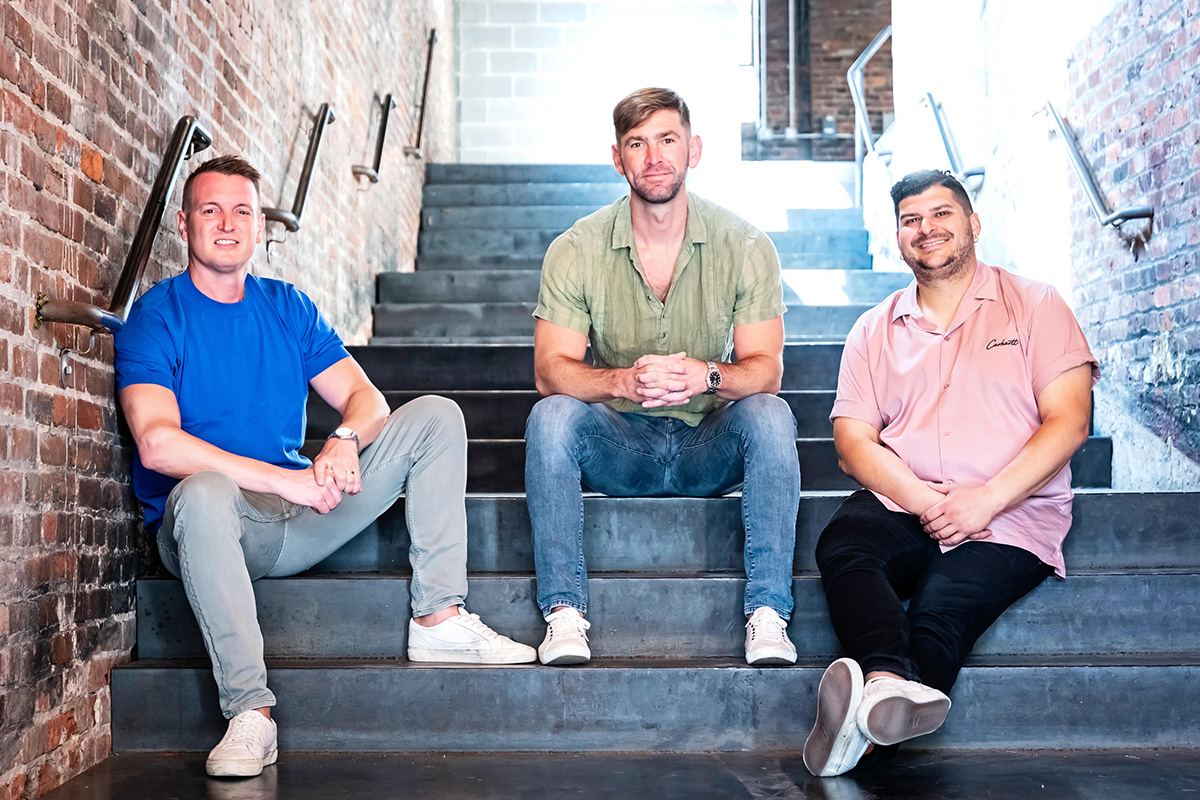
Not that a basic vodka-soda should ever dare to appear in print on the craft cocktail list at year-old Bar Betsie, but if it did, its name would be written in big black block letters, back-lit, on a marquee behind the 14-seat bar, with its ingredients – Tito’s, seltzer water – sitting visible on a shelf above.
Inviting and intimate, and with that arresting visual representation of cocktail ingredients along the wall, Bar Betsie has brought its vibes-forward approach to a dynamic corner of bustling Union Market. The sophomore effort from owners JP Sabatier, Ralph Brabham, and Drew Porterfield, the trio took a different tack at Bar Betsie than at their other, older (though not by much) 14th Street bar, Jane Jane.
Bar Betsie allowed Sabatier, Brabham, and Porterfield to expand their creativity. The three first connected several years ago, when JP was manager of Maydan and Brabham and Porterfield owned Beau Thai and BKK Cookshop. Immediately hitting it off, they dreamed of opening a bar together and in 2021, it became a reality, in the form of Jane Jane.
Featuring a short list of craft, rotating cocktails and shareable bar snacks, Bar Betsie is Jane Jane’s “grittier, edgier” sister. While Jane is named after Porterfield’s mother, Bar Betsie gets its moniker from Sabatier’s mom.
“While Jane Jane is going on a field trip, Bar Betsie feels like you’re skipping school,” says Brabham. Bar Betsie brings more of a party vibe, he says. They landed in the Union Market neighborhood after thinking through what a second bar might feel like: not a carbon copy, but an atmosphere unique to its physical space and surroundings. Union Market and its transitional nature translates to the bar’s interiors: its mood lighting regardless of time of day, the crushed-velvet booths, the blood-red curved curtains to the bathrooms and kitchen, and the air of timeless mystique contrast to the elevated, buttoned-up cocktail bar that is Jane Jane. No one would bat an eye if a cabaret broke out on top of the bar. When in Bar Betsie, they say, it’s as if the warm lighting cuts through the vibe (and the stories) of 50-year-old cigarette smoke in the air.
They decided to make the cocktail menu more concise: 12 to 15 signature drinks at a time. Tequila and mezcal lead the program (again, a nod to mom Betsie, who prefers agave-based liquors). Drinks rotate seasonally (a cocktail flip is happening this month) and are developed committee-style to ensure that the whole team has input. The Clover Cult has been especially popular, with bluecoat gin, raspberry, vermouth, and lemon, but passed through a high-speed blender that whips the drink into a frenzy: it’s a “yummy, sweet cocktail with foam with a beautiful pink color,” says Brabham.
Beers feature locally brewed options, like from DC Brau and Atlas, alongside a wine program featuring skin-contact wines. And hewing to that party-forward vibe, there’s a host of shooters like the blackberry firing squad with tequila and lime.
As for the food, Bar Betsie has a true kitchen, allowing Sabatier to stretch his cheffy wings (he attended the Culinary Institute of America). Bar snacks are plentiful, including Buffalo chicken dip, a giant pretzel with beer cheese, and chicken tinga nachos that are “fucking delicious” says Raplh. “We’re aiming for food that’s snacky, salty, crunchy, and tasty to pair with the drinks.” Guest chefs show up on Sundays for kitchen cameos.
Since opening Bar Betsie, the trio has welcomed some additional acclaim. They’ve begun to set up activations with other bars; last month, they held a pop-up at new cocktail den Frank’s Wild Years, and there’s an upcoming collaboration with Death &Co, the famed bar in Blagden.
Bar Betsie occupies a unique place in the city’s pantheon of drinking destinations. All three owners are gay, and yet this (like Jane Jane) is not a gay bar.
“We never hide who we are,” say Brabham and Porterfield. “There’s always the recognition of the community we come from, and love, and want to celebrate.”
They want people to know who they are and what they stand for, showing that by being inclusive and open in their support of the community. They work to ensure that the staff is diverse and inclusive as well. They also dropped an exclusive Easter egg: behind the medicine-cabinet mirrors in the bathroom is a video screen playing footage of drag queens either getting ready, fixing, or removing makeup and wigs. “It’s a little IYKYK moment, something fun and true to who we are as a queer-celebrating and owned space,” they say.
Movies
10 years later, we still can’t shake Barry Jenkins’s ‘Moonlight’
Landmark queer film returned to theaters this past weekend
It all started back at the Telluride Film Festival, where “Moonlight” had its world premiere in 2016, kicking off a successful awards season run. It instantly became the year’s critical darling, and it wound up winning three Academy Awards, including Best Picture, Best Adapted Screenplay (for Jenkins), and Best Supporting Actor (for Mahershala Ali.)
But there’s a world where an independently made film like “Moonlight,” featuring an all-Black cast with mostly unknown actors, and a story exploring how queerness intersects with toxic masculinity and race, gets easily overlooked. The fact that the film won Best Picture on Hollywood’s biggest stage not only cemented its place in film history, but helped the story reach more Black and queer people.
Adapted from Tarell Alvin McCraney’s unproduced, autobiographical play “In Moonlight Black Boys Look Blue,” Jenkins follows a boy named Chiron, introduced to the audience as Little, over the course of three pivotal moments in his upbringing. Set in Miami, the film tracks Chiron’s days as an outcast struggling to make it through elementary school, to his first sexual encounter with another boy, to his adult days making a living as a drug dealer. Chiron suffocates while living with his abusive, drug-addicted mother (Naomie Harris) and eventually finds refuge and safety in the home of surrogate parents Juan (Ali) and Teresa (Janelle Monáe) as he struggles to reckon with his queerness.
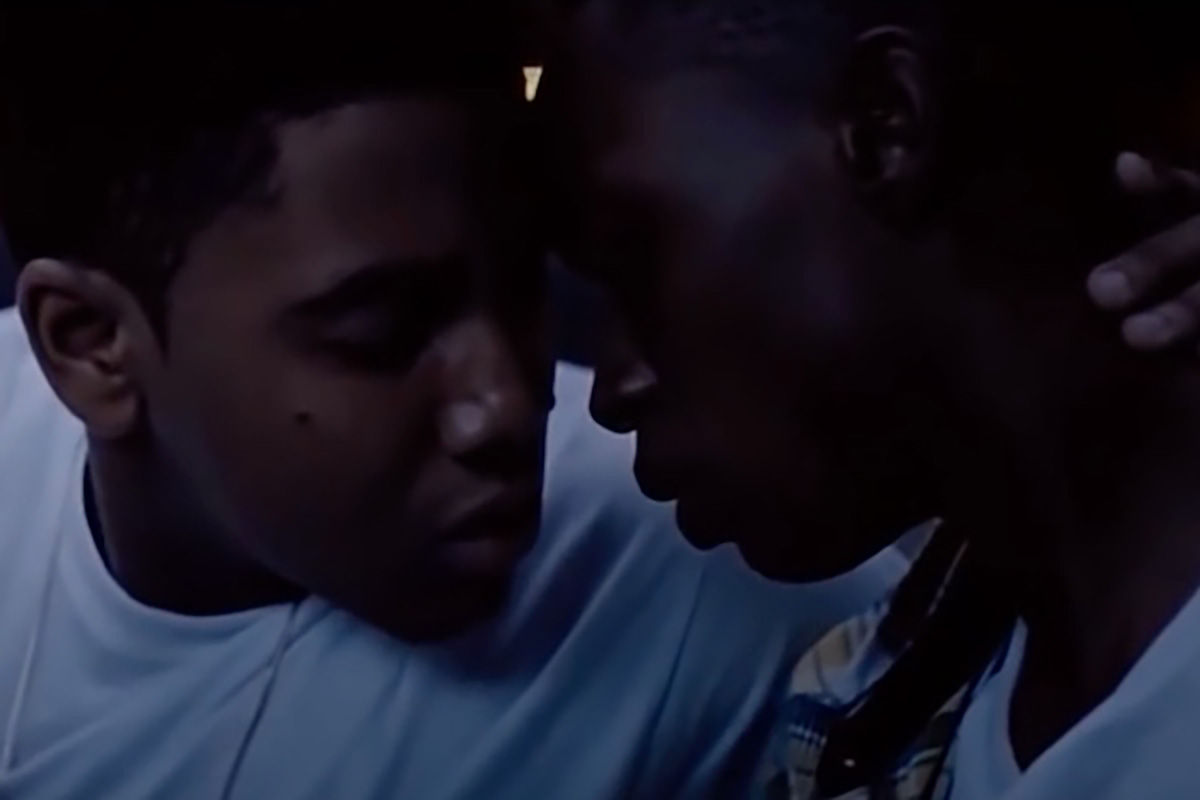
Jenkins’s images instantly became iconic: Juan holding Little in the ocean, a moment reminiscent of a young boy’s baptism; Chiron resting his head on Kevin’s (André Holland) shoulder as the two reconcile their love for one another; Little looking back at the audience as the waves crash.
The film mainly features locals from Miami. One of the smartest choices Jenkins and his casting director, Yesi Ramirez, made when shaping out Chiron’s journey was casting three different actors (Alex Hibbert, Ashton Sanders, and Trevante Rhodes) to play the character as he physically comes of age. Jenkins deliberately never had the three actors meet despite portraying the same character — quite the atypical approach to casting.
“I wanted [that decision] to be a comment on the way of the world we live in, and how society has this effect on these young men who grow up in a community like the one depicted in the film,” Jenkins said in a Creative Screenwriting interview in February 2017. “To me, the best way to show that was to illustrate this change in the character, and what happens to the people who are playing him at each stage.”
In the decade since “Moonlight”’s release, dozens of filmmakers cite Jenkins as one of their biggest influences, including Joe Talbot (“The Last Black Man in San Francisco”). And you can see his film’s footprints all over “Nickel Boys, If I Go Will They Miss Me” and “Waves,” all films that use evocative imagery to tell grounded, Black-led stories.
To date, “Moonlight” remains the lowest-budget film to ever win Best Picture, made for a mere $1.5 million dollars. It was also the first film that A24, the indie distributor that was still building a name for itself back in 2016, fully financed and produced itself. “Moonlight” went on to gross over $60 million at the global box office, largely thanks to the Oscars platform.
In our current political and media landscape under the Trump-Vance administration, “Moonlight” has the potential to save even more lives. In the early days depicted in Chiron’s upbringing, he is taught to live with shame, to keep his head down at school. It’s all about survival. But by the end of the film, Chiron reconnects with Kevin and finds himself remembering all the emotions he felt after being touched by a man for the first time. It’s a small step, a small embrace, but a crucial one for Chiron to start coming to terms with himself.
Jenkins still gets emotional when watching scenes back from the film now. Speaking with Vanity Fair at this year’s Telluride Film Festival, where “Moonlight” screened for its 10th anniversary, Jenkins admitted he was a “crying mess” when revisiting the last 15 minutes of the film earlier in the year.
“Maybe over the next few months I’ll get some more understanding of it, but I think it was just how meaningful it was that we created this thing,” Jenkins said. “It’s not about the film itself, but just how meaningful it was that we actually did it.
In the decade since “Moonlight”’s release, Jenkins went on to direct another acclaimed film, “If Beale Street Could Talk,” and recently made “Mufasa: The Lion King.” He’s set to return to his more independent roots with “Be My Baby” starring Zendaya, which will also be distributed by A24, and an Alvin Ailey biopic. The Oscar winner continues to mentor emerging filmmakers and writers through the Sundance Labs, visiting colleges around the country to teach what he learned from making his breakout film.
Now that “Moonlight” is back in theaters, it’s the perfect opportunity for queer and Black people to experience this tender, intimate, nuanced film on the big screen. It’s a modern classic with the potential to continue making people feel seen and embraced for every aspect of their identity.

Calendar: October 9-15

ICC unseals arrest warrants for Taliban officials accused of persecuting LGBTQ people, women

Bet Mishpachah participates in D.C. Oct. 7 commemoration ceremony

Man charged in Mall of America shooting plot inspired by Pulse massacre: report

Bar Betsie, inviting and intimate, marks one-year anniversary

Eliot Glazer’s new book an engaging collection of essays

‘Merrily’ is for Sondheim super fans, the uninitiated, and anyone in between

Engrossing ‘Tip Toe’ delivers tension and an ominous warning

The financial realities facing LGBTQ+ first-time buyers