Africa
Zimbabwe decriminalizes HIV transmission
UNAIDS applauded move in spite of NGO questions
A Zimbabwe civil society organization has questioned lawmakers’ decision earlier this month to decriminalize the transmission of HIV.
Liam Takura Kanheng of Zimbabwe Human Rights Monitors Platform, which is based in the country’s capital of Harare, said parliamentarians were not supposed to repeal Section 79 of the Criminal Law Code, but rather amend it.
“Repealing the law that criminalizes the transmission of HIV stands to be problematic because it’s transmission through what? There is transmission through birth, there is deliberate transmission through sexual intercourse and sharing of sharp objects such as needles and syringes, but I feel deliberate transmission should be the one that should be criminalized and I think the law needed to be amended or revised instead of being repealed because there are many people that have done deliberate transmission of HIV because there are people who do not go for voluntary HIV counseling and testing or how partners in heterosexual or homosexual relationships don’t disclose their HIV statuses to their partners and have unprotected sex with those partners,” Kanheng told the Washington Blade. “So, I think it was a matter of reviews and amendments than repealing.”
“When it comes to the LGBTQIA+ community I just think it makes it hard for everyone and protects no one as well, so I think it should have been better off amended than repealed,” added Kanheng. “However, when it comes to the issue of transmission the LGBTQIA+ community is not really fingered as the main catalyst of HIV prevalence but heterosexuals, because being LGBTQIA+ is seen as socially immoral on cultural grounds because it’s seen as taboo and an abomination and therefore the status quo under such a law does not change for the LGBTQIA+ community. If we are really going to transform the lives of the LGBTQIA+ community when it comes to their rights to sexuality and self-determination there is more that needs to be done on a macro scale than this piece of legislation.”
UNAIDS, however, congratulated Zimbabwe’s Parliament for repealing Section 79 and also stated the southern African country had made great progress in the response to HIV over the past decade.
“Public health goals are not served by denying people their individual rights and I commend Zimbabwe for taking this hugely important step,” said UNAIDS Executive Director Winnie Byanyima in a March 18 press release. “This decision strengthens the HIV response in Zimbabwe by reducing the stigma and discrimination that too often prevents vulnerable groups of people from receiving HIV prevention, care and treatment services.”
UNAIDS notes Zimbabwe in 2019 completed a legal environment assessment, which identified the criminalization of HIV transmission as a barrier to health care and a driver of stigma and discrimination for people living with HIV and other key populations. Since then, the U.N. Development Program has worked with key populations and other stakeholders, convening meetings with parliamentarians and other partners to advance the recommendations of the legal environment assessment.
Zimbabwe was the first African country to enact an HIV-specific criminal law, including it in the Sexual Offences Act of 2001.
The law, which women’s rights groups supported as a way to address violence against women, made criminalized anyone diagnosed with HIV who “intentionally does anything or permits the doing of anything” which they know “will infect another person with HIV.”
It is estimated that 1.2 million of the 1.3 million people living with HIV in Zimbabwe are now on life-saving medicines. AIDS-related deaths have decreased by 63 percent since 2010, with new HIV infections down by 66 percent over the same period.
More than 130 countries around the world still criminalize HIV non-disclosure, exposure and transmission through either specific or general legislation.
Daniel Itai is the Washington Blade’s Africa Correspondent.



Iran and Egypt on Friday faced off during the World Cup’s “Pride Match” in Seattle.
Iran is among the handful of countries in which consensual same-sex sexual relations remain punishable by death. Discrimination and persecution based on sexual orientation and gender identity is commonplace in Egypt.
Friday’s match coincided with Pride weekend in Seattle. The Egyptian Football Association and the Football Federation Islamic Republic of Iran both objected to playing in the “Pride Match.”
Egypt and Iran tied 1-1.
FIFA, for its part, allowed Pride flags inside the stadium during the match.
“The FIFA World Cup 2026 is an inclusive event that welcomes people from all backgrounds,” a FIFA spokesperson told the Washington Blade in a statement. “Fans of all sexual orientations and gender identities are welcome at matches and events. General statements of human rights, including rainbow flags and other flags representing sexual orientation and gender identity, are permitted under the FIFA World Cup 2026™ Stadium Code of Conduct and may be displayed inside stadiums provided they are used in a manner consistent with the code.”
Human Rights Watch welcomed FIFA’s decision to allow Pride flags inside the stadium. Outright International, a global LGBTQ and intersex rights group, distributed Pride flags in Seattle on Friday, which was Pride Match Day.
“Visibility matters,” said Outright International Executive Director Maria Sjödin. “Pride is now being celebrated in more than 100 countries, including this weekend in Seattle. For many LGBTIQ people, seeing a Pride flag in public is a reminder that they are not alone, and that their rights and dignity are recognized.”
FIFA President Gianni Infantino earlier this year told Die Weltwoche, a Swiss magazine, that “there will be no ‘Pride Match’ at the (FIFA) World Cup.”
“There will be a FIFA World Cup match in Seattle, and on the same day, events organized by external organizations will be taking place in the city,” said Infantino. “But that has nothing to do with the match itself.”
Peter Tatchell, a long-time LGBTQ activist from the U.K. who is director of the Peter Tatchell Foundation, was among those who traveled to Seattle for Friday’s match. Tatchell accused FIFA of not vetting World Cup teams — specifically Iran, Egypt, Saudi Arabia, Ghana, Senegal, Qatar, Tunisia, Morocco, Iraq, Uzbekistan, and Algeria — over whether they would allow gay players.
“FIFA is protecting LGBT+ visibility in the stands while failing to protect LGBT+ players on the pitch,” said Tatchell.
South Africa
White House to end PEPFAR funding for South Africa
State Department says country failed to respond to 2025 executive order demands
The Trump-Vance administration will end PEPFAR funding for South Africa.
A State Department spokesperson on Wednesday told the Washington Blade the State Department “will begin a phased drawdown of PEPFAR programming in South Africa, with most programs ending by Sept. 30, 2026, and critical personnel support continuing through March 31, 2027.”
Semafor last week reported South Africa has received more than $8 billion in PEPFAR funding since President George W. Bush created the program to combat the global HIV/AIDS pandemic in 2003.
President Donald Trump on Feb. 7, 2025, issued an executive order that addressed what it described as “egregious actions of the Republic of South Africa.” The State Department spokesperson with whom the Blade spoke noted the directive included five specific requests:
• South African government provides exemptions or alternatives for U.S. companies to Broad-Based Black Economic Empowerment laws and other race-based mandates.
• Senior government officials (e.g., president, deputy president, or minister of justice) unequivocally condemn all race-based incitement to violence, including the “Kill the Boer” song, more frequently.
• The South African government prevents the implementation of measures that would allow expropriation without fair compensation and due process under the Expropriation Act of 2024.
• South African Police Service designates rural crime a “priority crime” and increases resources dedicated to high-crime rural areas.
• South Africa refrains from actions that would significantly interfere with the implementation of the refugee program, within the confines of South African law.
“The United States communicated to the government of the Republic of South Africa multiple times at many levels that PEPFAR funding was likely to be terminated in the absence of progress on the five asks,” said the State Department spokesperson.
The State Department spokesperson further noted South Africa is “one of the largest economies in sub-Saharan Africa” and “has funded the vast majority of its own HIV response, estimated at 76 percent of the total, including procurement of all treatment commodities.”
“South Africa will continue to be supported by the Global Fund, including for the introduction and scale up of lenacapavir through Global Fund Resources,” the spokesperson told the Blade.
Lenacapavir is groundbreaking HIV prevention drug that users inject twice a year. Eswatini, which borders South Africa, is among the African countries that have received doses of the drug through PEPFAR.
HIV/AIDS service organizations in the U.S. and around the world have sharply criticized the Trump-Vance administration over plans to not fully fund PEPFAR and to cut domestic HIV/AIDS funding.
Secretary of State Marco Rubio shortly after the current White House took office issued a waiver that allowed PEPFAR and other “life-saving humanitarian assistance” programs to continue to operate during a freeze on nearly all U.S. foreign aid spending. HIV/AIDS service providers around the world with whom the Blade has spoken say PEPFAR cuts and the loss of funding from the U.S. Agency for International Development, which officially closed on July 1, 2025, has severely impacted their work.
Africa
African leaders once again trade African family values for American family values
Anti-LGBTQ conference backed by US-based groups took place this month in Ghana
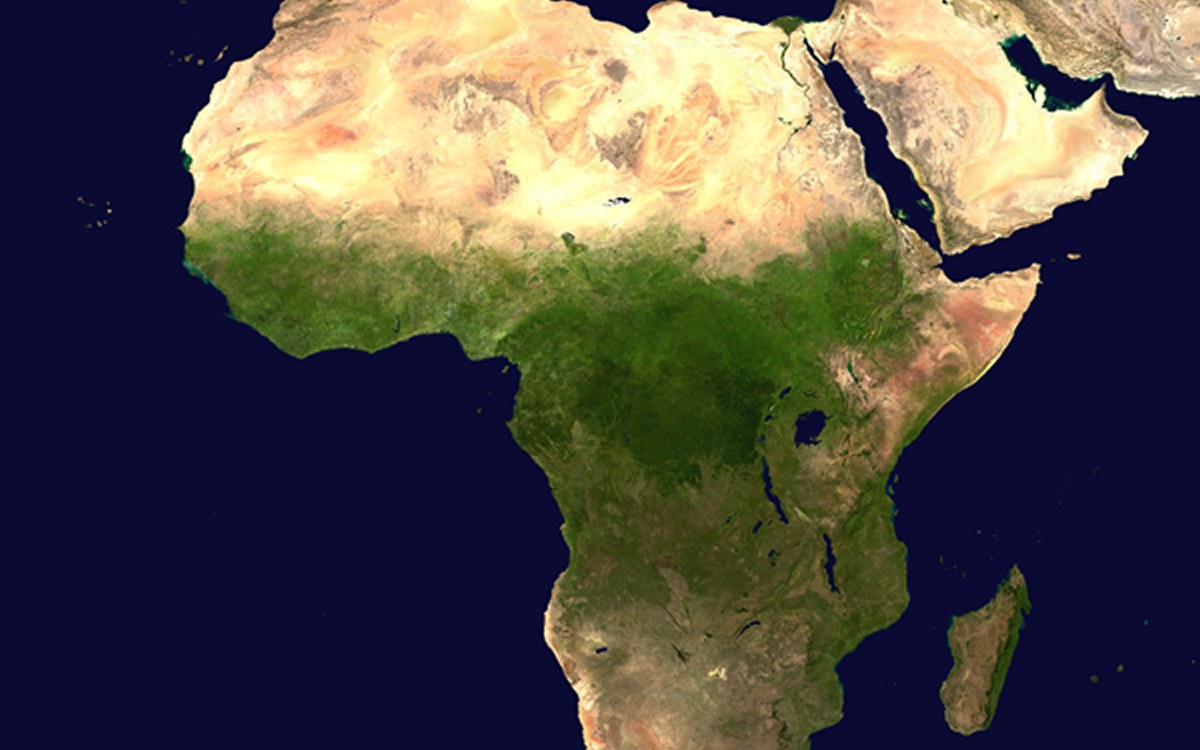
At the moment, some religious and political leaders in Africa are pushing for a charter on family values, lobbying lawmakers, African state institutions, and the African Union to formally adopt it. In the past number of years, they have been holding conferences across Africa with the support and funding of Western religious donors who, in their own countries, are definitely perceived as racist, hateful, and against women. Most recently, they convened the African Regional Interparliamentary Conference on Family Values and Sovereignty in Accra, Ghana. All this raises critical questions about foreign influence and agendas. At this critical time, when Africa faces so many problems, why do people insist on pushing an agenda that is neither ours nor relevant to our prosperity?
The African leaders who claim to protect African family values and sovereignty, unsurprisingly, exhibit traits similar to those of the historical enslavers and similar collaborators. Contrary to what they claim as “pushing back against foreign influence on the African family” and the infamous sovereignty claims, it has been proven that these leaders are directly linked and backed by the conservative “foreign” groups, including the U.S.-based hate organization, Family Watch International, which is closely linked to the anti-rights authors of Trump’s Project 2025, Heritage Foundation; and the Netherlands-based Christian nationalist organization, Christian Council International, another group closely linked to organizations supporting the Trump administration and its continued hate-based policies and atrocities. One might even argue that they serve these groups, their mandates, and their Western agenda, instead of what they want African people to believe: that they are doing this for the good and prosperity of Africa and its sovereignty. The truth, however, is that their so-called African values, culture, traditions, etcetera, could not be further removed from true African cultural values but instead mimic those outlined in America’s Project 2025. Meanwhile, the very same people who are pushing for these family values under Project 2025 are the very same people pushing for the exploitation of Africa’s natural resources, without any care for the impact their actions have on African people and their livelihoods. Adopting their policies verbatim in Africa and claiming them as our own could easily be seen as counterintuitive and self-betrayal.
Africa’s rich history of family, diversity, womanhood, and matriarchy is too beautiful to erase. Africans, especially women and girls, deserve to know about the likes of Queen Modjadji of the Balobedu people, a fierce leader who is traditionally believed to have rainmaking abilities and notably a distinctively matriarchal dynasty where the reign is passed down from woman to woman, from mother to daughter; or Queen Nzinga of modern-day Angola, who led an army that resisted and fought against the Portuguese colonizers. Queer folks and African spiritualists alike deserve to know how women and gender diverse persons held some of the highest spiritual positions in society, like Mbuya Nehanda of Zimbabwe, who was a deeply respected spirit medium and a leader of the resistance against early colonial rule in Zimbabwe, and the transgender priests, the respected agule and okule, female-to-male and male-to-female shamans of the Lugbara, now the Democratic Republic of Congo and Uganda, who led spiritual ceremonies. Even though the mudoko dako of the Langi people in Uganda were known to have been assigned male at birth, they were recognized as a distinct gender that was allowed to marry men. Africans must also know about woman-to-woman marriages that existed in pre-colonial Africa, which, according to research and oral histories, were recognised and served various purposes, from economic and social functions to lineage preservation. Similar practices include those from the Bapedi and Balobedu cultures, ngwetsi ya lapa, which still exists today, where a woman is married into a family or household to raise an heir for the family or to continue the family name, not necessarily the lineage.
As well-intentioned as it may appear, evidence suggests that the African leaders’ draft charter, because of its existing ties to Western ultraconservative partnerships, is neither original nor in good faith. The pace at which they have been moving and their true subsequent agenda should indisputably be questioned and criticised. Regardless of the inclusion of desirable language and terms such as minerals sovereignty and the Ubuntu philosophy, beneath the surface, the charter does not truly reflect these concepts. The charter, instead, does a disservice to African people by misrepresenting Africa’s diversity and disregarding its history as it relates to the diversity of families. The West has no business drafting or helping draft African legislation, especially if the whole of Africa is at risk of their negative impact. One would think the common goal would be to address bread-and-butter issues, such as poverty, unemployment, diseases, and health, to name but a few, instead of pushing the distractive agenda of those responsible for robbing Africa in the first place. No single group is the sole custodian of African knowledge. Africa belongs to all of us, with our diverse families and values, which cannot be defined through a single, narrow lens and are instead very individual issues that will differ from family to family.
Daniel Digashu is a consultant at the Southern Africa Litigation Center (SALC). SALC promotes and advances human rights and the rule of law in Southern Africa, primarily through strategic litigation and capacity-strengthening support to lawyers and grassroots organizations.

As Washington shifts right, Democratic Socialists gain ground

Susan Stewart could make history as Rehoboth’s first openly gay mayor

Silky Nutmeg Ganache talks sex and dating, gender, politics, weight loss journey

Madonna roundup: Reviews, sales, and love for ‘Danceteria’

Three overlooked court rulings limited White House anti-trans policies

‘Transcendent’ a tough but important read

‘My Favorite Sociopath’ debuts at Shepherdstown’s CATF

Under-the-radar Delaware beach towns smart buyers are targeting

In Trump’s divided America, Michael Weinstein’s AHF responds