Florida
‘Don’t Say Gay’ law looms over Pride in Wilton Manors
Parade to take place in LGBTQ-friendly Fla. city on June 18
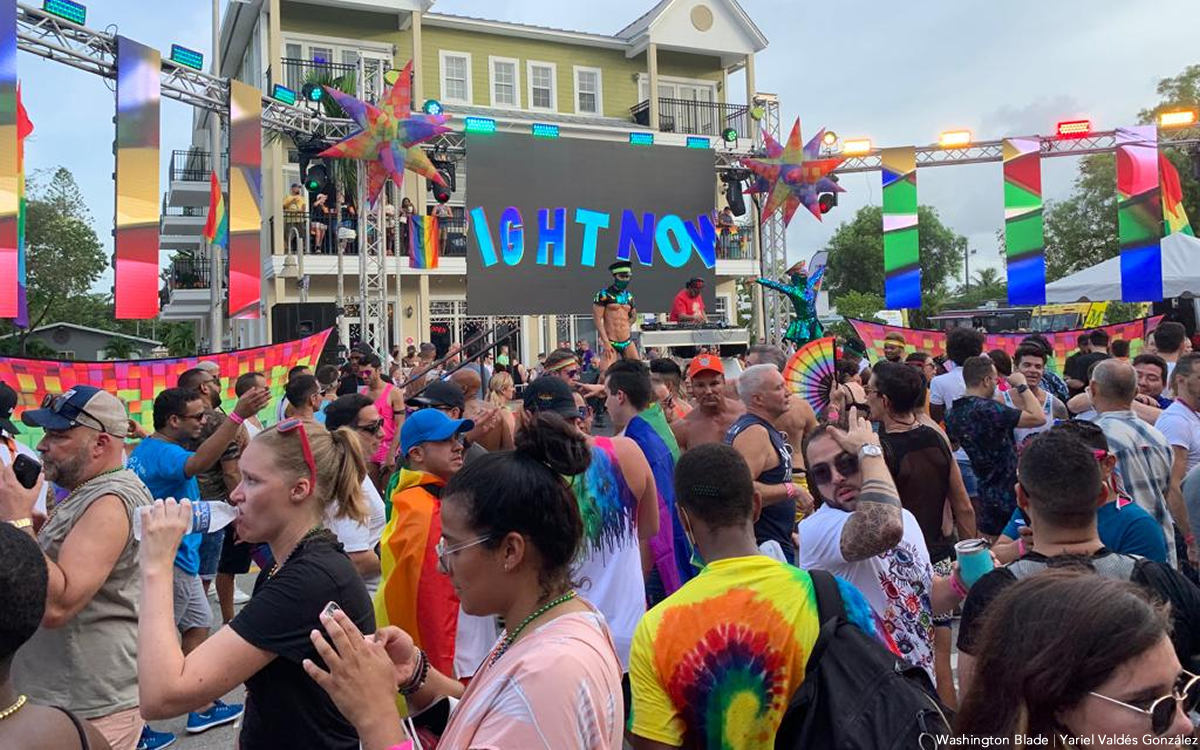
WILTON MANORS, Fla. — This year’s Pride celebration in Wilton Manors will take place against the backdrop of Florida’s “Don’t Say Gay” law that Republican Gov. Ron DeSantis signed earlier this year.
The Stonewall Pride Parade and Street Festival will take place in Wilton Manors on June 18.
“This Pride Month is different than previous Pride months because we see the attack on the LGBTQ community and because we see that the attack has taken place on the LGBTQ community,” state Sen. Shevrin Jones told the Washington Blade on Monday during a telephone interview.
Jones represents District 35, which includes portions of Broward and Miami-Dade Counties, in the Florida Senate. Jones in 2020 became the first openly gay man elected to the chamber.
The South Florida Democrat on March 7 became emotional when he discussed his own coming out in a speech against the “Don’t Say Gay” bill on the Florida Senate floor before his colleagues approved it. DeSantis signed it into law — which has been challenged in federal court — less than a month later.
Wilton Manors’ Pride events will also take place less than a month after DeSantis’ administration asked the Florida Agency for Health Care Administration, a board that regulates doctors in the state, to essentially ban transgender-specific health care for children and teenagers.
“The flags are being raised higher now more than ever because it’s not just the physical flag, it’s the flag of our voices, it’s the flag of our advocacy that’s being raised in this moment,” said Jones, referring to Pride Month. “There is a group of people who are trying to silence the LGBTQ community.”
Brandon Wolf, press secretary for Equality Florida, a statewide LGBTQ rights group, in a statement to the Blade noted “the chilling impacts of the bigoted ‘Don’t Say Gay’ law are already being felt across the state, even before it has gone into effect.”
“Books with LGBTQ characters are being ripped from shelves. Graduation speeches are being censored. Rainbow ‘safe space’ stickers are being peeled from classroom windows. And there is an uneasy climate that is causing educators to leave the work they love in order to avoid discrimination.” said Wolf, who survived the 2016 massacre at the Pulse nightclub massacre in Orlando that left his two close friends, Christopher “Drew” Leinonen and his fiancé, Juan Guerrero, and 47 other people dead.
“All of that makes Pride as critical as ever this year,” he added. “Pride has always been a protest. It has always been a resistance to injustice and a demand for equality. This Pride, people across the country are called upon to let Pride inspire them to get civically engaged, to recommit to the fight to protect LGBTQ young people, and hold accountable those who are working to undermine progress and erode our civil liberties.”
SunServe is a Wilton Manors-based foundation that provides housing, mental health and other services to more than 5,000 LGBTQ people through its offices in the city and in neighboring Fort Lauderdale. SunServe is among the groups that plan to participate in the Stonewall Pride Parade and Festival.
“SunServe enters this Pride Month with a lot of enthusiasm and celebrating our foundation’s 20th anniversary,” noted Tony Lima, the foundation’s CEO.
Lima, like Wolf and Jones, acknowledged the “Don’t Say Gay” law will impact Pride in Wilton Manors.
“It will be a Pride with more focus on our young people,” Lima told the Blade. “Young people are our future and we must protect them and give them the opportunity to live full and happy lives.”
Arianna’s Center is another Wilton Manors-based organization that serves trans women throughout South Florida.
The organization this past weekend participated in a Pride parade in the Puerto Rican capital of San Juan. Arianna’s Center staffers also plan to attend Pride Month events with the Mexican Consulate in Miami and with the Miami Police Department.
“June is not Pride (Month) for many of our clients, so we celebrate this month with a lot of responsibility, with the hope of having equality and that the transgender community is heard,” said Arianna Lint, the group’s CEO. “We have many wishes for improvement, equality and equity for the trans community. We cannot celebrate while there are trans people incarcerated for no reason and with no social services that help them.”
Lint also acknowledged the “Don’t Say Gay” law has adversely impacted Florida’s LGBTQ community.
“Everyone is affected and everyone must work together and not just in groups or an elite club,” she said. “This affects everyone and we must unite to be able to better work together to eradicate this and other types of bills that affect us.”
Michael K. Lavers contributed to this article.


Florida
Gay Fla. Democrat Elijah Manley sees opportunity in Trump’s second term
State’s 20th Congressional District’s includes Broward, Palm Beach Counties
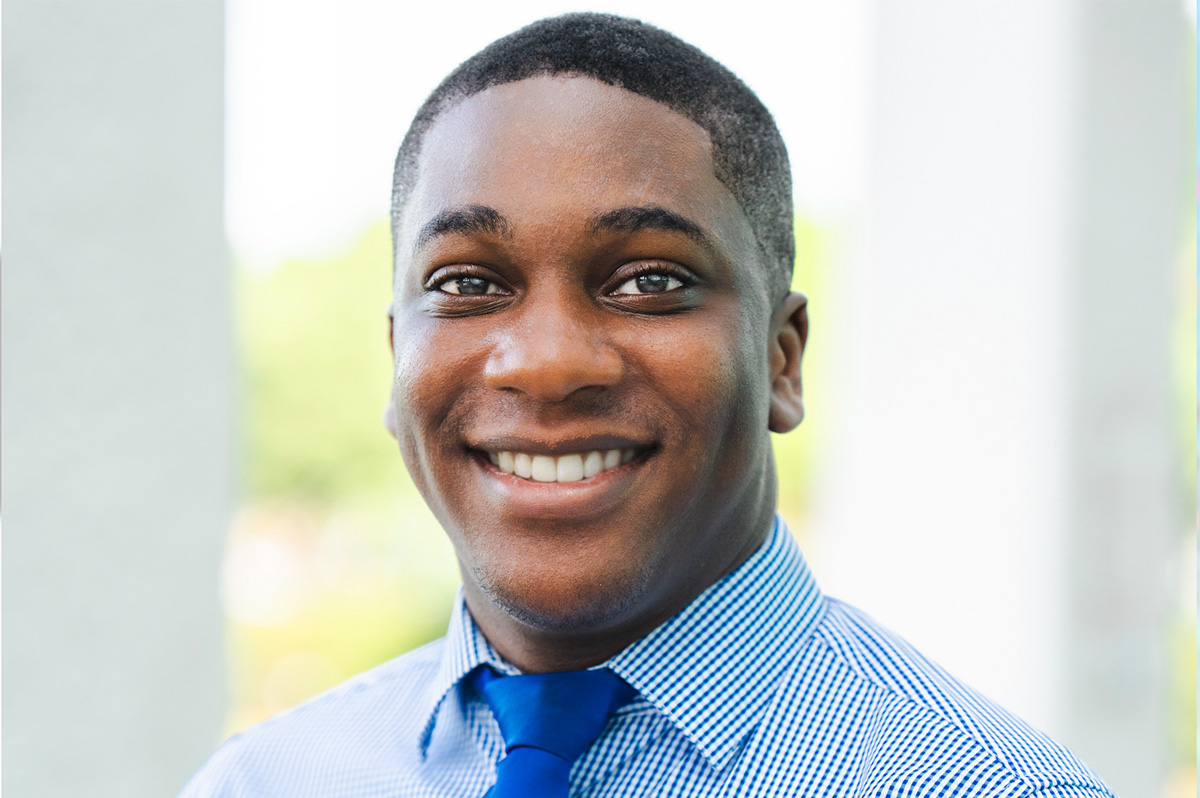
Just over two and a half miles from President Donald Trump’s primary residence lies one of Florida’s most reliably Democratic congressional districts. There, a 27-year-old progressive is mounting a campaign centered on resisting what he calls the Trump-Vance administration’s attacks on civil rights, immigrants, and LGBTQ Americans.
Elijah Manley, an openly gay Democrat, sat down with the Washington Blade to discuss why he is running for Florida’s 20th Congressional District, why he believes this moment calls for a new generation of leadership, and what he hopes to accomplish if elected to Congress.
Born and raised in Fort Lauderdale’s historic Sistrunk neighborhood — the city’s oldest African American community — Manley was raised by a single mother who struggled to make ends meet. His family experienced housing insecurity and, at one point, homelessness, experiences he says continue to shape both his politics and his policy priorities.
For Manley, those experiences are precisely what he believes Congress is missing.
“I think now the country is in need of somebody like me, with my story, my lived experience, the struggles I’ve been through in my life. We’re going through a really dark time in the country with the Trump administration coming for our civil rights and an economy that is not working for everybody. In a time where we have MAGA fascism, we need progressive leadership, and we need people who are really going to do the work of fighting back and resisting and obstructing Donald Trump and MAGA Republicans’ agenda in Congress.”
Manley said his campaign is also about ensuring people from marginalized communities — those without wealth, political connections, or institutional backing — have a voice in Congress.
“I think my story sets me aside from everyone else. I’m the only one in this race who has a story to tell voters that lines up with their lived experiences and their struggles. Growing up in poverty and experiencing homelessness was instrumental in developing my worldview and how I fight for people, and I think that’s something that’s absent on Capitol Hill.”
He argues that lived experience offers a perspective often missing on Capitol Hill.
“There are too many lawyers and people coming from professional and political backgrounds. Then you have somebody like me who is rooted in the story of this district. That’s what sets me apart from everyone else in this race.”
According to his campaign website, Manley’s interest in public service dates back to childhood. He cites the election of President Barack Obama as a defining moment that inspired him to pursue politics.
“He was inspired by Barack Obama’s historic election, igniting his passion for public service. He began writing to elected officials, speaking at school board and city council meetings, and advocating for issues affecting his community,” the website states. It goes on to describe his involvement in criminal justice and law magnet programs, Navy JROTC, and hundreds of hours of volunteer service while in high school.
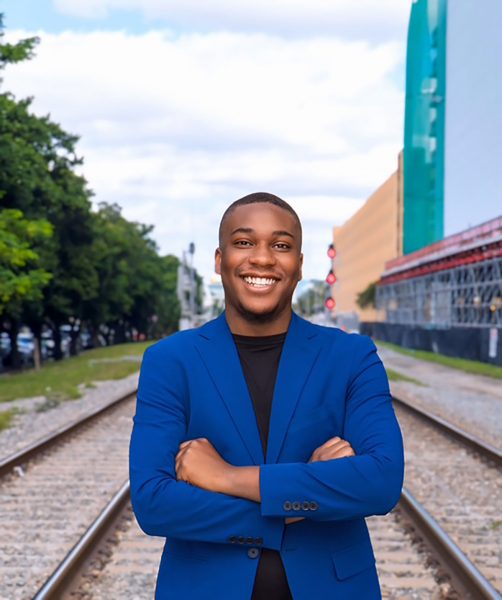
As an openly gay candidate running during Trump’s second administration, Manley said Congress must take a far more aggressive approach to protecting LGBTQ Americans, particularly as Republican-led states continue passing restrictions targeting transgender people.
“I think we need to bring the hammer down on some of these states. I’m not one of these states’ rights people — Congress has the power to preempt laws that states pass through the Supremacy Clause. There’s never been a more important time in our history when we’re seeing fascism, we’re seeing an administration out of control, and we need Congress to act.”
His campaign has also drawn criticism from both Republicans and establishment Democrats for his positions on Gaza, immigration, and his call to abolish U.S. Immigration and Customs Enforcement.
Manley said abolishing ICE does not mean eliminating immigration enforcement altogether.
“I’m not saying there should be no immigration laws. We want laws around immigration, but we want dignity. We don’t need a hypermilitarized, paramilitary group chasing people through the streets, terrorizing communities, churches, schools, and families.”
His personal experiences also inform his healthcare agenda.
“When we talk about healthcare, my experience growing up on Medicaid is seeing the failure of the government to expand Medicaid here in Florida, and now we’re seeing cuts from the Trump administration. I’m not just looking at statistics or numbers on paper — this is based on lived experience. I know how the people in this district are going to be hurt by these policies because I’ve lived it.”
California Democratic Congressman Ro Khanna, who has generated early buzz as a potential 2028 presidential contender for his “progressive capitalist” approach to governing, has endorsed Manley’s campaign, giving the first-time congressional candidate one of his highest-profile endorsements.
Manley faces six other Democrats in the primary, including U.S. Rep. Debbie Wasserman Schultz and former U.S. Rep. Sheila Cherfilus-McCormick, along with four Republican candidates in the general election field. Cherfilus-McCormick resigned from Congress ahead of a potential expulsion and is running again while facing federal criminal charges.
Despite running as the youngest candidate in the field, Manley said he hopes voters leave the race remembering one thing above all else.
“I want people to remember bold and authentic leadership. I want them to know I’m running because I’ve been through what people are going through right now — and it’s not that I’ve been through it, I’m actually still going through it. We need bold people who are going to fight for everybody and stand up for what’s right, and that’s what I hope voters see when they go to the polls.”
Florida
Former Fla. gubernatorial candidate Andrew Gillum arrested on drug charges
Democrat narrowly lost to DeSantis in 2018, later came out as bisexual
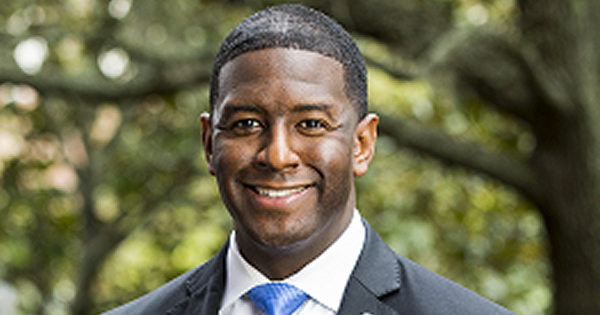
Andrew Gillum, the former Democratic nominee for governor of Florida and former mayor of Tallahassee, was arrested on drug possession charges in Alabama last week.
Police in Daphne, Ala., said they pulled Gillum over for erratic driving and found marijuana and methamphetamine in his vehicle. He was charged with possession of marijuana and unlawful possession of a controlled substance, according to the Daphne Police Department. Jail records show he was arrested on July 2 and released on July 3, the Associated Press reports.
Gillum, the first Black nominee of a major political party for governor in Florida, lost the 2018 election to current Republican Gov. Ron DeSantis in a highly contentious race.
Once considered a rising star in national politics, Gillum served in Tallahassee’s local government, first as a city commissioner and then as mayor of Florida’s capital from 2014- 2018.
The Daphne Police Department said officers stopped Gillum’s vehicle around 10:45 p.m. and initiated a probable cause search after one officer noticed a glass pipe on the center console.
During the search, officers found several rolled marijuana cigarettes and three packages containing a substance that tested positive for methamphetamine, police said.
The day after his arrest he was charged with possession of dangerous drugs, use or possession of drug paraphernalia, and possession of marijuana.
In 2020, Gillum was involved in a similar incident when he was found in a Miami Beach, Fla., hotel room with a man identified as an escort who had apparently overdosed on drugs. Police also found three bags of suspected crystal methamphetamine in the room. The man survived, and no one was ever charged with a crime.
Later that year, Gillum came out as bisexual during an appearance on “The Tamron Hall Show,” where he discussed his struggles with drug and alcohol addiction and his decision to seek treatment following the 2020 incident.
In the same interview he shed light onto this, saying his substance use was a byproduct of the emotional struggles he experienced after losing the 2018 gubernatorial race to DeSantis.
This is not the first time Gillum has faced legal scrutiny.
During his 2014 mayoral campaign, he faced allegations of misconduct after hiring private equity investor Adam Corey as his campaign treasurer, raising questions about a potential conflict of interest. However, the FBI ultimately concluded there was no conflict of interest.
Florida
Intersex teacher alleges Fla. school fired him over perceived trans identity
Shepard Scalf filed a complaint with Equal Employment Opportunity Commission

An intersex teacher in Florida who was fired is alleging in a new Equal Employment Opportunity Commission filing that he was terminated based on assumptions that he was transgender.
Shepard Scalf in the filing says he was assigned female at birth but identifies as male.
According to Monday’s filing with the EEOC, submitted on Scalf’s behalf by the American Civil Liberties Union, the American Civil Liberties Union of Florida, and the law firm of Chanfrau & Chanfrau P.L., the school district fired Scalf on the basis of his sex and the presumption that he is trans.
Scalf was hired for the 2025-2026 school year at Patriot Oaks Academy in the St. Johns County School District to teach language arts to 6th- and 7th-graders, after previously working in another Florida school district.
During the hiring process, Scalf submitted paperwork that disclosed he had been assigned female at birth. He was born with an intersex variation with XY chromosomes, and he lives as and presents as a man.
On Aug. 28, 2025, Patriot Oaks Academy Principal Drew Chiodo scheduled an emergency meeting with Scalf. The principal was directed to read a letter from the school district superintendent informing Scalf that he must either submit his resignation or be fired.
According to the ACLU, Scalf was provided with no legitimate reason for his termination and had not received any prior warnings or disciplinary actions. At the time of his termination, Chiodo told Scalf his work was “exemplary” and that Scalf had “met every expectation.”
“Receiving this ultimatum was confusing and overwhelming. Everything had been going so well — I couldn’t understand why this was happening,” Scalf said. “The start of a school year is always brimming with promise and excitement, and I was looking forward to continuing my teaching career at Patriot Oaks until I was cornered into resigning. It became clear to me that being fired had nothing to do with my qualifications or teaching — it was about who I am.”
According to the filing, Scalf received communications that the termination followed complaints from a parent about his gender identity. However, the filing also claims that his gender identity, sex assigned at birth, and intersex status were never mentioned in his classroom.
In a 2020 ruling, the U.S. Supreme Court in Bostock v. Clayton County found employment discrimination on the basis of actual or perceived sexual orientation or gender identity is a violation of Title VII of the Civil Rights Act of 1964.
The ACLU is claiming that under that ruling, Scalf’s rights under Title VII were violated.
“Six years ago, the Supreme Court held in Bostock v. Clayton County that employers cannot fire someone for being gay or transgender because doing so is discrimination because of sex,” said Shana Knizhnik, senior staff attorney with the ACLU’s LGBTQ & HIV Project, in a press release from the ACLU. “The same reasoning protects intersex people, who have long faced discrimination because their bodies and lives do not conform to narrow expectations about what a man or a woman is supposed to be. Mr. Scalf was an exemplary teacher, but despite his performance and qualifications, he was forced out of his job because he did not fit those expectations. As politicians and institutions increasingly seek to police sex and gender, intersex people are too often caught in the crossfire alongside transgender people — but federal civil rights law protects everyone from this kind of discrimination.”
Samantha Past, a staff attorney with the ACLU of Florida, stated in a press release that Florida’s public school system is increasingly hostile towards LGBTQ people.
“At a time when Florida’s public schools are increasingly targeted by disruptive state policies and in the midst of a teacher shortage crisis, St. Johns County School District chose to unlawfully oust a qualified and respected educator. Everyone deserves the opportunity to work and contribute to their community without fear of being targeted because of who they are. Mr. Scalf is no exception,” Past stated.

PHOTOS: Petal Release Party

Madonna headlines World Pride Music Festival in Amsterdam

Reggie White relishing first season as artistic director of Woolly Mammoth

PHOTOS: Amsterdam Pride Canal Parade

Amsterdam Pride Canal Parade draws hundreds of thousands

BLADE ENDORSEMENT: Susan Stewart for mayor of Rehoboth Beach

PHOTOS: Lambda Legal in the Pines

Calendar: July 31-August 6

Taiwan’s government has failed to update process to change gender markers on ID documents