Maryland
Anthony Brown to seek authority to enforce state, federal civil rights laws
New Md. attorney general took office on Tuesday
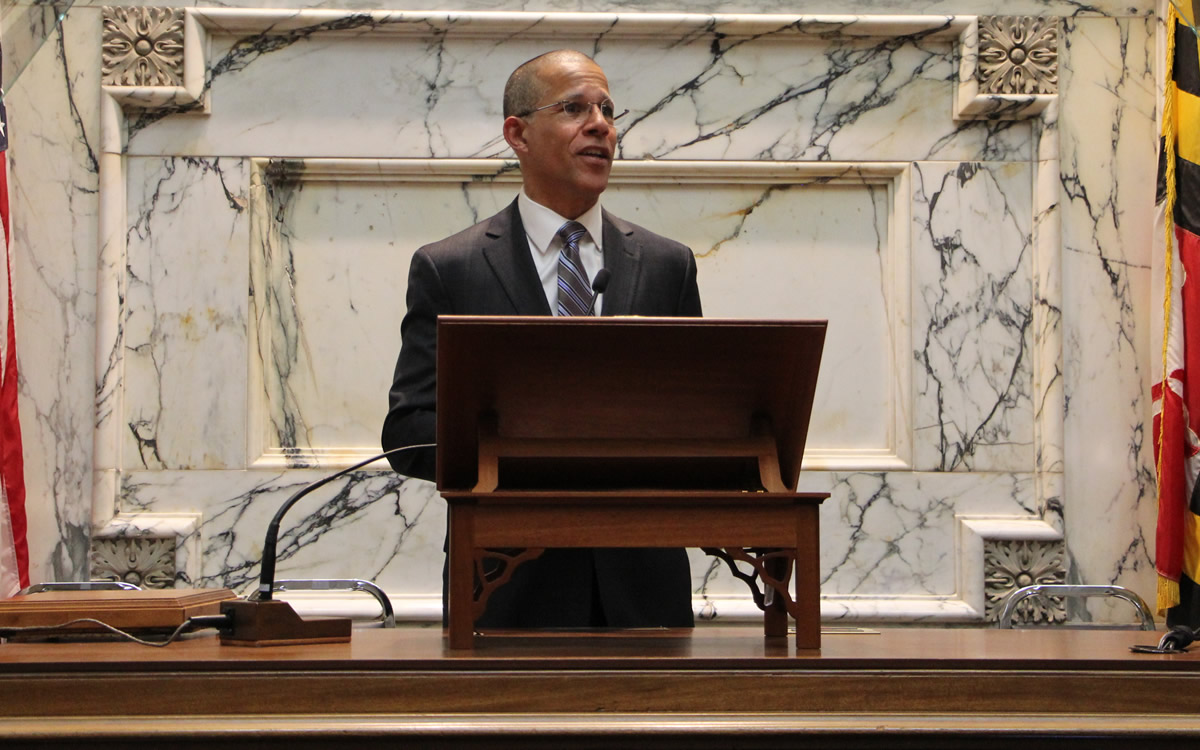
Maryland Attorney General Anthony Brown on Tuesday in his inaugural speech said he will seek the authority to enforce civil rights laws.
“To ensure that no entity or individual in Maryland deprive any person of their rights, regardless of faith or race, ethnicity or geography, identification, or orientation, and that all residents enjoy the privileges of living in Maryland, I’ll ask the governor and General Assembly for the statutory authority and the necessary resources to enforce federal and state civil rights laws,” he said.
Brown in his speech noted Maryland is the country’s fourth “most diverse state.”
“We speak 117 languages, and the percentage of foreign-born residents is higher than the national average and our neighboring states,” said Brown. “Maryland reflects where America is going.”
“So, what deeply troubles me is the racial and ethnic disparities and inequities that still exist in Maryland, motivated by bias and even overt discrimination, in housing, in the marketplace and workplace, and in opportunities,” he added. “Elijah Cummings would often admonish us by saying, “We’re better than that!” While I commend the work of the Maryland Commission for Civil Rights, that for 53 years has protected the civil rights of Marylanders, I firmly believe that we can do more.”
Brown, who previously represented Maryland’s 4th Congressional District, was the state’s lieutenant governor from 2007-2015. Brown last November defeated former Republican Anne Arundel County Councilman Michael Peroutka.
Democratic Congressman-elect Glenn Ivey will succeed Brown.
Gov.-elect Wes Moore and Comptroller-elect Brooke Lierman — both Democrats — will take office on Jan. 16.




Maryland
Md. groups receive state grants to fight hate crimes
Pride Center of Maryland among recipients

Maryland Gov. Wes Moore and the Governor’s Office of Crime Prevention and Policy are awarding a total of $10 million in grants in the 2027 fiscal year to nonprofit organizations that work to prevent hate crimes in the state.
The funds will be used to support those who feel targeted or discriminated against because of their race, religion, sexual orientation, gender identity, or disability status.
The Pride Center of Maryland is among the recipients. Churches, synagogues, mosques, and LGBTQ organizations are all eligible to receive grants
“The safety and security of all Marylanders is my top priority, so we are drawing a hard line because we have no tolerance for hate,” said Moore, according to media reports. “We are committed to protecting and ensuring safe and sacred spaces stay that way by investing in non-profit organizations, houses of worship, and community centers to protect and honor every community that makes our state so diverse and special.”
“Protection Against Hate Crime funding has strengthened the Pride Center of Maryland’s ability to protect, educate, and support the communities we serve … at a time of heightened concern associated with the Trump administration’s anti-LGBTQ/SGL (same-gender-loving) policies and pressures,” Pride Center of Maryland CEO Cleo Manago said. “PAHC funding helps us do more than improve physical security — it strengthens our community’s knowledge, preparedness, connection to resources, and ability to respond to hate with greater awareness and support.”
Maryland’s hate crimes law includes both sexual orientation and gender identity. The state’s nondiscrimination statute is also LGBTQ-inclusive.
Maryland
Anne Arundel schools now need parent permission to call trans students by preferred names
Conservative groups challenged system’s policy
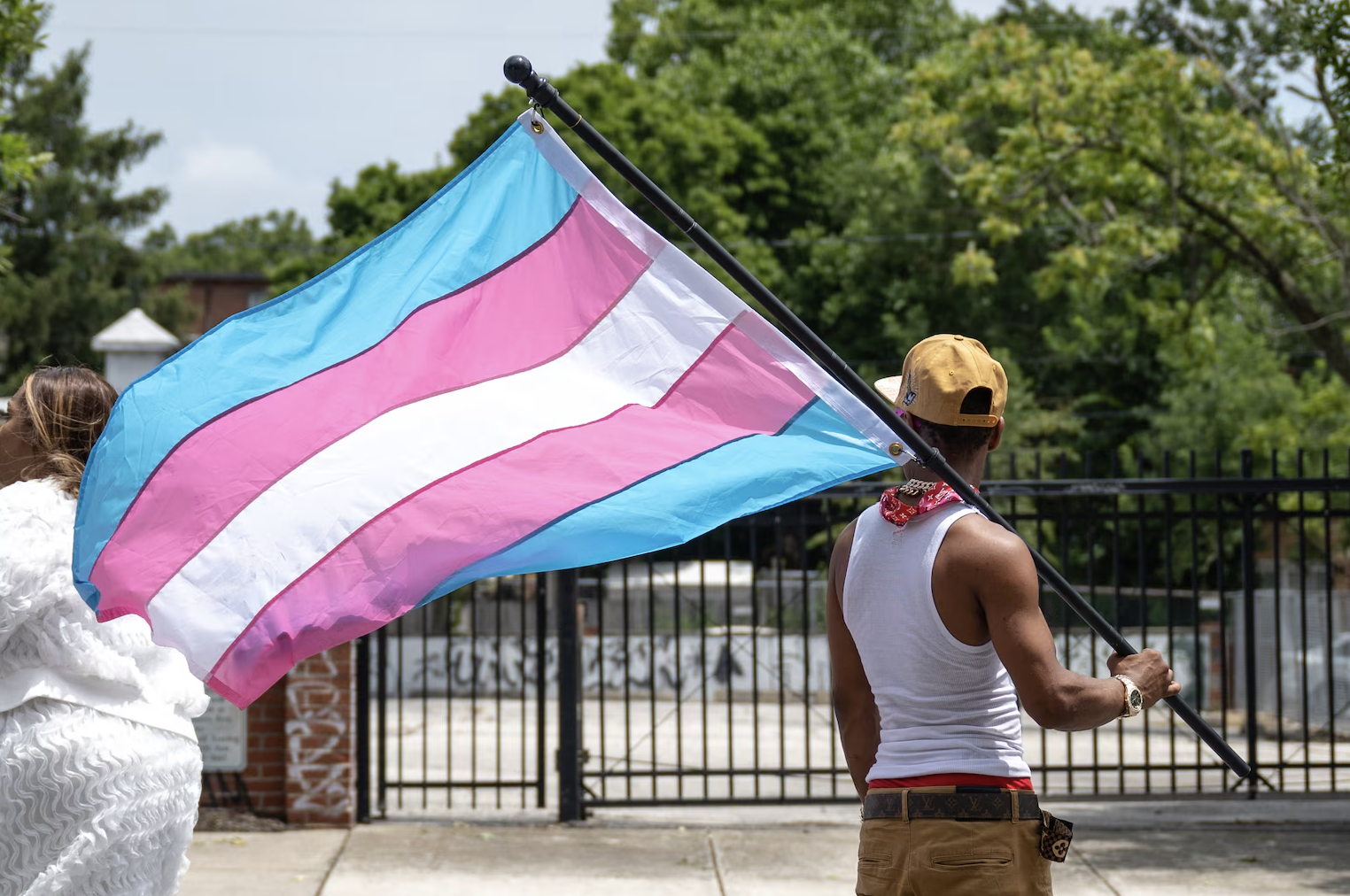
By JESSICA CALEFATI | Anne Arundel County Public Schools staff cannot use transgender students’ preferred names if their parents oppose it, according to an internal document reviewed by the Banner, a change that comes after conservative groups challenged the school system’s approach to gender identity.
Teachers union president Kristina Korona told members in an Aug. 20 email that the new guidance undermines district policy on acceptance and inclusivity and “will begin harming affected students immediately.”
Previously, the district didn’t require parental permission to use a high school student’s chosen name and pronouns corresponding to their gender identity, the internal document says. Now it does. The change comes as parents challenge the suburban school system’s gender identity policy and regulation in court and the Trump-Vance administration threatens the district’s funding.
The rest of this article can be found on the Baltimore Banner’s website.
Maryland
Girlfriends charged with Silver Spring murder to go on trial in 2027
Prosecutors charged both women with killing mother of one of them

Two women identified as a couple who are charged with the May 22, 2026, murder of the mother one of them in her Silver Spring home and who were arrested three weeks later in Ohio are scheduled to go on trial for murder April 19, 2027.
According to online records filed with Montgomery County Circuit Court in Rockville, Vanessa Tjongarero-Henderson, 29, of Clarksburg, Md., and Samantha Raebel, 36, of Phoenix are being held without bond in the Montgomery County Correctional Facility until the time of their trial.
Statements from Montgomery County police show the two women were arrested June 10 in Genoa, Ohio, after fleeing from the scene of the murder in Silver Spring. Police statements and court records show they were extradited back to Maryland in July, where prosecutors with the Montgomery County State’s Attorney’s Office obtained indictments against them for murder.
Earlier statements from Montgomery County police say their investigation into the murder led to their decision to initially charge the two women with first-degree murder for the death of Hilde Henderson, 67, who was Tjongarero-Henderson’s mother.
“Through the course of the investigation, detectives identified Henderson’s daughter, Vanessa Tjongarero-Henderson, and Vanessa’s girlfriend, Raebel, as the suspects,” one of the police statements says. It says police obtained arrest warrants for both women and launched a nationwide search seeking help from the public in in locating them.
One of the police statements says an autopsy determined the cause of Hilde Henderson’s death was blunt-force trauma injuries brought about by a murder. Police and the State’s Attorney’s Office, which is prosecuting the case, have yet to disclose whether they have determined a motive for the murder.
Court records show that prior to the start of the April 19, 2027, trial a “motion” hearing was scheduled for Oct. 30, 2026, a pre-trail conference was scheduled for Feb. 12, 2027, and another motion hearing and a status hearing were scheduled for March 12, 2027.
Court records also show that Tjongarero-Henderson is being represented by attorneys with the Montgomery County court system’s public defender service. The records show that Raebel initially had been represented by a public defender service attorney, but updated records show Aug. 14 is listed as the “removal date” for that attorney.
The docket shows that on Aug. 20, two new attorneys with the prominent D.C. law firm of Covington & Burling made their official appearance as her attorneys in the murder case. One of them, Daniel Solomon, told the Washington Blade in response to an inquiry that the defense has no comment at this time on the case.
He confirmed that Covington & Burling is representing Raebel on a no-cost, pro bono bass.
The office of the Montgomery County public defender service didn’t immediately respond to a phone message from the Blade asking for a comment on the Tjongarero-Henderson case.

Solidarity beyond the parade: the actual cost of Pride

Physician: addiction doesn’t always look the way you think it does

Calendar: October 9-15

ICC unseals arrest warrants for Taliban officials accused of persecuting LGBTQ people, women

Bet Mishpachah participates in D.C. Oct. 7 commemoration ceremony

Alianza para la Inclusión fortalece la defensa de derechos LGBTQ en Centroamérica

The facts about Victory Fund’s investigation and the path forward

In Ga., 2 trans candidates believe voters are ready for them

Bessent says Trump chose him for his qualifications, not his sexuality

‘Some Like It Hot’ a wild ride at renovated Bernard Family Theatre
-

 Central America4 days ago
Alianza para la Inclusión fortalece la defensa de derechos LGBTQ en Centroamérica
-
Opinions4 days ago
The facts about Victory Fund’s investigation and the path forward
-
Georgia4 days ago
In Ga., 2 trans candidates believe voters are ready for them
-
Federal Government4 days ago
Bessent says Trump chose him for his qualifications, not his sexuality